
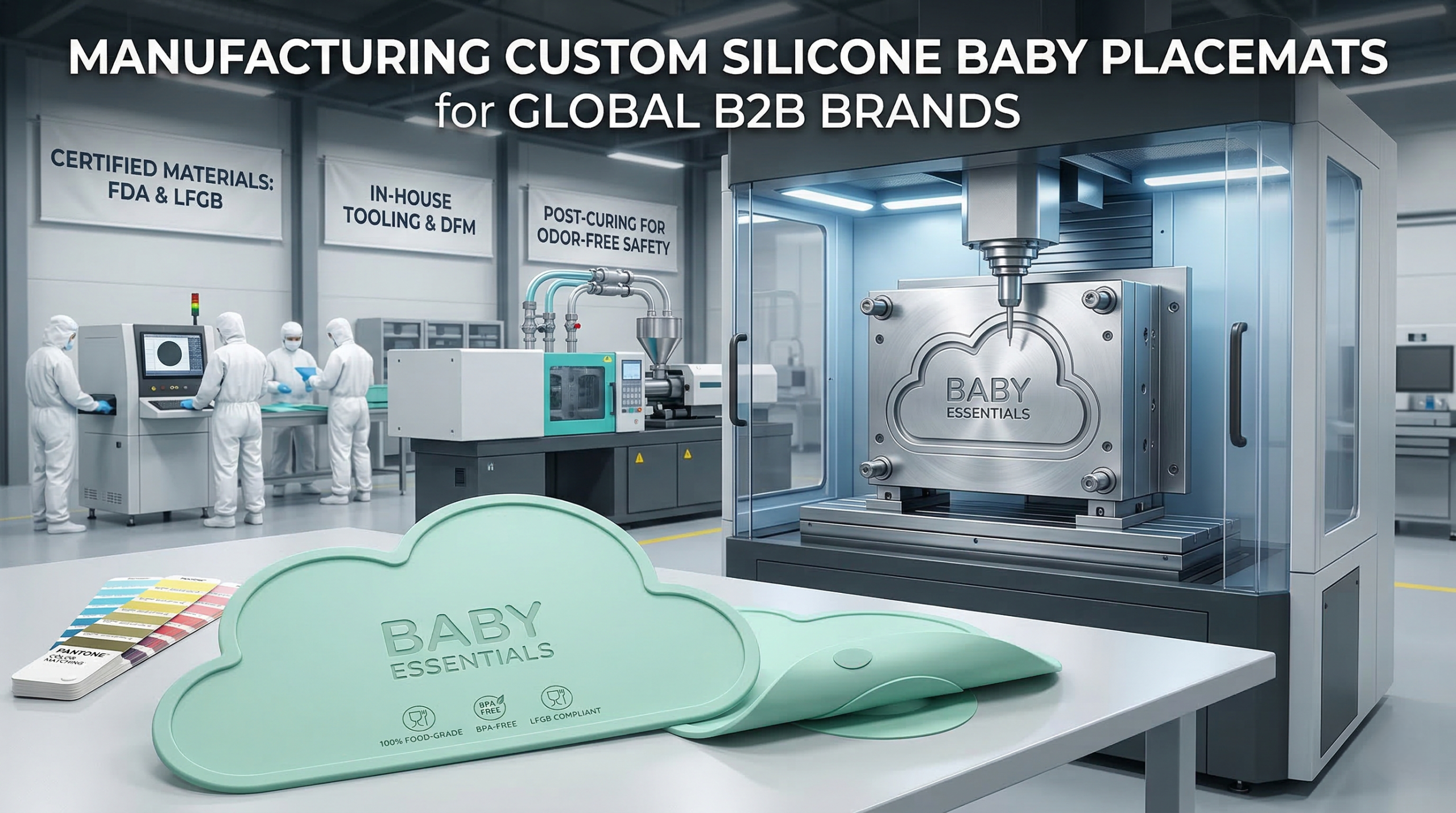
Silicone baby placemats are produced using high-precision compression molding or Liquid Silicone Rubber (LSR) injection processes. If you are a B2B brand owner, you likely face the challenge of finding high-quality manufacturers that prioritize non-toxic materials. It is frustrating to deal with suppliers who cut corners, potentially harming your reputation and child safety.
Think about it.
The nursery market is unforgiving, and one safety lapse can ruin your brand. By choosing the right manufacturing route, you ensure your products meet the highest standards. You need to know: is silicone safe for babies? This guide explores the professional steps taken to create premium, food-grade silicone products that parents trust.
What are silicone baby placemats and is silicone safe for babies?
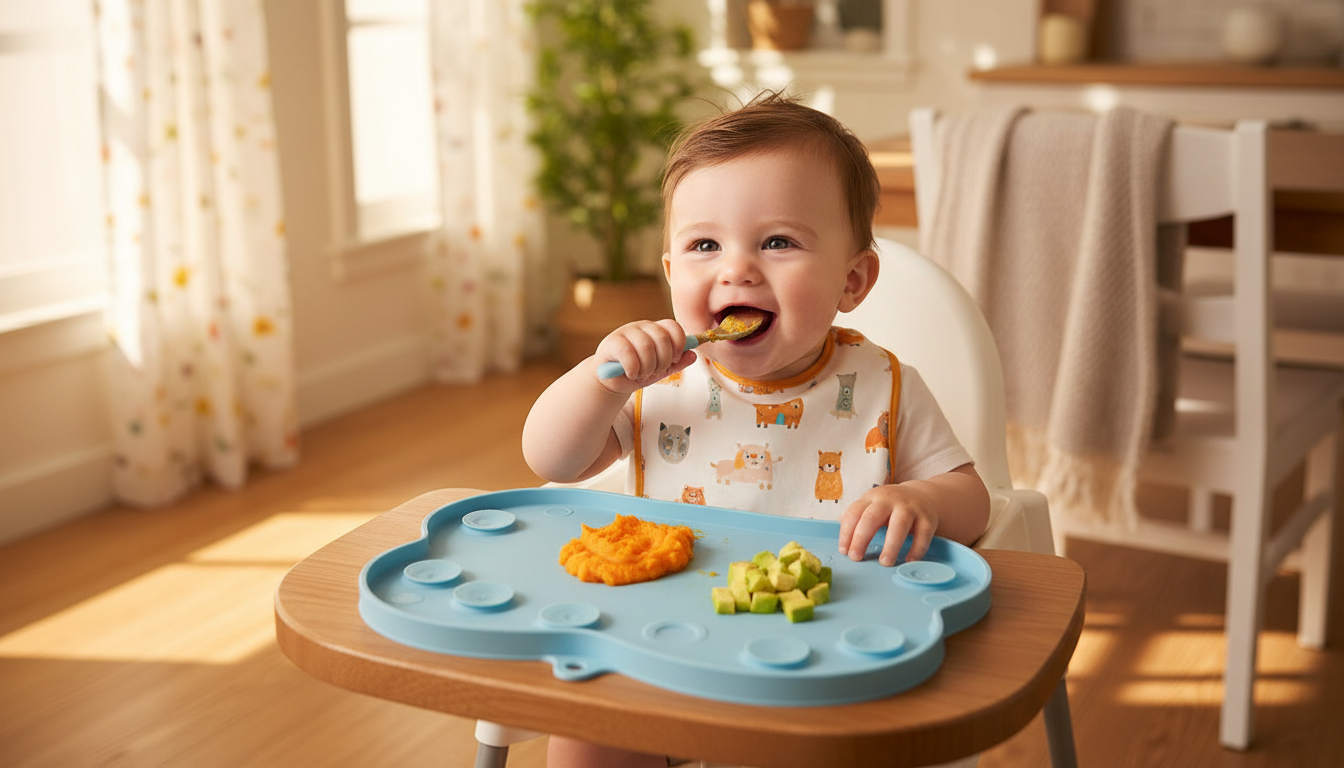
Silicone baby placemats are durable, heat-resistant table covers designed to keep feeding areas clean while providing a non-slip surface for toddlers. When considering if is silicone safe for babies, the answer lies in using 100% food-grade silicone that is free from BPA, phthalates, and lead. These products bridge the gap between functionality and hygiene in modern parenting.
What are the benefits of 100% food-grade silicone?
Food-grade silicone is a non-porous material that does not harbor bacteria or mold, making it ideal for messy eaters. It can withstand extreme temperatures, meaning you can sanitize these mats in dishwashers or boiling water without degradation.
- Naturally hypoallergenic and non-toxic.
- Resistant to odors and stains.
- Soft texture that is gentle on infant hands.
- Sustainable alternative to single-use plastic.
Key Takeaway: 100% food-grade silicone provides a hygienic, chemical-free surface that simplifies cleanup for busy parents.
Which safety certifications should you look for?
To ensure your inventory is market-ready, look for FDA and LFGB compliance. These standards verify that the material does not leach harmful substances into food during contact.
Key Takeaway: Verified certifications like FDA and LFGB are non-negotiable for entering the US and EU nursery markets.
Why choose custom silicone placemats for B2B retail brands?
Choosing custom silicone placemats allows B2B brands to differentiate themselves through unique aesthetics and superior functional performance. A major selling point for any nursery brand is answering “is silicone safe for babies” with a resounding yes backed by premium material choices.
Here is why:
Customization builds brand loyalty and allows you to target specific market niches like eco-conscious or minimalist parents. You can offer various silicone products that align with your overall brand identity.
How do anti-slip features improve the product?
Integrated suction bases or high-friction textures prevent toddlers from tossing their plates across the room. This functional advantage is a high-demand feature that increases the perceived value of your custom designs.
- Suction cups for high-chair compatibility.
- Micro-texture on the top surface to hold bowls.
- Weighted edges to prevent curling over time.
- Flexible borders to catch liquid spills.
Key Takeaway: Anti-slip functionality is the primary driver for parent purchases and should be a focus during your design phase.
What customization options exist for modern trends?
You can choose from a wide array of Pantone colors, embossed logos, and unique shapes like clouds or animals. These visual elements help your product stand out on digital storefronts and retail shelves.
| Custom Option | Business Impact |
|---|---|
| Pantone Color Matching | Aligns with seasonal nursery trends |
| Embossed Branding | Increases brand recognition and premium feel |
| Unique Geometry | Patents and design protection possibilities |
Analysis Guide: Aligning your custom color palette with current nursery decor trends can significantly increase seasonal turnover.
How do we design the 3D structure for baby placemat production?
Designing the 3D structure involves creating a balance between material flexibility and structural stability for easy storage. When parents ask if is silicone safe for babies, they also expect the product to be durable enough to survive years of daily use.
But that’s not all.
Professional engineering ensures that the mat remains flat on the table while still being rollable for travel. You must optimize the wall thickness to ensure the mat doesn’t feel flimsy or cheap to the touch.
Why is DFM feasibility review necessary?
Design for Manufacturing (DFM) identifies potential issues like air bubbles or uneven cooling before you invest in expensive tooling. This step saves you thousands in modification costs by refining the geometry for the chosen molding process.
- Evaluation of draft angles for easy demolding.
- Uniform wall thickness to prevent warping.
- Placement of injection gates for clean finishes.
- Simulation of material flow inside the mold.
Key Takeaway: A thorough DFM review prevents production delays and ensures the final product matches your digital prototype.
How do we optimize for waterproof performance?
The edges of the placemat must be designed with raised lips to contain spills effectively. These structural ridges are precision-engineered to be high enough to catch milk but low enough to avoid obstructing the baby’s reach.
| Design Feature | Functional Purpose |
|---|---|
| Raised Outer Rim | Prevents liquids from reaching the table |
| Reinforced Corners | Stops the mat from peeling up at the edges |
| Matte Underside | Enhances the natural suction of the silicone |
Analysis Guide: Focus on the “spill-containment” height during 3D modeling to maximize the practical value for end-users.
Why is in-house tooling critical for high-quality placemats?
In-house tooling allows a manufacturer to maintain total control over the precision and finish of the steel molds used for your mats. When debating if is silicone safe for babies, remember that the mold surface determines the final texture and cleanliness of the silicone part.
The best part?
Internal mold shops reduce development cycles by allowing engineers and toolmakers to collaborate in the same facility. This eliminates the communication gaps that occur when molds are outsourced to third-party shops.
How do CNC and EDM improve mold precision?
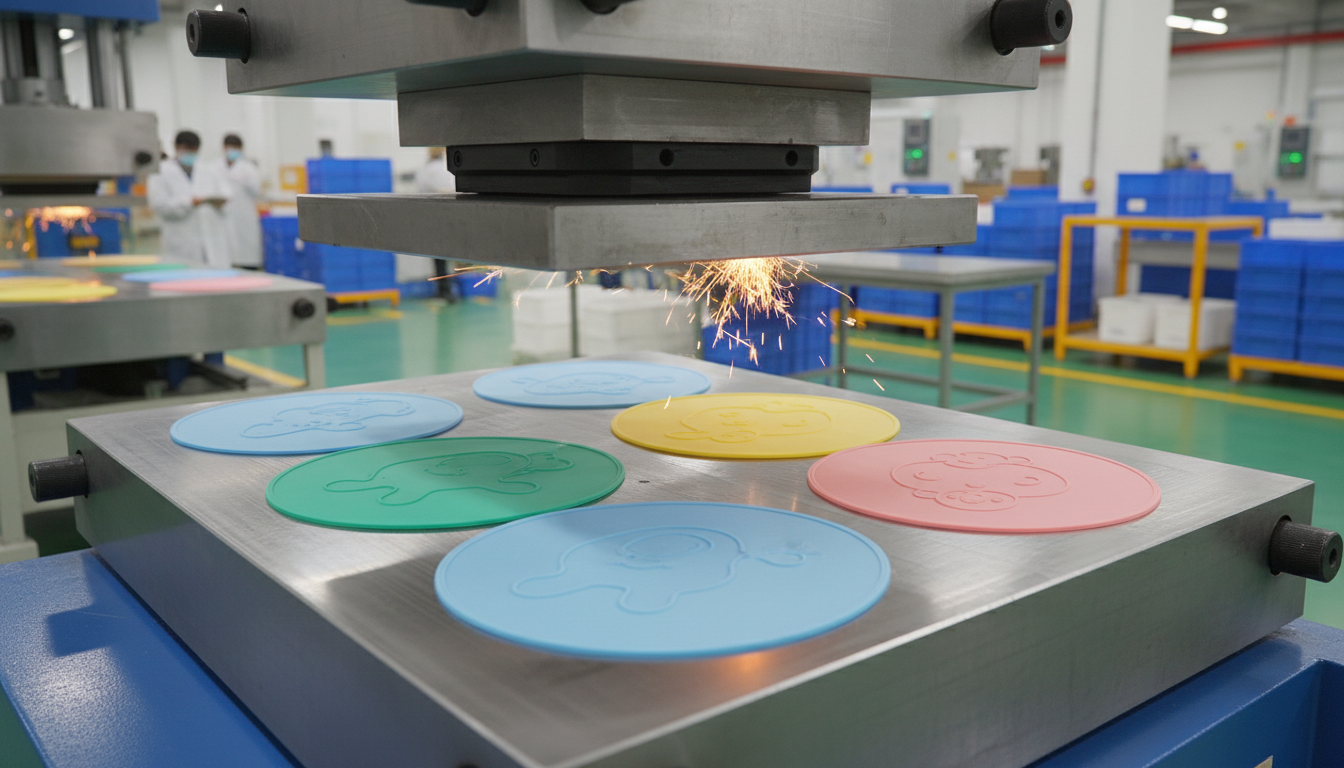
Computer Numerical Control (CNC) and Electrical Discharge Machining (EDM) are used to carve intricate designs into high-grade steel. This level of precision ensures that your embossed logo and suction features are sharp and consistent across millions of units.
- CNC machining for high-speed roughing.
- EDM for fine detailing and sharp corners.
- Mirror polishing for a glossy finish.
- Sandblasting for a soft-touch matte texture.
Key Takeaway: High-precision tooling is the foundation of a premium silicone product that feels high-quality to the consumer.
Can in-house tooling reduce your lead times?
Having the tool shop on-site means that any necessary adjustments can be made in hours rather than weeks. This agility is vital for B2B brands that need to hit tight product launch windows in competitive markets.
| Tooling Stage | Standard Timeline | In-House Timeline |
|---|---|---|
| Initial Design | 5-7 Days | 2-3 Days |
| Steel Cutting | 15-20 Days | 10-12 Days |
| Mold Modification | 7-10 Days | 1-2 Days |
Analysis Guide: Shortening the tooling phase allows you to move into mass production faster, giving you a competitive edge.
How is raw material prepared for production?
Raw material preparation involves compounding silicone gum with catalysts and pigments to meet specific safety and aesthetic requirements. Before asking is silicone safe for babies, we verify that the base polymer is sourced from reputable global suppliers.
It gets better.
Precision color matching ensures that your entire baby care line has consistent branding across different product batches. We use electronic scales to ensure the mix ratio is perfect every time, preventing curing issues.
What is the difference between fumed and precipitated silicone?
Fumed silicone offers higher clarity and superior tear strength compared to standard precipitated silicone. For premium placemats that need to endure heavy scrubbing and folding, fumed silicone is often the preferred choice for B2B brands.
- Fumed silicone: High transparency and durability.
- Precipitated silicone: Cost-effective for basic designs.
- BPA-free catalysts for guaranteed safety.
- Antimicrobial additives for enhanced hygiene.
Key Takeaway: Choosing the right silicone grade depends on your target price point and the required durability of the final mat.
How is Pantone color matching achieved?
We mix raw pigments into the silicone base during the compounding phase to achieve an exact match to your brand’s color codes. This process is monitored under standard lighting conditions to ensure the color remains stable after the high-heat curing process.
| Material Prep Step | Goal |
|---|---|
| Pigment Dispersion | Eliminates color streaks or spotting |
| Catalyst Addition | Triggers the chemical curing process |
| Vacuum De-airing | Removes bubbles for a smooth finish |
Analysis Guide: Always request a physical “color chip” before mass production to verify the hue under different lighting.
Which molding process works best for mass-produced baby mats?
Compression molding is the most common process for baby placemats due to its cost-effectiveness and ability to handle large surface areas. While discussing if is silicone safe for babies, production speed must be balanced with the time needed for a full chemical cure.
Check this out.
For highly complex shapes or mats that require overmolding onto plastic, Liquid Silicone Rubber (LSR) injection molding is the superior choice. It offers tighter tolerances and a much cleaner production environment for sensitive baby items.
Why is compression molding favored for B2B?
Compression molding involves placing a pre-measured “slug” of silicone into a heated mold cavity which is then pressed together. It is ideal for flat, wide products like placemats because it minimizes material waste and tooling complexity.
- Lower initial tooling investment.
- Capability for high-volume daily output.
- Easy color changes between production runs.
- Compatible with various shore hardness levels.
Key Takeaway: Compression molding offers the best balance of cost and quality for standard 2D and 3D placemat designs.
When should you consider LSR injection molding?
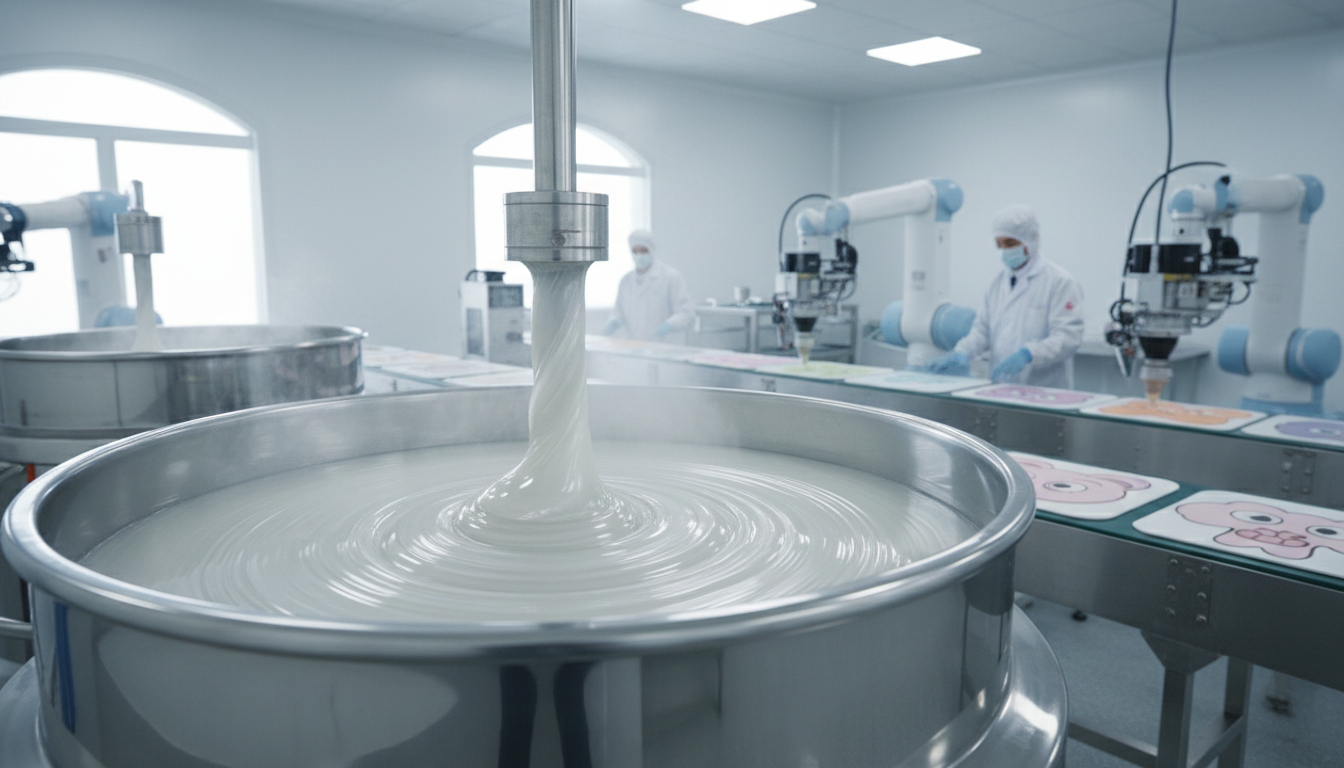
LSR is a closed-system process where liquid silicone is injected into the mold, resulting in virtually no flash (excess material). This process is perfect for high-end mats that require intricate textures or medical-grade purity.
| Process Feature | Compression Molding | LSR Injection |
|---|---|---|
| Setup Cost | Medium | High |
| Part Precision | High | Very High |
| Labor Intensity | High | Low (Automated) |
Analysis Guide: Choose LSR if your design features very thin walls or requires a level of precision that manual molding cannot reach.
Why is secondary vulcanization vital for baby product safety?
Secondary vulcanization, or post-curing, involves placing the finished mats in a specialized oven to remove volatile organic compounds (VOCs). This is the final step in proving is silicone safe for babies by ensuring the product is odor-free and chemically stable.
Bottom line?
Without this step, the silicone may retain a “rubbery” smell and fail strict export tests for food-grade compliance. It is a critical quality gate that differentiates professional manufacturers from budget-focused shops.
How does post-curing eliminate odors?
High heat for several hours allows any unreacted cross-linking agents to evaporate safely from the silicone matrix. This process also improves the mechanical properties of the mat, making it more resistant to permanent deformation.
- Standard temperature: 200°C for 4 hours.
- Removes residual siloxanes and volatiles.
- Stabilizes the final dimensions of the part.
- Ensures the surface is not tacky or sticky.
Key Takeaway: Post-curing is an essential safety requirement that ensures your product is truly food-grade and parent-approved.
Does secondary vulcanization affect the color?
If performed correctly, post-curing will not alter the Pantone match of your product. It actually helps “set” the material, ensuring that the color does not fade or leach when exposed to hot food or frequent washing.
| Curing Stage | Primary Function |
|---|---|
| Mold Curing | Shapes the part and provides initial strength |
| Post-Curing | Removes chemicals and maximizes safety |
| Cooling | Stabilizes the part for final inspection |
Analysis Guide: Ensure your manufacturer provides a post-curing report to guarantee compliance with international safety norms.
How do we apply custom logos and branding to silicone mats?
Custom logos can be integrated directly into the mold or applied via durable screen printing for a high-contrast look. When parents check if is silicone safe for babies, they also look for a professional brand appearance that signals quality.
Now consider this.
Laser engraving is an increasingly popular option for premium brands because it offers a permanent, tactile mark that won’t peel off. You must choose a branding method that survives repeated dishwasher cycles and rough handling by children.
What are the pros of integrated tooling logos?
An integrated logo is carved directly into the steel mold, resulting in a debossed or embossed mark on every placemat. This is the most cost-effective long-term solution as it requires no secondary printing or ink materials.
- Zero risk of ink leaching or peeling.
- Permanent branding that lasts the life of the mat.
- Clean, minimalist aesthetic favored by modern parents.
- No additional unit cost after the mold is made.
Key Takeaway: Integrated logos are the safest and most durable branding option for food-contact silicone products.
Should you use screen printing for color logos?
Screen printing allows for multi-color branding that pops against the silicone background. However, it requires specialized silicone-based inks that must be heat-cured to bond permanently with the surface.
| Branding Method | Durability | Cost per Unit |
|---|---|---|
| Mold Embossing | Permanent | $0.00 |
| Screen Printing | High (if cured) | $0.10 – $0.30 |
| Laser Marking | Permanent | $0.20 – $0.50 |
Analysis Guide: Select mold embossing for long-term brand equity and screen printing for high-visibility marketing designs.
What quality control steps prevent production failure?
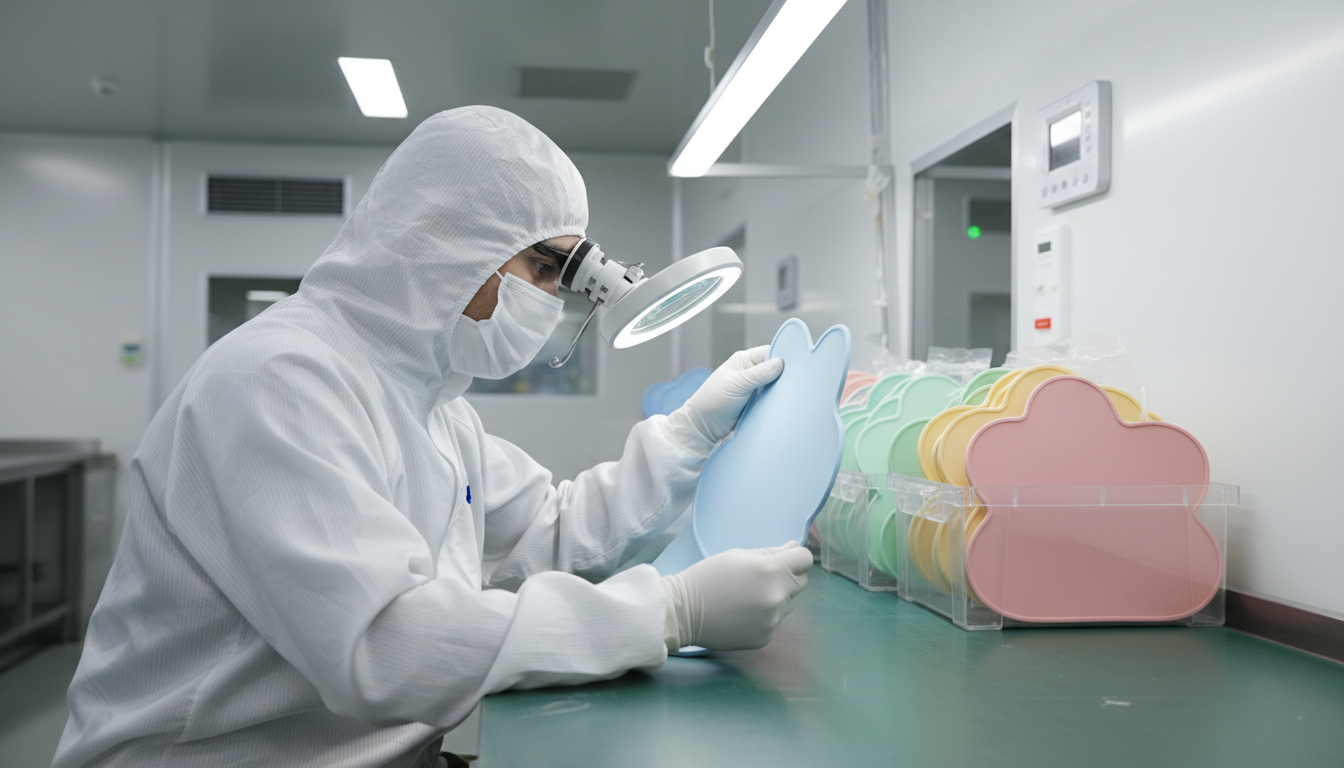
Quality control (QC) at a professional factory involves multiple layers of inspection, from raw material arrival to final packaging. To answer the question is silicone safe for babies, we must verify that every single unit is free from defects.
Here is the deal:
Automated CCD visual inspection and manual spot checks are used to catch surface imperfections or dimensional variances. We also perform “pull tests” to ensure any integrated suction features don’t tear away during use.
Why is IPQC vital for first-article approval?
In-Process Quality Control (IPQC) ensures that the first mat off the line matches your approved golden sample exactly. This prevents a whole batch from being produced with the wrong color or incorrect thickness.
- Verification of weight and material volume.
- Measurement of critical-to-quality dimensions.
- Visual check for “short shots” or air bubbles.
- Hardness testing (Durometer) for consistent feel.
Key Takeaway: Rigorous IPQC protocols eliminate the risk of mass batch rejections and costly shipping delays.
How do reliability tests ensure long-term safety?
Reliability testing involves simulating real-world abuse, such as extreme stretching or exposure to acidic foods. This ensures that the mat remains safe and functional throughout its entire intended lifespan.
| Test Type | Failure Prevented |
|---|---|
| Tear Strength Test | Choking hazards from torn pieces |
| Heat Aging Test | Cracking or hardening over time |
| Suction Power Test | Poor user experience and spills |
Analysis Guide: Request a comprehensive QC report for every shipment to maintain high standards for your B2B brand.
How much do custom silicone placemats cost at scale?
The cost of custom silicone placemats is influenced by material weight, mold complexity, and the total order volume. While ensuring is silicone safe for babies is the priority, B2B buyers must also find a balance that allows for a healthy retail margin.
You see.
Economies of scale play a massive role here; as your order quantity increases, the amortized cost of the mold and the per-unit labor price decrease significantly. It is often more profitable to order in larger batches to reduce your landed cost.
What are the main price variables?
The weight of the silicone used is the largest component of the unit price. Larger, thicker mats will naturally cost more than thin, compact travel versions. Additionally, multi-color designs or overmolded components will add to the complexity and cost.
- Raw material market prices (Silicone gum).
- Cycle time (how long the mat stays in the mold).
- Secondary operations (printing, post-curing, packing).
- Shipping and logistics (volume vs. weight).
Key Takeaway: Optimizing the mat’s weight and dimensions is the most effective way to lower your unit cost without sacrificing quality.
How can you optimize costs during production?
By choosing an integrated manufacturer that handles everything from tooling to export, you eliminate the markups of middlemen. Efficient mold design, such as using multi-cavity molds, allows for more parts to be produced in a single press cycle.
| Factor | Cost Impact | Recommendation |
|---|---|---|
| Mold Cavities | High | Use 2 or 4-cavity molds for volume |
| Packaging | Medium | Choose flat-pack polybags for lower shipping |
| Order Volume | Very High | Aim for 2,000+ units for best pricing |
Analysis Guide: Focus on increasing the “parts per cycle” to drastically reduce your manufacturing overhead.
Frequently Asked Questions
Can I customize the thickness of the placemat?
Yes, thickness is controlled during the 3D design and tooling phase to ensure the perfect balance of flexibility and weight.
What is the standard lead time for mass production?
Generally, mass production takes 15 to 25 days following the approval of the initial sample and tooling completion.
How do I ensure my design is eco-friendly?
By using 100% food-grade silicone, your product is naturally plastic-free and recyclable through specialized facilities.
Can I use multiple colors on one mat?
Yes, but this typically requires a more complex “overmolding” process or manual secondary placement, which increases the unit cost.
What is the difference between FDA and LFGB silicone?
FDA is the standard for the US market, while LFGB has stricter testing protocols required for many European countries.
Navigating the complexities of silicone manufacturing requires a partner who understands both engineering precision and infant safety. By focusing on food-grade materials and rigorous post-curing, you can confidently launch products that answer the question “is silicone safe for babies” with absolute certainty. Our facility is dedicated to helping B2B brands scale with stable production and expert DFM support. Protect your brand reputation and provide parents with the quality they deserve. Contact us today to start your custom silicone placemat project and receive a professional DFM review.