
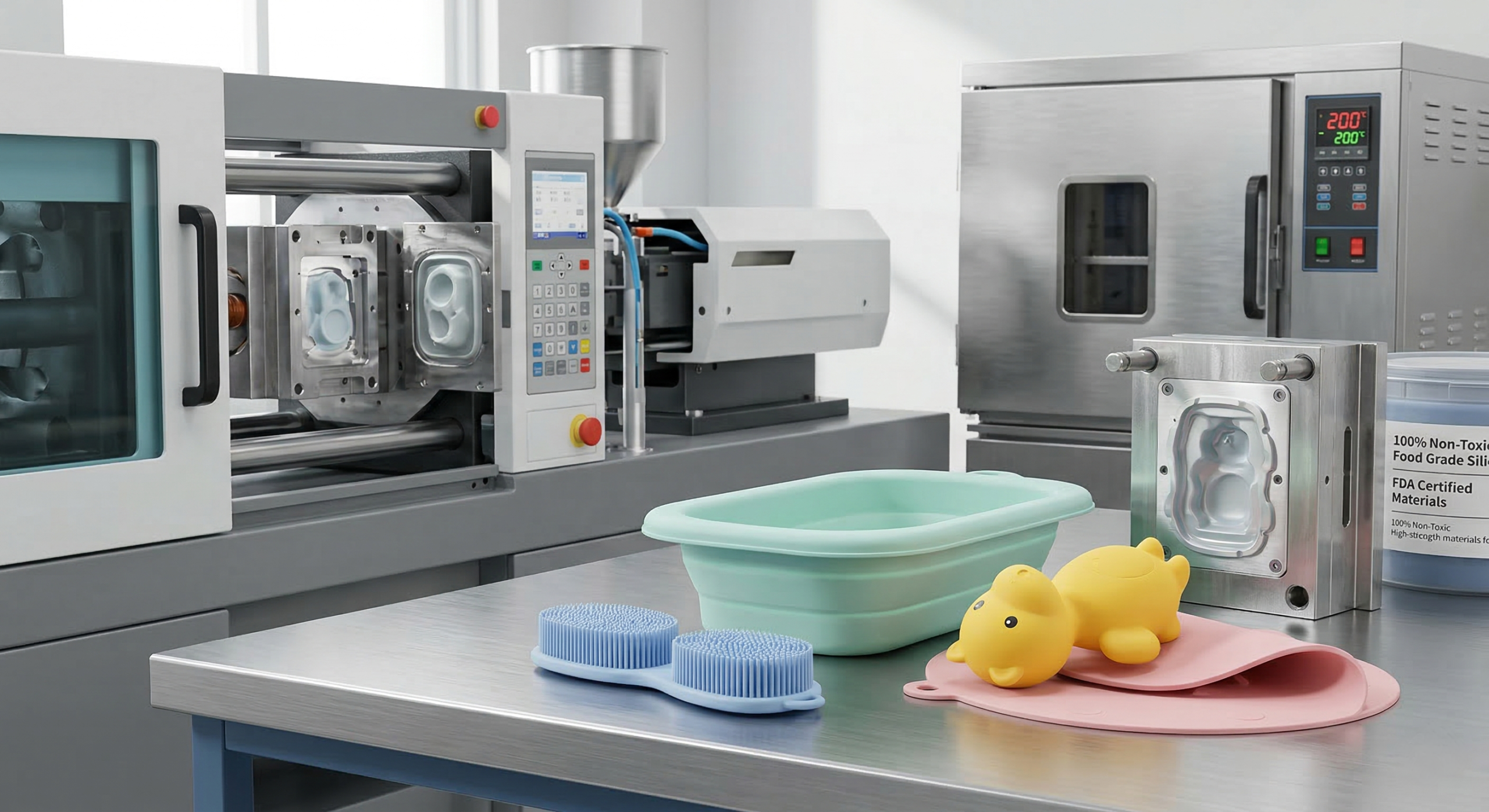
Making silicone baby bath products involves a precise 12-step manufacturing process that converts food-grade raw materials into soft, non-toxic hygiene tools. Many brand owners face the challenge of finding a manufacturer that can guarantee 100% chemical purity while maintaining competitive pricing. Using low-quality materials can lead to skin irritations or chemical leaching, which destroys consumer trust and your brand’s reputation. Our specialized production lines ensure that your products meet the highest safety standards while answering the critical question: is silicone safe for babies when used in hot water?
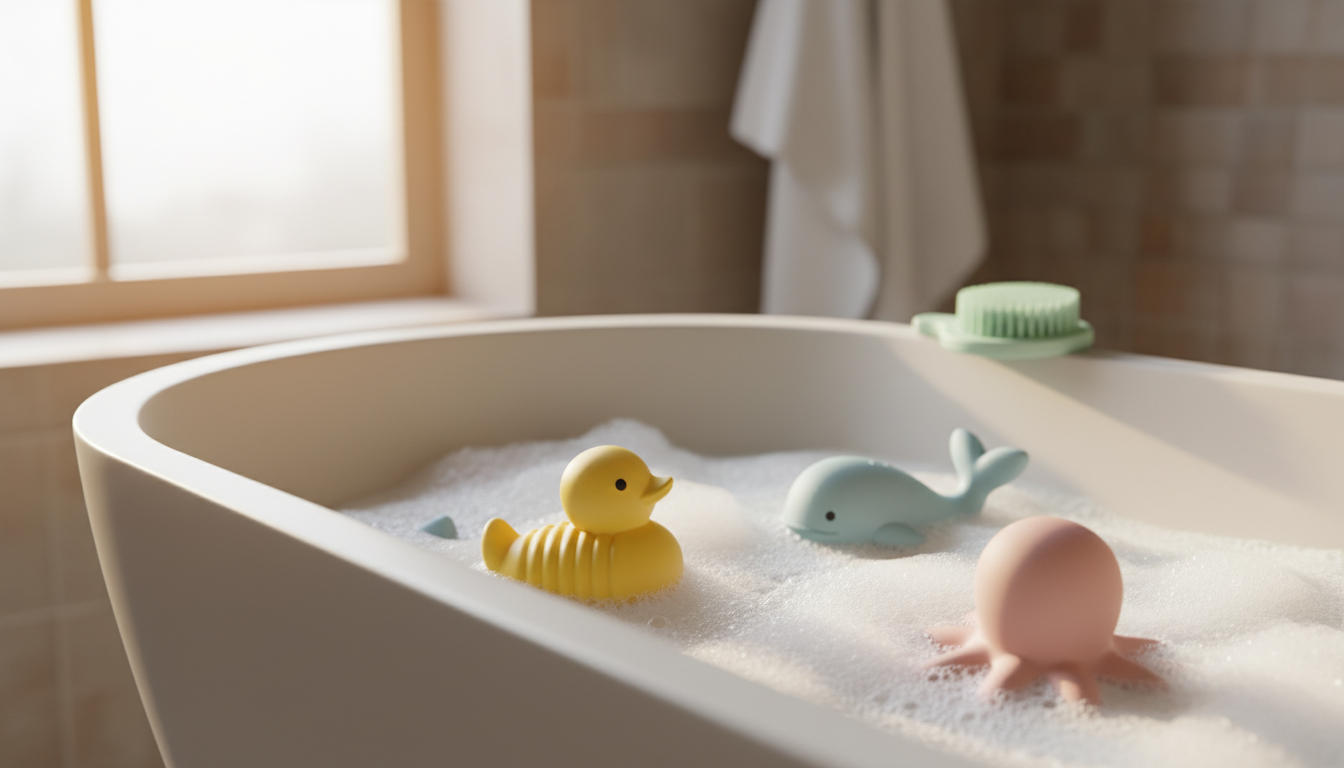
What is the silicone baby bath products?
When evaluating if is silicone safe for babies, you must look at its non-porous nature which resists bacterial growth. These specialized cleaning and sensory tools are made from 100% food-grade silicone rubber designed specifically for infant hygiene. They are soft, durable, and capable of withstanding high temperatures without degrading.
Common Types of Silicone Bath Items?
You will find a wide variety of these products in the modern nursery market. These tools are designed to make bath time safer and more engaging for both parents and infants.
- Silicone hair and body brushes with soft bristles.
- Foldable silicone bathtubs for space-saving storage.
- Squeeze-and-spray bath toys for sensory play.
- Non-slip suction mats to prevent accidental falls.
Here is the deal. While plastic can crack and harbor mold, silicone remains flexible and easy to disinfect.
Key Features of Bath Essentials?
The best products on the market share specific characteristics that parents prioritize. You should ensure your designs include these functional benefits to remain competitive.
But wait, there’s more. Beyond just being soft, these products are often designed with ergonomic handles for easier grip during slippery bath sessions.
Key Takeaway: Silicone bath products provide a hygienic, heat-resistant, and BPA-free alternative to traditional plastic or rubber bath tools.
| Feature | Benefit | Market Importance |
|---|---|---|
| Non-Porous | Resists mold/mildew | High |
| Heat Resistant | Dishwasher safe | Medium |
| Soft Texture | Gentle on infant skin | Very High |
How to make silicone baby bath products?
A critical question for any B2B buyer is whether the manufacturing process ensures that is silicone safe for babies at every stage. Making these products requires a sophisticated workflow that includes 3D modeling, precision tooling, and high-heat curing. We utilize controlled environments to prevent contamination from heavy metals or environmental pollutants.
What Is The Production Workflow?
The manufacturing journey begins with your conceptual idea and ends with a retail-ready product. You must follow these steps to ensure structural integrity and safety.
- Structural 3D design and prototyping.
- Mold development using CNC machining.
- Material mixing and pigment integration.
- Final curing and secondary vulcanization.
You might think it’s simple. However, every minute of curing time must be precisely monitored to prevent defects.
Key Takeaway: Successful production depends on a 12-step cycle that balances chemical safety with mechanical precision.
| Stage | Action | Quality Goal |
|---|---|---|
| Pre-Production | Material testing | Purity |
| Production | Molding/Curing | Accuracy |
| Post-Production | Vulcanization | Safety |
Why do you need make silicone baby bath products?
Offering certified food-grade options allows you to build a premium brand because parents constantly ask is silicone safe for babies. Manufacturing these products helps you meet the surging global demand for eco-friendly, non-toxic maternal and infant goods. These products offer higher margins and longer life cycles than disposable alternatives.
What Are Market Advantages for Brands?
Differentiating your brand in the nursery sector requires high-performance materials that parents can trust. Silicone provides the durability that modern consumers expect for their investment.
- Higher perceived value compared to plastic.
- Longer product lifespan increases brand loyalty.
- Eco-friendly appeal for sustainable shoppers.
- Resistance to odors and stains.
Think about this for a second. A single silicone brush can replace multiple plastic ones over a baby’s first three years.
Key Takeaway: Transitioning to silicone allows your brand to capture the high-end market segment focused on safety and sustainability.
| Factor | Silicone | Plastic |
|---|---|---|
| Chemical Safety | BPA/PVC Free | Often contains additives |
| Durability | High (years) | Low (months) |
| Recyclability | Specialized | Varies |
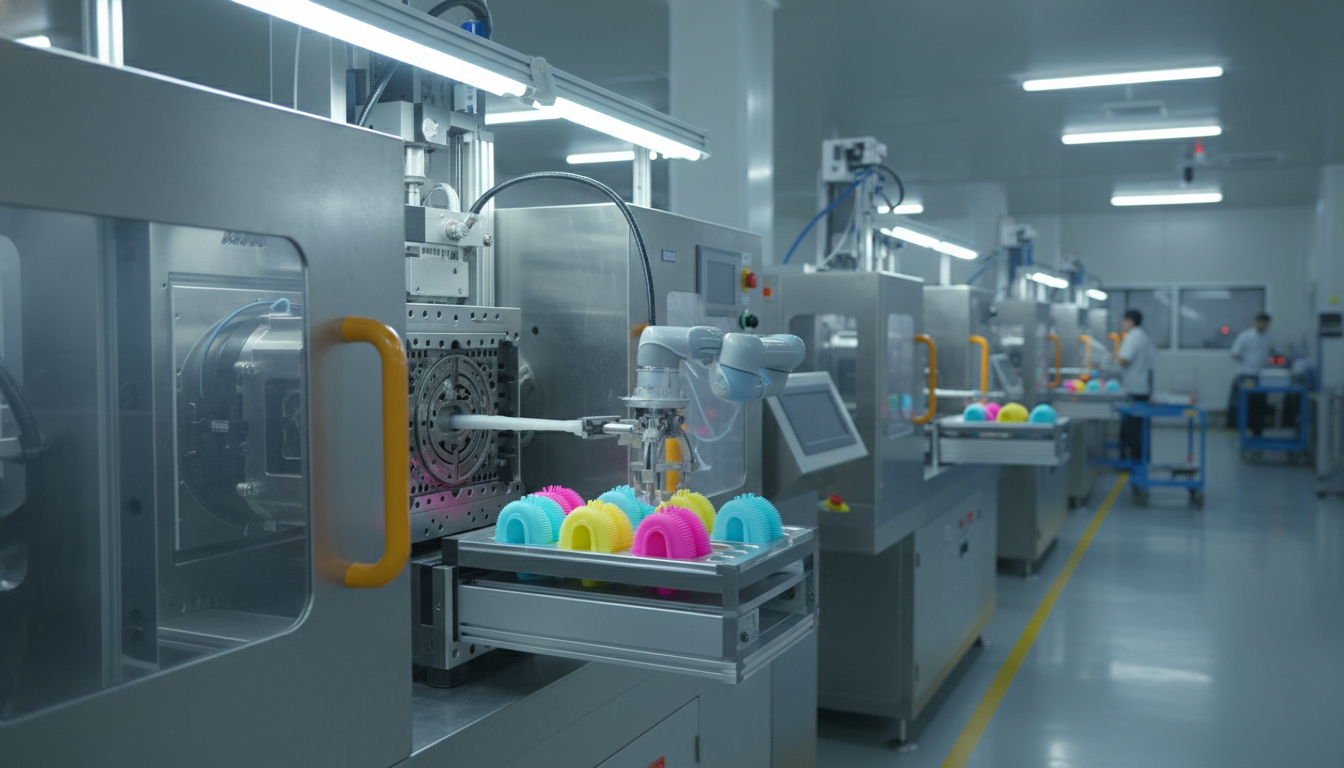
When need silicone baby bath products?
You must confirm that is silicone safe for babies as they begin to explore objects with their mouths starting from three months of age. At this stage, their sensory awareness and hygiene needs increase. These tools are indispensable for treating cradle cap and providing gentle stimulation during the bathing routine.
What is the Timing for Introduction?
You should market these products based on specific developmental milestones of the infant. Understanding these triggers helps in creating targeted marketing campaigns.
- 3-6 Months: Gentle scalp brushes for cradle cap.
- 6-12 Months: Suction mats and sensory bath toys.
- 12-24 Months: Foldable tubs and self-cleaning tools.
- Toddlerhood: Advanced massage brushes for independent use.
You want to know the best part? These products grow with the child, maintaining their utility long after the newborn phase.
Key Takeaway: Silicone bath tools are most relevant when a baby develops the need for deeper cleaning and tactile exploration.
| Age Range | Primary Product | Development Need |
|---|---|---|
| 0-6 Months | Soft Brushes | Scalp hygiene |
| 6-18 Months | Bath Toys | Sensory play |
| 18+ Months | Massage Tools | Independence |
How much of the silicone baby bath products?
When budgeting for your custom product line, you must consider that verifying is silicone safe for babies requires investment in food-grade raw materials. Unit prices for high-quality silicone bath products generally range between $1.29 and $3.19 depending on size and complexity. Bulk orders and simplified designs can significantly lower your per-unit manufacturing costs.
Which Cost Factors Matter Most?
Several variables influence the final price you will pay for your custom silicone line. You should analyze these factors before finalizing your product specifications.
- Complexity of the 3D mold and tooling.
- Number of colors (multi-color vs. single color).
- Quality of the silicone rubber (fumed vs. precipitated).
- Total volume of the production run.
It gets better. High-volume orders often qualify for significant discounts on both material and logistics costs.
Key Takeaway: Balancing material quality with production volume is the most effective way to optimize your unit price.
| Item Type | Est. Unit Cost | Key Variable |
|---|---|---|
| Bath Brush | $1.29 – $1.80 | Bristle density |
| Bath Toy | $1.50 – $2.10 | Multi-color count |
| Bath Mat | $2.40 – $3.19 | Suction cup count |
How to design 3D structure for bath products?
Design features like rounded edges and integrated one-piece construction are vital for safety while addressing the core question: is silicone safe for babies in terms of choking hazards? Designing a 3D structure involves creating a CAD model that accounts for the unique shrinkage properties of silicone. You must ensure the geometry is ergonomic for both parents and infants.
What are Ergonomic Design Essentials?
You need to focus on how both the parent and the baby will interact with the physical product. A well-designed tool reduces fatigue and increases safety during wet conditions.
- Anti-slip textures for better grip.
- One-piece molding to prevent mold traps.
- Balanced weight for easier handling.
- Flexible bristles that don’t scratch skin.
The truth is, a beautiful design is worthless if it’s difficult for a soapy hand to hold.
Key Takeaway: Professional 3D design must prioritize safety standards and ergonomic functionality over purely aesthetic choices.
| Design Element | Purpose | Safety Impact |
|---|---|---|
| Rounded Corners | Prevent scratches | High |
| Integrated Base | No small parts | Critical |
| Drain Holes | Prevent water buildup | High |
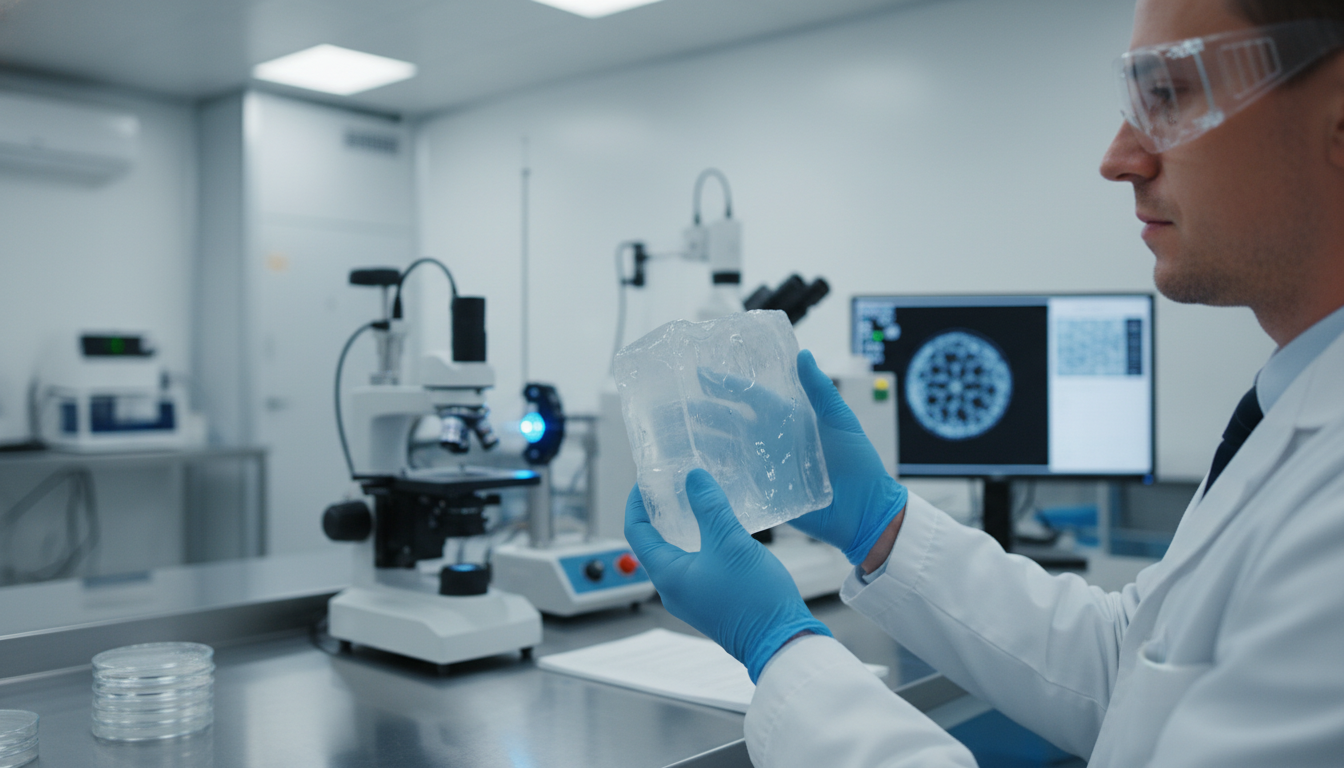
How to make the silicone bath products tooling?
Precision of the mold is essential to prevent sharp flashing or burrs on the final product when asking is silicone safe for babies. Precision tooling is created using 3-axis CNC machines and EDM technology to carve high-strength steel or copper molds. Durable tooling ensures that every unit in a massive production run remains identical and safe.
What Tooling Technology is Used?
The choice of metal for your mold determines the surface finish and the longevity of your production cycle. You should select the material based on your expected total output.
- Steel molds for high-volume, long-term durability.
- Copper molds for intricate, high-detail designs.
- CNC milling for rapid prototype development.
- Mirror polishing for a smooth, high-gloss finish.
Here is the kicker. Investing in high-grade steel now prevents costly mold repairs and production downtime later.
Key Takeaway: High-quality steel tooling is the foundation of consistent, safe, and cost-effective silicone production.
| Tooling Type | Lifecycle | Finish Quality |
|---|---|---|
| CNC Steel | 500k+ cycles | Excellent |
| AL Alloy | 10k cycles | Moderate |
| Copper EDM | 100k+ cycles | Superior Detail |
How to prepare the silicone raw material?
To guarantee is silicone safe for babies, you must use fumed silicone rubber which offers higher transparency and purity than precipitated versions. Raw material preparation involves mixing food-grade silicone rubber with non-toxic pigments and catalyst agents. The material is then precisely weighed and cut to match the exact requirements of each mold cavity.
How to Control Mixing and Weight?
Consistency in your raw material ensures that every product has the same flexibility and color. You need to maintain strict cleanliness standards during this phase to avoid contamination.
- Precise pigment weighing for color matching.
- High-shear mixing for uniform consistency.
- Accurate cutting to prevent material waste.
- Vacuum degassing to remove air bubbles.
Bottom line. If the mixing isn’t perfect, the final product will have weak spots or uneven coloring.
Key Takeaway: Strict material control and the use of fumed silicone are critical for producing high-transparency, safe baby products.
| Component | Function | Safety Grade |
|---|---|---|
| Silicone Base | Structural body | Food Grade (FDA) |
| Pigment | Visual appeal | Medical/Food Grade |
| Catalyst | Curing agent | Non-toxic |
How is curing and demolding performed?
We ensure is silicone safe for babies by maintaining temperatures that do not degrade the material’s molecular structure throughout the high-heat curing phase. Curing happens inside a heated press where pressure and temperature transform the raw silicone into its final solid state. Once the cycle is complete, the products are carefully demolded to preserve their surface finish.
What Are the Molding Techniques?
Different products require different molding approaches to achieve the best functional results. You should consult with engineers to determine the most cost-effective method for your design.
- Compression molding for standard bath brushes.
- LSR injection for high-precision, soft-touch items.
- Co-injection for multi-colored or over-molded parts.
But wait, there’s more. The cooling rate after demolding is just as important as the heating rate during curing.
Key Takeaway: Precision control of temperature and pressure during curing is what differentiates a durable silicone product from a flimsy one.
| Method | Best For | Production Speed |
|---|---|---|
| Compression | Brushes/Mats | Medium |
| LSR Injection | Pacifiers/Teethers | Fast |
| Over-molding | Dual-material grips | Slow |
Why is secondary vulcanization necessary?
This step is the final proof that is silicone safe for babies, as it ensures the product meets FDA and LFGB international standards. Secondary vulcanization is a post-curing baking process that removes residual odors and volatile substances from the silicone. Without this 2 to 4-hour baking cycle, products may retain a slight chemical scent and fail safety inspections.
What is the Science of Post-Curing?
Baking the products in an industrial oven stabilizes the material and completes the cross-linking of the silicone molecules. You should never skip this step if you want a truly food-grade finish.
- Elimination of residual catalysts and smells.
- Stabilization of physical dimensions.
- Enhancement of tensile strength and elasticity.
- Achievement of global safety certifications.
Here is the deal. This process is the “secret sauce” that makes high-end silicone products feel premium and smell neutral.
Key Takeaway: Secondary vulcanization is a non-negotiable step for ensuring your products are 100% odorless and safe for infants.
| Stage | Duration | Temperature |
|---|---|---|
| Initial Cure | 3-5 Minutes | 160°C – 200°C |
| Post-Curing | 2-4 Hours | 200°C |
| QC Check | Continuous | Ambient |
Frequently Asked Questions
Can I customize the color of my silicone bath products?
Yes, you can specify any Pantone color for your production run. We use food-grade pigments that are mixed into the raw silicone base to ensure the color never fades or leaches during use in hot bath water.
What’s the best way to clean silicone bath tools?
Silicone is naturally dishwasher safe and can also be boiled for sterilization. Because it is heat-resistant up to 230°C, you can use steam or boiling water to ensure the highest level of hygiene for the baby.
Can I add my logo directly onto the silicone mold?
Yes, we can laser engrave or CNC machine your logo into the tooling. This creates a permanent, debossed or embossed logo on the product that cannot be rubbed off or removed, unlike surface printing.
How long does the manufacturing process take from start to finish?
Typically, the process takes 25 to 35 days. This includes approximately 15 days for mold development and 10-20 days for mass production and quality control, depending on the complexity and volume of your order.
What safety certifications should I look for in a manufacturer?
You should ensure the factory provides FDA, LFGB, and CE certifications. These documents prove that the material and manufacturing processes meet the strict chemical and mechanical safety standards required for infant products.
Conclusion
Creating high-quality silicone baby bath products requires a blend of advanced engineering, precision tooling, and strict material safety. We solve the complex problem of nursery product manufacturing by providing a transparent process that guarantees non-toxic results. Our expertise in food-grade silicone ensures that your brand can confidently enter the market with products that are durable, hygienic, and eco-friendly. From the initial 3D CAD design to the final secondary vulcanization, we handle every detail to protect your reputation and the babies who use our products. Our brand stance is clear: we never compromise on material purity or manufacturing precision. If you are ready to launch or expand your baby care line, contact us today to receive a detailed quote and start your journey toward premium product excellence.