
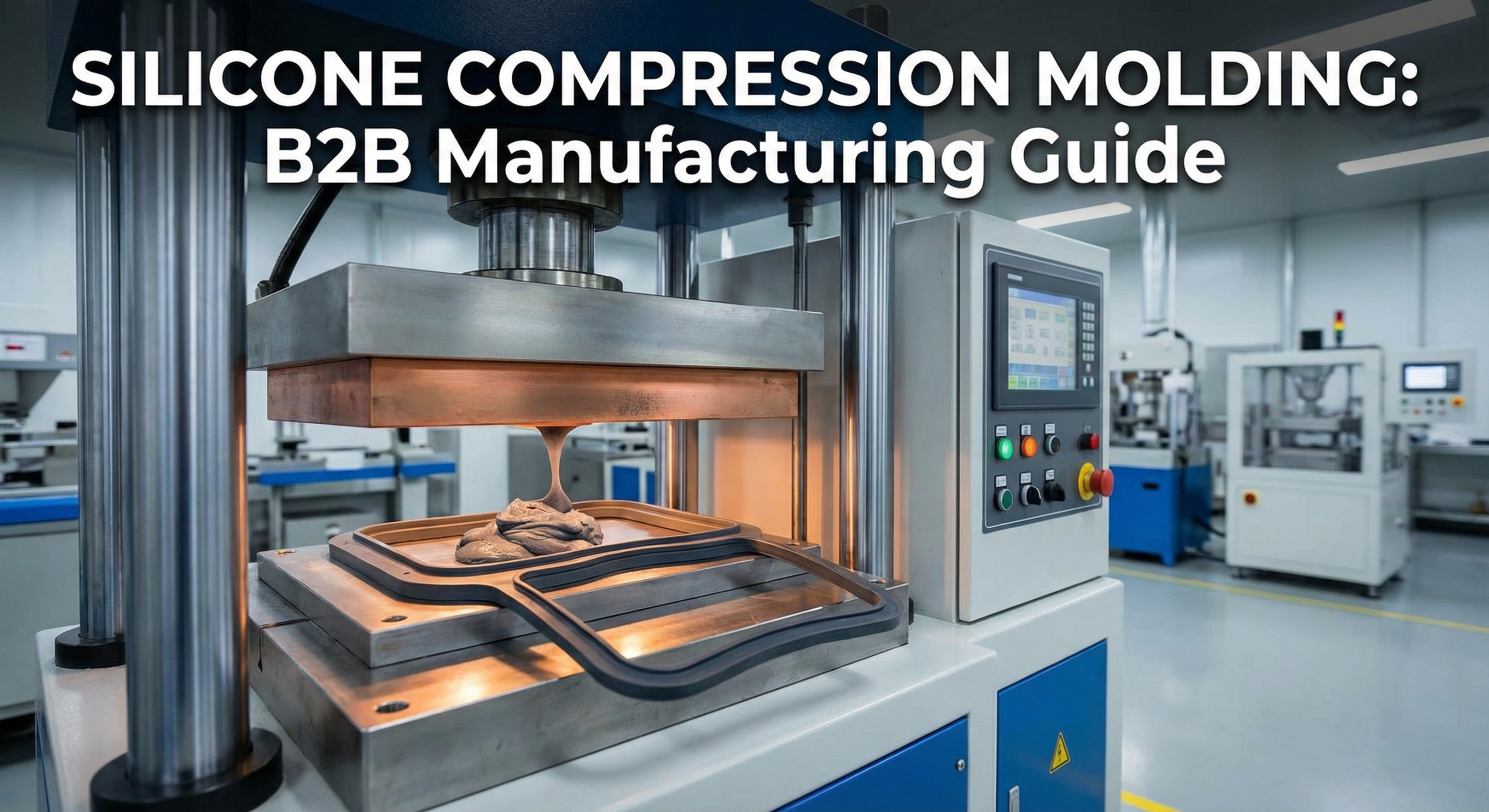
Sourcing high-quality silicone components often becomes a bottleneck for B2B procurement teams facing high tooling costs and slow turnaround times. When your project requires durable gaskets, seals, or consumer-grade parts without the massive investment of liquid injection molds, the path forward can seem prohibitively expensive. Silicone Compression Molding provides the strategic bridge you need, offering a low-cost entry point for manufacturing robust, high-performance products that meet strict industrial standards without depleting your capital budget.

What is Silicone Compression Molding?
Silicone Compression Molding is a manufacturing process where uncured silicone rubber is placed into a heated mold cavity and shaped under high pressure. You will find this method ideal for producing solid rubber parts that require durability and heat resistance. It utilizes high-consistency rubber (HCR) to create components that maintain their structural integrity in harsh environments.
Is it suitable for simple rubber parts?
This technique is the most straightforward approach for producing functional silicone components with uncomplicated geometries. You can achieve excellent results for parts like O-rings, flat gaskets, and simple stoppers.
But that’s not all…
- Optimized for low-to-medium volume production runs.
- Compatible with a wide range of Shore A hardness levels.
- Lower initial investment compared to automated injection systems.
Key Takeaway: Choose this method when your design priorities are cost-efficiency and material durability for simple shapes.
| Feature | Description |
|---|---|
| Material State | Solid/Uncured Rubber Preforms |
| Tooling Type | Two-plate or multi-plate steel molds |
| Primary Driver | Heat and Hydraulic Pressure |
This data confirms that the process relies on physical compression rather than complex injection mechanisms to achieve part density.
How does the molding process work?
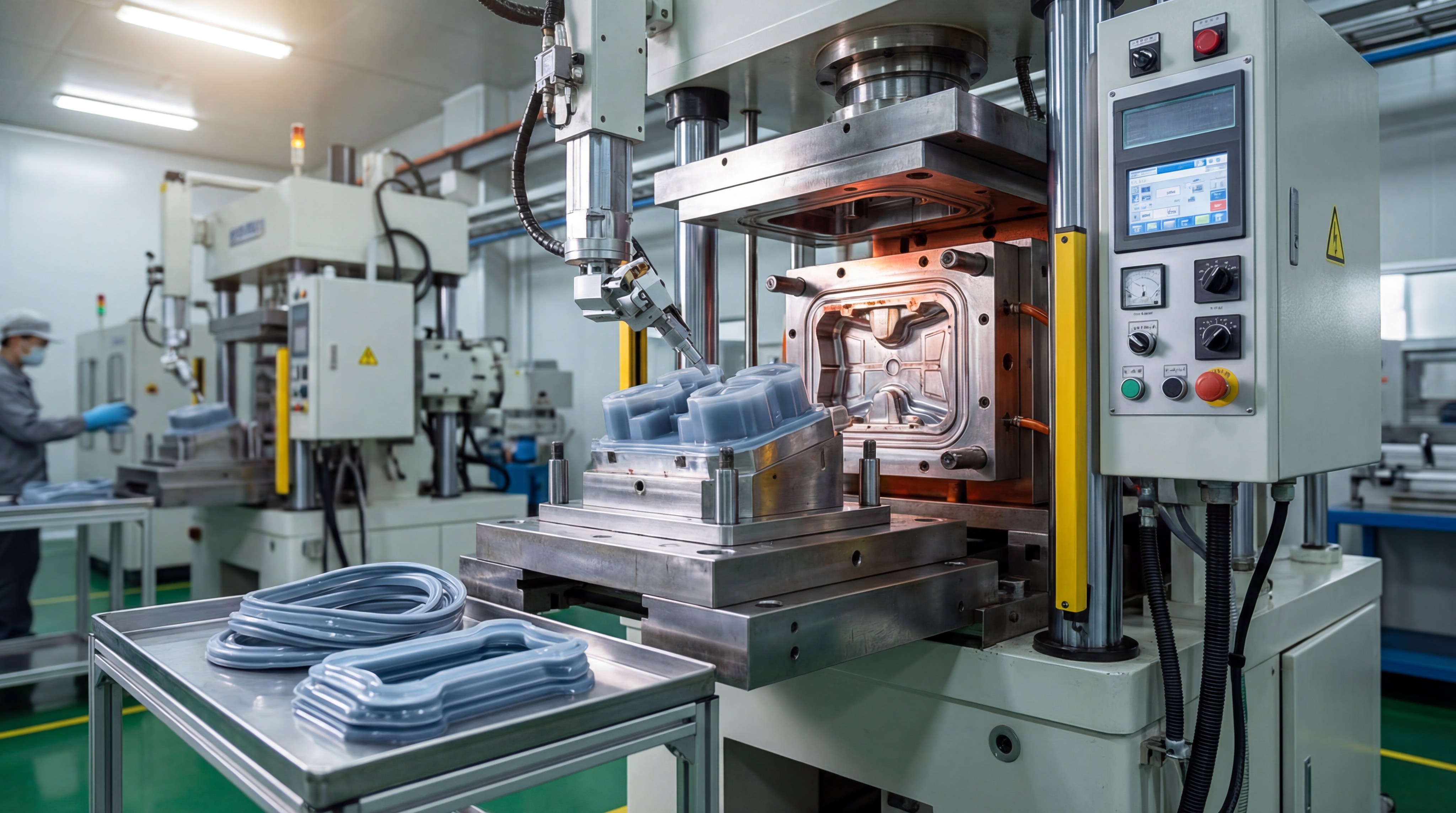
The Silicone Compression Molding process works by compressing a pre-measured “preform” of silicone between two heated mold plates until it cures into a permanent shape. You start by preheating the mold to a specific vulcanization temperature to ensure consistent chemical cross-linking. Once the material is loaded, the hydraulic press applies tons of force to eliminate air pockets.
What occurs during the curing cycle?
During the curing phase, the heat triggers a chemical reaction that transforms the raw silicone into a flexible, resilient elastomer. You must monitor the cycle time closely, as under-curing leads to weak parts while over-curing can cause brittleness.
Here is the kicker…
- Hydraulic pressure ensures the silicone fills every cavity detail.
- Programmable logic controllers manage precise heat distribution.
- Curing times typically range from one to six minutes per cycle.
Key Takeaway: Precise control over temperature and pressure is the foundation of repeatable part quality in every batch.
| Process Step | Critical Parameter | Objective |
|---|---|---|
| Loading | Preform Weight | Minimize Material Waste |
| Curing | Cycle Time | Achieving Final Durometer |
| Demolding | Mold Release | Preventing Part Tearing |
This sequence illustrates how mechanical inputs directly translate into the physical properties of the finished silicone component.
Why is the tooling cost so low?
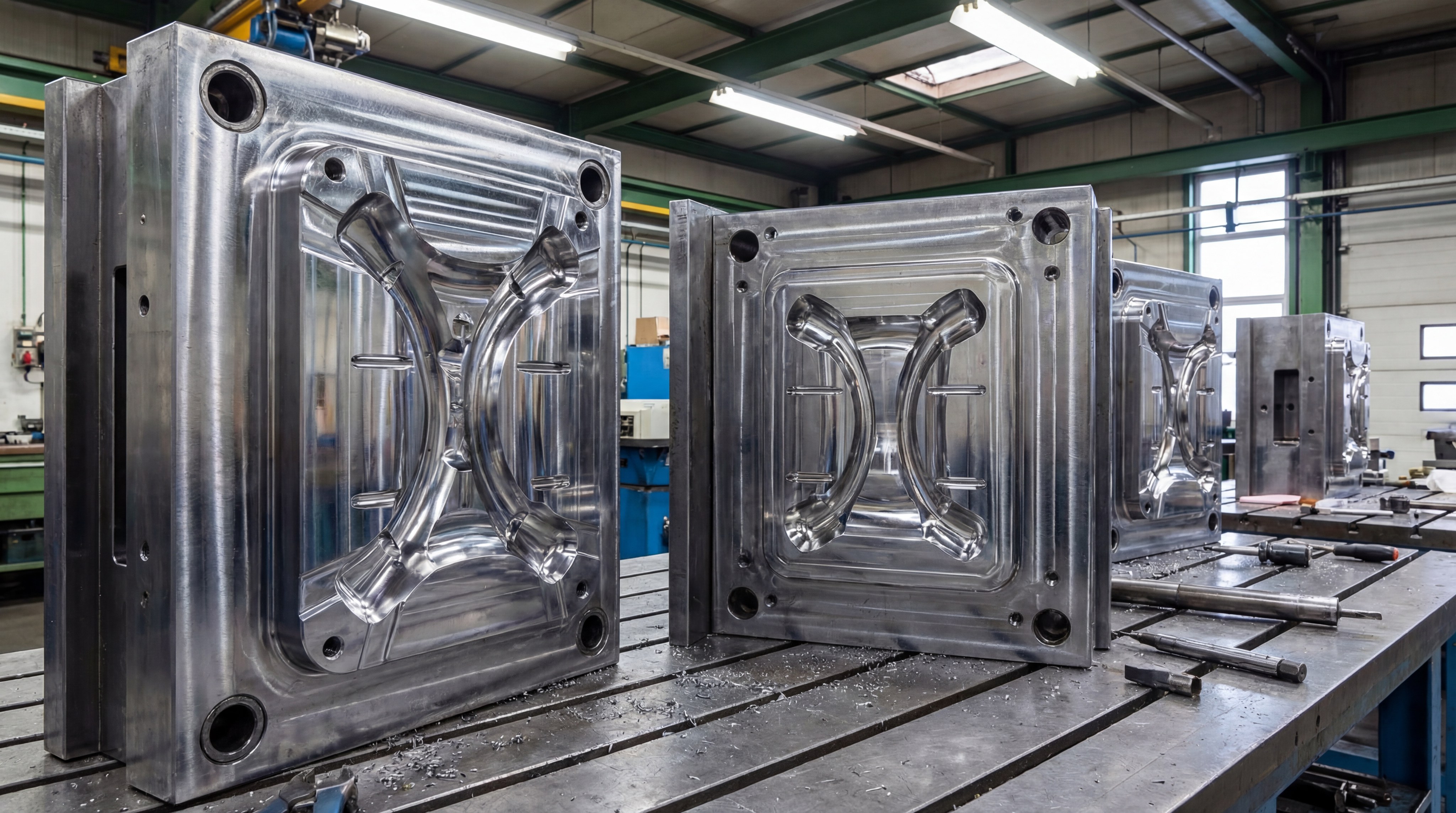
The tooling cost for Silicone Compression Molding is lower because the molds are mechanically simpler and require fewer complex internal components like runners or cooling lines. You can utilize our mold making service to develop high-quality steel tools at a fraction of the cost of injection molds. This affordability makes the process perfect for startups and specialized industrial applications.
How does DFM reduce manufacturing waste?
Design for Manufacturability (DFM) helps you simplify part geometry to reduce the amount of excess material, known as flash. By optimizing the parting line, you can minimize the manual labor required for trimming and finishing.
But wait, there’s more…
- Simpler mold designs lead to faster fabrication lead times.
- Multi-cavity molds can scale production without exponential cost increases.
- Standardized mold bases reduce the overall engineering overhead.
Key Takeaway: Lower upfront capital allows you to test designs and enter the market faster than with high-pressure injection methods.
| Tooling Aspect | Compression Molding | LSR Injection |
|---|---|---|
| Complexity | Low to Moderate | Extremely High |
| Initial Cost | Economic ($) | Premium ($$$) |
| Lead Time | 2-4 Weeks | 4-8 Weeks |
This comparison highlights why compression tooling is the preferred choice for B2B projects with restricted budgets or tight schedules.
Which materials are used in silicone molding?
The primary material used in Silicone Compression Molding is High-Consistency Rubber (HCR), which is a clay-like solid silicone. You can choose from various formulations, including food-grade, medical-grade, or flame-retardant grades depending on your application. This material is preferred for its high tear strength and ability to withstand extreme temperatures.
Can you use food-grade silicone?
Yes, you can utilize FDA or LFGB compliant silicone to manufacture kitchenware, baby products, and food processing seals. These materials are tested to ensure no harmful chemicals leach out during use under high heat.
And it gets better…
- Wide range of colors achievable via Pantone matching.
- Availability of specialized fluorosilicone for chemical resistance.
- Consistent durometer options from Shore 10A to 80A.
Key Takeaway: Material versatility allows you to meet strict regulatory standards across diverse global industries.
| Material Type | Primary Benefit | Common Use Case |
|---|---|---|
| General Purpose | Cost Efficiency | Industrial Dampers |
| High Tear Strength | Durability | Frequent Flexing Parts |
| Medical Grade | Biocompatibility | Surgical Tool Grips |
Selecting the right grade ensures that your components perform reliably within their specific operating environments.
How does it compare to LSR molding?
While Silicone Compression Molding uses solid rubber blocks, LSR molding utilizes a liquid two-part system injected into a closed mold. You will notice that compression molding is better for thicker, larger parts, whereas LSR excels at high-precision, thin-walled components. The choice often comes down to your production volume and the complexity of the part’s geometry.
When is solid rubber better?
Solid rubber is the superior choice when you need cost-effective prototypes or parts with a significant cross-sectional thickness. It handles high-durometer materials more effectively than liquid systems, providing better structural support.
But that’s not all…
- Compression tools are easier to modify during the R&D phase.
- HCR material often provides higher physical toughness for gaskets.
- Setup times are significantly shorter for small batch runs.
Key Takeaway: Use compression for robust industrial parts and LSR for high-volume, high-precision consumer electronics.
| Criteria | Compression Molding | LSR Molding |
|---|---|---|
| Material Form | Solid (HCR) | Liquid (LSR) |
| Production Volume | 500 – 50,000 | 50,000 – 1,000,000+ |
| Precision | Moderate | High |
This analysis helps you determine the most profitable manufacturing path based on your specific scale and design requirements.
What industries benefit from this technology?
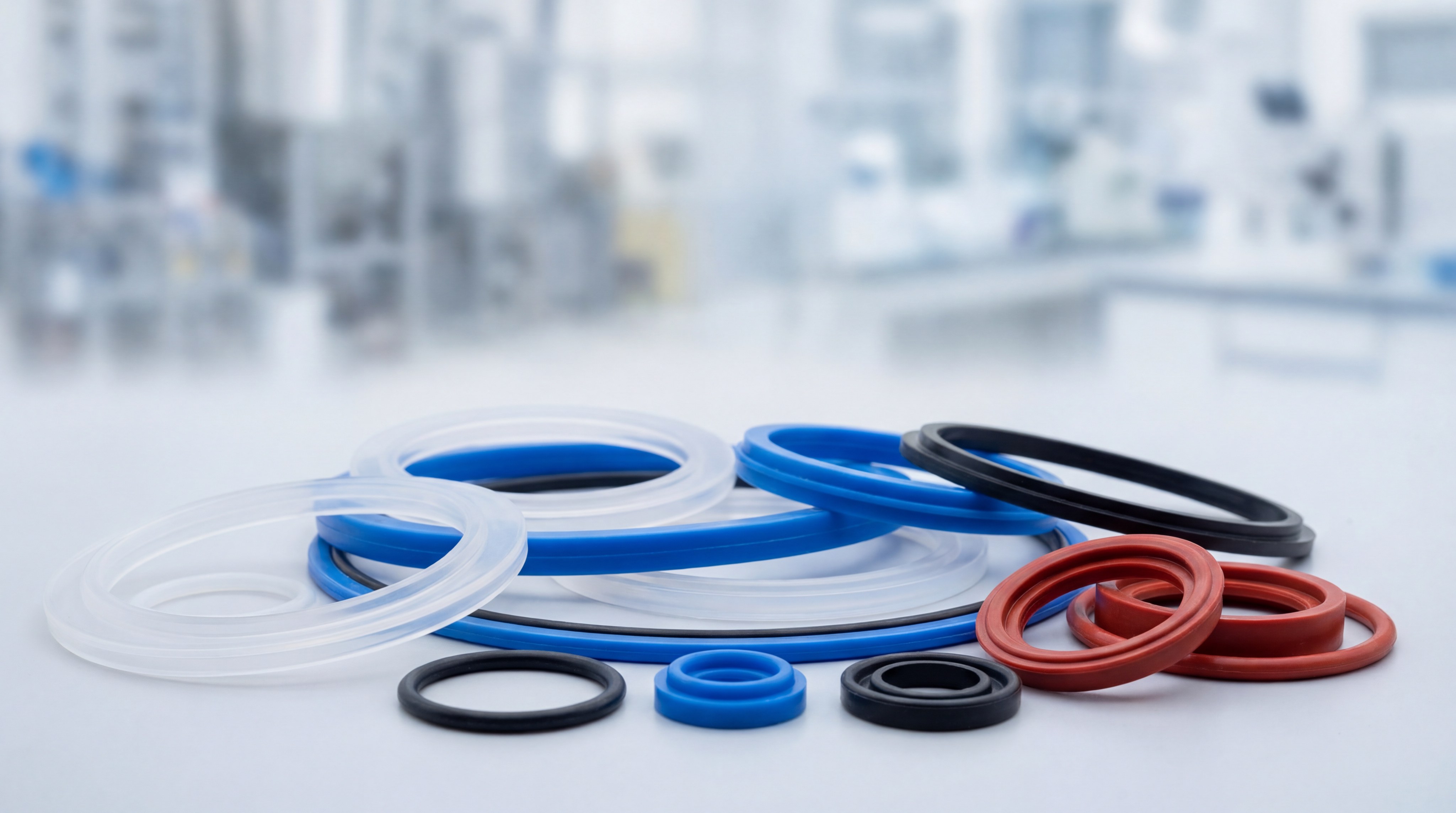
Industries requiring durable, heat-resistant, and chemically stable components find Silicone Compression Molding to be an essential manufacturing tool. You will see these parts in the automotive sector as high-temp gaskets and in the medical field as biocompatible seals. The process is also a staple for consumer goods, particularly for items that require a soft-touch feel and long-term durability.
Is it used in medical devices?
Medical device manufacturers use this method to produce high-purity components like tubing connectors and keypad covers. You can rely on the material’s biocompatibility and resistance to sterilization processes like autoclaving.
Here is the kicker…
- Automotive O-rings provide reliable sealing against oil and fuel.
- Consumer electronics utilize silicone for protective sleeves and grips.
- Aerospace applications benefit from extreme temperature stability.
Key Takeaway: Cross-industry adoption proves the reliability and safety of silicone parts produced via compression.
| Industry | Typical Application | Key Requirement |
|---|---|---|
| Automotive | Engine Gaskets | Oil/Heat Resistance |
| Consumer | Phone Cases | Impact Absorption |
| Industrial | Vibration Mounts | Mechanical Damping |
The wide range of applications demonstrates how silicone compression adapts to the functional needs of various technical sectors.
How can you optimize molding costs?
You can optimize the costs of Silicone Compression Molding by maximizing cavity count and reducing the manual labor involved in deflashing. Since labor for trimming flash is a major cost driver, designing parts with clean parting lines is essential for your bottom line. You should also consider batch sizes, as larger runs spread the setup fees across more units.
Does cavity count matter?
Increasing the number of cavities in a mold lowers your per-unit price by producing more parts in a single press cycle. You must balance this against the initial tooling cost to find the optimal return on investment.
Believe it or not…
- Standardizing part sizes can allow for shared mold bases.
- Automated deflashing equipment can replace manual labor for high volumes.
- Using pre-colored silicone eliminates the need for secondary painting.
Key Takeaway: Strategic design and volume planning are the most effective ways to lower your total cost of ownership.
| Optimization Strategy | Cost Impact | Production Impact |
|---|---|---|
| Multi-Cavity Tooling | Higher Capex | Lower Unit Cost |
| Flash Minimization | Lower Labor | Faster Throughput |
| Material Selection | Varied Material Cost | Functional Performance |
Implementing these strategies ensures your procurement remains competitive without sacrificing the quality of the molded parts.
What quality standards should you expect?
High-quality manufacturing requires the shop to follow ISO 9001:2015 standards to ensure every part meets your exact dimensional specifications. You should look for a partner like us—learn more about us—who performs 100% inspection on critical features. Purity of material is also vital, especially for medical or food-contact applications where contamination is not an option.
How is part flash managed?
Flash is managed through precision mold design and careful control of the material volume placed in each cavity. You can expect high-quality parts to have minimal, uniform flash that is easily removed without damaging the part’s surface.
But wait, there’s more…
- First Article Inspection (FAI) reports confirm tool accuracy.
- Durometer testing ensures consistent material hardness.
- Cleanroom production prevents environmental particulates from entering the rubber.
Key Takeaway: Rigorous quality protocols prevent costly product recalls and ensure long-term field reliability.
| Quality Metric | Standard | Importance |
|---|---|---|
| Dimensional | ISO 3302-1 | Fit and Function |
| Material | FDA / RoHS | Safety Compliance |
| Process | ISO 9001 | Supply Consistency |
These metrics provide the transparency and trust necessary for successful B2B manufacturing partnerships.
How to design for silicone compression molding?
To design successfully for Silicone Compression Molding, you must factor in material shrinkage, which can range from 2% to 4% depending on the grade. You should also avoid deep undercuts that make it difficult to remove the cured part from the mold without tearing. Simple, symmetrical designs typically yield the highest success rates and the lowest defect percentages.
Why factor in shrinkage?
If you ignore shrinkage, your final parts will be smaller than the intended design, leading to assembly failures. Your engineering team should work closely with the mold maker to oversize the cavity correctly.
Here is the kicker…
- Uniform wall thickness prevents warping during the cooling phase.
- Large radii on corners improve material flow and part strength.
- Draft angles assist in the easy release of parts from the tool.
Key Takeaway: Early collaboration between designers and manufacturers prevents expensive tooling revisions later in the project.
| Design Element | Recommended Approach | Reason |
|---|---|---|
| Wall Thickness | Constant/Uniform | Prevent Distortion |
| Corners | Rounded/Radiused | Better Material Flow |
| Parting Line | Flat/Simple | Easier Deflashing |
Following these design principles leads to a more efficient production cycle and higher-quality silicone components.
Is this method right for your project?
This method is right for your project if you need robust, thick-walled parts and want to avoid the high entry costs of liquid injection. You can explore our full silicone rubber molding capabilities to see how we handle custom industrial requirements. It is the gold standard for durable gaskets, protective covers, and high-performance seals that don’t require extreme microscopic precision.
How do you start production?
You start production by submitting your 3D CAD files and material requirements for a professional manufacturability review. Once the design is validated, the mold is fabricated, and samples are provided for your final approval.
But that’s not all…
- Fast-track prototyping allows for functional testing in weeks.
- Scalable production paths grow with your business needs.
- Expert engineering support guides you through material selection.
Key Takeaway: Compression molding offers a balanced path of low risk, low cost, and high durability for most B2B silicone needs.
| Project Scope | Recommended Method |
|---|---|
| Bridge Production | Compression Molding |
| Large Industrial Seals | Compression Molding |
| High-Precision Micro-Parts | LSR Injection |
Identifying your project’s primary driver—cost, volume, or precision—will lead you to the correct manufacturing decision.
*
Conclusion
Silicone Compression Molding remains a vital manufacturing pillar for B2B teams seeking reliable, cost-effective silicone solutions. By understanding the balance between tooling simplicity and material performance, you can navigate production challenges with confidence. Whether you are developing medical seals or automotive gaskets, the flexibility of HCR material and the economy of compression tools provide a clear advantage. If you are ready to move from design to delivery, contact us today to discuss your specific project requirements with our expert team.
Frequently Asked Questions
Can I use this for complex geometries?
Compression molding is best for simpler shapes; however, moderate complexity can be achieved with multi-plate molds. For extremely intricate parts with thin walls, we usually recommend LSR injection.
What’s the best way to reduce flash?
The best way is through precision-engineered preforms and well-designed overflow grooves. Ensuring the mold plates are perfectly parallel and clamping pressure is sufficient also helps significantly.
How do I know if my material is FDA grade?
You should always request a Certificate of Analysis (COA) from your manufacturer. Pure silicone will not turn white when pinched or twisted, which is a common sign of cheap fillers.
Can I produce multi-color parts easily?
Yes, it is possible through manual overmolding where a cured part is placed into another mold with a different color, though this increases labor and per-unit price.
What’s the best batch size for this?
Typically, batches ranging from 500 to 10,000 units are the “sweet spot” for balancing tooling investment with the manual labor costs associated with this process.