
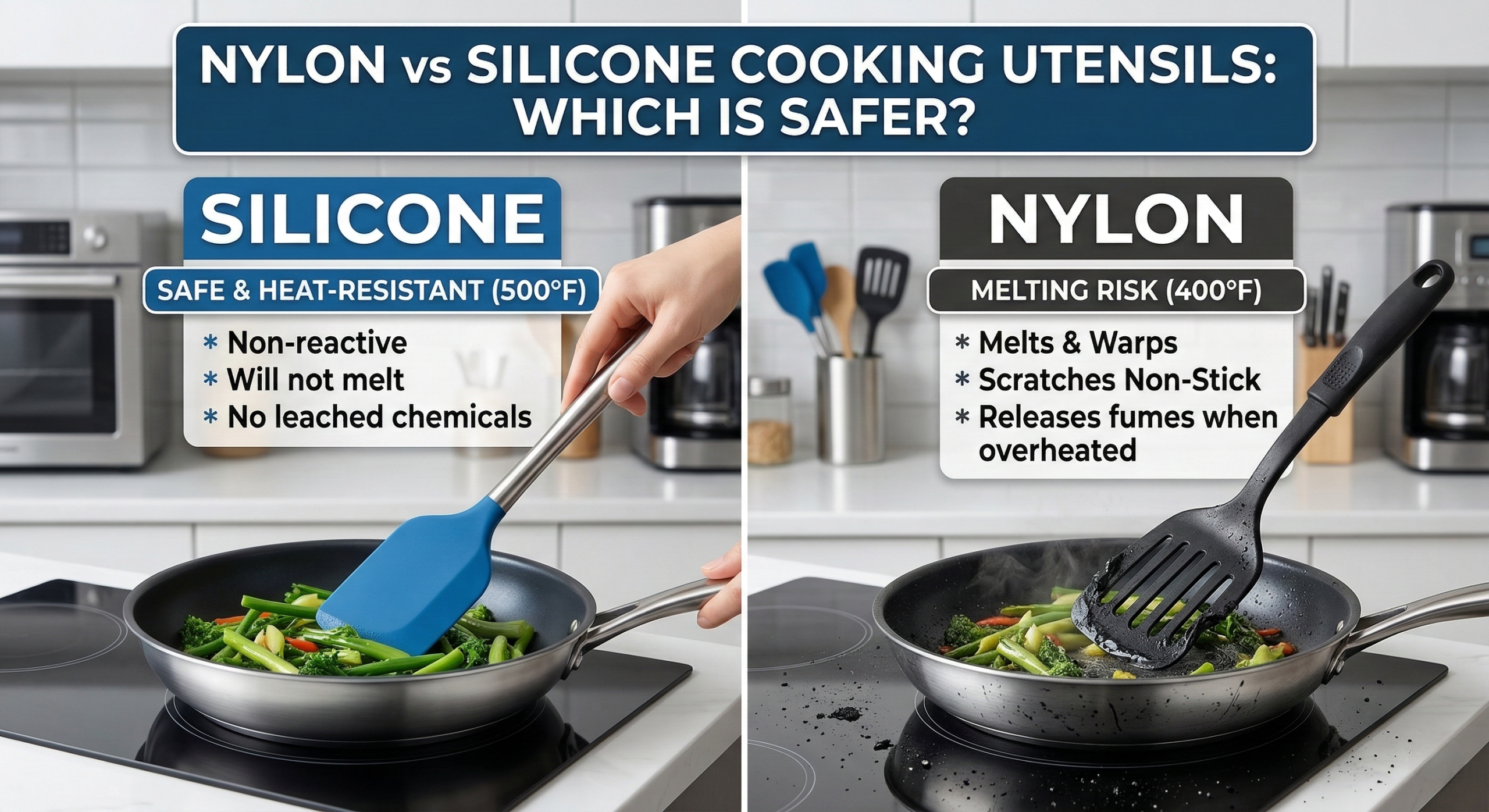
Silicone is the safer choice for modern kitchens because it offers superior heat resistance and remains chemically inert under high temperatures. Many home cooks struggle with melting spatulas that ruin expensive pans, often wondering if those black plastic bits in their food are dangerous. This worry is justified, as the wrong material can leach toxins into your family’s meals during every sauté. The solution lies in choosing high-quality Silicone kitchen utensils safe for daily use, ensuring durability without health risks.
Is silicone safer than nylon for cooking?
Silicone is significantly safer than nylon because it is non-reactive and does not leach toxic chemicals like BPA or phthalates into food. Choosing Silicone kitchen utensils safe ensures that your tools won’t degrade when exposed to acidic ingredients or high heat.
Why is chemical stability important?
Chemical stability prevents molecular migration into your food, which is a major concern with synthetic polymers. Here is the truth: Not all plastics are created equal when they face a hot stove.
- Silicone is stable up to 500°F without leaching.
- Nylon begins to soften and release fumes at much lower thresholds.
- Silicone does not harbor bacteria due to its non-porous surface.
Key Takeaway: Silicone provides a chemically inert cooking surface that protects food purity and family health.
| Material | Chemical Leaching Risk | Porosity | Safety Rating |
|---|---|---|---|
| Silicone | Very Low | Non-porous | Excellent |
| Nylon | Moderate | Slightly porous | Fair |
Analysis: Silicone’s inert nature makes it the clear winner for maintaining food safety and hygiene.
What is the heat resistance of nylon vs silicone?
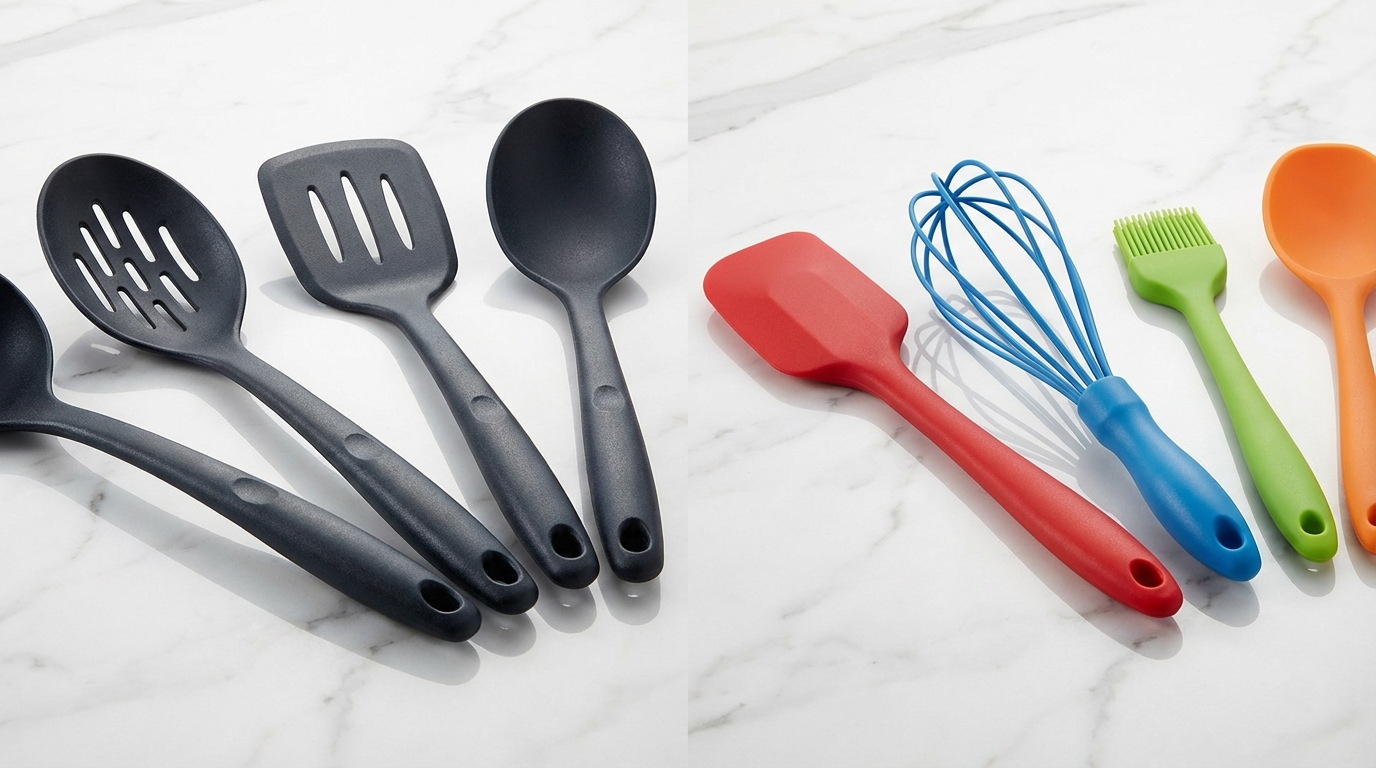
Silicone handles temperatures up to 500°F (260°C), while nylon often begins to melt or warp at approximately 400°F (204°C). Ensuring your Silicone kitchen utensils safe performance means you can leave a spatula in a hot pan without fear of a molten mess.
Can nylon utensils melt in the pan?
Yes, nylon spatulas frequently melt at the tips if left resting against the edge of a hot skillet. Think about this: A pan can reach 400°F in just a few minutes of preheating.
- Silicone maintains its shape in boiling oil or hot pans.
- Nylon can develop “fuzzy” edges that flake into food.
- Heat-resistant silicone prevents handle burns and tool deformation.
Key Takeaway: Silicone’s high melting point prevents structural failure and food contamination during high-heat cooking.
| Property | Silicone Threshold | Nylon Threshold |
|---|---|---|
| Melting Point | ~500°F | ~400°F |
| Structural Integrity | Remains flexible | Becomes brittle |
Analysis: The 100-degree safety margin of silicone is critical for preventing accidental melting in professional and home kitchens.
Are nylon utensils toxic when they melt?
Nylon utensils can release hazardous substances like formaldehyde and melamine if they reach their melting point. Using Silicone kitchen utensils safe products eliminates the risk of ingesting these harmful volatile compounds.
What chemicals are in nylon?
Nylon 6,6 often contains stabilizers and dyes that are not always food-safe when heated beyond their limits. Here’s the deal: When plastic smells like it’s burning, it’s already releasing toxins.
- Formaldehyde is a known respiratory irritant found in melted nylon.
- Melamine migration is a documented risk with overheated nylon tools.
- Silicone emits no toxic fumes even at its maximum temperature.
Key Takeaway: The thermal degradation of nylon poses specific chemical risks that silicone simply does not have.
| Toxin Risk | Silicone | Nylon |
|---|---|---|
| Formaldehyde | None | High Risk if melted |
| BPA/Phthalates | None | Potential in low-quality sets |
Analysis: Silicone’s lack of toxic byproduct release during overheating makes it the only responsible choice for health-conscious cooks.
Which material lasts longer in a busy kitchen?
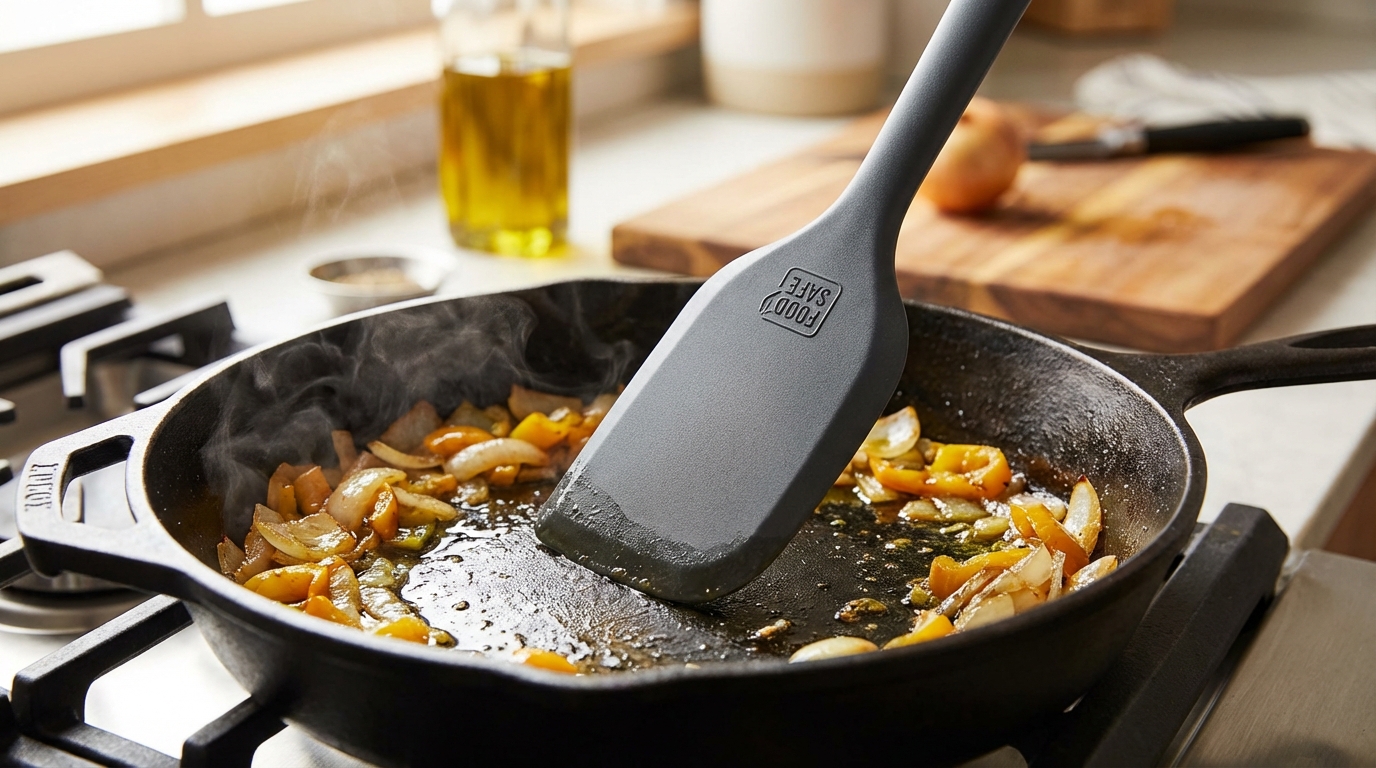
Silicone is significantly more durable because it is flexible and resistant to the cracking and staining that plagues nylon. While many consider Silicone kitchen utensils safe for years, nylon tools often need replacement every few months due to wear and tear.
Does nylon crack over time?
Yes, repeated exposure to heat and water causes nylon to lose its plasticizers, leading to surface cracking. But that’s not all: Durability is also about maintaining the tool’s original performance over time.
- Silicone does not become brittle after repeated dishwasher cycles.
- Nylon often develops cracks where bacteria can grow.
- The flexibility of silicone prevents snapped handles or chipped edges.
Key Takeaway: Investing in silicone reduces long-term costs and waste through superior material longevity.
| Durability Factor | Silicone Performance | Nylon Performance |
|---|---|---|
| Stress Cracking | Highly Resistant | Prone to cracking |
| Texture Change | Stays smooth | Becomes rough/pitted |
Analysis: Silicone’s ability to remain supple and intact after hundreds of uses provides better value and safety than disposable nylon.
How do these materials affect non-stick pans?
Silicone is the gentlest material for non-stick surfaces, whereas rigid nylon can eventually micro-scratch delicate coatings. Using Silicone kitchen utensils safe tools preserves the life of your expensive PTFE or ceramic cookware.
Will nylon scratch Teflon?
While generally safe, old or damaged nylon with burrs can definitely leave visible scratches on Teflon. You might be wondering: If both are “plastic,” does it really matter which one I use?
- Silicone is soft enough to “squeegee” a pan without friction.
- Nylon’s hardness can wear down non-stick layers over time.
- Silicone tools prevent the release of pan-coating chemicals caused by scratching.
Key Takeaway: Silicone acts as a protective barrier for your cookware, preventing the mechanical damage that ruins non-stick properties.
| Cookware Interaction | Silicone | Nylon |
|---|---|---|
| Scratch Risk | Zero | Low to Moderate |
| Scraping Efficiency | High (flexible) | Moderate (rigid) |
Analysis: Protecting the integrity of pan coatings is a secondary safety benefit of using soft silicone tools.
Is silicone safer for baby food preparation?
Silicone is the gold standard for baby food because it is hypoallergenic, odorless, and completely free of hormonal disruptors. Parents choose Silicone kitchen utensils safe options to ensure that no microplastics or chemicals interfere with their child’s development.
Why choose silicone for infants?
The soft texture prevents gum injuries, and the material’s purity is unmatched by any synthetic plastic. It gets better: Silicone is often used in medical environments because it is incredibly easy to sterilize.
- BPA, PVC, and Lead-free by nature.
- Does not retain odors from previous meals.
- Can be boiled or steam-sterilized without damage.
Key Takeaway: For sensitive applications like infant feeding, silicone is the only material that guarantees chemical purity.
| Safety for Babies | Silicone | Nylon |
|---|---|---|
| Hypoallergenic | Yes | No |
| Sterilization | High Temp (Boil) | Limited (Warm wash) |
Analysis: Silicone’s biocompatibility makes it the superior choice for the most vulnerable members of the household.

Which is easier to clean and maintain?
Silicone is much easier to maintain due to its naturally non-stick, non-porous surface that repels food and oils. Finding Silicone kitchen utensils safe sets that are dishwasher compatible saves significant time in cleanup.
Are nylon utensils dishwasher safe?
Most are, but the high heat of a dishwasher speeds up the degradation and “whitening” of nylon. Believe it or not: A “clean” looking tool can still be covered in a biofilm if the material is porous.
- Food slides off silicone with minimal scrubbing.
- Nylon often requires soaking to remove burnt-on residues.
- Silicone does not stain from tomato sauce as easily as nylon.
Key Takeaway: Silicone’s non-porous nature ensures a higher level of sanitation with less effort.
| Cleaning Factor | Silicone | Nylon |
|---|---|---|
| Dishwasher Resistance | Excellent | Poor (causes brittleness) |
| Odor Retention | Negligible | Moderate |
Analysis: Silicone simplifies kitchen hygiene by providing a surface that is fundamentally hostile to bacterial growth.
What are the environmental impacts of each?
Silicone has a lower environmental impact over time because its extreme durability prevents the frequent disposal common with nylon. While neither is biodegradable, choosing Silicone kitchen utensils safe products reduces the volume of kitchen waste heading to landfills.
Is silicone more eco-friendly?
Yes, because it is more durable and does not shed microplastics into the water system during washing. Here is the kicker: Sustainability is often measured by how many times you don’t have to buy a replacement.
- Silicone tools can last 10+ years in active kitchens.
- Nylon tools often fail within 1-2 years due to melting.
- Silicone is made from silica (sand), which is an abundant resource.
Key Takeaway: Long-term durability is the most effective form of kitchen sustainability.
| Eco-Metric | Silicone | Nylon |
|---|---|---|
| Product Lifespan | Very Long | Short |
| Resource Base | Silica (Sand) | Petroleum (Oil) |
Analysis: The extended lifecycle of silicone products makes them the “slower” and more responsible choice for the environment.
Do professional chefs prefer nylon or silicone?
Professional chefs almost exclusively prefer silicone for high-heat tasks and delicate finishing work. They recognize Silicone kitchen utensils safe properties as essential for maintaining consistent results in high-pressure environments.
Why do pros use silicone spatulas?
They allow for precision scraping and can move from a cold bowl to a hot pan without a second thought. The reason is simple: Professionals cannot afford tools that fail in the middle of a dinner rush.
- Silicone spatulas are better for “cleaning” a bowl.
- Nylon is often too rigid for folding delicate mixtures.
- Heat-proof handles of silicone tools prevent workplace injuries.
Key Takeaway: Silicone’s versatility and reliability have made it the industry standard for modern gastronomy.
| Professional Use | Silicone Preference | Nylon Preference |
|---|---|---|
| Precision Scraping | 100% | 0% |
| High-Heat Sauté | 90% | 10% |
Analysis: The shift in professional kitchens toward silicone validates its status as the superior material for performance and safety.
How can you tell if your utensils are safe?
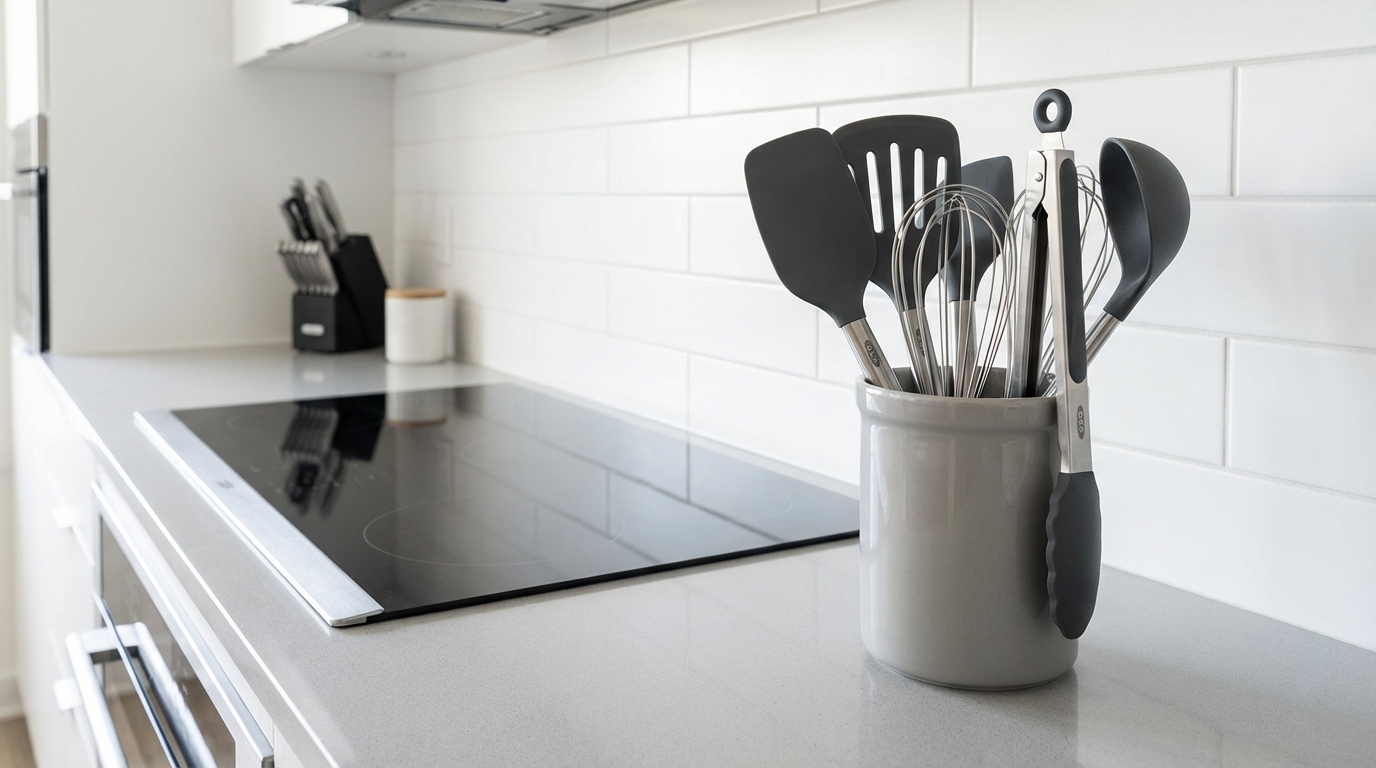
Safe utensils should be labeled as “100% Food Grade Silicone” and carry FDA or LFGB certification stamps. Always verify that your Silicone kitchen utensils safe claims are backed by reputable manufacturer testing and high temperature ratings.
How to test material quality?
High-quality silicone should be heavy and firm, not flimsy or exceptionally lightweight like thin plastic. Look for this: The “pinch test” can reveal if a silicone tool contains cheap fillers.
- Twist or pinch the silicone; if it turns white, it has fillers.
- Pure silicone stays the same color when stretched.
- Check for a smooth, matte finish rather than a shiny surface.
Key Takeaway: Quality verification is the final step in ensuring your kitchen remains a toxin-free zone.
| Verification Method | Pass Result | Fail Result |
|---|---|---|
| Pinch Test | Color stays uniform | Turns white |
| Certification | FDA/LFGB Symbol | No markings |
Analysis: Buying from certified manufacturers is the only way to guarantee that the “silicone” you use is actually food-safe.
*
Conclusion
Choosing the right cooking tools is about more than just aesthetics; it is a critical decision for your family’s health and kitchen efficiency. We have explored how silicone outperforms nylon in heat resistance, chemical safety, and long-term durability. By switching to high-quality silicone, you eliminate the risks of melting plastic and toxic leaching in your home. At HuaLin Silicone, we are dedicated to manufacturing premium, food-grade solutions that meet the highest global standards. To upgrade your kitchen or source custom components, contact us today.
FAQ
Can I use silicone utensils in an air fryer?
Yes, silicone is perfectly safe for air fryers as long as the temperature does not exceed its 500°F rating.
What’s the best way to remove odors from silicone?
Baking clean utensils in an oven at 250°F for 20 minutes effectively “off-gasses” any trapped food molecules.
Can I put nylon utensils in the microwave?
No, because nylon can develop “hot spots” and melt quickly, potentially leaching chemicals into your food.
What’s the best brand of silicone for safety?
Look for products made by ISO-certified manufacturers that use 100% food-grade or medical-grade raw materials.
How do I know if my spatula is BPA-free?
Pure silicone is inherently BPA-free, but you should verify this by checking for FDA certification on the packaging.