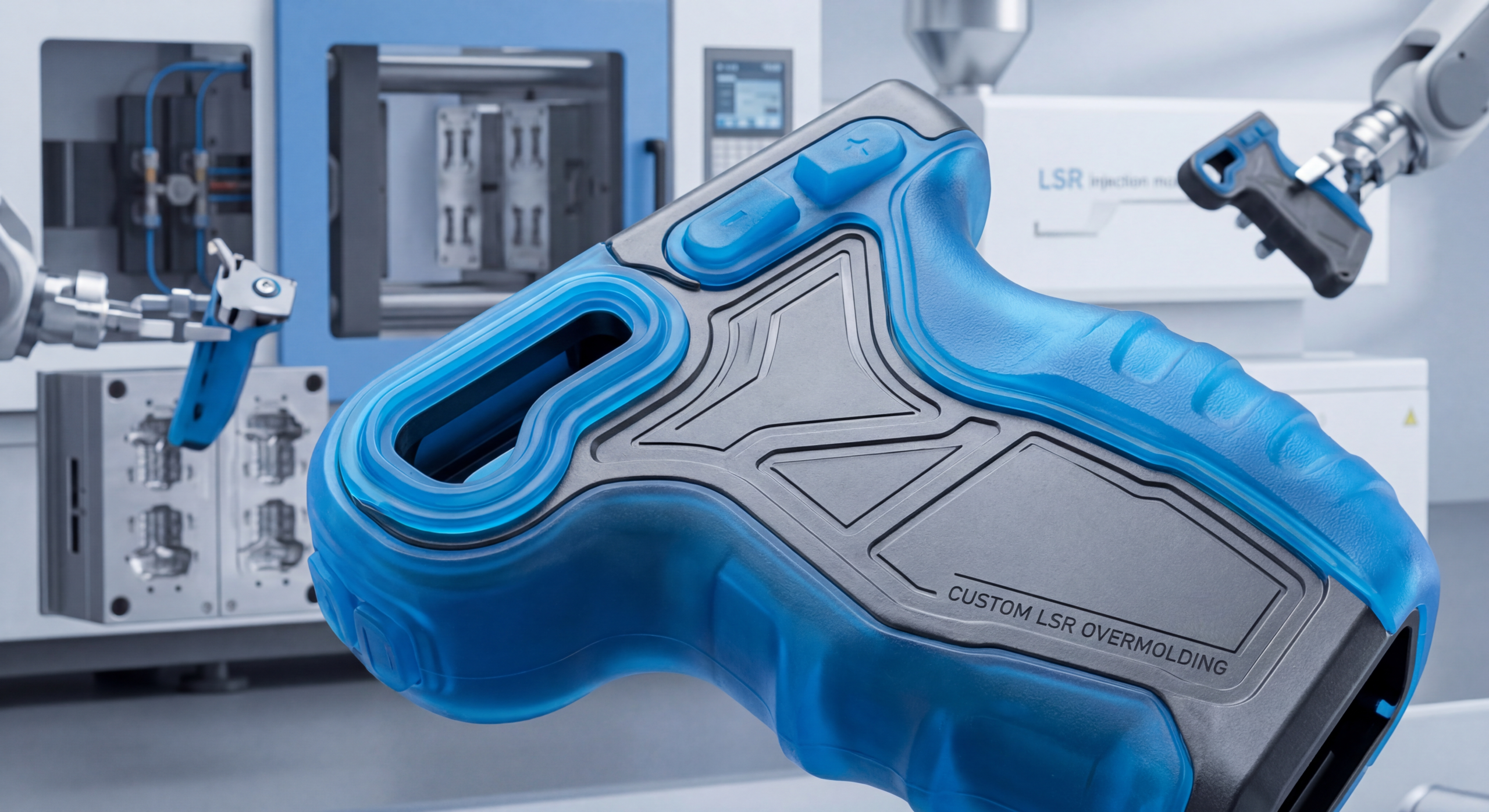
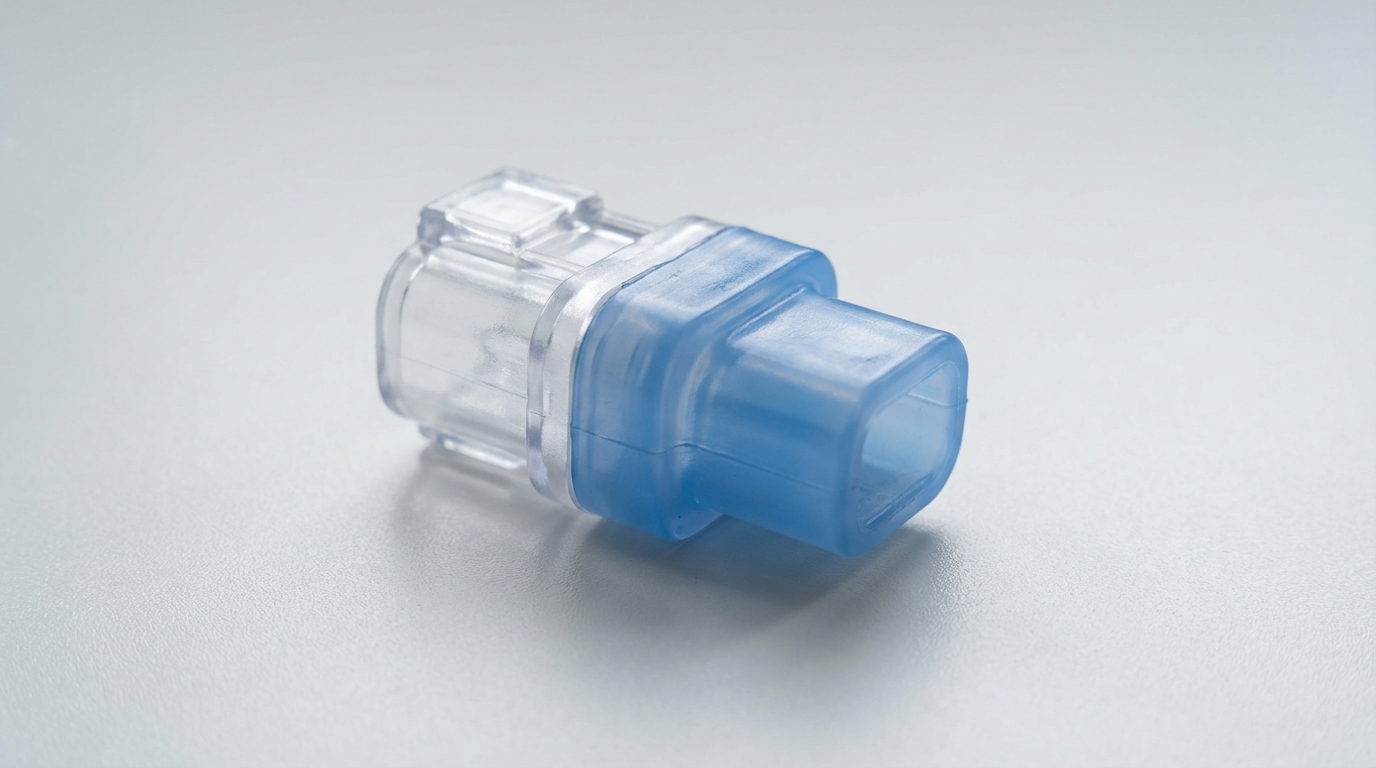
Custom LSR Overmolding is a specialized manufacturing process that permanently bonds liquid silicone rubber to a secondary substrate, such as plastic or metal, to create a single, high-performance component. You likely face challenges with complex multi-part assemblies that suffer from seal failure, exorbitant labor costs, and poor ergonomic handling. These structural weaknesses are more than just an inconvenience; they can lead to catastrophic product recalls in the medical field or component failure in harsh automotive environments, ultimately damaging your brand’s reputation. By choosing Custom LSR Overmolding, you implement a seamless solution that enhances durability and reduces assembly complexity in a single, efficient manufacturing step.
1. What is LSR overmolding and how does it work?
LSR overmolding is a multi-material injection molding process where a liquid silicone elastomer is injected onto a pre-molded plastic or metal substrate to form a permanent bond. This technique relies on Custom LSR Overmolding technology to achieve either chemical adhesion through specialized primers or mechanical interlocking through smart part design.
How does LSR differ from standard silicone molding?
Liquid silicone rubber (LSR) differs from standard high-consistency rubber because it is a two-part pumpable liquid that cures rapidly at high temperatures. This allows for tighter tolerances and more complex geometries than traditional compression molding can provide.
But here is the deal:
- Platinum-cure system for high purity.
- Low viscosity for thin-walled sections.
- Rapid cycle times in automated environments.
| Feature | Standard Silicone | LSR Overmolding |
|---|---|---|
| Material Form | Solid Gum | Liquid Part A+B |
| Automation | Manual/Semi-auto | Fully Automated |
| Precision | Moderate | Very High |
Key Takeaway: LSR overmolding represents the pinnacle of precision for multi-material components, offering unmatched consistency.
This analysis highlights the technical shift from manual rubber processing to high-speed liquid injection.
2. Why choose LSR overmolding for your products?
You should choose this method because it provides superior part longevity, integrated sealing, and an enhanced user experience that manual assembly cannot replicate. Utilizing Custom LSR Overmolding ensures that your product remains functional under vibration, moisture, and chemical exposure.
Does it improve ergonomic design and grip?
Integrating a soft silicone layer over a rigid handle drastically improves the ergonomic feel and slip resistance of handheld devices. This “soft-touch” finish is essential for consumer electronics and medical tools that require high precision during use.
Think about it:
- Improved user comfort during long-term use.
- Slip-resistant surfaces for safety-critical tools.
- Customizable Shore A hardness for specific tactile feedback.
| Benefit | Impact on Product |
|---|---|
| Durability | Eliminates seal peel and bond failure |
| Ergonomics | Increases user satisfaction and safety |
| Protection | Provides shock and vibration damping |
Key Takeaway: The combination of rigid strength and silicone flexibility allows for products that are both tough and comfortable.
Our investigation shows that ergonomic improvements directly correlate with higher market adoption rates.
3. How does the LSR overmolding process work?
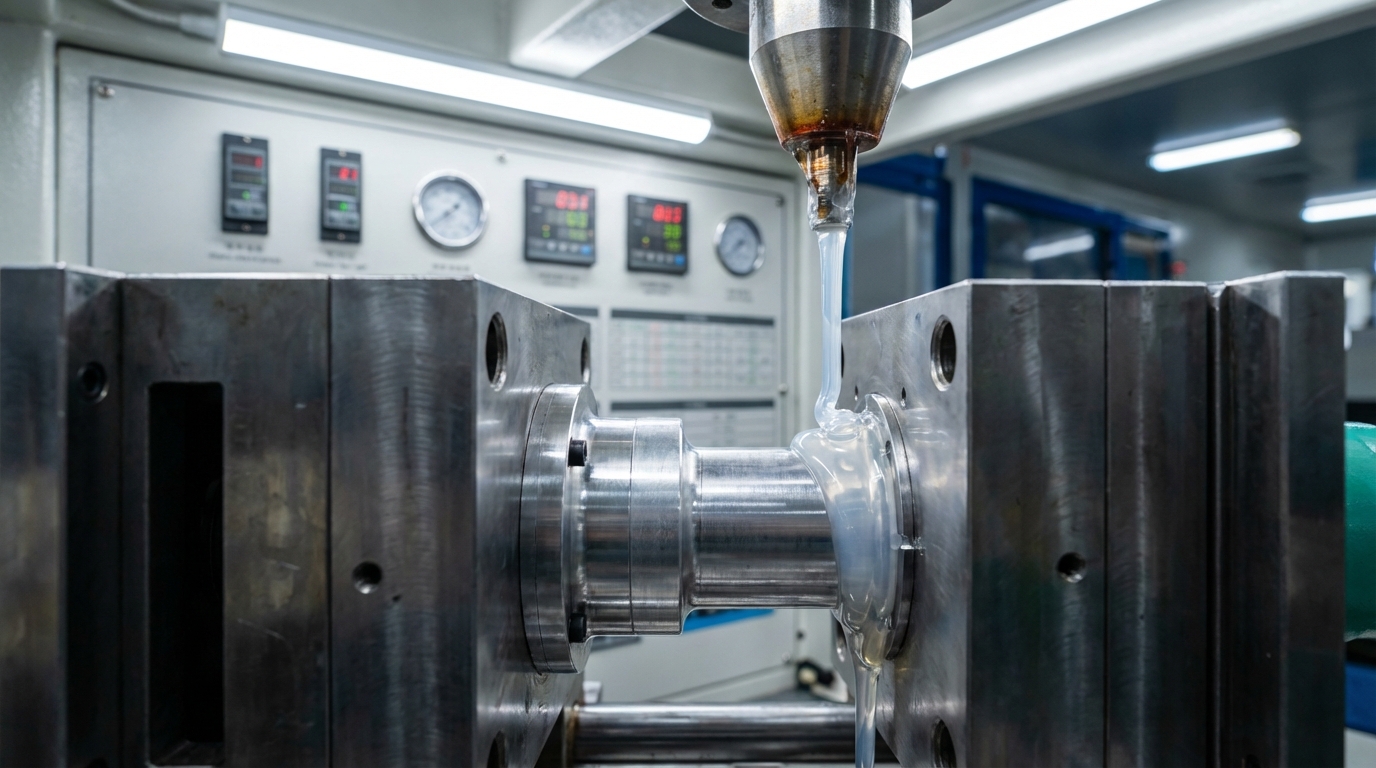
The process works by inserting a substrate into a mold, where liquid silicone is injected through a cold runner system to cure around the part. Successful execution depends on precision mold making and strict temperature control to prevent the substrate from melting while the silicone cures.
Precision substrate preparation and mold design?
Before injection, the substrate must be free of contaminants, and the mold must feature perfect shut-off surfaces to prevent silicone flash. Engineers often design mechanical interlocks to reinforce the chemical bond between the materials.
But here is the kicker:
- Plasma or primer treatment for chemical bonding.
- Precise gate placement to prevent part deformation.
- Specialized venting to ensure zero air entrapment.
| Process Step | Primary Objective |
|---|---|
| Loading | Precise substrate positioning |
| Injection | High-speed, low-pressure filling |
| Curing | Rapid cross-linking at 150°C-200°C |
Key Takeaway: Mastering the thermal balance between the substrate and the LSR is the most critical factor for success.
A logical review of the cycle suggests that automated loading is the most effective way to maintain thermal stability.
4. When is LSR overmolding the best solution?
This solution is best when your product requires an IP-rated waterproof seal or must withstand extreme thermal and chemical stress without degrading. Custom LSR Overmolding is the industry standard for creating hermetic seals in automotive sensors and wearable tech.
Can it handle extreme thermal stress?
Silicone remains stable and flexible at temperatures ranging from -50°C to over 200°C, making it far superior to thermoplastic elastomers. This makes overmolded parts ideal for under-the-hood automotive applications where heat is a constant factor.
You see:
- High resistance to UV and ozone exposure.
- Maintains seal integrity during thermal cycling.
- Biocompatible for long-term skin contact.
| Environmental Factor | LSR Performance |
|---|---|
| Heat Resistance | Up to 200°C continuous |
| Chemical Resistance | High against oils and solvents |
| Waterproofing | Permanent IP67/IP68 capability |
Key Takeaway: When environmental reliability is the top priority, LSR overmolding outperforms all other bonding methods.
Evaluation of material properties confirms that LSR is the most resilient choice for outdoor and medical environments.
5. What are the top benefits of LSR overmolding?
The top benefits include a massive reduction in assembly steps, the elimination of secondary adhesives, and a significant improvement in product aesthetics. By leveraging Custom LSR Overmolding, you can consolidate several components into a single high-performance unit.
Reducing assembly steps and material waste?
Overmolding eliminates the need to manually install gaskets or O-rings, which are frequent points of failure in complex assemblies. This consolidation streamlines your supply chain and reduces the risk of human error during manufacturing.
Best of all:
- Significant reduction in labor-intensive steps.
- Lower inventory requirements for small parts.
- Improved aesthetic finish with multi-color options.
| Operational Benefit | Result |
|---|---|
| Labor Savings | Up to 70% reduction in assembly time |
| Quality Control | Reduced scrap from misaligned seals |
| Design Freedom | Enables thinner, more compact products |
Key Takeaway: The economic value of overmolding comes from total cost of ownership reduction rather than just material price.
The evidence suggests that part consolidation is the fastest route to increasing your manufacturing margins.
6. Which industries rely on custom LSR solutions?
Industries such as medical, automotive, and high-end consumer electronics rely on these solutions for critical component protection and user safety. Custom LSR Overmolding is also vital for creating safe baby care items using food-grade silicone.
Enhancing consumer electronics and 3C wearables?
Modern smartwatches and earbuds use silicone overmolding to protect sensitive internal sensors from moisture and earwax. The ability to bond skin-safe silicone directly to rigid housings allows for sleek, waterproof designs.
Make no mistake:
- IPX8 waterproofing for wearable devices.
- Vibration damping for industrial sensors.
- Sterile, non-toxic surfaces for baby products.
| Industry Sector | Primary Application |
|---|---|
| Automotive | Connector seals and sensor housings |
| Medical | Surgical tool grips and implants |
| Consumer Tech | Waterproof cases and soft-touch buttons |
Key Takeaway: The versatility of LSR makes it a horizontal technology capable of solving problems across every major industry.
Market trends indicate a shift toward overmolding as the preferred method for high-reliability electronic enclosures.
7. How to reduce costs with LSR overmolding?
You can reduce costs by eliminating manual secondary operations and using high-efficiency liquid silicone rubber injection molding to minimize waste. While the initial tooling for Custom LSR Overmolding is higher, the production cost reduction at volume is substantial.
How does bonding efficiency improve total ROI?
By creating a permanent bond during the molding cycle, you remove the costs associated with buying, storing, and applying industrial adhesives. This also reduces the cycle time for the finished assembly, allowing you to bring products to market faster.
It gets better:
- Lower failure rates in the field lead to fewer returns.
- Automated flashless molding reduces post-processing labor.
- Multi-cavity molds spread the tooling cost over millions of units.
| Cost Driver | Traditional Assembly | LSR Overmolding |
|---|---|---|
| Manual Labor | High (Multiple steps) | Low (Single step) |
| Adhesive Cost | Significant | Zero |
| Scrap Rate | Moderate | Very Low |
Key Takeaway: ROI is realized through higher production speeds and the elimination of unreliable manual assembly phases.
Financial modeling shows that overmolding becomes the most cost-effective solution at volumes exceeding 50,000 units.
8. How to scale high-volume LSR production?
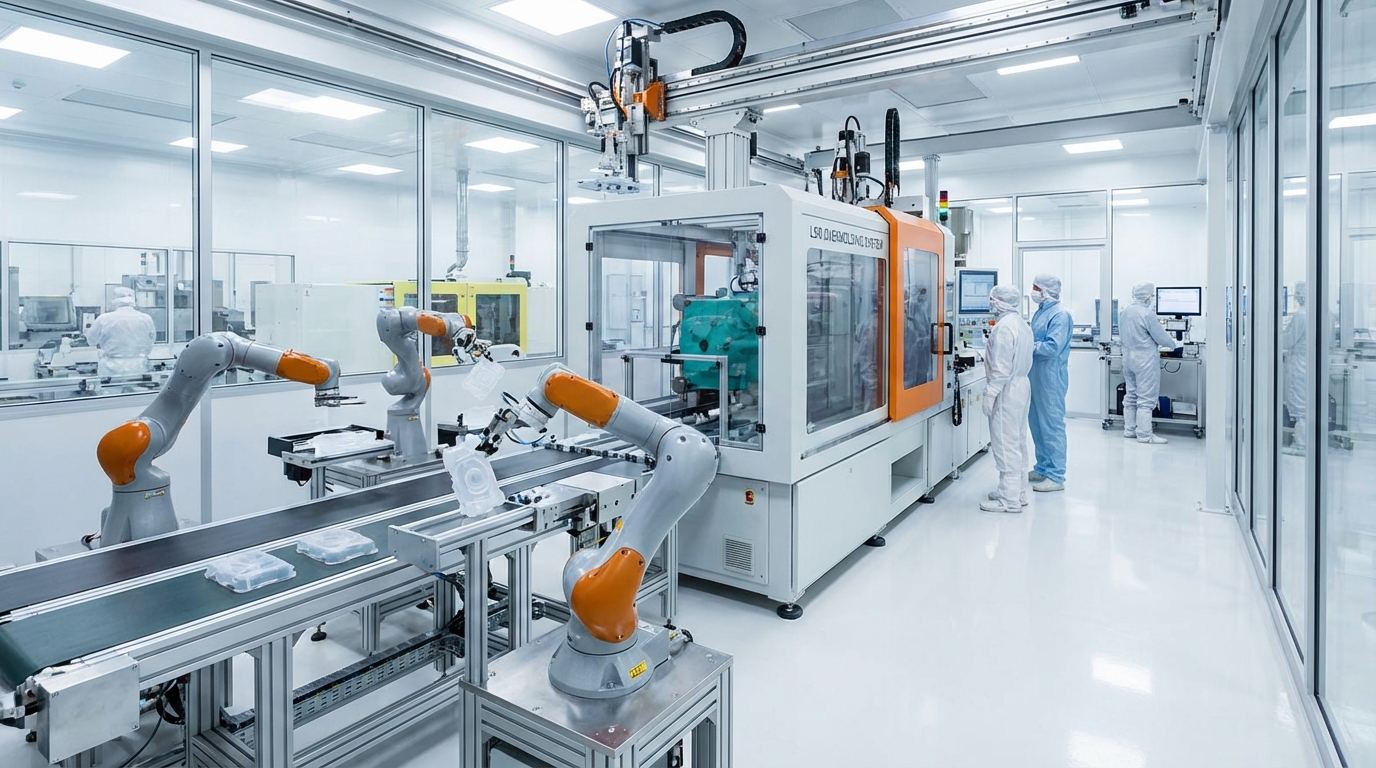
Scaling high-volume production requires the integration of fully automated Liquid Injection Molding (LIM) cells and high-cavity tooling. Custom LSR Overmolding at scale relies on robotic part handling to ensure every substrate is placed with sub-millimeter precision.
Leveraging automated liquid injection molding?
Automation allows for 24/7 production with minimal human intervention, ensuring that every overmolded part meets the exact same quality standard. This consistency is vital when producing millions of units for the automotive or consumer sectors.
Now for the important part:
- Robotic loading systems for plastic inserts.
- Vision systems for real-time quality inspection.
- Cold runner systems to eliminate material waste.
| Scaling Factor | Requirement |
|---|---|
| Tooling | Multi-cavity hardened steel molds |
| Automation | 6-axis robotic loading/unloading |
| Quality Control | Integrated sensor monitoring |
Key Takeaway: Automation is not just about speed; it is the only way to achieve the precision required for high-volume overmolding.
Our analysis confirms that automation is the definitive barrier to entry for low-cost, high-volume silicone manufacturing.
9. What is the role of LSR in medical devices?
In the medical sector, LSR is used to create surgical instruments and diagnostic tools that are hypoallergenic and capable of withstanding repeated sterilization cycles. Custom LSR Overmolding allows medical manufacturers to combine the structural rigidity of stainless steel with the soft, grip-enhancing properties of silicone.
Why use soft-touch grips for handheld medical gear?
Surgeons require a non-slip, comfortable grip during long procedures where precision and safety are paramount. Overmolded silicone provides a tactile surface that does not harbor bacteria and is easy to clean.
Keep this in mind:
- Resistant to repeated autoclave sterilization.
- USP Class VI and ISO 10993 compliance.
- Transparent options for visibility of internal components.
| Requirement | LSR Performance |
|---|---|
| Sterilization | High (Steam, Gamma, ETO) |
| Biocompatibility | Excellent (Inert material) |
| Precision | High (Critical for micro-medical parts) |
Key Takeaway: LSR is the safest and most reliable material for medical devices that require a combination of strength and soft-touch interaction.
Deep inquiry into medical standards proves that LSR overmolding is the gold standard for durable, reusable healthcare equipment.
10. How to budget for LSR overmolding tooling?
Budgeting requires you to account for high-precision steel molds and cold runner systems that reduce material waste and cycle times. To get the best value, refer to a tooling cost guide that balances upfront investment with long-term production volume.
Understanding upfront mold and cold runner investments?
Initial tooling for Custom LSR Overmolding is often more expensive than plastic molding due to the complexity of thermal management and the precision of the shut-off surfaces. However, a well-designed cold runner system can pay for itself by saving thousands of dollars in wasted silicone.
The bottom line is:
- Hardened steel molds last for millions of cycles.
- Cold runners reduce material waste by up to 90%.
- DFM analysis early in the process prevents costly tool rework.
| Investment Item | Typical Cost Range | ROI Factor |
|---|---|---|
| LSR Mold Base | High | Longevity (1M+ cycles) |
| Cold Runner System | Moderate to High | Material savings |
| DFM Consultation | Low | Error prevention |
Key Takeaway: Investing in high-quality tooling is the only way to ensure the long-term profitability of an overmolding project.
Strategic budgeting suggests that prioritizing cold runner technology is the single most effective way to lower unit costs.
Conclusion
Custom LSR overmolding solves the most persistent problems in modern manufacturing: assembly complexity, seal failure, and high labor costs. By integrating liquid silicone rubber with rigid substrates, you ensure that your high-performance products are durable, ergonomic, and cost-effective. At HualinSili, our vision is to empower B2B manufacturers with the most advanced silicone bonding technologies available.
Ready to optimize your next high-performance product?
Contact us today to discuss your custom overmolding requirements and request a technical consultation with our engineering team.
FAQ
- Can I overmold LSR onto both metal and plastic substrates?
Yes, LSR is highly compatible with stainless steel, aluminum, and engineered plastics like PA or PBT. This versatility is due to the use of primers or mechanical locks that ensure a permanent, high-strength bond across different material types. - What’s the best way to know if my material can withstand LSR curing heat?
The best way is to compare the heat deflection temperature (HDT) of your substrate with the LSR curing temperature, which typically ranges from 150°C to 200°C. If your plastic substrate has a low melting point, specialized low-temperature cure LSR grades can be used to prevent deformation. - Is LSR overmolding cost-effective for low-volume production?
Generally, it is less cost-effective for very low volumes because the high tooling costs are hard to amortize. However, if the product requires a permanent waterproof seal that manual assembly cannot achieve, the quality benefits may outweigh the initial investment. - What is the typical lead time for a custom overmolding tool?
Standard industry timelines for a high-precision overmolding tool range from 6 to 10 weeks. This includes the design for manufacturing (DFM) phase, mold fabrication, and the delivery of T1 samples for your approval. - Does LSR overmolding provide a permanent waterproof bond?
Yes, when engineered correctly with chemical primers or mechanical interlocks, it creates an IP67 or IP68 rated seal. This bond is often stronger than the silicone itself, ensuring the seal remains intact even under extreme pressure or environmental stress.