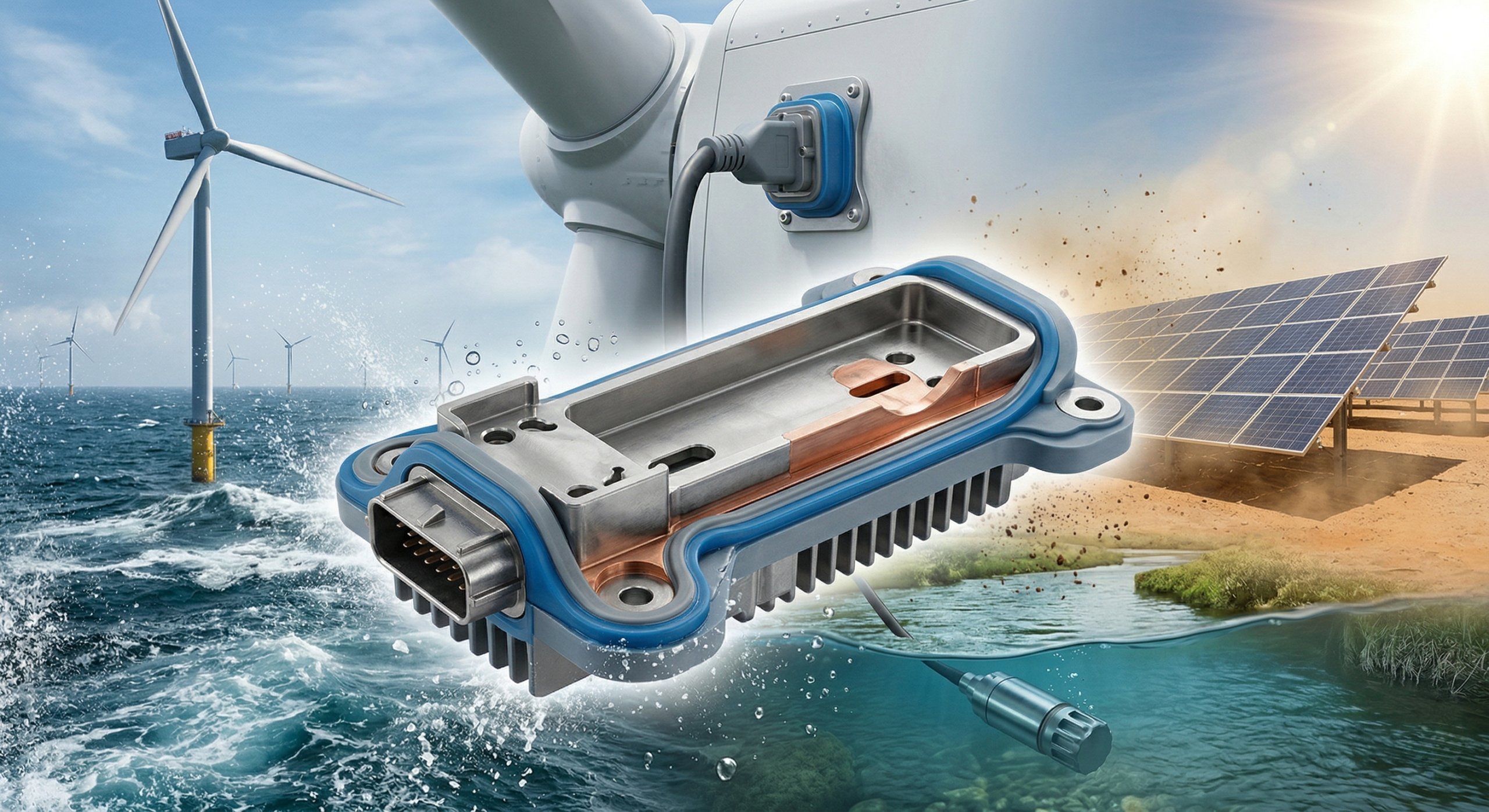
Custom Silicone Overmolding with metal inserts is essential for renewable energy because it provides a hermetically sealed, vibration-resistant barrier that protects critical electrical pathways from catastrophic environmental failure. You often face the daunting challenge of maintaining hardware in remote, harsh locations where salt spray, UV radiation, and extreme temperatures threaten system longevity. When standard seals fail, the resulting downtime and repair costs can quickly erode the return on investment for your green energy infrastructure. Custom Silicone Overmolding solves these issues by creating a permanent molecular bond between flexible silicone and rigid metal, ensuring your equipment operates reliably for decades.
What is silicone overmolding for renewable energy?
This specialized process involves injecting a liquid or high-consistency silicone elastomer over a pre-positioned metal component to create a single, high-performance part. Using Custom Silicone Overmolding, you can combine the structural strength and conductivity of metals like stainless steel or aluminum with the insulating properties of silicone.
The synergy of metal inserts and silicone
Think about this: the metal insert acts as the skeleton while the silicone serves as the protective skin.
- Stainless steel provides high mechanical strength for mounting.
- Copper inserts ensure optimal electrical conductivity.
- Silicone encapsulation prevents oxidation and chemical corrosion.
Here is the kicker: the chemical bond formed during the molding process prevents moisture from ever reaching the metal-silicone interface.
Why environmental sealing is non-negotiable
In the energy sector, “good enough” sealing leads to expensive grid failures.
- Achieving IP68 ratings is standard with precision overmolding techniques.
- Silicone remains stable under intense UV exposure and ozone.
- Material flexibility prevents cracking during extreme thermal cycling.
But wait, there is more: this technology allows for complex geometries that traditional gaskets simply cannot match.
| Feature | Metal Insert Purpose | Silicone Benefit |
|---|---|---|
| Structural | Rigid mounting points | Vibration damping |
| Protective | Impact resistance | UV/Chemical barrier |
| Functional | Electrical pathways | High-voltage insulation |
Key Takeaway: Understanding how metal and silicone integrate is the first step in designing failure-proof renewable energy components.
This analysis shows that the fusion of these two materials provides a multi-functional solution that addresses both mechanical and environmental stressors simultaneously.
Why is overmolding essential for energy equipment?
Reliability in renewable energy depends on components that can survive decades of exposure without degrading or losing their insulating properties. By choosing Custom Silicone Overmolding, you eliminate the weak points typically found in traditional mechanical assemblies.
Extending the lifespan of outdoor hardware
It gets even better: silicone maintains its physical properties from -60°C to over 200°C.
- Prevents the brittleness common in low-grade plastics.
- Resists the corrosive effects of salt spray in offshore environments.
- Provides a “soft touch” interface that reduces mechanical wear.
Here is the best part: you significantly reduce the frequency of field maintenance visits by using these integrated parts.
Reducing the risk of electrical short circuits
Safety is the highest priority when you are managing high-voltage renewable systems.
- Silicone is a premier dielectric material that prevents arcing.
- Overmolding eliminates air gaps where moisture might condense.
- Custom shapes ensure that high-voltage areas are perfectly isolated.
But wait, there is more: the encapsulation protects delicate electronic contacts from dust and insects.
| Risk Factor | Traditional Impact | Overmolding Solution |
|---|---|---|
| UV Exposure | Material degradation | UV-stable silicone skin |
| Vibration | Fastener loosening | Integrated damping |
| Moisture | Short circuits | Hermetic bonding |
Key Takeaway: Investing in overmolded components lowers the long-term cost of ownership by preventing the most common modes of hardware failure.
The evidence suggests that replacing mechanical seals with overmolded interfaces creates a more resilient system for long-term power generation.
How are wind turbines using encapsulated connectors?
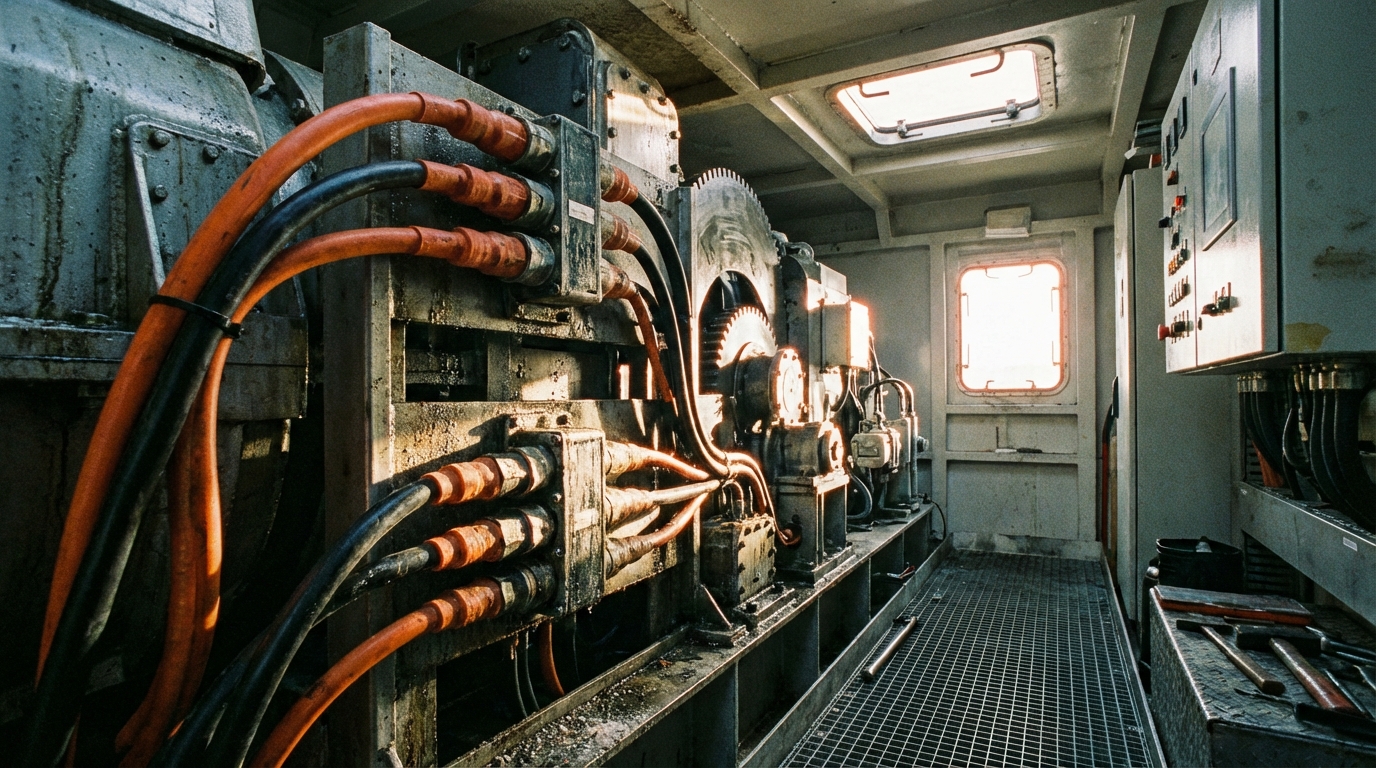
Custom Silicone Overmolding provides the airtight seal required for turbine components facing relentless vibration and corrosive salt spray. In wind energy, internal electronics must remain isolated from the external environment to prevent signal drift or total failure.
Corrosion resistance for offshore wind farms
Here is the kicker: salt creep can destroy electronic contacts in just a few months without proper protection.
- Stainless steel inserts offer the base corrosion resistance needed.
- Silicone overmolding covers exposed metal to prevent galvanic corrosion.
- Specialized grades resist the biofouling common in tidal or offshore zones.
Think about this: every hour of downtime on an offshore turbine costs thousands in lost revenue and specialized vessel hire.
Vibration damping in high-wind conditions
Wind turbines are subject to constant micro-vibrations that can fatigue traditional metal connectors.
- The elastomeric nature of silicone absorbs mechanical shocks.
- Prevents wires from rubbing against sharp metal edges inside the nacelle.
- Maintains seal integrity even when the turbine is under heavy load.
But wait, there is more: the silicone acts as a stress-relief boot for power cables.
| Wind Stressor | Connector Impact | Overmolding Result |
|---|---|---|
| Salt Spray | Contact oxidation | Hermetic exclusion |
| Vibration | Mechanical fatigue | Absorptive damping |
| Thermal Shift | Seal separation | Molecular bonding |
Key Takeaway: Wind energy reliability is directly linked to the integrity of the overmolded electrical interconnects and sensor housings.
High-performance overmolding ensures that the electrical nervous system of the turbine remains protected against the harshest offshore elements.
Can solar inverters benefit from thermal management?
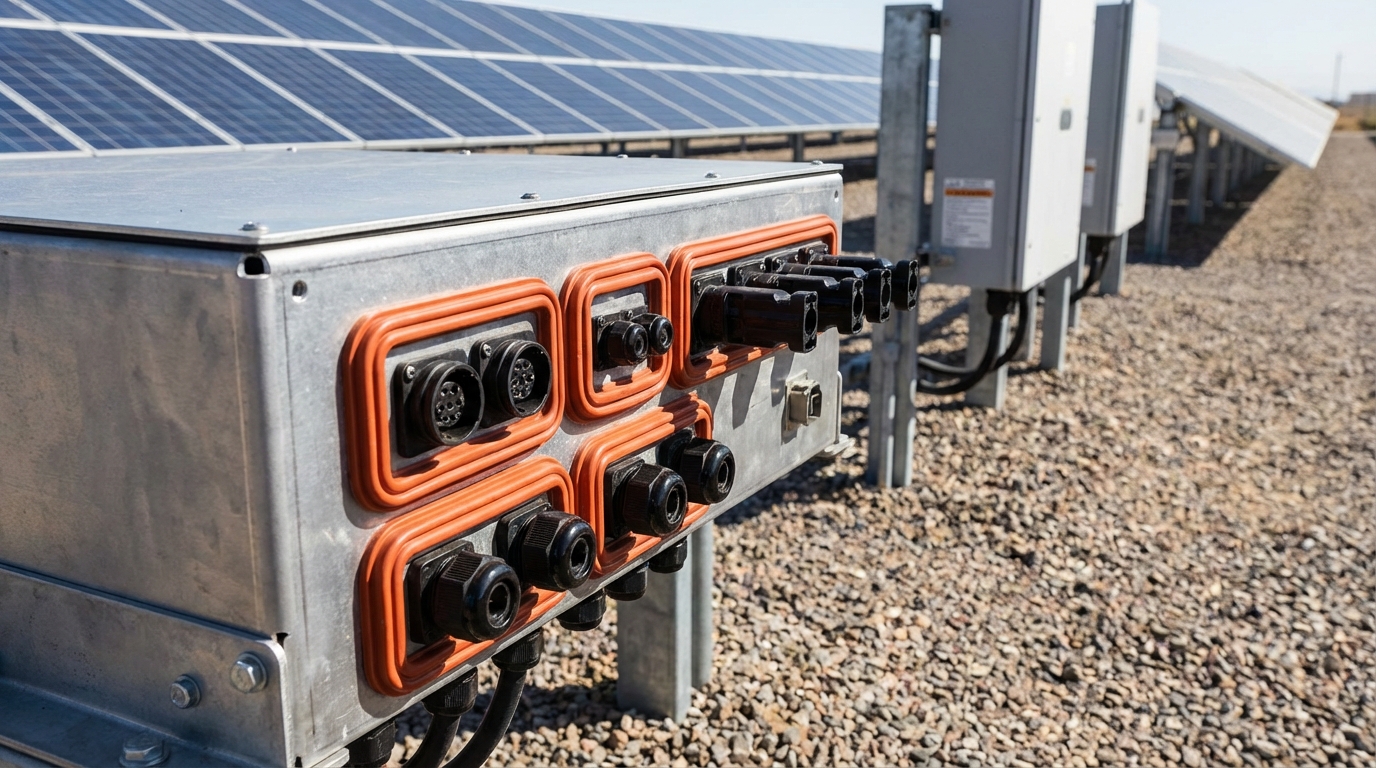
Integrating aluminum or copper inserts via Custom Silicone Overmolding allows solar inverters to shed heat faster while remaining protected from desert dust. Thermal stress is a leading cause of solar farm inefficiency, making effective heat dissipation a top priority for your design team.
Optimizing cooling with custom geometries
Here is the best part: you can mold specialized cooling fins directly into the silicone exterior.
- Thermally conductive silicone grades help transfer heat to the metal core.
- Custom shapes can fit into tight enclosures without sacrificing airflow.
- The metal insert acts as a heat sink for sensitive PCBs.
Think about this: improving heat dissipation by just a few degrees can extend the life of power electronics by years.
Protecting electronics from thermal shock
Desert solar arrays experience massive temperature swings between day and night.
- Silicone expands and contracts without losing its seal on the metal.
- Prevents the internal condensation that leads to board-level shorts.
- Acts as a buffer against rapid temperature fluctuations.
But wait, there is more: the silicone skin protects the inverter housing from abrasive sandstorms.
| Thermal Challenge | Traditional Issue | Overmolding Advantage |
|---|---|---|
| Heat Build-up | Efficiency loss | Metal-path conduction |
| Dust Ingress | Component failure | Fan-less, sealed design |
| UV Damage | Housing cracks | Stable elastomeric skin |
Key Takeaway: Effective thermal management through overmolding extends the peak performance window and reliability of solar power conversion systems.
By using thermally conductive materials, you can create a cooling solution that is both more effective and more durable than traditional fans.
Why use sealed housings for hydro power sensors?
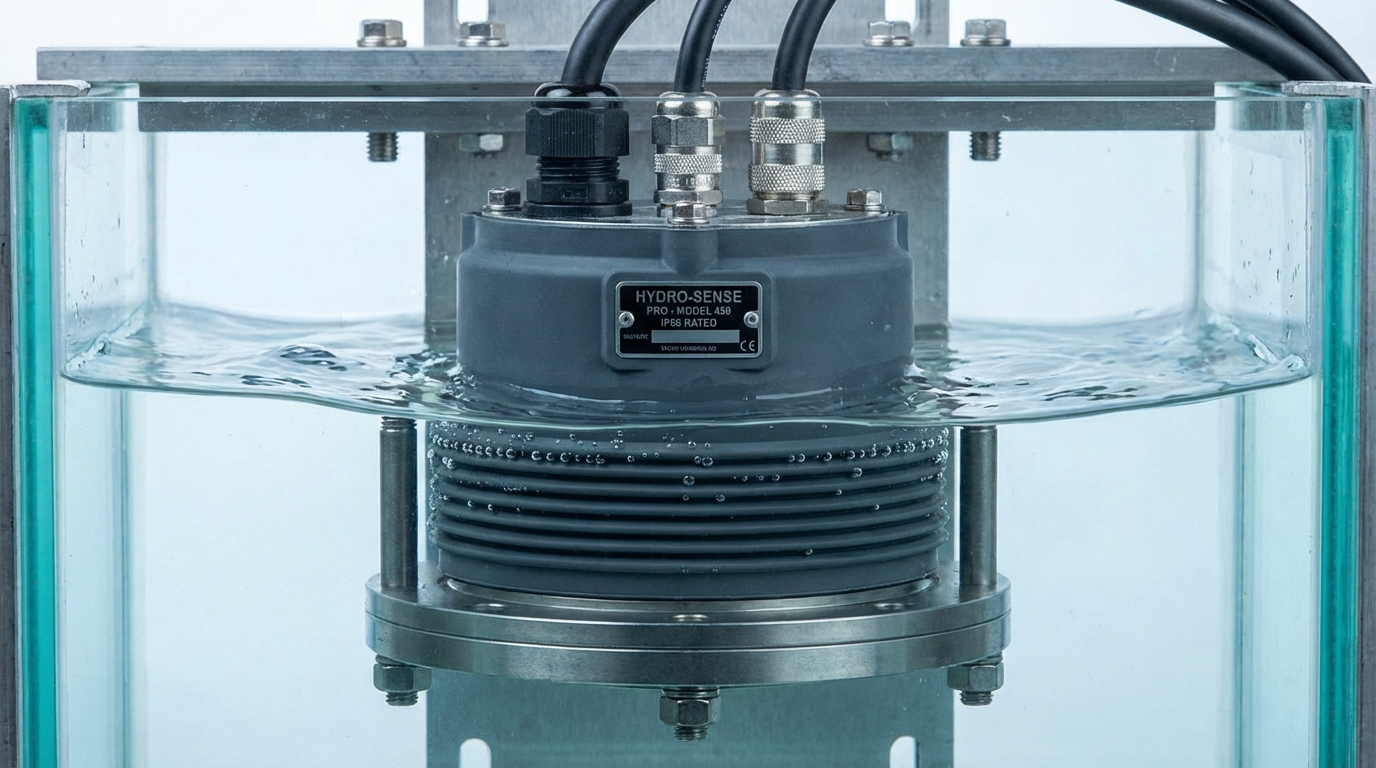
Hydro power sensors require hermetic seals that only a professional Custom Silicone Overmolding process can provide for long-term submersion. Accurate data is the lifeblood of dam management and tidal power generation, requiring sensors that never leak.
Underwater reliability and pressure resistance
Here is the kicker: hydrostatic pressure can force water into even the smallest microscopic gaps.
- Molecular bonding between silicone and metal eliminates these leak paths.
- Silicone maintains its seal at various depths and pressures.
- Resists the high-pressure spray found in turbine intake areas.
Think about this: a single sensor failure in a dam can lead to catastrophic miscalculations in water flow.
Maintaining accuracy in high humidity
Sensors located near hydro turbines operate in 100% humidity environments.
- Overmolding keeps internal electronics perfectly dry to prevent signal drift.
- Protects titanium or high-grade steel inserts from electrolytic corrosion.
- Resists the attachment of aquatic organisms like algae or barnacles.
But wait, there is more: the smooth silicone surface is much easier to clean during maintenance.
| Hydro Stressor | Component Risk | Overmolding Solution |
|---|---|---|
| Pressure | Seal compression | Integrated structure |
| Corrosion | Metal thinning | Full encapsulation |
| Moisture | Signal noise | High insulation barrier |
Key Takeaway: For hydro applications, precision overmolding is the difference between a functional sensor and a submerged, useless component.
The high-pressure environment of hydro plants demands a level of sealing that only molecular bonding can provide over the long term.
What design factors impact overmolding quality?
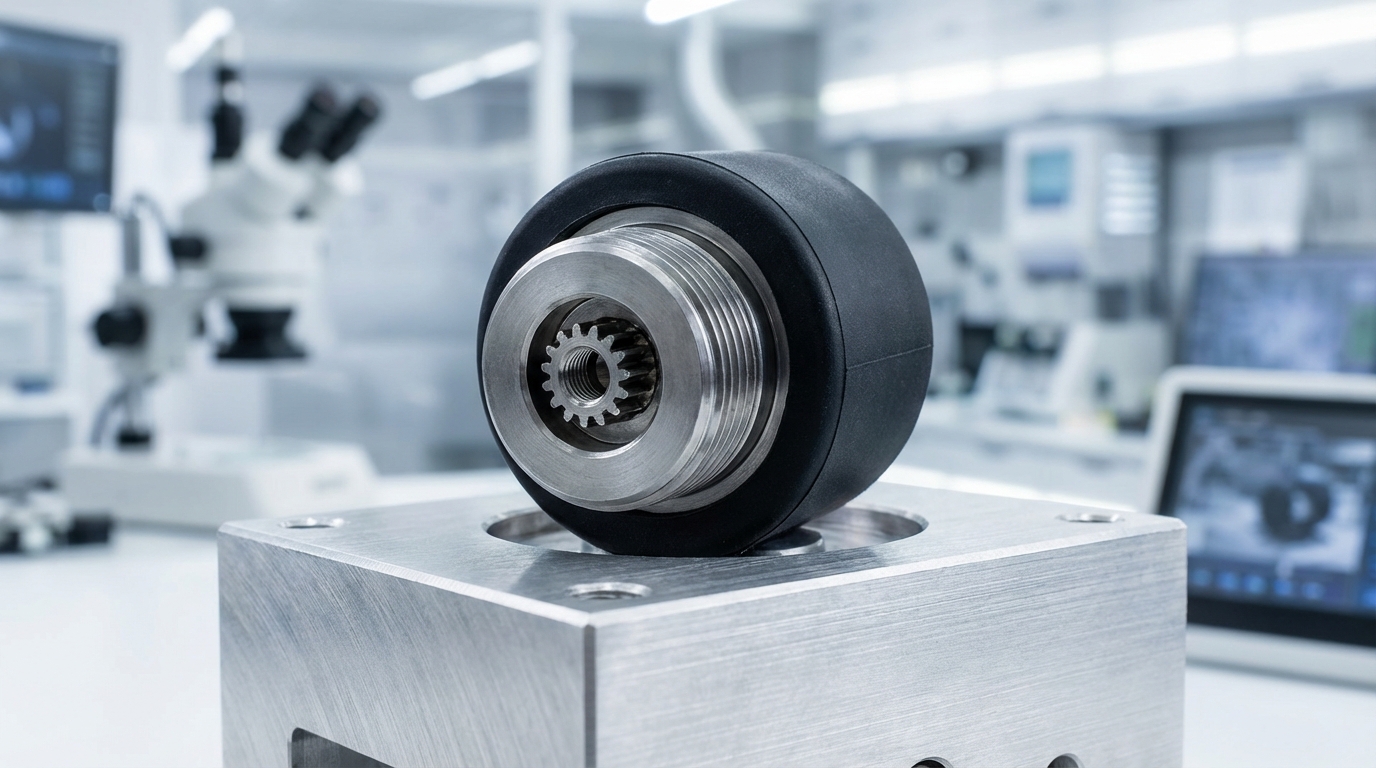
Successful Custom Silicone Overmolding starts with precise tool design that accounts for the different expansion rates of metal and silicone. You must ensure that your design allows for consistent material flow to avoid air pockets or weak spots in the bond.
Achieving the perfect molecular bond
Think about this: the bond strength is often determined by the preparation of the metal surface.
- Mechanical interlocking through undercuts provides extra security.
- Chemical primers are used to bridge the gap between silicone and metal.
- Proper cleaning protocols prevent oils from ruining the adhesion.
Here is the best part: a well-designed bond is often stronger than the silicone material itself.
Precision mold design for complex parts
Complex geometries in renewable energy require advanced mold flow analysis to ensure quality.
- Consistent wall thickness prevents sink marks and material stresses.
- Precision jigs lock the metal insert in place during high-pressure injection.
- Gates and vents must be placed to avoid trapping air in the cavity.
But wait, there is more: high-precision tooling reduces the need for secondary flash trimming.
| Design Factor | Requirement | Quality Metric |
|---|---|---|
| Bonding | Primer & undercuts | Peeling resistance test |
| Tolerances | Micron-level precision | CMM verification |
| Material Flow | Uniform thickness | Flash-free surface |
Key Takeaway: Design for Manufacturing (DFM) is the most critical phase for ensuring the longevity of overmolded energy parts.
Focusing on the interface between the metal and silicone during the design phase prevents premature failure in the field.
Which manufacturing processes deliver the best results?
High-quality outcomes for Custom Silicone Overmolding are usually achieved through advanced Liquid Silicone Rubber (LSR) injection or automated insert molding. Choosing the right process depends on your production volume and the complexity of the renewable energy component.
The advantages of Liquid Silicone Rubber
Here is the kicker: LSR offers faster cycle times and higher precision than traditional compression molding.
- Superior flowability allows for thin walls and intricate details.
- Automated systems ensure batch-to-batch consistency for mass production.
- Lower flash levels reduce waste and labor costs.
Think about this: using LSR molding allows for the high volumes required by global energy infrastructure projects.
Ensuring accuracy through automated placement
In high-stakes applications, even a 0.1mm shift in the metal insert can compromise the final seal.
- Robotic arms ensure the insert is positioned perfectly every time.
- Automated sensors detect if an insert is missing before the cycle begins.
- Closed-loop control systems maintain the perfect temperature and pressure.
But wait, there is more: secondary post-curing stabilizes the silicone properties for extreme environments.
| Process | Best Use Case | Benefit |
|---|---|---|
| LSR Molding | High volume, complex | Rapid, clean production |
| Compression | Large, simple parts | Lower tooling costs |
| Transfer | Medium complexity | Improved flow control |
Key Takeaway: The manufacturing process must be as precise as the design to ensure your components meet rigorous B2B standards.
Selecting a partner with advanced LSR capabilities ensures that your parts remain stable from the first prototype to full mass production.
How to select the right silicone for energy projects?
Choosing between standard and high-performance grades is critical for Custom Silicone Overmolding success in specialized energy niches. You must consider the specific environmental stressors of the installation site to select the optimal material hardness and chemical resistance.
Comparing silicone grades for energy use
Think about this: not all silicone is created equal when it comes to UV and chemical resistance.
- High-tear strength grades are needed for components under mechanical stress.
- Flame-retardant silicone is essential for battery storage modules.
- Conductive grades can assist with EMI shielding in communication parts.
Here is the best part: you can tailor the silicone formula to meet specific international safety standards.
Hardness and elasticity requirements
Selecting the right Shore A hardness determines how well a component will seal under pressure.
- Soft grades (40A) are better for complex seals and vibration damping.
- Harder grades (70A) provide better structural support for connectors.
- Elasticity ensures the part returns to its original shape after stress.
But wait, there is more: specialized additives can increase the thermal conductivity of the elastomer.
| Material Property | Target Range | Benefit |
|---|---|---|
| Hardness | 40A – 70A | Balanced sealing & rigidity |
| Tear Strength | High | Prevents splitting under load |
| Thermal Range | -60°C to 200°C | Extreme weather stability |
Key Takeaway: Material selection should be driven by the specific environmental stressors and mechanical loads of your installation.
Using high-grade LSR or HTV silicone ensures that your overmolded parts do not become brittle or lose their bond over time.
Why do ISO certifications matter for your supply chain?
Certifications like ISO 9001 and IATF 16949 guarantee that your Custom Silicone Overmolding partner follows strict quality management protocols. For B2B buyers in the energy sector, these certifications provide the documentation and traceability needed for large-scale infrastructure projects.
Traceability from raw material to part
Here is the kicker: in the event of a failure, you need to know exactly which batch of material was used.
- Full traceability ensures accountability across the entire supply chain.
- Batch records help identify potential issues before they hit the field.
- Documented testing protocols provide proof of performance.
Think about this: a certified partner reduces your risk of liability in critical infrastructure deployments.
Consistent mass production quality
ISO standards force a manufacturer to maintain a repeatable, controlled process for every single part.
- Statistical Process Control (SPC) prevents batch rejections.
- Automated optical inspection finds surface defects that humans miss.
- Regular audits ensure the factory remains clean and efficient.
But wait, there is more: certified manufacturers often have better access to high-quality raw material suppliers.
| Certification | Focus Area | Value to Buyer |
|---|---|---|
| ISO 9001 | Quality Management | Consistent production |
| IATF 16949 | Automotive/Energy | Advanced failure prevention |
| ISO 13485 | High Precision | Extreme accuracy |
Key Takeaway: Certification is not just a badge; it is a promise of repeatable, high-quality results for your critical energy parts.
By auditing your supplier’s certifications, you ensure that your green energy project is built on a foundation of quality and safety.
What are the top benefits for B2B energy firms?
B2B energy firms prioritize Custom Silicone Overmolding because it allows them to consolidate parts and simplify their assembly lines. By integrating gaskets, housings, and connectors into a single component, you can significantly reduce the complexity of your supply chain.
Radical simplification of the assembly line
Think about this: every fastener or separate gasket you eliminate is a potential leak point removed.
- Overmolded parts arrive ready to install without secondary sealing.
- Reduces the bill of materials (BOM) and purchasing complexity.
- Speeds up the final assembly time for inverters and turbine controllers.
Here is the best part: fewer separate parts mean less inventory to manage and fewer supplier handoffs.
Long-term ROI and brand reputation
Your reputation in the renewable sector depends on the reliability of your equipment over twenty years or more.
- Lower maintenance costs translate directly into higher project ROI.
- Fewer field failures protect your brand from negative reviews.
- High-quality components attract better financing for large projects.
But wait, there is more: custom colors and logos can be molded directly into the part for branding.
| B2B Advantage | Project Impact | Success Metric |
|---|---|---|
| Part Consolidation | Simplified BOM | 30% reduction in labor |
| Durability | Long service life | 20+ year reliability |
| Customization | Perfect fitment | Zero-leak performance |
Key Takeaway: The primary B2B advantage of overmolding is the radical simplification of the manufacturing and maintenance lifecycle.
Consolidating your design into overmolded components allows you to scale production faster while maintaining the highest possible quality standards.
The transition to global sustainable power requires components that are as resilient as the vision behind them. By utilizing high-performance overmolding, you solve the critical problems of environmental degradation, vibration damage, and moisture ingress that plague the renewable energy sector. HuaLin Silicone is dedicated to providing B2B partners with the precision engineering and manufacturing discipline needed to power the future safely. We bridge the gap between design and durability, ensuring that your solar, wind, or hydro equipment remains protected for its entire service life. To secure your supply chain with high-performance silicone solutions, contact us today for a comprehensive DFM review.
FAQ
Can I use custom colors for energy components to match brand guidelines?
Yes, we offer Pantone and RAL color matching. This ensures that functional parts like seals and connectors also align with your corporate identity without compromising UV stability.
What’s the best metal to use for inserts in offshore applications?
For saltwater environments, 316 stainless steel or titanium inserts are highly recommended. These materials, when paired with high-grade silicone, provide the ultimate defense against corrosion.
How do I know if the silicone will peel off the metal insert over time?
We use a combination of chemical primers and mechanical locking features like grooves or holes. This creates a bond that is often stronger than the silicone material itself, preventing delamination.
Can I use silicone overmolding for high-voltage battery storage?
Absolutely. Silicone has excellent dielectric properties and flame-retardant options. This makes it an ideal material for insulating busbars and connectors in large-scale energy storage systems.
What is the best way to ensure accuracy in a high-volume B2B order?
Choosing a manufacturer with automated LSR injection and robotic insert placement is the best strategy. This minimizes human error and ensures that every part in a large order is identical.