To choose the best partner, you must evaluate their engineering expertise, material certifications, and production capacity to ensure your specific application needs are met. Many industrial projects fail because a weak seal leads to leaks, pressure loss, or system contamination. This creates massive headaches for engineers who must then manage expensive recalls or unplanned maintenance cycles. Working with a dedicated ilicone Gasket Manufacturer provides the precision and reliability needed to protect your machinery and reputation.
What Are the Primary Functions of Custom Silicone Gaskets?
Silicone gaskets serve as compressible sealing devices designed to prevent leakage and preserve internal pressure between mating surfaces. Every professional ilicone Gasket Manufacturer knows that these components must withstand harsh environmental conditions while maintaining a perfect seal.
Which industrial applications require these seals?
These seals are ubiquitous in sectors where safety and durability are paramount.
- Automotive: Ensuring fluid-tight joints in engines.
- Medical: Providing biocompatible seals for surgical tools.
- Electronics: Waterproofing sensitive internal components.
Here is the secret: silicone is favored because it remains stable across extreme temperature ranges from -60°C to 230°C.
What are the main benefits of using silicone material?
Silicone offers incredible flexibility and chemical resistance compared to traditional rubber. This makes it the ideal choice for fluctuating surfaces or environments with constant vibration.
Key Takeaway: Understanding material capabilities helps you select a gasket that survives the unique stresses of your specific industry.
| Benefit | Description |
|---|---|
| Temperature Range | Withstands -60°C to 230°C without losing elasticity. |
| Durability | Resists UV rays, ozone, and harsh chemicals over time. |
| Compliance | Available in FDA, medical, and flame-retardant grades. |
Industrial durability depends heavily on matching material properties to environmental stressors.
Why Pick a Reliable ilicone Gasket Manufacturer for Your Project?
Selecting a reliable Silicone Gasket Manufacturer is critical because the quality of your finished product depends entirely on the integrity of the seal. A poor manufacturer might use low-grade materials that lead to premature failure and costly system downtime.
Avoiding the risks of poor material quality
Substandard gaskets often suffer from inconsistent dimensions or poor surface durability.
- Dimensional errors lead to immediate leakage issues.
- Surface peeling can contaminate fluid lines in medical systems.
- Poor compression sets result in seals that flatten over time.
But wait, there is more: a trusted partner uses traceable raw materials to guarantee performance.
How does manufacturer reputation impact your bottom line?
Reputation serves as a proxy for reliability, safety, and long-term operating value. Choosing a vetted supplier prevents the need for expensive reworks or field replacements.
Key Takeaway: Partnering with a reputable firm minimizes project risk and protects your long-term profit margins through quality assurance.
| Factor | Impact on Project |
|---|---|
| Material Grade | Prevents chemical degradation and seal leakage. |
| Manufacturing Process | Ensures tight tolerances for complex assemblies. |
| Traceability | Simplifies audits and regulatory compliance checks. |
Vetted manufacturing processes translate directly into lower total cost of ownership for your equipment.
How Important Is Industry Expertise in Your Manufacturer Search?
Industry expertise is vital because experienced suppliers can anticipate technical hurdles and suggest material optimizations specifically for your niche. An expert ilicone Gasket Manufacturer understands that a seal for a medical device has far stricter requirements than one used in basic consumer electronics.
Evaluating the supplier’s history in specialized fields
A manufacturer with deep roots in your industry will already have the necessary cleanroom facilities and certification protocols.
- Automotive: Suppliers understand IATF 16949 standards.
- Medical: Partners focus on ISO 13485 and biocompatibility.
- Electronics: Experts specialize in EMI shielding and thermal conductivity.
Think about this: why risk a prototype with a vendor who hasn’t solved your specific problem before?
Does the manufacturer understand medical or automotive needs?
Each industry has unique “failure modes” that only an expert can identify during the design phase.
Key Takeaway: Deep industry knowledge ensures your gaskets meet sector-specific regulations and functional performance benchmarks.
| Industry | Primary Requirement |
|---|---|
| Automotive | Durability under high heat and vibration. |
| Medical | Sterilization compatibility and non-toxicity. |
| Aerospace | Flame retardancy and lightweight properties. |
Specialized expertise acts as a safeguard against common engineering oversights during the prototyping stage.
Which Compliance Standards Should Your Manufacturer Meet?
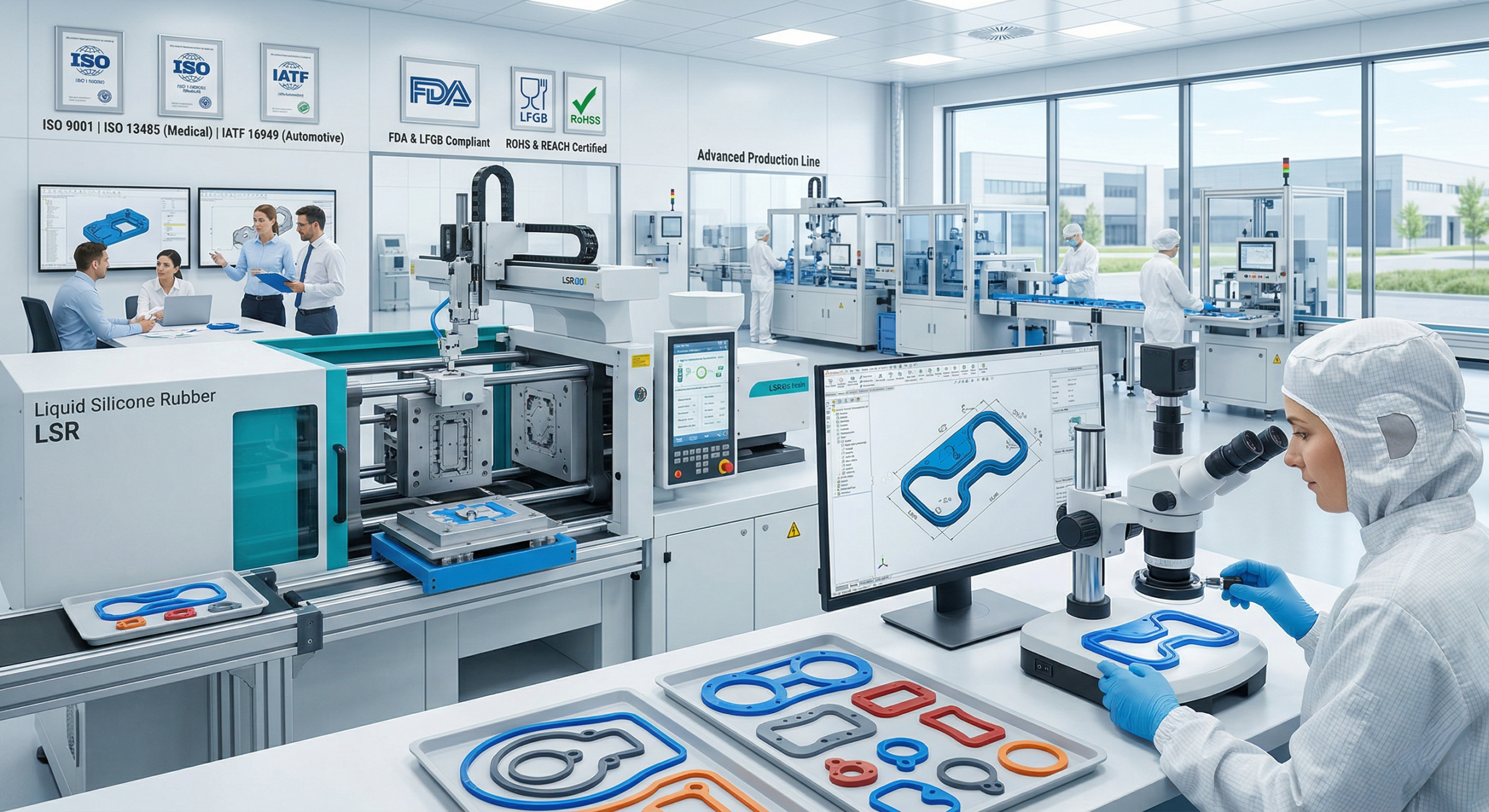
Your supplier must adhere to global quality and safety standards like ISO 9001 and FDA regulations to ensure product safety. Every professional Silicone Gasket Manufacturer should be able to provide documentation proving their materials are safe for their intended use.
Understanding the value of ISO 9001 and IATF 16949
These certifications prove that the factory maintains a repeatable and controlled manufacturing process.
- ISO 9001: General quality management excellence.
- IATF 16949: Specialized automotive supply chain discipline.
- ISO 13485: Required for high-precision medical components.
The reality is simple: without these certifications, you are gambling with your product’s safety.
Why are FDA, RoHS, and REACH certifications critical?
Chemical compliance ensures that your parts do not contain hazardous substances or leach toxins.
Key Takeaway: Compliance documentation protects you from legal liability and ensures your products can be exported globally without friction.
| Certification | Purpose |
|---|---|
| ISO 9001 | Guarantees consistent quality management systems. |
| FDA/LFGB | Ensures materials are safe for food and medical contact. |
| RoHS/REACH | Restricts hazardous chemicals for environmental safety. |
Rigorous certification standards provide the transparency needed for high-stakes industrial and medical procurement.
What Tech Skills Should an ilicone Gasket Manufacturer Have?
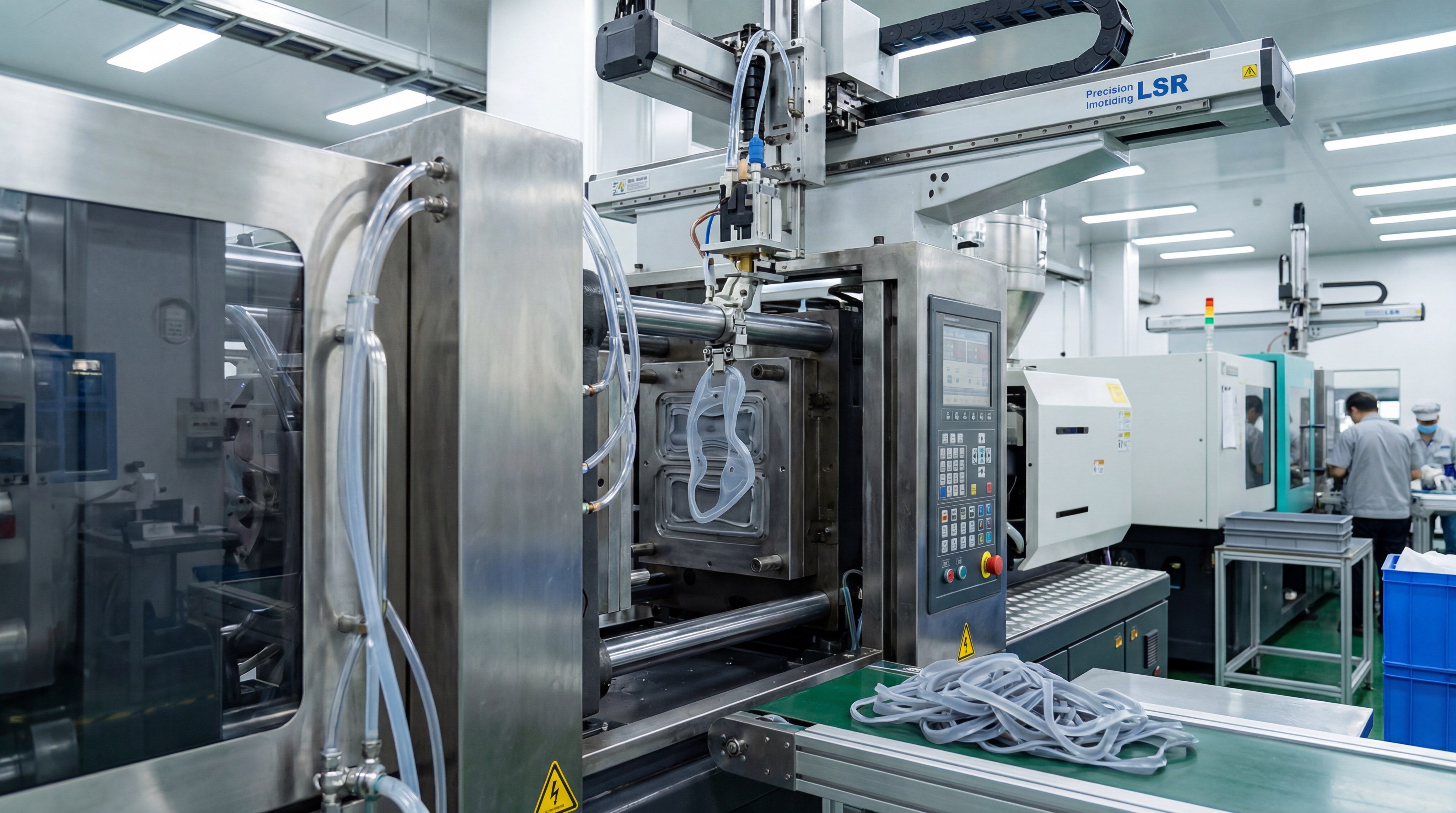
An advanced manufacturer should possess diverse capabilities such as LSR injection molding and in-house tooling to handle complex designs. A top-tier ilicone Gasket Manufacturer uses modern machinery to ensure every part is stable from the first prototype to mass production.
Examining LSR injection and compression molding options
Different project volumes and complexities require specific manufacturing routes.
- LSR Molding: Ideal for high-precision, high-volume automated runs.
- Compression Molding: Cost-effective for larger parts or lower volumes.
- Overmolding: Bonds silicone directly to plastic or metal inserts.
Here is a pro tip: Liquid Silicone Rubber (LSR) offers superior dimensional stability for intricate seals.
How does automated CNC machining improve precision?
Automated machining ensures that the mold cavities are identical, resulting in perfect part-to-part consistency.
Key Takeaway: Advanced technical capabilities allow for greater design freedom and significantly faster time-to-market for your products.
| Technology | Best Use Case |
|---|---|
| LSR Injection | Intricate, high-volume parts with tight tolerances. |
| Compression | Simpler geometries and cost-sensitive production. |
| Overmolding | Multi-component parts requiring integrated seals. |
Technological sophistication reduces the gap between complex engineering concepts and physical reality.
How Does a Quality Control System Protect Your Supply Chain?
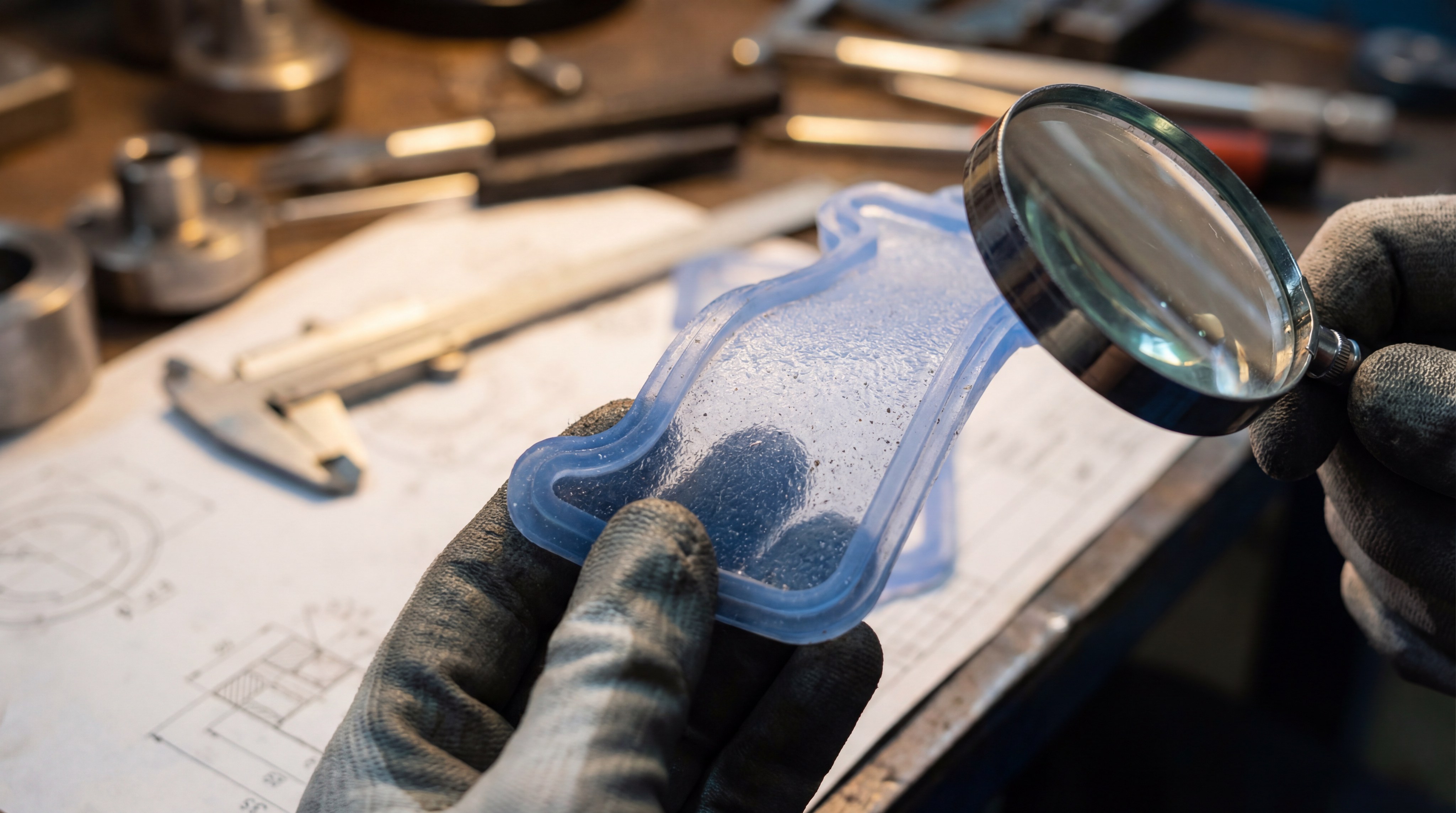
A robust quality control system prevents defective parts from reaching your assembly line, saving you from expensive production delays. A leading Silicone Gasket Manufacturer employs a three-stage inspection process to catch issues early.
What is involved in the IQC, IPQC, and FQC stages?
Systematic inspection ensures that quality is built into the part, not just checked at the end.
- IQC (Incoming): Verifying raw material purity and batch records.
- IPQC (In-Process): Patrol inspections and first-article approval.
- FQC (Final): Visual standards and dimensional verification before shipping.
It gets even better: real-time monitoring catches process drift before it results in a batch rejection.
Utilizing automated optical inspection for surface defects
Automated systems use cameras to find microscopic tears or debris that the human eye might miss.
Key Takeaway: Multi-stage quality control ensures that every shipment meets your exact specifications without the risk of batch failures.
| QC Stage | Primary Focus |
|---|---|
| Incoming | Material compliance and property testing. |
| In-Process | Dimensional accuracy and process stability. |
| Final | Aesthetic quality and packaging integrity. |
Standardized inspection protocols provide the data-driven assurance required for safety-critical component manufacturing.
Why Is Design for Manufacturing Support Vital for Custom Seals?
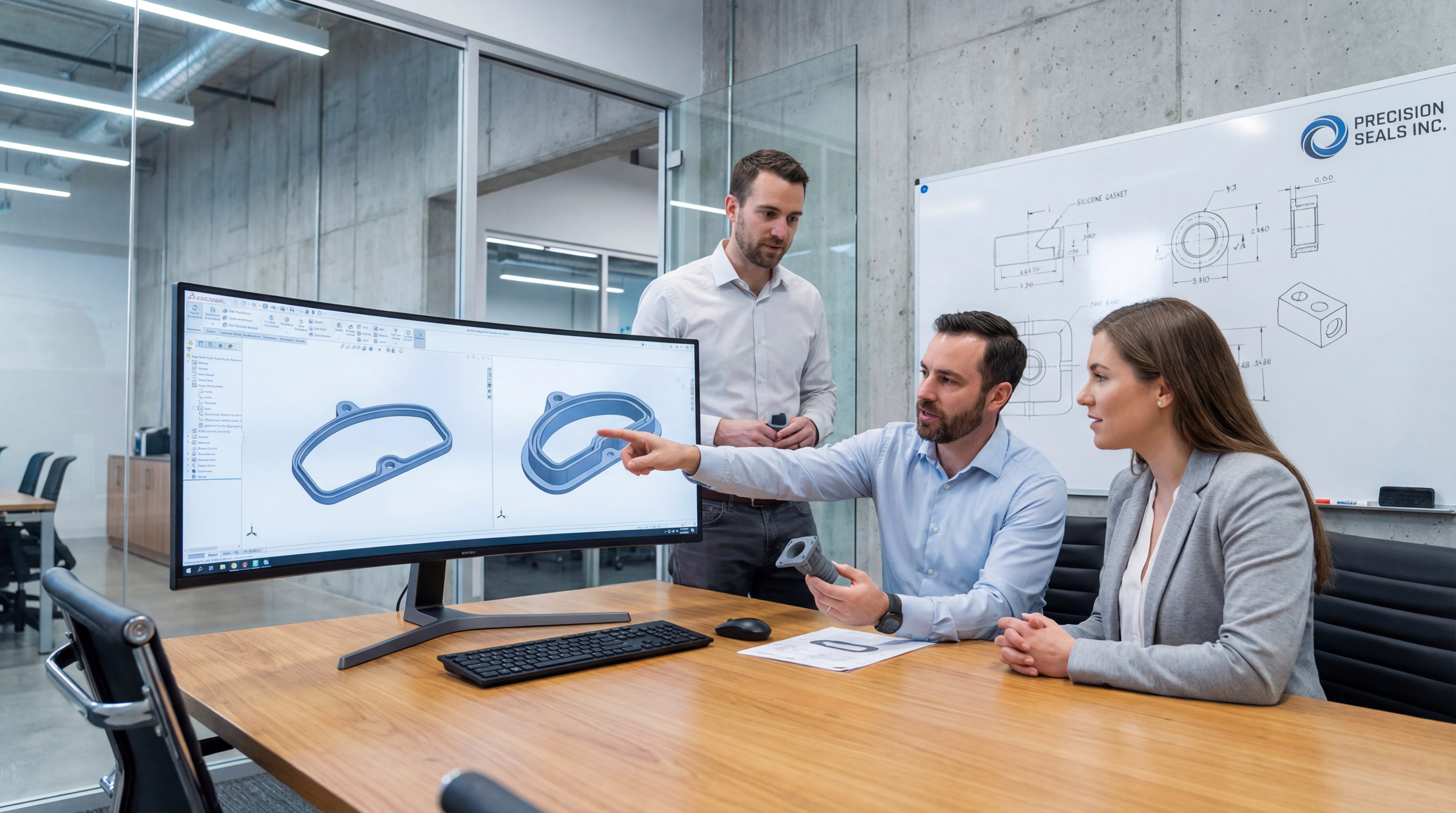
Design for Manufacturing (DFM) support allows engineers to optimize gasket structures for better performance and lower production costs. Any qualified ilicone Gasket Manufacturer will review your drawings to ensure tolerances and material choices are realistic.
Reducing development risks through early DFM review
Catching a design flaw before the mold is cut saves thousands of dollars in tooling changes.
- Tolerance planning prevents assembly issues.
- Material selection ensures compatibility with mating surfaces.
- Flash and gate placement improves aesthetic quality.
Here is the secret: early collaboration with factory engineers often reveals ways to simplify the production process.
Can the manufacturer handle complex custom shapes?
Customized solutions require a partner that can manage non-standard thicknesses, durometers, and colors.
Key Takeaway: Integrated DFM support reduces design risk and ensures your custom seals perform exactly as intended in the field.
| DFM Check | Engineering Benefit |
|---|---|
| Tolerance Review | Ensures perfect fitment with metal or plastic housings. |
| Gate Location | Minimizes cosmetic defects and improves part strength. |
| Draft Angles | Facilitates easy ejection from the mold to reduce scrap. |
Proactive engineering support transforms complex design challenges into repeatable manufacturing successes.
How Do Lead Times and Capacity Affect Your Production Schedule?
Reliable lead times and scalable production capacity are essential for maintaining a steady supply chain as your business grows. Your Silicone Gasket Manufacturer must be able to ramp up production quickly to meet sudden spikes in market demand.
Planning for bulk order scaling and logistics
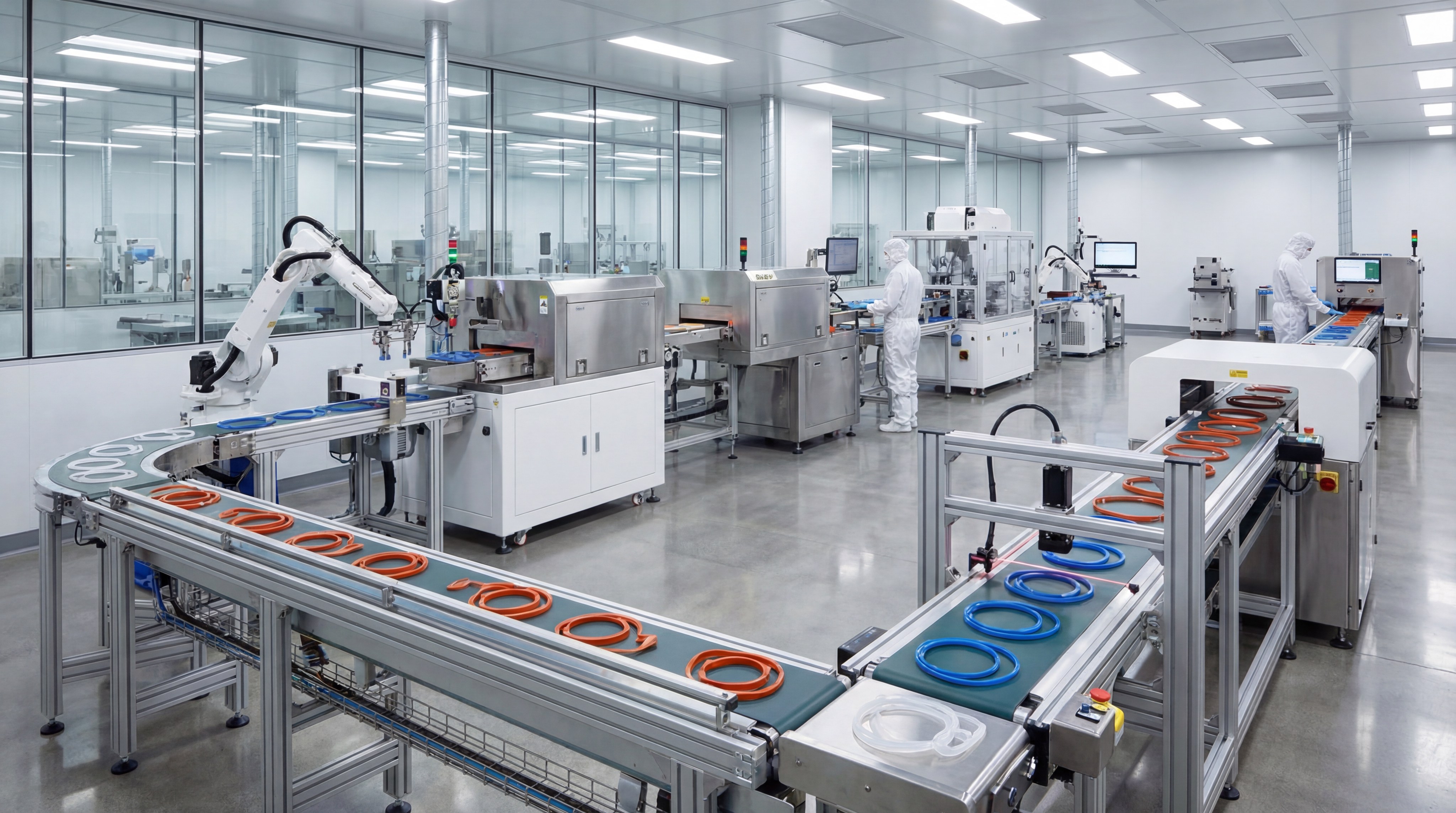
Factories with multiple molding lines and automated systems can handle high-volume orders without compromising quality.
- Scalable molding routes allow for growth.
- Automated packaging speeds up the shipping preparation.
- International logistics support simplifies global delivery.
But wait, there is more: a partner with stable material supplies avoids the delays caused by global shortages.
How to assess a manufacturer’s global shipping capabilities?
Inquire about their experience with export documentation and their proximity to major shipping hubs to ensure timely delivery.
Key Takeaway: Choosing a high-capacity partner ensures you never face stockouts or production halts due to supplier bottlenecks.
| Capacity Metric | Value to Buyer |
|---|---|
| Production Lines | Ability to run multiple projects simultaneously. |
| Material Stock | Protection against sudden market price hikes or shortages. |
| Export Experience | Faster transit times and fewer customs delays. |
Production agility is the cornerstone of a resilient and responsive modern supply chain.
What Common Mistakes Occur When Choosing a Gasket Partner?
One of the most common mistakes is choosing a supplier based solely on the lowest price without vetting their quality systems. An ilicone Gasket Manufacturer that cuts corners on material testing or engineering support will ultimately cost you more in the long run.
Why shouldn’t you make decisions based solely on price?
Low-cost vendors often use “recycled” or uncertified silicone that degrades quickly under heat or chemicals.
- Cheap materials lead to premature seal failure.
- Lack of DFM support causes expensive tooling reworks.
- Slow communication results in missed product launch windows.
Look at it this way: the upfront savings are often erased by the cost of one major product recall.
The danger of ignoring long-term technical support
Post-sales service is critical when you need to troubleshoot field failures or optimize a design for the next generation.
Key Takeaway: Avoiding common vetting mistakes prevents high-cost failures and ensures you receive a product that lasts its entire lifecycle.
| Mistake | Consequence |
|---|---|
| Price-Only Focus | Higher risk of material failure and system leaks. |
| No DFM Review | Tooling errors and difficult-to-assemble parts. |
| Unverified Certs | Regulatory rejections and export blockages. |
Strategic procurement prioritizes long-term reliability and supplier accountability over short-term cost savings.
How to Assess the Value of an ilicone Gasket Manufacturer?
Assessing value requires looking beyond the unit price to consider factors like engineering support, material longevity, and shipping reliability. A high-value Silicone Gasket Manufacturer acts as an extension of your own engineering team.
Balancing upfront costs with total lifecycle efficiency
A slightly more expensive part that lasts twice as long provides far better ROI than a cheap alternative.
- Durable seals reduce maintenance costs.
- Precise dimensions speed up assembly line throughput.
- Quality certifications simplify the path to market.
Here is the secret: value is found in the absence of problems throughout the product life.
Building a scalable partnership for future growth
Seek a vendor that offers one-stop services from prototyping to assembly and specialized packaging.
Key Takeaway: High-value partners provide the technical stability and scalability needed to grow your business without quality risks.
| Value Driver | Strategic Benefit |
|---|---|
| Technical Support | Faster troubleshooting and design optimization. |
| Manufacturing Range | One vendor for simple gaskets and complex LSR parts. |
| Process Stability | Consistent performance across thousands of batches. |
True manufacturing value is measured by the total success and reliability of the final application.
Don’t let poor seal quality compromise your engineering vision or your company’s reputation. Whether you are dealing with medical-grade precision or heavy-duty automotive heat, our team provides the DFM support and ISO-certified manufacturing you need to launch with confidence. We are committed to pushing the boundaries of silicone technology to ensure every part we make adds lasting value to your supply chain. To see how our integrated manufacturing process can solve your most difficult sealing challenges, contact us today for a professional DFM review and a comprehensive project quote.
FAQ Section
Can I get custom-designed silicone gaskets for small production runs?
Yes, absolutely. Many manufacturers offer compression molding as a cost-effective route for low-volume projects or initial prototyping phases.
What’s the best way to ensure a gasket is safe for medical use?
It depends on your application. You should always verify that the manufacturer uses USP Class VI or ISO 10993 certified silicone processed in a cleanroom environment.
How do I know if my manufacturer uses high-quality raw materials?
Request a Certificate of Analysis (COA) for each material batch. This document proves the silicone meets specified physical and chemical properties.
Can I use silicone gaskets in high-vibration automotive environments?
Yes, silicone is excellent for this. Its inherent damping properties and flexibility allow it to maintain a seal even when surfaces are in constant motion.
What’s the best storage method to prevent silicone degradation?
Store them in a cool, dry place. Avoiding direct sunlight and extreme temperature fluctuations ensures the gaskets maintain their elasticity and sealing performance.