
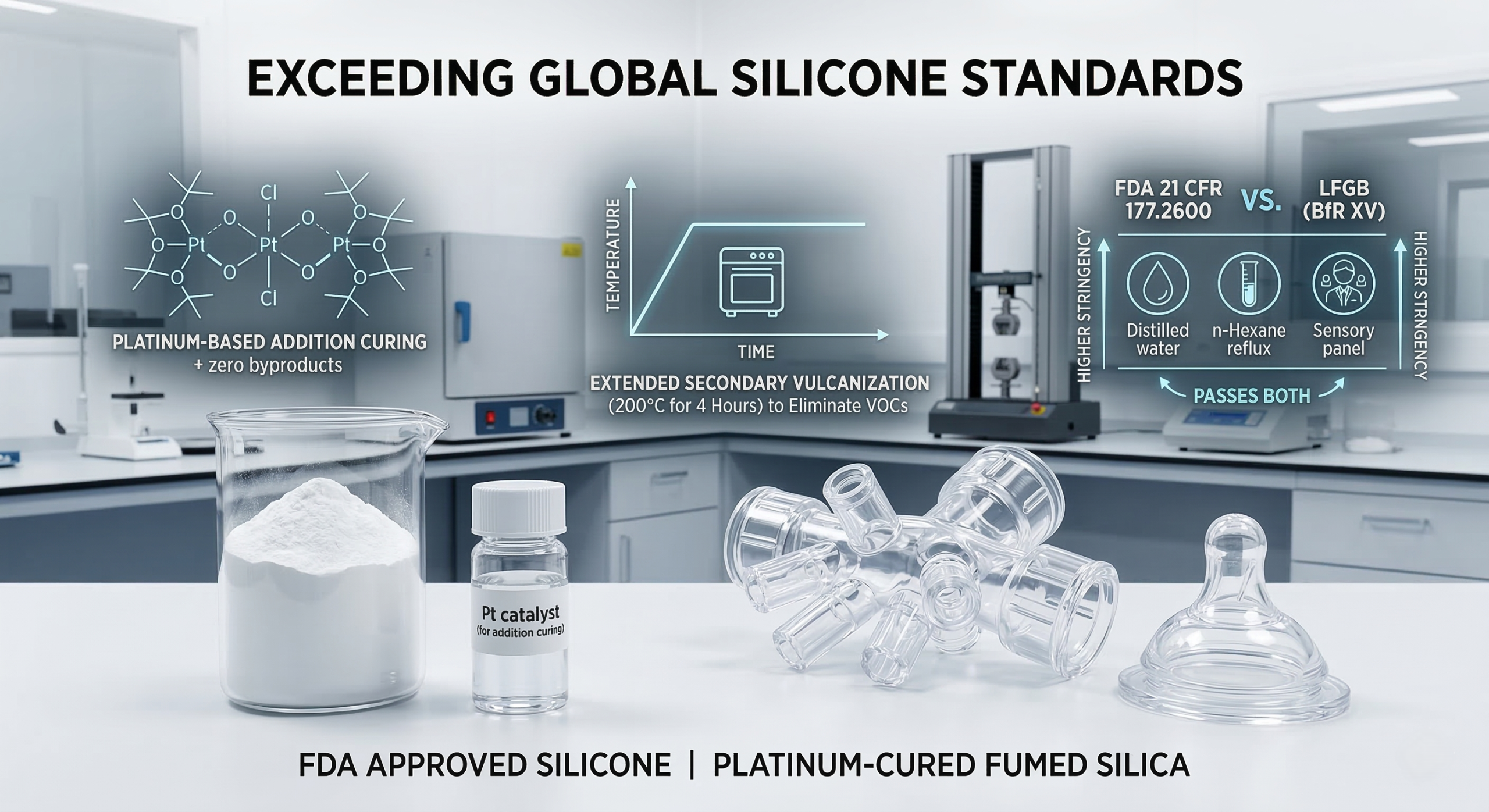
Exceeding LFGB and FDA standards in silicone manufacturing requires a rigorous integration of high-purity raw materials, platinum-based catalysis, and extended secondary vulcanization. You likely face immense pressure to deliver products that are not just compliant but are demonstrably safer than the competition to avoid costly recalls or export rejections. Navigating the maze of global regulations can feel overwhelming, especially when a single batch failure can dismantle years of brand reputation and client trust. By mastering the core fundamentals of What is FDA approved silicone and how is it tested?, you can transform these regulatory hurdles into a distinct competitive advantage for your B2B operations.
Why are global safety standards vital?
Global safety standards provide the essential framework for ensuring that synthetic elastomers are inert and safe for human contact. When you are assessing your supply chain, you must determine What is FDA approved silicone and how is it tested? to ensure your materials meet the non-toxic thresholds required by the US Food and Drug Administration.
These regulations safeguard consumers from harmful chemical migration while providing a standardized language for international trade. Without strict adherence to these benchmarks, your products risk failing the volatile organic compound (VOC) tests required for high-end European and American markets.
The legal necessity of compliance
Meeting these standards is the baseline for entering the global marketplace without facing severe legal penalties. You must ensure your production facility understands the nuances of regional requirements to prevent shipments from being seized at customs.
Here is the truth:
- FDA compliance is mandatory for US food-contact products.
- LFGB serves as the primary standard for the German and EU markets.
- Failure to comply can lead to massive litigation and financial loss.
- Certification builds trust with distributors and high-end retailers.
Protecting your brand reputation
A single instance of leaching can destroy the perceived value of your custom silicone solutions. By prioritizing quality, you protect your long-term viability and secure repeat business from safety-conscious clients.
But wait, there is more:
- High-quality materials reduce the risk of sensory contamination.
- Rigorous testing protocols ensure batch-to-batch consistency.
- Exceeding standards allows you to charge premium prices.
- Safe products foster long-term loyalty in the baby and medical sectors.
Key Takeaway: Prioritizing safety standards is not just a legal obligation; it is a strategic branding tool that secures your position in the high-tier global manufacturing sector.
| Standard Type | Primary Region | Focus Area | Stringency Level |
|---|---|---|---|
| FDA 21 CFR 177.2600 | United States | Extractables & Weight Loss | Standard |
| LFGB (BfR XV) | Germany / EU | Migration & Sensory Purity | High |
| ISO 10993 | Global | Medical Biocompatibility | Maximum |
The comparison above illustrates that while the FDA sets the baseline, European standards often require more intensive testing for chemical inertness.
What is FDA approved silicone and how is it tested for safety?
FDA approved silicone refers to materials that comply with 21 CFR 177.2600, focusing on the limitation of extractable substances during food contact. To succeed in the North American market, you must specifically verify What is FDA approved silicone and how is it tested? to ensure your rubber components do not leach harmful polymers.
Testing involves exposing the material to solvents like distilled water and n-hexane at specific temperatures. These tests measure the total weight of substances that migrate from the silicone into the liquid simulants.
The chemistry of food-grade rubber
The polymer backbone must be free from fillers that could degrade or react with acidic foods. This requires a precise balance of siloxane chains and cross-linking agents that remain stable under thermal stress.
Let’s dive deeper:
- Materials must be BPA-free and phthalate-free for safety.
- Synthetic Si-O-Si bonds provide high heat resistance up to 230°C.
- Low compression set is required for sealing integrity.
- Pigments must also be FDA-compliant to prevent heavy metal leaching.
Laboratory extraction procedures
Independent labs perform these extractions by boiling the silicone in water or hexane for several hours. The remaining residue is weighed and must stay below the specific milligrams-per-square-inch limits set by the regulator.
Think about this:
- Water extraction measures migration in aqueous food environments.
- Hexane extraction simulates contact with fatty or oily foods.
- The surface area to volume ratio is a critical testing variable.
- Total extractables are calculated after a specific evaporation period.
Key Takeaway: Passing FDA extraction tests ensures that your silicone components will not contaminate the food chain with harmful residues during normal usage.
| Test Parameter | Simulant Used | Duration | Passing Threshold |
|---|---|---|---|
| Distilled Water | 7 Hours | Boiling | < 20 mg/sq in |
| n-Hexane Reflux | 7 Hours | Boiling | < 175 mg/sq in |
| Distilled Water (Successive) | 2 Hours | Boiling | < 1 mg/sq in |
The data confirms that successive extraction tests are much more difficult to pass and require high-purity raw materials.
How does fumed silica enhance purity?
Fumed silica offers a much higher degree of purity and mechanical strength compared to cheaper precipitated alternatives. When you evaluate What is FDA approved silicone and how is it tested?, you will find that fumed-grade silicone is the preferred choice for meeting the most stringent migration limits.
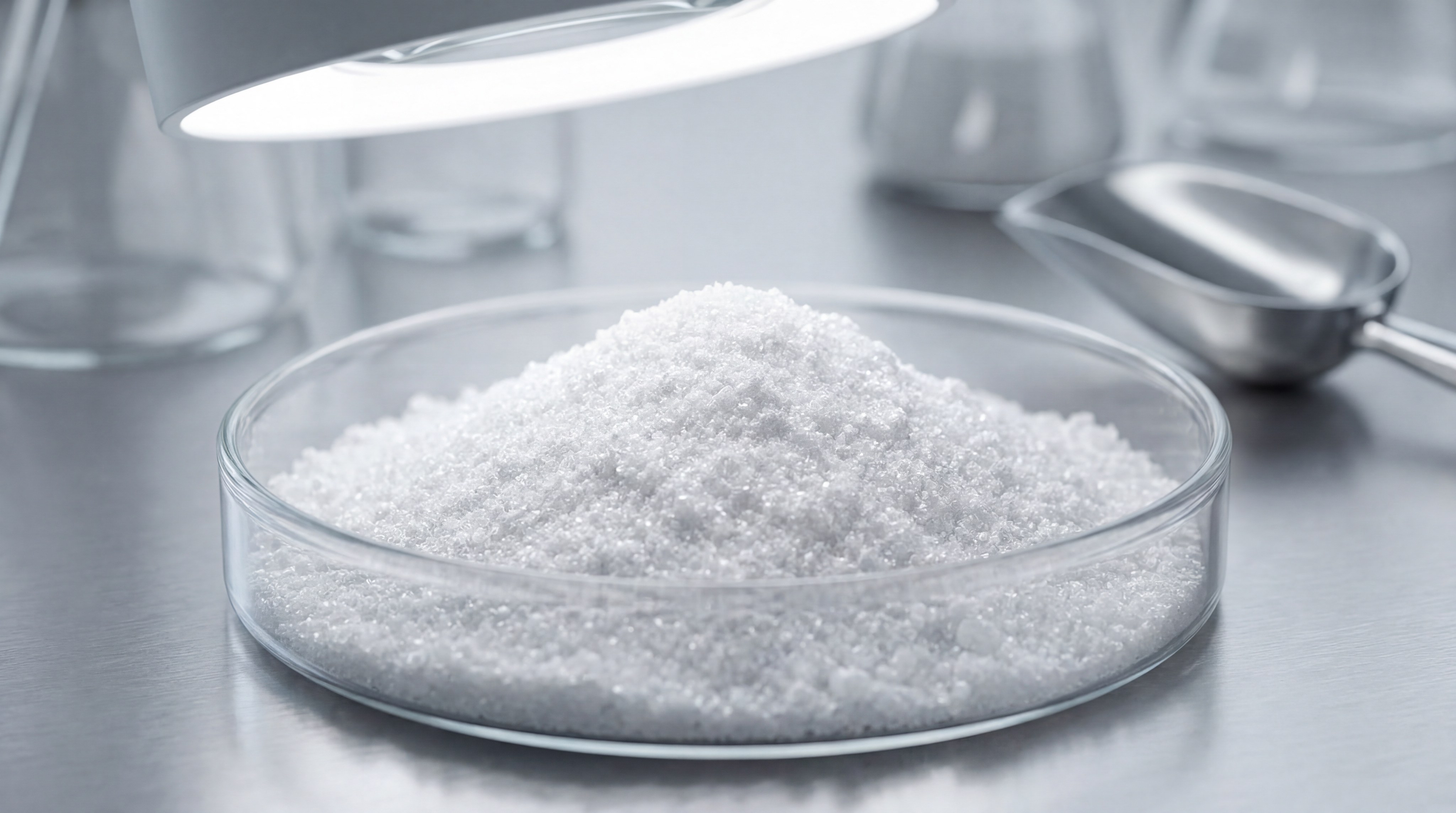
This material is produced through the flame hydrolysis of silicon tetrachloride, resulting in a three-dimensional branched chain structure. This structure provides superior reinforcement without the need for high-migration fillers or additives.
Structural advantages of fumed grades
The smaller particle size of fumed silica allows for a more dense and stable polymer matrix. This density prevents small molecules from escaping the elastomer during high-temperature baking or sterilization.
It gets better:
- Higher transparency is achieved with fumed silica fillers.
- Increased tear strength makes it ideal for medical tubing.
- Low moisture absorption prevents swelling in humid environments.
- Better thermal stability ensures the product doesn’t “bleed” oils.
Comparing precipitated vs. fumed silica
Precipitated silica is cost-effective but often contains more impurities that can lead to failure during LFGB sensory testing. If your goal is to exceed standards, you should consistently specify fumed grades for any skin or food contact applications.
Simply put:
- Precipitated silica is suited for industrial gaskets and seals.
- Fumed silica is the gold standard for baby pacifiers.
- Higher surface area in fumed grades improves curing efficiency.
- Fumed grades exhibit lower volatile content after primary molding.
Key Takeaway: Using fumed silica as your primary reinforcement agent is the most effective way to ensure your products pass rigorous international purity tests.
| Property | Precipitated Silica | Fumed Silica | Impact on Compliance |
|---|---|---|---|
| Purity Level | 95-98% | > 99.8% | Higher Purity = Lower Migration |
| Particle Size | 10-20 microns | 5-50 nanometers | Nano-size = Better Reinforcement |
| Volatile Content | Higher | Very Low | Essential for LFGB/VOC Compliance |
The shift from micro-sized to nano-sized particles in fumed silica is what creates the superior barrier against chemical leaching.
Why choose platinum curing for high-end parts?
Platinum curing involves an addition-reaction that produces no chemical byproducts, unlike the peroxide-based curing traditionally used in industrial rubber. Understanding What is FDA approved silicone and how is it tested? will reveal that platinum-cured silicone is inherently safer because it eliminates the risk of “blooming” or acidic residues.
This catalyst system works at lower temperatures and provides a faster cycle time during injection molding. It is the only choice for manufacturers who want to exceed global standards for medical and food-grade applications.
Eliminating peroxide byproducts
Traditional peroxide curing leaves behind benzoic acid and other volatile organic compounds that can cause unpleasant odors. These byproducts are the most common reason for products failing the strict LFGB sensory and migration tests.
Here is why it matters:
- Platinum curing produces zero acidic byproducts.
- No “blooming” or white powder appears on the surface.
- The material remains odorless and tasteless indefinitely.
- Transparency is improved due to the lack of chemical residues.
Improving manufacturing efficiency
While the catalyst is more expensive, the reduction in post-processing time and rejection rates often leads to lower total production costs. Automated silicone injection molding systems perform exceptionally well with two-part platinum LSR systems.
Now for the best part:
- Faster curing cycles increase your daily factory output.
- Better dimensional stability reduces waste in high-precision parts.
- Lower energy consumption during primary molding stages.
- Easier to meet tight tolerances for medical-grade components.
Key Takeaway: Switching to platinum-catalyzed systems is a non-negotiable step for any brand aiming to surpass European safety and sensory requirements.
| Catalyst Type | Byproducts | Sensory Impact | Compliance Suitability |
|---|---|---|---|
| Peroxide | Benzoic Acid / Odors | Potential “Taint” | Industrial Only |
| Platinum | None (Addition Reaction) | Totally Neutral | Food & Medical Grade |
Choosing the right catalyst effectively removes the primary source of contamination before the product even leaves the mold.
How do extraction tests verify compliance?
Extraction testing is the ultimate proof that your material will not leach polymers into its environment. When you investigate What is FDA approved silicone and how is it tested?, you must focus on the global migration limits which quantify the total mass of substances transferred.
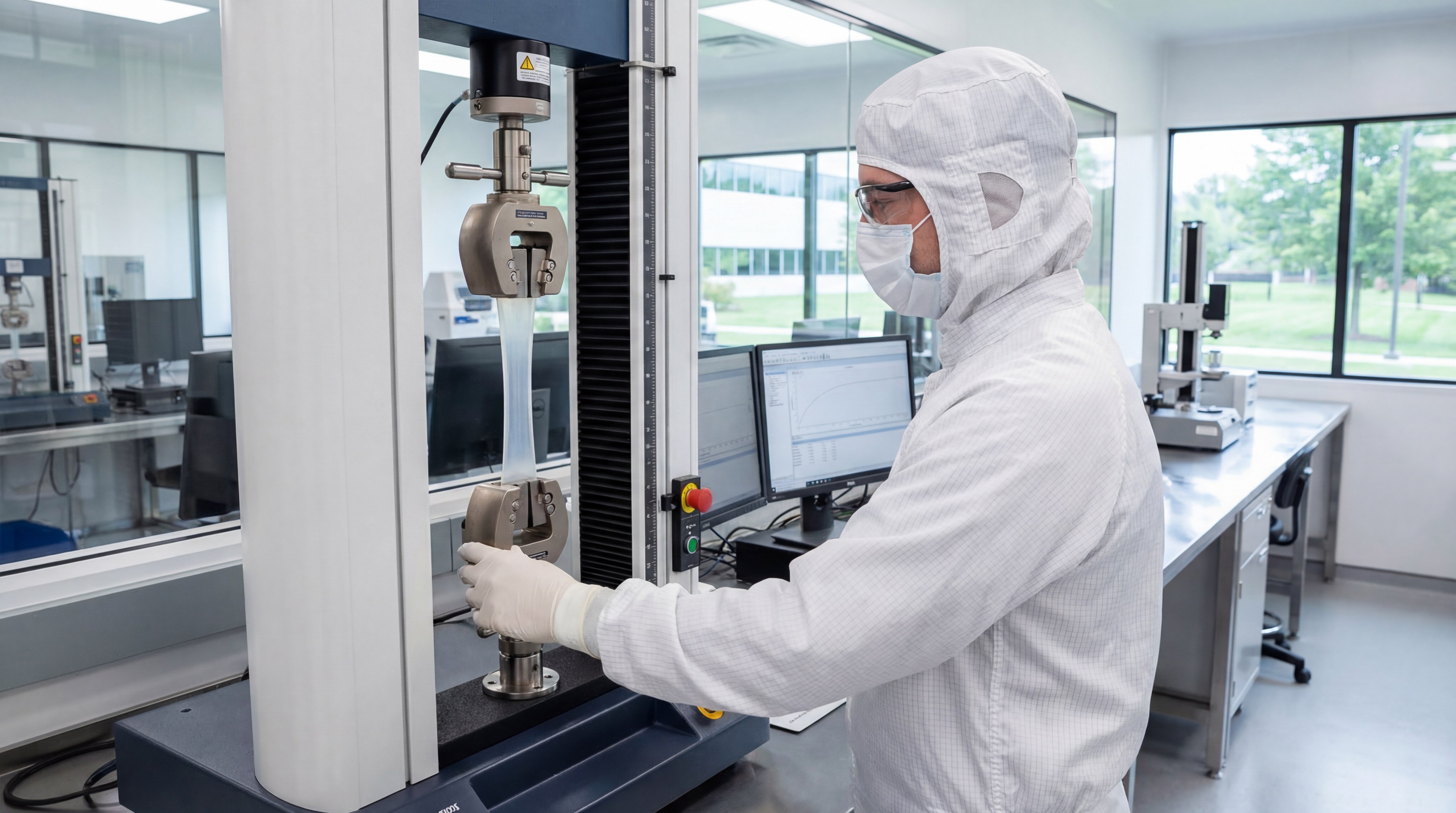
These tests are designed to mimic worst-case scenarios, such as storing hot, fatty soup in a silicone container for extended periods. If your parts pass these tests, you can confidently market them as high-performance, compliant solutions.
Simulating environmental stress
Testing laboratories use various liquid simulants that behave like different food groups to test the resilience of the silicone. This ensuring that your custom silicone trays are safe regardless of whether they hold water, oil, or alcohol.
Believe it or not:
- Acetic acid (3%) simulates acidic foods like citrus.
- Ethanol (10-50%) simulates alcoholic beverages.
- Vegetable oil or hexane simulates fatty food contact.
- Thermal cycling tests the material’s integrity over time.
Measuring mass transfer limits
The most critical measurement is the global migration limit, which is typically set at 10mg/dm² for European LFGB standards. This precise measurement requires ultra-sensitive scales and controlled laboratory environments to ensure accuracy.
Why does this matter?
- It proves the material is biologically and chemically inert.
- It ensures no microplastics or fillers enter the body.
- It protects the flavor profile of the end-user’s food.
- It provides a data-driven certificate for your B2B customers.
Key Takeaway: Rigorous extraction testing is the scientific barrier that separates high-quality compliant silicone from low-grade, potentially dangerous industrial rubber.
| Food Simulant | Represents | Test Condition | LFGB Limit |
|---|---|---|---|
| 3% Acetic Acid | Fruit, Soda, Vinegar | 2 Hours @ 70°C | 10 mg/dm² |
| 10% Ethanol | Beer, Wine, Spirits | 2 Hours @ 70°C | 10 mg/dm² |
| Olive Oil | Fatty Foods, Meats | 2 Hours @ 100°C | 10 mg/dm² |
Analytical leading sentence: These thresholds are significantly tighter than many domestic regulations, emphasizing why LFGB is the preferred global safety benchmark.
What is FDA approved silicone and how is it tested against LFGB?
The main difference between the two standards lies in the testing methodologies and the strictness of the migration limits. To truly excel, you must understand What is FDA approved silicone and how is it tested? in comparison to the German LFGB, which adds extra layers of sensory and VOC testing.
While the FDA focuses primarily on weight loss during solvent extraction, the LFGB examines the odor and taste transfer to ensure total consumer satisfaction. If your product passes LFGB, it will almost certainly meet all FDA requirements.
The sensory challenge of LFGB
LFGB testing includes a sensory panel where experts evaluate if the silicone imparts any flavor or smell to distilled water. This is a subjective but critical test that many peroxide-cured or low-quality silicone products fail.
Think about this:
- A “taint” score higher than 2.5 results in immediate failure.
- Sensory purity is essential for coffee machine gaskets and water filters.
- Platinum curing is the only way to consistently pass this test.
- Post-curing duration is the primary factor in reducing sensory impact.
Comparative extraction rigor
LFGB migration tests are often performed at higher temperatures and for longer durations than their FDA counterparts. This ensures that even in extreme cooking conditions, the material remains stable and safe.
Let’s dive deeper:
- FDA focuses on hexane/water; LFGB uses a wider range of simulants.
- LFGB includes specific tests for heavy metals and peroxides.
- Weight loss thresholds are typically stricter in the European model.
- Certification requires a more detailed technical dossier in the EU.
Key Takeaway: Aiming for LFGB certification ensures your products are “future-proofed” against evolving global safety regulations.
| Feature | FDA Standard | LFGB Standard | Exceeding Both |
|---|---|---|---|
| Sensory Testing | Not Required | Mandatory (Odor/Taste) | Zero Detectable Taint |
| Solvent Range | Narrow (Hexane/Water) | Wide (Acid/Alcohol/Oil) | All-Condition Stability |
| Post-Cure Required | Recommended | Strongly Mandatory | Extended 4-Hour Cycles |
Analytical leading sentence: The integration of sensory evaluation makes LFGB the superior standard for products where user experience and health are equally prioritized.
Does secondary vulcanization eliminate volatiles?
Secondary vulcanization, or post-curing, is the essential process of heating molded parts in an oven to remove low-molecular-weight volatiles. In the context of What is FDA approved silicone and how is it tested?, this step is what reduces the VOC content to levels that meet the sub-0.5% requirement for high-end markets.
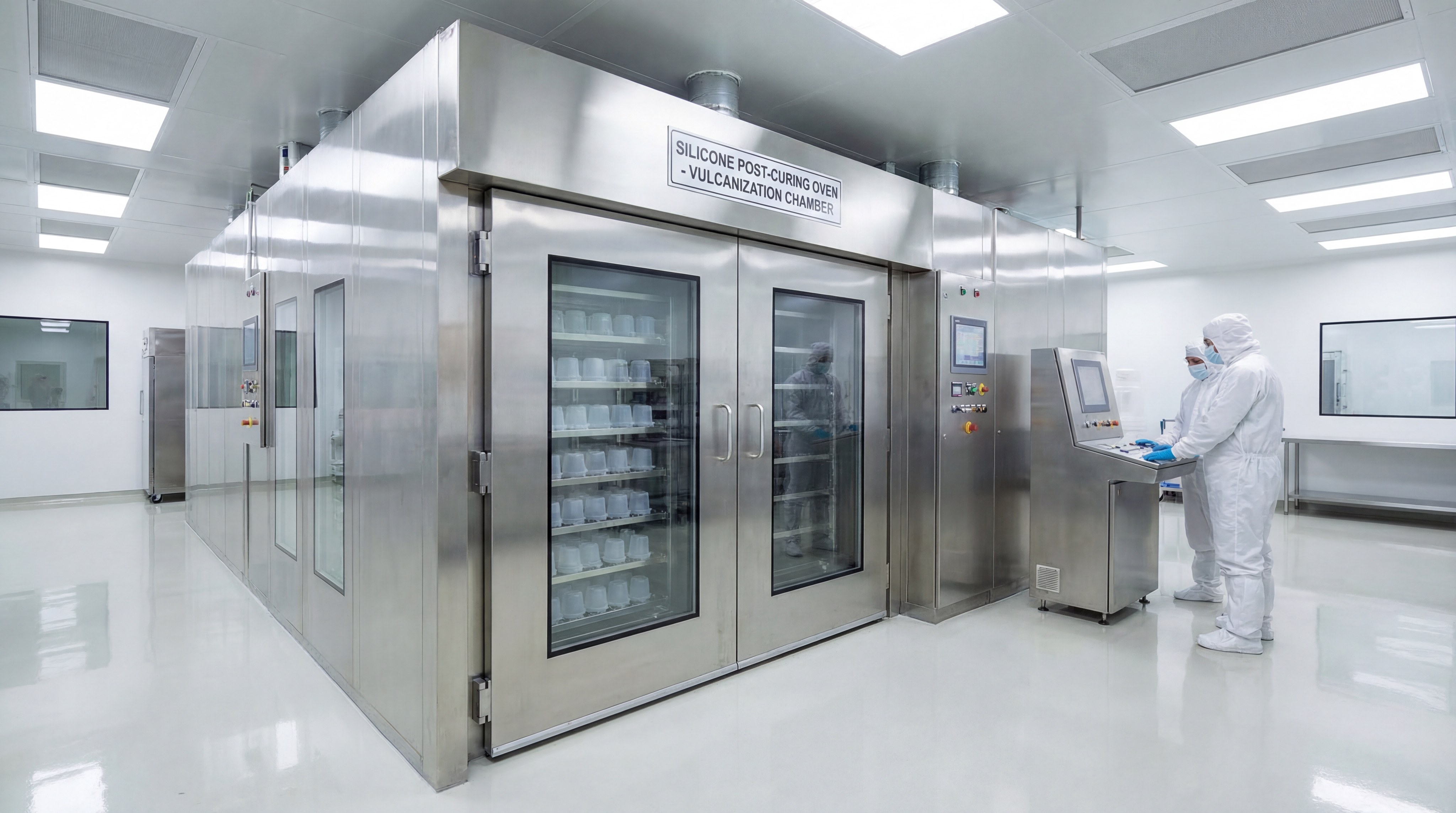
Without this step, your parts might appear finished but will contain residual chemical species that can outgas or leach over time. A professional post-curing cycle is the “secret sauce” for manufacturers who want to claim superior safety.
The science of outgassing
Post-curing drives off unreacted crosslinkers and moisture that are trapped within the rubber during the initial molding process. This stabilization ensures the physical properties of the silicone remain constant throughout its service life.
But wait, there is more:
- Post-curing increases the final hardness (Shore A) of the part.
- It improves the compression set for high-performance seals.
- The process eliminates the “new silicone” smell from consumer items.
- High-temperature stability is only achieved after full vulcanization.
Optimizing the oven cycle
To exceed standards, you should optimize your oven temperature and airflow to ensure every part is treated uniformly. For most LFGB-compliant parts, a cycle of 200°C for at least four hours is the industry recommendation.
Here is the truth:
- Proper airflow prevents the re-absorption of volatiles.
- Over-curing can lead to material brittleness or discoloration.
- Vacuum-assisted ovens provide the highest level of volatile removal.
- Automated data logging ensures batch-to-batch traceability.
Key Takeaway: Never skip or shorten the post-curing cycle if you intend to market your products as food-grade or medical-grade.
| Factor | Standard Cycle | Optimized Cycle | Benefit |
|---|---|---|---|
| Temperature | 150°C – 170°C | 200°C | Faster Volatile Removal |
| Duration | 2 Hours | 4 – 6 Hours | Deep Purity & Stability |
| Air Exchange | Static | High-Flow Forced Air | Prevents Re-contamination |
Analytical leading sentence: Extended cycles at higher temperatures are the most reliable way to drive volatile content down to nearly undetectable levels.
How is medical-grade biocompatibility ensured?
Medical-grade silicone must go beyond food safety to ensure it does not cause inflammation or immune responses when touching human tissue. You must understand What is FDA approved silicone and how is it tested? for biocompatibility, specifically referring to ISO 10993 or USP Class VI certifications.
These tests evaluate the material’s interaction with living cells to confirm that it is non-cytotoxic, non-irritating, and non-sensitizing. This is the highest level of certification in the silicone industry.
ISO 10993 biological evaluation
This international standard requires a series of in-vitro and in-vivo tests to assess the systemic and local effects of the material. For medical-grade silicone parts, this testing is mandatory before any clinical use.
It gets better:
- Cytotoxicity tests ensure the material doesn’t kill human cells.
- Sensitization tests check for delayed allergic reactions.
- Irritation tests confirm the material is safe for prolonged skin contact.
- Hemocompatibility is required for any blood-contacting devices.
Traceability and cleanroom production
Achieving medical compliance requires more than just testing; it requires a documented trail of every raw material and production step. Manufacturing in a Class 100,000 cleanroom is often required to prevent environmental dust or oils from contaminating the parts.
Why does this matter?
- Traceability ensures that faulty batches can be identified and recalled.
- Cleanroom environments minimize the risk of bacterial contamination.
- Detailed manufacturing records are required for FDA Class II and III devices.
- Strict employee hygiene protocols protect the purity of the end product.
Key Takeaway: Biocompatibility is a measure of biological safety that requires specialized testing and controlled manufacturing environments far beyond standard industrial rubber.
| Test Category | Duration | Method | Purpose |
|---|---|---|---|
| Cytotoxicity | 24 – 72 Hours | Cell Culture Lysis | Detect toxic substances |
| Skin Irritation | 72 Hours | Animal or Reconstructed Skin | Evaluate inflammatory response |
| Sensitization | 2 – 3 Weeks | Repeated Exposure | Identify allergic potential |
Analytical leading sentence: These biological hurdles ensure that silicone remains the most trusted material for permanent medical implants and long-term wearables.
What are the sensory requirements for LFGB?
LFGB sensory testing is a unique requirement that determines if a silicone product alters the smell or taste of its contents. When you ask What is FDA approved silicone and how is it tested?, remember that the FDA does not strictly require this sensory panel, whereas the LFGB considers it a pass/fail criterion.
The test involves soaking the product in distilled water at 70°C for two hours and then having a trained panel “blind taste” the water. This ensures that consumer products like baby bottle nipples don’t impart a “rubbery” flavor to milk.
The 1-to-4 sensory scale
The panel assigns a score from 1 (no difference) to 4 (strong difference) based on their comparison of the test water against a control sample. A score above 2.5 is a failure, which can happen even if the material passed all chemical migration tests.
Here is why it matters:
- Consumer perception is heavily influenced by taste and smell.
- Odor can indicate the presence of hidden chemical byproducts.
- Low-quality pigments and catalysts are the main cause of sensory failure.
- Passing this test proves your product is truly high-end and inert.
Strategies for passing sensory panels
To consistently pass, you must use platinum catalysts and high-grade fumed silica while maintaining a spotless production floor. Any smoke or oil fumes in the factory can be absorbed by the silicone during molding and lead to failure.
Simply put:
- Clean your molds frequently to prevent burnt residue.
- Use medical-grade pigments that are guaranteed odorless.
- Ensure the post-curing oven is vented to a clean exterior area.
- Avoid using mold release sprays that contain scents or oils.
Key Takeaway: Sensory purity is the subjective benchmark that consumers actually notice, making it just as important as chemical compliance for brand success.
| Sensory Score | Description | Result | Consumer Perception |
|---|---|---|---|
| 0 – 1.5 | No/Very Slight Change | Strong Pass | Premium / High Quality |
| 1.6 – 2.5 | Slight Change | Pass | Acceptable |
| 2.6 – 4.0 | Strong Change | Fail | Cheap / Chemical Taste |
Analytical leading sentence: Maintaining a score below 1.5 is the hallmark of a world-class silicone manufacturer specializing in food-contact solutions.
How can you optimize manufacturing costs?
Optimization involves balancing the high cost of compliant materials with efficient manufacturing techniques. By understanding What is FDA approved silicone and how is it tested?, you can implement lean manufacturing principles to reduce waste without compromising on the safety standards required for the silicone industry.

Automation and high-cavity molds are the most effective ways to lower the per-piece cost of platinum-cured fumed silicone. While the upfront investment is higher, the long-term unit cost becomes highly competitive for large-scale B2B orders.
The ROI of automated injection
Liquid Silicone Rubber (LSR) injection molding is significantly more efficient than manual compression molding for high-volume parts. It reduces human labor, minimizes material flash, and ensures that every part is cured under identical conditions.
Now for the best part:
- Flash-less molding eliminates the need for manual trimming.
- Closed-loop systems prevent raw material contamination.
- Automated dosing ensures the 1:1 catalyst ratio is perfect.
- Robot-assisted demolding speeds up the total cycle time.
Material waste reduction strategies
Silicone is an expensive raw material, so reducing the “runner” and “gate” waste in your molds can save thousands of dollars per month. Cold runner systems keep the silicone in the distribution channels liquid, allowing it to be reused in the next shot rather than becoming waste.
Think about this:
- Cold runner technology can reduce material waste by up to 90%.
- Multi-cavity molds spread the machine operation cost across more units.
- Precision dosing systems prevent the over-filling of mold cavities.
- Recycling non-compliant scrap for industrial-grade parts recovers cost.
Key Takeaway: High-purity manufacturing does not have to be prohibitively expensive if you invest in modern automation and waste-reduction technologies.
| Cost Factor | Compression Molding | LSR Injection | Long-term Impact |
|---|---|---|---|
| Labor Cost | High | Low | Automation saves ~60% on labor |
| Material Waste | 15 – 30% | < 5% | Cold runners pay for themselves |
| Rejection Rate | Variable | Very Low | Consistency reduces costly scrap |
Analytical leading sentence: Transitioning to automated LSR injection is the single most effective strategy for scaling compliant silicone production profitably.
Conclusion
Mastering the complexities of LFGB and FDA compliance is the ultimate differentiator for B2B silicone buyers and manufacturers. By selecting high-purity fumed silica, utilizing platinum catalyst systems, and adhering to strict post-curing and testing protocols, you can deliver products that lead the market in safety and performance. We solve your compliance headaches by providing end-to-end expertise in regulated manufacturing, ensuring your custom parts pass every global audit with flying colors. If you are ready to elevate your supply chain with high-precision, certified silicone components, contact us today for a technical consultation. We believe that in the future of manufacturing, safety will not be a checkbox, but the very foundation of innovation.
FAQ
Can I use peroxide-cured silicone for food-contact products?
No, it is generally discouraged because peroxide curing leaves behind acidic byproducts and odors that often fail the strict migration and sensory tests required for modern food-grade standards.
What’s the best way to verify if my silicone parts are truly LFGB compliant?
The best way is to request a formal test report from an accredited third-party laboratory like SGS, TUV, or Intertek that specifically measures global migration and sensory taint.
How do I know if a manufacturer is using fumed silica or precipitated silica?
It depends, but you can usually tell by the clarity and tear strength; fumed silica is much more transparent and resistant to tearing, and you should always ask for the material data sheet (TDS).
Can I skip the post-curing process if my parts feel dry to the touch?
No, because post-curing is not just about drying; it is a chemical stabilization process required to remove deep-seated volatile organic compounds that are invisible to the naked eye.
How do I know if my medical-grade silicone is biocompatible?
It depends on whether it has passed the ISO 10993 series of tests, which verify that the material does not cause cytotoxicity, irritation, or sensitization when in contact with the body.