
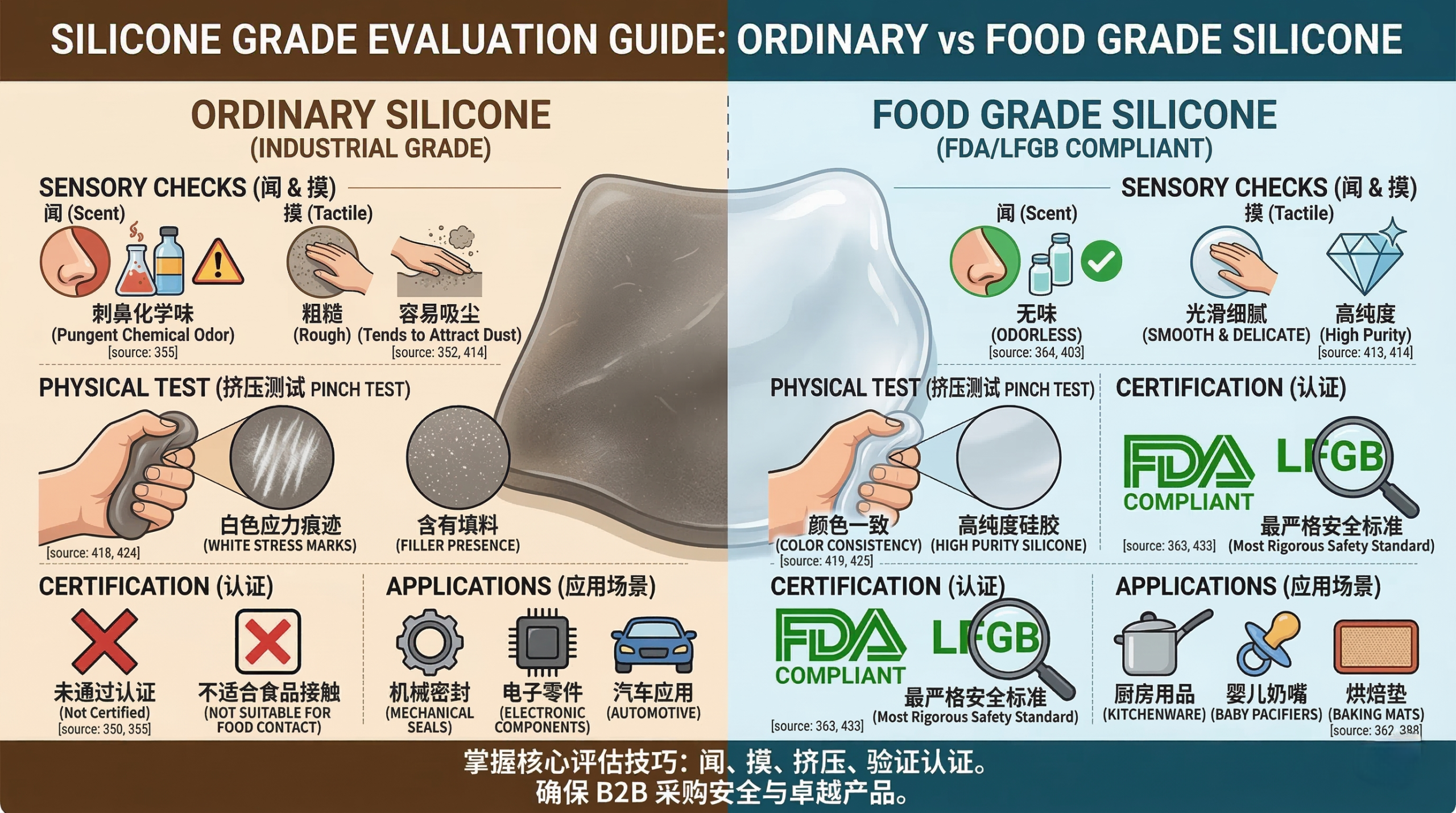
No, medical-grade silicone is not the same as food-grade silicone because they are governed by entirely different regulatory standards and safety risk models. You need high-performance components for your next project, but selecting the wrong material grade can lead to devastating audit failures or product recalls. Navigating these complex certification requirements is a major frustration for many B2B procurement teams. Is medical grade silicone the same as food grade silicone? is the critical question we help you solve so you can launch your products with complete confidence.
1. Why? Is medical grade silicone the same as food grade silicone?
The primary difference is that food-grade focuses on chemical migration into food, while medical-grade focuses on how the human body reacts to the material. When asking is medical grade silicone the same as food grade silicone?, you must recognize that they serve different compliance environments. A material that is safe for a spatula may not be safe for a long-term medical implant or skin-contact device.
The core compliance difference for B2B buyers
Compliance is about matching the material’s test data to your specific industry requirements. For instance, food-grade testing ensures no harmful substances leach into consumables during use. Medical-grade testing goes much further, verifying that the material won’t cause irritation or toxic reactions in patients.
Think about it:
- Food-grade: Regulated by FDA or LFGB for ingestion safety.
- Medical-grade: Regulated by ISO 10993 for biological compatibility.
- Documentation: Medical grade requires much stricter lot-level traceability.
Why material labels impact your audit success
Your auditors will look for specific evidence that matches your product’s intended use case. Using a “high-quality” silicone without the correct medical certification can lead to immediate batch rejection. It is essential to verify that the supplier’s documentation aligns with your market’s legal framework.
How do risk models differ between the two grades?
The risk model for food is based on the volume of chemicals that could be swallowed. In contrast, the medical risk model considers the duration of contact with blood, tissue, or skin.
Here is the truth:
- Food risk is about chemical extraction.
- Medical risk is about biological response.
- Both require distinct processing controls.
Key Takeaway: Choosing the right grade ensures your product meets legal safety standards and protects your brand from liability.
| Factor | Food-Grade Silicone | Medical-Grade Silicone |
|---|---|---|
| Primary Goal | Prevent food contamination | Ensure biocompatibility |
| Risk Focus | Ingestion of leachables | Tissue/blood reaction |
| Common Standard | FDA 21 CFR 177.2600 | ISO 10993 / USP Class VI |
Matching your compliance path to your specific risk model is the first step in successful sourcing.
2. What defines medical-grade silicone for regulated devices?
Medical-grade silicone is defined by its ability to remain neutral when in contact with the human body, supported by extensive biocompatibility data. When evaluating is medical grade silicone the same as food grade silicone?, you must look for certifications like USP Class VI. This grade is processed in controlled environments to prevent any contamination from dust or oils.
Biocompatibility testing and ISO 10993 standards
ISO 10993 is the global benchmark for testing the safety of medical devices and their materials. These tests evaluate whether the silicone causes cell death, skin sensitization, or systemic toxicity.
The reality is this:
- Cytotoxicity tests check for cell damage.
- Sensitization tests look for allergic reactions.
- Irritation tests ensure skin safety.
Why is lot-level traceability critical for health?
Traceability allows you to track every single component back to the specific batch of raw material used. In the medical field, this is non-negotiable for managing potential recalls or quality investigations.
But wait, there’s more:
- Lot numbers connect parts to manufacturing dates.
- Raw material certificates verify the chemical purity.
- Process logs document the specific molding parameters used.
Understanding USP Class VI and medical use
USP Class VI is one of the most rigorous testing protocols for plastics and silicones used in medical applications. It involves injecting material extracts into specimens to observe any adverse reactions.
Consider these requirements:
- Acute systemic toxicity testing.
- Intracutaneous reactivity testing.
- Short-term muscle implantation testing.
Key Takeaway: Medical-grade silicone provides a verified safety margin for body contact that food-grade materials simply cannot guarantee.
| Requirement | Medical-Grade Detail |
|---|---|
| Testing Type | In-vivo and in-vitro biological tests |
| Environment | Cleanroom or controlled manufacturing |
| Traceability | Full batch-to-batch documentation |
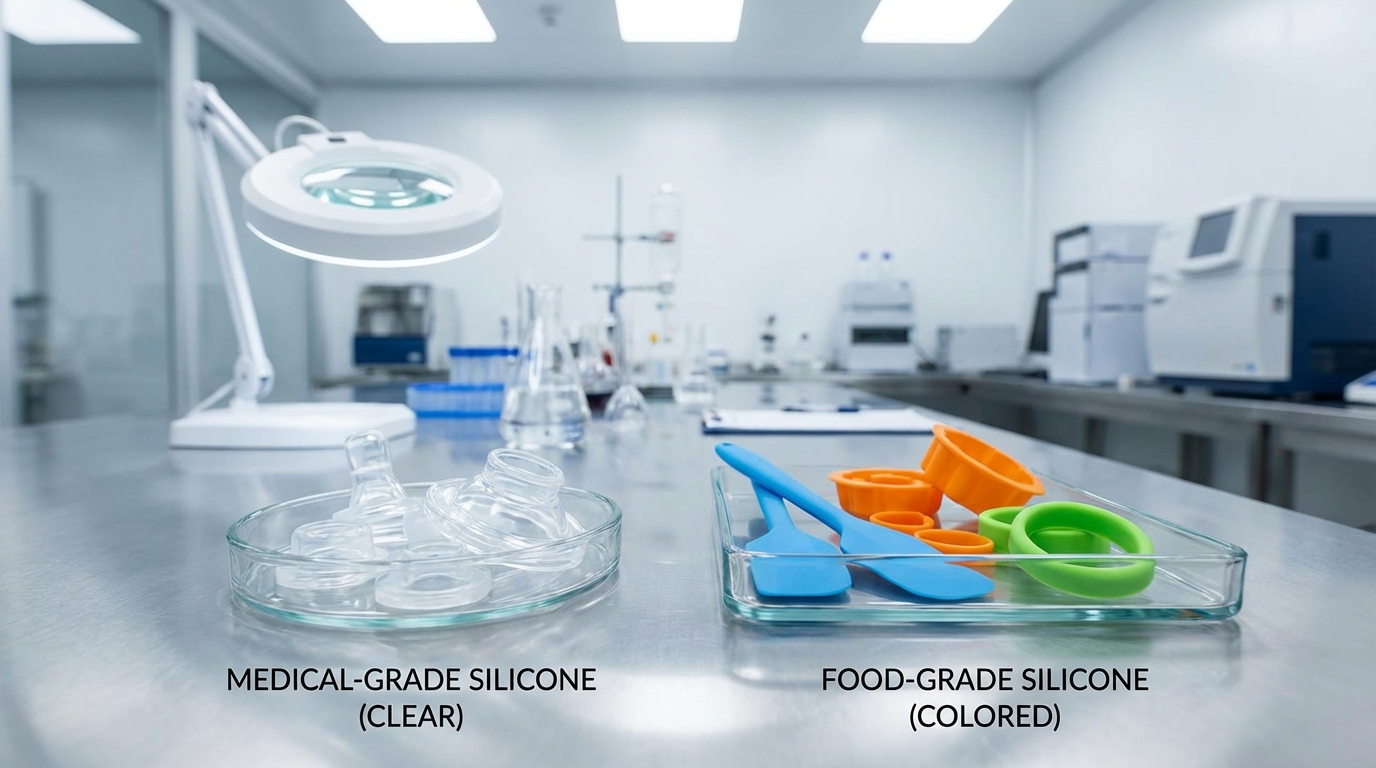
These stringent definitions ensure that every medical part performs safely in clinical environments.
3. What makes silicone safe for food contact applications?
Food-grade silicone is safe because it is formulated and cured to ensure that chemical migration stays below strict legal limits. When determining is medical grade silicone the same as food grade silicone?, the focus shifts to whether the material can withstand food acids and fats. It must not impart any odor, taste, or harmful substances to the food it touches.
FDA vs. LFGB compliance rules for global markets
The FDA standards are common in the USA, while LFGB standards are the more rigorous requirement for the European market. LFGB testing involves tougher extraction limits, especially for volatile organic compounds.
Look at it this way:
- FDA: Focuses on overall extraction levels.
- LFGB: Requires specific tests for “platinum-cured” purity.
- Global: Most high-end brands prefer LFGB for universal compliance.
Extraction limits and chemical migration risks
Migration happens when molecules from the silicone move into the food, especially under heat. Food-grade silicone is tested to ensure these levels are negligible and non-toxic.
Here is the truth:
- High temperatures increase migration risk.
- Fatty foods attract more silicone by-products.
- Proper post-curing is required to remove volatiles.
How food type and contact time influence safety
The safety of a silicone gasket depends on whether it touches dry flour for a second or hot oil for an hour. Longer contact times and higher temperatures require more stable silicone formulations.
Think about it:
- Short contact: Lower risk of chemical transfer.
- Long contact: Requires higher material stability.
- Acidic foods: Can degrade low-quality silicone over time.
Key Takeaway: Food-grade certification ensures that your kitchenware or food processing seals will not contaminate consumer products.
| Standard | Region | Key Focus |
|---|---|---|
| FDA | United States | Total extractables |
| LFGB | Europe (Germany) | Volatile organic compounds (VOCs) |
| 3-A | Global | Sanitary design for dairy/food |
Safety in food applications is built on rigorous testing for chemical stability and migration.
4. How? Is medical grade silicone the same as food grade silicone?
The two grades differ in their “proof of safety,” where food-grade proves what leaves the material, and medical-grade proves what the body does to it. If you ask is medical grade silicone the same as food grade silicone?, you are essentially comparing two different testing philosophies. While a medical silicone might pass food tests, a food-grade silicone rarely passes medical biocompatibility tests.
Comparing extraction vs. biological response
Extraction testing measures the weight of substances that leach into a solvent like water or oil. Biological response testing measures the actual health of living cells in contact with the material.
The reality is this:
- Extraction: Quantitative measurement of chemicals.
- Biological: Qualitative observation of cell health.
- Both: Essential for their respective industries.
Where do compliance paths diverge in production?
The manufacturing process for medical silicone often requires a cleanroom environment to prevent airborne contaminants. Food-grade production focuses more on “Good Manufacturing Practices” (GMP) to ensure general hygiene.
Consider these differences:
- Medical needs a controlled air filtration system.
- Food needs stainless steel contact surfaces.
- Medical requires more frequent cleaning of molds.
When can a single compound meet both standards?
Some high-purity liquid silicone rubbers (LSR) are formulated to meet both USP Class VI and FDA requirements. This “dual-certified” material is useful for products that touch both medical fluids and nutrition.
But wait, there’s more:
- Dual certification simplifies your inventory.
- It provides a higher safety margin for food products.
- It often comes with a higher raw material price point.
Key Takeaway: Understanding how these paths diverge helps you avoid using overpriced medical grades for simple food applications.
| Feature | Extraction Path (Food) | Biological Path (Medical) |
|---|---|---|
| Test Media | Alcohol, oil, water | Cell cultures, specimens |
| Primary Metric | Milligrams per square inch | Toxicity or irritation score |
| Production | Hygienic factory | Certified cleanroom |
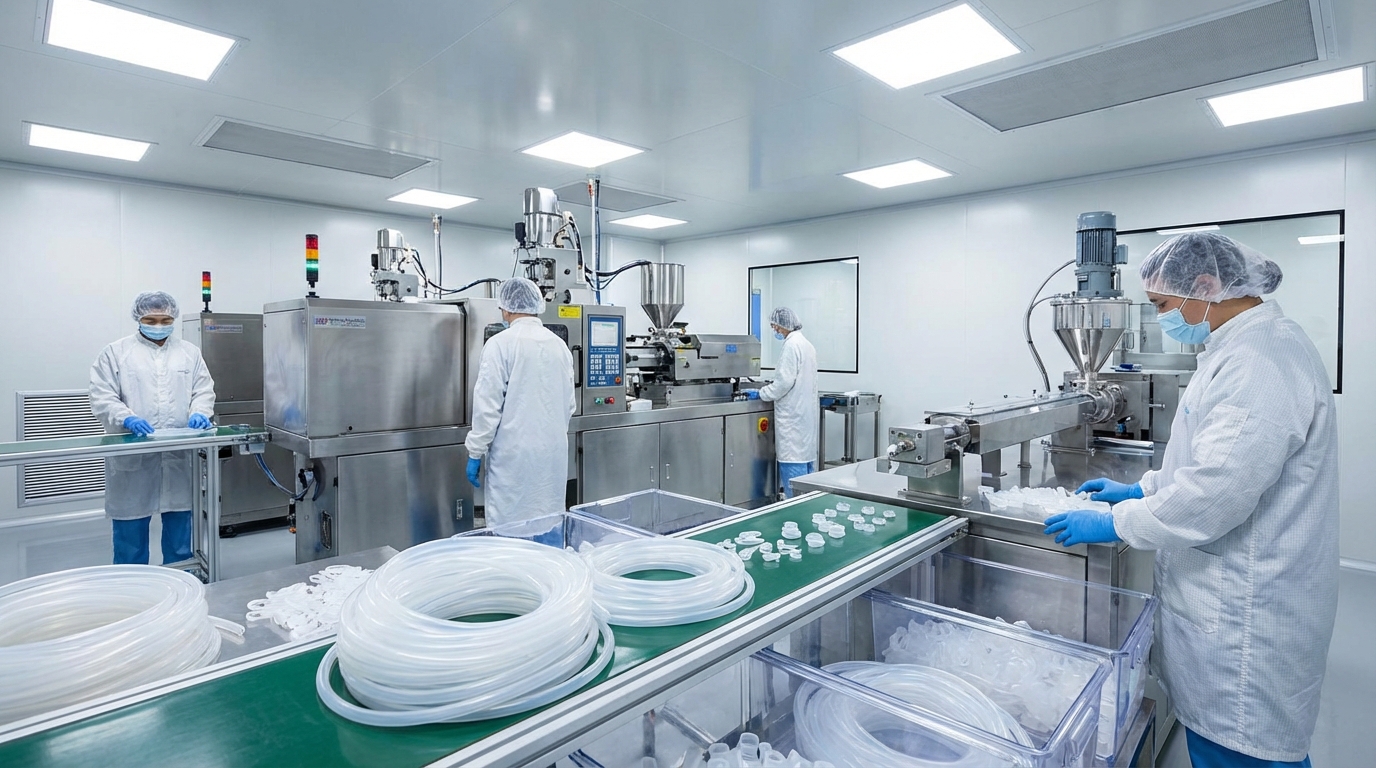
Knowing the “how” behind the grades allows for smarter material selection and cost control.
5. How does sterilization affect material grade selection?
Sterilization is often the deciding factor because medical-grade silicones are specifically designed to survive harsh cycles of heat or radiation. When asking is medical grade silicone the same as food grade silicone?, you must consider if your food-grade part needs to be sanitized frequently. Many food-grade silicones can handle boiling water, but medical grades are tested for repetitive steam autoclaving.
Steam autoclave vs. gamma radiation durability
Medical devices are often sterilized using high-pressure steam or gamma rays, which can degrade the molecular structure of standard silicone. Medical-grade formulations include stabilizers to prevent the material from becoming brittle.
Think about it:
- Steam Autoclave: High heat and moisture stress.
- Gamma Radiation: Can cause yellowing or loss of elasticity.
- Choice: You must match the grade to the sterilization method.
Residual odor and volatile organic compounds
High-heat sterilization can release trapped gases in the silicone, leading to “ghost odors” or residues. Medical grades undergo extensive post-curing to ensure these volatiles are removed before the part reaches the user.
Look at it this way:
- Post-curing at 200°C removes siloxanes.
- This ensures no odor during heat exposure.
- It also stabilizes the final dimensions of the part.
Will sterilization cycles degrade food-grade parts?
While food-grade silicone is heat-resistant, it may lose its physical properties after hundreds of intense sterilization cycles. If your food equipment requires daily steam cleaning, a higher-grade silicone may be necessary for longevity.
Here is the truth:
- Standard food grade: Good for occasional boiling.
- Medical grade: Built for industrial sterilization.
- Failure: Brittle silicone can shed particles into the food chain.
Key Takeaway: Always select a material grade that can withstand your specific cleaning and sterilization protocols without degrading.
| Method | Stress Level | Best Grade Choice |
|---|---|---|
| Boiling Water | Moderate | Food-Grade |
| Steam Autoclave | High | Medical-Grade |
| Gamma Ray | Chemical/Physical | Specialized Medical |
Durability under sterilization ensures the long-term safety and performance of your silicone components.
6. Why doesn’t grade always dictate mechanical performance?
The “grade” of silicone refers to its safety certifications, not its strength, stretch, or hardness. Even when you’ve decided is medical grade silicone the same as food grade silicone?, you still need to specify the mechanical properties. A medical-grade silicone can be very soft or very hard, just like a food-grade version.
Hardness ranges and Shore A targets for seals
Hardness is measured on the Shore A scale, typically ranging from 10A (very soft) to 80A (hard). Your seal’s effectiveness depends more on this hardness than on whether it is medical or food grade.
The reality is this:
- Soft silicone (30A): Better for conforming to uneven surfaces.
- Hard silicone (70A): Better for high-pressure industrial seals.
- Selection: Choose hardness based on your mechanical design.
Compression set benchmarks for B2B gaskets
Compression set measures how well a silicone gasket returns to its original shape after being squeezed. This is a critical KPI for preventing leaks in valves and containers over time.
But wait, there’s more:
- Low compression set means better long-term sealing.
- It is affected by the curing agent (platinum vs. peroxide).
- Grade does not automatically guarantee a low compression set.
Tear strength differences in LSR vs. compression
Liquid Silicone Rubber (LSR) generally offers better tear strength and precision than traditional compression-molded silicone. This makes it ideal for complex medical parts or thin-walled food containers.
Consider these factors:
- LSR: High precision, high tear resistance.
- Compression: Cost-effective for larger, simpler shapes.
- Grade: Both processes can use food or medical-grade raw materials.
Key Takeaway: Mechanical performance is a separate specification from compliance; you must define both to get a functional part.
| Property | Typical Range | Importance |
|---|---|---|
| Hardness | 10 – 80 Shore A | Sealing force and fit |
| Elongation | 100% – 800% | Flexibility and assembly |
| Tear Strength | 15 – 50 kN/m | Durability against damage |
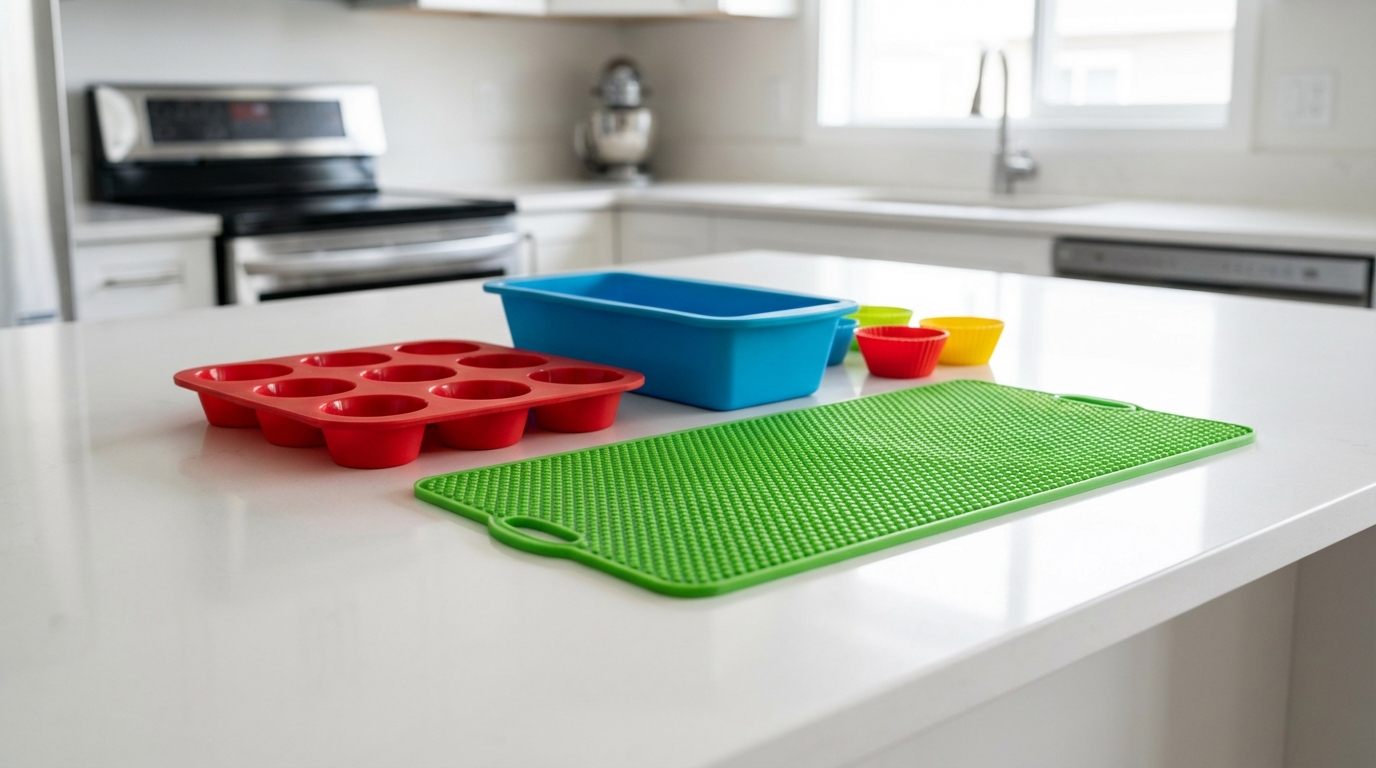
Focusing on mechanical specs ensures your safe material also performs its physical job correctly.
7. How does factory tooling impact part compliance?
Precision tooling is the foundation of quality, ensuring that your parts meet the tight tolerances required for medical or food safety. When considering is medical grade silicone the same as food grade silicone?, you must realize that a safe material can still fail if the mold is contaminated. In-house mold design allows for better control over surface finishes and parting lines.
In-house mold design for better dimensional accuracy
Managing the mold-making process internally reduces the risk of communication errors and speed-up iterations. This ensures that the final part matches your 3D drawings exactly, which is vital for waterproof seals.
Think about it:
- Accurate molds prevent “flash” (excess material).
- Proper venting prevents air bubbles in the silicone.
- Tight tolerances ensure a perfect fit in your assembly.
Preventing batch contamination in the facility
Contamination from other rubbers like EPDM or Nitrile can ruin a batch of food-grade or medical-grade silicone. A dedicated silicone facility prevents these foreign materials from entering the production line.
Look at it this way:
- Dedicated machines prevent cross-contamination.
- Strict cleaning protocols between batches are essential.
- Air filtration systems protect the material during curing.
Why process stability matters for medical audits
Audit success depends on showing that your manufacturing process is stable and repeatable. Medical-grade production requires documented process controls for every single shift.
Here is the truth:
- Stable pressure and temperature lead to consistent parts.
- Automated LSR injection reduces human error.
- Consistency is the key to passing medical device audits.
Key Takeaway: High-quality tooling and a controlled factory environment are just as important as the material grade itself.
| Tooling Aspect | Benefit | Compliance Impact |
|---|---|---|
| In-House Design | Faster DFM feedback | Dimensional stability |
| Surface Finish | Easier cleaning | Reduced bacterial growth |
| Automated Injection | Batch consistency | Reliable audit trails |
Reliable tooling ensures that your chosen grade of silicone is molded into a perfect, compliant component.
8. How should procurement teams choose the right grade?
The right choice begins with a clear understanding of your product’s environment and the regulations of your target market. Before asking is medical grade silicone the same as food grade silicone?, list every substance your part will touch. A thorough assessment prevents you from over-paying for medical grade when food-grade is sufficient.
Evaluating contact scenarios and media exposure
Identify if the silicone will touch human skin, internal tissue, water, oils, or harsh cleaning chemicals. Each scenario points to a different compliance path.
The reality is this:
- Skin contact: Needs medical-grade biocompatibility.
- Beverage contact: Needs food-grade migration testing.
- Oil exposure: May need specialized oil-resistant silicone.
Setting realistic test plans for mass production
Don’t just rely on a material datasheet; set up a testing plan for your finished parts. This includes dimensional reports and functional tests like leak-proofing.
But wait, there’s more:
- Request Material Certificates (COA) for every batch.
- Perform “First Article Inspections” (FAI) before mass production.
- Conduct aging tests if the product has a long shelf life.
Using DFM reviews to balance cost and compliance
A Design for Manufacturing (DFM) review helps you optimize the part’s shape to reduce waste and lower costs. This is the best time to finalize whether you truly need medical-grade or if food-grade is the smarter B2B choice.
Consider these steps:
- Simplify geometry to reduce mold complexity.
- Select the most cost-effective curing method for your grade.
- Use DFM to identify potential quality risks early.
Key Takeaway: A structured procurement process saves money and prevents legal headaches by matching the grade to the real-world use.
| Step | Action | Outcome |
|---|---|---|
| 1. Define Media | List all contact fluids/solids | Grade identification |
| 2. Review DFM | Optimize design for molding | Lower unit costs |
| 3. Verify COA | Check raw material batch data | Guaranteed compliance |
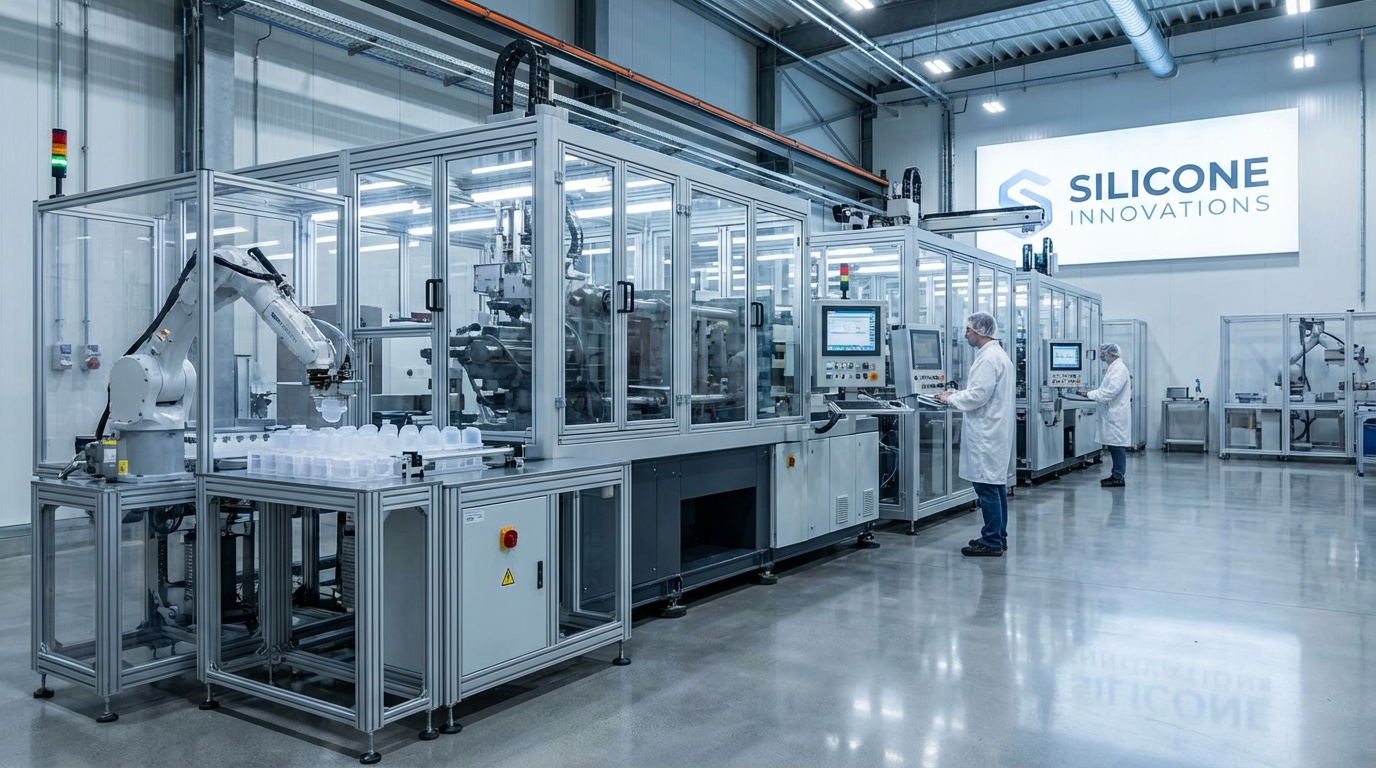
Smart procurement turns material selection from a guessing game into a strategic advantage.
9. Why do buyers often choose the wrong silicone grade?
Mistakes usually happen when buyers treat “medical-grade” as a general quality label rather than a specific regulatory requirement. When asking is medical grade silicone the same as food grade silicone?, many assume “more expensive is better.” In reality, using medical-grade for a simple kitchen tool adds unnecessary cost without improving the user experience.
The hidden cost of over-specifying to medical grade
Specifying medical-grade when it isn’t required can increase your component costs by 30% to 50%. This can make your final product less competitive in the consumer market.
Look at it this way:
- Medical grade: Higher material cost, stricter production.
- Food grade: Optimized for value and food safety.
- Strategy: Only specify what the regulations require.
Ignoring peak temperature and cleaning pH levels
A buyer might choose a food-grade silicone but forget that the part will be cleaned with high-pH industrial detergents. This causes the silicone to swell or degrade, regardless of its initial “grade.”
Think about it:
- High pH cleaners can attack the silicone backbone.
- Peak temperatures can exceed the material’s limit.
- Media compatibility is as important as the grade label.
Failure to verify raw material batch certificates
Many buyers assume that because a factory can make medical parts, every part they make is medical grade. You must verify the specific batch certificate for the material used in your order.
Here is the truth:
- Certification is batch-specific, not factory-wide.
- Always check the “CofA” (Certificate of Analysis).
- Verify that the certificate matches the current production run.
Key Takeaway: Avoid over-specifying or under-testing by focusing on the actual regulatory needs and environmental stresses of your part.
| Mistake | Consequence | Prevention |
|---|---|---|
| Over-specifying | High costs, low margin | Strict regulatory review |
| Ignoring Media | Part failure in field | Chemical compatibility test |
| Skipping COA | Compliance risk | Mandatory batch paperwork |
By avoiding these common pitfalls, you ensure your project stays on budget and in compliance.
10. What are the final steps for a successful B2B order?
A successful order ends with a rigorous quality control process and seamless export logistics. Once you have settled the question of is medical grade silicone the same as food grade silicone?, you must define how you will inspect the final goods. This ensures that the high-quality material you selected has been molded into high-quality parts.
Defining customized QC standards and inspections
Every project needs a tailored Quality Control (QC) plan that focuses on its most critical features. For a medical seal, this might be microscopic surface inspection; for a food container, it might be volume accuracy.
The reality is this:
- Define “AQL” (Acceptable Quality Levels) levels.
- Specify what constitutes a “critical defect.”
- Use CCD visual inspection for high-volume precision parts.
Final dimensional reports and functional checks
Before the parts leave the factory, you should receive a final report confirming they meet all specified dimensions. Functional checks, such as leak testing or tactile feel, verify the part works in its real application.
But wait, there’s more:
- Dimensional reports provide proof of accuracy.
- Functional checks reduce your incoming inspection workload.
- Video inspections can offer peace of mind for overseas buyers.
Coordinating export documents for your supply chain
Proper documentation, including packing lists, commercial invoices, and material certifications, is essential for smooth customs clearance. Missing paperwork can lead to expensive delays at the port.
Consider these requirements:
- Ensure HS codes are accurate for your region.
- Include all safety certifications in the shipping file.
- Coordinate with a reliable freight forwarder for door-to-door delivery.
Key Takeaway: Success is only achieved when the parts are delivered on time, with full documentation, and meet every quality standard.
| Final Phase | Critical Action | Value to Buyer |
|---|---|---|
| Inspection | AQL-based final QC | Zero-defect shipments |
| Reporting | Dimensional verification | Guaranteed fit and finish |
| Shipping | Export document prep | Fast customs clearance |
Completing these steps ensures that your sourcing journey concludes with a high-performance, compliant product.
Conclusion
Is medical grade silicone the same as food grade silicone? The answer is a definitive no. While both materials offer the heat resistance and flexibility of silicone, they serve different masters—one focuses on the safety of ingestion, while the other protects the delicate biological balance of the human body. By understanding these nuances, you can choose the correct compliance path, optimize your production costs, and ensure your products pass every audit.
At HuaLin Silicone, we simplify this complex process for you. From initial DFM reviews to high-precision LSR molding and global export, we provide the technical expertise you need to succeed. Whether you require FDA-compliant baby care products or ISO 10993 medical components, our Dongguan-based facility is ready to bring your designs to life with 100% inspection and full traceability.
Ready to secure your supply chain with precision-engineered silicone? contact us today to receive a free DFM review and expert guidance on your next project. We are committed to a future where high-performance silicone protects lives and enhances innovation across every industry.
FAQ
Can I use food-grade silicone for a skin-contact wearable device?
No, because food-grade silicone is not tested for the biological skin reactions, such as irritation or sensitization, required for wearable devices. You should always opt for medical-grade silicone that meets ISO 10993 standards to ensure user safety and avoid legal liability.
What’s the best way to tell if my silicone parts are truly medical grade?
The most reliable method is to request a Certificate of Analysis (COA) that specifically references USP Class VI or ISO 10993 compliance for the exact batch of material used in your production. Without this documented proof from the raw material supplier, you cannot verify the grade, regardless of the part’s appearance.
How do I know if I need LFGB or FDA food-grade silicone?
It depends on your target market; FDA is generally sufficient for the United States, while LFGB is the mandatory standard for Germany and highly preferred throughout the rest of Europe. If you are planning a global launch, choosing LFGB-compliant silicone is the safest strategy as it meets the world’s most stringent extraction limits.