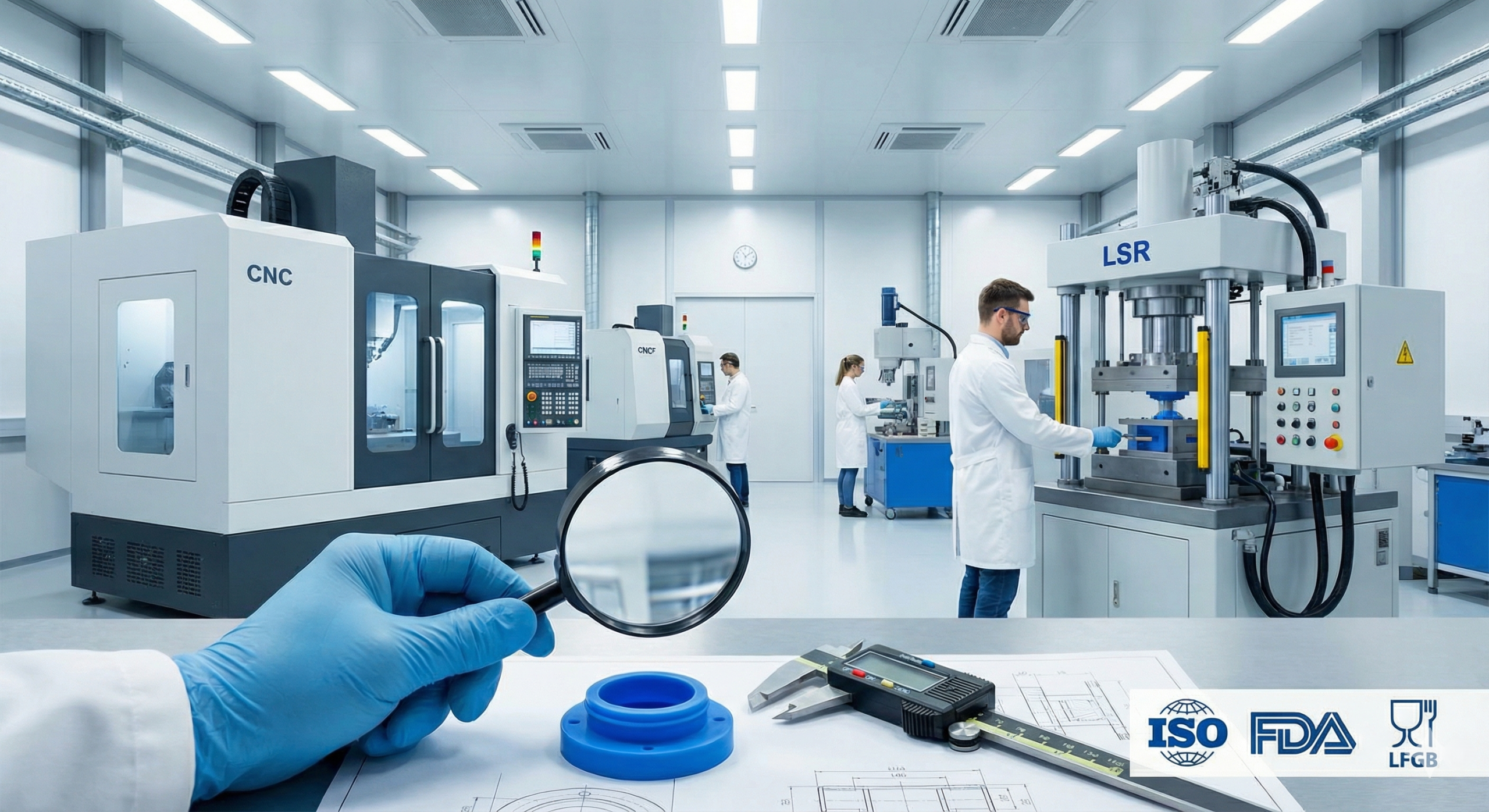
Finding a reliable partner for custom silicone manufacturing can be the difference between a successful product launch and a costly production nightmare. Many B2B buyers struggle with inconsistent part quality, hidden logistical fees, and poor material transparency when sourcing abroad. This comprehensive guide outlines the critical criteria and strategic steps for How to Choose a Reliable Silicone Manufacturer in China to ensure your business secures high-precision components that meet global standards.
Can the Factory Handle In-House Mold Making?
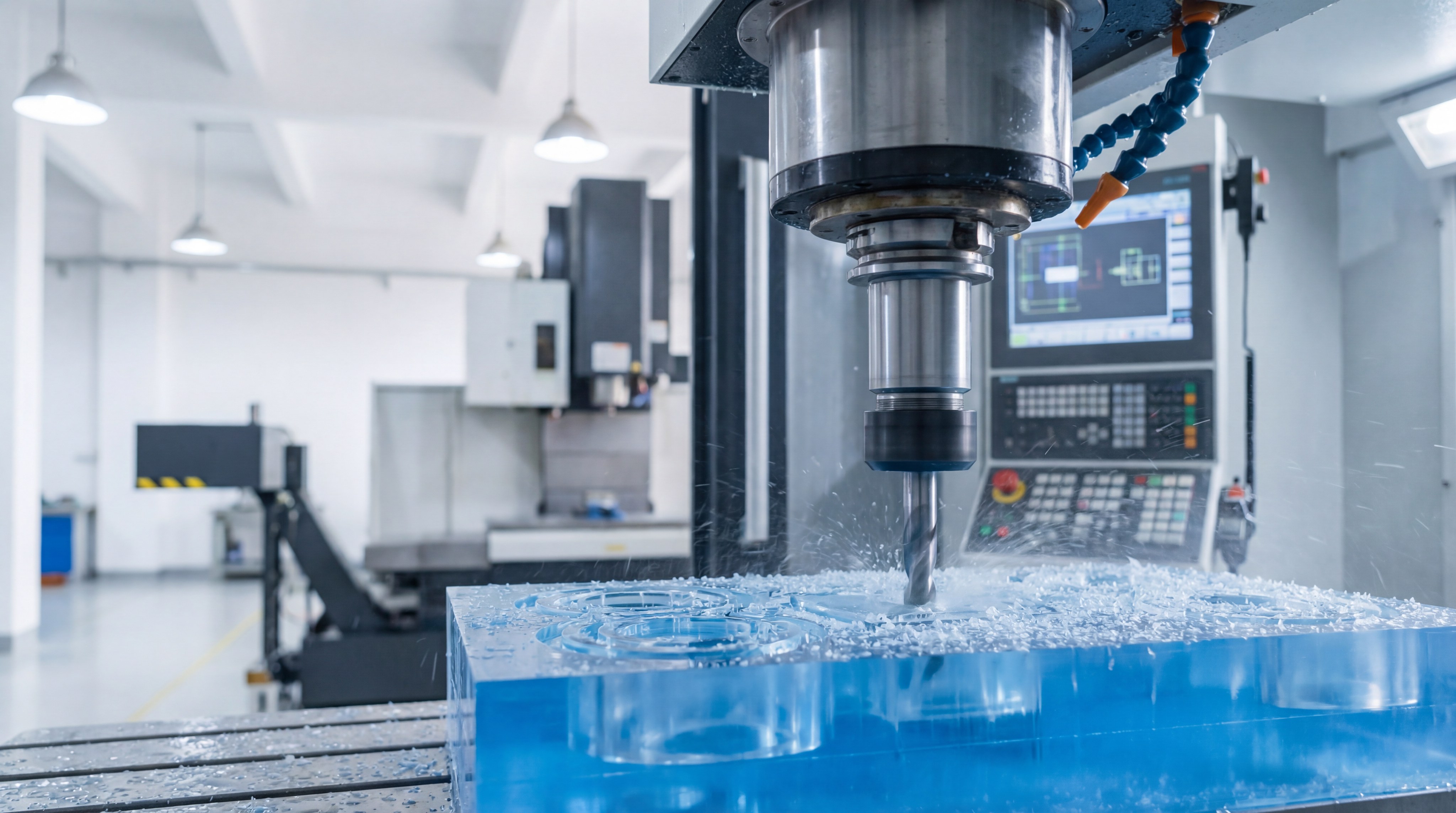
A manufacturer with in-house tooling capabilities provides significantly better control over project timelines and part precision. Understanding How to Choose a Reliable Silicone Manufacturer in China involves verifying if they use advanced CNC and EDM machinery to carve their own molds rather than outsourcing to third-party shops.
Benefits of In-House CNC and EDM Tooling
In-house mold making allows for rapid iterations and immediate adjustments during the prototyping phase.
But here is the kicker:
It can reduce your T1 sample lead times by up to 50% while ensuring the mold geometry perfectly matches your 3D design files.
- Direct oversight of steel quality and hardening processes.
- Faster response to design changes (DFM).
- Lower overall tooling costs by removing middleman markups.
Impact of Tooling Precision on Part Tolerance
High-precision molds are essential for achieving tight tolerances as low as ±0.01mm in Liquid Silicone Rubber (LSR) parts.
You might be wondering how this affects your bottom line.
Precise tooling minimizes “flash” or excess material, which significantly reduces secondary trimming labor and material waste.
- High-speed CNC ensures micro-precision for complex medical or electronic parts.
- Automated mold maintenance extends the life of the tool for millions of cycles.
Key Takeaway
In-house tooling is the foundation of precision; always prioritize factories that own their CNC and EDM equipment.
| Capability | In-House Tooling | Outsourced Tooling |
|---|---|---|
| Lead Time | 15–25 Days | 35–45 Days |
| Tolerance Control | High (±0.01mm) | Moderate (±0.1mm) |
| IP Protection | Superior | Vulnerable |
Choosing a factory with integrated mold making ensures that technical specifications are never lost in translation between shops.
Which Silicone Molding Process Fits Your Project?
Selecting the right fabrication method is vital for balancing part performance with manufacturing costs. When evaluating How to Choose a Reliable Silicone Manufacturer in China, you must ensure the supplier offers a variety of molding processes tailored to your specific volume and complexity requirements.
LSR Injection vs. Compression Molding
Liquid Silicone Rubber (LSR) injection molding is the gold standard for high-volume, high-precision components like medical valves and ear tips.
The best part?
LSR is fully automated, allowing for rapid cycle times of less than 60 seconds and zero-flash production.
- LSR Injection: Best for micro-parts (0.005g) and high-volume mass production.
- Compression Molding: Ideal for large, thick parts and low-volume prototyping.
Advanced Overmolding and Extrusion Methods
Overmolding allows for the permanent bonding of silicone to plastic or metal substrates without the need for adhesives.
But wait, there’s more:
This process creates a seamless, waterproof seal (IP68) that is essential for smart wearables and rugged electronics.
- Overmolding: Achieves mechanical and chemical bonds between materials.
- Extrusion: Best for continuous profiles like silicone tubing, gaskets, and seals.
Key Takeaway
The choice between LSR and compression molding should be driven by part complexity and total production volume.
| Feature | LSR Injection | Compression Molding |
|---|---|---|
| Automation | Fully Automated | Mostly Manual |
| Cycle Time | 30–90 Seconds | 3–10 Minutes |
| Best For | Complex/Precision Parts | Simple/Bulkier Parts |
A versatile manufacturer will provide DFM feedback to help you choose the most cost-effective process for your design.
Does the Supplier Meet Global Compliance Standards?
Regulatory compliance is non-negotiable, especially for industries involving food contact, medical devices, or infant care. Learning How to Choose a Reliable Silicone Manufacturer in China requires a deep dive into the factory’s certification portfolio and material traceability.
Understanding FDA and LFGB Food-Grade Standards
Silicone used in kitchenware or baby products must be certified as food-grade to ensure no harmful chemicals leach into the user.
You might think all silicone is safe, but here is the truth:
LFGB (German standard) involves stricter testing than FDA and is often required for premium European markets.
- FDA Compliance: Standard for US food-contact applications.
- LFGB Compliance: Higher purity standards often requiring secondary curing.
- BPA-Free: Essential for mother and baby care products.
Importance of ISO 13485 for Medical Silicone
For healthcare applications, a manufacturer must hold ISO 13485 certification to prove they follow a rigorous quality management system for medical devices.
This is where it gets serious:
Medical-grade silicone must be biocompatible (ISO 10993) and often produced in controlled environments to prevent particulate contamination.
- Ensures material biocompatibility and skin-safe properties.
- Provides full traceability from raw material batch to finished part.
Key Takeaway
Never accept “verbal” quality promises; always request valid, third-party PDF certificates for ISO 9001, 13485, and FDA/LFGB.
| Certification | Industry Focus | Key Requirement |
|---|---|---|
| ISO 13485 | Medical / Healthcare | Quality Management for Devices |
| FDA/LFGB | Kitchen / Baby | Food-Contact Safety |
| RoHS/REACH | Electronics | Chemical Restriction Compliance |
Rigorous compliance prevents costly product recalls and ensures your brand remains trusted in highly regulated markets.
What Quality Control Protocols Are in Place?
Consistency in mass production is maintained through structured inspection workflows and specialized facilities. When researching How to Choose a Reliable Silicone Manufacturer in China, ask for a detailed Quality Control (QC) plan that covers every stage from material arrival to final packaging.
Three-Stage Inspection: IQC, IPQC, and FQC
A professional factory uses a three-tier system to catch defects before they reach your warehouse.
But here is the kicker:
Relying only on a final check is a recipe for disaster, as defects should be identified during the molding process itself.
- IQC (Incoming): Testing raw silicone for hardness, purity, and color consistency.
- IPQC (In-Process): Regular checks on the production line to monitor dimensions and cure times.
- FQC (Final): 100% inspection of finished goods for cosmetic defects or flash.
Cleanroom Standards for Sensitive Components
High-purity silicone products, such as medical valves or infant nipples, must be manufactured in a Class 100,000 (ISO 8) cleanroom.
You might be wondering why this matters.
Without dust control, static electricity in silicone can attract microscopic debris, compromising the sterility and function of the part.
- Prevents environmental contamination during LSR injection.
- Required for ISO 13485 compliant medical production.
Key Takeaway
A 100% inspection policy combined with cleanroom production is the only way to guarantee a 99.5% yield rate.
| QC Stage | Primary Focus | Tools Used |
|---|---|---|
| IQC | Material Hardness/Purity | Durometers, Spectrometers |
| IPQC | Part Dimensions/Tolerances | CCD Inspection, Calipers |
| FQC | Cosmetic/Final Function | Visual Inspection, Leak Testing |
Consistent QC protocols ensure that the millionth part produced is identical to the very first prototype approved.
Can They Scale Production for Your Demand?
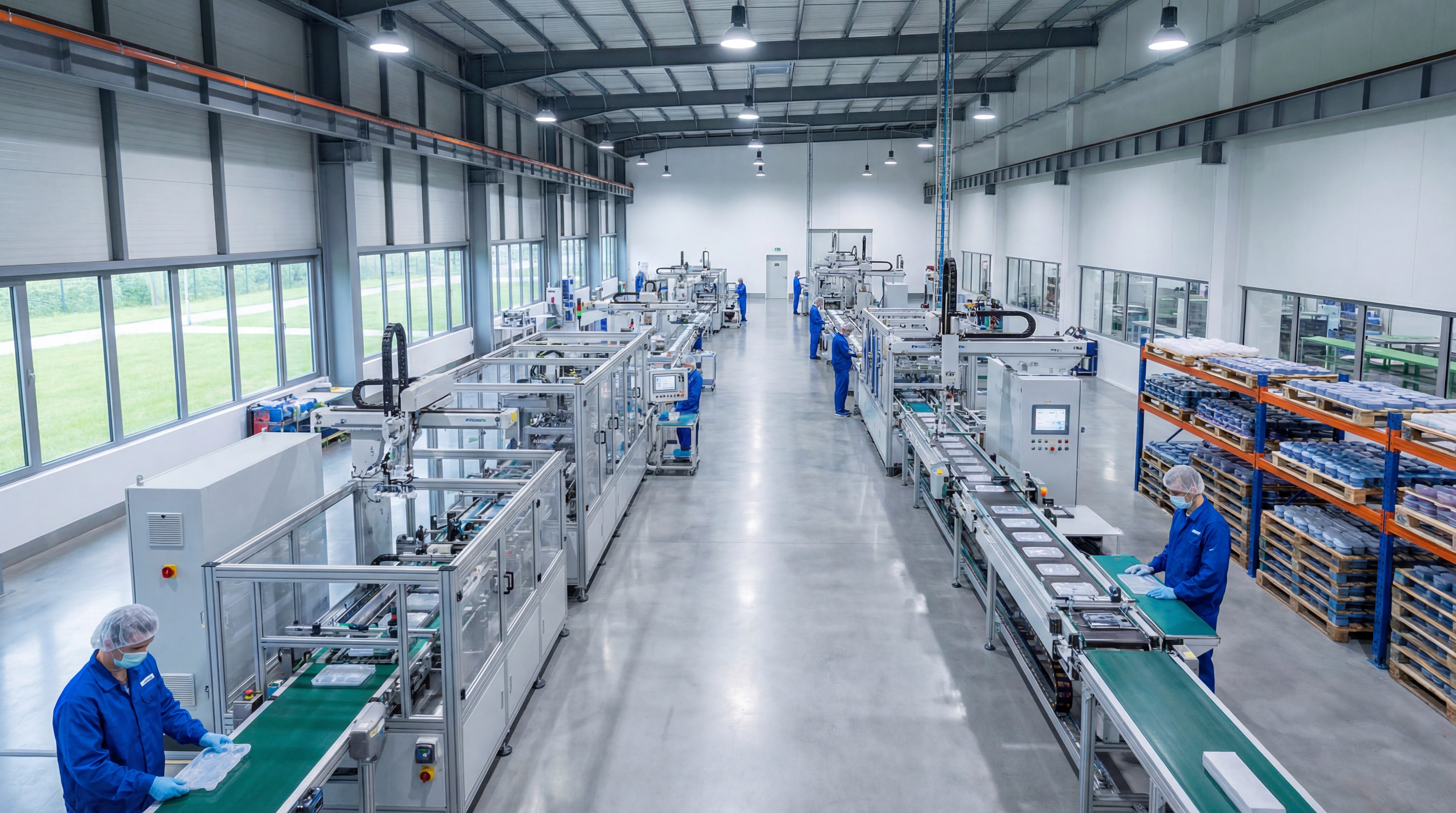
Scaling from a few hundred prototypes to millions of units per month requires significant infrastructure and automation. Assessing How to Choose a Reliable Silicone Manufacturer in China involves looking at their machine count and ability to maintain quality at high volumes.
Automated LSR Lines for High-Volume Scaling
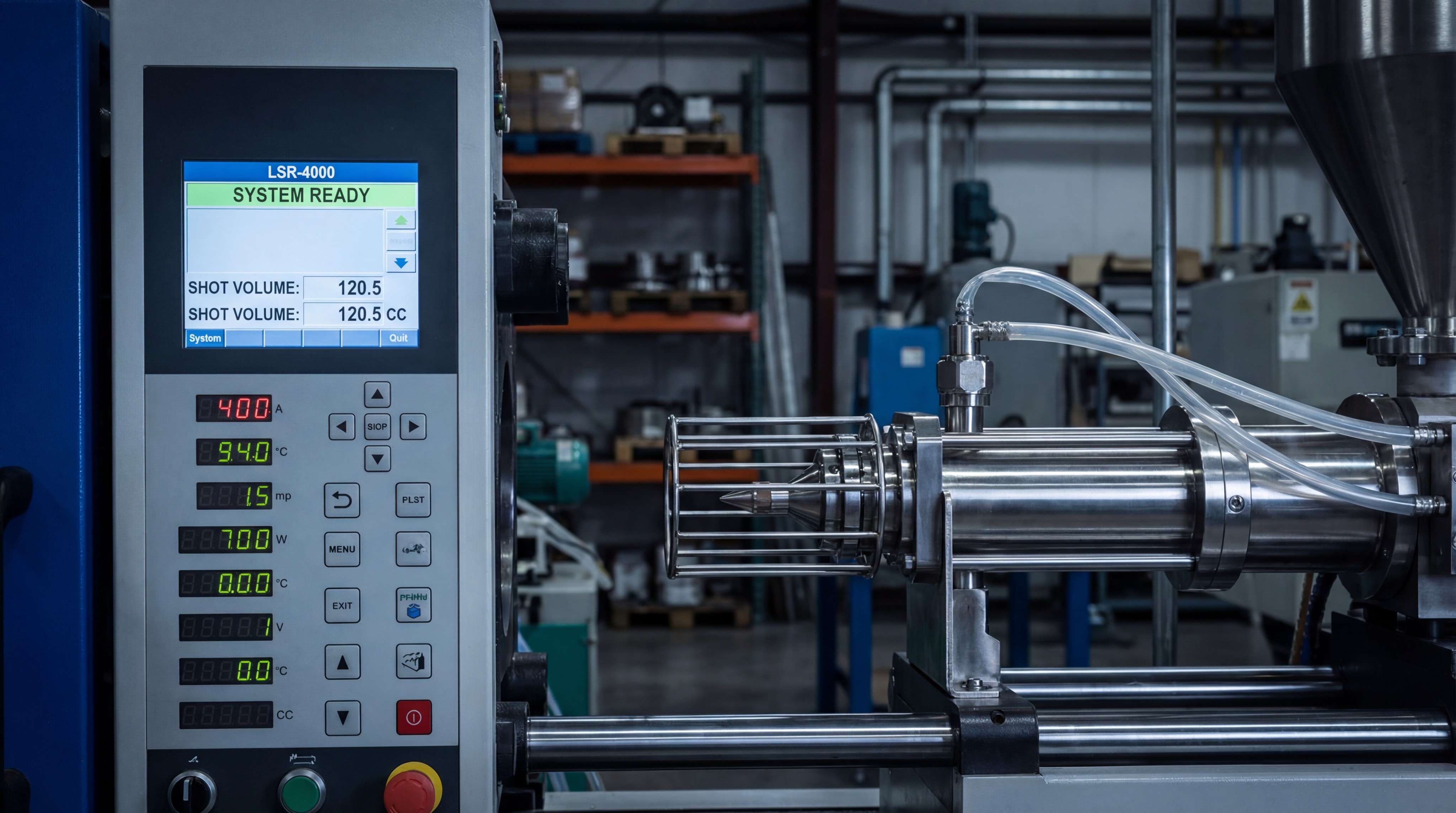
Fully automated LSR machines equipped with robotic demolding systems can run 24/7 with minimal human intervention.
The bottom line is this:
Automation not only increases speed but also eliminates the human error associated with manual part removal.
- Scalability to 5,000,000 units per month.
- Cold-runner systems reduce material waste by up to 30%.
- Consistent cycle times ensure uniform curing across all batches.
Managing Low MOQ for Startup Prototyping
While mass production is the goal, startups often need low Minimum Order Quantities (MOQs) to test the market.
Here is a secret:
The best manufacturers use soft-tooling or compression molding for small runs (500-1,000 units) before transitioning to high-cavity LSR molds.
- Flexible MOQ supports product development and market testing.
- DFM support helps bridge the gap between prototype and mass production.
Key Takeaway
Choose a partner that can support you at every stage, from low-MOQ prototyping to massive industrial scaling.
| Production Scale | Typical MOQ | Process |
|---|---|---|
| Prototyping | 100 – 500 pcs | Compression / 3D Printing |
| Mid-Volume | 1,000 – 10,000 pcs | Single-Cavity LSR |
| High-Volume | 100,000+ pcs | Multi-Cavity LSR / Auto |
Infrastructure scalability protects your supply chain as your business grows and your order volumes increase.
How Does the Factory Manage Project Communication?
In international manufacturing, technical clarity and responsiveness are just as important as the machinery on the floor. A vital part of How to Choose a Reliable Silicone Manufacturer in China is vetting the expertise and availability of their engineering and sales teams.
Working with English-Speaking Project Managers
Communication barriers can lead to misinterpreted tolerances or incorrect material grades.
It’s a simple truth:
A dedicated project manager who speaks your language ensures that technical nuances are understood and implemented.
- Fast response times (within 24 hours) for quotes and updates.
- Transparent reporting on production milestones and potential delays.
- Ability to hold technical video calls to discuss design revisions.
Transparency in Design Feedback and Revisions
A good manufacturer won’t just say “yes” to every design; they will offer constructive feedback through Design for Manufacturability (DFM) reports.
But here is the kicker:
A supplier who suggests design changes to save you money is a partner invested in your long-term success.
- Identification of “undercuts” that might cause demolding issues.
- Suggestions for gating locations to minimize cosmetic blemishes.
Key Takeaway
Technical communication is the bridge between a digital design and a physical product; prioritize partners with strong engineering support.
| Communication Metric | Industry Leader | Standard Factory |
|---|---|---|
| Response Time | < 12 Hours | 2 – 3 Days |
| Design Support | Detailed DFM Reports | No Feedback |
| Project Tracking | Weekly Progress Photos | Vague Status Updates |
Clear, proactive communication eliminates the “black box” feeling often associated with overseas manufacturing.
How Are International Shipping and Logistics Handled?
Producing a high-quality part is only half the battle; getting it to your warehouse efficiently and safely is the other half. When looking at How to Choose a Reliable Silicone Manufacturer in China, evaluate their export experience and packaging standards.
Export Experience for Global 500 Companies
Factories that regularly serve global brands understand the complexities of international customs, duties, and documentation.
The best part?
Experienced exporters can often suggest shipping routes or methods that significantly lower your landed cost.
- Familiarity with DDP, FOB, and EXW shipping terms.
- Accurate HS code classification to avoid customs delays.
- Preparation of all necessary export permits and safety data sheets (SDS).
Lead Time Reliability and Shipping Methods
Timely delivery is critical for retail seasonal launches or medical supply chains.
You might be wondering about the best options.
Manufacturers should offer a mix of air freight for urgent samples and sea freight for cost-effective bulk shipments.
- Air Freight: 3–7 days for samples and urgent small batches.
- Sea Freight: 25–40 days for high-volume, cost-effective logistics.
- Rail/Trucking: Alternative routes for specific regions like Europe or SE Asia.
Key Takeaway
A manufacturer with a dedicated logistics team ensures your goods are packaged securely and clear customs without a hitch.
| Factor | Air Freight | Sea Freight |
|---|---|---|
| Cost | High | Low |
| Speed | Very Fast | Slow |
| Best For | Samples / Urgent Needs | Mass Production Stock |
Logistical expertise prevents hidden fees and ensures your products arrive on schedule and in perfect condition.
Is the Raw Silicone Material Traceable and Safe?
The quality of the final product is directly tied to the purity of the raw polymer used. Determining How to Choose a Reliable Silicone Manufacturer in China involves verifying the source of their silicone and their testing procedures.
Selecting Between Medical and Food-Grade Silicone
Not all silicone is created equal; different applications require different curing agents—typically peroxide-cured or platinum-cured.
But wait, there’s more:
Platinum-cured silicone is the premium choice because it does not produce by-products, ensuring it is odorless, tasteless, and highly transparent.
- Platinum-Cured: Best for medical, baby, and high-end kitchenware.
- Peroxide-Cured: More economical; suitable for industrial gaskets and seals.
Verifying Raw Material Certificates of Analysis
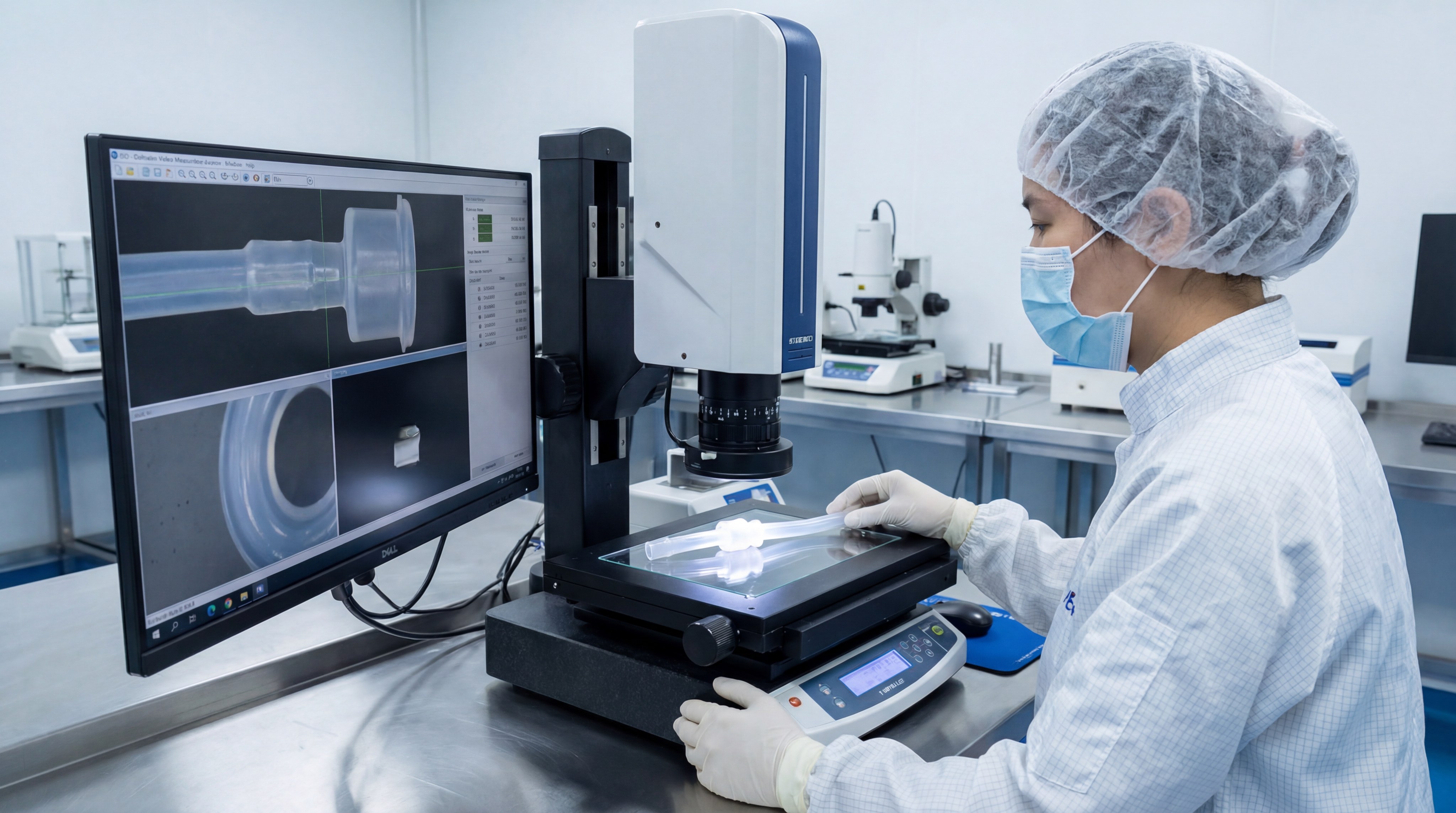
A reliable supplier will provide a Certificate of Analysis (COA) for every batch of raw material used in your project.
The bottom line is this:
Traceability ensures that if a material defect is found, it can be tracked back to the specific batch and date of production.
- Ensures consistency in Shore hardness (10A to 80A).
- Verifies compliance with RoHS and REACH environmental standards.
Key Takeaway
Always insist on platinum-cured silicone for any product that comes into contact with the body or food.
| Material Property | Medical Grade (Platinum) | Industrial Grade (Peroxide) |
|---|---|---|
| Purity | Extreme (No By-products) | Standard |
| Transparency | High | Moderate to Low |
| Tear Strength | >45 N/mm | 25 – 35 N/mm |
Material transparency protects your customers’ health and shields your business from legal liabilities.
Do They Offer DFM and Prototyping Services?
Optimization should happen before the first steel is cut for the mold. A core pillar of How to Choose a Reliable Silicone Manufacturer in China is their ability to provide technical guidance during the design phase.
Using DFM to Optimize Production Cycles
Design for Manufacturability (DFM) is a data-driven review of your part’s geometry to ensure it can be molded efficiently.
But here is the kicker:
Small changes in wall thickness or corner radii can reduce cycle times by 20%, directly lowering your cost per unit.
- Optimizing gate locations to prevent visible “knit lines.”
- Ensuring uniform wall thickness (0.2mm to 5mm) for even curing.
- Adding draft angles to facilitate easy part ejection.
Rapid Prototyping and T1 Sample Turnaround
Before committing to expensive mass-production molds, you need physical samples to verify fit and function.
You might be wondering how fast this can happen.
A factory with a specialized prototyping cell can deliver T1 samples in as little as 7–10 days using bridge tooling.
- 3D printed molds for immediate “look and feel” testing.
- Single-cavity sample molds for functional testing with real materials.
- Rapid iteration based on physical test results.
Key Takeaway
DFM is not an optional extra; it is a vital engineering service that prevents mold rework and saves thousands of dollars.
| DFM Check | Purpose | Customer Benefit |
|---|---|---|
| Draft Angles | Easier Ejection | Lower Scrap Rates |
| Wall Thickness | Uniform Curing | No Warpage / Bubbles |
| Gate Placement | Cosmetic Finish | Premium Product Look |
Early-stage engineering support ensures your product is “born” ready for the demands of high-volume mass production.
Is the Pricing Structure Clear and All-Inclusive?
Price is always a factor, but the lowest quote is rarely the best value when hidden costs are considered. Finalizing How to Choose a Reliable Silicone Manufacturer in China requires a transparent breakdown of every cost element.
Understanding Tooling Costs vs. Unit Prices
Mold costs are a one-time investment, while unit prices affect your ongoing margins.
Here is a secret:
Some factories offer low unit prices but charge exorbitant “maintenance fees” for the mold later.
- Tooling: Clarify if the price includes unlimited mold maintenance and a life guarantee.
- Unit Price: Ensure it includes basic packaging, QC, and local transport to the port.
Identifying Hidden Fees in Bulk Production
Quotes should be all-encompassing to avoid “surprises” on the final invoice.
The best part?
A professional quote will explicitly list the costs for secondary services like silk-screen printing, laser engraving, or custom retail packaging.
- No hidden “material surcharge” fees.
- Clearly defined costs for color matching (Pantone).
- Transparent terms for bulk discounts as volume increases.
Key Takeaway
Compare “landed costs” (including shipping and duties) rather than just the factory-gate price to see the true financial picture.
| Pricing Element | Transparent Supplier | Budget Factory |
|---|---|---|
| Mold Life | Guaranteed (e.g., 500k shots) | Vague / No Guarantee |
| Packaging | Included in Quote | Extra Fee Added Later |
| Samples | Free / Low Cost | High Per-Sample Fees |
Clear pricing structures allow for accurate budgeting and protect your profit margins throughout the product lifecycle.
FAQ
Can I visit the factory before placing an order?
Yes. A legitimate manufacturer should welcome on-site audits or provide a detailed virtual tour to verify their cleanroom, machinery, and QC labs.
What’s the best way to verify material safety?
Mandatory. Always request recent FDA, LFGB, or biocompatibility test reports that are specific to the material batch being used for your order.
Can I get custom colors for my silicone products?
Absolutely. Professional manufacturers can match any Pantone color code and ensure consistency across different production runs.
What’s the typical lead time for a new project?
Standard. Expect 15–25 days for mold development and an additional 10–20 days for mass production, depending on the volume.
Can I request a Design for Manufacturability (DFM) report?
Recommended. Any high-quality factory will provide a DFM report for free to ensure your design is optimized for the chosen molding process.
Conclusion
Choosing the right custom silicone products manufacturer requires a holistic evaluation of their in-house technical capabilities, compliance standards, and communication transparency. By focusing on integrated tooling, automated LSR production, and rigorous three-stage quality control, you can mitigate the risks of international sourcing and build a resilient supply chain. At Hualin Silicone, we are committed to transforming your complex designs into high-precision reality using state-of-the-art Liquid Silicone Rubber technology and pharmaceutical-grade materials. We invite you to contact us today to discuss your project requirements and discover how our factory-direct expertise can drive your brand’s success in the global market.