
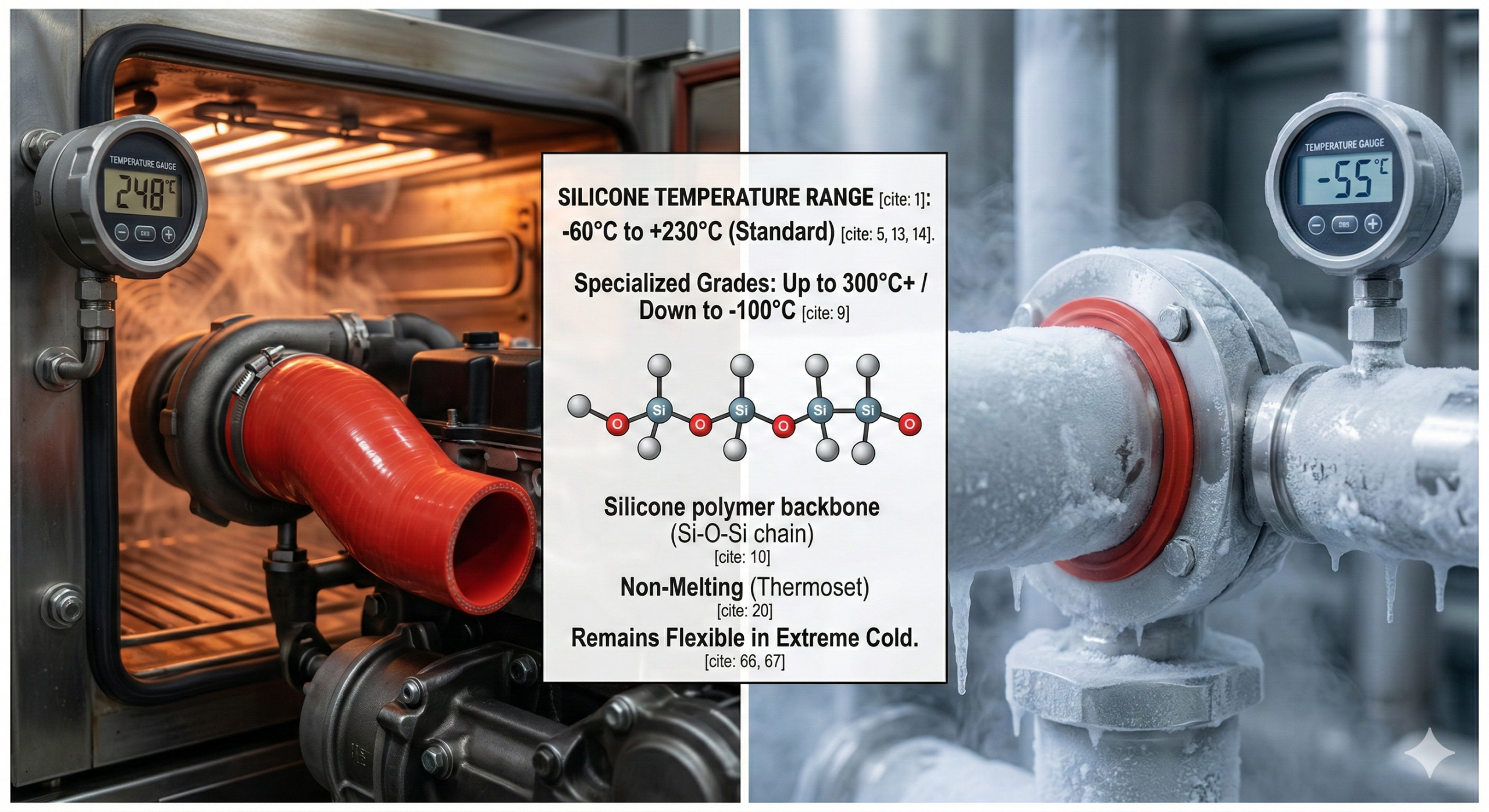
Silicone’s standard temperature range typically spans from -60°C to +230°C, with specialized grades reaching even wider extremes. You might be designing a new industrial seal or a consumer kitchen tool and find that standard rubbers fail under the stress of extreme heat. When these components warp or crack, your entire production line can come to a grinding halt, leading to expensive downtime and safety hazards. Fortunately, understanding how hot can silicone get allows you to select a material that maintains its integrity where others melt.
What is the standard temperature range for silicone?
The standard operating range for industrial silicone rubber is generally -60°C to +230°C. This stability makes it a go-to choice for engineers who need a material that won’t degrade when they analyze how hot can silicone get in daily operations.
Typical operating limits for industrial grades
Most commercial grades are rated for continuous use at temperatures up to 200°C. Here is the deal: if you push the material beyond this for extended periods without specific additives, you will notice a gradual loss of elasticity.
- Standard Grade: -60°C to 200°C.
- High-Temp Grade: Up to 300°C.
- Low-Temp Grade: Down to -100°C.
Why does silicone resist extreme thermal cycles?
Think about it: the silicon-oxygen backbone of the polymer is significantly stronger than the carbon-carbon bonds found in organic rubbers. This chemical structure prevents the material from becoming brittle during rapid temperature swings.
- High bond energy.
- Minimal thermal expansion.
- Stable cross-linking.
Key Takeaway: You can rely on standard silicone for most applications between -60°C and 230°C, ensuring long-term seal integrity and part performance.
| Parameter | Standard Silicone Value |
|---|---|
| Low Temperature Limit | -60°C |
| High Temperature Limit | +230°C |
| Thermal Stability | Excellent |
The standard range covers the majority of industrial needs while providing a safety margin for occasional spikes.
How hot can silicone get before it combusts?
Silicone does not have a true melting point but will begin to decompose and eventually auto-ignite at approximately 450°C. You must understand how hot can silicone get before it poses a fire risk in your specific facility or product design.
Understanding the absence of a true melting point
Unlike plastics that turn into liquid, silicone is a thermoset polymer that undergoes chemical decomposition rather than melting. But wait, there is more: this means that even as it fails, it doesn’t create a flowing fire hazard like thermoplastic materials.
- No liquid phase.
- Gradual hardening.
- Eventual charring.
What occurs at temperatures above 300°C?
When you exceed 300°C, the chemical bonds begin to break down, releasing volatile organic compounds. The best part is that the remaining material often forms a protective crust that can temporarily shield underlying structures.
- Outgassing of polymers.
- Reduction in tensile strength.
- Formation of silica ash.
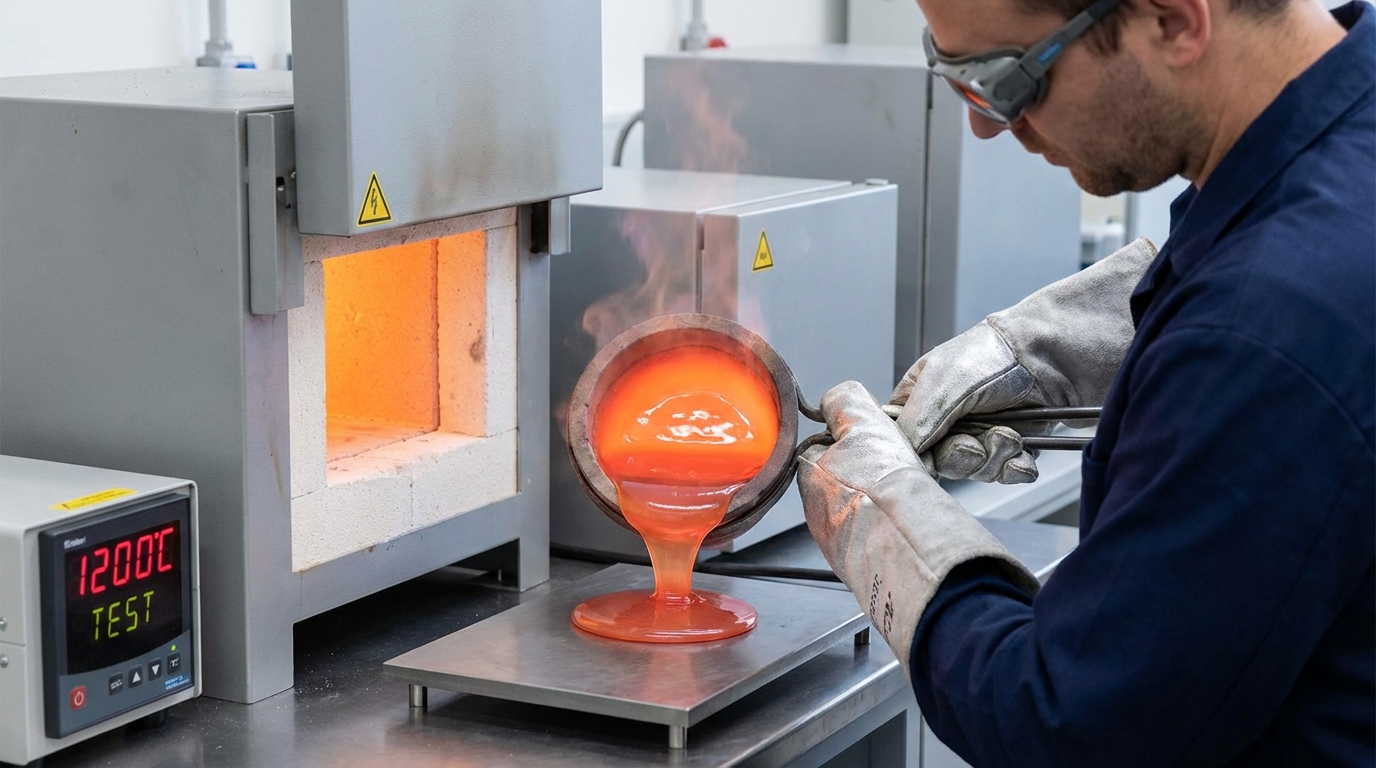
Key Takeaway: While silicone won’t melt into a puddle, you should keep operating temperatures below 300°C to prevent the material from losing its mechanical utility and eventually combusting.
| Event | Approximate Temperature |
|---|---|
| Thermal Decomposition | >300°C |
| Auto-ignition Point | ~450°C |
| Physical State Change | Solid to Ash |
Understanding the decomposition threshold is critical for preventing catastrophic material failure in high-heat environments.
What are the physical advantages of silicone rubber?
The primary physical advantages include exceptional flexibility, UV stability, and natural flame retardancy across a wide thermal spectrum. Knowing how hot can silicone get is just one part of the equation when you consider its overall durability.
Excellent durability and flame retardancy
Silicone remains flexible at temperatures where other rubbers turn to stone or melt into a mess. Truth be told, its inherent flame retardancy makes it the safest choice for electronics and aerospace seals.
- Low toxicity smoke.
- Non-corrosive combustion products.
- High dielectric strength.
How does water repellency aid sealing?
The hydrophobic nature of silicone ensures that it keeps moisture out, even when the seal is expanded by heat. Here is the deal: this water resistance prevents internal corrosion in machinery that operates in humid or wet conditions.
- Beads water effectively.
- Resists fungal growth.
- Maintains seal under pressure.
Key Takeaway: You benefit from a material that isn’t just heat-resistant, but also protects your components from UV rays, moisture, and electrical interference.
| Property | Advantage for Users |
|---|---|
| Flame Retardancy | Enhanced safety in fires |
| Flexibility | Easy installation and fit |
| UV Resistance | Long outdoor lifespan |
Silicone’s multifaceted physical benefits make it a versatile solution for more than just thermal challenges.
How is heat-resistant silicone manufactured?
Heat-resistant silicone is manufactured by cross-linking siloxane polymers through a process involving silicon metal and methyl chloride. This creates the inorganic backbone that defines how hot can silicone get during its service life.
The role of silicon and methyl chloride
The process starts with extracting silicon from quartz and reacting it with methyl chloride to produce silanes. But wait, there is more: these silanes are the building blocks that allow for the creation of various grades of silicone oil and rubber.
- Quartz sand refinement.
- Chemical synthesis of monomers.
- Purification stages.
Polymerization into durable siloxane structures
Through polymerization, these monomers are linked into long chains that are later cross-linked during the curing process. Think about it: the more robust the cross-linking, the more stable the final part will be when exposed to intense heat.
- Addition curing.
- Peroxide curing.
- Post-curing for stability.
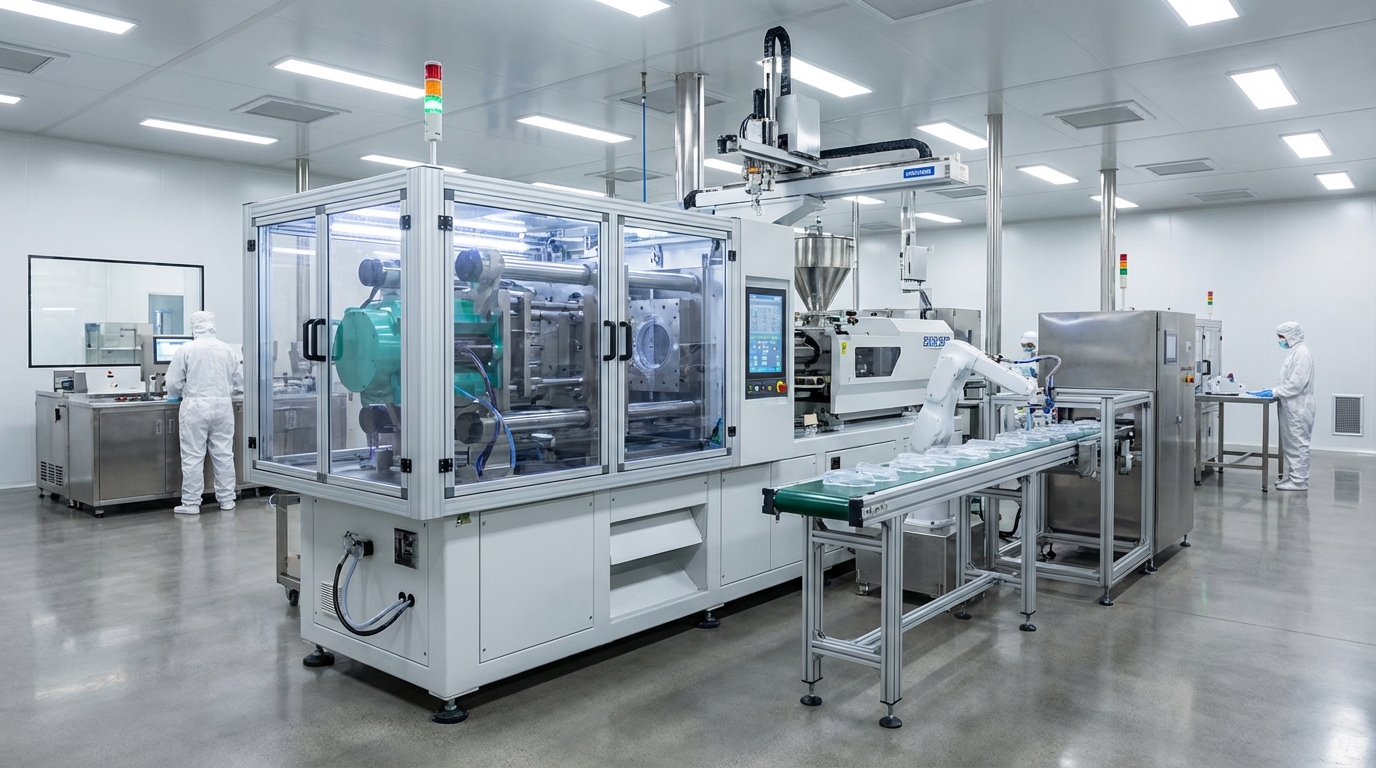
Key Takeaway: The manufacturing process uses high-purity raw materials to build an inorganic structure that you can trust in the most demanding thermal applications.
| Component | Function |
|---|---|
| Silicon Metal | Primary structural element |
| Methyl Chloride | Organic side group source |
| Catalysts | Initiates cross-linking |
Precise chemical engineering is the foundation of silicone’s world-class thermal and mechanical performance.
Can additives improve the maximum operating temperature?
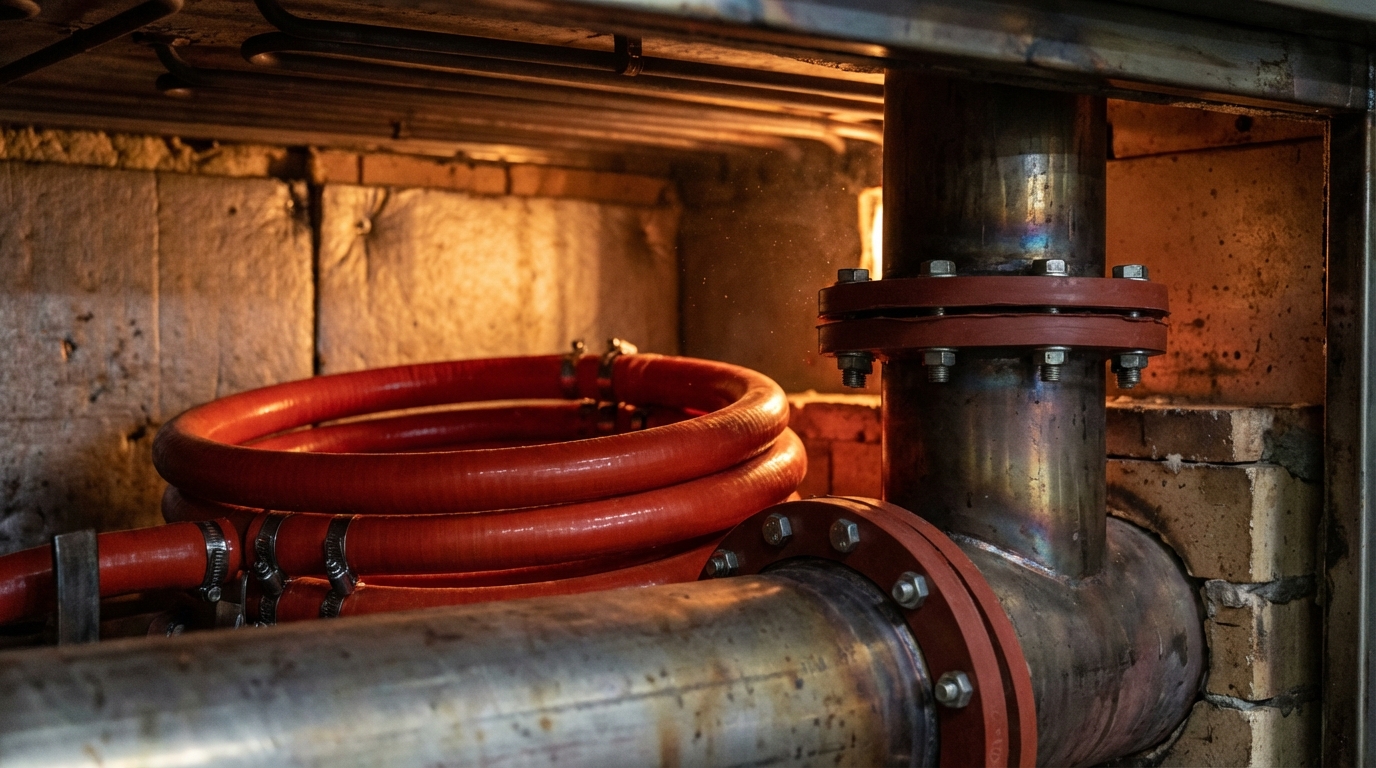
Yes, the addition of specific heat stabilizers like iron oxide can extend the maximum operating temperature to 300°C for continuous use. If you are pushing boundaries, researching how hot can silicone get with additives is a game-changer for your project.
Benefits of heat-stabilized silicone grades
Heat stabilizers prevent the polymer chains from “unzipping” when exposed to extreme thermal energy. The best part is that these additives can double or triple the service life of a gasket in a high-heat engine environment.
- Iron oxide (Red silicone).
- Titanium dioxide.
- Carbon black stabilizers.
Meeting UL94-V0 and EN45545-2 safety standards
For public transport and electronics, additives ensure the material meets strict fire safety codes. Truth be told, these certifications are often impossible to reach with standard organic elastomers without heavy chemical modification.
- Self-extinguishing properties.
- Low smoke emission.
- Resistance to flame spread.
Key Takeaway: You can customize your silicone parts with additives to meet specific safety certifications and survive environments that would destroy standard materials.
| Additive Type | Temperature Boost |
|---|---|
| Heat Stabilizers | +50°C to +70°C |
| Flame Retardants | Improves safety rating |
| Reinforcing Fillers | Increases hot strength |
Additives provide the necessary flexibility to tailor silicone’s performance to your most extreme engineering requirements.
How does silicone behave in sub-zero environments?
In sub-zero environments, silicone maintains its elasticity and mechanical properties down to -60°C, significantly outperforming most organic elastomers. While you might worry about how hot can silicone get, its cold-weather performance is just as impressive for outdoor or cryogenic use.
Retaining elasticity at -60°C or lower
Unlike nitrile or EPDM, silicone has a very low glass transition temperature, meaning it won’t shatter when frozen. Here is the deal: your seals will continue to provide a tight fit even in arctic conditions or high-altitude aerospace applications.
- Prevents seal leakage.
- Maintains vibration damping.
- Resists impact damage.
Is silicone better for extreme cold than nitrile?
Think about it: while nitrile is great for oil resistance, it becomes brittle and fails at temperatures where silicone is still soft. This makes silicone the superior choice for any application where temperature fluctuations go from one extreme to the other.
- Phenyl-silicone for -100°C.
- Superior compression set.
- No plasticizer migration.
Key Takeaway: You can use silicone in extreme cold without fear of material failure, ensuring your equipment stays operational regardless of the weather.
| Material | Low Temp Limit | Flexibility Status |
|---|---|---|
| Standard Silicone | -60°C | Flexible |
| Nitrile (Buna-N) | -30°C | Brittle |
| Fluorocarbon (FKM) | -20°C | Very Brittle |
Silicone’s ability to remain elastic in extreme cold makes it an essential material for all-season industrial reliability.
What happens to the material during auto-ignition?
During auto-ignition, the material undergoes a chemical breakdown that leaves behind a non-conductive, insulating layer of silicon dioxide ash. This unique reaction is a critical factor when determining how hot can silicone get while still maintaining a safety barrier.
Insulating silicon dioxide powder
When silicone burns, the byproduct is silica (sand), which is a fantastic thermal and electrical insulator. But wait, there is more: even after the material has technically “failed” as a seal, the ash can prevent an electrical short or a fire from spreading.
- Non-conductive residue.
- Thermal barrier formation.
- Structural ash retention.
Managing volatile releases during combustion
During the initial stages of combustion, silicone releases small amounts of water vapor and carbon dioxide. The best part is that it produces far fewer toxic fumes compared to PVC or other halogenated plastics, which is vital for indoor safety.
- Low smoke density.
- Absence of halogen gases.
- Reduced fire toxicity.
Key Takeaway: You get an extra layer of safety because silicone’s failure mode results in an insulating ash rather than a conductive or toxic liquid.
| Combustion Factor | Silicone Result |
|---|---|
| Residue Type | White Silica Ash |
| Electrical Property | Insulating |
| Smoke Toxicity | Very Low |
The way silicone fails is a hidden advantage, providing passive protection even in the event of a catastrophic fire.
Which applications benefit most from silicone’s range?
Automotive, aerospace, and medical sectors benefit most due to the requirement for reliable seals in high-heat or cryogenic conditions. You need to verify how hot can silicone get to ensure these components don’t fail during critical operations like surgery or high-speed travel.
High-performance seals for the automotive sector
Turbocharger hoses and engine gaskets must survive constant thermal cycling and exposure to hot oils. Here is the deal: silicone is often the only material that can handle these temperatures while remaining cost-effective for mass production.
- Turbocharger connectors.
- Spark plug boots.
- Valve cover gaskets.
Durable accessories for consumer pet products
In the consumer space, silicone’s safety and heat resistance are perfect for items that need to be sterilized or used near heat sources. Think about it: pet mats and feeding accessories made of silicone are dishwasher safe and won’t leach chemicals when exposed to hot water.
- High-heat sterilization.
- Food-grade safety.
- Long-term durability.
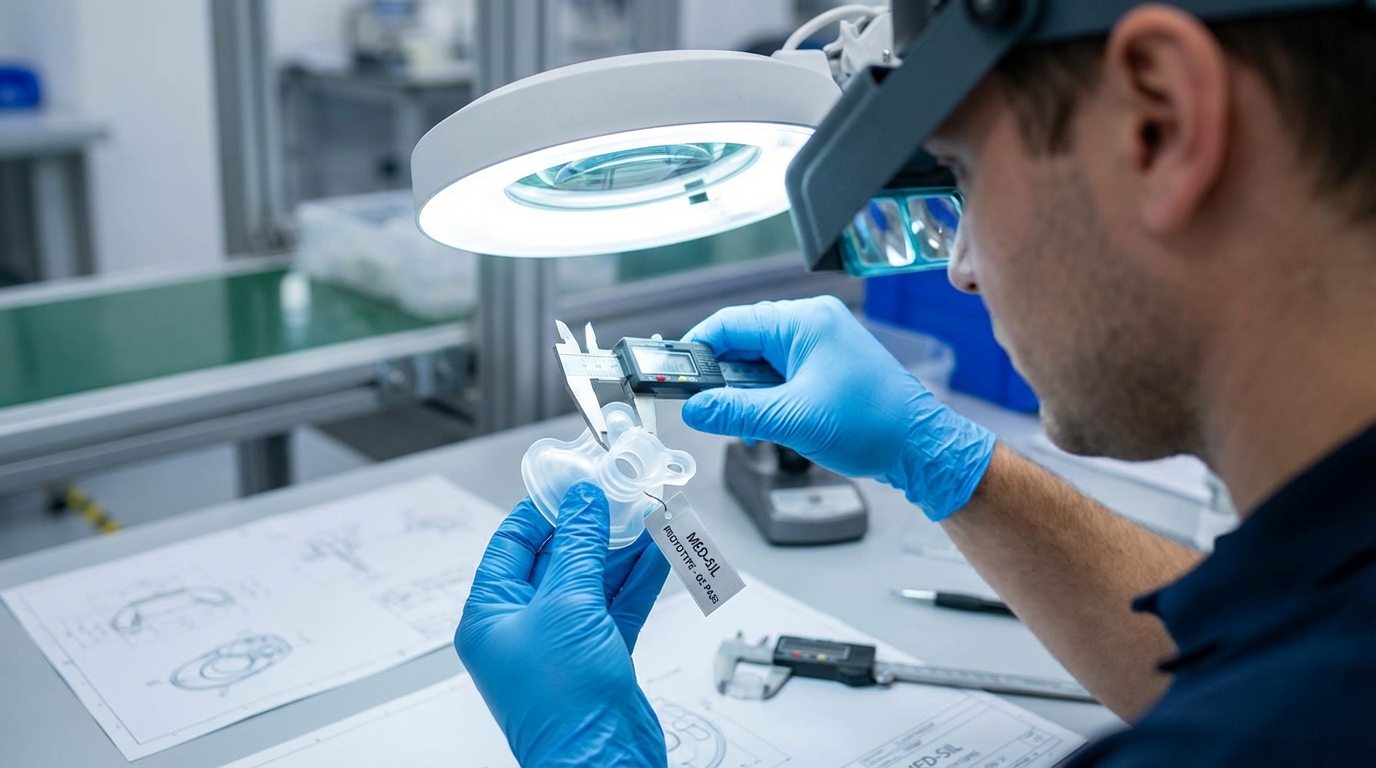
Key Takeaway: You can apply silicone across diverse industries to solve complex sealing and safety challenges where thermal stability is a non-negotiable requirement.
| Industry | Primary Use Case |
|---|---|
| Automotive | Engine and Turbo Seals |
| Medical | Sterilizable Tubing |
| Consumer | Heat-safe Pet Products |
Diverse industries leverage silicone’s wide temperature range to create safer, more durable products for their end users.
Does molding technology influence heat resistance?
Yes, advanced molding technologies like LSR injection allow for greater material density and more consistent thermal performance. Determining how hot can silicone get often depends on the uniformity achieved during the injection process.
Precision through Liquid Silicone Rubber (LSR)
LSR molding allows for incredibly complex geometries while maintaining tight tolerances that prevent thin spots. But wait, there is more: thin spots in a gasket are often the first place heat will cause a failure, so precision is key to thermal longevity.
- High wall consistency.
- Rapid cycle times.
- Flash-less production.
Ensuring consistency across mass production
When you are making millions of parts, even a small variation in material density can lead to a batch of parts that fail prematurely. Truth be told, automated molding systems ensure that every part has the exact same heat-resistant properties as the prototype.
- Closed-loop control.
- Accurate dosing.
- Uniform curing temperatures.
Key Takeaway: You ensure the highest possible heat resistance for your parts by choosing precision molding techniques that eliminate structural weaknesses.
| Molding Type | Precision Level | Thermal Consistency |
|---|---|---|
| LSR Molding | High | Excellent |
| Compression | Medium | Good |
| Extrusion | High | Very Good |
Advanced manufacturing techniques are the key to unlocking the full thermal potential of silicone polymers.
How can you optimize silicone for your specific needs?
You can optimize silicone by selecting the correct base polymer and filler additives to match your specific environmental stressors. Before you finalize your design, ask yourself how hot can silicone get in your specific operating environment.
Material selection and tolerance planning
Choosing the right grade involves balancing heat resistance with other needs like oil resistance or shore hardness. Here is the deal: a “one size fits all” approach often leads to over-engineering or premature failure, so customized selection is vital.
- Define temperature spikes.
- Assess chemical exposure.
- Calculate required lifespan.
How to get expert engineering support?
Think about it: working with a manufacturing partner can save you weeks of trial and error in the lab. Expert engineers can provide data on thermal expansion and degradation rates that aren’t found on a standard datasheet.
- Material testing services.
- Prototype validation.
- Scale-up consultation.
Key Takeaway: You can achieve superior results and lower costs by consulting with experts to tailor a silicone formulation specifically for your heat-stress requirements.
| Optimization Step | Benefit |
|---|---|
| Grade Selection | Prevents over-paying |
| Additive Choice | Maximizes part life |
| Design Review | Ensures manufacturability |
Custom optimization ensures your silicone components are perfectly tuned for their intended thermal and mechanical environment.
This article has explored the thermal boundaries of silicone, the manufacturing processes that enable its durability, and the specialized additives that push its limits further. Whether you are facing failures in the automotive sector or seeking medical-grade safety, we provide the precision engineering and material expertise needed to solve your toughest sealing challenges. Our vision is to empower your innovation through high-performance silicone solutions that never compromise on safety or quality. To discuss your project or request a custom formulation, reach out to our team and let us help you optimize your next design.
FAQ
Can I use silicone in a standard oven?
Yes, most food-grade silicone is rated for at least 230°C, which is higher than the settings of a typical household oven.
What’s the best grade for -100°C?
The best choice is a specialized phenyl-silicone (PVMQ), which is specifically formulated to remain flexible at cryogenic temperatures.
How do I know if my silicone is failing?
It depends, but generally, you will see the material become hard, brittle, or develop surface cracks, indicating that the polymer chains have broken down.
Can I microwave silicone containers?
Yes, silicone is microwave-safe because it does not absorb microwave energy and has a high enough heat resistance to handle boiling liquids.
What’s the best way to clean high-heat silicone?
The best way is using mild soap and warm water, or a dishwasher, as silicone resists the high temperatures and chemicals found in standard cleaning cycles.