
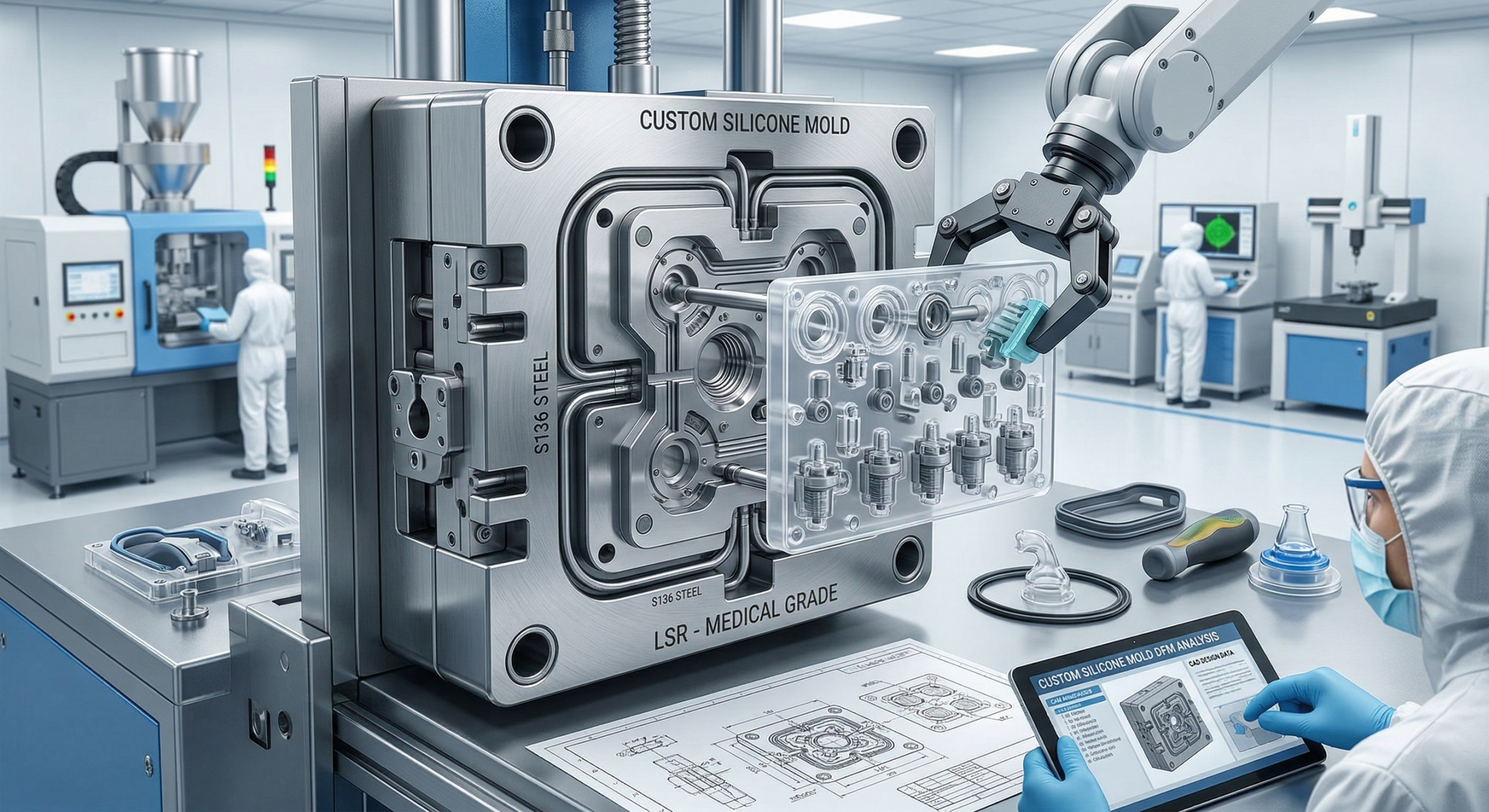
A custom silicone mold is a bespoke industrial tool designed to produce precise silicone parts according to specific engineering requirements. Sourcing off-the-shelf components often leads to poor fitment, material failure, and compromised product performance. You might face costly delays and product recalls if your components don’t meet exact tolerances or environmental resistances. Choosing a Custom Silicone Mold provides the precision, durability, and material specificity required to meet your exact engineering standards and scale production efficiently.
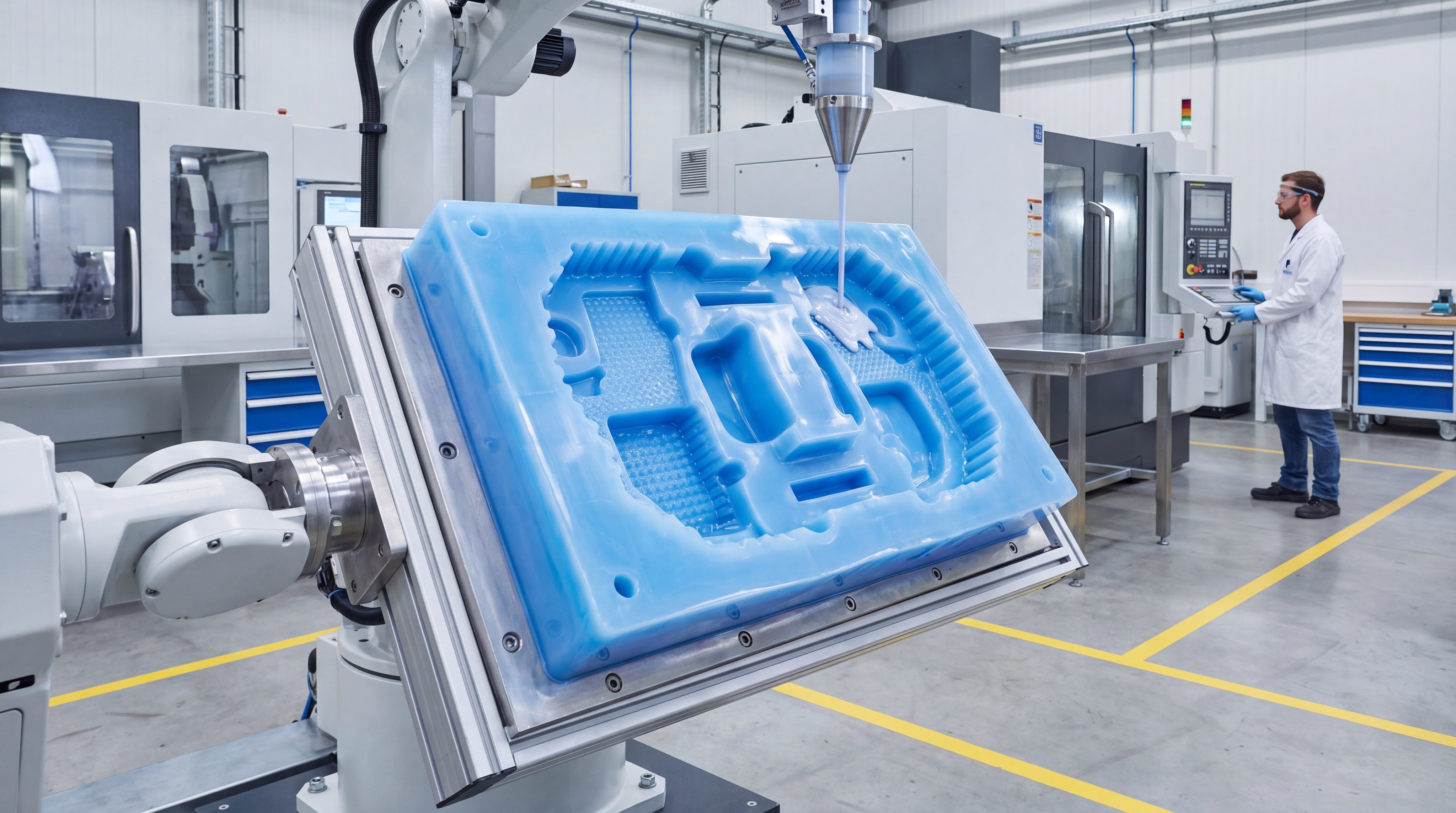
What defines a custom silicone mold?
A custom silicone mold is a unique cavity or tool manufactured specifically to replicate a particular geometry for high-accuracy industrial production. Unlike generic molds, a Custom Silicone Mold is engineered from the ground up to handle specific durometers, textures, and material grades required for a professional project.
These tools are prized for their extreme flexibility and thermal stability, allowing engineers to demold complex parts without damaging the final product. Using a custom approach ensures that every gate, vent, and parting line is optimized for the specific silicone grade you intend to use.
Why choose silicone over other materials?
Silicone offers a unique combination of heat resistance and chemical inertness that other elastomers simply cannot match. It remains flexible at low temperatures and stable at high temperatures, making it the ideal medium for challenging environments.
Think about this:
- Temperature stability ranging from -60°C to 230°C.
- Excellent electrical insulation properties.
- Biocompatibility for medical and food-grade use.
- High tear strength for complex mechanical assemblies.
Are these molds better than standard options?
Standard molds are often restricted to simple geometries and common material grades that might not meet your technical specifications. Custom tooling allows you to integrate specific design features like undercuts or overmolded inserts that standard options simply ignore.
Here is the deal:
- Perfect fitment for proprietary hardware.
- Support for specialized medical or aerospace grades.
- Optimized cycle times for high-volume manufacturing.
- Zero-defect production through tailored DFM analysis.
Key Takeaway: Custom silicone molds are the only way to ensure 100% adherence to complex engineering designs while maintaining material integrity.
| Feature | Standard Mold | Custom Silicone Mold |
|---|---|---|
| Design Flexibility | Limited | Infinite |
| Material Support | General Purpose | All Grades (LSR/HCR) |
| Tolerance Control | Standard | High Precision |
This data indicates that custom solutions provide the necessary control for high-stakes applications where standard tolerances are insufficient.
How are these molds manufactured?
Manufacturing these industrial tools involves high-precision CNC machining of metal plates or the creation of a 3D master pattern for liquid casting. Each Custom Silicone Mold is developed using CAD data to ensure the internal cavities exactly mirror the dimensions of the intended final part.
The process typically begins with a Design for Manufacturability (DFM) review to identify potential molding issues before the tool is even cut. This proactive approach saves time and reduces the risk of expensive modifications during the production phase.
What is the LSR injection molding process?
LSR injection molding is an automated process where two components are mixed and injected into a heated mold to vulcanize. This method is highly efficient for producing millions of high-precision parts with minimal human intervention.
The best part?
- Automated metering and mixing systems.
- Flash-less and waste-free production.
- Fast cycle times for high-volume orders.
- Extremely consistent part-to-part quality.
How does compression molding differ?
Compression molding involves placing a pre-measured amount of silicone rubber into a mold cavity and using heat and pressure to shape it. It is often the preferred method for larger parts or lower production volumes where tooling costs need to be kept low.
Look at it this way:
- Lower initial investment in tooling.
- Ideal for large, thick-walled components.
- Simpler tool design and maintenance.
- Effective for high-consistency rubber (HCR).
Key Takeaway: The choice between injection and compression molding depends largely on your production volume and the complexity of the part.
| Process | Production Volume | Tooling Cost | Complexity |
|---|---|---|---|
| LSR Injection | High | High | Very High |
| Compression | Low/Medium | Low | Moderate |
An analysis of these methods shows that while LSR requires more upfront capital, it offers the lowest cost per unit for scaled production.
Which materials suit your mold needs?
The best material for your mold depends on the end-use environment, ranging from biocompatible liquid silicone to high-durability consistency rubbers. A Custom Silicone Mold must be designed with the specific shrinkage rates of the chosen material in mind to avoid dimensional errors.
Selecting the wrong grade can lead to premature wear or failure in the field, so understanding durometer and chemical resistance is vital. Professional manufacturers help you navigate these choices to ensure the material matches the tool design perfectly.
Should you choose medical-grade silicone?
Medical-grade silicone is essential if your part will have direct contact with the human body or requires sterilization. These materials are manufactured under strict cleanroom conditions to ensure they are free of contaminants and bio-burdens.
Here is why:
- ISO 10993 and USP Class VI compliance.
- Resistance to repeated sterilization cycles.
- Long-term biocompatibility and safety.
- High purity with platinum-curing systems.
Why use liquid silicone rubber?
Liquid silicone rubber (LSR) is the industry standard for precision molding due to its excellent flow characteristics and fast curing times. It is particularly useful for parts with intricate details or thin walls that require high-pressure injection.
Consider this:
- Exceptional thermal and chemical resistance.
- Superior clarity for optical applications.
- Excellent compression set performance.
- Easy to pigment for custom branding needs.
Key Takeaway: Material selection is a primary driver of part performance and should be decided early in the design phase.
| Material Grade | Primary Benefit | Typical Application |
|---|---|---|
| Medical Grade | Biocompatibility | Surgical Tools |
| Food Grade | Safety (FDA/LFGB) | Kitchenware |
| Industrial Grade | Durability | Automotive Seals |
This material matrix highlights that functionality dictates the grade, ensuring compliance and safety across diverse industries.
What are the benefits of custom tooling?
Custom tooling offers unmatched accuracy and the ability to produce complex features like undercuts or internal threads that generic molds cannot handle. By investing in a Custom Silicone Mold, you gain complete control over the parting lines and gate locations to ensure a premium surface finish.
Furthermore, custom molds are built for longevity, often featuring hardened steel inserts that can withstand hundreds of thousands of cycles. This durability ensures that your production line remains consistent throughout the entire life of the product.
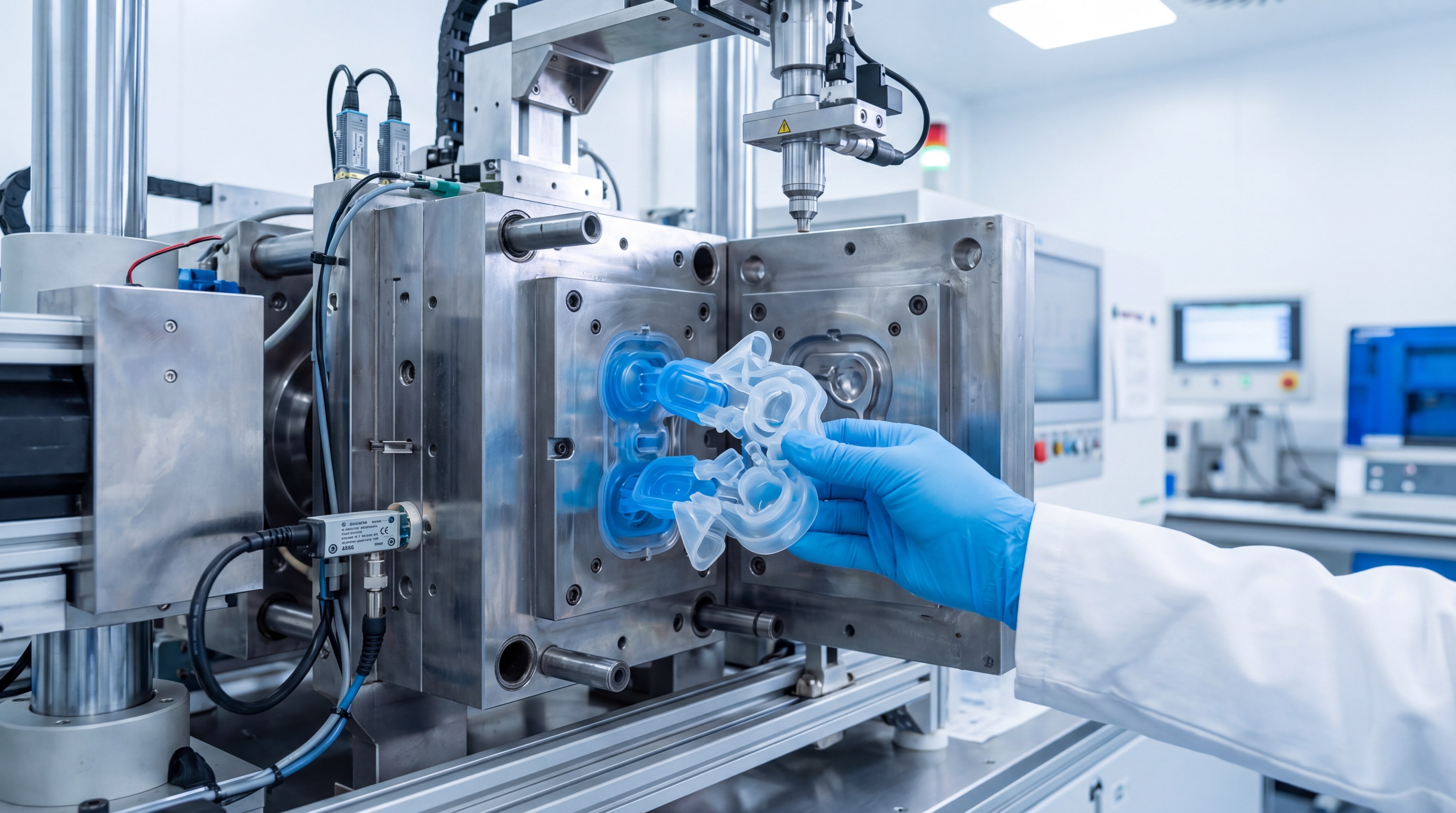
Does customization improve accuracy?
Customization allows for precise adjustments to account for silicone shrinkage, which varies based on the geometry and material grade. This level of control ensures that every dimension stays within the tight tolerances required for mechanical assemblies.
The reality is:
- Tolerances as tight as +/- 0.05mm.
- Elimination of part interference issues.
- Perfect alignment for multi-component kits.
- Consistent wall thickness across the entire part.
How durable is bespoke tooling?
Bespoke tooling is engineered with high-grade tool steels like NAK80 or S136 to resist the abrasive nature of some silicone additives. This ensures the mold does not degrade over time, maintaining the same precision on the 500,000th part as it did on the first.
Think about it:
- Resistance to corrosion and high heat.
- Minimal maintenance requirements.
- Extended mold life for high-volume programs.
- Lower total cost of ownership over time.
Key Takeaway: Custom tooling is a strategic investment that pays off through reduced waste, higher quality, and long-term production stability.
| Tooling Material | Durability | Cost | Best For |
|---|---|---|---|
| Aluminum | Low | Low | Prototyping |
| P20 Steel | Medium | Medium | Medium Volume |
| S136 Steel | High | High | High Volume LSR |
Choosing the right tool steel ensures the mold survives the intended production lifespan without losing critical dimensional accuracy.
Which industries rely on these solutions?
Industries ranging from healthcare and automotive to consumer electronics utilize these molds to create high-purity, heat-resistant, and durable components. A Custom Silicone Mold is often the only solution for producing the waterproof seals and ergonomic grips found in modern hardware.
As products become smaller and more complex, the demand for precision silicone parts continues to grow. Engineers rely on custom manufacturers to provide the DFM support and material expertise needed to bring these innovative designs to market.
How does the medical sector use them?
The medical sector uses custom silicone for everything from ventilator valves to surgical instrument handles due to its hypoallergenic properties. These parts must be manufactured in ISO-certified cleanrooms to meet strict global safety standards.
Here is the deal:
- Surgical grade tubing and seals.
- Soft-touch grips for diagnostic equipment.
- Implantable grade components for long-term use.
- Drug delivery system diaphragms.
Why is silicone vital for consumer electronics?
Consumer electronics require silicone for its ability to provide IP-rated waterproofing while maintaining a tactile, high-end feel. It is also used for internal shock absorption and thermal management in high-performance computing devices.
Believe it or not:
- IP68 waterproof gaskets for smartphones.
- Soft-touch protective cases and sleeves.
- Keypads with specific tactile feedback.
- Vibration dampening mounts for hard drives.
Key Takeaway: Silicone’s versatility makes it a critical material for high-tech industries that demand both performance and aesthetics.
| Industry | Primary Requirement | Example Product |
|---|---|---|
| Medical | Biocompatibility | Respirator Masks |
| Electronics | Waterproofing | Smartwatch Straps |
| Automotive | Heat Resistance | Turbocharger Hoses |
The broad application across these sectors proves that silicone is a foundational material for modern engineering and product design.
How can you optimize your mold design?
Optimization requires a detailed Design for Manufacturability (DFM) analysis to ensure uniform material flow and the elimination of air traps. When you design a Custom Silicone Mold, you must consider draft angles and parting line placement to ensure easy part ejection.
Properly optimized designs reduce cycle times and material waste, directly impacting your bottom line. Working with an experienced engineering team helps you identify these optimizations before the tooling phase begins.
What design rules reduce defects?
Maintaining uniform wall thickness is one of the most important rules to prevent sink marks and uneven curing. Additionally, incorporating generous radii on corners helps the silicone flow smoothly into every corner of the cavity.
Here is a tip:
- Avoid sharp corners to reduce stress.
- Include draft angles of at least 1-2 degrees.
- Place gates in non-critical aesthetic areas.
- Use ribs for strength instead of thick walls.
Can complex geometries be molded?
Yes, silicone’s high elasticity allows it to be demolded from undercuts and internal threads that would be impossible with rigid plastics. This “self-demolding” capability gives designers more freedom to create intricate and organic shapes.
Check this out:
- Internal threads without unscrewing mechanisms.
- Deep undercuts for snap-fit assemblies.
- Variable wall thicknesses for complex seals.
- Overmolded metal or plastic inserts.
Key Takeaway: Creative mold design leverages silicone’s physical properties to achieve geometries that other manufacturing processes cannot.
| Design Element | Recommended Action | Benefit |
|---|---|---|
| Wall Thickness | Keep Uniform | Prevents Warping |
| Draft Angles | Add 1° Minimum | Easy Demolding |
| Radii | Avoid Sharp Edges | Improves Flow |
Following these guidelines during the CAD phase significantly reduces the risk of quality issues and expensive mold rework later.
What factors drive production costs?
Production costs are primarily driven by the complexity of the mold design and the number of cavities included in the tool. A Custom Silicone Mold with sixteen cavities will cost more upfront but will drastically reduce the price per part for high-volume orders.
The choice of tooling material also plays a role, as hardened steels require more machining time than aluminum. However, the long-term savings in maintenance and cycle time efficiency usually outweigh the initial investment.
How does volume affect your ROI?
High production volumes justify the cost of multi-cavity, automated LSR molds by spreading the tooling investment over millions of units. For low-volume prototyping, a single-cavity aluminum mold or even a 3D-printed master might be more economical.
Here is the bottom line:
- Higher cavitation reduces labor costs per part.
- Automation lowers the defect rate significantly.
- Longer mold life reduces replacement frequency.
- Faster cycle times increase overall throughput.
Understanding tooling vs. part price?
It is common to see a high initial tooling fee followed by a very low unit price for the actual silicone parts. This is because the majority of the engineering and precision work happens during the mold fabrication stage.
Look at it this way:
- Tooling is a one-time capital expense.
- Part price covers material and machine time.
- Efficiency gains from custom tools lower part price.
- Post-processing costs are minimized with good design.
Key Takeaway: Focus on the total cost of ownership rather than just the initial quote to find the most cost-effective solution.
| Volume Category | Best Tooling Type | Cost Focus |
|---|---|---|
| Prototype (1-100) | Aluminum/Cast | Speed |
| Batch (100-10k) | P20 Steel | Flexibility |
| Mass (10k+) | Hardened Steel | Unit Cost |
Balancing the initial investment with projected volume is the key to achieving the best possible return on your manufacturing project.
Why are quality standards essential?
Quality standards like ISO 13485 and IATF 16949 provide a framework for ensuring that every part meets rigorous safety and performance benchmarks. When you order a Custom Silicone Mold, you need the assurance that the manufacturer follows a documented quality management system.
These certifications guarantee traceability, meaning every batch of silicone can be tracked back to its raw material source. This is particularly critical in the medical and aerospace industries where failure is not an option.

What certifications should you seek?
Look for manufacturers who hold ISO 9001 for general quality and more specific certifications like ISO 13485 for medical device manufacturing. These standards ensure that the factory environment and production processes are consistently monitored.
The facts are:
- ISO 13485: Medical device quality.
- IATF 16949: Automotive industry standard.
- FDA/LFGB: Food safety compliance.
- RoHS/REACH: Environmental safety.
How is precision measured?
Precision is measured using advanced metrology equipment like CMM machines and optical comparators that can detect deviations at the micron level. This ensures that the Custom Silicone Mold produces parts that align perfectly with your technical drawings.
Wait, there’s more:
- Automated optical inspection (AOI) systems.
- Material hardness (Durometer) testing.
- Tear strength and elongation analysis.
- Dimensional verification of every cavity.
Key Takeaway: Quality certifications and advanced measurement tools are the only way to guarantee the reliability of critical silicone components.
| Certification | Industry Focus | Key Value |
|---|---|---|
| ISO 13485 | Medical | Safety & Purity |
| IATF 16949 | Automotive | Zero Defects |
| ISO 9001 | General | Process Control |
An analytical look at these standards shows they act as a safeguard for your brand, preventing costly recalls and ensuring customer satisfaction.
How to choose the right manufacturer?
Choosing the right partner involves looking beyond the price and evaluating their technical capabilities, DFM support, and cleanroom facilities. A reliable manufacturer will work as an extension of your engineering team, helping you refine your Custom Silicone Mold design for optimal performance.
You should also verify their material sourcing and in-house tooling capabilities. Manufacturers who control the entire process from mold-making to final inspection generally offer better quality and faster lead times.
Why is DFM support critical?
DFM support identifies design flaws that could lead to air traps, flash, or poor surface finish before production begins. A manufacturer who provides this feedback proactively can save you weeks of delays and thousands in rework costs.
Here is why:
- Early identification of “un-moldable” features.
- Optimization of gate and vent locations.
- Suggestions for material cost-savings.
- Reduced time-to-market for new products.
Evaluating supplier track records?
Check for case studies or client testimonials within your specific industry to ensure the supplier understands your unique requirements. A supplier with experience in high-precision medical parts may be better suited for your project than a general-purpose rubber shop.
Think about this:
- Proven experience with LSR and HCR.
- In-house mold shop for faster repairs.
- Ability to scale from prototype to mass.
- Transparent communication and project management.
Key Takeaway: Your manufacturer is your most important partner; choose one with a deep understanding of silicone’s unique behaviors and requirements.
| Selection Factor | Priority | Why it Matters |
|---|---|---|
| DFM Support | Critical | Prevents Mold Rework |
| Tooling Control | High | Ensures Quality/Speed |
| Certifications | High | Compliance & Safety |
A strategic evaluation based on these factors ensures you partner with a manufacturer capable of meeting your long-term production goals.
What is the future of silicone molding?
The future of silicone manufacturing is being shaped by multi-material overmolding and the integration of automated robotics to increase precision and reduce waste. By using a Custom Silicone Mold designed for automation, companies can achieve “lights-out” manufacturing where the machines run 24/7 without human intervention.
We are also seeing the rise of smart silicone, where sensors are embedded directly into the parts during the molding process. These innovations are opening up new possibilities in the wearables and medical device markets.

Is automation changing the industry?
Automation is drastically reducing cycle times and eliminating the human error associated with manual mold loading and unloading. This leads to more consistent parts and allows manufacturers to offer more competitive pricing for high-volume programs.
Looking ahead:
- Robotic arm extraction for delicate parts.
- Automated vision systems for 100% inspection.
- Self-correcting injection molding machines.
- Reduction in energy and material waste.
Innovations in multi-material molding?
Multi-material molding, or overmolding, allows silicone to be bonded to plastic or metal parts in a single process. This creates a permanent, waterproof bond that is essential for ergonomic handles and complex medical housings.
It gets better:
- No need for messy secondary adhesives.
- Integrated seals that cannot fall off.
- Ergonomic soft-touch grips on rigid tools.
- Combined electrical and mechanical properties.
Key Takeaway: Innovations in automation and overmolding are making custom silicone more versatile and cost-effective than ever before.
| Technology | Future Impact | Benefit |
|---|---|---|
| Overmolding | High | Simplified Assemblies |
| Automation | Very High | Lower Costs/Higher Quality |
| Smart Silicone | Emerging | Data-Driven Products |
The trend toward more integrated and automated production indicates that silicone will remain a primary material for the next generation of high-tech products.
Conclusion
Custom silicone molds provide a versatile and cost-effective solution for replicating precise parts across every major industry. Their flexibility, durability, and customization options make them indispensable tools for procurement professionals who refuse to compromise on quality. By investing in custom tooling and partnering with an experienced manufacturer, you ensure that your products meet the highest engineering standards while optimizing your production costs.
If you are ready to start your next project or need expert DFM advice, contact us today to speak with our engineering team. We are dedicated to delivering precision-engineered silicone solutions that empower innovation and drive industrial excellence across the globe.
FAQ
Can I use a custom silicone mold for high-heat applications?
Yes, industrial silicone molds are designed to withstand temperatures exceeding 200°C during the vulcanization process. This thermal stability makes them ideal for casting resins, low-melt metals, or producing parts for automotive engines.
What’s the best way to clean and maintain these molds?
Consistent maintenance involves using mild detergents or specialized mold cleaners to remove residue without damaging the tool’s surface. Proper storage in a climate-controlled environment prevents oxidation of the steel plates and ensures long-term accuracy.
How do I know if I need LSR or compression molding?
LSR is the best choice if you need high volumes (10,000+ units) of complex, high-precision parts with automated efficiency. Compression molding is usually the better option for larger, simpler parts or if you are working with a limited initial tooling budget.
Can I request a prototype mold before committing to mass production?
Absolutely, most professional manufacturers offer “bridge tooling” or aluminum prototype molds to verify your design before investing in hardened steel mass-production tools. This step is critical for functional testing and final design validation.
What’s the best material for a mold used with food products?
FDA or LFGB-compliant food-grade silicone is the only choice for products intended for kitchen or food-processing use. These materials are platinum-cured to ensure they do not leach chemicals or odors into the food items they produce.