
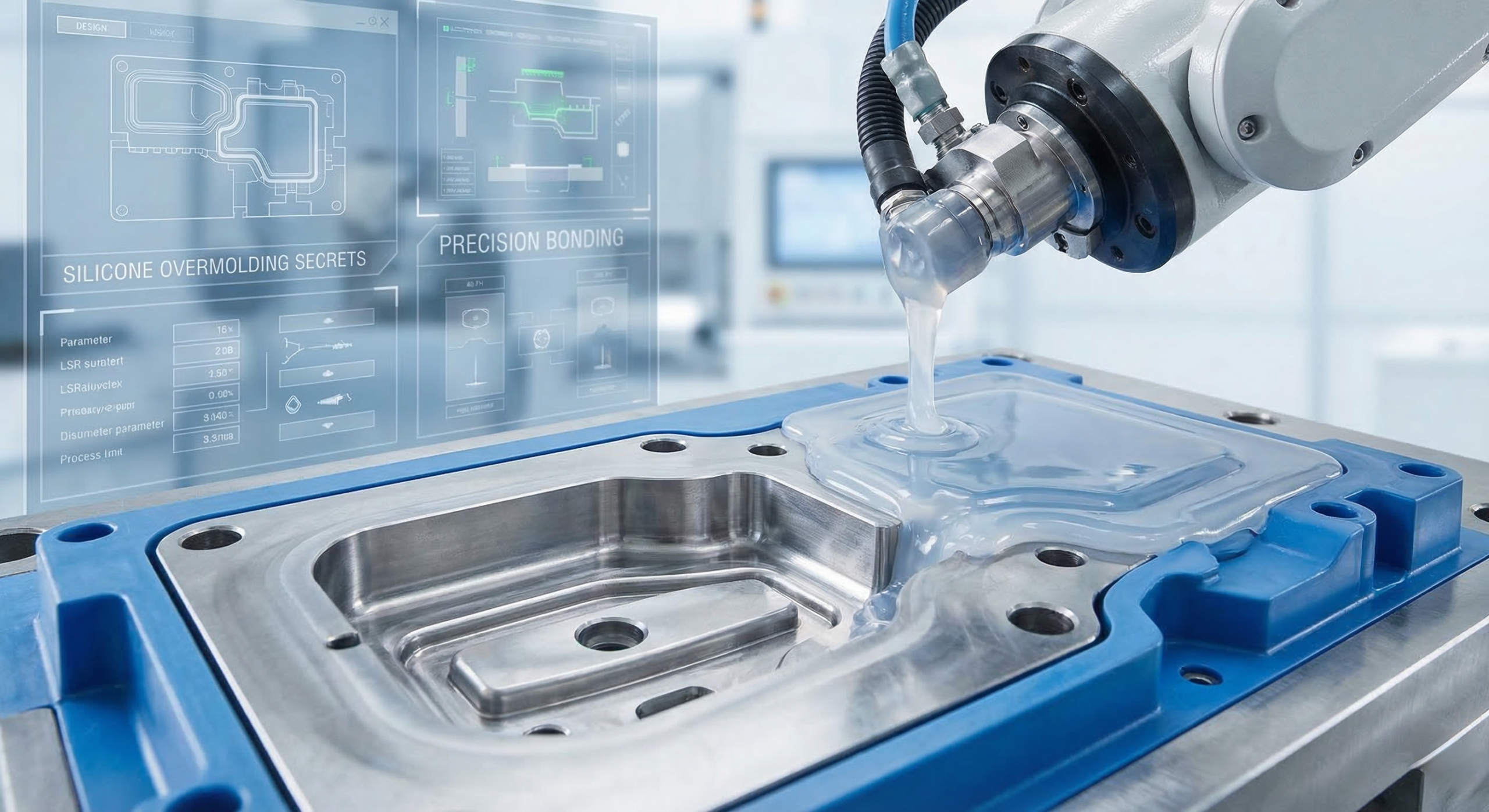
Yes, you can absolutely overmold silicone onto plastic or metal, and Can you overmold silicone onto plastic or metal? is the primary question designers ask when seeking to eliminate the failures of manual assembly. Traditional bonding methods often lead to peeling interfaces, high labor costs, and parts that simply cannot withstand harsh environments. Silicone overmolding solves these issues by creating a single, integrated component that is both durable and aesthetically superior.
What exactly is silicone overmolding?
Silicone overmolding is a high-precision manufacturing process where liquid silicone rubber is molded directly over, under, or through a secondary substrate to create a unified part. This technique effectively answers the common industry query: Can you overmold silicone onto plastic or metal? By integrating two distinct materials in a controlled environment, you eliminate the need for post-production adhesives or mechanical fasteners.
Think about it:
- It streamlines the supply chain by reducing part counts.
- It ensures a watertight seal that traditional assembly cannot match.
- It enhances the structural integrity of the final product.
The In-Mold Assembly Process
This specialized injection molding technique involves placing a pre-formed substrate into a mold cavity before injecting silicone. Here is the truth: this “in-mold assembly” creates a molecular or mechanical bond that is far stronger than any glue. It effectively removes the human error associated with manual bonding steps.
Combining Soft and Rigid Materials
Designers use this process to leverage the specific strengths of two materials simultaneously. You can combine the structural rigidity of a plastic frame with the soft-touch, ergonomic feel of silicone. This duality is essential for products that require both strength and user comfort.
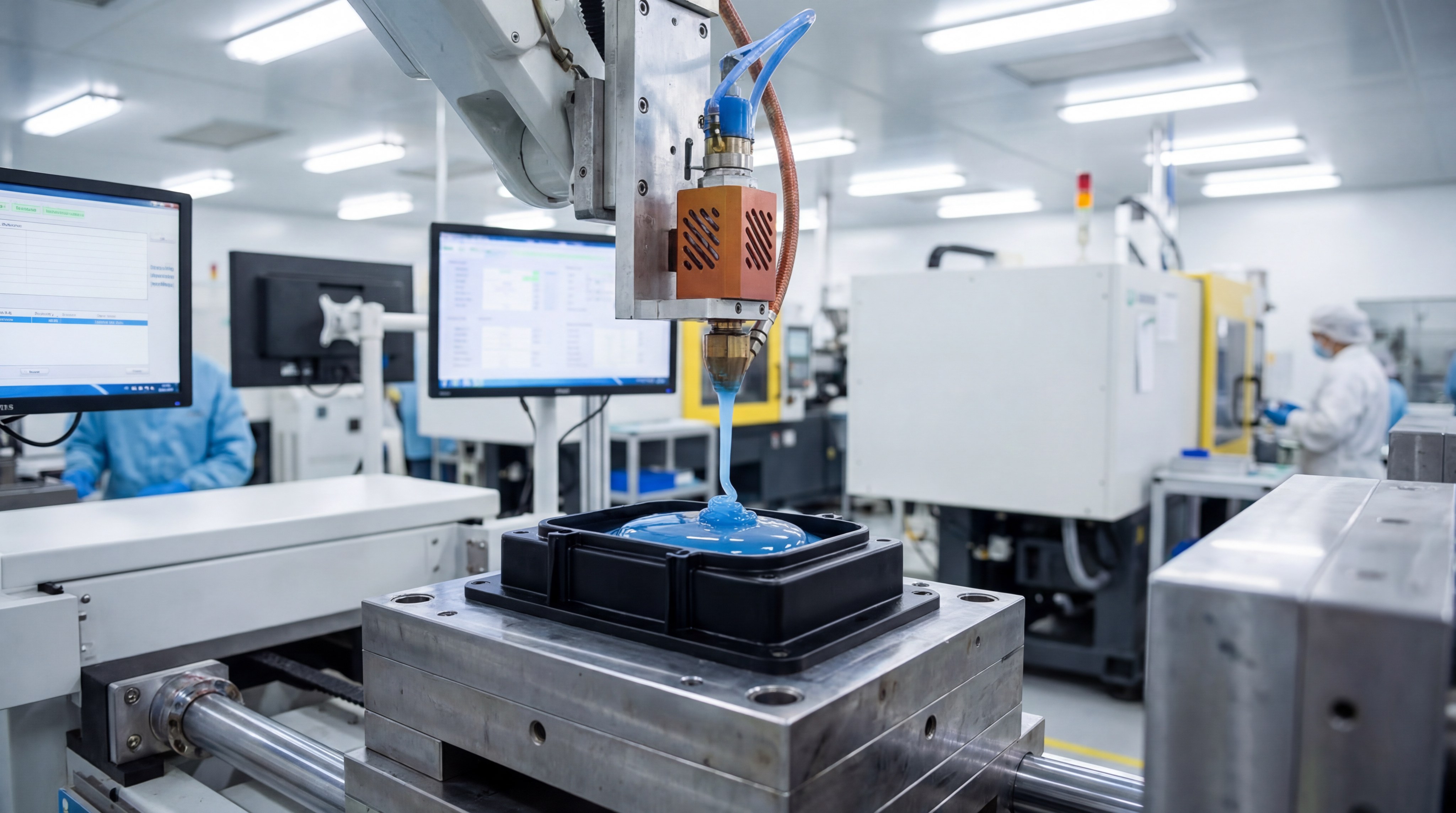
Key Takeaway: Silicone overmolding is a sophisticated manufacturing process that creates a seamless, multi-material part in a single controlled environment.
The table below outlines the fundamental features and goals of the standard overmolding process.
| Feature | Description |
|---|---|
| Material 1 | Rigid Substrate (Plastic/Metal) |
| Material 2 | Silicone Overmold (LSR/HCR) |
| Primary Goal | Enhanced Ergonomics & Protection |
Can you overmold silicone onto plastic or metal?
Yes, you can overmold silicone onto both plastic and metal as long as the chosen substrate can withstand the high curing temperatures of the silicone. When engineers ask, “Can you overmold silicone onto plastic or metal?”, they are typically searching for a way to add protective or ergonomic layers to a rigid core. Success depends entirely on the material selection and the thermal properties of the base component.
The reality is:
- Plastics must have high melting points to avoid deformation.
- Metals require clean surfaces for optimal adhesion.
- Thermal expansion rates must be carefully balanced between materials.
Bonding Silicone to Plastic Substrates
Successful bonding requires plastics like Tritan™ co-polyester, nylon, or PBT that can handle temperatures reaching 150°C. You must ensure the plastic grade is specifically rated for high-heat exposure during the curing cycle. Without this resistance, the substrate may warp or melt before the silicone sets.
Adhering Silicone to Metal Inserts
Metals such as stainless steel, aluminum, and brass are excellent candidates for silicone overmolding. To achieve a permanent bond, you often need to utilize specialized surface treatments or physical mechanical anchors. Here is the secret: cleaning the metal to remove all oils is the most critical step for success.
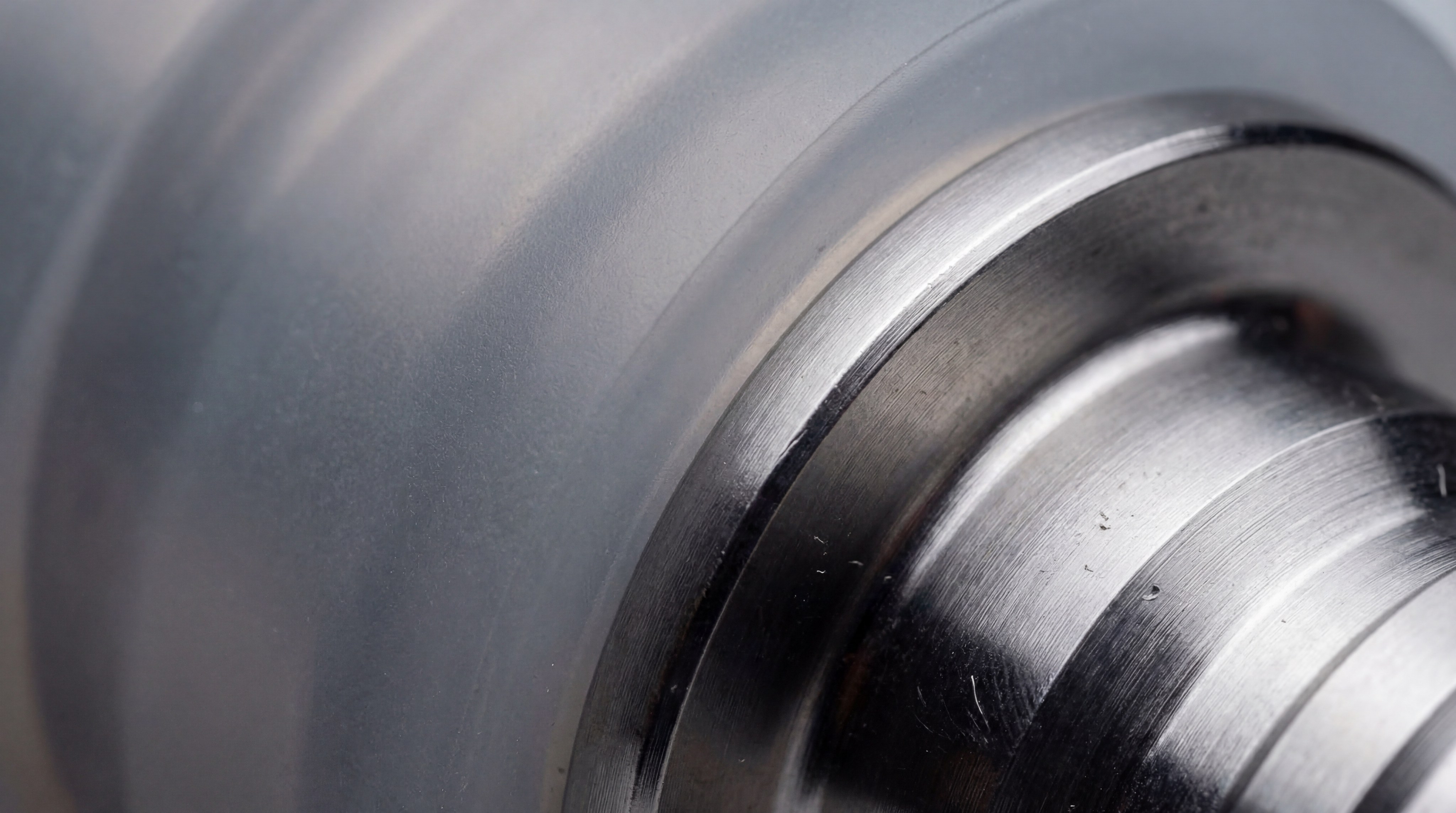
Key Takeaway: While bonding to different materials is challenging, successful overmolding is achievable on both plastic and metal through proper material selection and surface preparation.
This comparison highlights the varying difficulty levels and specific requirements for common overmolding substrates.
| Substrate Type | Bonding Difficulty | Requirements |
|---|---|---|
| BPA-Free Plastics | Moderate | High heat resistance |
| Stainless Steel | High | Priming or Interlocks |
| Aluminum | Moderate | Surface Cleaning |
Why is LSR the superior choice for overmolding?
Liquid Silicone Rubber (LSR) is the superior choice for overmolding because its low viscosity allows it to flow effortlessly into complex mold geometries. If you are wondering, Can you overmold silicone onto plastic or metal?, LSR provides the most reliable answer for high-volume, high-precision applications. Its ability to cure quickly at lower pressures makes it safer for delicate plastic inserts.
Best of all:
- LSR is highly compatible with automated injection systems.
- It produces minimal flash, reducing secondary trimming costs.
- The material is naturally inert and biocompatible.
Benefits of Liquid Silicone Rubber
LSR is preferred for overmolding due to its rapid cycle times and ease of processing. Its liquid state allows it to wrap around thin walls and intricate metal details without displacing the insert. You get a much more consistent wall thickness compared to high-consistency rubber (HCR).
Thermal and Chemical Resistance
LSR maintains its physical properties across extreme temperature ranges and exposure to harsh chemicals. This makes it the ideal material for industrial or medical environments where reliability is non-negotiable. It remains flexible and durable even when the underlying substrate is under stress.
Key Takeaway: LSR provides the precision and durability necessary for high-performance overmolded components compared to traditional high-consistency rubber.
The following property analysis demonstrates why LSR is the industry standard for complex overmolding projects.
| Property | Advantage for Overmolding |
|---|---|
| Low Viscosity | Flows easily around complex inserts |
| Fast Curing | Reduces production cycle time |
| Biocompatibility | Essential for skin-contact products |
How do you achieve a permanent bond?
You achieve a permanent bond by combining chemical adhesion promoters with mechanical design features that lock the silicone in place. When you ask, “Can you overmold silicone onto plastic or metal?”, the durability of that bond is usually your primary concern. A failure-proof bond prevents the silicone from delaminating or peeling away from the substrate during the product’s lifespan.
Make no mistake:
- Chemical primers create a molecular link between materials.
- Mechanical interlocks provide a physical safety net.
- Self-bonding silicones can eliminate the need for manual priming.
Chemical Priming vs. Self-Bonding
External primers are often applied to the substrate to create a reactive surface for the silicone to grab onto. Alternatively, self-bonding silicone grades contain built-in adhesion promoters that activate during the curing process. Both methods aim to create a watertight, permanent seal.
Mechanical Interlocks and Undercuts
Design features like through-holes, grooves, and undercuts are used to “anchor” the silicone to the substrate. Here is the truth: even if a chemical bond fails, a mechanical interlock ensures the part stays together. This “belt and braces” approach is standard for high-stress industrial components.
Key Takeaway: A permanent bond usually requires a strategic combination of chemical adhesion and mechanical interlocking features designed into the substrate.
The matrix below compares the most effective strategies for ensuring a long-lasting bond.
| Method | Best For | Pros |
|---|---|---|
| Chemical | Smooth surfaces | Watertight seal |
| Mechanical | High-stress parts | Failure-proof |
| Hybrid | Heavy-duty use | Maximum reliability |
Should you use insert or multi-shot molding?
The decision between insert and multi-shot molding depends on your production volume and the complexity of the part. If you are investigating, Can you overmold silicone onto plastic or metal?, you must choose the method that balances tooling costs with labor efficiency. Both methods produce high-quality bonds but require different capital investments.
Let’s dive in:
- Insert molding is better for lower volumes and large inserts.
- Multi-shot molding is optimized for high-speed, high-volume production.
- Tooling for multi-shot is significantly more complex and expensive.
Efficiency of Multi-Shot Molding
In a “two-shot” or multi-shot process, the plastic substrate and silicone overmold are injected in the same machine cycle. This eliminates the need for human intervention and ensures the substrate is still hot when the silicone hits it, which can improve bonding. It is the fastest way to manufacture millions of parts.
Cost-Effective Insert Molding
Insert molding involves placing a pre-made substrate into the mold by hand or via a robot. This is much more flexible and requires lower initial tooling investment. For many B2B applications, this is the most logical path for mid-range production runs.
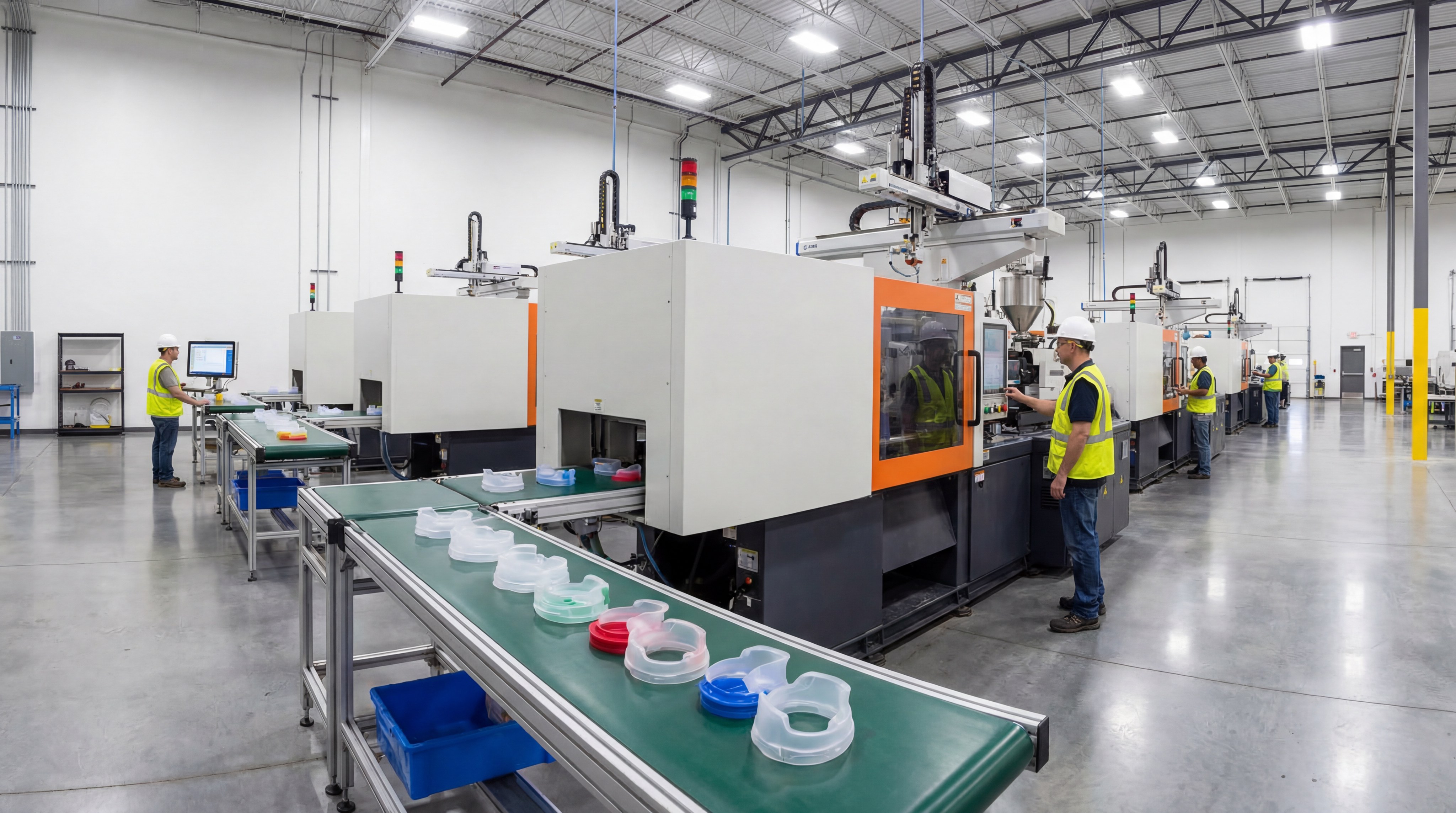
Key Takeaway: The choice between insert and multi-shot molding is primarily driven by production volume, budget, and the complexity of the part geometry.
This table provides a high-level comparison to help you select the right production method for your project.
| Factor | Insert Molding | Multi-Shot Molding |
|---|---|---|
| Tooling Cost | Lower | Very High |
| Labor Cost | Higher | Minimal |
| Volume Suitability | Low to Medium | High to Ultra-High |
What tooling secrets ensure a perfect finish?
Perfect finishes are achieved through precision-engineered mold shutoffs and strategic venting that prevent air entrapment. Every time you ask, “Can you overmold silicone onto plastic or metal?”, you should also be asking how to prevent cosmetic defects like flash. The high pressure of silicone injection means that even the smallest tooling gap can lead to wasted material.
Simply put:
- Shutoffs must be razor-sharp to prevent silicone leakage.
- Deep venting is required to let air escape as silicone flows in.
- Gate placement dictates how the silicone fills the cavity.
Precision Shutoffs and Venting
Mold shutoffs are the areas where the mold halves meet to “shut off” the flow of material. In overmolding, the mold must shut off against the substrate itself, which requires extremely tight tolerances. Proper venting ensures that trapped air doesn’t cause “burns” or air bubbles at the bond line.
Avoiding Flash and Delamination
Flash occurs when silicone seeps into areas it shouldn’t, while delamination is the peeling of the silicone layer. Here is the secret: optimizing the gate size and flow length prevents the silicone from cooling too early or thinning out. A well-designed tool ensures the overmold layer remains uniform across the entire part.
Key Takeaway: High-quality overmolding depends on precision-engineered tooling that manages the high-pressure injection of silicone without allowing for flash or air gaps.
Refer to this checklist to ensure your tooling design is optimized for a defect-free finish.
| Design Element | Critical Goal |
|---|---|
| Gate Location | Minimize flow length |
| Venting Depth | Eliminate air bubbles |
| Draft Angles | Ensure easy part release |
How does overmolding benefit medical devices?
Overmolding benefits medical devices by creating a seamless, hygienic interface that is easy to sterilize and comfortable for clinicians. For manufacturers asking, Can you overmold silicone onto plastic or metal?, the medical grade applications offer the highest standard of safety. It allows for the creation of surgical tools that are both functionally rigid and biologically safe.
The bottom line:
- Overmolding eliminates crevices where bacteria can grow.
- It provides a non-slip grip even when instruments are wet.
- Medical-grade silicone is hypoallergenic and skin-safe.
Biocompatible Interface Design
Surgical instruments often use stainless steel cores overmolded with medical-grade silicone grips. This provides the surgeon with a high-friction surface that reduces hand fatigue during long procedures. The bond must be permanent to prevent any biological fluids from seeping between the materials.
Sterilization-Ready Components
Silicone-overmolded parts are built to survive the harshest sterilization environments. Whether it is an autoclave’s high heat or chemical washes, the silicone remains bonded to the substrate without degrading. This longevity is critical for reusable medical equipment.
Key Takeaway: In the medical sector, overmolding is the gold standard for creating tools that are both functionally rigid and biologically safe for patients and providers.
The table below highlights common applications of overmolding within the medical device industry.
| Device Category | Benefit |
|---|---|
| Surgical Tools | Improved grip & ergonomics |
| Diagnostic Gear | Shock protection for sensors |
| Wearable Monitors | Skin-safe comfort & sealing |
Can overmolding improve pet and baby products?
Yes, overmolding significantly improves pet and baby products by combining durable cores with soft, chew-safe exteriors. When you consider, “Can you overmold silicone onto plastic or metal?”, the safety of the end-user—whether an infant or a pet—is the top priority. Overmolding ensures that soft parts cannot be pulled off and swallowed, providing a much higher level of safety.
Here is the truth:
- It makes pet toys nearly indestructible by reinforcing them with nylon.
- Baby spoons and bottle grips become safer with food-grade silicone layers.
- Seamless designs prevent the buildup of mold and bacteria.
Durable Chew-Safe Pet Gear
For pets, overmolding allows for the creation of toys that feature a tough internal frame covered in a soft, tooth-friendly silicone. These products withstand heavy chewing while remaining gentle on the animal’s mouth. The bond is so strong that even the most determined dogs cannot separate the materials.
Soft-Touch Infant Care Essentials
In the world of baby care, overmolding is used for everything from teething rings to spoon handles. By overmolding food-grade silicone onto BPA-free plastics, you create a product that is soft enough for a baby’s gums but rigid enough for a parent to hold. It is the perfect marriage of safety and functionality.
Key Takeaway: Overmolding adds significant value to consumer products by making them safer, more durable, and more comfortable for sensitive users like infants and pets.
This matrix summarizes the primary benefits that overmolding brings to various consumer product categories.
| Industry | Primary Requirement | Overmolding Solution |
|---|---|---|
| Pet Care | Durability | Reinforced silicone structures |
| Infant Care | Safety | Seamless food-grade layering |
| Kitchenware | Heat Resistance | Heat-shielding handles |
What quality standards prevent batch defects?
Strict quality standards prevent batch defects by catching material and bonding issues during the early stages of production. If you ask, Can you overmold silicone onto plastic or metal?, you must also ensure that your manufacturer follows rigorous inspection protocols. A defect in an overmolded part often means scrapping two materials instead of just one, making quality control even more vital.
It gets better:
- Pre-production DFM catches errors before tools are cut.
- In-process inspections monitor the bond strength in real-time.
- 100% visual checks ensure every part meets aesthetic standards.
Pre-Production DFM Verification
Design for Manufacturing (DFM) is the most critical step in preventing defects. Our engineers analyze the part geometry to identify potential filling issues or air traps. By simulating the flow of silicone, we can adjust the tool design to ensure a perfect bond every time.
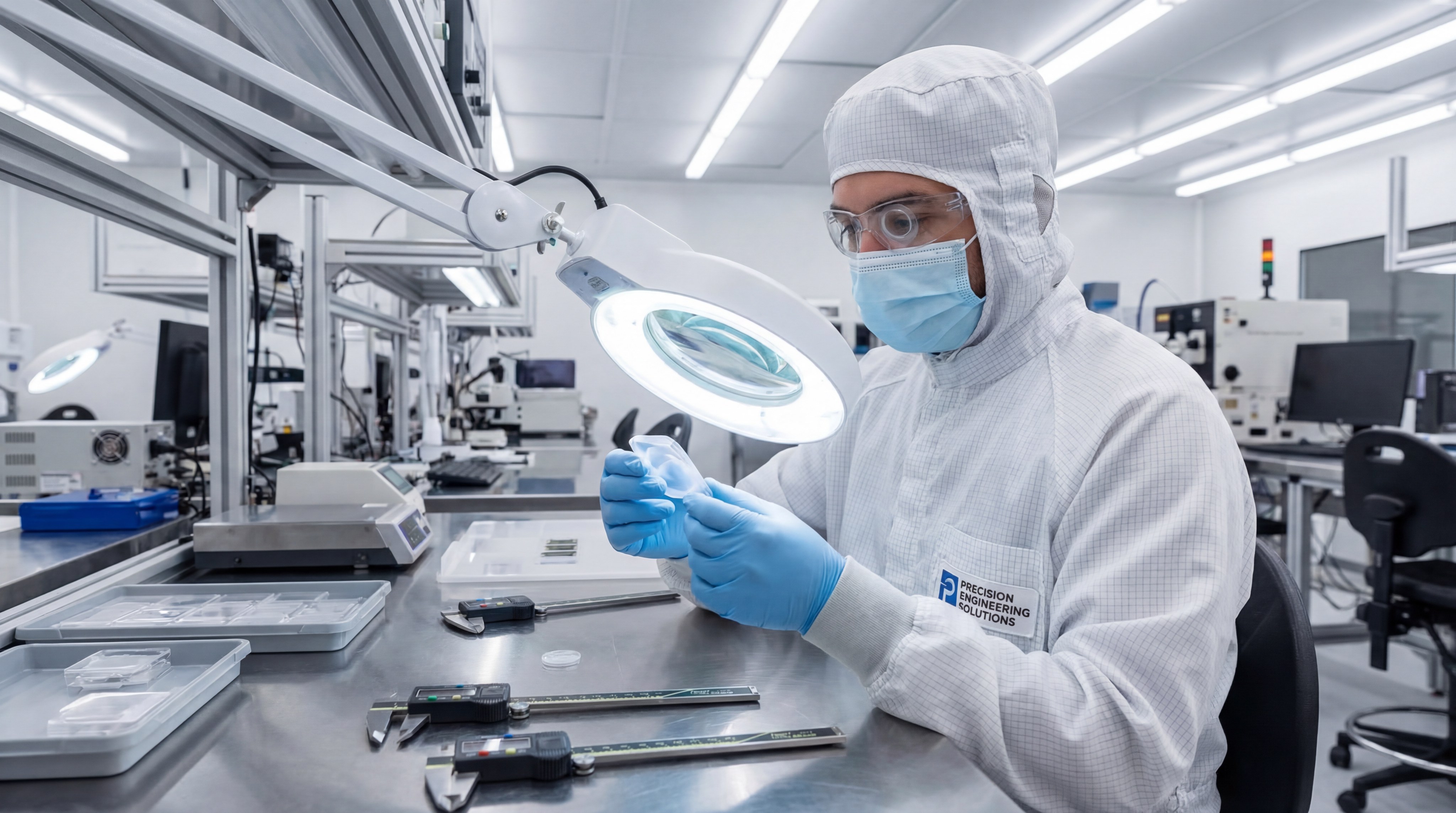
Three-Stage Inspection Protocols
We utilize IQC, IPQC, and FQC stages to maintain the highest quality levels. From checking the purity of incoming materials to performing pull tests on finished bonds, every step is documented. This rigorous approach ensures that your parts function exactly as intended in the field.
Key Takeaway: Rigorous inspection protocols and early-stage DFM reviews are the only ways to ensure zero-defect production in complex multi-material molding.
The following table details the focus areas of each inspection stage during the manufacturing cycle.
| Stage | Focus Area |
|---|---|
| Incoming (IQC) | Material purity & substrate prep |
| In-Process (IPQC) | Bond strength & flash control |
| Final (FQC) | Cosmetic finish & dimensions |
How do surface textures impact part performance?
Surface textures impact part performance by enhancing user grip and hiding manufacturing imperfections like flow lines. When designers ask, “Can you overmold silicone onto plastic or metal?”, they often overlook how the surface finish can change the perceived quality of the material. A well-chosen texture can make a standard silicone part feel like a premium luxury component.
Think about it:
- Matte finishes reduce the “sticky” feel of raw silicone.
- Grained textures provide a secure grip for wet environments.
- Polished surfaces are necessary for high-clarity or sealing applications.
Enhancing Grip and Ergonomics
Textures are vital for products like smart wearables or handheld tools where grip is essential. By applying a specific texture to the mold, we can alter the friction coefficient of the silicone. This allows a relatively hard silicone to feel soft and velvety to the skin.
Improving Release and Durability
Beyond aesthetics, textures help the part release from the mold more easily during production. They also serve a functional purpose by hiding scuffs and scratches that occur during everyday use. This ensures the product looks new for a longer period of time.
Key Takeaway: Surface texture is not just an aesthetic choice; it is a functional design tool that improves both the user experience and the efficiency of the molding process.
This texture impact matrix helps you choose the right finish based on your specific user and manufacturing goals.
| Texture Style | User Benefit | Manufacturing Benefit |
|---|---|---|
| Matte/Satin | Soft-touch feel | Hides sink marks |
| Grained/Leather | High-friction grip | Easier part ejection |
| Polished | Aesthetic clarity | Optimal sealing surface |
Frequently Asked Questions
Can I overmold silicone onto any type of plastic?
No. The substrate must have a melting point higher than the silicone’s curing temperature, which is usually above 150°C. Common suitable plastics include PBT, PPS, and high-temperature nylons.
What’s the best way to ensure a permanent bond?
Absolutely use a “Hybrid” approach. This involves selecting a self-bonding silicone grade and incorporating mechanical interlocks, such as grooves or through-holes, into the substrate design.
Can I use overmolding for electronic components?
Yes. Silicone overmolding is frequently used to encapsulate sensitive electronics, providing a shock-resistant and waterproof seal that protects against moisture and impact.
What’s the best material for medical-grade overmolding?
Yes, platinum-cured Liquid Silicone Rubber (LSR) is the standard. It is chosen for its high purity, excellent biocompatibility, and its ability to withstand repeated sterilization cycles.
Can I reduce my total costs by using insert molding?
Yes. For low to medium production volumes, insert molding is usually more cost-effective because it utilizes standard injection molding machines and features less complex tooling.
Conclusion
Silicone overmolding is the ultimate solution for manufacturers who need to combine the structural strength of metal or plastic with the versatile properties of silicone. By mastering the secrets of material compatibility, bonding strategies, and precision tooling, you can create products that are more durable, safer, and more comfortable for the end-user. Whether you are building surgical tools or consumer electronics, this process provides a level of integration that traditional assembly simply cannot match.
At Hualin Silicone, we are committed to turning your complex multi-material designs into high-performance realities. Our ISO-certified facility and engineering-first approach ensure that every overmolded part we produce meets the most stringent quality standards.
Don’t let bonding issues hold back your product innovation. Contact our engineering team today for a professional DFM review and custom quotation for your next overmolding project.