
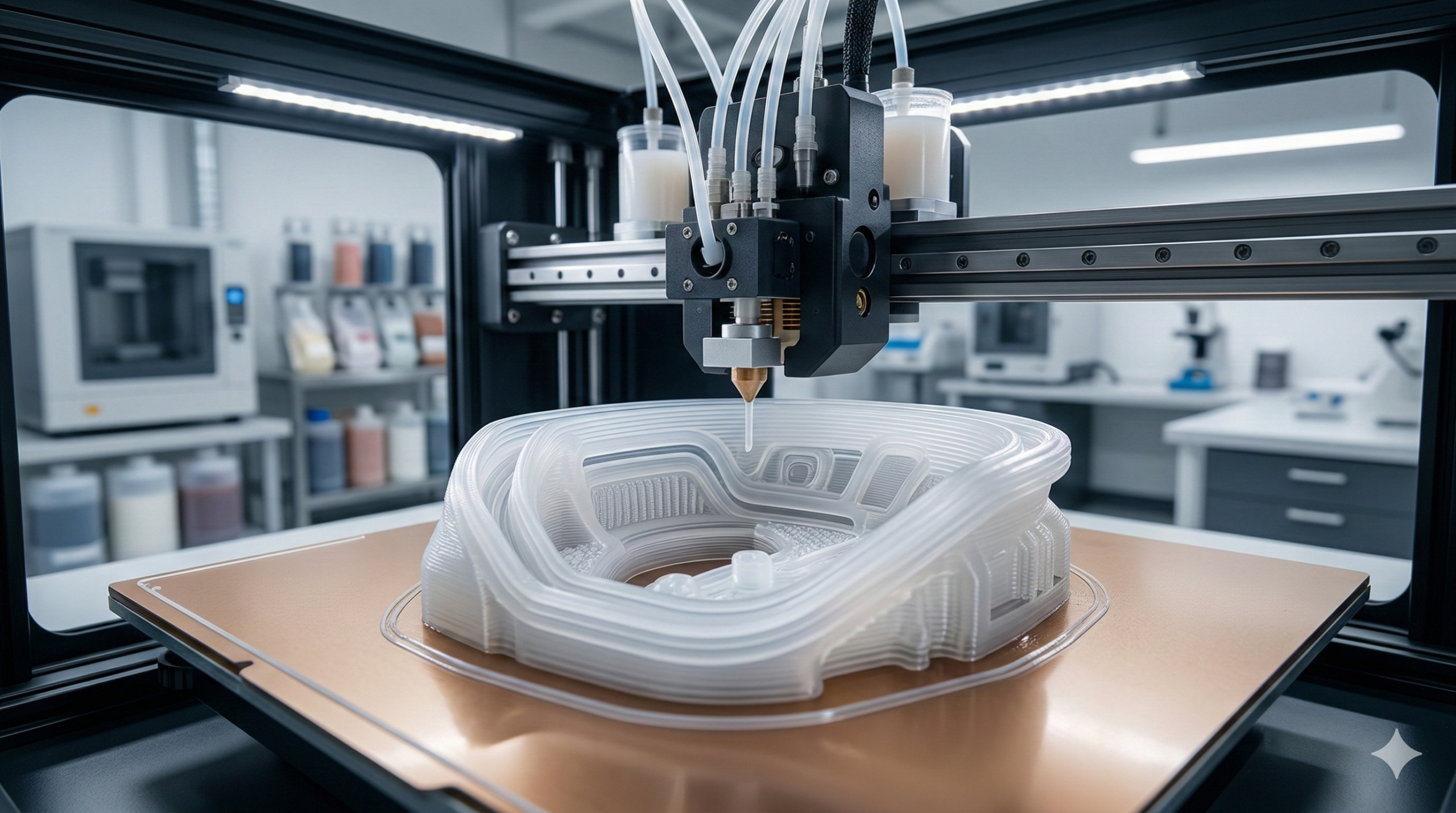
Silicone 3D printing is an additive manufacturing process that layers 100% pure silicone to create complex, elastomeric parts without the need for traditional molds. Transitioning from a digital design to a functional elastomer part often feels like a race against time and budget. Traditional molding requires expensive tooling and weeks of lead time, creating a bottleneck that can stall your product development cycle. Silicone 3D Printing eliminates these barriers by providing a tooling-free path to high-performance parts.
What is Silicone 3D Printing?
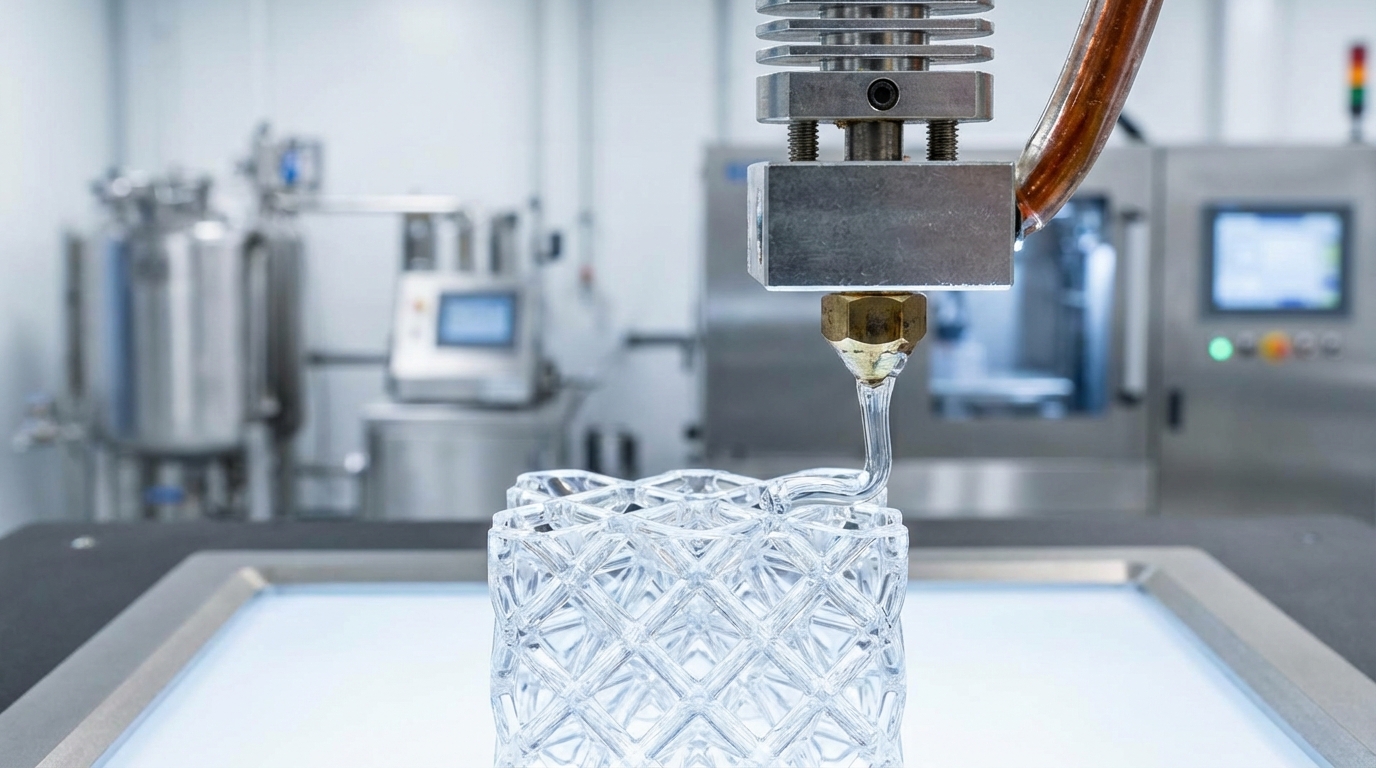
Silicone 3D printing is a specialized additive technology that extrudes pure silicone material to build functional parts layer by layer. Unlike other flexible prints that use plastic blends, this method utilizes the same high-grade material found in industrial molding. This ensures that your parts maintain the thermal and chemical properties required for demanding B2B environments.
Is it different from standard 3D printing?
Here’s the deal: standard 3D printing often uses thermoplastics like TPU which lack the long-term environmental resistance of true silicone. While most printers melt plastics, silicone printers manage the precise deposition of a viscous elastomer that cures into a solid, rubbery state. This allows you to achieve a level of flexibility and heat resistance that standard filaments simply cannot match.
Understanding True Silicone material
The material used in this process is 100% pure silicone, offering a temperature range of -30°C to +180°C. You will find that these parts show high resistance to acids, nonpolar solvents, and harsh environmental conditions. They are inherently water-repellent and provide excellent insulating properties for electronics.
- Temperature Resistance: Stable from -30°C to +180°C.
- Chemical Durability: Resists acids, bases, and nonpolar solvents.
- High Permeability: Excellent gas permeability for specialized applications.
- Biocompatibility: Suitable for various medical and skin-contact uses.
Key Takeaway: Using pure silicone ensures your 3D-printed prototypes have the same mechanical integrity as final mass-produced components.
| Property | Description | Benefit |
|---|---|---|
| Purity | 100% Silicone | High chemical stability |
| Temp Range | -22°F to +356°F | Extreme environment use |
| Permeability | High Gas Exchange | Breathable for medical use |
The chemical purity of the material ensures that your parts perform reliably under extreme thermal stress.
How Does Silicone 3D Printing Aid Prototyping?
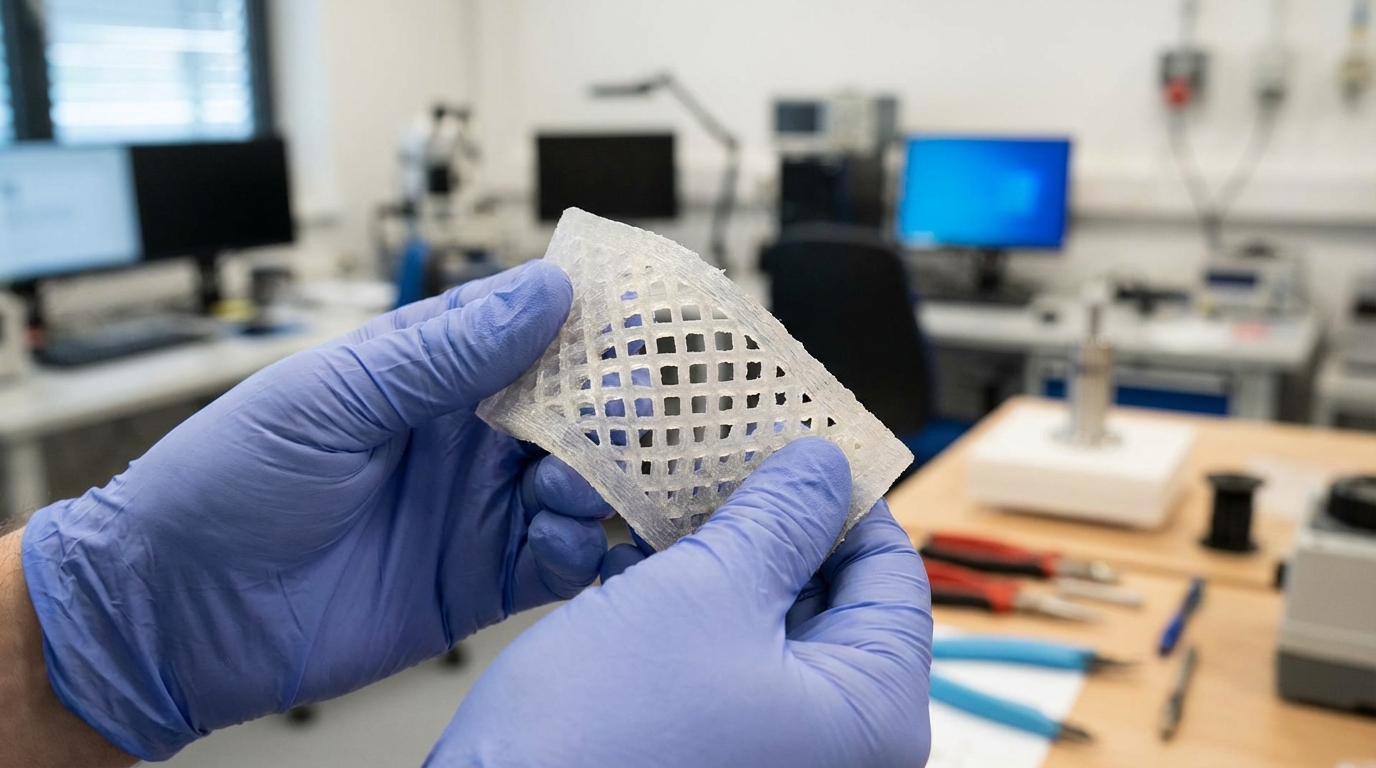
Silicone 3D printing aids prototyping by allowing you to bypass the expensive and slow process of creating metal molds. You can test multiple design versions in days rather than waiting weeks for tooling to arrive. This rapid Silicone 3D Printing cycle significantly reduces your overall project risk by catching design flaws early.
Fast iterations without mold costs
The best part? You can modify your CAD file and start a new print immediately without spending thousands on a new mold. This freedom allows you to refine gaskets, seals, or wearable straps until the ergonomics are perfect. You save significant overhead costs while accelerating your market entry timeline.
Validating complex organic geometries
Many organic shapes and internal channels are impossible to create with standard molding because they cannot be ejected from a tool. 3D printing handles undercuts and complex internal features with ease, giving you total design freedom. You can now build parts that were previously considered “unmanufacturable.”
- Undercuts: Create features that standard molds cannot release.
- Internal Channels: Print hollow paths for fluid or air flow.
- Organic Curves: Achieve smooth, anatomical shapes for medical models.
- Lattice Structures: Optimize weight and damping characteristics.
Key Takeaway: Prototyping with this technology removes the financial penalty for design mistakes and encourages innovation through rapid testing.
| Metric | 3D Printing | Mold Tooling |
|---|---|---|
| Initial Setup Cost | Low ($0 tooling) | High ($2,000+) |
| Lead Time | 1–5 Days | 2–6 Weeks |
| Design Changes | Instant | Expensive/Difficult |
This comparison highlights how additive methods provide a superior path for low-volume testing and design validation.
What are the Main Benefits of True Silicone?
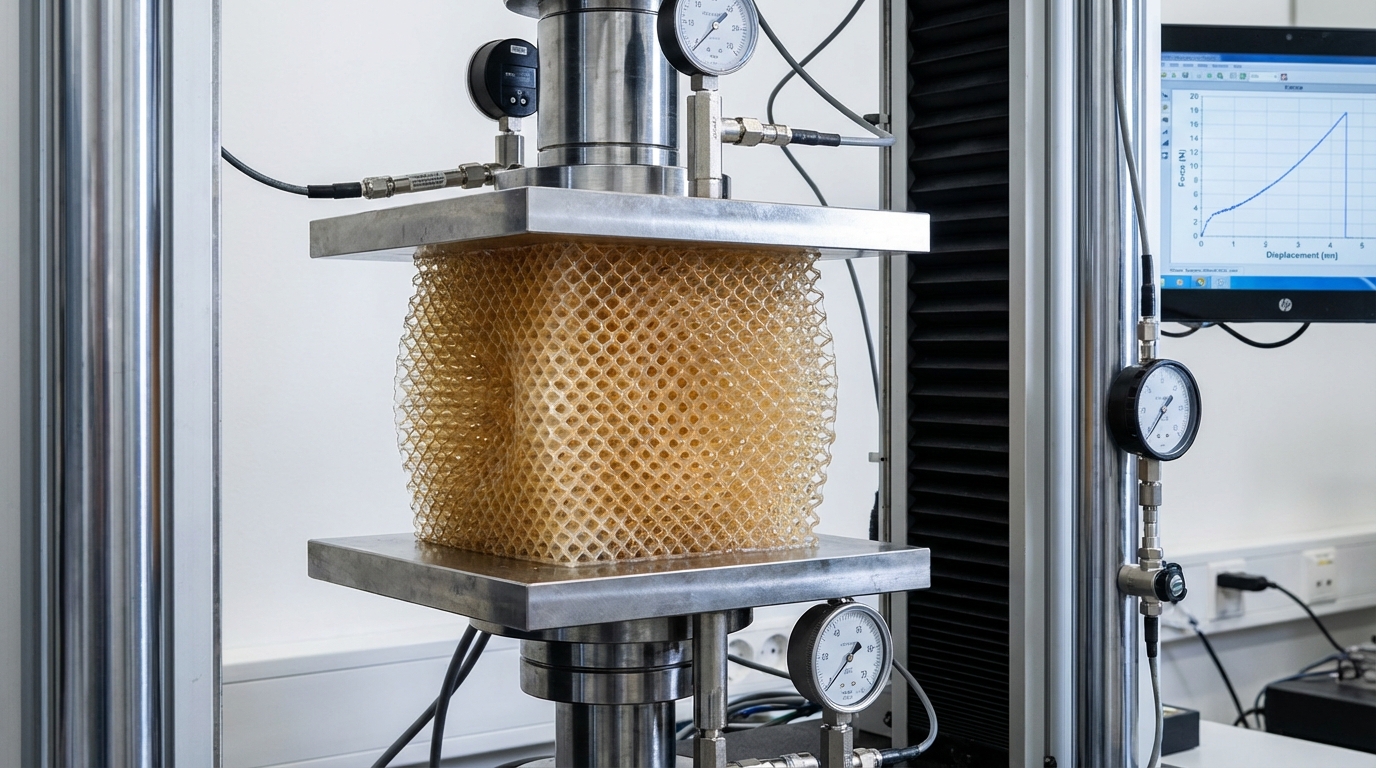
True silicone provides unparalleled elasticity and environmental resistance that imitation elastomers simply cannot achieve. In the world of silicone 3D printing, having a material that behaves consistently under stress is vital for functional parts. You can rely on its durability for gaskets, seals, and interface components that must withstand repeated use.
High temperature and wear resistance
Think about it. Most flexible 3D materials degrade when exposed to heat or friction, but true silicone thrives in these conditions. It maintains its shape and performance even when exposed to temperatures exceeding 150°C for long periods. This makes it an ideal choice for engine components or industrial kitchenware prototypes.
Elasticity after repeated stress
Pure silicone is famous for its ability to return to its original shape after being stretched or compressed. You won’t have to worry about the “compression set” that plagues lower-quality flexible plastics over time. This reproducibility makes it a prime candidate for long-life industrial seals.
- Compression Set: Minimal deformation after long-term pressure.
- Elongation: Ability to stretch significantly without tearing.
- Wear Resistance: High durability against surface friction.
- UV Stability: Will not yellow or become brittle in sunlight.
Key Takeaway: The mechanical resilience of pure silicone ensures that your 3D-printed parts function exactly like final molded products.
| Feature | True Silicone | Generic Elastomers |
|---|---|---|
| Heat Limit | 180°C+ | 80°C – 100°C |
| Recovery | Excellent | Poor (takes set) |
| UV Resistance | High | Moderate |
The superior stress recovery of pure silicone makes it the most reliable choice for dynamic sealing applications.
Which Sectors Use Silicone 3D Printing Services?
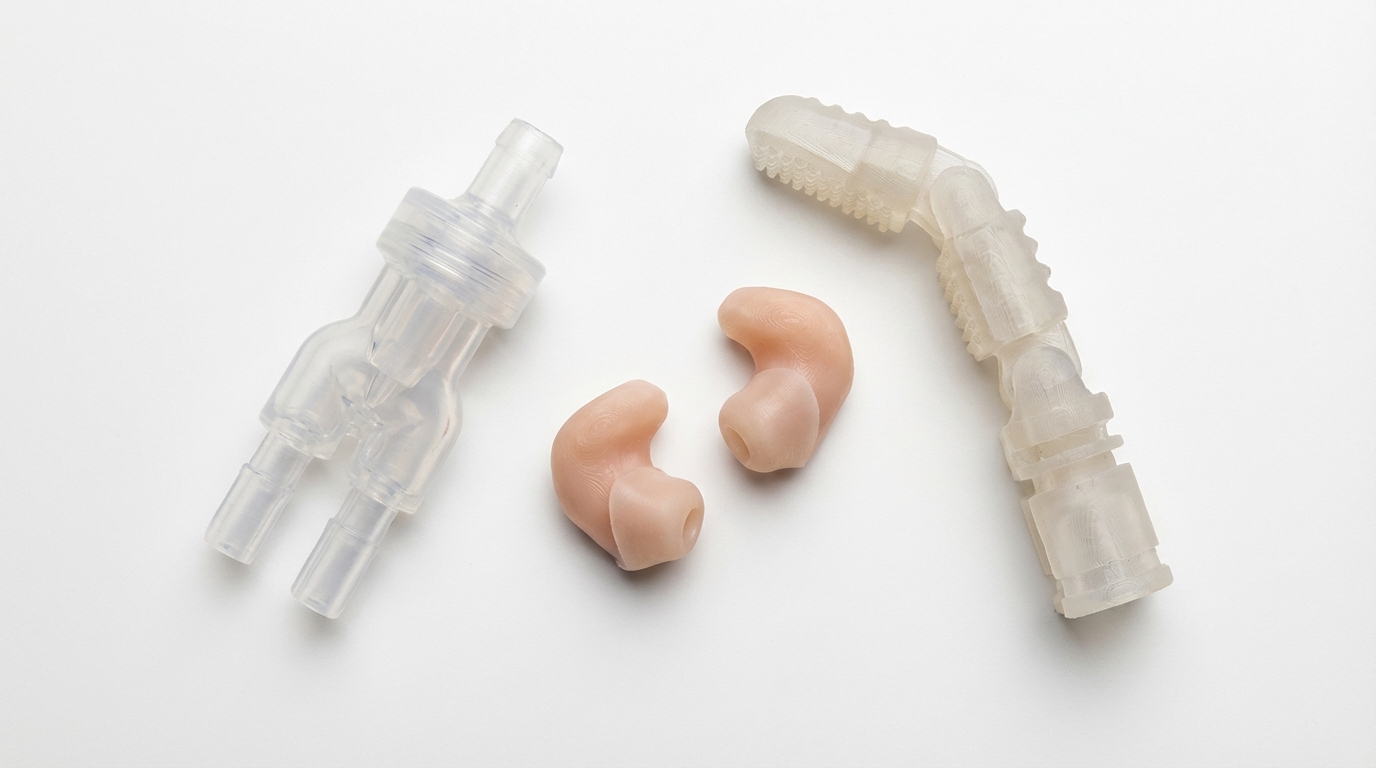
Multiple industries utilize silicone 3D printing services to create custom, biocompatible, and high-performance components. From specialized medical devices to consumer electronics, this technology allows for the creation of parts that meet strict safety standards. You can leverage Silicone 3D Printing to gain a competitive edge in niche markets.
Custom pet accessories and feeders
Pet owners demand safety and durability, which makes food-grade silicone a preferred material for innovative pet products. You can design custom feeders with complex textures or unique chew toys that are completely non-toxic and dishwasher safe. The ability to create these without high-volume commitments allows for rapid niche market testing.
- Chew-Safe: Withstands the bite force of pets without shredding.
- Non-Toxic: Safe for food and water contact.
- Durable: Resists tearing during aggressive play.
- Easy Clean: Withstands sterilization and high-heat washing.
Consumer wearables and smart devices
What does this mean for you? You can produce custom watch straps or earbud tips that are sweat-resistant and hypoallergenic for long-term wear. These parts provide the soft-touch feel consumers expect while maintaining the structural integrity needed to house sensitive sensors. It is the perfect bridge for moving from a digital concept to a retail-ready wearable.
Key Takeaway: Industry-specific needs for safety and biocompatibility are easily met with the high purity of 3D-printed silicone.
| Industry | Primary Use Case | Critical Requirement |
|---|---|---|
| Medical | Surgical Models | Biocompatibility |
| Consumer | Wearable Straps | Skin Safety |
| Industrial | Custom Gaskets | Chemical Resistance |
Each sector benefits from the unique intersection of additive manufacturing speed and medical-grade material purity.
What Mechanical Properties Can You Expect?
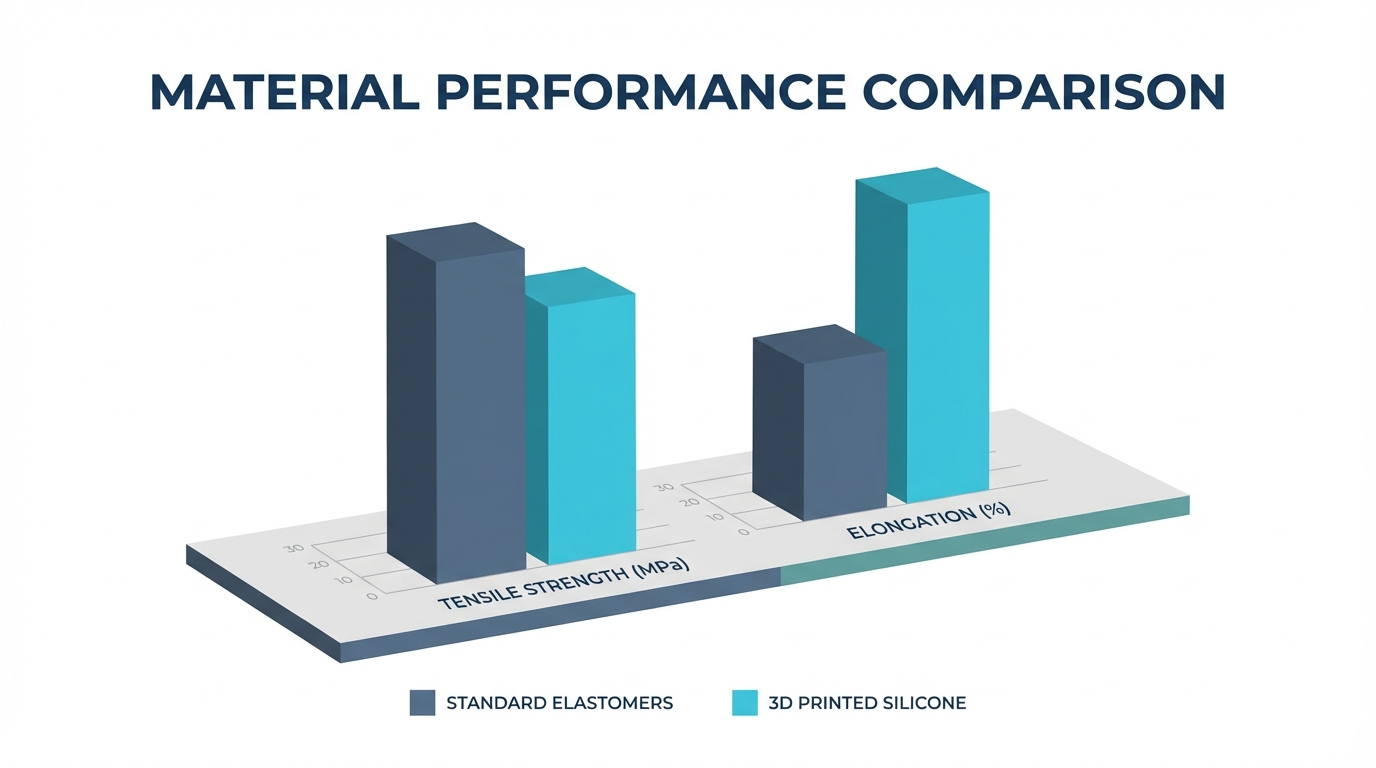
You can expect industrial-level mechanical properties like tensile strength up to 1,450 psi and elongation up to 950% when using silicone 3D printing. These metrics ensure that your parts can be stretched and pulled without experiencing structural failure. You will find that these printed components are robust enough for most functional B2B testing scenarios.
Tensile strength and elongation metrics
Silicone 3D printing provides impressive elongation, meaning parts can stretch nearly ten times their original length before breaking. This flexibility is essential for items like bellows, surgical models, or flexible tubing. Depending on the durometer you choose, you can balance the softness with the necessary pull-strength your application demands.
- Tensile Strength: Up to 1,450 psi for high-durability needs.
- Elongation: Maximum break point at 950% stretch.
- Tear Strength: High resistance to nicking and propagation.
- Density: Consistent across different hardness levels for weight planning.
Resistance to acids and nonpolar solvents
But wait, there’s more. Beyond physical stretch, these parts provide a chemical barrier that protects your assemblies from aggressive substances. You can safely use these components in environments where they might be exposed to industrial oils or mild acids. This reliability is why many engineers choose silicone for custom lab equipment and sealing prototypes.
Key Takeaway: The high tensile strength and elongation metrics of printed silicone match the performance of traditional liquid silicone rubber.
| Shore-A Hardness | Tensile Strength (psi) | Elongation (%) |
|---|---|---|
| 35A | 1,450 | 950% |
| 50A | 1,233 | 550% |
| 60A | 1,160 | 320% |
The inverse relationship between hardness and elongation allows you to tune part performance to specific mechanical needs.
How Should You Design for Silicone 3D Printing?
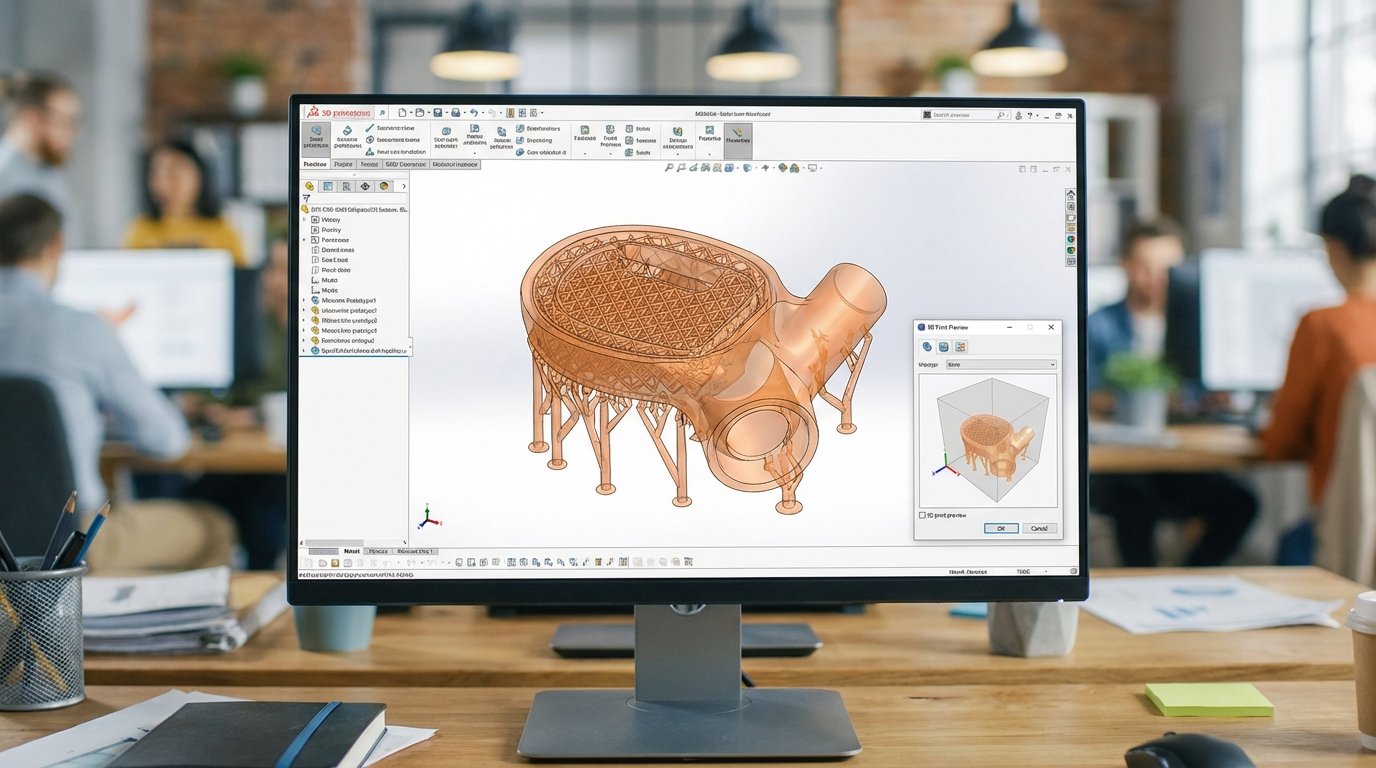
Designing for silicone 3D printing requires an understanding of minimum wall thicknesses and supported versus unsupported features. Because silicone is highly flexible during the printing process, your design must account for the stability of the part as it is being built. You can achieve high precision by following these Silicone 3D Printing guidelines.
Minimum feature size and wall thickness
It gets better. You can print features as small as 0.01 inches on the X-Y plane, allowing for intricate detail on keypads and small seals. However, you must maintain a wall thickness of at least 0.012 inches for supported walls to ensure the part doesn’t collapse. Proper planning ensures that your delicate designs translate into durable physical objects.
Tolerance planning for assembly
When designing parts that must fit into larger assemblies, you should plan for a tolerance of approximately +/- 0.004 inches for the first inch. This precision allows for tight-fitting gaskets and click-on buttons that feel high-quality to the end-user. Understanding these limits prevents assembly issues later in your development cycle.
- X-Y Feature Size: Minimum of 0.01 inches for fine detail.
- Supported Walls: Maintain at least 0.012 inches for stability.
- Unsupported Walls: Increase to 0.02 inches to prevent sagging.
- Z-Plane Detail: Features should be at least 0.016 inches high.
Key Takeaway: adhering to strict design guidelines for wall thickness and feature size ensures a successful, high-quality print every time.
| Limit Type | US Value | Metric Value |
|---|---|---|
| Min Feature (X-Y) | 0.01 in | 0.25 mm |
| Supported Wall | 0.012 in | 0.30 mm |
| Unsupported Wall | 0.02 in | 0.50 mm |
Precision in the design phase directly correlates to the functional reliability of your 3D-printed silicone part.
What Shore-A Hardness Options are Available?
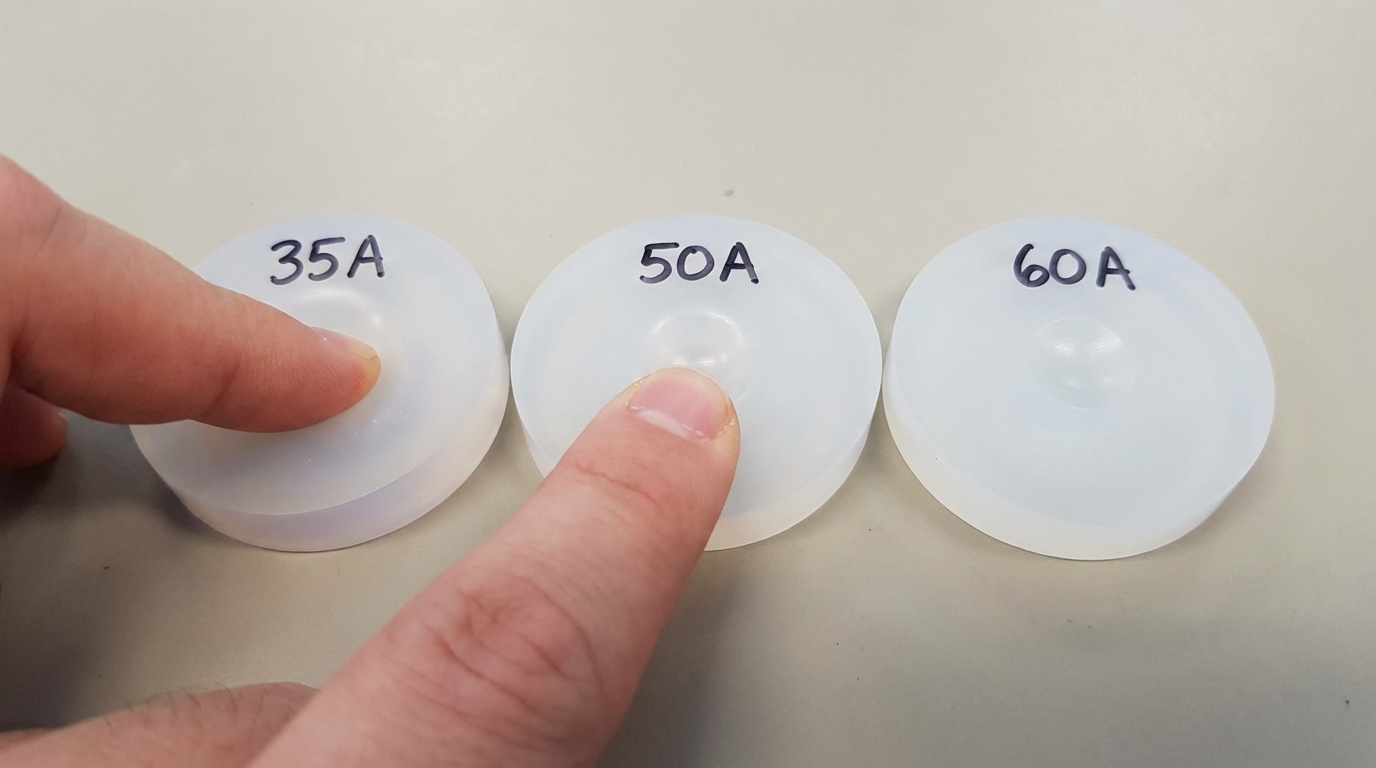
Silicone 3D printing offers a variety of Shore-A hardness levels, ranging from very soft 35A to more rigid 60A durometers. This range allows you to select a material that feels right for your specific product, whether it’s a soft seal or a stiff industrial button. You can optimize the tactile feedback and compression characteristics by choosing the appropriate hardness.
Soft 35A vs Hard 60A durometers
Selecting a 35A silicone gives you a part that is highly flexible and squishy, perfect for physiological models or anatomical replicas. On the other end, 60A silicone feels much firmer and is ideal for parts that need to hold their shape under more intense mechanical loads. You can choose the middle ground of 50A for general-purpose gaskets and protective sleeves.
- 35A Durometer: Very soft, high elongation, perfect for soft-tissue models.
- 50A Durometer: Medium firm, balanced properties, great for seals.
- 60A Durometer: Stiffest option, high tear resistance, ideal for buttons.
- Customization: Ability to select the hardness that matches your final product.
How to choose the right hardness?
You might be wondering: “Which hardness is best for my assembly?” If your part needs to create a seal with low pressure, a softer 35A or 50A is usually the best choice for maximum compliance. For items like protective cases or ruggedized keypads, the 60A option provides the impact resistance and stiffness required for long-term use.
Key Takeaway: Having multiple durometer options allows you to simulate the exact feel and function of your mass-produced silicone parts.
| Hardness | Feel | Common Application |
|---|---|---|
| 35A | Soft/Squishy | Medical models, soft seals |
| 50A | Flexible/Firm | Gaskets, protective covers |
| 60A | Rigid/Tough | Keypads, structural bumpers |
Choosing the correct durometer is the most important step in ensuring your prototype meets functional expectations.
How Does it Compare to Liquid Silicone Rubber?
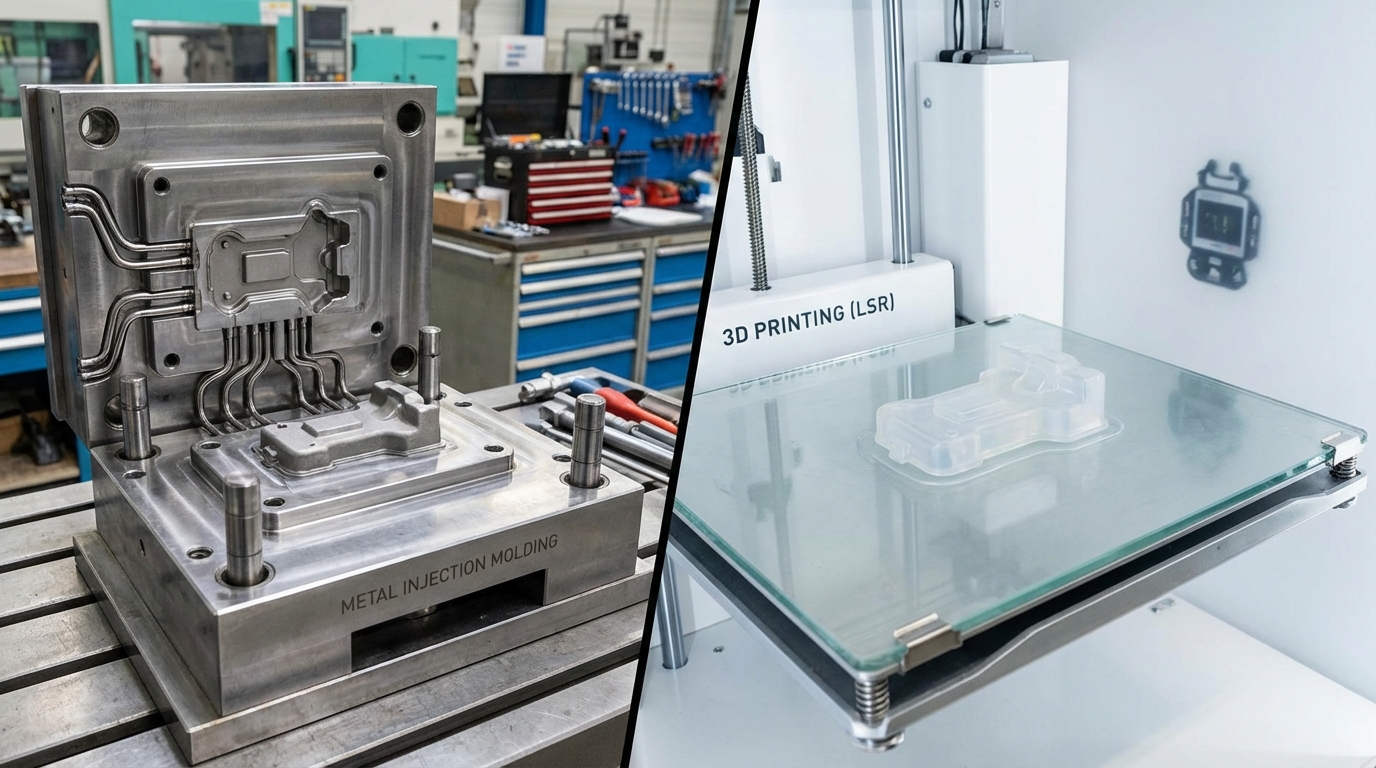
While both processes use high-quality materials, silicone 3D printing is a tooling-free additive process whereas LSR molding requires a machined metal tool. This makes 3D printing far more efficient for low volumes and complex prototyping. You can utilize Silicone 3D Printing to speed up your development before committing to expensive mass production molds.
Tooling-free vs high-volume molding
Look: the main difference is that 3D printing builds parts one layer at a time, avoiding the constraints of a physical mold. Molding is incredibly fast for thousands of parts but requires a massive upfront investment in steel or aluminum tools. 3D printing is the clear winner for quantities under 100 units where the cost of a mold would be prohibitive.
Surface quality and finishing differences
Molded parts have a very smooth, polished surface that is difficult to replicate with the layer lines inherent in 3D printing. However, modern silicone printing has advanced to offer much finer resolution and smoother textures than earlier versions. You can also perform secondary finishing operations to improve the surface quality if your application requires it.
- Tooling: Printing is $0 setup, Molding is $2,000+ per tool.
- Complexity: Printing allows for internal voids; Molding is limited by ejection.
- Surface Finish: Molding is smoother; Printing has visible layer lines.
- Speed: Printing starts in hours; Molding takes weeks for tooling.
Key Takeaway: Silicone 3D printing is the most economical way to produce small batches and complex geometries without mold investment.
| Process | Best Volume | Design Freedom |
|---|---|---|
| 3D Printing | 1 – 50 Units | Unlimited (internal cavities) |
| LSR Molding | 500+ Units | Limited by mold ejection |
| Overmolding | 100+ Units | Requires insert placement |
While molding dominates mass production, additive methods provide the agility needed for modern B2B product development.
Is Silicone 3D Printing Best for Small Runs?
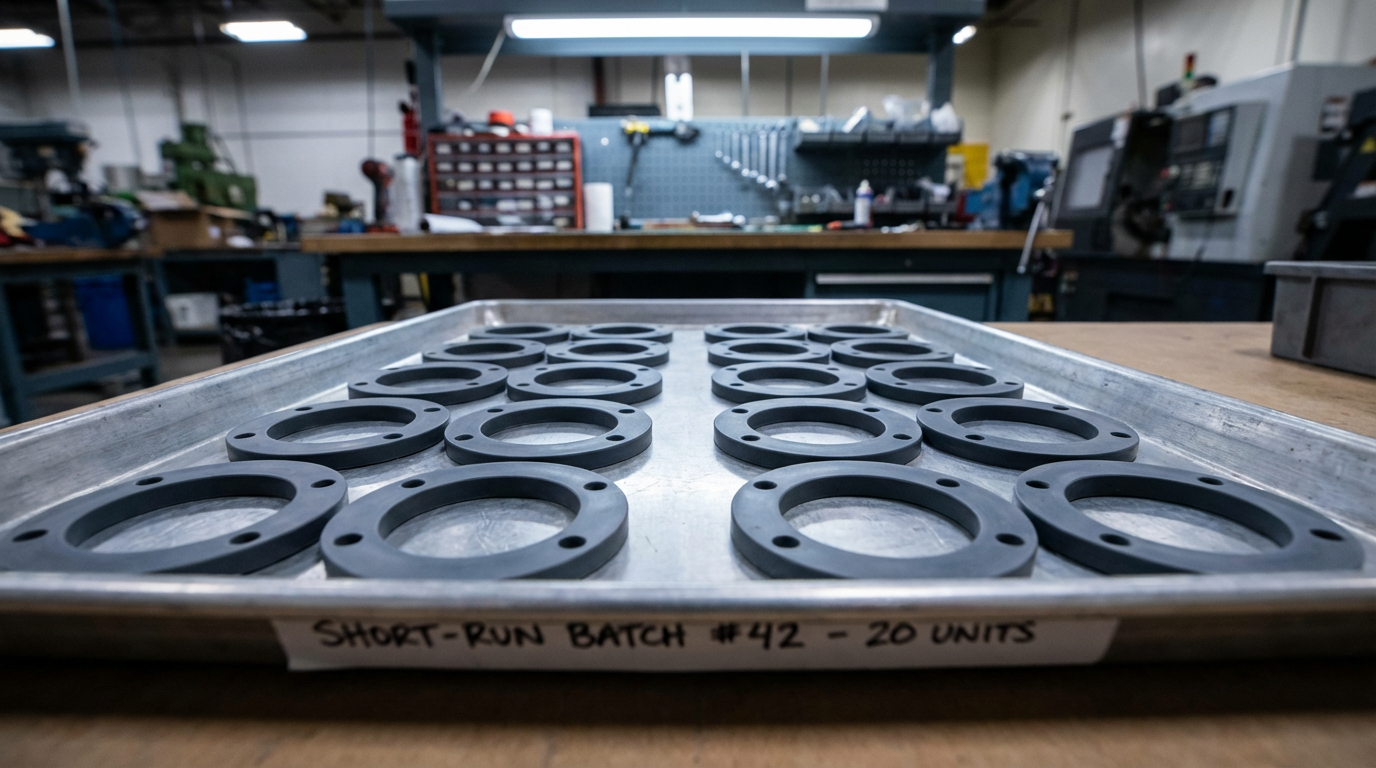
Yes, silicone 3D printing is the most effective solution for small runs and bridging production before investing in mass-market tooling. It allows you to produce dozens of identical parts for pilot testing or low-volume custom orders without any minimum order quantities. This flexibility helps you manage your budget while maintaining a professional standard of manufacturing.
Bridging production before mass tooling
Now: you can fulfill early orders or conduct clinical trials with 3D-printed parts while your high-volume mold is being machined. This “bridge” strategy ensures you don’t lose momentum in the market while waiting for your permanent production line. You can even use these small batches to test different market segments with varied designs.
Custom parts with no minimum order
The lack of an MOQ means you can order exactly what you need, whether it is one piece or fifty. This is particularly useful for specialized B2B applications like custom laboratory gaskets or bespoke medical components. You reduce waste and storage costs by only producing the inventory required for your current project.
- No MOQ: Order 1 or 100 parts with the same ease.
- Rapid Shipping: Receive your custom parts in as fast as 1-5 days.
- Lower Risk: No need to commit to thousands of units upfront.
- Custom Batching: Easily print multiple durometers in the same order.
Key Takeaway: The cost-scaling of 3D printing makes it the perfect choice for high-mix, low-volume silicone manufacturing needs.
| Quantity | 3D Printing Cost | Molding Cost (incl. Tool) |
|---|---|---|
| 1 Unit | $150 | $3,000 |
| 20 Units | $1,200 | $3,500 |
| 1,000 Units | $50,000 | $10,000 |
Additive manufacturing is specifically optimized for the low-volume “valley” where traditional molding is too expensive.
Can Silicone 3D Printing Meet Your B2B Needs?

Silicone 3D printing can meet your B2B needs by providing high-quality, functional parts with shorter lead times and lower entry costs. Whether you are in the medical, automotive, or consumer goods sector, this technology offers the purity and performance your projects demand. You can trust this Silicone 3D Printing method for both prototyping and small-scale end-use production.
Frequently Asked Questions
Let’s dive in. Here are some of the most common questions engineers ask when considering this technology for their professional projects:
- Can I use silicone 3D printing for food-safe parts?
- What’s the best shore hardness for gaskets?
- How long does the 3D printing process take?
- Is 3D printed silicone biocompatible for medical?
- Does 3D printing support silicone overmolding?
Key Takeaway: The combination of pure material and additive speed makes this technology an essential tool for modern B2B manufacturing.
| Capability | Readiness | Note |
|---|---|---|
| Prototyping | 100% | Faster than any other method |
| Low Volume | 100% | Ideal for bridge production |
| Mass Production | 20% | Molding is still better for 1k+ |
The current state of technology makes it a vital resource for any company focused on rapid development and high-purity elastomer parts.
Conclusion
Silicone 3D printing is more than just a prototyping tool; it is a strategic advantage for B2B innovators who need performance without the wait. By eliminating mold costs and providing access to 100% pure silicone, you can bring high-quality products to market faster and with less financial risk. Whether you need a soft 35A anatomical model or a rugged 60A industrial seal, this technology delivers. To see how our factory-direct services can accelerate your next project, contact us today for a professional DFM review.
FAQ
Can I use silicone 3D printing for food-safe parts?
Yes, since the process uses 100% pure silicone, the resulting parts can meet FDA or LFGB food-grade standards depending on the specific resin grade used.
What’s the best shore hardness for gaskets?
Generally, a Shore 50A or 60A is best for gaskets as it provides enough stiffness to maintain a seal while remaining flexible enough to compress under pressure.
How long does the 3D printing process take?
Most small-to-medium parts can be printed and cured in as little as 24 to 48 hours, with shipping typically taking an additional 2-3 business days.
Is 3D printed silicone biocompatible for medical?
True silicone materials are often biocompatible and can be sterilized, making them suitable for anatomical models, dental liners, and external medical components.
Does 3D printing support silicone overmolding?
While the printing process itself is additive, you can print silicone structures directly onto other 3D-printed or machined inserts to simulate an overmolded assembly.