
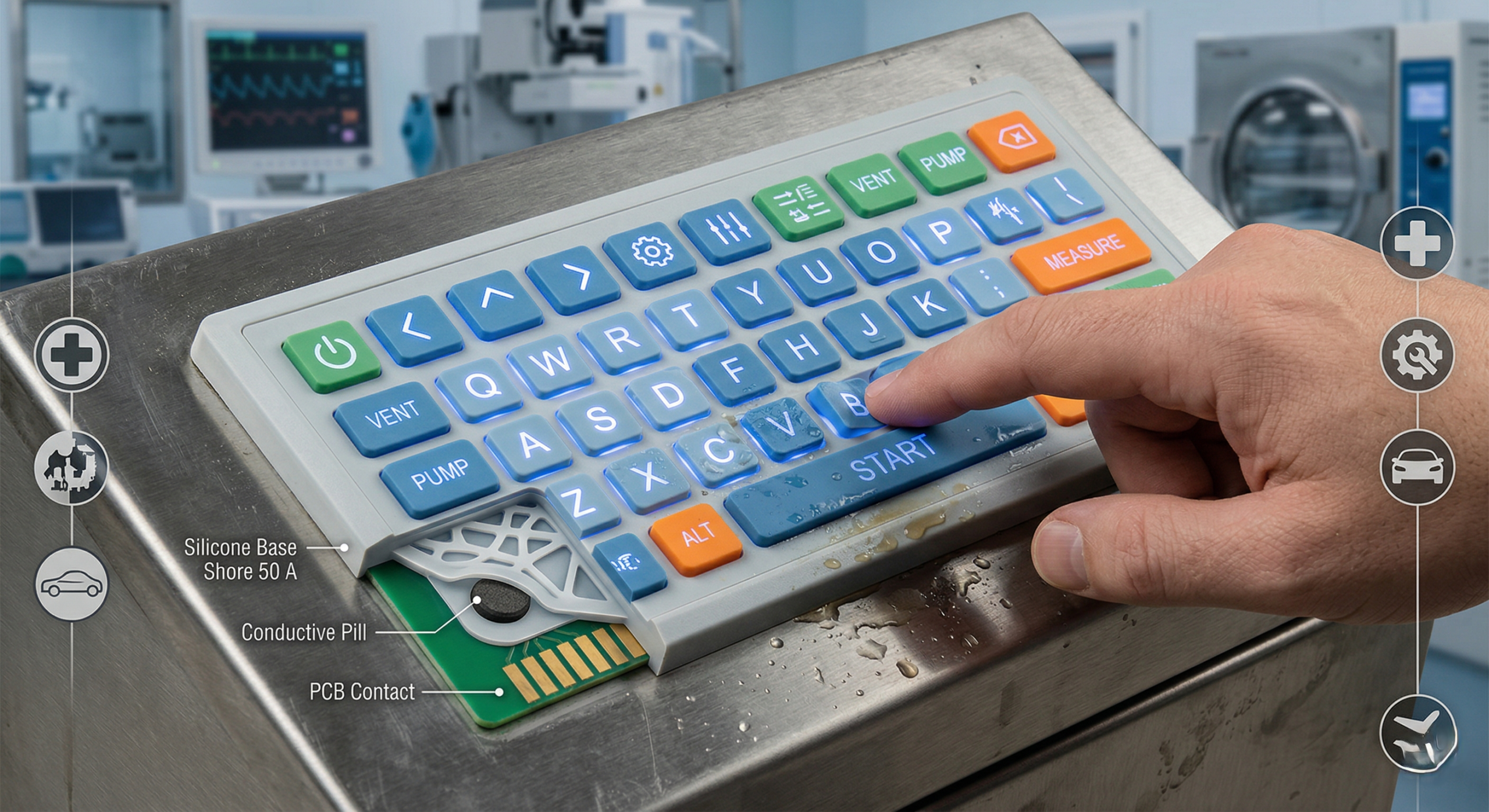
Manufacturers often struggle with rigid, noisy, or fragile interface components that fail under heavy use. This lack of durability leads to expensive product recalls and a frustrating user experience that can damage a brand’s reputation. Silicone Rubber Keypads provide the perfect solution by offering a flexible, resilient, and virtually indestructible interface that excels in even the most demanding environments.
What Materials Comprise Silicone Rubber Keypads?
Silicone Rubber Keypads are primarily composed of high-quality elastomeric silicone polymers and conductive elements like carbon or gold-plated pills. These materials are chosen for their ability to maintain flexibility across extreme temperature ranges while providing excellent electrical insulation for the surrounding components. 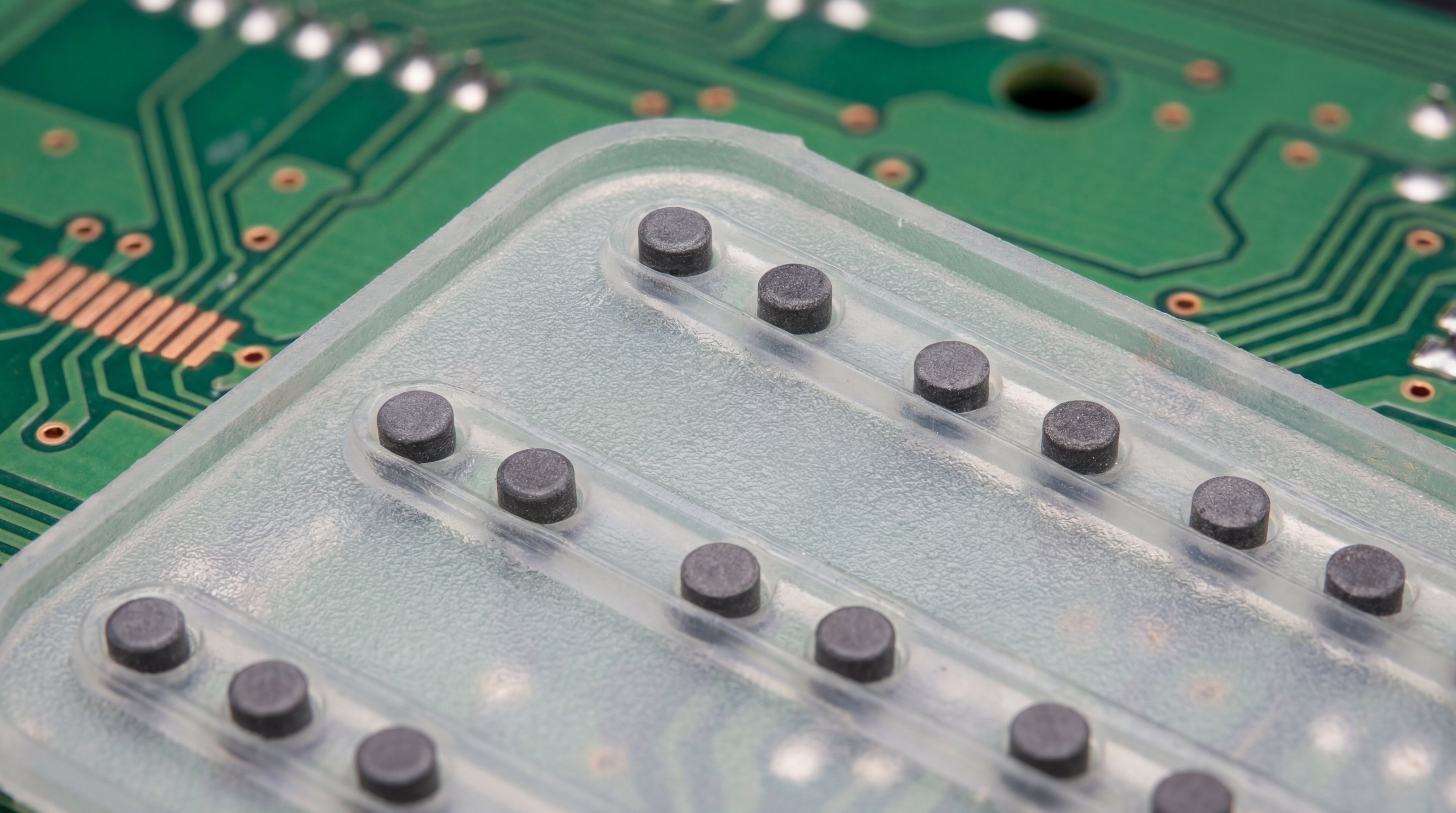 You will find that the base material is often mixed with specific pigments to achieve any desired color.
The Importance of Conductive Pills
Conductive pills are small discs embedded on the underside of the keypad to complete the electrical circuit on the PCB. Here is the kicker: without these tiny components, your device wouldn’t register a single press.
- Carbon pills for standard cost-effective use.
- Gold pills for low-resistance requirements.
- Conductive ink for ultra-thin applications.
Silicone Grade Selection
Choosing the right grade of silicone determines the tactile feel and environmental resistance of the final product. Think about it: a medical device requires different material certifications than a TV remote.
Key Takeaway
The material composition is a balance of structural silicone for durability and conductive elements for functional circuit completion.
| Material Component | Primary Function | Standard Grade |
|---|---|---|
| Silicone Base | Structural integrity and travel | Shore 40-70 A |
| Conductive Pill | Electrical contact | Carbon or Gold |
| Color Pigments | Aesthetic branding | Pantone/RAL |
This combination ensures that the interface is both visually appealing and electronically reliable for long-term industrial use.
How Do Silicone Rubber Keypads Operate Mechanically?
Silicone Rubber Keypads function by utilizing a “web” or “skirt” that collapses under pressure to push a conductive element against a circuit board. This mechanical deformation is carefully engineered through compression vulcanization to ensure the key returns to its original position once released. 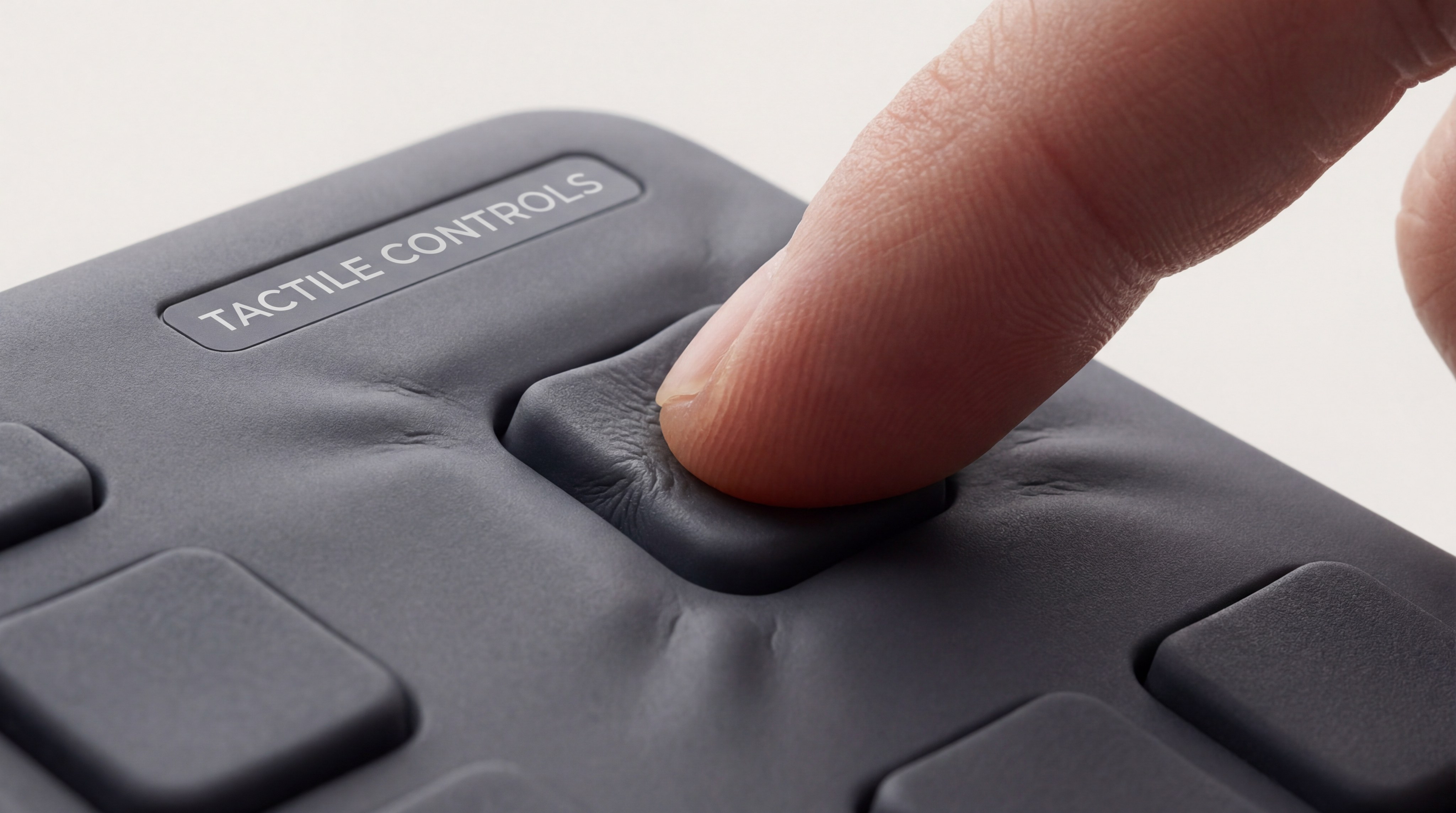 Believe it or not, this simple movement can be rated for millions of cycles without material fatigue.
The Role of the Snap Ratio
The snap ratio is the mathematical relationship between the actuation force and the return force of the key. Here is the thing: if this ratio is off, the keypad will feel “mushy” or unresponsive to the user.
- High snap ratios provide a “clicky” feel.
- Low snap ratios offer a silent, soft touch.
- Ideal ratios usually fall between 40% and 60%.
Web Geometry and Travel
The thickness and angle of the silicone web determine exactly how far a key must travel before it activates. You might be wondering how much distance is standard; typically, it ranges from 0.5mm to 3.0mm depending on the application.
Key Takeaway
Mechanical operation relies on precise web geometry to provide consistent tactile feedback and reliable circuit activation.
| Mechanical Factor | Impact on User | Design Variable |
|---|---|---|
| Actuation Force | Effort required to press | Web thickness |
| Stroke Distance | Travel “depth” of key | Web height |
| Return Force | Speed of key reset | Material durometer |
Engineering these variables correctly ensures a premium user experience that matches the intended device functionality perfectly.
Why Are Silicone Keypads Better Than Plastic?
Silicone Rubber Keypads outperform traditional plastic buttons because they offer superior environmental sealing, silent operation, and a significantly longer lifecycle. Unlike plastic which can crack or become brittle, the elastomeric nature of Silicone Rubber Keypads allows them to absorb impact and resist chemical exposure effortlessly. Look at it this way: you are getting a seal and a switch in one single component.
Durability in Harsh Conditions
Silicone remains stable in temperatures where plastic would melt or shatter, ranging from -60°C up to 250°C. This makes them the go-to choice for industrial machinery and aerospace controls.
- Resistant to UV radiation and ozone.
- Naturally repels moisture and dust.
- Resistant to common oils and alcohols.
Ergonomics and Customization
The soft-touch feel of silicone is much more comfortable for frequent data entry than hard, abrasive plastic. The best part? You can mold complex 3D shapes that are impossible to achieve with rigid materials.
Key Takeaway
Silicone offers a multi-functional advantage by combining interface aesthetics with rugged environmental protection in a single part.
| Feature | Silicone Keypad | Plastic Button |
|---|---|---|
| Operating Temp | -60°C to +250°C | -20°C to +80°C |
| Acoustic Profile | Silent / Dampened | Loud / Clicking |
| Sealing | Integrated IP-rating | Requires gaskets |
The inherent flexibility of silicone eliminates the need for complex mechanical assemblies, reducing total production costs over time.
Where Are Silicone Rubber Keypads Most Applied?
Silicone Rubber Keypads are found in diverse sectors including medical, automotive, industrial, and consumer electronics due to their versatility. In high-stakes environments, manufacturers often prefer lsr molding to create the high-precision interfaces required for mission-critical hardware. 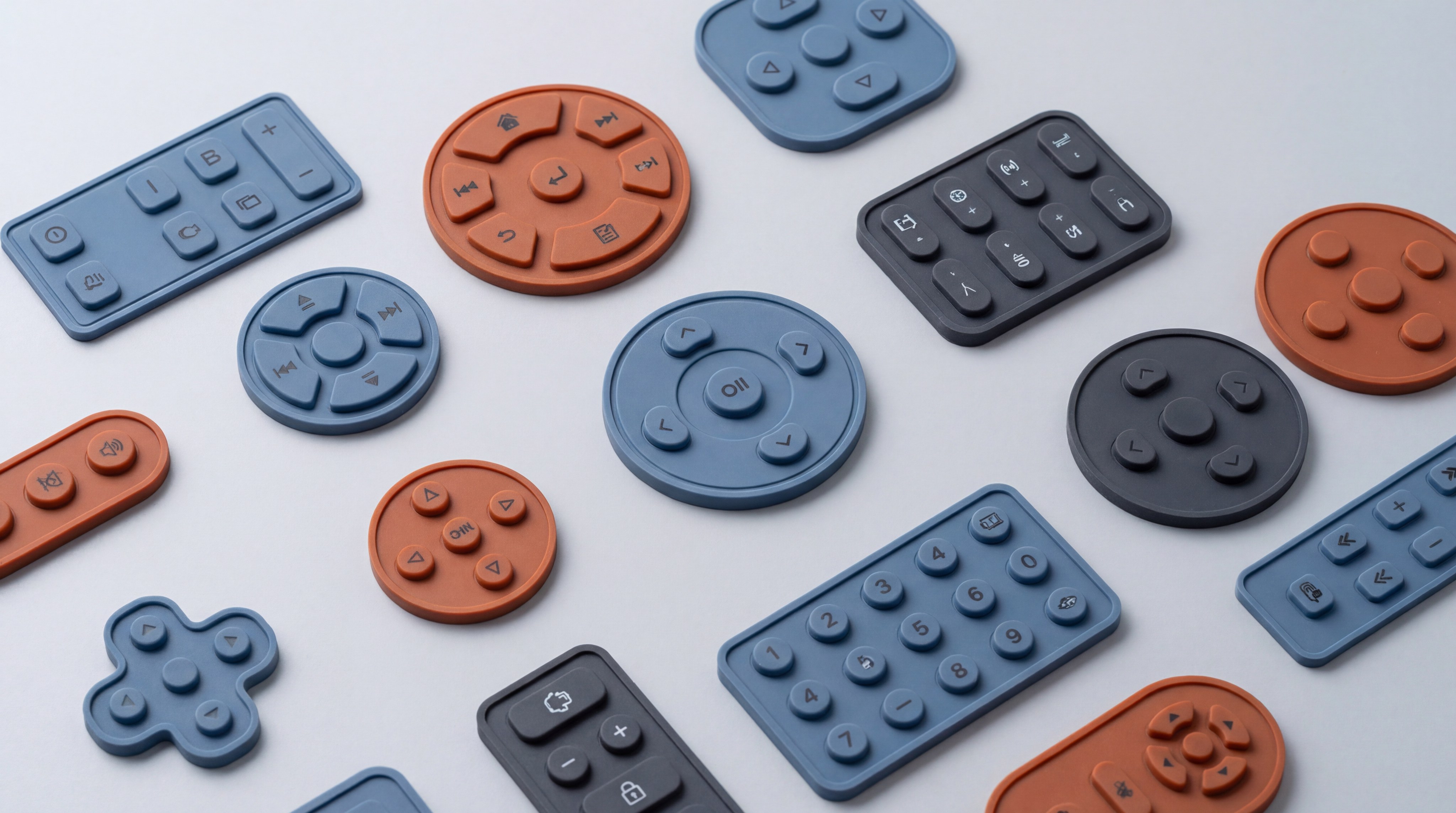 From your kitchen microwave to an ICU heart monitor, these keypads are everywhere.
Medical and Healthcare Use
In hospitals, the ability to wipe down and sterilize a surface is a matter of life and death. Because Silicone Rubber Keypads can be molded as a single, seamless sheet, they prevent bacteria from hiding in cracks.
- Used in ventilators and monitors.
- Compatible with harsh disinfectants.
- Anti-microbial additives can be integrated.
Industrial Control Panels
Factories use these interfaces because they can withstand vibration and accidental contact with grease or chemicals. Think about it: a standard keyboard would fail in minutes on a machine shop floor.
Key Takeaway
The application range is vast, specifically targeting industries where hygiene, durability, and environmental resistance are non-negotiable.
| Industry Sector | Primary Benefit | Example Device |
|---|---|---|
| Automotive | Vibration resistance | Steering wheel controls |
| Consumer | Low cost/High volume | Remote controls |
| Aerospace | Temp stability | Cockpit instrumentation |
Regardless of the industry, these components provide a reliable human-machine interface that protects the underlying electronics from damage.
What Are the Key Design Features for Custom Keypads?
Custom Silicone Rubber Keypads can be designed with unique features such as backlighting, laser etching, and varied surface textures to suit specific branding. Utilizing custom silicone rubber molds allows engineers to create intricate designs that incorporate translucent windows for LED indicators. You have the freedom to define every tactile and visual aspect of the user interface.
Backlighting and Illumination
To achieve illuminated keys, the keypad is molded in a translucent material and then spray-coated with an opaque layer. Here is the kicker: a laser then removes the coating to create perfectly sharp, glowing legends.
- Ideal for low-light environments.
- Uniform light distribution.
- Multi-color LED compatibility.
Surface Coatings and Textures
Applying a PU (Polyurethane) or epoxy coating can change the feel of the keypad from soft-touch to a hard, plastic-like finish. This also adds a layer of protection against abrasion and oils.
Key Takeaway
Design features allow for a high degree of functional branding, turning a simple switch into a sophisticated piece of equipment.
| Design Feature | Purpose | Visual Result |
|---|---|---|
| Laser Etching | Legend visibility | Glowing text/icons |
| Epoxy Drip | Durability/Premium feel | 3D “Lens” effect |
| PU Spray | Protection | Matte or Gloss finish |
By integrating these features during the molding process, you eliminate the need for secondary labels or external lighting components.
How Are These Keypads Manufactured for Mass Production?
Mass production of Silicone Rubber Keypads is typically achieved through compression vulcanization, where raw silicone is pressed into heated molds. This process is highly efficient for creating thousands of identical parts with consistent tactile properties and dimensional accuracy. It is the industry standard for balancing high-quality output with manageable tooling investments.
The Vulcanization Cycle
During vulcanization, the silicone undergoes a chemical change that sets its shape permanently. Believe it or not, the temperature and pressure must be controlled to within a few degrees to prevent defects.
- High-pressure closing of the mold.
- Heated curing for a specific duration.
- De-molding and manual inspection.
Secondary Operations
After the main molding is complete, the keypads often undergo “de-burring” to remove excess material and silkscreen printing for the legends. Here is the thing: the ink used must be silicone-based to ensure it bonds permanently to the surface.
Key Takeaway
Mass production relies on controlled thermal processes and specialized tooling to ensure every keypad in a batch performs identically.
| Production Stage | Objective | Quality Check |
|---|---|---|
| Tooling Prep | Mold cleanliness | Surface finish check |
| Compression | Material formation | Flash thickness |
| Printing | Graphic application | Adhesion testing |
Standardized manufacturing workflows allow for rapid scaling, moving from prototype to millions of units in a matter of weeks.
What Environmental Factors Do Silicone Keypads Withstand?
Silicone Rubber Keypads are engineered to withstand extreme temperatures, UV exposure, and moisture ingress without degrading. Because silicone is chemically inert, Silicone Rubber Keypads are naturally resistant to the growth of mold and fungi, making them ideal for outdoor or tropical applications. 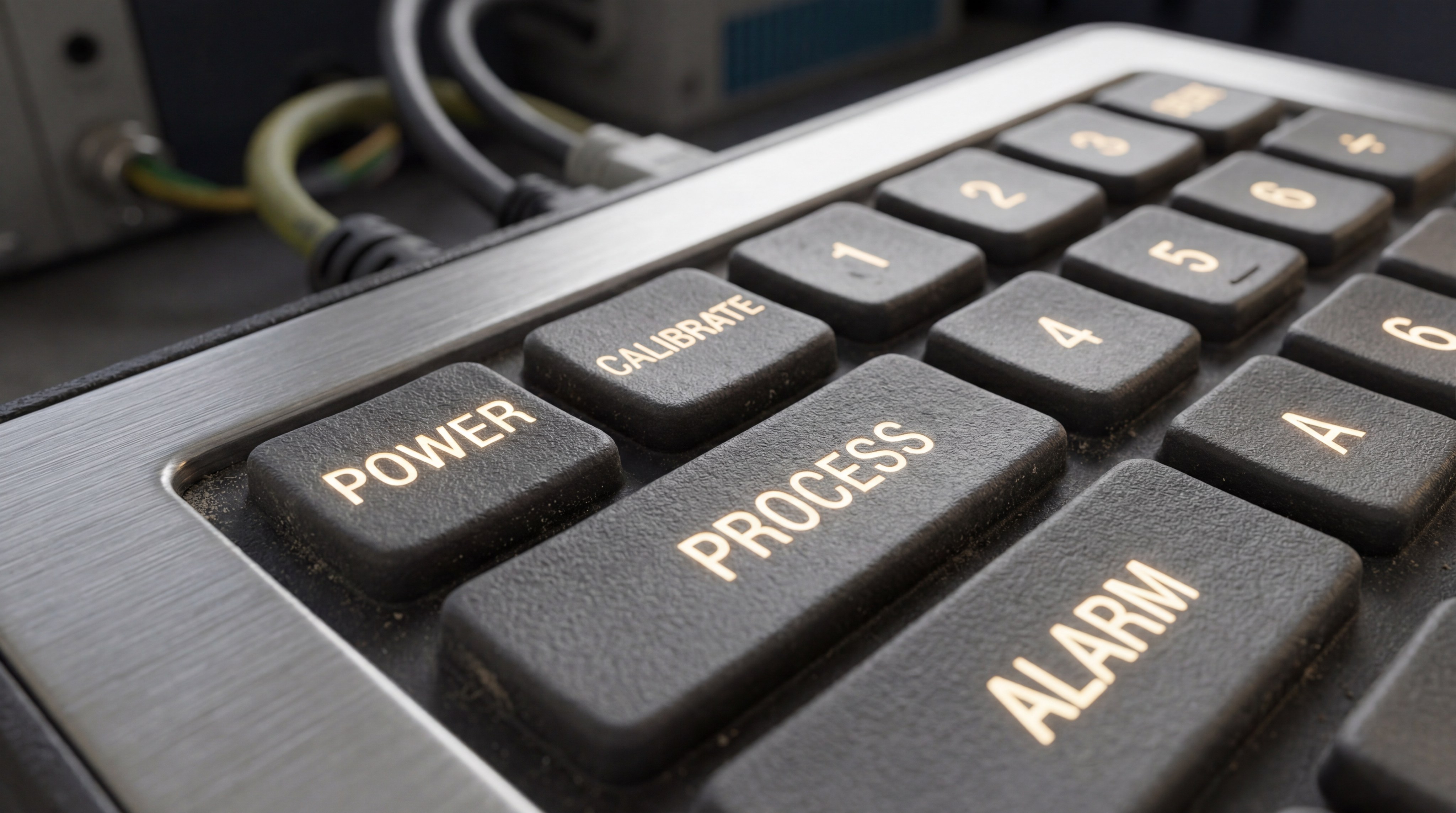 You can rely on them to function in the most punishing climates on Earth.
Waterproofing and Dust Sealing
By designing the keypad with a “wrap-around” seal, you can achieve IP67 or even IP68 ratings for your device. Think about it: the keypad becomes the gasket that protects the entire internal circuit.
- Seamless outer surface.
- Integrated perimeter seals.
- Protection against jet-sprayed water.
Chemical and Oil Resistance
In automotive and industrial settings, exposure to gasoline, cleaning agents, or hydraulic fluids is common. Silicone handles these substances much better than standard rubber or plastic alternatives.
Key Takeaway
The environmental resilience of silicone ensures that the device interface is the last thing to fail in a demanding field environment.
| Environmental Threat | Resistance Level | Mitigation Strategy |
|---|---|---|
| UV / Ozone | Excellent | High-consistency silicone |
| Moisture | 100% Waterproof | Integrated gasket design |
| Extreme Heat | Up to 250°C | Thermal-grade polymers |
This robustness reduces the total cost of ownership for end-users by minimizing maintenance and replacement needs in the field.
How Does Liquid Silicone Rubber Improve Precision?
Liquid Silicone Rubber (LSR) improves precision by using an automated injection process that allows for much tighter tolerances than traditional compression methods. When producing Silicone Rubber Keypads via lsr molding, the material is pumped as a liquid into a closed mold, reducing the risk of air bubbles or material voids. This is the gold standard for high-tech communication and medical devices.
Advantages of LSR Injection
LSR allows for wall thicknesses that are significantly thinner than what can be achieved with solid silicone. Here is the kicker: thinner walls mean more sensitive tactile feedback and lighter-weight components.
- Flash-less molding for cleaner parts.
- Faster cycle times for high volume.
- Automated dosing for material consistency.
Micro-Feature Integration
Because the material flows so easily, LSR can fill incredibly small details in a mold. You might be wondering how small; we are talking about microscopic textures and intricate internal seals.
Key Takeaway
LSR molding is the superior choice for high-precision, high-volume projects where dimensional accuracy is the top priority.
| Process Metric | LSR Molding | Compression |
|---|---|---|
| Cycle Time | 30 – 90 seconds | 3 – 8 minutes |
| Tolerance | +/- 0.05mm | +/- 0.15mm |
| Automation | High | Low/Medium |
While the initial tooling cost for LSR is higher, the reduction in labor and scrap rates makes it more economical for large-scale production.
What Surface Coatings Enhance Keypad Durability?
Surface coatings like Polyurethane (PU) and Epoxy enhance the durability of Silicone Rubber Keypads by providing a hard barrier against abrasion and chemical wear. Without these coatings, the printed legends on your Silicone Rubber Keypads would eventually fade after thousands of finger presses. Think of it as a clear-coat for your car, but for your buttons.
PU Spray and Matte Finishes
PU spray is the most common coating used to protect silkscreened graphics. It provides a smooth, “satin” feel that resists fingerprints.
- Extends print life by 10x.
- Provides a premium, non-sticky feel.
- Available in various gloss levels.
Epoxy Resin Drip
An epoxy drip involves placing a thick “bead” of clear resin on top of each key. This gives the keys a 3D, plastic-like appearance and makes the icons virtually indestructible.
Key Takeaway
Protective coatings are essential for maintaining the visual clarity and professional appearance of the interface throughout its life.
| Coating Type | Best For | Touch Feel |
|---|---|---|
| PU Coating | Standard consumer use | Soft/Satin |
| Epoxy Cap | Industrial/High-end | Hard/Smooth |
| Pari-lene | Medical/Cleanroom | Ultra-thin/Inert |
Applying the right coating ensures that the branding and instructions on the keypad remain legible for the entire lifespan of the device.
How Should You Select a Silicone Keypad Manufacturer?
Selecting a manufacturer requires evaluating their engineering support, material certifications, and ability to handle custom silicone rubber molds in-house. A reliable partner for Silicone Rubber Keypads will offer Design for Manufacturing (DFM) feedback to help you avoid common pitfalls like trapped air or weak snap ratios. Don’t just look for a vendor; look for a technical consultant.
Evaluating Quality Control
A world-class factory will have dedicated testing equipment for life-cycle testing and actuation force measurement. Here is the thing: if they can’t prove the cycle life, they can’t guarantee your product’s success.
- ISO 9001 and ISO 13485 certifications.
- In-house lab for force-displacement testing.
- Optical inspection for print clarity.
Lead Times and Prototyping
The best manufacturers offer rapid prototyping to let you test the “feel” of the keys before committing to expensive production tools. The reality is: you need to touch the part before you buy ten thousand of them.
Key Takeaway
Your choice of manufacturer dictates the reliability of your product; prioritize those with deep technical expertise and transparent quality processes.
| Selection Criteria | Importance | What to Look For |
|---|---|---|
| DFM Support | Critical | Detailed feedback on 3D files |
| Tooling | High | In-house mold making shop |
| Compliance | Mandatory | RoHS / REACH / FDA data |
Choosing a partner that understands the nuances of silicone chemistry and mechanical design will save you thousands of dollars in potential redesigns.
Summary
Silicone rubber keypads represent the ultimate intersection of durability, tactile precision, and environmental resilience. Whether you are building medical devices that require sterile surfaces or industrial controllers that must survive extreme heat, silicone provides a versatile and cost-effective solution. At HuaLin Silicone, we specialize in transforming complex engineering challenges into high-performance interface solutions. Our vision is to empower global manufacturers with precision-molded components that define the next generation of human-machine interaction.
To start your project with a team of experts, contact us today and let’s build a more resilient product together.
FAQ
- Can I get a specific tactile feel like a “click” with silicone?
Yes, by adjusting the snap ratio and web geometry during the design phase, we can simulate anything from a soft touch to a sharp mechanical click. - What is the best way to clean a silicone keypad?
The best way is to use a damp cloth with mild soap or isopropyl alcohol, as silicone is highly resistant to most common cleaning agents. - Can I have multiple colors on a single keypad sheet?
Absolutely, we can use a process called “secondary molding” or “mottled molding” to place different colored silicone in specific areas of the same part. - How long do the printed letters last on the keys?
With a standard PU protective coating, the legends are typically rated for over 100,000 to 1,000,000 cycles depending on the ink quality. - Is silicone rubber safe for skin contact?
Yes, medical-grade and food-grade silicones are completely biocompatible and hypoallergenic, making them perfect for wearable devices.