
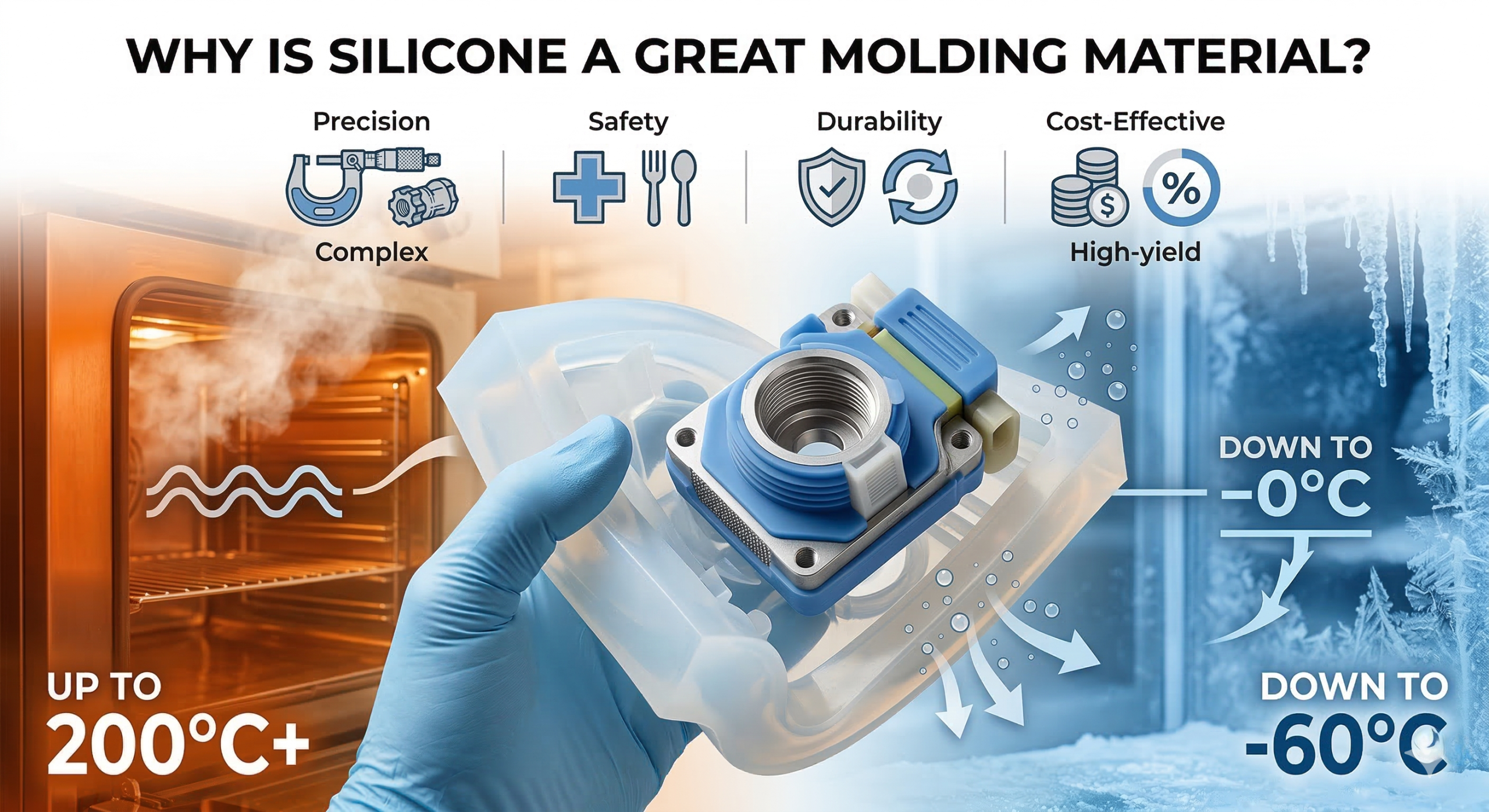
Silicone is an exceptional molding material because it combines extreme temperature resistance with high elasticity and chemical inertness for superior part release. Imagine a high-stakes production run where your rigid molds begin to crack under thermal stress, causing thousands of dollars in scrapped parts and total line downtime. This failure agitates your bottom line through lost productivity and damaged client relationships. Transitioning to silicone molding offers the elastic resilience and thermal stability needed to prevent these failures entirely. This reliability is fundamentally why is silicone a great molding material for any scalable manufacturing project.
Why Is Flexibility Key for Mold Performance?
Flexibility is the primary driver of mold performance because it allows the tool to deform around complex undercuts and then return to its original shape without damaging the finished part. When you evaluate why is silicone a great molding material, you must consider how its soft Shore hardness prevents the structural breakage common in rigid polycarbonate tooling. This mechanical advantage ensures that even the most delicate components are released flawlessly every time.
How does elasticity prevent part breakage?
Elasticity acts as a mechanical buffer that absorbs demolding forces rather than transferring them to the product. Unlike rigid molds that can snap or chip under tension, silicone stretches to accommodate the removal of hardened resins or food products.
- High elongation at break prevents mold tearing.
- Low modulus allows for easy manual or automated removal.
- Structural memory ensures the cavity returns to exact dimensions.
Benefits of effortless demolding for throughput
Check this out: faster part removal directly translates to higher cycles per hour and increased factory efficiency. By eliminating the need for aggressive release agents, you reduce secondary cleaning steps and speed up the entire production workflow.
Key Takeaway: Elasticity reduces scrap rates by protecting fragile geometries during the critical demolding phase.
| Performance Metric | Silicone Mold | Rigid Plastic Mold |
|---|---|---|
| Demolding Force | Very Low | High |
| Undercut Capability | Excellent | Limited |
| Scrap Rate | <1% | Variable |
This mechanical flexibility is essential for manufacturers dealing with non-standard geometries that would otherwise require expensive multi-part metal molds.
How Does Silicone Handle Extreme Temperatures?
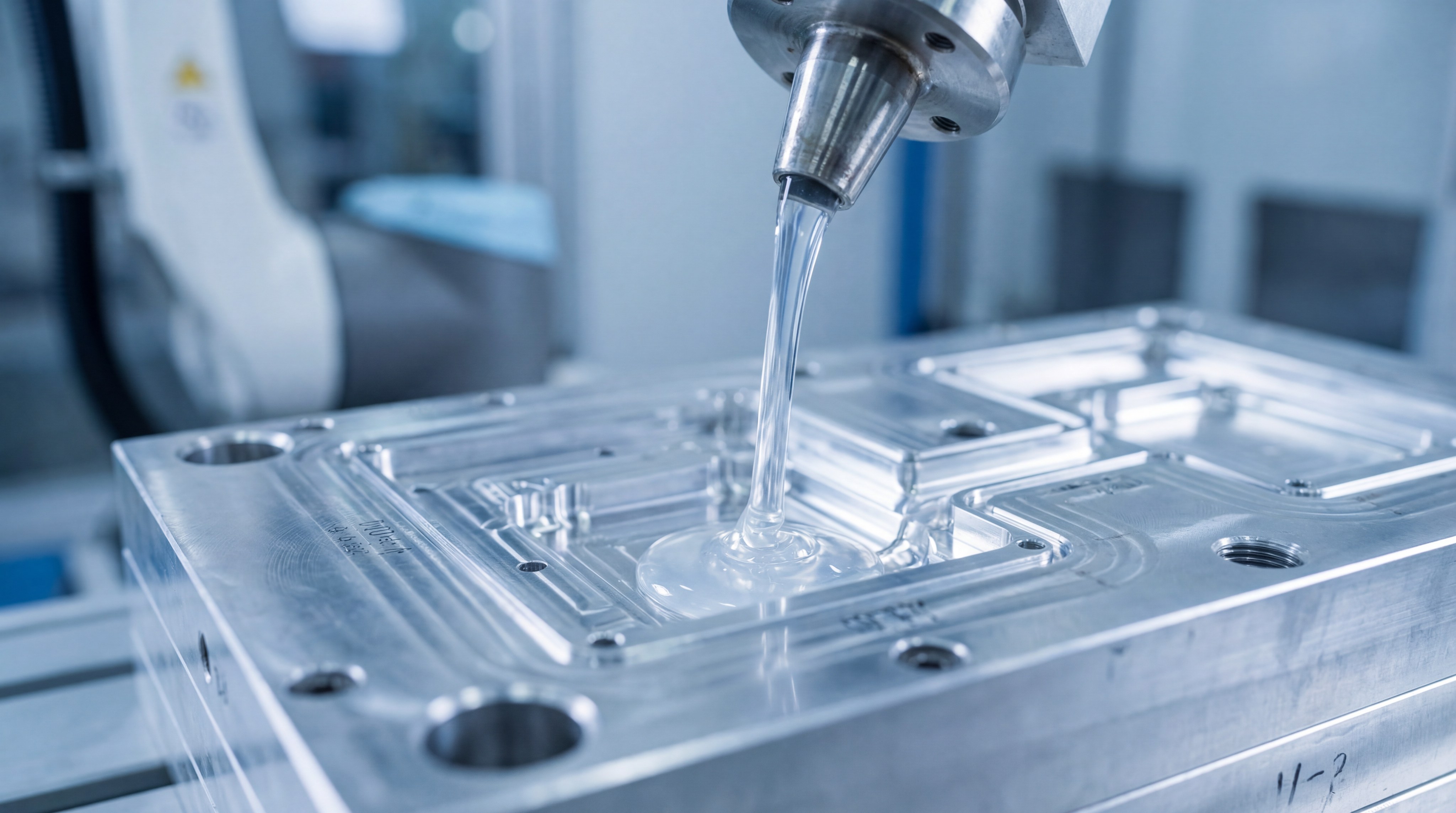
Silicone handles extreme temperatures by maintaining its physical properties and molecular stability across a massive range from -60°C to over 200°C. This thermal range is a significant reason why is silicone a great molding material for industrial applications involving heat-cured resins or cryogenic freezing. You can cycle these molds from an oven to a freezer repeatedly without the material becoming brittle or melting.
Performance in cryogenic and oven environments
But wait, there’s more: silicone doesn’t just survive these temperatures; it thrives in them by retaining its soft-touch feel and seal integrity. This makes it the go-to choice for aerospace components that face rapid thermal cycling during flight.
Maintaining dimensional stability under heat
Thermal expansion in silicone is predictable and manageable, ensuring your parts remain within specification even during high-heat curing. The material resists charring and degradation, which preserves the interior surface finish of the mold for a longer service life.
- Resists thermal cracking and oxidation.
- Low thermal conductivity protects handling staff.
- Stable cross-linking prevents softening at peak heat.
Key Takeaway: Superior thermal stability allows for consistent production in environments that would destroy standard thermoplastics.
| Temperature Stage | Silicone Behavior | Standard Plastic Behavior |
|---|---|---|
| -50°C | Remains Flexible | Becomes Brittle |
| 150°C | Fully Stable | Softens/Deforms |
| 250°C | Intermittent Use | Melts/Degrades |
Manufacturers rely on this stability to ensure that tool dimensions remain constant throughout long, high-heat production runs.
Why Is Silicone Ideal for High-Precision Parts?
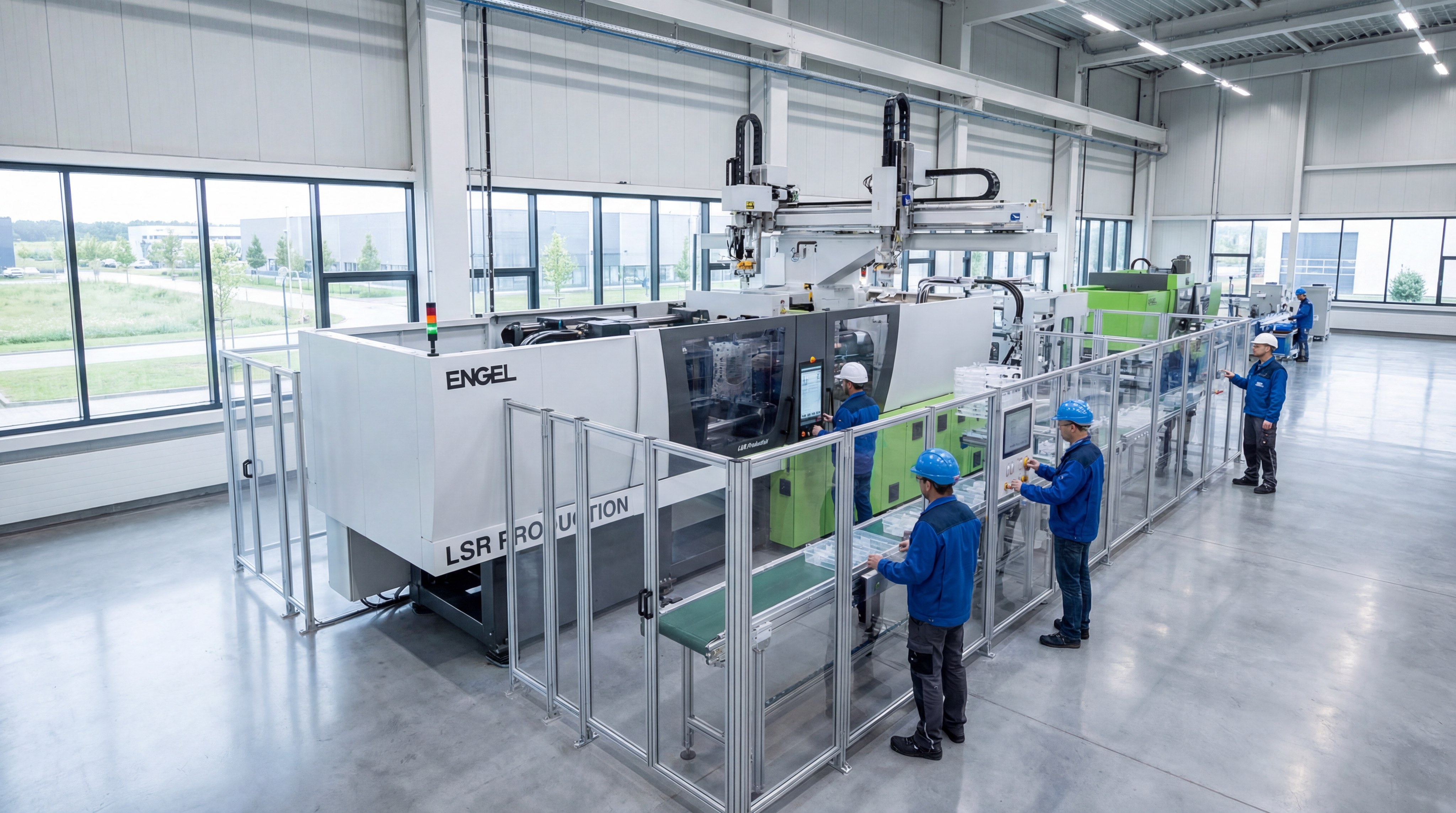
Silicone is ideal for high-precision parts because it exhibits minimal linear shrinkage and can be processed via Liquid Silicone Rubber (LSR) injection for tight tolerance control. When engineers ask why is silicone a great molding material, they are often focused on the ability to replicate micro-scale features with sub-millimeter accuracy. The low viscosity of the raw material ensures it fills every corner of a precision-machined tool cavity.
Achieving tight tolerances with LSR molding
Check this out: LSR molding uses computer-controlled injection to ensure every part is identical to the last. This process eliminates the human error associated with manual compression molding, providing the consistency required for electronic seals and medical valves.
How does low shrinkage ensure accuracy?
Low shrinkage rates, often below 1%, mean the final part dimensions will almost perfectly match the original mold design. This predictability simplifies the engineering phase by reducing the need for complex compensation calculations in the tooling.
- Consistent cavity pressure during injection.
- Minimal post-cure warping.
- Uniform material distribution across thick and thin walls.
Key Takeaway: Precision molding with silicone ensures that complex assemblies fit together perfectly without secondary machining.
| Accuracy Factor | Silicone LSR | Compression Molding |
|---|---|---|
| Tolerance Range | +/- 0.05mm | +/- 0.20mm |
| Shrinkage Rate | 0.5% – 2.0% | 2.0% – 4.0% |
| Batch Consistency | Excellent | Moderate |
High-precision silicone components are critical for the functionality of modern medical devices and consumer electronics.
Is Silicone a Cost-Effective Choice for Production?
Silicone is cost-effective for production because its durability allows for thousands of uses per mold, significantly lowering the “cost per part” over the life of the tool. Understanding why is silicone a great molding material requires looking past the initial material cost to the long-term operational savings. You save money by reducing the frequency of mold replacements and minimizing material waste from failed demolding attempts.
Long-term ROI of durable production tooling
But wait, there’s more: a single high-quality silicone mold can often outlast several cheaper plastic alternatives. This durability reduces the labor costs associated with constantly creating new tooling and recalibrating production lines.
- Lower maintenance requirements.
- Reduced downtime for tool swaps.
- High yield rates per production shift.
Reducing waste through repeatable processes
Using silicone reduces waste because its non-stick nature ensures that almost 100% of the poured material becomes a usable product. You spend less on raw materials and disposal fees, which improves your overall manufacturing margins.
Key Takeaway: Silicone’s longevity and high yield make it a financially superior choice for mid-to-high volume production.
| Cost Driver | Silicone Tooling | Disposable Molds |
|---|---|---|
| Initial Cost | Moderate | Low |
| Tool Lifespan | 2,000+ Cycles | <50 Cycles |
| Part Unit Cost | Low | High |
The financial benefits of silicone are most apparent when calculating the total cost of ownership over a full product lifecycle.
How Does Silicone Ensure Food and Medical Safety?
Silicone ensures food and medical safety because it is an inorganic, non-porous material that does not support bacterial growth or leach harmful chemicals. In regulated industries, why is silicone a great molding material is answered by its chemical purity and its ability to pass rigorous biocompatibility testing. You can use it for everything from infant pacifiers to surgical implants with complete confidence in patient safety.
Meeting FDA and LFGB compliance standards
Check this out: medical-grade silicone is platinum-cured to ensure zero peroxide byproducts remain in the finished part. This high level of purity allows manufacturers to meet global standards like FDA 21 CFR and European LFGB.
- Odorless and tasteless for food contact.
- Resistant to bodily fluids and detergents.
- Sterilizable via autoclave or gamma radiation.
Why is biocompatibility essential for medical?
Biocompatibility ensures that the material does not cause an immune response when in contact with human tissue. This is a non-negotiable requirement for long-term medical devices and smart wearable sensors.
Key Takeaway: Silicone provides a safe, inert interface for products that interact directly with the human body or food.
| Safety Standard | Silicone Status | Generic Rubber Status |
|---|---|---|
| BPA Free | Yes | Variable |
| Latex Free | Yes | No |
| Non-Leaching | Yes | No |
Medical professionals and food safety auditors prioritize silicone due to its long history of safe use in critical environments.
What Makes Silicone Superior for Complex Geometries?
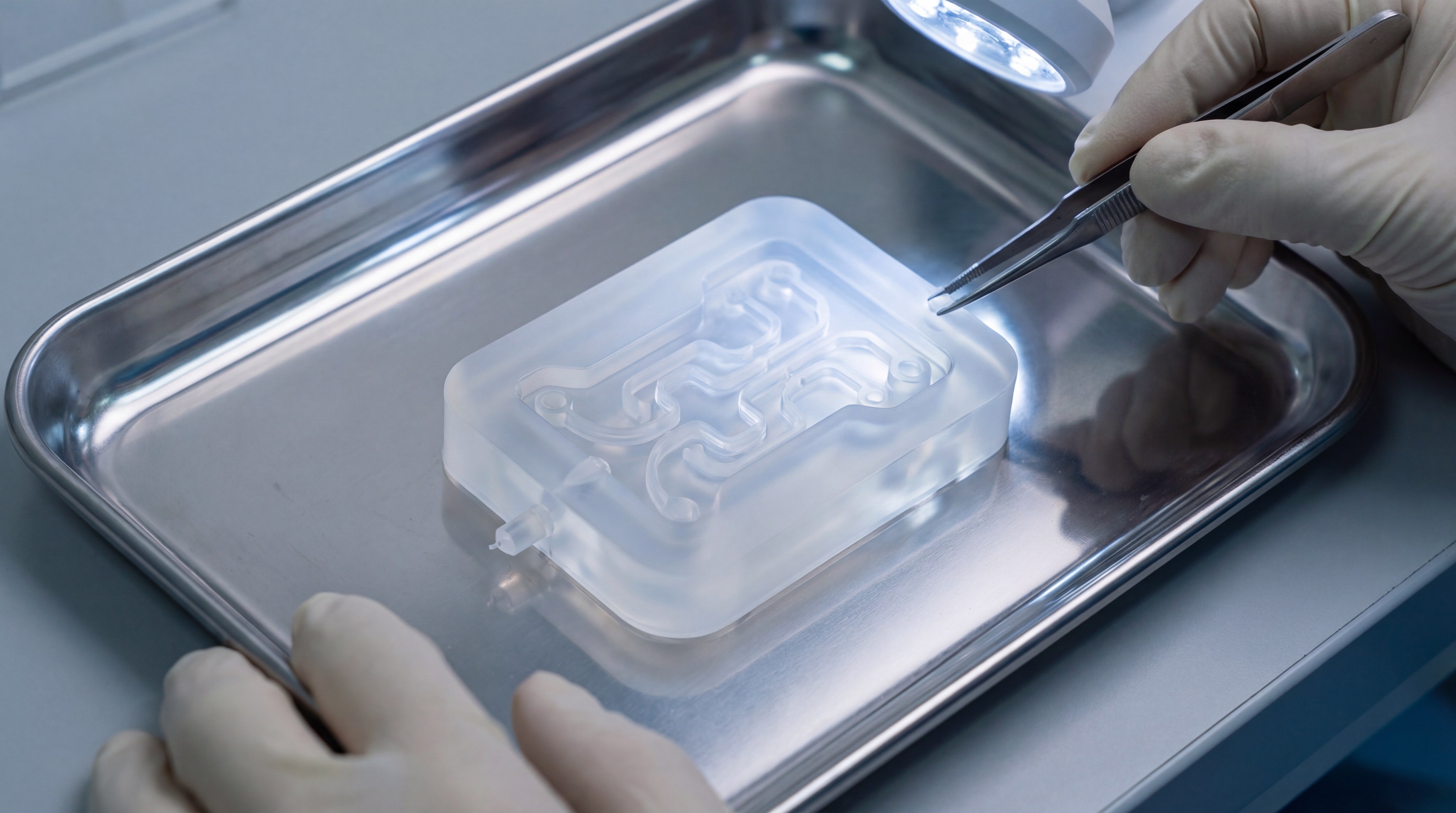
Silicone is superior for complex geometries because its low viscosity and high flow rate allow it to penetrate the smallest details of a master pattern. When you examine why is silicone a great molding material, you see its unique ability to replicate textures like wood grain or leather with 100% fidelity. You are no longer restricted by the draft angles and ejection pins required for traditional metal or plastic molds.
Capturing intricate textures and fine details
But wait, there’s more: silicone can capture details at the micron level, making it perfect for high-end consumer goods. This allows designers to push the boundaries of aesthetics without worrying about manufacturing feasibility.
Overcoming design limits of rigid materials
Rigid molds often require parts to be redesigned to avoid “trapped” areas, but silicone simply flexes out of the way. This freedom allows you to create hollow structures, internal threads, and deep cavities that would be impossible elsewhere.
- Eliminates the need for complex side-actions.
- Supports deep undercuts and thin wall sections.
- Enables textured finishes directly from the mold.
Key Takeaway: Design freedom is vastly expanded when using silicone, allowing for more creative and functional part geometries.
| Design Feature | Silicone Capability | Aluminum Mold Limit |
|---|---|---|
| Internal Threads | Easy | Complex |
| Surface Texture | Micro-detailed | Grain-limited |
| Draft Angles | 0 Degrees Possible | 1-3 Degrees Required |
By removing traditional manufacturing constraints, silicone allows your engineering team to focus entirely on part performance and user experience.
Why Is Material Durability Vital for Manufacturers?
Material durability is vital because it ensures that the mold cavity retains its exact shape and surface finish over thousands of high-pressure injection cycles. The reason why is silicone a great molding material lies in its “structural memory,” which prevents it from permanently deforming even after significant stretching. You can rely on a single tool to produce consistent parts from the first unit to the last.
Resistance to chemical degradation and aging
Check this out: silicone is virtually immune to UV light, ozone, and many common industrial chemicals that would degrade other elastomers. This means your molds won’t become sticky, dry out, or crack while sitting in storage between production runs.
- High tear strength prevents edge wear.
- Chemical resistance to epoxy and polyurethane resins.
- Low compression set maintains seal integrity.
Maintaining form across thousands of cycles
The long-term stability of the material means that your quality control team sees fewer variations between batches. This reliability reduces the need for constant inspections and allows for more automated production environments.
Key Takeaway: High durability leads to a more stable supply chain and lower long-term maintenance costs.
| Durability Test | Silicone Performance | Nitrile Rubber Performance |
|---|---|---|
| UV Exposure | Excellent | Poor |
| Chemical Inertness | High | Low |
| Tear Resistance | Superior | Moderate |
For long-term projects, the durability of silicone tooling provides a level of peace of mind that few other materials can match.
How Does Air Permeability Improve Molding Quality?
Air permeability improves molding quality by allowing trapped air to escape through the mold material itself, preventing surface voids and “short shots.” This gas-permeable nature is why is silicone a great molding material for parts with deep ribs or narrow channels where air pockets naturally form. You get a smoother, more professional surface finish without the need for complex vacuum venting systems.
Reducing surface defects and trapped bubbles
But wait, there’s more: because air can migrate through the silicone walls, you see a significant reduction in surface pitting. This is especially important for clear or translucent parts where internal bubbles would be a major visual defect.
Impact on final product structural integrity
By ensuring a complete material fill without air inclusions, you improve the physical strength of the finished part. Air-free parts are less likely to fail under mechanical stress or pressure, which is critical for safety-related components.
- Natural venting reduces the need for machined vents.
- Higher surface gloss on finished parts.
- Stronger bond in multi-material overmolding.
Key Takeaway: Natural air permeability simplifies mold design and results in structurally superior finished products.
| Quality Issue | Silicone Solution | Rigid Mold Risk |
|---|---|---|
| Surface Pitting | Air escapes through walls | Trapped air creates voids |
| Short Shots | Easier cavity filling | High pressure required |
| Venting Needs | Minimal | Critical |
This inherent property of silicone reduces the technical complexity of achieving a “perfect pour” every time.
Can Silicone Integrate With Other Materials Easily?
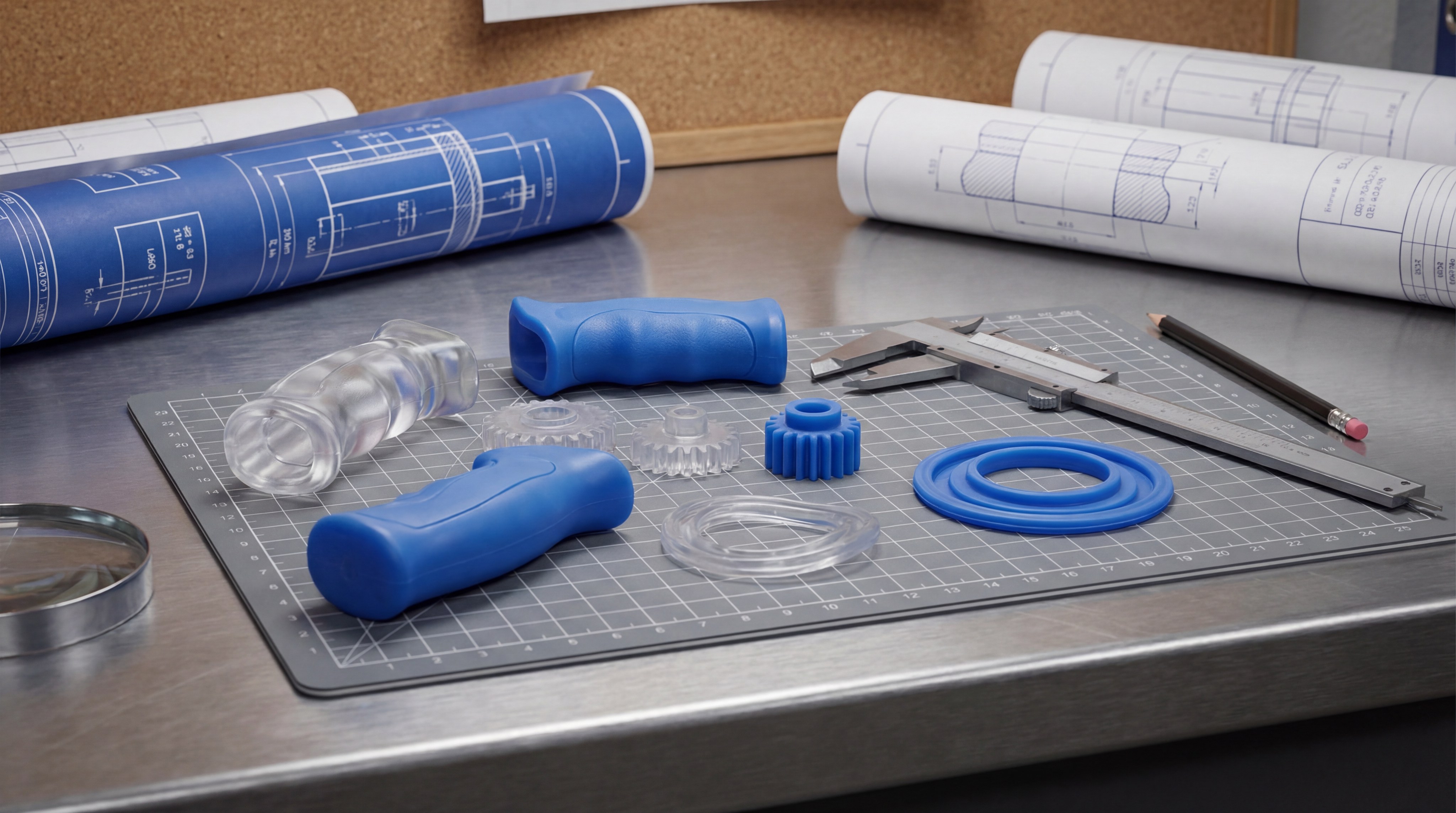
Silicone integrates easily with other materials through advanced overmolding and insert molding techniques that create a permanent chemical or mechanical bond. Manufacturers choose why is silicone a great molding material because it can be bonded directly to metals, plastics, and glass during the molding process. You can create soft-touch handles on rigid tools or waterproof seals directly on electronic housings.
The advantages of silicone-to-metal overmolding
Check this out: overmolding eliminates the need for messy glues or mechanical fasteners, reducing assembly time. The resulting bond is often stronger than the silicone itself, creating a unified part that can withstand extreme vibration.
- Seamless integration of hard and soft materials.
- Improved ergonomic performance.
- Enhanced aesthetic appeal with multi-color options.
Multi-component assembly for smart devices
In the world of smart wearables, silicone-to-plastic bonding is used to create water-resistant enclosures for delicate electronics. This integration ensures that the device remains protected while providing a comfortable, skin-safe interface for the user.
Key Takeaway: Integrated bonding capabilities reduce assembly steps and improve the overall durability of complex products.
| Integration Type | Typical Application | Benefit |
|---|---|---|
| Overmolding | Power Tool Grips | Vibration Dampening |
| Insert Molding | Connector Seals | Waterproofing |
| Co-Molding | Smartwatch Straps | Seamless Comfort |
The ability to combine the best properties of multiple materials into a single part is a massive advantage in modern product design.
Why Is Cleaning and Maintenance So Efficient?
Cleaning and maintenance are efficient because silicone’s non-stick surface resists residue buildup and can withstand aggressive sterilization chemicals. When evaluating why is silicone a great molding material, you must consider the “turnaround time” between batches. You spend less time scrubbing molds and more time producing parts, which maximizes your equipment utilization rates.
Non-porous surfaces and bacterial resistance
But wait, there’s more: the smooth, non-porous nature of silicone means there are no microscopic cracks for bacteria or old material to hide in. This makes silicone the gold standard for cleanroom manufacturing and food processing applications.
Simplified protocols for industrial sanitation
Because silicone is so chemically resistant, you can use high-pressure steam or strong solvents to clean it without causing damage. This flexibility in cleaning protocols ensures that your production line meets the highest hygiene standards with minimal effort.
- Dishwasher safe for food-grade tools.
- Compatible with IPA and other industrial cleaners.
- Fast drying due to hydrophobic surface.
Key Takeaway: Rapid cleaning cycles minimize downtime and prevent cross-contamination in multi-product facilities.
| Maintenance Task | Silicone Mold | Metal Tooling |
|---|---|---|
| Residue Removal | Wipes Clean | Requires Polishing |
| Rust Prevention | Not Needed | Constant Oiling |
| Storage Needs | Low | High |
The ease of maintenance ensures that your tooling remains in peak condition for years, providing a consistent return on investment.
Conclusion
Silicone is a great molding material because it provides the ultimate balance of durability, flexibility, and precision, solving the most common manufacturing failures like part breakage and thermal degradation. By switching to silicone, you eliminate the high costs of production downtime and the waste associated with rigid, unforgiving tooling. Our vision at HuaLin Silicone is to empower global manufacturers with the highest quality LSR and custom molding solutions to bring complex designs to life efficiently. If you are ready to optimize your production line for maximum yield and quality, contact us today to receive a comprehensive DFM review for your project.
Frequently Asked Questions
Can I use silicone for high-volume automotive parts?
Yes, you certainly can. Silicone is widely used in the automotive industry for gaskets, seals, and wire harnesses due to its ability to withstand engine heat and vibration over hundreds of thousands of miles.
What’s the best silicone grade for medical devices?
Platinum-cured medical-grade silicone is the best choice. This specific grade undergoes extensive biocompatibility testing and ensures that no toxic residues are left behind, which is critical for surgical and implantable applications.
How do I know if my design needs LSR or compression?
It depends on your volume and precision requirements. Generally, Liquid Silicone Rubber (LSR) injection molding is the best choice for high-volume, high-precision parts, while compression molding is more cost-effective for simpler shapes and lower volumes.
Can I customize the hardness and color of the mold?
Absolutely. Silicone can be formulated to almost any hardness level on the Shore A scale (from 10A to 80A) and matched to any Pantone or RAL color to meet your specific functional and aesthetic needs.
What’s the best way to verify material compliance?
The most reliable way is to request official certification. Always ensure your supplier provides traceable documentation for FDA, LFGB, RoHS, or REACH compliance to guarantee the material meets your industry’s safety standards.