
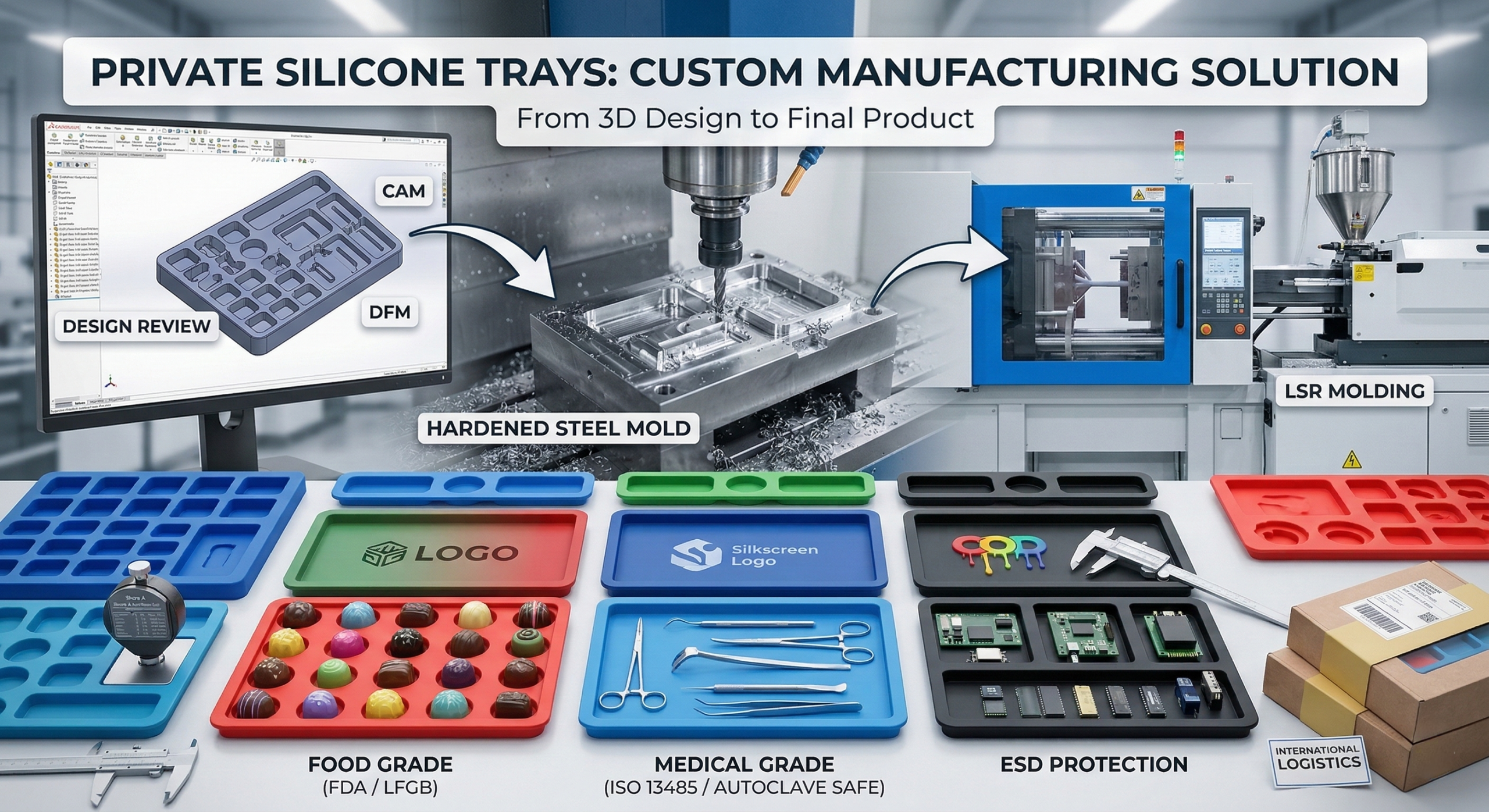
To create private silicone trays, you must partner with an integrated manufacturer that handles 3D design, precision tooling, and mass production using food-grade or medical-grade raw materials. Many businesses struggle with generic plastic trays that crack under high temperatures or leach chemicals into products. This lack of durability forces frequent reorders and damages your brand reputation. By developing a custom solution, you can finally determine is silicone better than plastic for your specific application requirements.
What are the benefits of private silicone trays?
Private silicone trays offer unmatched thermal stability, ranging from -60°C to 230°C, while providing a non-toxic surface for sensitive applications. When choosing materials for your product line, asking is silicone better than plastic reveals that silicone offers superior longevity and environmental benefits. You gain full control over the geometry, Shore A hardness, and branding of the final product.
Can they withstand extreme temperatures?
Think about it: generic materials often fail in the oven or freezer, but high-quality silicone remains flexible and stable. This resilience makes these trays ideal for both industrial freezing and high-heat baking environments.
- Operates safely up to 230°C.
- Remains flexible at -60°C.
- Does not release toxic fumes when heated.
Key Takeaway: Custom silicone trays provide a durable, temperature-resistant solution that protects your product integrity across diverse environmental conditions.
| Benefit | Silicone Property | Business Impact |
|---|---|---|
| Durability | High tear strength | Lower replacement costs |
| Safety | Non-toxic / BPA-free | Compliance with health standards |
| Customization | Flexible molding | Unique brand identity |
The technical resilience of silicone ensures that your private label products outperform standard market alternatives.
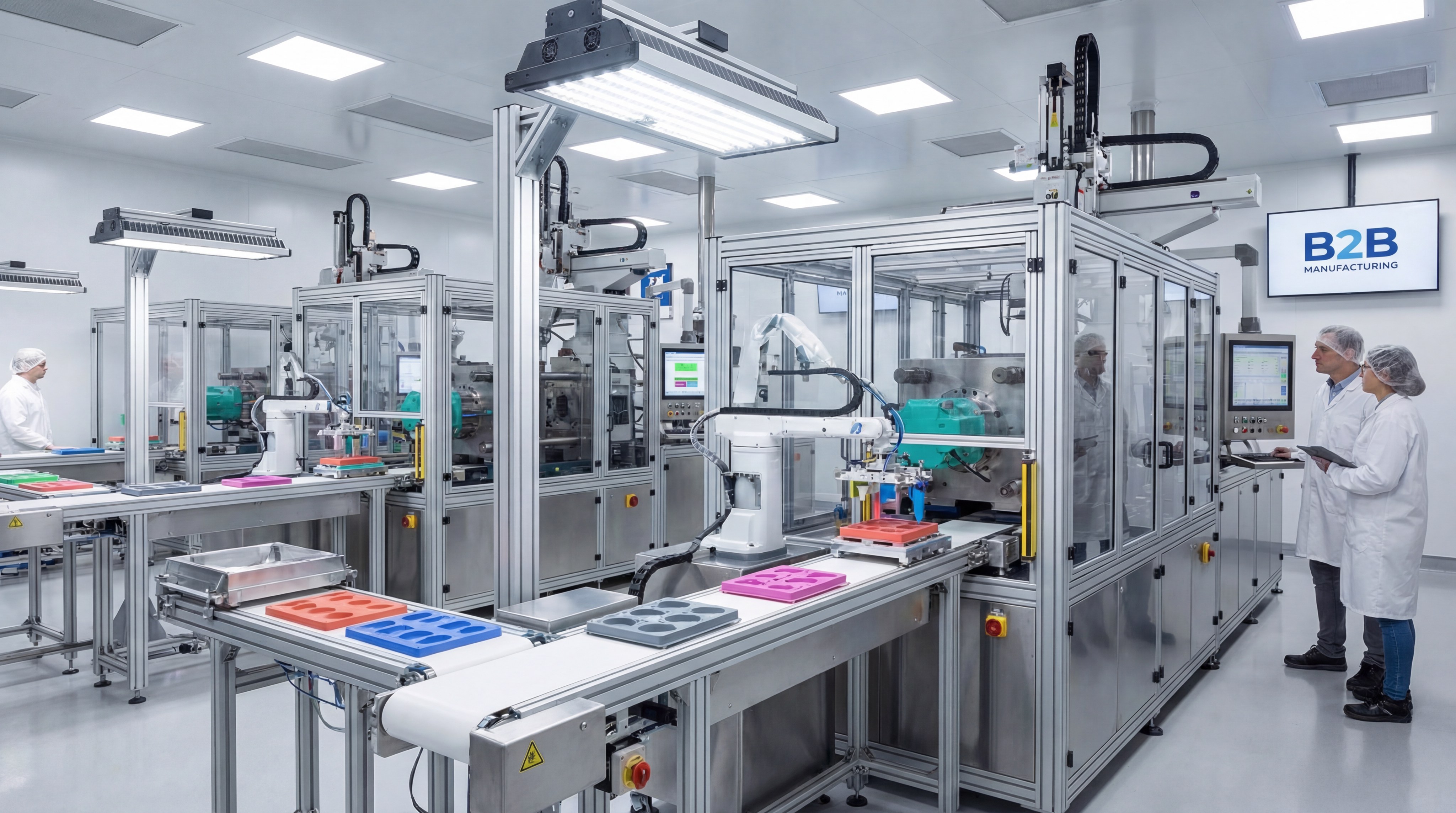
Is silicone better than plastic for industrial trays?
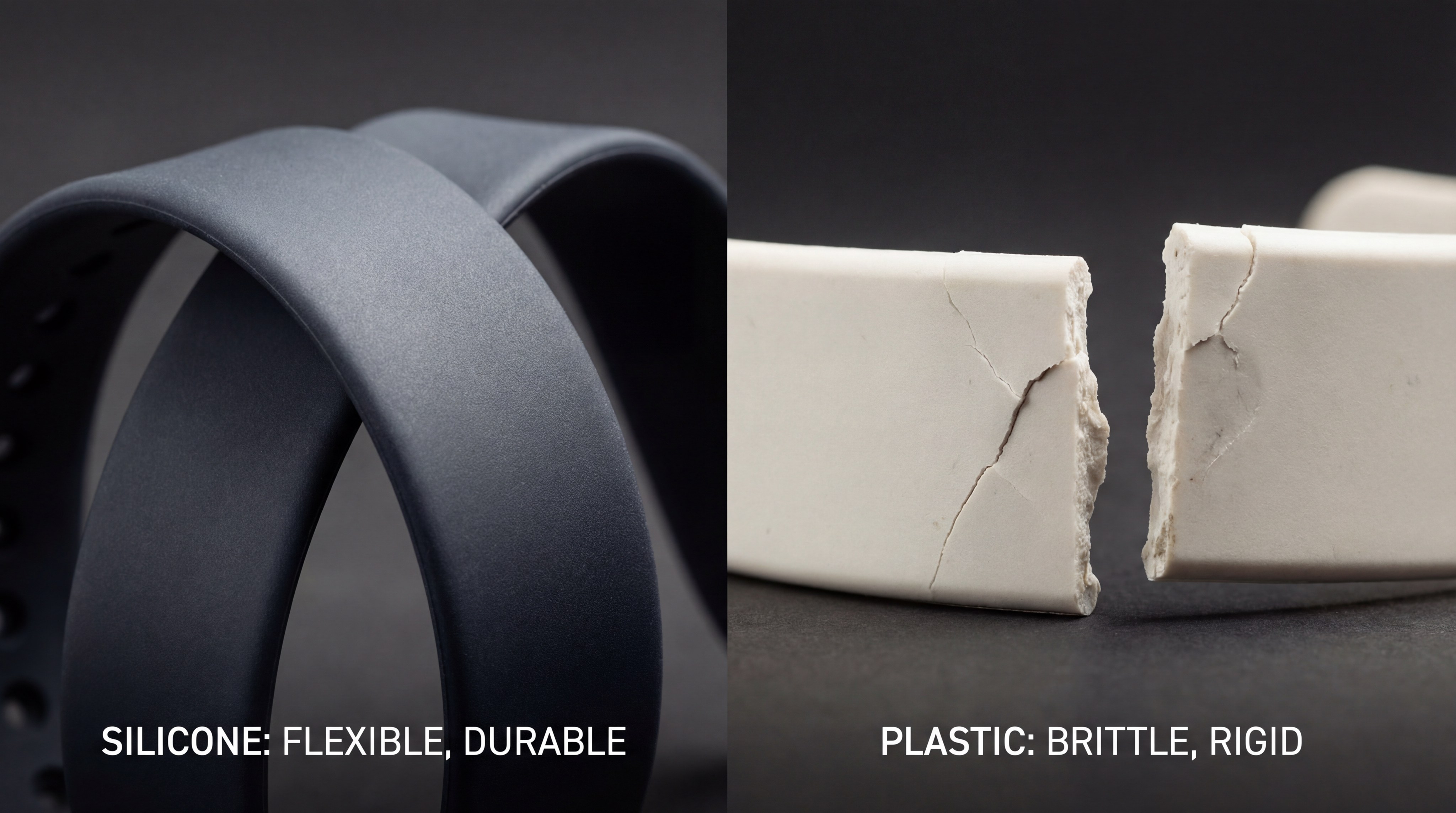
Silicone is significantly better than plastic for industrial trays because it possesses superior wear resistance and impact absorption, which prevents breakage during heavy-duty logistics. You will notice that [is silicone better than plastic] becomes a secondary question once you witness how silicone handles harsh vibrations and stacking pressure. Industrial environments require materials that do not become brittle over time.
How does it handle chemical exposure?
Here is the deal: many industrial cleaners and chemicals cause plastic to degrade or discolor, but silicone remains chemically inert. This property allows for repeated sterilization and cleaning without compromising the tray’s structural integrity.
- Resistant to oils and fats.
- Withstands most industrial detergents.
- Non-reactive with mild acids.
Key Takeaway: Industrial-grade silicone trays reduce long-term operational costs by surviving harsh handling and chemical cleaning cycles that destroy plastic.
| Material | Impact Resistance | Chemical Stability |
|---|---|---|
| Silicone | Excellent (flexible) | High |
| Plastic | Poor (brittle) | Low to Medium |
Choosing silicone for industrial applications ensures a higher return on investment through reduced breakage and contamination risks.
What industries rely on custom silicone trays?
The food, medical, and electronics industries are the primary sectors that rely on custom silicone trays for their specialized safety and protective needs. When these sectors evaluate is silicone better than plastic, they prioritize biocompatibility and heat shielding. Each industry requires specific certifications, such as FDA for food or ISO 13485 for medical devices.
Why is the medical sector switching?
The best part? Silicone is naturally hypoallergenic and can be sterilized in an autoclave without losing its shape or physical properties. This makes it the gold standard for organizing surgical tools or transporting delicate pharmaceutical components.
- Medical-grade biocompatibility.
- Autoclave compatible.
- Anti-slip for precision handling.
Key Takeaway: Diverse industries use custom silicone to meet strict regulatory standards while improving the functional life of their equipment.
| Industry | Primary Requirement | Silicone Solution |
|---|---|---|
| Food Service | Heat resistance | Baking and freezing trays |
| Medical | Sterilization | Surgical tool organizers |
| Electronics | ESD protection | Anti-static component trays |
Targeted industry solutions demonstrate how customized material properties solve specific logistical and safety challenges.
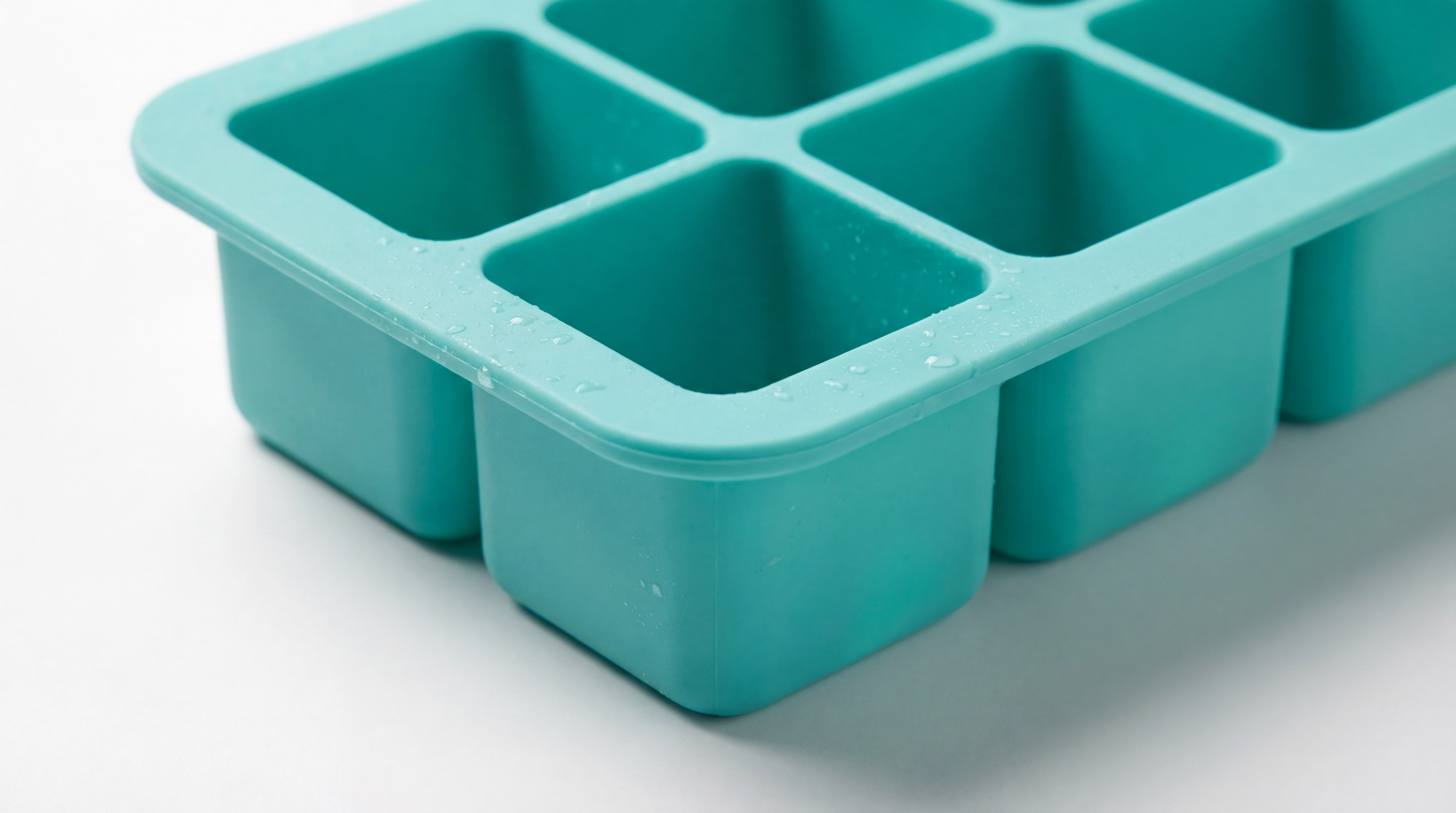
How do you begin the custom design process?
You begin the custom design process by submitting a 3D CAD model or a detailed sketch to an engineering team for a Design for Manufacturing (DFM) review. During this stage, engineers will help you decide [is silicone better than plastic] for your specific tray geometry and wall thickness requirements. Defining critical tolerances early prevents expensive revisions during the tooling phase.
What are the steps to a 3D model?
But wait, there is more: you don’t always need a finished file to start, as expert manufacturers can turn a simple hand drawing into a functional prototype. This collaborative approach ensures that your private label tray fits perfectly within its intended application.
- Initial sketch or 2D drawing.
- 3D CAD modeling (STP/STEP files).
- Prototype 3D printing for fit testing.
Key Takeaway: Starting with a professional DFM review guarantees that your tray design is optimized for mass production and long-term durability.
| Design Phase | Activity | Deliverable |
|---|---|---|
| Concept | Sketching / Idea | Basic dimensions |
| Engineering | CAD Modeling | Digital 3D file |
| Validation | Prototyping | Sample for testing |
A structured design workflow eliminates technical errors before the expensive tooling process begins.
Why is silicone better than plastic for food safety?
Silicone is better than plastic for food safety because it is BPA-free, phthalate-free, and does not leach chemicals when exposed to high heat or acidic foods. When consumers ask [is silicone better than plastic], they are looking for reassurance that their kitchenware will not contaminate their meals. Food-grade silicone meets strict FDA and LFGB compliance standards that many low-cost plastics cannot achieve.
Is silicone safer for baking?
In simple terms: plastic can melt or warp in the oven, whereas silicone remains stable and non-stick even at temperatures exceeding 200°C. This makes it the ideal material for private label baking trays and baby food supplement molds.
- BPA and PVC-free.
- No migration of harmful chemicals.
- Naturally non-stick surface.
Key Takeaway: Investing in food-grade silicone trays builds consumer trust by providing a safe, reusable, and toxic-free cooking experience.
| Safety Standard | Compliance Focus | Silicone Performance |
|---|---|---|
| FDA | Food contact safety | Fully compliant |
| LFGB | European food standards | Platinum-grade compliant |
| BPA-Free | Endocrine disruptors | 100% Guaranteed |
The inherent safety profile of silicone makes it the premier choice for health-conscious brands in the culinary market.
Which manufacturing process fits your tray project?
The best manufacturing process depends on your tray’s complexity, as Liquid Silicone Rubber (LSR) injection is ideal for precision, while compression molding is more cost-effective for larger, simpler designs. Understanding is silicone better than plastic often leads to selecting LSR for its high-speed automation and low labor costs. Each method offers different advantages regarding speed, cost, and surface finish.
When should you use compression molding?
Here is the deal: if you are looking to launch a private label tray with a lower initial investment, compression molding is often the best choice for large surface areas. It allows for high-volume production without the high cost of complex injection molds.
- Compression: Low tooling cost.
- LSR: High precision and automation.
- Dripping: Multi-color logo effects.
Key Takeaway: Selecting the right molding process balances your upfront tooling investment with the unit cost and quality requirements of your project.
| Process Type | Production Speed | Tooling Cost |
|---|---|---|
| LSR Injection | Very Fast | High |
| Compression | Moderate | Low to Medium |
| Dripping | Slow | Medium |
Evaluating your volume and design complexity ensures you choose the most efficient manufacturing path for your business.
How are tooling and mold making managed?
Tooling is managed through in-house CNC and EDM machining to ensure that the steel or aluminum molds meet exact dimensional specifications. When considering [is silicone better than plastic], the precision of the mold dictates the final quality of the silicone part. In-house mold making reduces lead times and allows for immediate adjustments during the sampling phase.
How do you ensure accuracy?
Think about it: even a fraction of a millimeter can cause a tray to leak or fail, so precision steel molds are essential for high-tolerance industrial parts. Advanced machining centers can carve intricate logos and anti-slip textures directly into the mold surface.
- CNC machining for shape.
- EDM spark machines for detail.
- Hardened steel for high volume.
Key Takeaway: High-quality tooling is the foundation of a successful private label tray, ensuring consistency across every production batch.
| Tooling Material | Lifespan | Precision Level |
|---|---|---|
| Hardened Steel | 500,000+ shots | Very High |
| Aluminum | 5,000 – 10,000 shots | Moderate |
The quality of your mold directly impacts the rejection rate and surface finish of your final silicone trays.
What branding and surface options are available?
You can customize your silicone trays using logo engraving, silk-screen printing, or specialized textures like soft-touch and anti-slip coatings. Branding is where you truly prove is silicone better than plastic to your customers by creating a premium, tactile experience. Custom Pantone color matching ensures that your trays align perfectly with your company’s visual identity.
Can you use multi-color designs?
The best part? Silicone dripping techniques allow for vibrant, multi-colored logos that are molded directly into the tray rather than just printed on the surface. This creates a permanent branding solution that won’t fade or peel over time.
- Laser engraving for durability.
- Silk-screen for complex graphics.
- Pantone color matching for brand.
Key Takeaway: Utilizing advanced branding options allows your private silicone trays to stand out in a crowded market with a professional look.
| Branding Method | Durability | Complexity |
|---|---|---|
| In-mold Engraving | Permanent | Moderate |
| Silk-Screen | High | High |
| Laser Etching | Very High | Simple |
Custom textures and logos transform a generic tool into a powerful brand asset that consumers recognize and trust.
What quality control steps ensure performance?
Quality control involves 100% visual inspection, dimensional verification, and physical property testing to ensure every tray meets the required performance standards. Determining is silicone better than plastic requires rigorous testing of tensile strength and aging resistance. Automated CCD visual inspection can detect even the smallest surface defects or material impurities.
How is waterproof sealing verified?
But wait, there is more: for trays used in sealing or storage applications, vacuum and pressure tests are conducted to verify that no leaks occur under stress. This level of scrutiny ensures that your private label products are reliable in critical environments.
- 100% manual visual checks.
- Shore A hardness verification.
- Tensile and elongation tests.
Key Takeaway: A robust quality control system prevents batch rejections and ensures that your brand is associated with high-performance reliability.
| Test Type | Metric | Goal |
|---|---|---|
| Hardness | Shore A | Consistency of feel |
| Dimensional | Calliper/CCD | Perfect fitment |
| Aging | Heat/UV exposure | Long-term durability |
Rigorous testing protocols guarantee that your silicone trays will maintain their function for years, not just weeks.
How do you choose a silicone manufacturing partner?
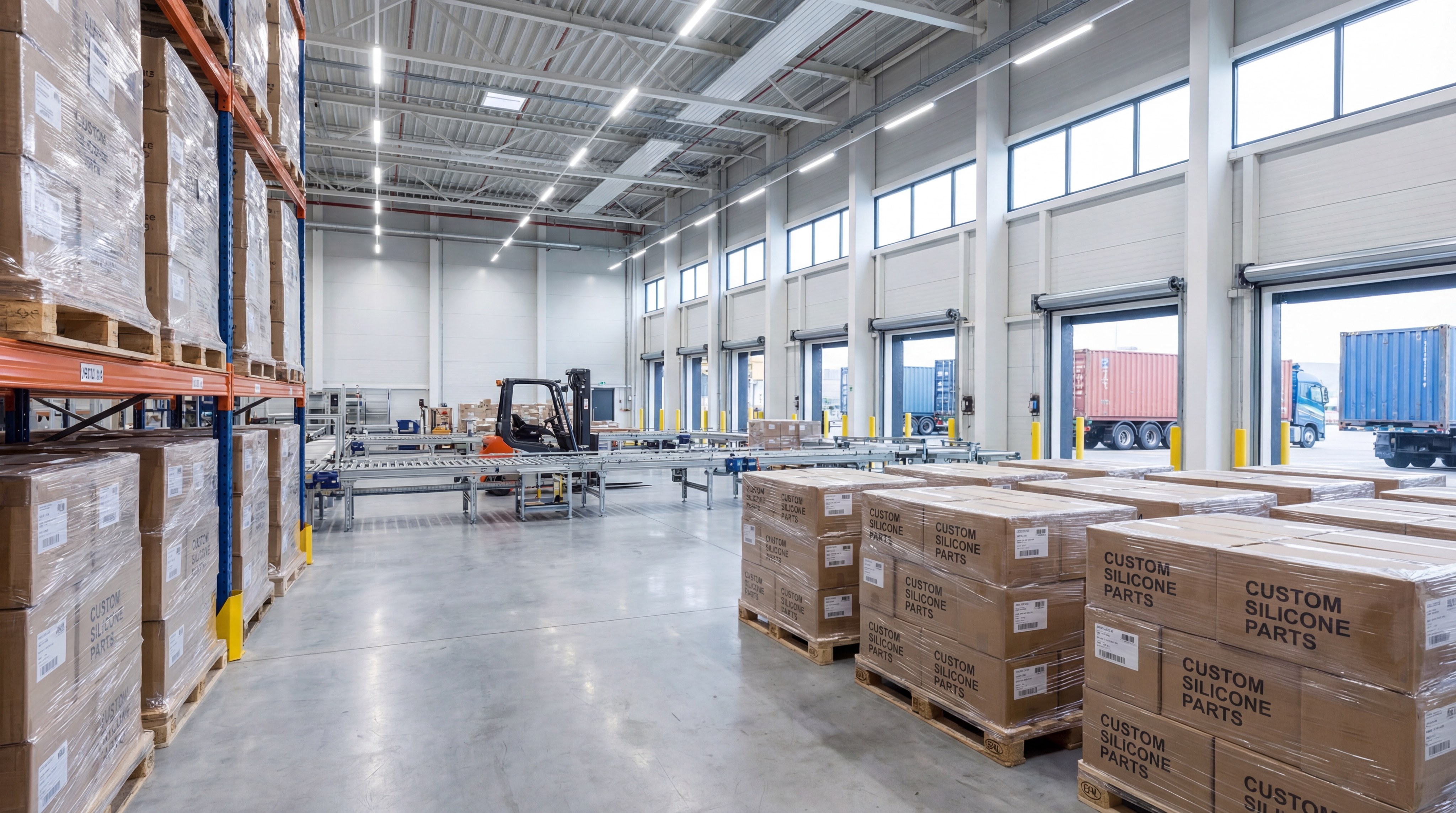
To choose a silicone manufacturing partner, you must evaluate their ISO certifications, in-house tooling capabilities, and their experience with international export logistics. While many factories offer low prices, verifying [is silicone better than plastic] requires a partner that understands material science and compliance documentation. A one-stop factory reduces the risk of quality drift that occurs when moving between different vendors.
Should you visit the factory?
In simple terms: seeing the facility allows you to verify their cleanroom standards and the condition of their molding equipment. Reliable partners provide transparent lead times and detailed quality reports for every shipment they send to your warehouse.
- Check for ISO 9001 and BSCI.
- Confirm in-house mold making.
- Review past case studies.
Key Takeaway: The right manufacturing partner acts as an extension of your team, providing the engineering support needed to scale your business.
| Partner Criteria | Importance | Benefit |
|---|---|---|
| ISO Certified | Essential | Quality consistency |
| In-house Tooling | High | Faster lead times |
| Export Experience | High | Smooth logistics |
Choosing a partner with a proven track record simplifies the entire development cycle from prototype to global distribution.
Creating private silicone trays allows your business to move beyond low-quality plastic alternatives and offer high-performance, safe, and branded solutions to your customers. This guide has detailed how custom engineering, advanced molding processes like LSR, and rigorous quality control come together to solve the problems of material failure and chemical leaching. We provide the expertise in material selection, precision tooling, and mass production to transform your concepts into market-ready products. Contact us today to begin your custom project. Our vision is to lead the industry through precision engineering and sustainable silicone innovation, ensuring your brand achieves lasting success.
FAQ
- Can I customize the Shore A hardness for my specific application?
Yes, you can specify any hardness from 10A to 80A to match the required flexibility of your tray. Different applications, such as medical vs. kitchenware, often require varying levels of stiffness for optimal performance. - What’s the best way to reduce tooling costs for small batches?
The best way to save on initial costs is to use aluminum prototype tooling or choose compression molding over LSR injection. This reduces the upfront investment while still allowing you to test the market with high-quality samples. - How do I know if my tray requires secondary vulcanization?
Secondary vulcanization is required if your tray must meet strict FDA or LFGB food-grade standards to remove any residual volatile substances. It is also recommended for medical products to ensure maximum purity and dimensional stability. - Can I request a prototype before starting mass production?
Yes, receiving a physical prototype is a standard part of the development process to verify dimensions and material feel. Most manufacturers offer 3D printed samples or single-cavity prototype molds for this purpose. - What’s the best way to handle international shipping logistics?
The best way is to work with a manufacturer that has an established export department and can provide all necessary customs documentation. Choosing a factory with experience in US and EU shipping ensures your cargo clears customs without delays.