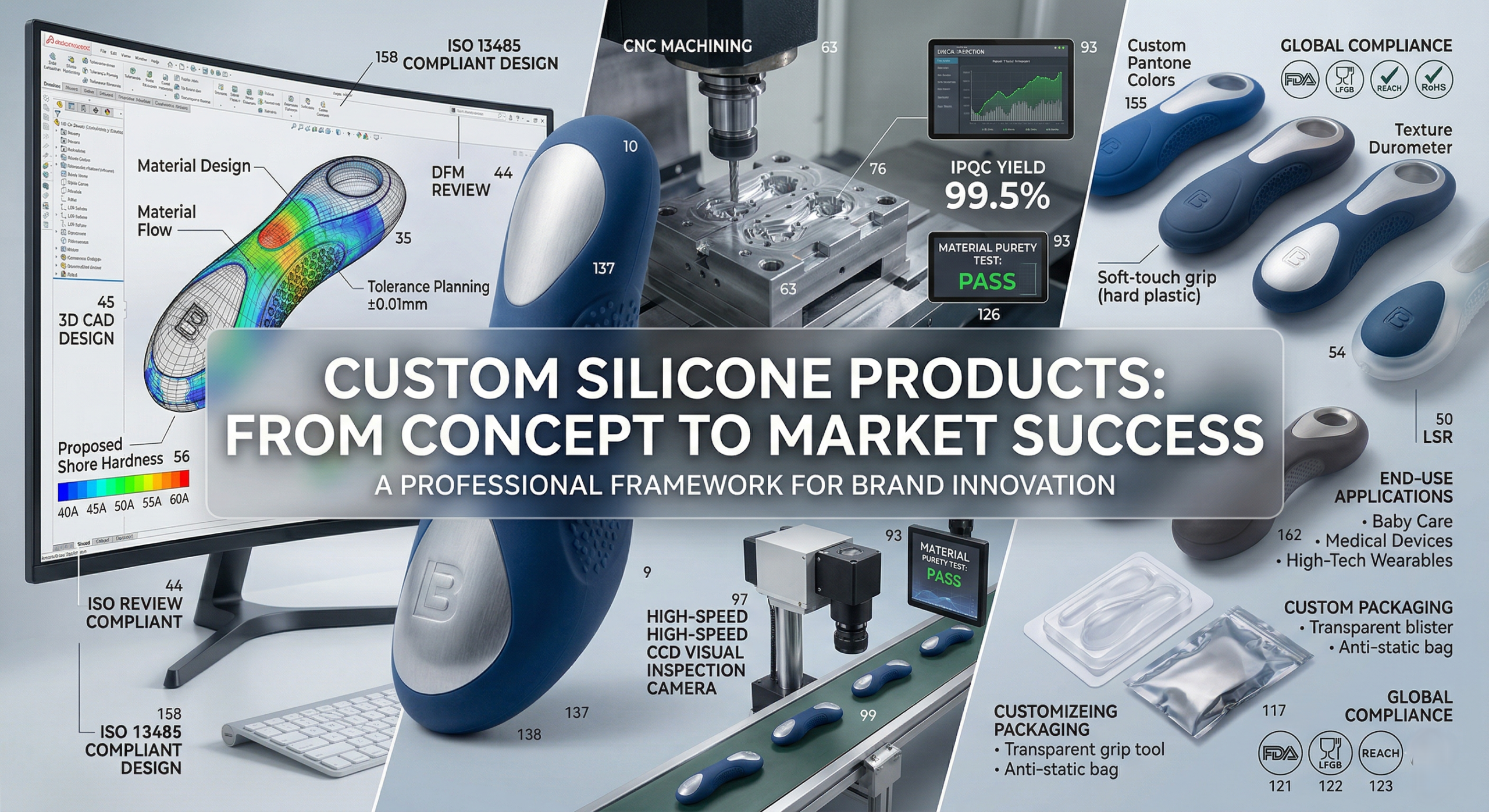
Custom silicone design matters because it allows brands to bridge the gap between generic functionality and proprietary innovation that secures market loyalty. In today’s competitive landscape, relying on standard parts often leads to “me-too” products that fail to command a premium price or ensure long-term safety. By investing in high-quality Custom Silicone Products, you take full control of your brand’s narrative, ensuring every tactile interaction reinforces your commitment to excellence.
How do you define a winning product concept?
Defining a winning concept requires aligning your brand’s aesthetic vision with the practical performance needs of your end-users. When you develop Custom Silicone Products, you aren’t just making a component; you are creating a tactile experience that defines your market presence.
What makes a design truly marketable?
Marketability is found at the intersection of ergonomics and visual appeal. You must ensure the product feels as good as it looks in a digital rendering to capture consumer interest.
But wait, there’s more:
- Unique color matching and gradients.
- Soft-touch surface textures for grip.
- Integrated brand logos through debossing.
- Precision fitment for hybrid assemblies.
How do you identify a functional market gap?
Finding a gap often involves looking for industries where plastic or rubber has traditionally failed to meet durability standards. Silicone offers a unique value proposition for high-temperature or food-grade applications that other materials cannot match.
The result?
- Medical-grade safety compliance.
- Extreme temperature resistance (-60°C to 230°C).
- Chemical stability in harsh environments.
- Consumer preference for non-toxic, BPA-free materials.
Key Takeaway: Identifying a functional gap allows your brand to solve real-world problems while leveraging the versatility of silicone materials for a superior product.
| Concept Factor | Brand Benefit | Success Metric |
|---|---|---|
| Market Gap | Competitive Edge | Market Share Growth |
| Ergonomics | User Satisfaction | Positive Reviews |
| Logo Integration | Identity Retention | Brand Recognition |
Thoughtful ideation at the concept stage prevents commoditization and establishes a unique value proposition for your new product line.
Why is choosing the right manufacturer critical?
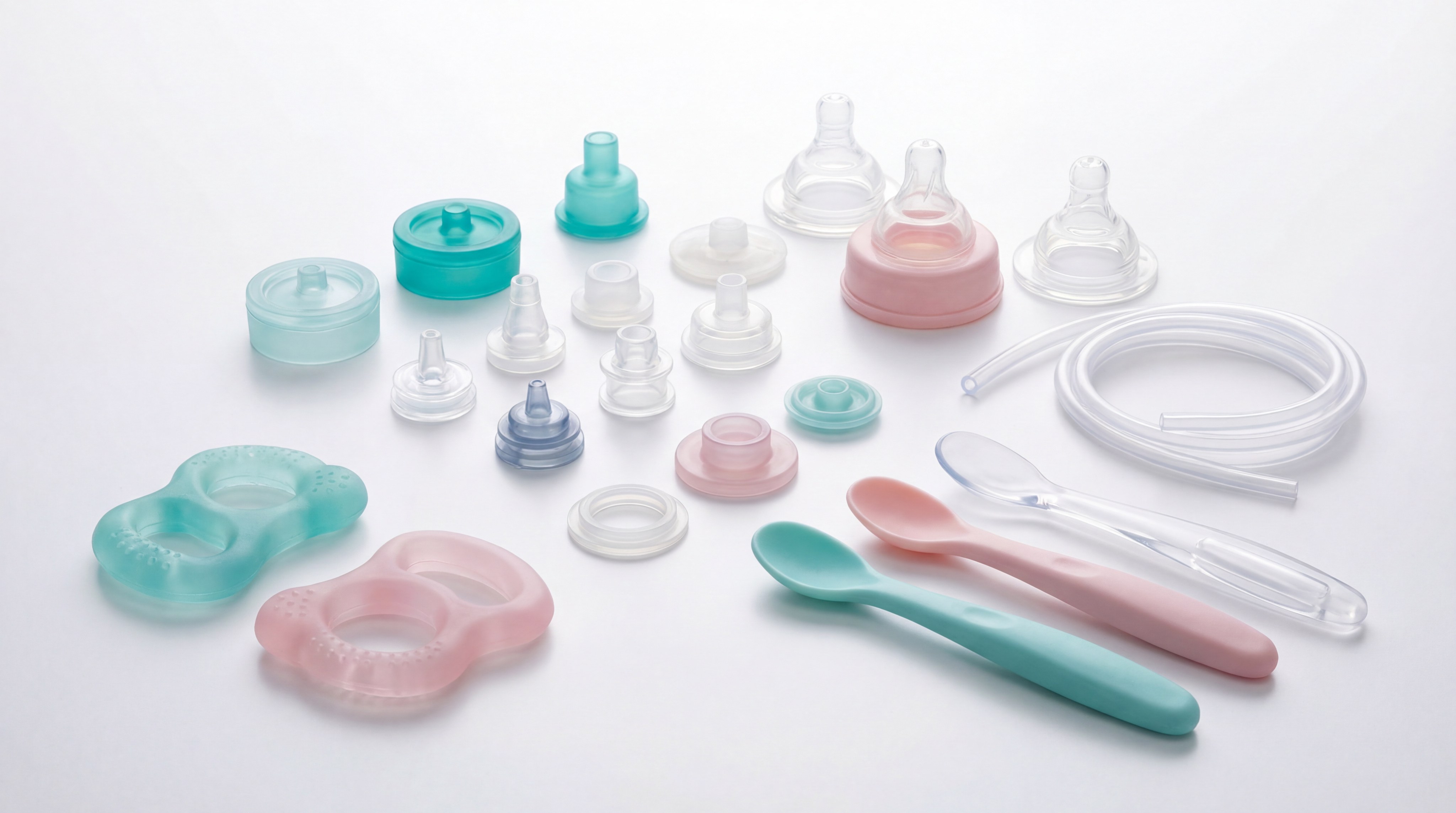
Selecting the right manufacturer ensures your design translates perfectly into a safe, high-yield product without expensive mid-production pivots. Quality Custom Silicone Products depend on a partner who understands both precision engineering and global compliance standards.
How do you audit technical capabilities?
A manufacturer should be audited based on their certifications and in-house equipment. Look for facilities that offer integrated mold design and manufacturing to ensure seamless communication during the development phase.
Think about it:
- ISO 9001 and IATF 16949 certifications.
- Cleanroom production capabilities (Class 100,000).
- Advanced LSR injection molding machinery.
- Comprehensive DFM (Design for Manufacturing) reviews.
What are factory-direct advantages?
Working directly with a factory eliminates the communication lag and markup associated with middlemen. This direct line of contact allows for faster iterations and more transparent quality control over every batch produced.
And that’s not all:
- Lower overall tooling costs.
- Faster lead times for prototyping.
- Direct engineering support for troubleshooting.
- Scalable production from thousands to millions.
Key Takeaway: A strategic manufacturing partnership transforms your vision into a scalable reality while maintaining the rigorous quality standards required for global markets.
| Partner Attribute | Operational Value | Impact on Brand |
|---|---|---|
| Certifications | Regulatory Assurance | Lower Risk of Recalls |
| Direct Factory | Cost Efficiency | Better Profit Margins |
| In-house Tooling | Design Precision | Perfect Part Fitment |
Choosing a manufacturer with deep technical expertise is the most significant insurance policy against production failure and brand damage.
What role does 3D engineering play in design?
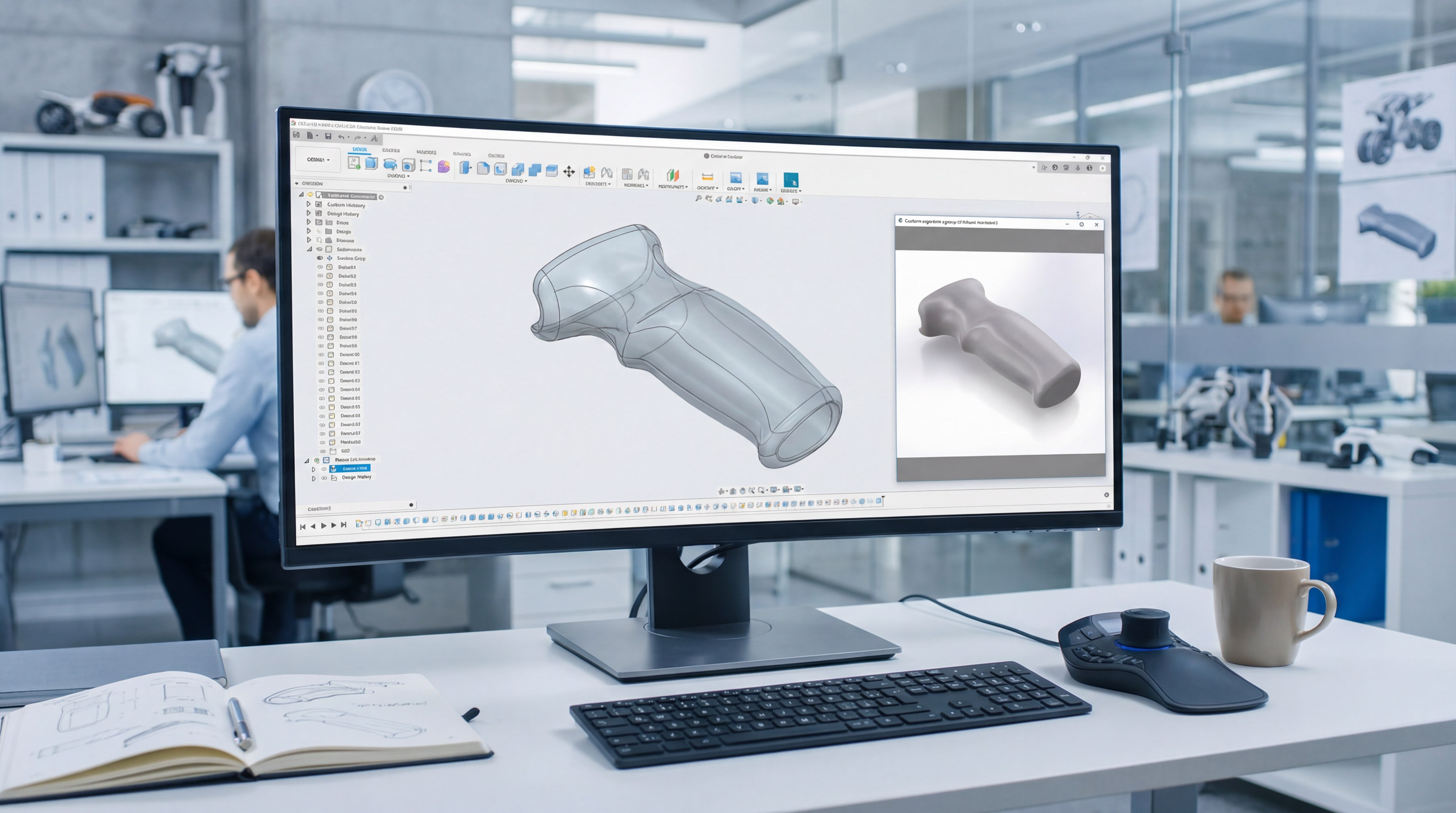
The engineering phase of Custom Silicone Products transforms a creative vision into a manufacturable digital blueprint that accounts for material physics. This stage is where your design is stress-tested in a virtual environment to ensure it performs under real-world conditions.
How does CAD modeling reduce risk?
Computer-Aided Design allows engineers to simulate how silicone will flow into a mold, identifying potential air traps or thin walls before steel is ever cut. Precision at this stage is vital because silicone shrinkage usually ranges between 1% and 3%.
Check this out:
- Tolerance planning of ±0.01mm.
- Wall thickness optimization for durability.
- Simulation of material flow and venting.
- Undercut and parting line management.
Why is prototyping essential before tooling?
Prototyping serves as the final gatekeeper, allowing you to hold a physical representation of your product to verify size and feel. Using resin mockups or 3D prints can save weeks of time and thousands of dollars in mold rework.
The bottom line:
- Visual verification of aesthetic details.
- Fit testing with existing hardware components.
- Functional validation of moving parts.
- Material hardness (Shore A) confirmation.
Key Takeaway: Rigorous 3D engineering and prototyping ensure that your final product meets the “first-time-right” standard, saving both time and financial resources.
| Engineering Step | Purpose | Output |
|---|---|---|
| DFM Review | Moldability Check | Optimized Tooling Design |
| CAD Simulation | Flow Analysis | Defect Prevention |
| Prototyping | Physical Validation | Design Approval |
Investing in high-level engineering early in the process ensures that the transition from digital model to physical product is flawless.
How do you select the best silicone material?
Material selection for Custom Silicone Products is a strategic decision that dictates the product’s safety, longevity, and overall performance in its intended environment. You must choose a formulation that aligns with both your brand’s ethics and the technical requirements of the application.
What is the difference between LSR and HCR?
Liquid Silicone Rubber (LSR) is ideal for high-precision, high-volume parts, while High Consistency Rubber (HCR) is often used for compression molding of simpler geometries. LSR provides superior clarity and precision, making it the preferred choice for medical and baby care sectors.
Here’s the kicker:
- LSR: High precision, fast cycle times.
- HCR: Excellent for high-tear strength.
- Fluorosilicone: Superior chemical resistance.
- Medical Grade: Biocompatible and sterilization-safe.
How do you choose the right Shore hardness?
Hardness, measured on the Shore A scale, determines whether your product feels like a soft gel or a hard plastic. Choosing the wrong durometer can lead to ergonomic failure or structural instability under pressure.
That’s not all:
- 20A–30A: Soft grips and nipples.
- 40A–60A: Standard seals and keypads.
- 70A–80A: High-pressure gaskets and hard caps.
- Transparency levels from opaque to crystal clear.
Key Takeaway: Selecting the correct material formulation is critical for ensuring consumer safety and meeting specific industry performance benchmarks like IP68 waterproofing.
| Material Type | Primary Use Case | Key Brand Benefit |
|---|---|---|
| Food-Grade LSR | Kitchenware / Baby Care | Consumer Health Safety |
| Medical Silicone | Healthcare Devices | Regulatory Compliance |
| Industrial HCR | Seals / Gaskets | Product Durability |
Aligning material properties with user expectations ensures that your product delivers on its performance promises consistently.
Why is precise mold fabrication so expensive?
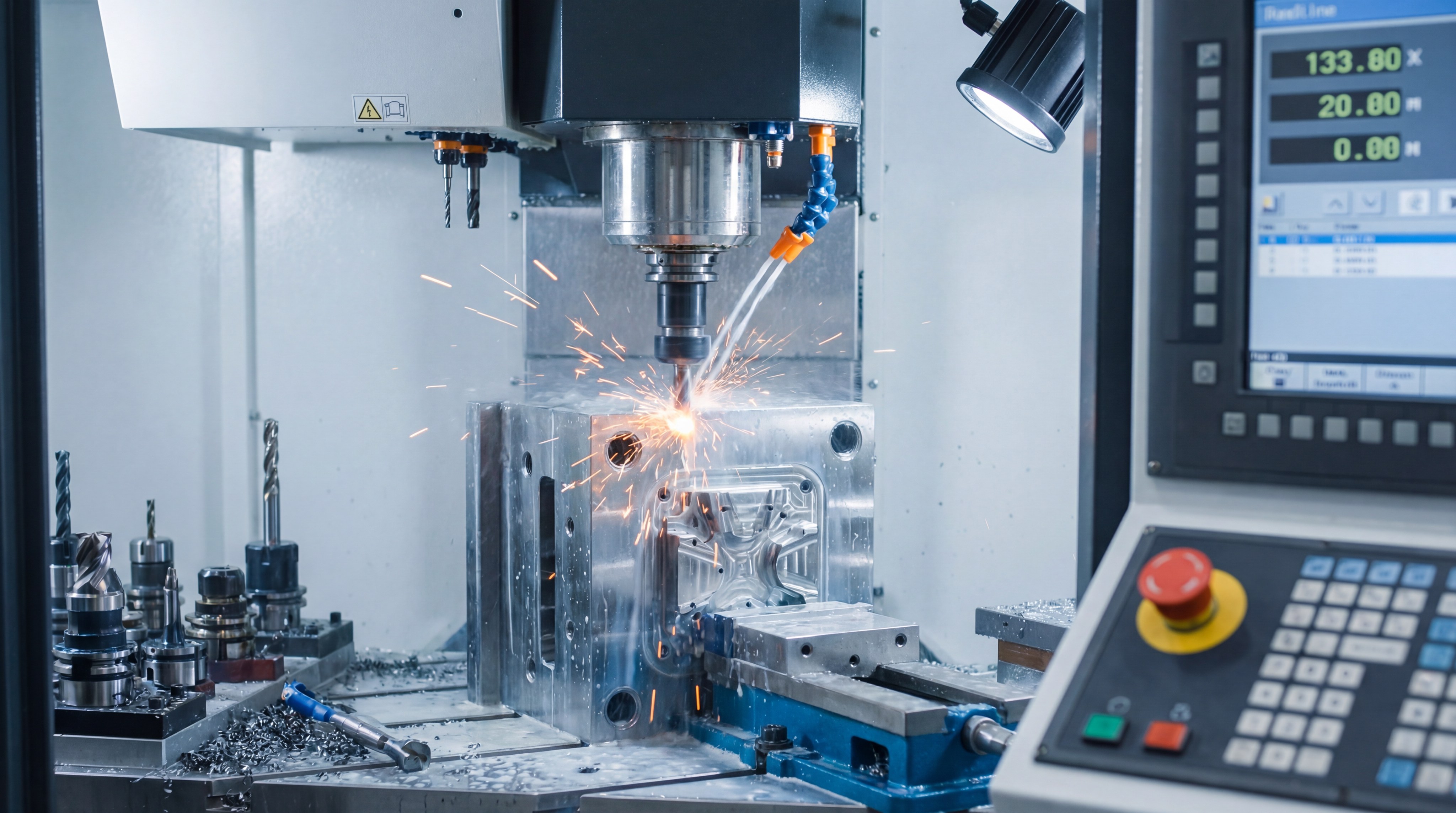
The initial investment in Custom Silicone Products is concentrated in mold fabrication, where CNC machining and EDM (Electrical Discharge Machining) create high-precision steel tools. This “tooling” is a proprietary asset that determines the surface finish and consistency of every part you sell.
How does mold quality affect the final part?
High-quality steel molds can withstand hundreds of thousands of cycles without degrading, ensuring the ten-thousandth part is identical to the first. Cheap molds often lead to “flash”—excess material at the seams—which requires expensive manual trimming.
But wait, there’s more:
- Multi-cavity molds for high-volume efficiency.
- Precision gates for clean material entry.
- Cooling channels to optimize cycle times.
- Surface texturing (polishing or etching).
What determines the ROI of silicone tooling?
Return on investment is calculated by the mold’s longevity and the reduction in defect rates. While a high-precision mold has a larger upfront cost, it pays for itself through lower per-unit prices and reduced waste during mass production.
The secret sauce?
- 500,000+ cycle lifespan for steel molds.
- Automated ejection systems for speed.
- Minimal flash for “ready-to-ship” quality.
- Patent-protected multi-color molding techniques.
Key Takeaway: Precision tooling is the foundation of high-yield production, ensuring your brand maintains consistent quality across millions of units.
| Tooling Type | Lifecycle | Best For |
|---|---|---|
| Aluminum Mold | Low Volume | Prototyping / Small Batches |
| Steel Mold | High Volume | Mass Production Stability |
| Multi-Cavity | Extremely High Volume | Unit Cost Optimization |
A well-engineered mold is the most valuable physical asset in your production chain, dictating both cost and quality.
What happens during the sample testing phase?
The sample testing phase allows you to validate Custom Silicone Products against your original specifications using T1 (Trial 1) samples from the actual production mold. This is the moment where theory meets reality, and any necessary adjustments are made before the “green light” for mass manufacturing.
How do you perform functional validation?
Samples undergo rigorous testing to ensure they meet environmental standards such as IP68 waterproofing or high-cycle durability. If a part is designed for the medical or baby sector, it must pass extraction tests to ensure no harmful substances leach out.
But wait, there’s more:
- Tensile strength and tear resistance tests.
- 50,000+ cycle durability “chew” tests for pets.
- Dimensional accuracy checks against CAD.
- Color consistency verification (Pantone matching).
Can the design be iterated after sampling?
While the core mold is set, minor adjustments—known as “steel-safe” changes—can still be made to refine fit or aesthetics. This flexibility ensures that the final product delivered to your customers is nothing short of perfect.
Here is the best part:
- Fine-tuning of surface textures.
- Adjustments to parting line visibility.
- Optimization of material durometer.
- Finalizing custom branding colors.
Key Takeaway: Sampling is the final quality gate that protects your brand from large-scale manufacturing errors and ensures consumer safety.
| Sample Test | Objective | Metric |
|---|---|---|
| Compression Set | Seal Reliability | % Displacement |
| Tear Strength | Part Longevity | N/mm Rating |
| Extraction Test | Food/Medical Safety | Compliance Pass/Fail |
Validation through sampling provides the empirical data needed to move into full-scale production with absolute confidence.
How is quality maintained in mass production?
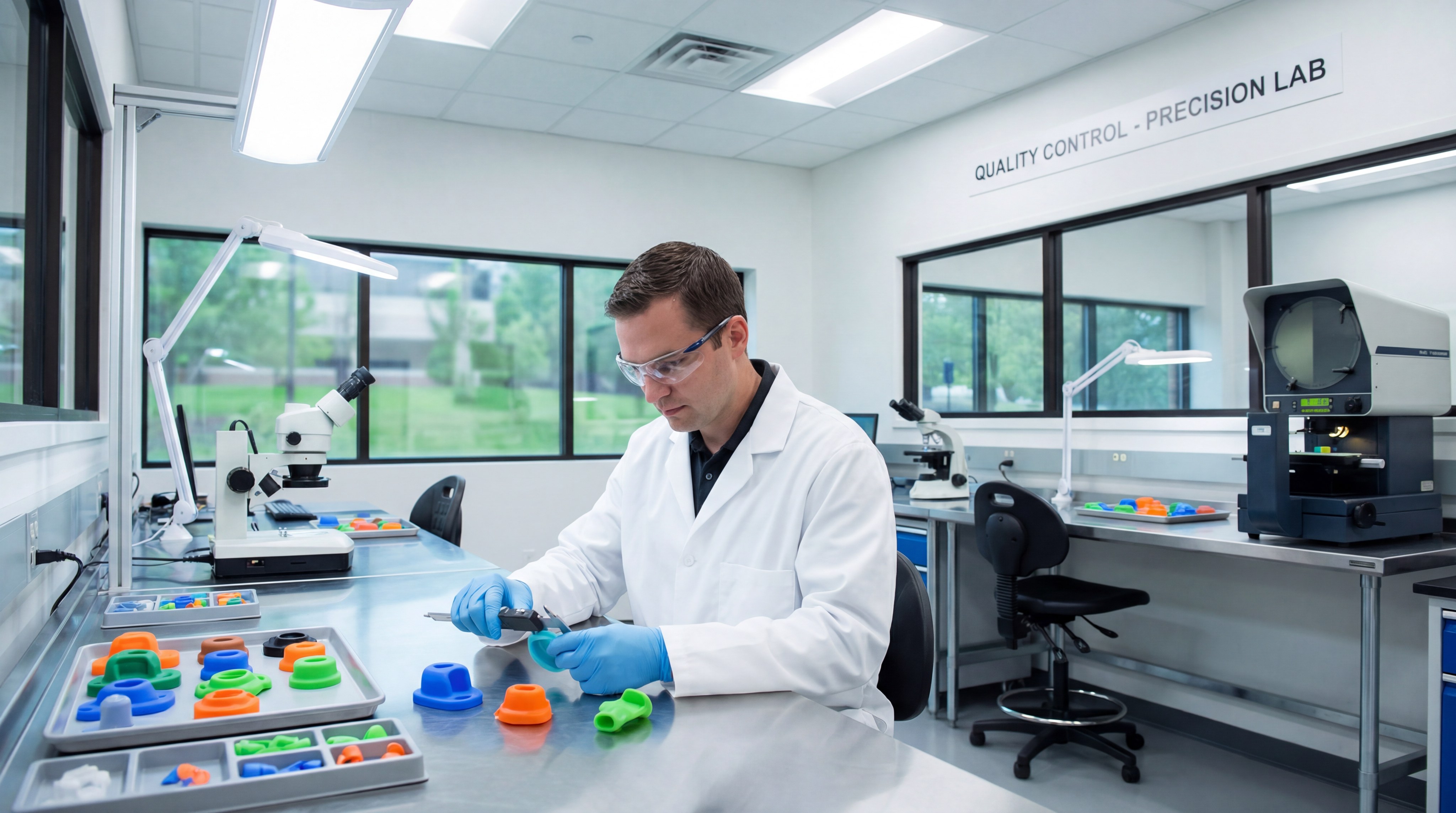
Consistency in mass-produced Custom Silicone Products requires a multi-layered Quality Control (QC) system that monitors every stage from raw material to final shipment. Maintaining a 99.5% yield rate is essential for keeping your brand profitable and your customers satisfied.
What are the stages of silicone QC?
A professional QC workflow involves Incoming Quality Control (IQC) for raw materials, In-Process Quality Control (IPQC) during molding, and Final Quality Control (FQC) before the products leave the factory. This ensures that defects are caught early, reducing waste and cost.
The result?
- 100% inspection for critical dimensions.
- CCD visual inspection for high-volume orders.
- Waterproof testing for electronics components.
- Tensile testing for high-stress parts.
How does automation improve reliability?
Using automated inspection technology like CCD (Charge-Coupled Device) cameras allows for micro-precision detection of defects that the human eye might miss. This is particularly important for high-volume industries like vapes or electronics where a single leak can be catastrophic.
Here’s the kicker:
- Elimination of human error in inspection.
- High-speed sorting of defective parts.
- Real-time monitoring of molding parameters.
- Data-driven yield optimization.
Key Takeaway: A robust, data-driven quality control system is the only way to ensure that your brand’s reputation remains untarnished at scale.
| QC Stage | Primary Focus | Goal |
|---|---|---|
| IQC | Raw Material Purity | Prevent Contamination |
| IPQC | Molding Stability | Uniform Part Geometry |
| FQC/OQC | Final Aesthetics | Perfect “Out-of-Box” Quality |
Consistency across millions of units is achieved only through a culture of rigorous inspection and automated verification.
How does custom packaging enhance brand value?
The final presentation of Custom Silicone Products serves as the first point of contact between your brand and the consumer, making packaging a vital part of the design strategy. Effective packaging protects the product during global transit while reinforcing your brand’s premium identity.
Why is retail-ready packaging important?
Retail-ready packaging allows your products to move directly from the factory to the shelf or fulfillment center without additional handling. Custom inserts ensure that delicate silicone parts do not deform or attract dust during storage.
The secret sauce?
- Anti-static bags for electronics components.
- Custom blister packs for retail visibility.
- Sustainable, eco-friendly paper inserts.
- Precise labeling for SKU management.
How do you protect products during export?
Silicone is durable, but high-precision parts can be sensitive to compression during long-haul shipping. Specialized export packaging prevents deformation and ensures that the product arrives in the same condition it left the factory.
That’s not all:
- Double-walled corrugated shipping cartons.
- Vacuum-sealed bags for medical components.
- Desiccant packs for moisture control.
- Palletization for secure global logistics.
Key Takeaway: Strategic packaging design reduces shipping damage and elevates the consumer unboxing experience, directly impacting brand perception.
| Packaging Type | Protection Level | Brand Impact |
|---|---|---|
| Blister Pack | High Visibility | Retail Appeal |
| Anti-Static Bag | Electronic Safety | Trust & Reliability |
| Sustainable Box | Eco-Conscious | Brand Value Alignment |
Thinking of packaging as part of the product ensures a professional end-to-end experience for your global customer base.
Can custom silicone meet global safety standards?
Regulatory compliance for Custom Silicone Products is non-negotiable, especially for brands exporting to the US, EU, and Asian markets. Ensuring your products meet FDA, LFGB, and RoHS standards is the foundation of legal protection and consumer safety.
What are the essential certifications?
Depending on your industry, you may require FDA (US) or LFGB (Germany/EU) registration for food-contact items. For electronics, RoHS and REACH compliance ensure that no hazardous chemicals are present in the material.
Think about it:
- FDA 21 CFR 177.2600 for food-grade.
- LFGB (BfR XV) for high-purity European standards.
- USP Class VI for medical biocompatibility.
- REACH/RoHS for environmental safety.
How do you verify material purity?
Reputable manufacturers provide material safety data sheets (MSDS) and third-party test reports from labs like SGS or TUV. This transparency allows your brand to market “safe” and “non-toxic” claims with complete legal backing.
But wait, there’s more:
- Lot-traceability for every batch produced.
- Post-curing processes to remove volatiles.
- Regular audits of raw material suppliers.
- Strict adherence to ISO 13485 for medical parts.
Key Takeaway: Full regulatory compliance is a mandatory requirement for global market entry and serves as a powerful marketing tool for health-conscious brands.
| Standard | Region | Application |
|---|---|---|
| FDA | USA | Food / Kitchen / Baby |
| LFGB | Europe | High-End Kitchenware |
| USP Class VI | Global | Medical Devices |
Navigating the complex world of global regulations is made easier by partnering with a manufacturer that prioritizes certified material science.
What future trends will impact silicone design?
Staying ahead with Custom Silicone Products involves adopting new technologies like overmolding, multi-color integration, and eco-friendly manufacturing processes. As consumer expectations evolve, brands that embrace these innovations will define the next generation of high-tech products.
How is overmolding changing the market?
Overmolding allows for the permanent bonding of silicone to plastic or metal without the need for adhesives. This creates hybrid products that combine the structural strength of a rigid frame with the soft-touch grip and sealing of silicone.
Here is the best part:
- Silicone-to-metal bonding for tools.
- Silicone-to-plastic for smart electronics.
- Multi-material assemblies for medical devices.
- Seamless, waterproof “monoblock” designs.
What about multi-color and smart silicone?
New patented processes now allow for complex, multi-color patterns to be molded into a single part without bleeding or alignment issues. Additionally, “smart” silicone integrated with conductive elements is opening doors for the next wave of wearable technology.
The result?
- Intricate, multi-color brand patterns.
- Conductive silicone for sensor integration.
- Antimicrobial coatings for health products.
- Bio-based silicone for true sustainability.
Key Takeaway: Continuous innovation in molding technology allows your brand to create “first-of-its-kind” products that capture the imagination of modern tech consumers.
| Trend | Benefit | Industry Impact |
|---|---|---|
| Overmolding | Design Versatility | Electronics / Industrial |
| Multi-Color | Aesthetic Branding | Consumer Lifestyle |
| Smart Silicone | Tech Integration | Wearables / Healthcare |
The future of silicone design is limited only by imagination, as new manufacturing capabilities continue to unlock more complex and functional possibilities.
FAQ
Can I get a DFM review before committing to tooling?
Yes, most professional manufacturers provide a detailed Design for Manufacturing review to optimize your part for production. This step identifies potential molding issues and helps lower overall tooling costs before you invest.
What’s the best silicone for food-grade applications?
Liquid Silicone Rubber (LSR) that is FDA or LFGB certified is considered the gold standard for food-grade products. It offers the highest purity and is resistant to bacterial growth and extreme sterilization temperatures.
How do I know if my design is suitable for overmolding?
An engineering assessment is required to verify that the substrate material (plastic or metal) can withstand the heat and pressure of the silicone molding process. Overmolding is excellent for creating ergonomic grips and waterproof seals.
Can I request custom Pantone colors for my brand?
Absolutely, silicone can be matched to any specific Pantone color through a precise pigment-mixing process. This ensures that your custom products align perfectly with your existing brand identity and packaging.
How do I know if a manufacturer is reliable for medical parts?
You should verify that the factory holds an ISO 13485 certification and operates a cleanroom environment. Reliable medical partners will also provide lot-traceability and full compliance reports for biocompatible materials.
Conclusion
This guide has explored the critical steps of developing Custom Silicone Products, from initial concept and engineering to mass production and global compliance. By following this professional framework, you can avoid the common pitfalls of product development and ensure your brand delivers safe, high-performance solutions to your customers. Whether you are creating baby care items, medical devices, or high-tech wearables, the right design strategy and manufacturing partner are your most valuable assets.
Our vision is to empower global brands with precision-engineered silicone solutions that enhance lives and drive industrial progress. We are committed to factory-direct excellence, providing the transparency and technical expertise needed to bring your most ambitious designs to market. To transform your product idea into a market-leading reality, contact us today for a comprehensive design review and quote.