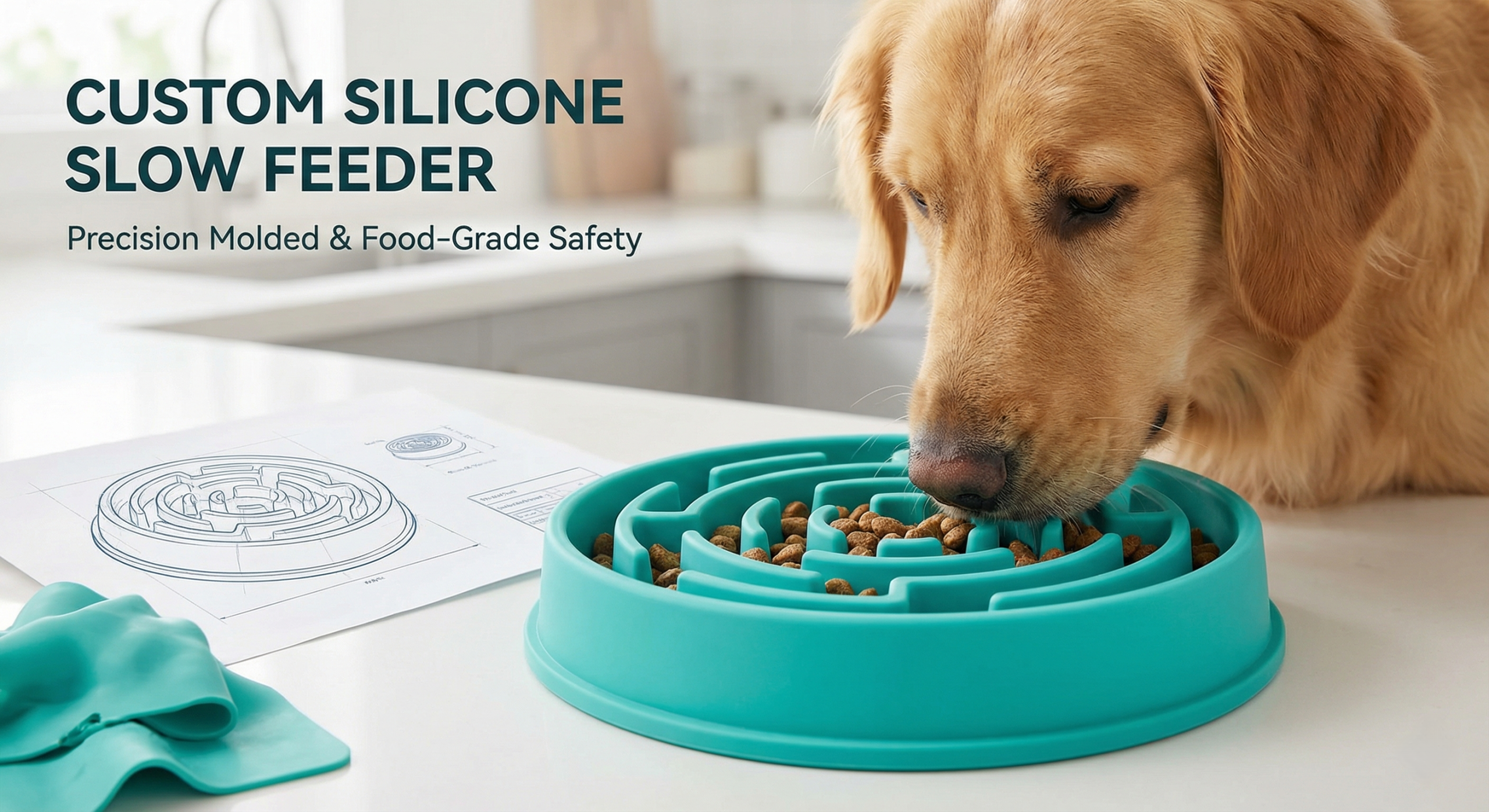
Manufacturing successful pet products involves a synergy of innovative pattern design, food-grade material selection, and precision molding techniques to ensure animal safety. Many pet owners struggle with “scarf and barf” episodes and choking caused by pets eating too quickly from traditional bowls. For global pet brands and wholesalers, bringing a poorly designed or toxic product to market is a massive liability that can lead to costly recalls and a damaged reputation. Developing a high-quality Custom Silicone slow feeder offers a durable, non-toxic, and effective solution that modern pet owners demand.
1. Why Use Custom Silicone for Pet Slow Feeders?
Silicone is the ideal choice for feeders because it is non-porous, hypoallergenic, and prevents the bacterial growth often found in plastic alternatives. Utilizing Custom Silicone ensures that your products are free from BPA and phthalates, meeting the highest safety standards for long-term food contact.
These products are incredibly durable and can withstand extreme temperatures ranging from freezing to dishwasher-safe heat. This flexibility ensures that the feeder remains indestructible under normal pet use while maintaining its structural integrity.
The Benefits of Food-Grade Materials
Food-grade silicone provides a soft surface that is gentle on a pet’s teeth and gums during enthusiastic feeding. Believe it or not, this material also offers natural anti-skid properties to keep bowls in place.
- Non-toxic and BPA-free composition.
- High thermal stability for sterilization.
- Resistance to mold and mildew.
Key Takeaway: Choosing high-quality silicone over plastic provides a significant marketing advantage by prioritizing pet health and product longevity.
| Feature | Food-Grade Silicone | Traditional Plastic |
|---|---|---|
| BPA/Phthalates | Always Free | Often Present |
| Heat Resistance | Up to 230°C | Low melting point |
| Durability | Flexible/Unbreakable | Prone to cracking |
This comparison highlights why premium pet brands are rapidly shifting toward silicone to avoid the safety risks associated with rigid polymers.
2. How to Design an Effective Custom Silicone Maze?
An effective maze design balances feeding difficulty with pet accessibility to prevent frustration while significantly slowing down meal consumption. When creating a Custom Silicone pattern, you must consider the spacing and height of the ridges to accommodate different snout sizes.
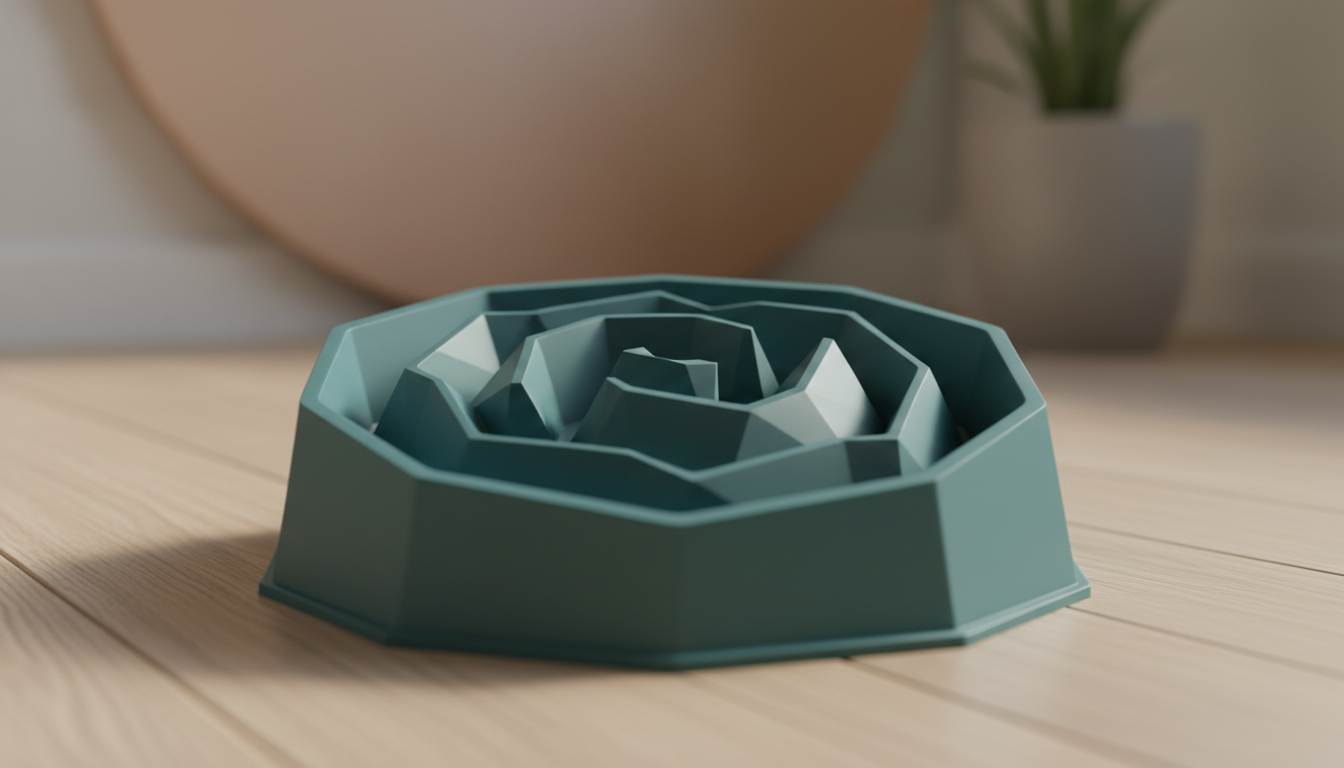
Engineers must also incorporate Design for Manufacturability (DFM) principles to ensure the parts can be demolded easily. Proper draft angles and rounded corners are essential to prevent the flexible material from tearing during the production cycle.
Optimizing Geometry for Feeding
The complexity of the maze directly impacts how much the pet must “work” for their kibble. Here is the deal: if the channels are too tight, the bowl becomes impossible for either the pet to use or the owner to clean.
- Tapered ridges for easy food release.
- Rounded internal corners for hygiene.
- Variable heights to challenge different pets.
Key Takeaway: Smart design prevents pet frustration and simplifies the manufacturing process by ensuring high yields and low defect rates.
| Design Element | Purpose | Impact on Pet |
|---|---|---|
| Draft Angles | Easier demolding | Consistent product finish |
| Ridge Height | Slows eating pace | Reduces choking risk |
| Nook Radius | Easier cleaning | Prevents bacterial buildup |
Integrating these design elements during the initial CAD phase reduces the need for expensive mold modifications later in the project.
3. Which Custom Silicone Grades Ensure Food Safety?
Choosing between FDA and LFGB compliance depends on your target market, as European standards require stricter testing for volatile organic compounds. Selecting Custom Silicone that meets these international certifications is non-negotiable for brands that prioritize consumer trust and regulatory compliance.
Shore A hardness is another critical factor, typically ranging from 40A to 60A for pet feeders. This range provides the necessary rigidity for maze walls to stand upright while remaining soft enough to be comfortable for the pet.
Shore Hardness and Application
The hardness of the material affects both the user experience and the manufacturing speed. Think about it: a material that is too soft might collapse, while one that is too hard might become difficult to demold.
- 40A Shore: Highly flexible and tactile.
- 50A Shore: The standard for most pet bowls.
- 60A Shore: Firm ridges for heavy chewers.
Key Takeaway: Matching the silicone grade and hardness to your specific product function ensures both safety and high performance in the field.
| Standard | Testing Focus | Primary Market |
|---|---|---|
| FDA | Basic food contact safety | North America |
| LFGB | Volatile organic compounds | Europe / Premium Global |
| Platinum Cure | Purity and odor reduction | High-end Pet Products |
Selecting the correct certification early in the development process prevents legal hurdles and ensures your product is ready for global export.
4. How is Custom Silicone Tooling Built In-House?
In-house tooling involves using precision CNC machining to create steel or aluminum molds that capture every intricate detail of the maze design. Controlling this stage within the Custom Silicone factory allows for tighter tolerances and much faster iterations during the prototyping phase.
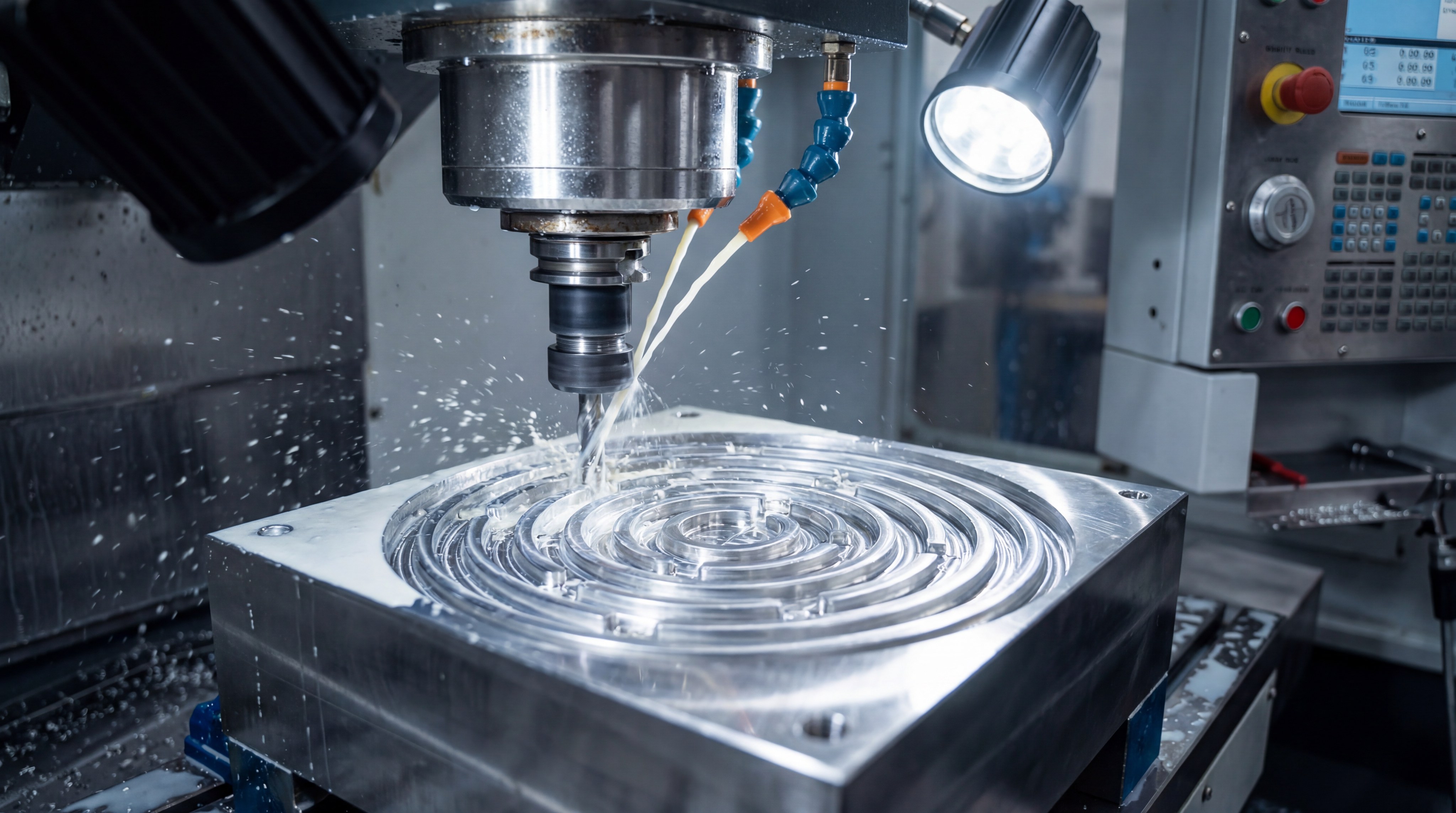
Manufacturers can choose between single-cavity molds for initial low-volume testing or multi-cavity molds for high-efficiency mass production. Multi-cavity tooling significantly reduces the per-unit cost by producing multiple bowls in a single cycle.
Precision CNC for Intricate Molds
The quality of the mold surface determines the final appearance of your feeder. In simple terms, a polished mold results in a premium glossy finish, while bead-blasting creates a sophisticated matte texture.
- Hardened steel for high-volume runs.
- Aluminum for rapid prototyping.
- Integrated logos and branding.
Key Takeaway: In-house tooling capability reduces project lead times and ensures that the final product matches your 3D design perfectly.
| Tooling Type | Best Use Case | Lead Time |
|---|---|---|
| Single-Cavity | Market testing / Startups | 10 – 15 Days |
| Multi-Cavity | High-volume retail | 20 – 30 Days |
| Prototype Mold | Design validation | 5 – 7 Days |
Evaluating your projected sales volume is critical when deciding which tooling strategy will offer the best return on investment.
5. Why Choose LSR Injection for Custom Silicone?
Liquid Silicone Rubber (LSR) injection molding is the gold standard for high-volume production due to its precision, speed, and automated nature. Utilizing Custom Silicone LSR technology ensures that every bowl has consistent weight, dimensions, and material properties.
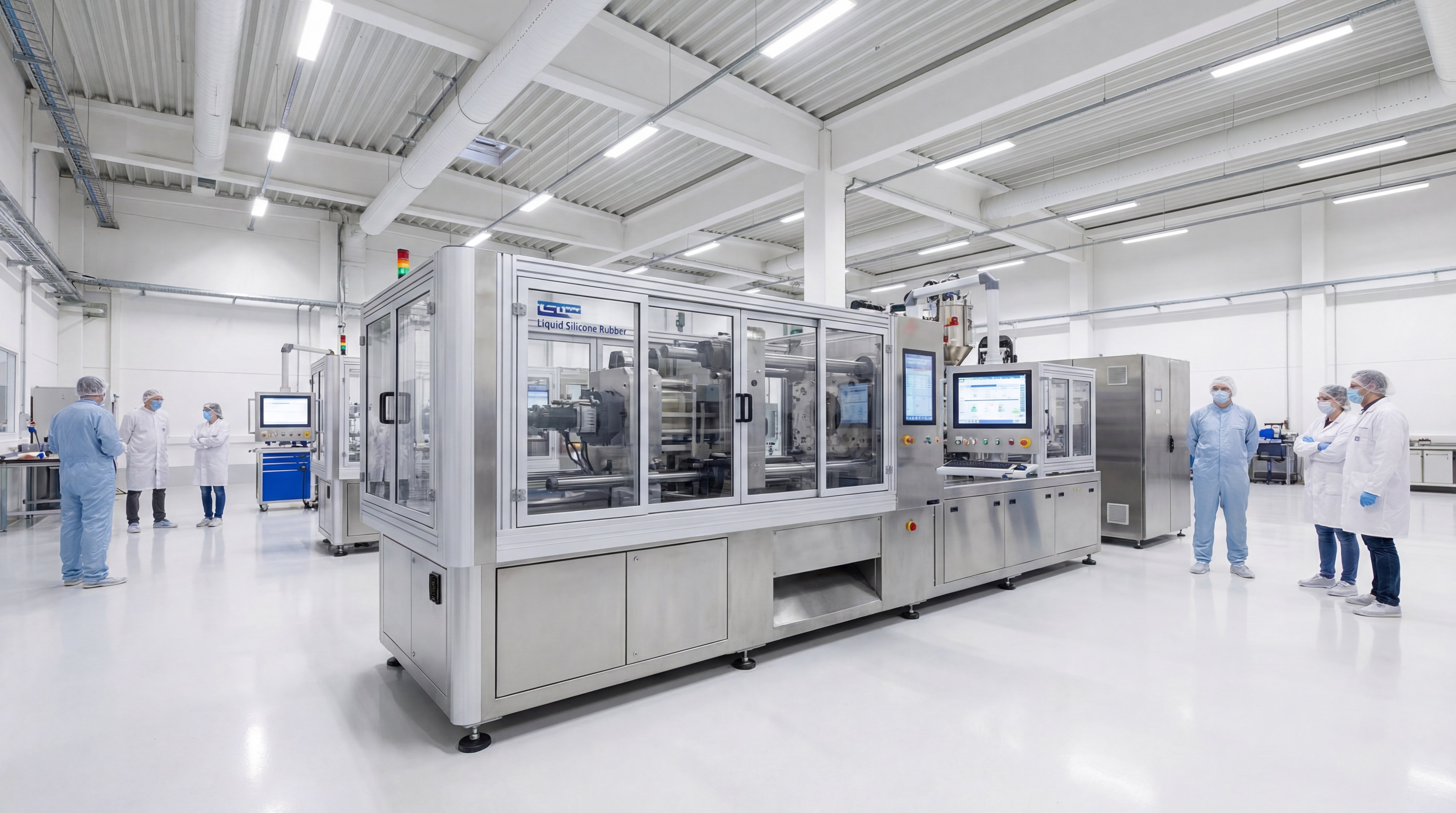
This process uses a closed-loop system that prevents environmental contamination, which is vital for food-grade products. LSR offers faster cycle times compared to traditional methods, as the material cures in seconds once injected into the heated mold.
The Advantages of High-Volume Precision
The automation involved in LSR molding minimizes human error and labor costs. Why does this matter? It allows your brand to scale rapidly while maintaining a low defect rate.
- High dimensional accuracy (±0.1mm).
- Flash-less production for cleaner edges.
- Consistent color and material density.
Key Takeaway: LSR injection molding is the most cost-effective and reliable method for pet brands looking to produce tens of thousands of units.
| Feature | LSR Injection | Traditional Methods |
|---|---|---|
| Cycle Time | 30 – 90 Seconds | 5 – 10 Minutes |
| Automation | Fully Automated | Mostly Manual |
| Waste | Very Low | High (Flash) |
The efficiency of LSR makes it the preferred choice for complex maze designs that require perfect filling of every thin ridge.
6. When is Compression Used for Custom Silicone?
Compression molding is typically used for lower volume orders or simpler designs where the high cost of LSR tooling is not justified. This Custom Silicone process uses solid silicone preforms that are placed into a mold and pressed under heat to form the final shape.
While it is slower than injection molding, it provides an accessible entry point for new brands. The process requires a secondary trimming step to remove “flash,” which is the excess material that squeezed between the mold halves.
Managing Costs for Small Batches
If you are launching a pilot program or a limited edition product, compression molding is often the logical choice. The best part? You can achieve a professional-grade product with a much lower upfront investment in equipment.
- Lower initial mold costs.
- Suitability for large-format bowls.
- Ability to use high-consistency rubber (HCR).
Key Takeaway: Compression molding serves as a vital bridge for startups to test their designs before committing to expensive automated systems.
| Factor | Compression Molding | LSR Injection |
|---|---|---|
| Upfront Cost | Low | High |
| Production Speed | Slower | Very Fast |
| Manual Labor | High | Low |
Choosing the right molding process requires a careful balance between your current budget and your long-term scaling goals.
7. How Does Overmolding Improve Custom Silicone?
Overmolding allows silicone to be bonded directly to rigid plastic or metal bases, creating a hybrid product with superior stability. Incorporating Custom Silicone overmolding is ideal for slow feeders that need a soft interior maze combined with a sturdy, non-slip outer shell.
This technology also allows for the integration of powerful suction cups on the base. These features prevent pets from sliding the bowl across the floor or flipping it over during mealtime.
Enhancing Functionality with Hybrid Parts
Combining materials allows you to leverage the benefits of both soft silicone and rigid polymers. Let’s be honest, a hybrid bowl often feels more “premium” to consumers than a single-material product.
- Integrated anti-skid feet.
- Structural reinforcement for larger breeds.
- Multi-color aesthetic options.
Key Takeaway: Overmolding adds functional value and aesthetic appeal that can differentiate your product in a crowded marketplace.
| Material Pair | Benefit | Common Use |
|---|---|---|
| Silicone on PP | High stability / Soft touch | Premium Feeders |
| Silicone on Steel | Luxury feel / Anti-skid | High-end Bowls |
| Silicone on Suction | Maximum grip | Lick Mats |
By bonding materials at a molecular level, you ensure that the components will never separate, even after hundreds of dishwasher cycles.
8. What are the Custom Silicone Quality Standards?
Quality standards for pet products include rigorous dimensional verification and functional testing to ensure the maze effectively slows feeding. Every Custom Silicone part must undergo a “kibble test” to verify that the design performs as intended in real-world scenarios.
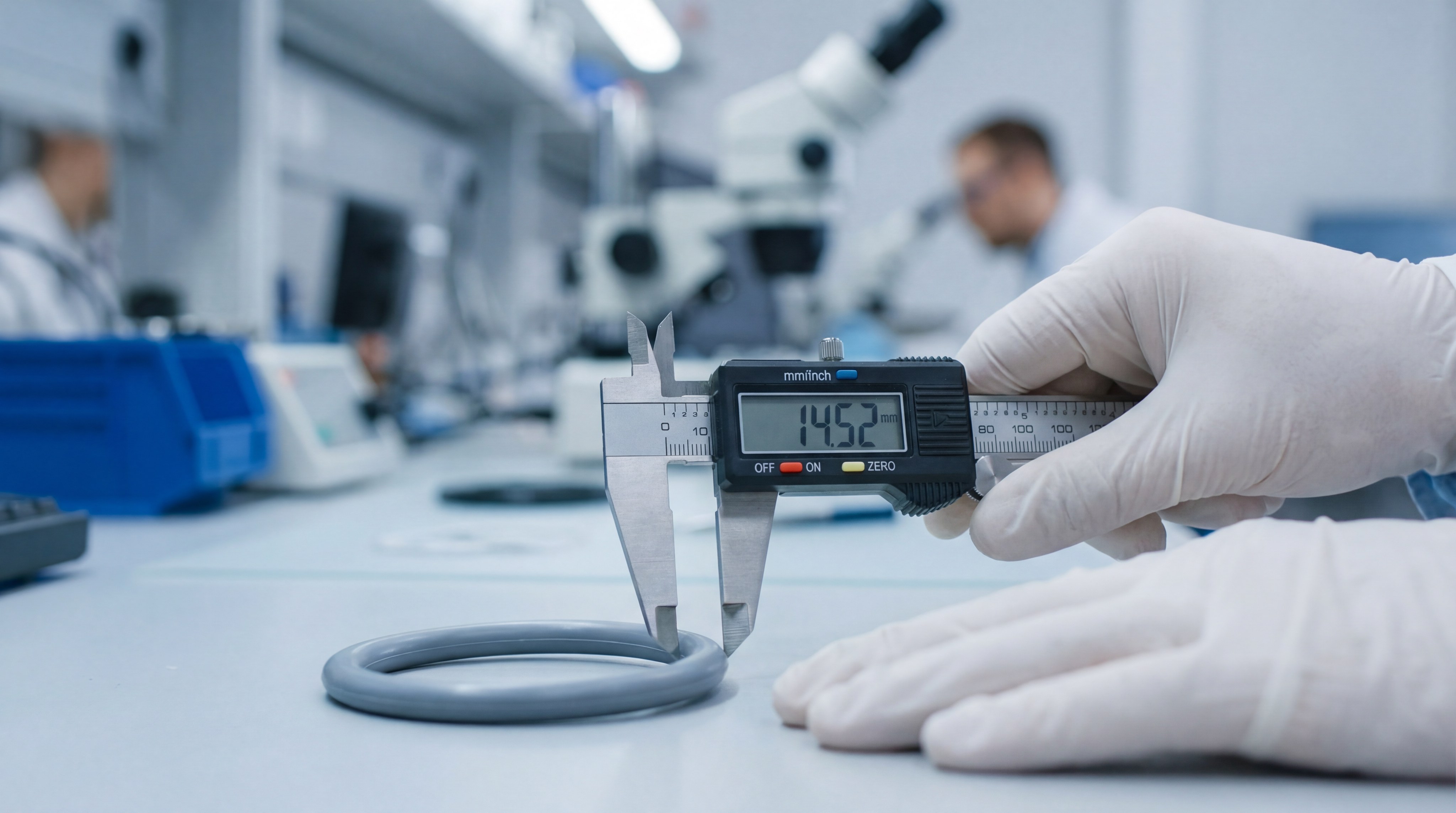
Finished bowls are often post-cured in industrial ovens for several hours to eliminate residual volatiles. This process ensures the product is completely odorless and safe for sensitive pet noses while meeting high-end export requirements.
Rigorous Functional Verification
A comprehensive inspection protocol catches defects before they reach your warehouse. The truth is, one bad batch can destroy a brand’s reputation overnight.
- Pull tests for suction strength.
- Dimensional checks against 3D models.
- Visual inspection for surface bubbles.
Key Takeaway: Implementing a multi-stage quality control process is the only way to guarantee consistent safety and performance for every unit.
| QC Check | Tools Used | Pass Criteria |
|---|---|---|
| Hardness Test | Durometer | Within ±5 Shore A |
| Odor Check | Human Sense / Lab | Neutral / No VOCs |
| Suction Test | Pull Gauge | 10kg+ retention |
Standardizing these inspections across every production run provides the transparency needed for international pet brands to scale confidently.
9. How to Scale Your Custom Silicone Production?
Scaling your production requires a clear understanding of Minimum Order Quantities (MOQs) and the lead times associated with mass manufacturing. Partnering with a Custom Silicone factory allows you to move from prototypes to batches of 5,000 or 10,000 units with consistent pricing.
Branding and packaging solutions are also part of the scaling process. A one-stop manufacturer can provide laser-engraved logos and custom-printed retail boxes to ensure your product is shelf-ready upon arrival.
Understanding the Production Timeline
Managing expectations for delivery is crucial for successful retail launches. In simple terms, you need a partner who can meet tight deadlines without sacrificing quality.
- Sampling phase: 5-7 days.
- Mass production: 15-25 days.
- Logo and package design support.
Key Takeaway: Professional scaling involves optimizing the entire supply chain, from raw material procurement to final retail packaging.
| Production Stage | Typical Duration | Major Focus |
|---|---|---|
| Tooling | 15 – 25 Days | Precision & Durability |
| Mass Molding | 2 – 3 Weeks | Consistency & Output |
| Packaging | 5 – 10 Days | Brand Presentation |
Effective project management during these stages ensures that your stock levels remain consistent even during peak holiday seasons.
10. Why Choose a Dongguan Custom Silicone Partner?
Dongguan is the global hub for silicone manufacturing, providing unparalleled access to advanced technology and high-quality raw material suppliers. A Custom Silicone partner in this region offers a one-stop solution that includes design, mold making, and global logistics under one roof.
Integrated factories reduce communication risks and speed up the time-to-market. Choosing an ISO 9001 certified partner ensures that every step of the manufacturing process is documented, repeatable, and transparent.
The Power of an Integrated Factory
Working with an all-in-one facility eliminates the quality drift that occurs when moving parts between multiple vendors. Believe it or not, this can save you thousands of dollars in logistics and quality management.
- Fast access to premium material grades.
- Advanced LSR and overmolding equipment.
- Experienced export documentation support.
Key Takeaway: A specialized Dongguan partner provides the technical expertise and scale needed to dominate the competitive pet product market.
| Capability | In-House Partner | Split Suppliers |
|---|---|---|
| Responsiveness | High (One team) | Low (Fragmented) |
| Quality Risk | Controlled | High (Handoffs) |
| Cost Control | Optimized | Multiple Margins |
Partnering with a focused manufacturer allows you to focus on marketing and sales while the technical complexities are handled by experts.
Manufacturing a successful custom silicone slow feeder requires the perfect blend of ergonomic design, certified materials, and precision engineering. We solve the challenges of slow feeding safety, bacterial hygiene, and product durability so your brand can provide the very best for pet health. Our vision is to empower global pet brands with high-performance, factory-direct silicone solutions that enhance the bond between pets and their owners. To start your next project with a dedicated manufacturing partner, contact us today.
FAQ
Can I customize the color to match my brand’s specific palette?
Yes. We can match any Pantone or RAL color by mixing food-safe pigments directly into the raw silicone before the molding process.
What is the best molding method for complex maze patterns?
LSR Injection molding. It uses high pressure to ensure the liquid silicone perfectly fills every intricate ridge and channel without air pockets.
How do I know if the silicone is truly food-grade?
It depends on the certification. We provide full material traceability and official test reports for FDA and LFGB compliance for every batch produced.
Can I add a suction base to my existing bowl design?
Yes. This is achieved through a secondary molding process or by designing a dedicated overmolded base that provides high grip on flat surfaces.
How do I know if my design is ready for mass production?
We offer a free DFM (Design for Manufacturability) review. Our engineers will check your CAD files for draft angles and wall thickness to ensure a high-yield production run.