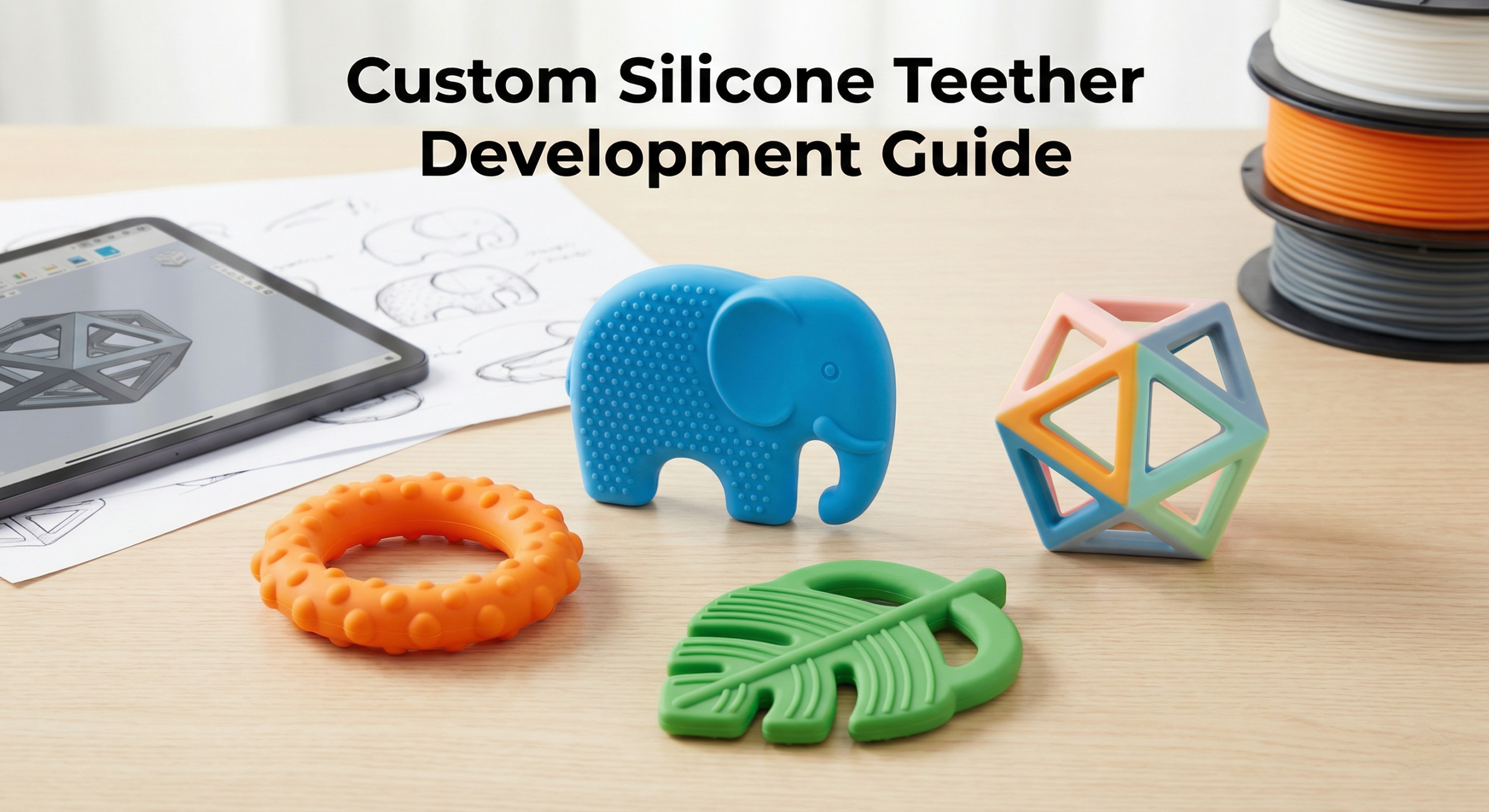
Successful custom teether development requires a strategic blend of regulatory compliance, child-safe material selection, and precision manufacturing. Many businesses enter the baby product market only to find their designs rejected due to safety violations or high production costs. You might face the daunting reality of manufacturing defects or material purity issues that can ruin a brand’s reputation overnight. By following this comprehensive guide, you can navigate these complexities and launch a high-quality Custom Silicone Teether that meets international standards.
Why is custom teether development a smart move?
Investing in custom development is a smart move because it allows brands to capture the growing demand for safe, sustainable, and functional infant products. Developing a Custom Silicone Teether ensures you control every aspect of the user experience, from ergonomic grip to soothing textures. This proactive approach helps you stand out in a saturated market where parents prioritize safety over cost.
Are teethers essential for infant oral development?
Teethers are vital because they provide the necessary counterpressure to soothe gums while a baby’s teeth are erupting. They also play a significant role in developing oral motor skills by encouraging jaw movement and tongue coordination.
Here is the kicker:
- They help babies explore different sensory inputs safely.
- Proper design prepares the mouth for complex feeding tasks later.
- Counterpressure reduces infant irritability during peak teething phases.
Is the market for silicone baby products growing?
The global market is expanding rapidly as more parents shift away from plastics toward eco-friendly, bacteria-resistant materials. Modern consumers look for durability and chemical purity that only high-grade silicone can provide consistently.
Make no mistake:
- Demand for BPA-free and phthalate-free items is at an all-time high.
- Silicone’s temperature resistance makes it ideal for sterilization.
- Sustainable manufacturing practices are now a primary buying trigger.
Key Takeaway: Custom development allows for a perfect balance between infant developmental needs and modern market trends.
| Feature | Impact on Brand | Benefit to Infant |
|---|---|---|
| Custom Geometry | Unique Market Identity | Improved Ergonomic Grip |
| Material Choice | Higher Trust Rating | Toxic-Free Oral Safety |
| Texture Design | Product Differentiation | Targeted Gum Relief |
This data demonstrates how custom features simultaneously serve both the business goals and the end-user’s physical needs.
Does your brand really need a custom silicone teether?
Your brand needs a bespoke solution to avoid the “me-too” product trap that limits long-term growth and pricing power. Creating a Custom Silicone Teether allows you to integrate specific brand aesthetics that generic wholesale products simply cannot offer. This level of customization builds deep consumer trust and encourages repeat purchases within your product ecosystem.
Can custom designs differentiate your brand?
Custom designs allow you to move beyond basic circular shapes into themed or educational geometries that captivate parents. You can incorporate unique 3D textures that serve as a visual signature for your entire baby care line.
The truth is:
- Unique shapes prevent your product from being compared solely on price.
- Custom colors can align with your brand’s seasonal palettes.
- Specialized textures can be marketed as “exclusive” soothing technology.
Does customization improve user safety and comfort?
Customization lets you tailor the weight and dimensions of the product specifically for the 3-to-6-month age range. You can ensure the product is lightweight enough for tiny hands while maintaining structural integrity against aggressive chewing.
But wait, there’s more:
- You can design specific “stop” points to prevent choking hazards.
- Material hardness (Durometer) can be adjusted for different teething stages.
- Integrated loops can allow for easy attachment to pacifier clips.
Key Takeaway: Customization is the most effective way to solve specific safety and branding challenges that stock items ignore.
| Customization Type | Business Value | User Experience |
|---|---|---|
| Proprietary Textures | Patent Opportunities | Better Sensory Input |
| Ergonomic Handles | Positive Reviews | Reduced Hand Fatigue |
| Custom Hardness | Niche Targeting | Stage-Specific Relief |
Careful customization transforms a simple toy into a sophisticated tool that justifies a premium market position.
How can you design a teether that babies actually love?
Designing a successful Custom Silicone Teether requires focusing on sensory engagement through varied textures and safe, vibrant colors. You must balance the visual appeal that attracts the parent with the tactile functionality that keeps the baby occupied. A well-designed product should feel natural in a baby’s mouth while providing multiple surfaces for gum stimulation.

What design factors impact sensory exploration?
The combination of ridges, bumps, and smooth surfaces creates a rich tactile environment that aids in cognitive development. Vivid, high-contrast colors also help infants develop visual tracking and recognition skills during play.
Think about this:
- Different textures provide varying levels of pressure to the gums.
- Open-frame designs are easier for infants to grasp and manipulate.
- Soft-touch finishes provide a comforting mouthfeel that reduces stress.
Are you following the small parts regulation?
Safety is paramount, and your design must pass the “choke tube” test to ensure no components can be inhaled or swallowed. You must avoid sharp edges and ensure that any multi-part designs are permanently bonded via overmolding.
Don’t overlook this:
- Designs must comply with CPSC and ASTM F963-17 physical standards.
- Every protrusion must be tested for bite-force tear resistance.
- The “small parts” cylinder is the ultimate benchmark for design safety.
Key Takeaway: Sensory appeal must always be secondary to strict adherence to physical safety and “small parts” regulations.
| Design Element | Sensory Purpose | Safety Standard |
|---|---|---|
| Surface Ridges | Gum Stimulation | Tear Resistance |
| Hollow Center | Easy Gripping | Choke Prevention |
| Vibrant Pigments | Visual Engagement | Non-Toxic Purity |
This comparison highlights how every design choice must serve a dual purpose of infant enjoyment and strict safety compliance.
Which materials guarantee your teether is 100% safe?
The only way to guarantee 100% safety is by using platinum-cured, medical-grade, or food-grade Custom Silicone Teether materials. These materials are naturally inert, meaning they do not leach chemicals even when exposed to high heat or acidic baby saliva. Selecting high-purity raw materials is the first and most critical step in avoiding product recalls and legal liabilities.
Why is food-grade silicone the industry standard?
Food-grade silicone is the standard because it is hypoallergenic and resistant to the growth of mold, fungus, and bacteria. Its high thermal stability allows parents to boil the teether for sterilization without damaging the product’s structure.
Here is the kicker:
- It contains no BPA, phthalates, lead, or PVC.
- The material remains flexible and soft across a wide temperature range.
- It is dishwasher and freezer safe for versatile home use.
How do you perform a professional FDA purity test?
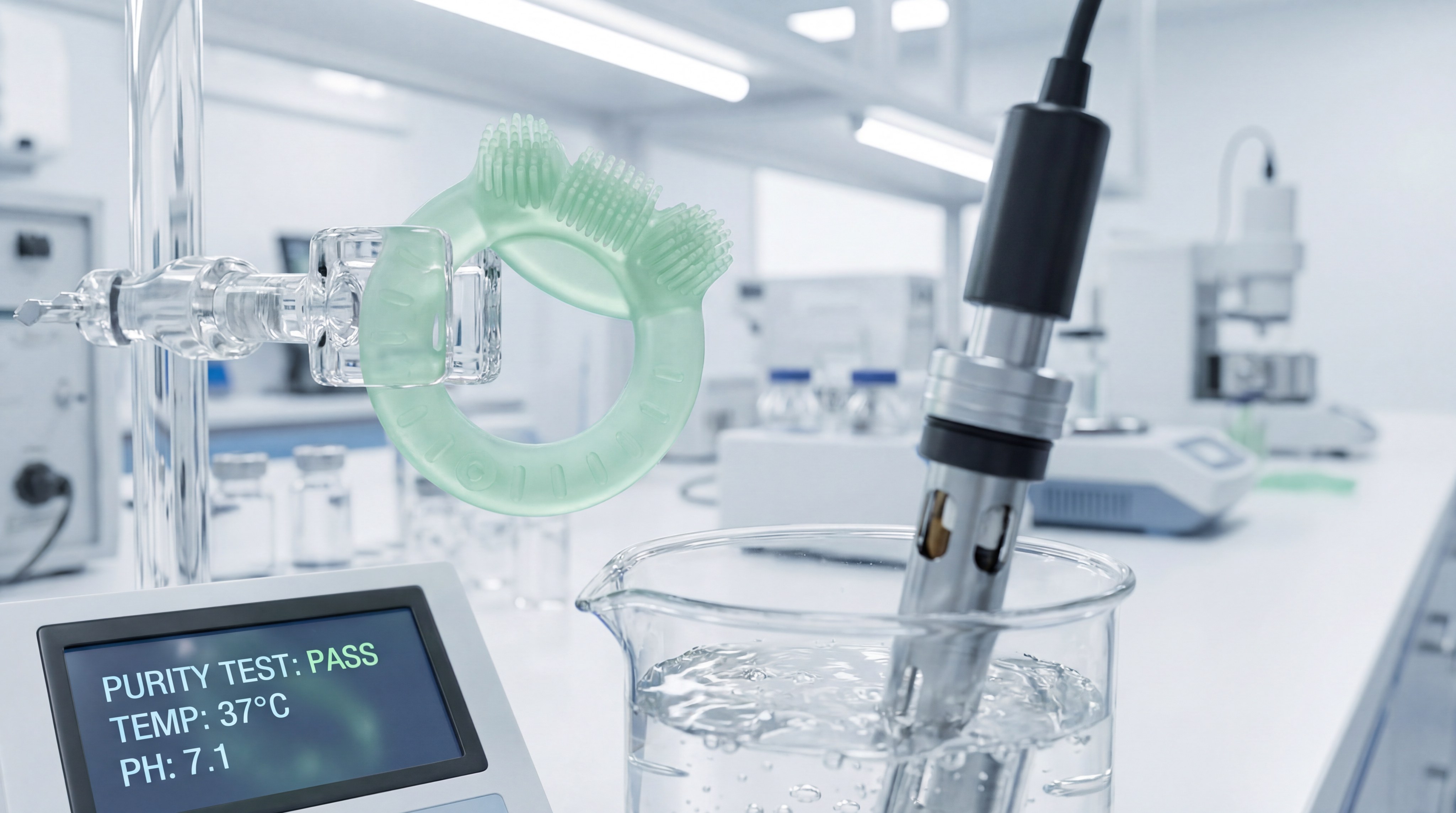
Professional testing involves extraction tests where the silicone is submerged in various solvents to check for chemical migration. You should work with third-party labs like SGS or TUV to verify that your material meets FDA or LFGB limits.
But that’s not all:
- Sensory tests ensure the material has no weird odors or tastes.
- Heavy metal screening checks for traces of lead or mercury.
- Extraction limits are measured in milligrams per square inch.
Key Takeaway: Material purity is non-negotiable and must be verified through rigorous laboratory testing and certifications.
| Material Type | Purity Level | Primary Use Case |
|---|---|---|
| Food-Grade | High (FDA/LFGB) | Standard Retail Teethers |
| Medical-Grade | Very High (USP VI) | Hospital-Grade/Premium |
| Platinum-Cured | Exceptional | No Byproducts/No Odor |
Choosing the right purity level ensures your product remains safe under the most demanding use conditions.
What is the best molding process for your teether?
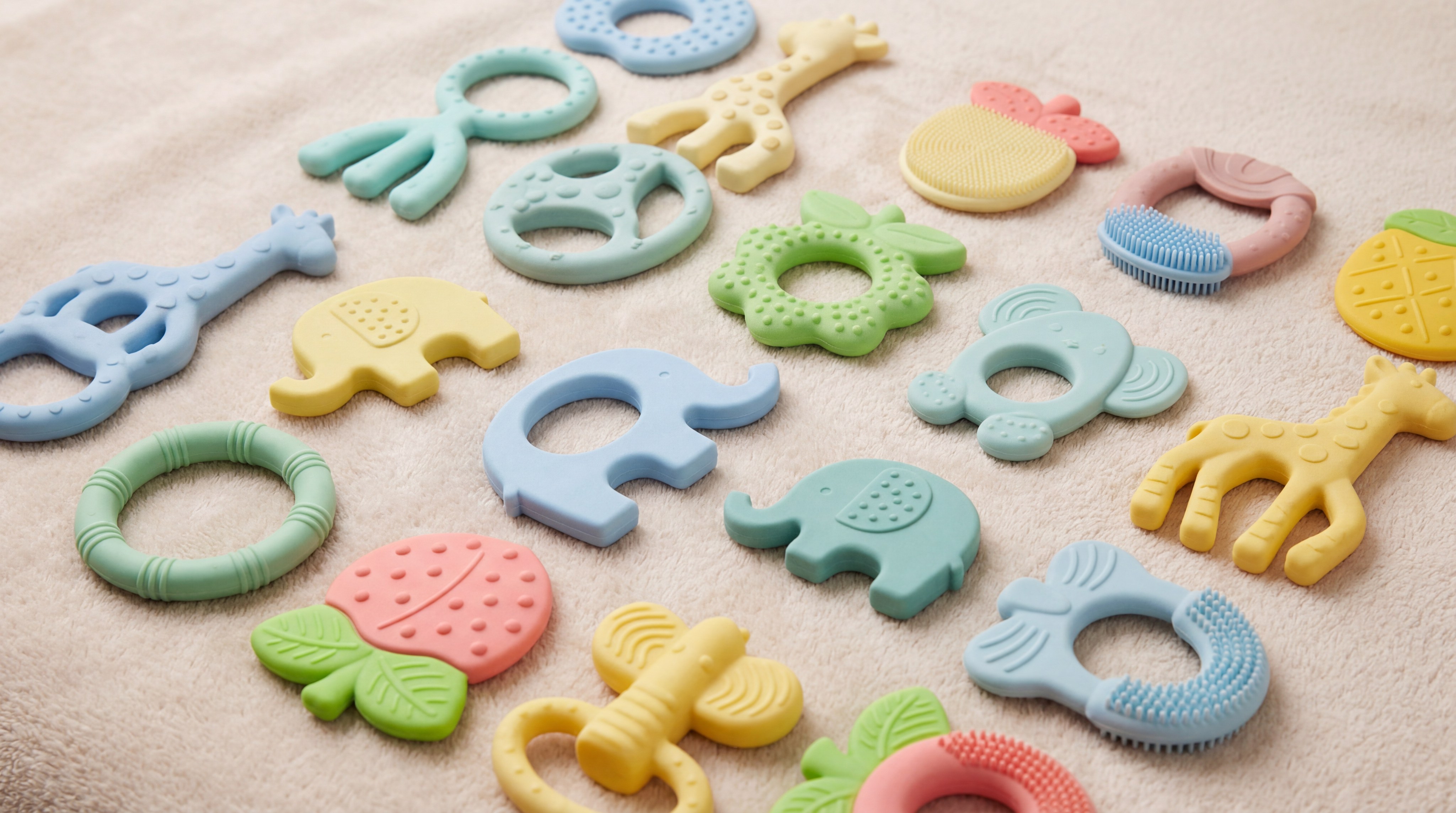
The best molding process depends on your design complexity and production volume, with LSR injection and compression molding being the primary choices. For a high-precision Custom Silicone Teether, Liquid Silicone Rubber (LSR) injection molding offers the best results for intricate details and high-speed production. Understanding these processes helps you balance initial tooling costs with long-term unit price efficiency.
When should you choose LSR vs. compression molding?
LSR is best for high-volume, complex parts that require automated production and minimal manual finishing. Compression molding is more cost-effective for simpler designs or smaller initial pilot runs where tooling budget is limited.
Check this out:
- LSR provides superior consistency and tighter dimensional tolerances.
- Compression molding has lower upfront mold costs but higher labor.
- Automated LSR systems reduce the risk of human contamination.
Is overmolding the right choice for multi-color teethers?
Overmolding is the preferred method for creating multi-color or multi-material teethers without using dangerous adhesives. This process allows you to bond two different silicone colors together permanently, ensuring the pieces never separate.
Here’s the deal:
- It eliminates the need for surface printing which can flake off.
- Overmolding creates a seamless, hygienic bond between parts.
- You can combine different hardness levels in a single product.
Key Takeaway: Choose LSR injection for high-precision, high-volume projects, and use overmolding for safe multi-color aesthetics.
| Process | Precision | Cost per Unit | Ideal For |
|---|---|---|---|
| LSR Injection | Very High | Low (High Vol) | Complex Designs |
| Compression | Moderate | Moderate | Simple Geometries |
| Overmolding | High | High | Multi-Color Sets |
The table clarifies why molding choice is the biggest driver of both product quality and project profitability.
How do you verify your teether meets safety standards?
Verifying safety standards requires a combination of third-party certifications and a rigorous in-house Custom Silicone Teether inspection protocol. You must ensure your manufacturer adheres to ISO 9001 standards and maintains a clean production environment. Documenting every step of the verification process is essential for compliance with international toy safety regulations.
What are the critical ASTM and CPSC requirements?
The ASTM F963-17 standard covers everything from flammability and heavy metal content to physical integrity under stress. Compliance with these standards is mandatory for any teething toy sold in major markets like the United States.
It gets better:
- Compression tests ensure the teether won’t shatter under pressure.
- Tension tests verify that no small parts can be pulled off.
- Chemical screening checks for restricted plasticizers and lead.
Why is batch traceability vital for product safety?
Batch traceability allows you to track every teether back to the specific raw material lot and production date in case of a quality issue. This system is crucial for managing targeted recalls and identifying the root cause of any manufacturing defects.
Consider this:
- Production logs should include machine settings and operator ID.
- Material certifications must be kept on file for every batch.
- Outgoing quality control (OQC) ensures only 100% perfect units ship.
Key Takeaway: Safety verification is a continuous process that involves both international certifications and granular batch tracking.
| Verification Step | Standard/Method | Goal |
|---|---|---|
| Chemical Testing | FDA/LFGB Lab | Toxic-Free Material |
| Physical Testing | ASTM F963 Choke Tube | Choke Hazard Prevention |
| Quality Audit | IQC/IPQC/FQC | Batch Consistency |
Strict verification protocols protect your business from the catastrophic costs associated with safety failures.
What should you look for in a silicone teether factory?
When selecting a factory, you should prioritize those with in-house tooling capabilities and a proven track record in manufacturing Custom Silicone Teether products. A factory that controls the entire process—from CNC mold making to final packing—can ensure better quality control and faster lead times. You must also verify their commitment to cleanliness, as baby products require a dust-free production environment.
Does the factory have in-house tooling capabilities?
In-house tooling means the manufacturer can quickly iterate on designs and fix mold issues without waiting for outside vendors. This capability significantly reduces the time between the prototype stage and mass production.
Make no mistake:
- It ensures better alignment between the mold and the injection machine.
- Design for Manufacturing (DFM) suggestions can be implemented instantly.
- Tooling maintenance is performed regularly to prevent flash or defects.
How do you conduct a thorough quality audit?
A quality audit involves visiting the facility to inspect their raw material storage, production lines, and testing equipment. You should look for a clear three-stage quality control system: Incoming (IQC), In-Process (IPQC), and Final (FQC).
The kicker is:
- Check for ISO 9001 certifications and cleanroom standards.
- Verify that they use CCD visual inspection for precision parts.
- Ask for historical batch records to check their traceability systems.
Key Takeaway: A reliable factory must offer integrated tooling services and a transparent, multi-stage quality control system.
| Factory Attribute | Why It Matters | Red Flag |
|---|---|---|
| In-House CNC | Faster Iterations | Outsourced Tooling |
| Cleanroom Setup | Prevents Contamination | Dusty Workshop Floor |
| Full Traceability | Recall Management | Missing Material Logs |
Working with the right partner eliminates the most common manufacturing bottlenecks and quality risks.
How can you optimize your teether production costs?
You can optimize production costs by using Design for Manufacturing (DFM) to simplify your Custom Silicone Teether geometry without sacrificing functionality. Small changes, such as optimizing wall thickness, can drastically reduce material waste and cycle times during molding. Strategic planning during the design phase is far more effective than trying to cut costs after the molds are already made.
Does DFM reduce your long-term manufacturing costs?
DFM reduces costs by identifying complex features that increase mold complexity or lead to high scrap rates. By simplifying the parting lines and ensuring uniform wall thickness, you can achieve a more consistent and faster production cycle.
Think about this:
- Uniform walls prevent “sink marks” and uneven curing.
- Proper draft angles allow parts to eject easily without damage.
- Reduced material volume lowers the raw material cost per unit.
How do mold cavities affect your unit price?
The number of cavities in a mold determines how many teethers are produced in a single machine cycle. While a high-cavity mold has a higher initial cost, it significantly lowers the labor and machine time cost for each individual unit.
The secret is:
- 1-cavity molds are great for prototypes but expensive for bulk.
- 4-to-16-cavity molds are the sweet spot for medium-scale brands.
- Fully automated high-cavity molds are essential for mass retail.
Key Takeaway: Optimization happens in the design phase by balancing part complexity with high-cavity mold efficiency.
| Cost Driver | Strategy for Savings | Risk of Cutting |
|---|---|---|
| Mold Cavities | Increase for High Volume | High Initial Investment |
| Part Complexity | Simplify Non-Essential Detail | Lower Market Appeal |
| Material Grade | Stick to High Quality | Safety Recalls (High Cost) |
Smart optimization focuses on manufacturing efficiency rather than compromising on material quality or safety.
Which packaging solutions work best for your teether?
The best packaging solutions for a Custom Silicone Teether combine high-impact retail aesthetics with strict hygiene protection. Parents are increasingly looking for eco-friendly, plastic-free packaging that reflects the safe, natural qualities of the silicone product inside. Your packaging is not just a container; it is the first point of contact that communicates your brand’s commitment to quality and safety.
Can eco-friendly packaging enhance your brand value?
Using recycled cardboard or compostable materials aligns your brand with the sustainability values of modern millennial parents. Minimalist packaging that uses fewer plastics can also reduce your overall shipping weight and carbon footprint.
But wait, there’s more:
- FSC-certified paper shows a commitment to responsible forestry.
- Clear windows made from corn-starch (PLA) allow visibility without PVC.
- Soy-based inks are safer and more environmentally friendly.
Does your packaging protect the teether during shipping?
Packaging must be robust enough to prevent the silicone from attracting dust or being deformed during transit and storage. Sealed blister packs or secure boxes ensure that the product remains sterile until the moment it reaches the baby.
Here is the deal:
- Tamper-evident seals build immediate consumer confidence.
- Clear sterilization instructions should be printed on the back.
- Proper box sizing prevents items from shifting and getting scuffed.
Key Takeaway: Packaging should be sustainable and functional, serving as both a branding tool and a hygiene barrier.
| Packaging Type | Sustainability | Retail Appeal |
|---|---|---|
| Cardboard Box | High | High (Premium Look) |
| PLA Blister | Medium | Very High (Visibility) |
| Cotton Pouch | Very High | High (Reusable Value) |
Choosing the right packaging ensures your product arrives in perfect condition while reinforcing your brand’s ethical stance.
How do you scale your custom teether production?
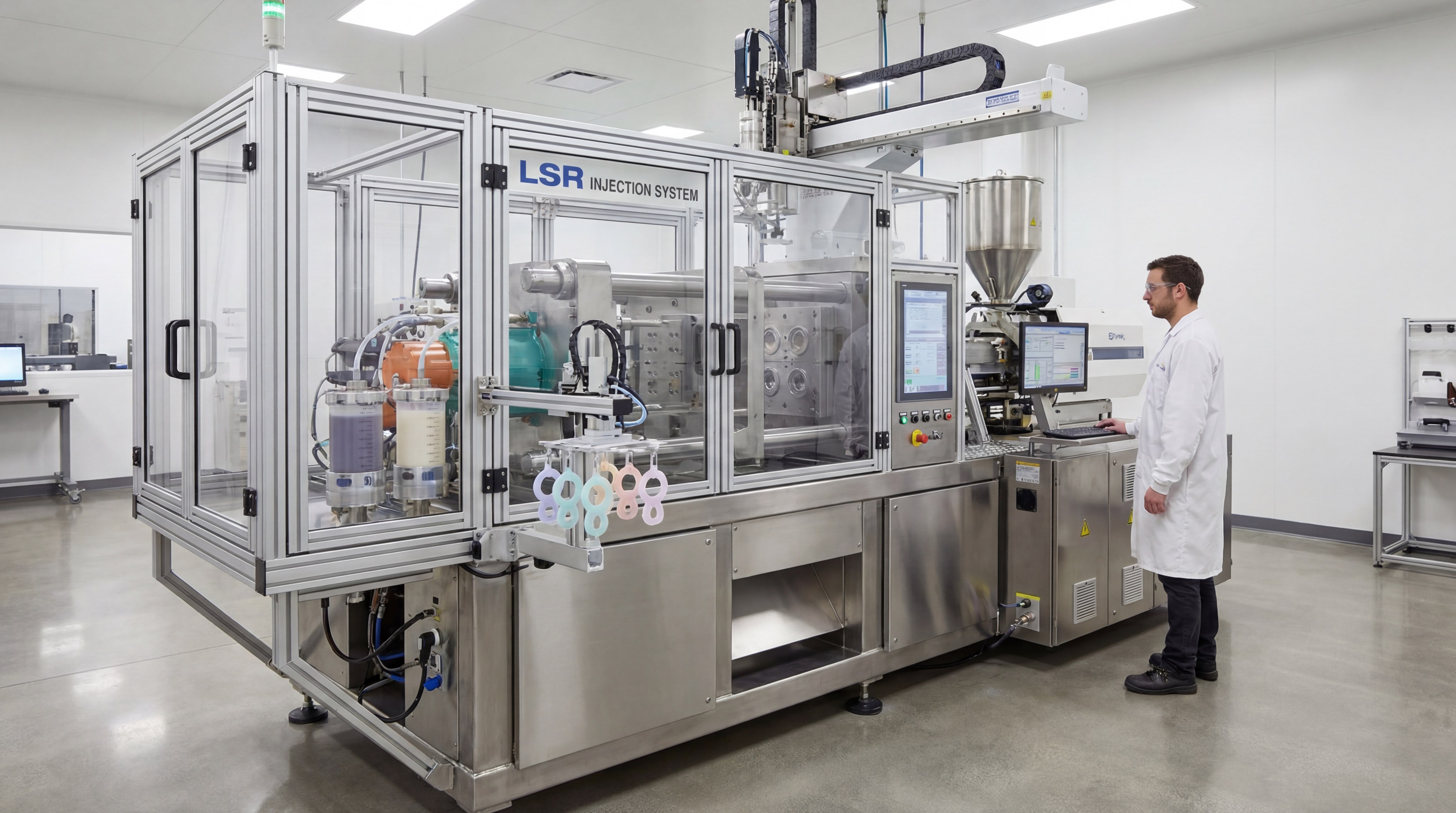
Scaling your Custom Silicone Teether production requires transitioning from manual processes to fully automated LSR injection molding systems. As order volumes grow, you must maintain strict quality standards by standardizing your inspection protocols across multiple production shifts. Scaling is not just about making more; it’s about making more with the same level of precision and safety as your first batch.
When is the right time to move to high-volume molds?
You should move to high-volume molds once your monthly sales forecasts consistently exceed the capacity of your initial pilot tooling. High-volume molds allow for greater automation, which reduces labor costs and minimizes human error in the production process.
Consider this:
- Moving too early can tie up capital in expensive steel tools.
- Moving too late leads to stockouts and missed retail opportunities.
- Look for a 60% reduction in unit labor cost as a scaling signal.
How do you maintain quality while scaling fast?
Quality maintenance during scaling relies on automated CCD camera inspections and standardized IPQC (In-Process Quality Control) checklists. You must also ensure your raw material supply chain is robust enough to provide consistent purity across larger volumes.
The kicker is:
- Automated inspection catches defects that tired humans might miss.
- Regular mold maintenance prevents flash as cycles increase.
- Quarterly factory audits ensure standards don’t slip over time.
Key Takeaway: Successful scaling balances high-volume automation with rigorous, technology-driven quality control protocols.
| Scaling Phase | Production Method | Quality Strategy |
|---|---|---|
| Pilot Run | Compression/1-Cavity | Manual 100% Check |
| Growth | LSR/4-Cavity | IPQC Sampling |
| Mass Market | Automated LSR/16-Cavity | CCD Visual Inspection |
Standardizing your growth path ensures that your brand reputation remains intact even as you reach global retail shelves.
*
Navigating the Custom Teether Journey
This guide has addressed the most critical pain points in developing a successful silicone teether, from navigating strict safety regulations to optimizing manufacturing costs. By focusing on material purity, sensory design, and precision molding, you can transform a simple concept into a market-leading infant product. Our team provides the manufacturing expertise and rigorous quality control needed to bring these high-stakes projects to life. We believe that every child deserves the safest possible start, and our mission is to empower brands with the technical tools to provide it. If you are ready to move from design to production, contact us today to start your custom project.
*
Frequently Asked Questions
Can I use any silicone for my teether design?
No, you must exclusively use food-grade or medical-grade silicone that is FDA or LFGB certified. Using standard industrial silicone can lead to chemical leaching and severe safety violations.
What’s the best way to test if my teether is a choking hazard?
The industry standard is the “small parts cylinder” test, which mimics the size of an infant’s throat. If any part of your teether fits entirely within this tube, it is considered a prohibited choking hazard.
How do I know if I should use LSR or compression molding?
LSR is the better choice for high-volume, complex designs that require extreme precision and automation. Compression molding is generally preferred for simpler shapes or when you are testing the market with a smaller initial budget.
Can I print my logo directly onto the silicone surface?
While possible, it is not recommended for teethers as the ink can flake off and be ingested. The best practice is to use embossed or debossed logos integrated directly into the mold design for permanent, safe branding.
How do I know if my factory is actually following safety protocols?
You should request current ISO 9001 certifications and ask for specific batch records that show their IQC, IPQC, and FQC results. A reliable manufacturer will have transparent documentation for every material lot and production run.