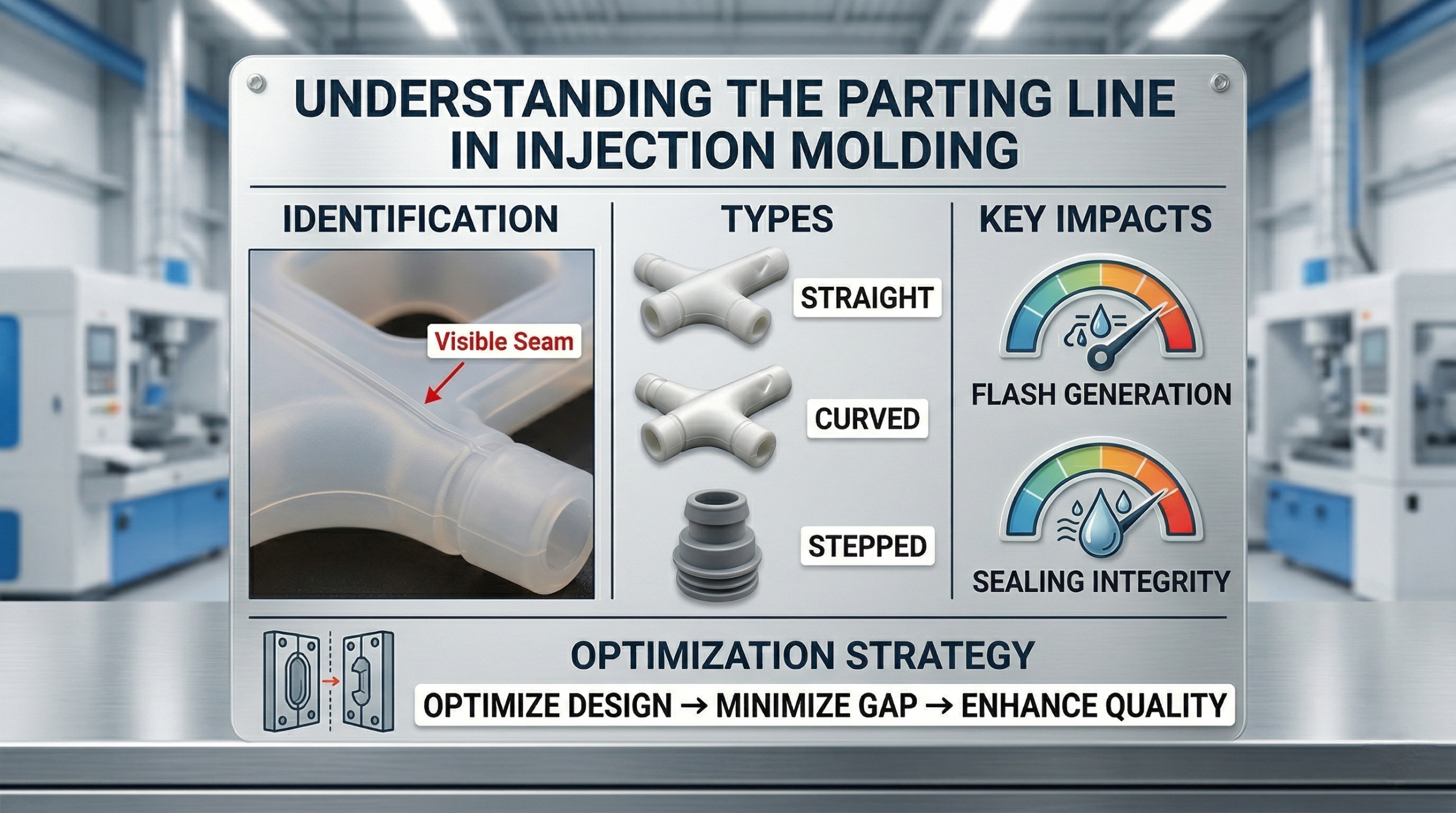
The parting line is the exact visible seam where the two halves of a mold meet and separate during the manufacturing process. Have you ever noticed an unsightly ridge ruining the aesthetic of a premium component? This minor detail can cause major headaches, leading to sealing failures and rejected batches that hurt your bottom line. Fortunately, improving the mold design provides a permanent fix for this issue. Mastering silicone Injection Molding helps you consistently produce flawless, high-quality products that meet strict industry standards.
What Exactly Is the Parting Line in silicone Injection Molding?
The parting line is the exact physical boundary where the core and cavity of a mold separate. In the precise world of silicone Injection Molding, identifying this seam early prevents structural weaknesses and cosmetic flaws. You need strict oversight from the beginning to manage how materials behave under pressure.
How Do Mold Halves Create This Seam?
Here’s the deal: when two steel mold plates press together, a microscopic gap always remains. Liquid material flows into this cavity and slightly seeps into the gap, curing into a visible trace on the final part.
- Tooling accuracy determines the gap size.
- High clamping force reduces material seepage.
- Surface finish dictates how visible the trace becomes.
Why Does Liquid Silicone Behavior Matter?
You might be wondering: why is this material so prone to seeping? Liquid silicone possesses an incredibly low viscosity before curing, allowing it to slip into clearances as small as 0.005mm. Properly designing the gates and vents manages this flow to keep the seam minimal.
Key Takeaway: Understanding the physics behind mold separation and material flow empowers you to predict and control seam placement effectively.
| Component | Function | Impact on Seam |
| Mold Core | Forms internal shapes | Defines inner seam location |
| Mold Cavity | Forms external shapes | Defines outer seam visibility |
| Clamping Unit | Applies closing pressure | Reduces gap width |
| This basic breakdown highlights how mechanical components dictate the physical appearance of your product. |
What Are the Types of Parting Lines in Silicone Products?
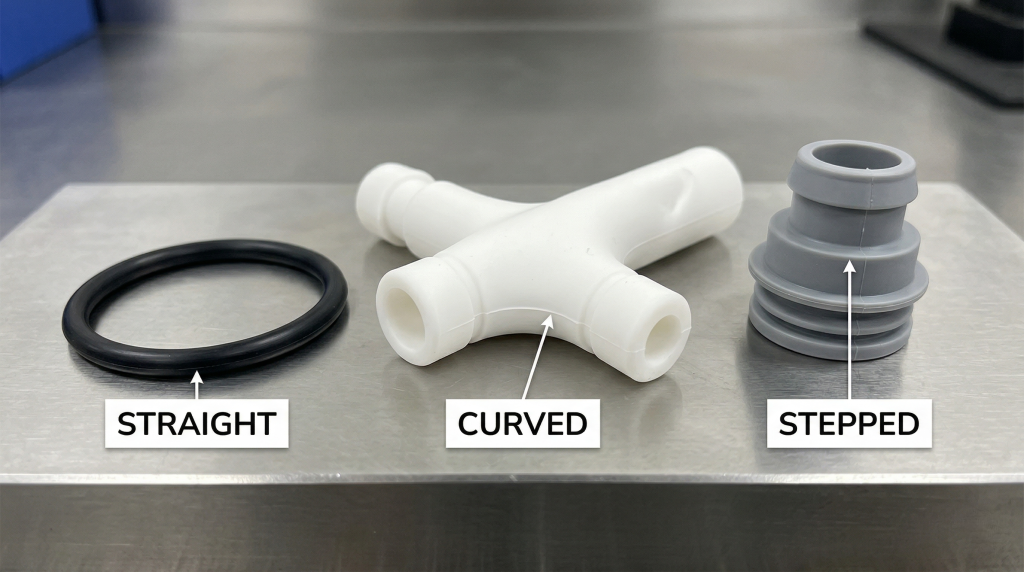
The structural design of the component dictates the specific geometry of the parting seam. Utilizing advanced silicone Injection Molding techniques allows engineers to adapt the seam to match the contours of complex parts perfectly. Choosing the correct style protects both the function and the visual appeal of the finished piece.
When Do You Use a Straight or Vertical Line?
What’s the catch? While straight lines are the easiest to manufacture, they often run directly across highly visible flat surfaces. They work best for simple gaskets, O-rings, and basic structural components where aesthetics take a back seat.
- Simplifies the CNC machining process.
- Reduces overall tooling costs.
- Speeds up the demolding phase.
What Makes Curved Lines Necessary?
But here’s the kicker: ergonomic products like wearables or medical devices feature organic, sweeping shapes that reject straight lines. The seam must follow the natural curve of the product to maintain a seamless user experience.
Key Takeaway: Matching the seam type to the geometric complexity of your product prevents awkward visual breaks and functional weaknesses.
| Seam Type | Best Application | Manufacturing Complexity |
| Straight | O-rings, basic seals | Low |
| Curved | Wearables, curved cases | Medium |
| Stepped | Complex multi-level parts | High |
| Selecting the appropriate configuration balances aesthetic demands with tooling expenses. |
What Key Factors Contribute to Parting Line Formation?
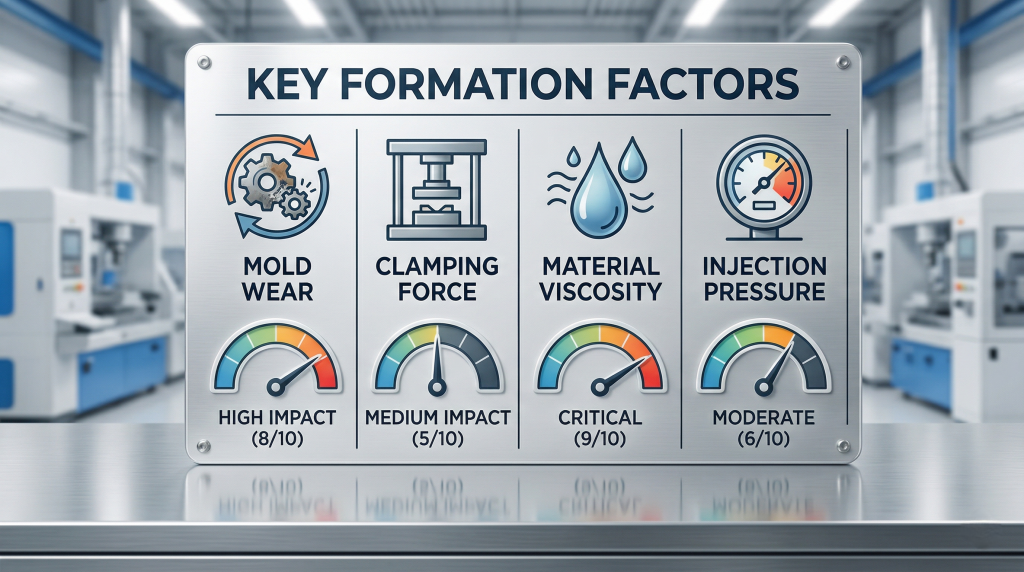
Several physical variables interact during the manufacturing cycle to create and emphasize this seam. Maintaining strict control over silicone Injection Molding parameters minimizes the prominence of the trace on your final parts. Even slight deviations from the standard can ruin a perfect batch.
How Does Mold Wear Impact the Seam?
What’s the real story? Steel molds degrade over hundreds of thousands of cycles, causing the mating surfaces to lose their perfect flush fit. As the gap widens over time, the resulting seam becomes thicker and more pronounced.
- Abrasive materials accelerate surface degradation.
- High-pressure clamping causes metal fatigue.
- Poor maintenance leads to rust and pitting.
Why Do Molding Process Settings Matter?
Ready for the good part? You hold the power to adjust injection speed, pressure, and temperature right at the control panel. Dialing in these parameters prevents the ultra-low viscosity silicone from flashing out of the cavity bounds.
Key Takeaway: Proactive tooling maintenance and precise machine calibration keep the parting seam nearly invisible throughout the production run.
| Factor | Consequence of Neglect | Correction Method |
| Mold Wear | Thicker, rougher seams | Routine resurfacing |
| Injection Speed | Material over-packing | Calibrate machine settings |
| Clamping Force | Flash generation | Increase tonnage |
| Monitoring these specific variables protects the lifespan of your tooling and the quality of your output. |
Why Does the Parting Line Affect Product Quality?
The placement of the seam directly influences how a part performs in real-world scenarios. Through precision silicone Injection Molding, you can strategically hide this trace away from critical interaction points. Ignoring its placement puts the entire application at risk.
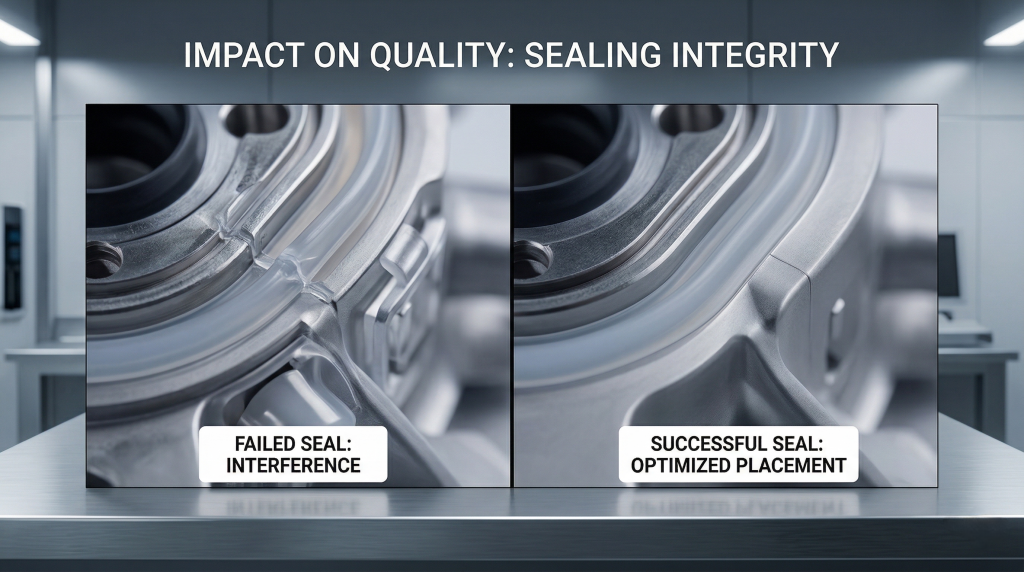
How Does It Affect Sealing Integrity?
This is where it gets interesting: if a seam crosses an active sealing face, liquids and gases will eventually leak through that microscopic ridge. Moving the seam to a non-functional edge guarantees a watertight seal for critical components.
- Protects sensitive electronics from water ingress.
- Maintains pressure in pneumatic systems.
- Prevents contamination in medical devices.
Can It Impact Your Manufacturing Costs?
Here’s the deal: placing the seam in a complex, hard-to-reach area forces toolmakers to design expensive side actions and sliders. A thoughtfully placed line simplifies the mold architecture and slashes upfront tooling investments.
Key Takeaway: Strategic seam placement simultaneously improves physical part performance and dramatically lowers your tooling expenses.
| Performance Area | Poor Placement Risk | Ideal Placement Strategy |
| Sealing | Fluid or gas leakage | Move to non-active edge |
| Aesthetics | Ugly visual ridges | Hide along natural contours |
| Cost | Expensive mold sliders | Place on widest contour |
| Strategic placement safeguards functionality while keeping your capital expenditure in check. |
What Are the Core Principles for Effective Parting Line Design?
Designing the mold requires balancing mechanical limitations with the desired physical output. Successful silicone Injection Molding projects always start with a robust design phase that anticipates manufacturing hurdles. A well-planned boundary makes demolding effortless.
How Do You Balance Demolding and Mold Size?
You might be wondering: how do engineers decide exactly where the mold should split? They locate the widest cross-section of the part to allow the cured silicone to eject without getting stuck.
- Eliminates the need for aggressive pulling.
- Reduces tearing of soft silicone.
- Keeps the mold footprint as compact as possible.
Why Is Venting Efficiency Necessary?
What’s the catch? Air gets trapped inside the closed cavity and must escape before the liquid silicone fills the void. The parting boundary serves as the primary exit route for this displaced air, preventing ugly burn marks.
Key Takeaway: Prioritizing demolding ease and proper venting during the CAD stage eliminates the most common molding defects.
| Principle | Manufacturing Benefit | Defect Prevented |
| Widest Contour | Easy part ejection | Tearing and sticking |
| Flat Profile | Cheaper CNC machining | High tooling costs |
| End of Fill | Excellent air escape | Burn marks and voids |
| Applying these engineering principles guarantees a smoother transition from digital model to physical product. |
How Can You Perfect Parting Lines During the Manufacturing Process?
Continuous refinement on the factory floor transforms a good design into a flawless physical component. Advanced silicone Injection Molding operations rely on real-time data to tweak parameters mid-run. This dedication to precision separates amateur shops from professional partners.
What Role Do CAD Tools Play in Optimization?
But here’s the kicker: modern software simulates exactly how the liquid material will behave before any steel is cut. This flow analysis helps engineers shift the boundary line to the most advantageous position possible.
- Simulates varying injection speeds.
- Predicts air trap locations.
- Highlights potential stress concentrations.
Why Does Routine Mold Maintenance Matter?
What’s the real story? Even the most perfectly designed tool will produce bad parts if it gets covered in cured residue. Regular ultrasonic cleaning and precision polishing keep the mating surfaces completely flush.
Key Takeaway: Combining predictive software with rigorous physical maintenance keeps your production running without costly interruptions.
| Optimization Method | Application Phase | Primary Advantage |
| Mold Flow Analysis | Pre-production | Validates design choices |
| Parameter Tuning | Active production | Reduces flash instantly |
| Ultrasonic Cleaning | Post-production | Maintains metal flushness |
| Consistent application of these practices delivers a superior surface finish batch after batch. |
What Are the Common Parting Line Challenges and Their Solutions?
Mass production inevitably reveals hidden flaws that test the skill of the engineering team. Operating a silicone Injection Molding press requires quick troubleshooting to keep the defect rate near zero. Addressing these hurdles promptly saves massive amounts of raw material.
How Do You Handle Excessive Flash?
Ready for the good part? Flash occurs when liquid material bleeds outside the intended cavity space. You fix this by increasing the machine’s clamping tonnage and verifying that the steel plates are completely parallel.
- Inspect guide pins for bending.
- Clean any debris from the mating faces.
- Verify material viscosity matches the spec.
What Solves Demolding Difficulties?
This is where it gets interesting: soft parts often cling stubbornly to the wrong side of the tool. Adding proper draft angles and texturing the core side encourages the part to release exactly where intended.
Key Takeaway: Swift identification of root causes allows technicians to eliminate flash and sticking issues permanently.
| Challenge | Root Cause | Effective Solution |
| Flash | Low clamping force | Increase machine tonnage |
| Sticking | Insufficient draft | Add 1-2 degree draft angles |
| Mismatch | Worn guide pins | Replace alignment hardware |
| Implementing these targeted fixes keeps your defect rate incredibly low and protects your margins. |
How Does Tooling Precision Affect Parting Lines in Silicone Molding?
The final quality of your product directly mirrors the quality of the steel tool that shaped it. Partnering with a top-tier silicone Injection Molding facility guarantees the steel is cut with micron-level accuracy. Cheap tooling always results in highly visible, sloppy seams.
Why Is High-End CNC Machining Necessary?
Here’s the deal: standard milling machines leave microscopic chatter marks that prevent the two halves from sealing perfectly. Utilizing ultra-precise equipment guarantees a mirror-like finish that blocks liquid seepage.
- Achieves tolerances tighter than 0.01mm.
- Creates perfectly flush mating surfaces.
- Allows for highly complex geometric cuts.
How Does Precision Prevent Defects?
You might be wondering: does investing in expensive steel actually pay off? Perfect alignment stops the two halves from shifting laterally during the high-pressure injection phase, eliminating ugly mismatched seams.
Key Takeaway: Investing heavily in premium tooling equipment is the only guaranteed way to achieve a virtually invisible seam.
| Machining Level | Tolerance Capability | Seam Quality |
| Standard CNC | +/- 0.05mm | Noticeable, prone to flash |
| High-Speed CNC | +/- 0.01mm | Very fine, minimal trace |
| Mirror EDM | +/- 0.005mm | Nearly invisible |
| Upgrading to premium machining drastically elevates the cosmetic perfection of your molded components. |
Can Post-Processing Completely Eliminate a Parting Line?
Sometimes the basic molding process cannot deliver the absolute perfection required by luxury consumer goods. In the silicone Injection Molding industry, secondary operations help disguise any remaining traces of the manufacturing boundary. These extra steps add value to the final presentation.
Which Techniques Effectively Mask the Seam?
What’s the catch? You cannot easily sand soft silicone like you would hard plastic. Instead, manufacturers apply a specialized matte UV coating or use cryogenic deflashing to freeze and tumble away the microscopic edges.
- Cryogenic tumbling removes fragile flash.
- Matte sprays hide visual inconsistencies.
- Automated trimming cleanly cuts excess edges.
Are There Limitations to Grinding?
But here’s the kicker: aggressive manual trimming often damages the main body of the soft product. It requires highly trained personnel and meticulous quality control to avoid ruining the entire batch.
Key Takeaway: While post-processing refines the final look, it should never be used as a crutch to hide terrible mold design.
| Post-Process | Best Material | Primary Function |
| Cryogenic Deflashing | Soft Silicone | Removes brittle flash edges |
| UV Coating | Hard Plastics | Masks visual surface lines |
| Manual Trimming | Large Rubber | Cuts thick material bleed |
| Selecting the right finishing technique adds the final polish needed for premium retail environments. |
How Should You Choose a Manufacturer for Flawless Parting Lines?
The operational capability of your factory dictates whether your product launches successfully or suffers from constant delays. Finding a facility skilled in advanced silicone Injection Molding requires looking past the marketing fluff. You need a partner with proven, verifiable expertise.
What Certifications Should You Look For?
What’s the real story? Quality management systems like ISO 13485 and IATF 16949 prove that the factory adheres to strict process controls. These certifications guarantee that the facility continuously monitors equipment wear and part consistency.
- Validates stringent quality control procedures.
- Guarantees material traceability.
- Requires regular third-party audits.
Why Does Integrated Manufacturing Matter?
Ready for the good part? A factory that handles mold making, injection, and post-processing under one roof eliminates miscommunication between vendors. This complete control guarantees the seam is managed perfectly from the digital CAD file to the shipping box.
Key Takeaway: Partnering with a fully integrated, certified manufacturer guarantees that your cosmetic and functional requirements are met consistently.
| Factory Capability | Client Benefit | Risk Mitigated |
| In-House Tooling | Faster mold revisions | Communication delays |
| ISO Certifications | Standardized quality | Batch inconsistency |
| Post-Processing | Retail-ready parts | Poor aesthetic finish |
| Evaluating a manufacturer based on these core capabilities protects your brand reputation and your investment. |
Conclusion
Mastering the parting boundary directly separates premium components from cheap, unreliable alternatives. Prioritizing precision mold design and partnering with certified experts helps you conquer aesthetic flaws and functional leaks simultaneously. If you demand absolute perfection for your next project, contact us today to see how our fully integrated manufacturing solutions bring your vision to life. Let us help you set a new standard of excellence in your industry.
FAQs
Q1: Can I completely eliminate the parting line on my product?
No, it cannot be eliminated completely. It is a natural physical reality of the manufacturing process, but precision design and premium tooling can make it nearly invisible to the naked eye.
Q2: How do I know if the seam will impact my product’s strength?
You will know based on stress testing and flow analysis. As a structural joint, a poorly placed seam creates weak points, so engineers must strategically move it away from high-stress areas.
Q3: What’s the best location to place the parting line?
The best location is along the widest contour of the component. This simplifies the demolding process, hides the seam on natural edges, and aids in proper air venting.
Q4: How can I minimize the visual impact of the seam?
You can minimize it by incorporating it into the product’s natural geometry. Using textured finishes, adding decorative grooves, or applying matte coatings successfully masks the minor visual inconsistencies.
Q5: What is the standard type of parting line used?
The standard type is a simple straight or vertical configuration. It simplifies tooling separation and reduces overall costs, making it ideal for basic symmetrical parts like O-rings.