
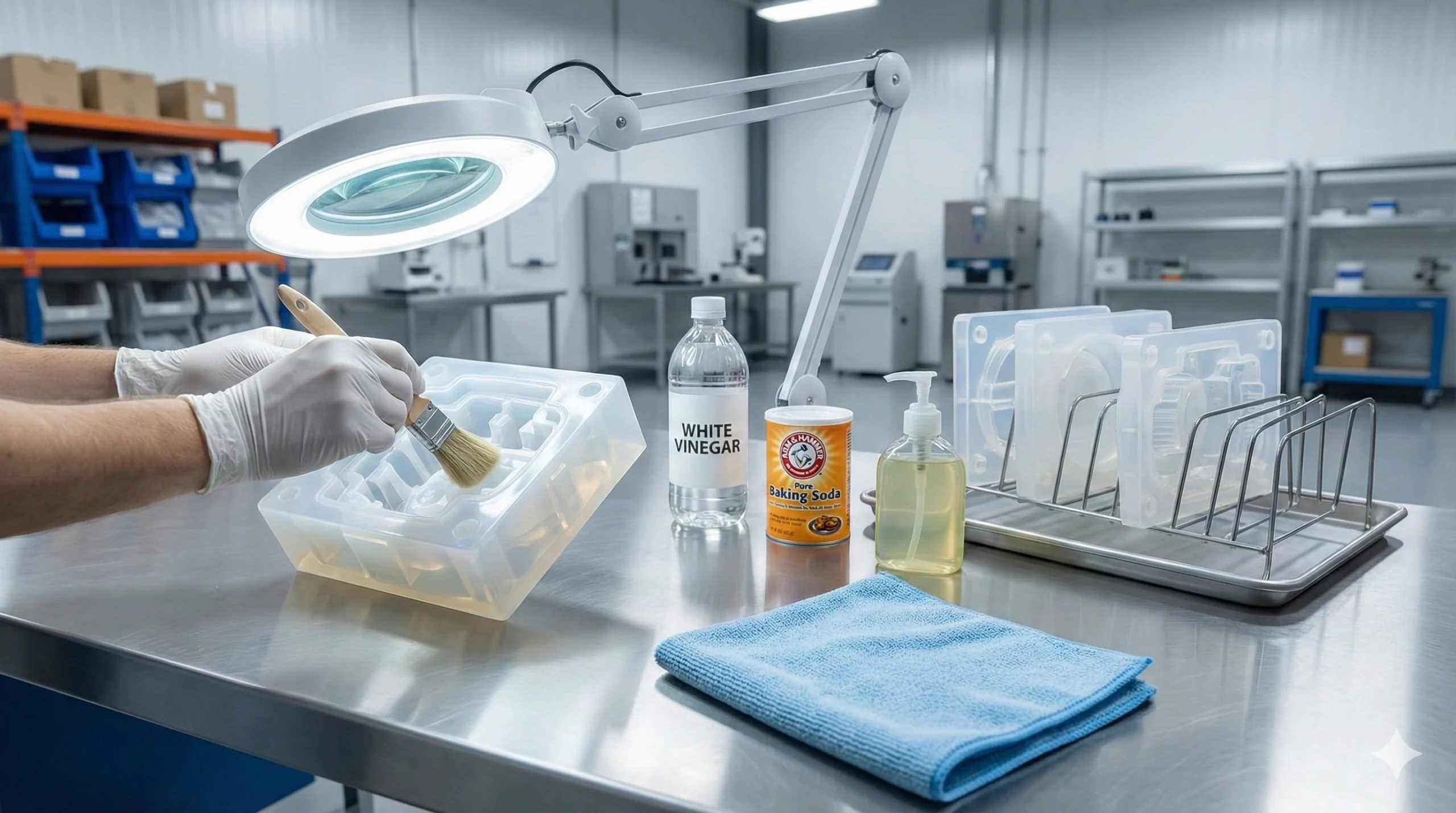
To clean silicone molds effectively, you should wash them with warm, soapy water after every production cycle and use specialized agents like vinegar or baking soda for deep decontamination. Residual materials left in cavities can lead to surface defects and compromised part geometry, which significantly increases your scrap rates. Implementing a professional cleaning protocol is the only way to protect your production assets and ensure consistent output.
Learning how to clean silicone molds is the solution to maintaining high-precision industrial tools. By removing oils, resins, and dust promptly, you prevent permanent staining and material degradation. Visit HuaLin Silicone for expert guidance on maintaining your custom manufacturing equipment and optimizing your production workflow.
How can you ensure effective quality control?
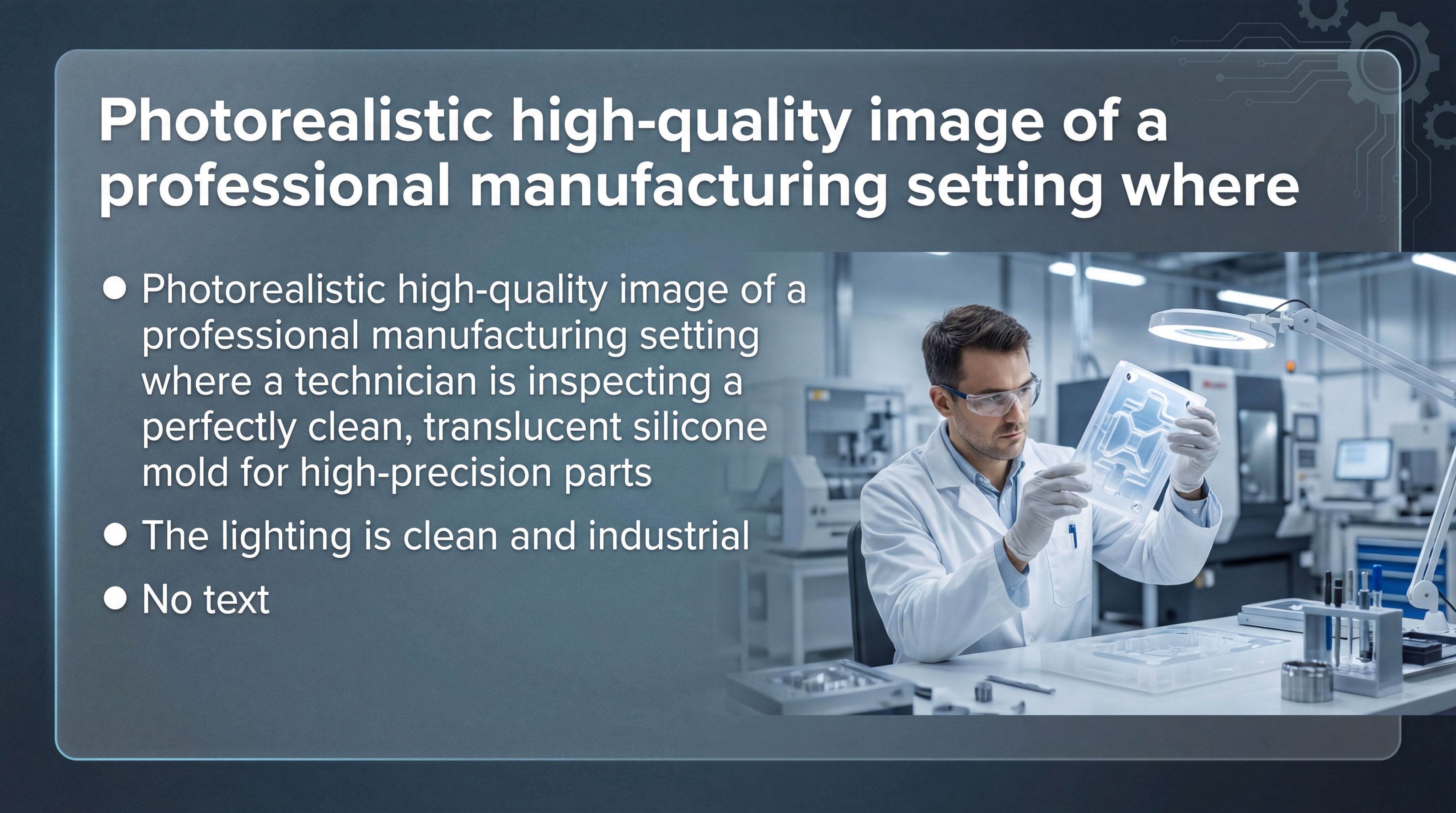
You ensure quality control by performing a visual and tactile inspection of every cavity to confirm that your process of how to clean silicone molds has removed all microscopic residue. This step is critical for high-compliance sectors where even a single particle of dust can cause a batch failure. Proper inspection guarantees that the non-stick properties of the silicone remain intact for the next cycle.
Why is inspection essential for precision?
High-precision components require perfectly smooth surfaces to meet tight tolerances. Residual buildup alters the dimensions of the final part, leading to assembly issues in complex systems.
Look:
Consistency is the hallmark of professional manufacturing.
- Check for oily films on the surface.
- Inspect corners for trapped resin.
- Verify the absence of lint or fibers.
- Monitor for any signs of surface wear.
What tools aid in mold inspection?
Professional technicians often use magnifying lamps and high-intensity LED lights to spot imperfections. These tools help identify residues that are invisible to the naked eye under standard factory lighting.
Key Takeaway: Thorough inspection after cleaning ensures that your molds are ready for high-yield production without the risk of surface contamination or dimensional drift.
| Inspection Factor | Quality Standard |
|---|---|
| Surface Clarity | Completely free of films or oils |
| Cavity Detail | No residual material in deep corners |
| Tactile Feel | No sticky spots or powdery residue |
Careful inspection prevents the repetition of errors in subsequent molding batches.
What items do you need for effective cleaning?
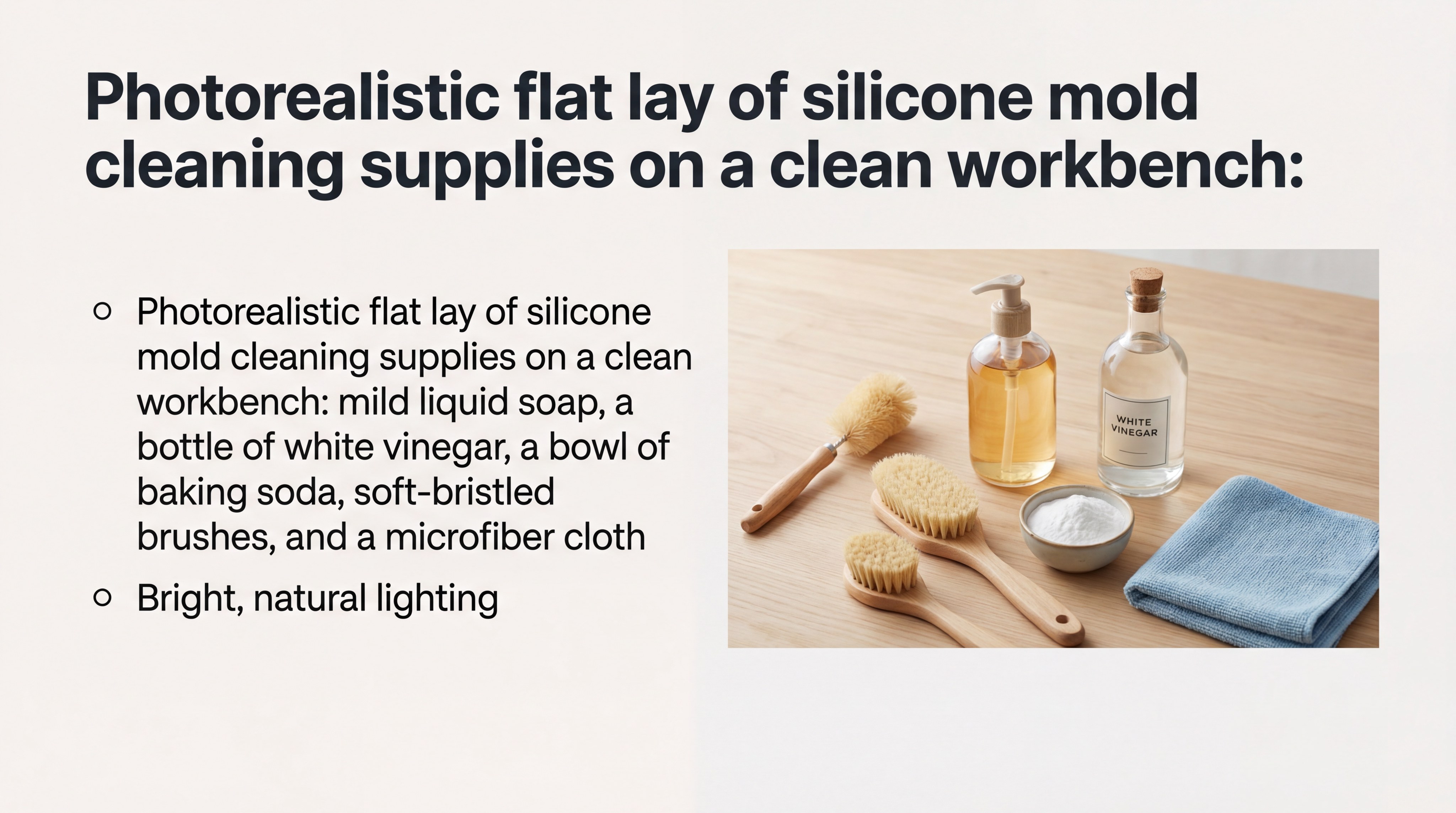
To master how to clean silicone molds, you must gather pH-neutral soaps, white vinegar, baking soda, and soft-bristled brushes that won’t scratch the polymer. Using the correct materials prevents chemical reactions that could make the silicone brittle or cause it to swell. Industrial environments require these supplies to be readily available at cleaning stations to maintain a fast-paced production schedule.
Are industrial detergents safe for silicone?
While some industrial cleaners are effective, many contain harsh solvents that degrade the silicone structure over time. Stick to mild, fragrance-free dish soaps to maintain the integrity of the material without leaving a chemical film.
The best part?
Most effective cleaning agents are affordable and readily accessible.
- Use distilled white vinegar for odors.
- Apply baking soda for sticky grease.
- Utilize microfiber cloths for lint-free drying.
- Keep soft sponges for general surface washing.
Which brushes are best for tight crevices?
Soft-bristled toothbrushes or specialized detailing brushes are ideal for reaching into intricate geometries. These tools allow you to apply gentle pressure to lift residue without creating micro-tears in the mold’s delicate surface.
Key Takeaway: Having a dedicated cleaning kit with non-abrasive tools and mild agents is the foundation of a sustainable mold maintenance routine.
| Item Type | Primary Function |
|---|---|
| Mild Soap | Removes surface oils and grime |
| White Vinegar | Neutralizes odors and disinfects |
| Baking Soda | Deodorizes and lifts sticky residue |
Equipping your facility with these basics ensures your staff can perform daily maintenance efficiently.
How does the vinegar method remove odors?
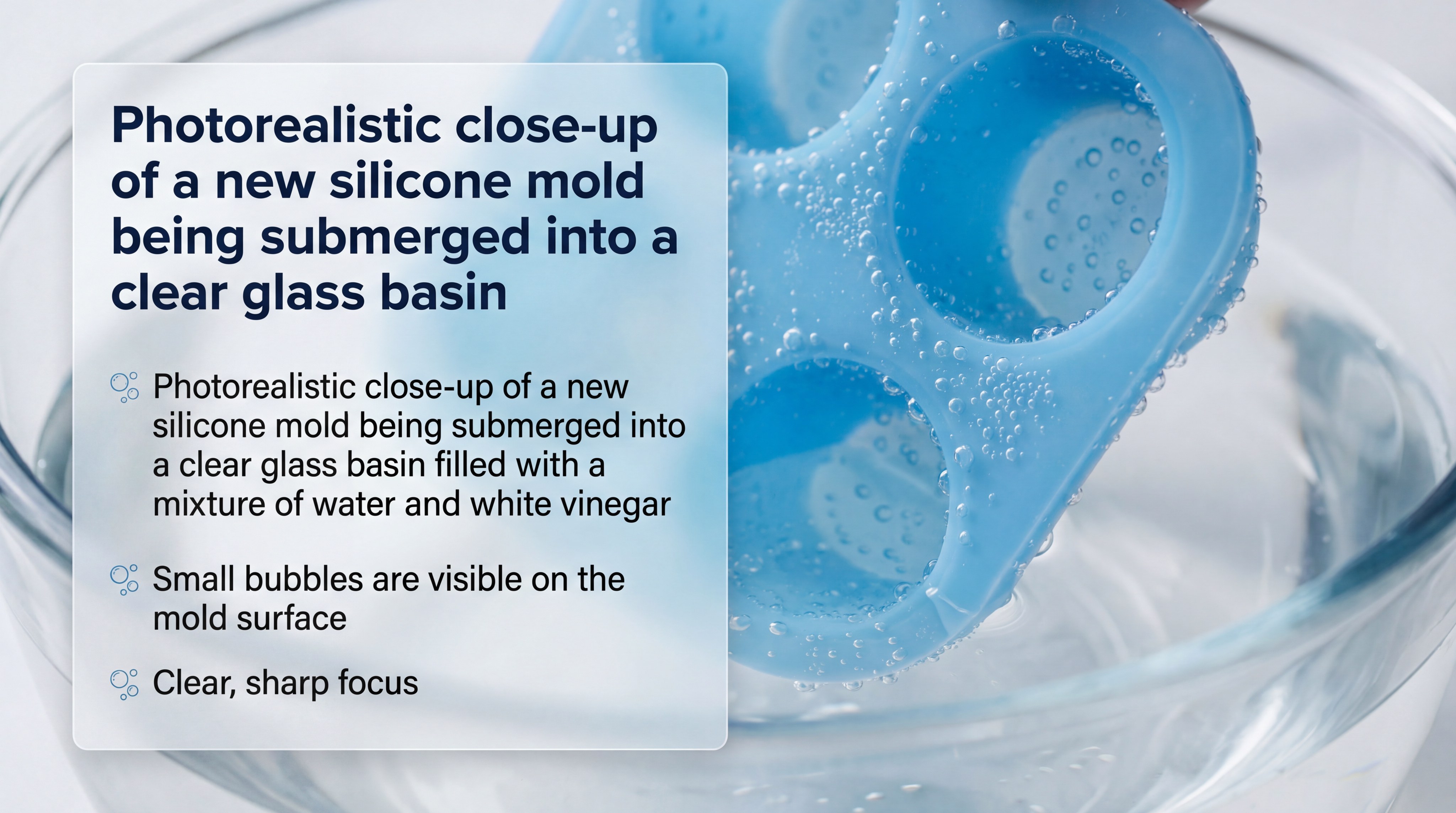
The vinegar method works by submerging the equipment in a solution that neutralizes the chemical odors often found in new molds. When you learn how to clean silicone molds with this acidic agent, you effectively break down the factory residues that can affect the purity of your parts. It is a non-toxic way to sanitize the surface before the first production run.
Why should you soak new molds?
New molds often carry a “new rubber” scent that can transfer to finished products, especially in consumer-facing industries. Soaking for 30 minutes in a vinegar-water mix eliminates these volatile organic compounds.
Here is why:
Vinegar acts as a natural solvent that leaves no harmful residue.
- Mix 1 part vinegar with 2 parts water.
- Ensure the mold is fully submerged.
- Let it sit for at least 30 minutes.
- Rinse thoroughly with warm water.
Can vinegar help with hard water stains?
Yes, vinegar is excellent for removing mineral deposits left behind by hard water during previous cleaning cycles. These white spots can interfere with the mold’s release properties if they are not addressed.
Key Takeaway: A simple vinegar soak is the most effective way to disinfect new molds and remove persistent manufacturing odors.
| Step | Action Detail |
|---|---|
| Solution Prep | 1:2 ratio of white vinegar to water |
| Soaking Time | 30 to 60 minutes for best results |
| Final Rinse | Use warm water to remove acidic scent |
This method serves as an essential pre-treatment step for any new manufacturing project.
Why is baking soda effective for grease?
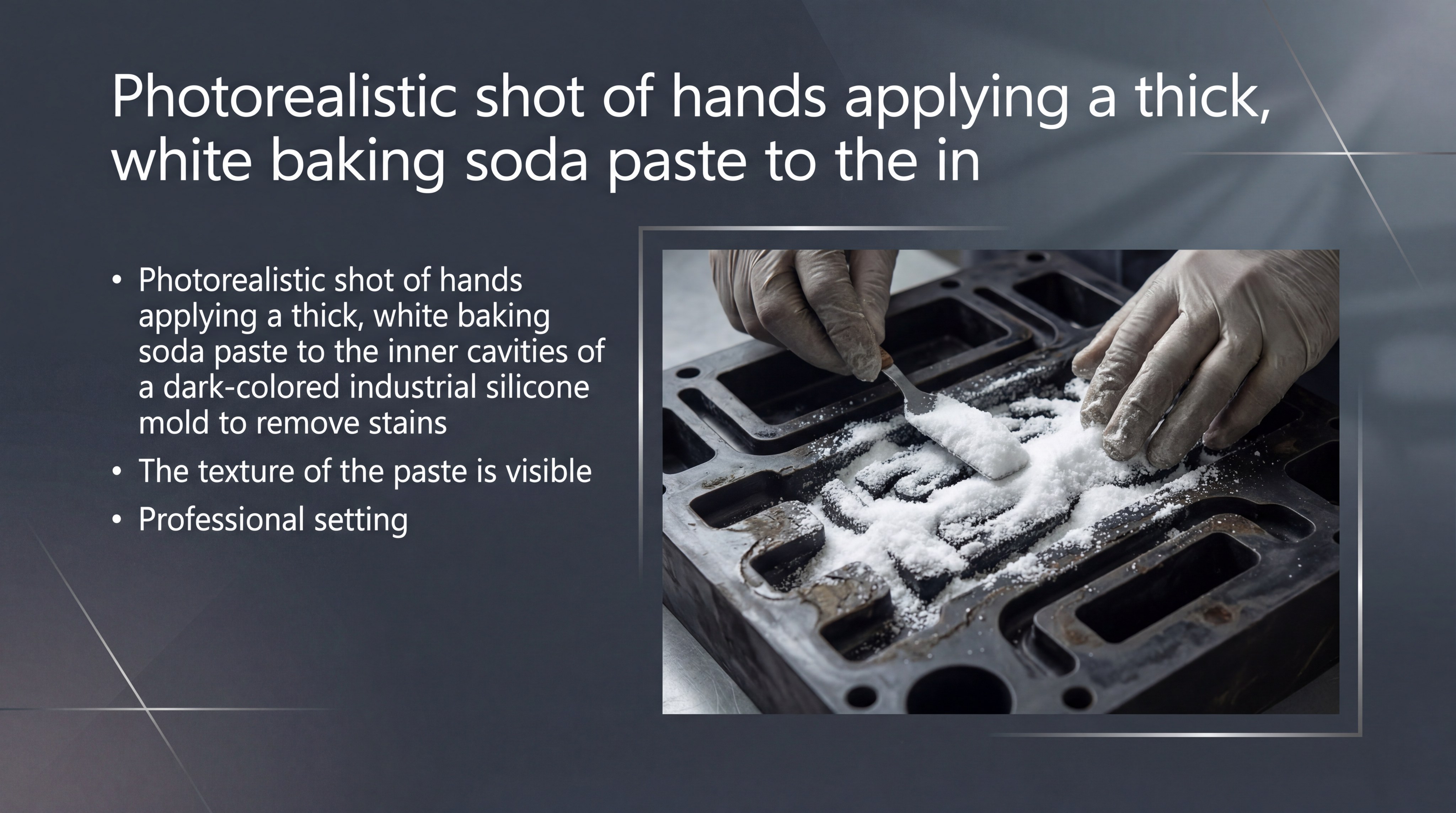
Baking soda is highly effective because it acts as a mild abrasive and a powerful deodorizer when you are figuring out how to clean silicone molds that have become sticky. It absorbs the oils that migrate to the surface of the silicone during high-heat cycles. This treatment is especially useful for components like gaskets and seals that require a perfectly clean surface for optimal performance.
How do you apply a baking soda paste?
Creating a thick paste allows you to target specific stained areas without scratching the surrounding material. Rub the paste into the cavities and let it dry completely to pull deep-seated oils out of the silicone pores.
Think about it:
Deep cleaning prevents the accumulation of sticky residues that attract dust.
- Use a 3:1 ratio of soda to water.
- Apply directly to the affected areas.
- Allow the paste to dry for 60 minutes.
- Scrub gently with a soft sponge.
Is baking soda safe for frequent use?
Unlike chemical degreasers, baking soda is gentle enough to be used regularly without damaging the polymer. It maintains the mold’s flexibility while ensuring a sanitary environment for sensitive production runs.
Key Takeaway: Baking soda paste is the professional standard for removing stubborn grease and industrial odors from silicone surfaces.
| Problem | Baking Soda Solution |
|---|---|
| Persistent Odors | Soak in a diluted soda bath |
| Sticky Residue | Apply a thick, concentrated paste |
| Surface Grime | Gently scrub with a soda-dipped sponge |
Using this method regularly keeps your tools in peak condition for demanding production tasks.
Can heat help how to clean silicone molds?

Heat can assist in how to clean silicone molds by loosening the chemical bonds of stubborn oils that have adhered to the surface. By placing the mold in an oven at 350°F (177°C) for 10 minutes, you cause the trapped grease to liquefy and rise to the surface. This advanced technique should be followed immediately by a hot, soapy water wash to remove the loosened contaminants.
What are the risks of heat cleaning?
Overheating or leaving the mold in the oven for too long can cause the silicone to become brittle or lose its structural integrity. You must strictly adhere to the recommended time and temperature to avoid ruining your assets.
Truth is:
Heat is a powerful tool when standard washing methods fail.
- Preheat the oven to exactly 350°F.
- Use a clean baking sheet as a support.
- Bake for no more than 10 minutes.
- Wear heat-resistant gloves during removal.
Should you use this method for all molds?
This method is best reserved for industrial-grade silicone that has a high heat resistance. Always check the material specifications before subjecting a mold to laboratory oven temperatures.
Key Takeaway: Thermal cleaning is a highly effective “reset” for molds plagued by persistent industrial stains that soap cannot reach.
| Phase | Technical Procedure |
|---|---|
| Preheating | Stabilize oven at 350°F (177°C) |
| Exposure | 10-minute maximum heating window |
| Extraction | Immediate hot water and soap scrub |
Thermal treatment should be viewed as an occasional deep-cleaning solution rather than a daily routine.
Which mistakes cause permanent mold damage?
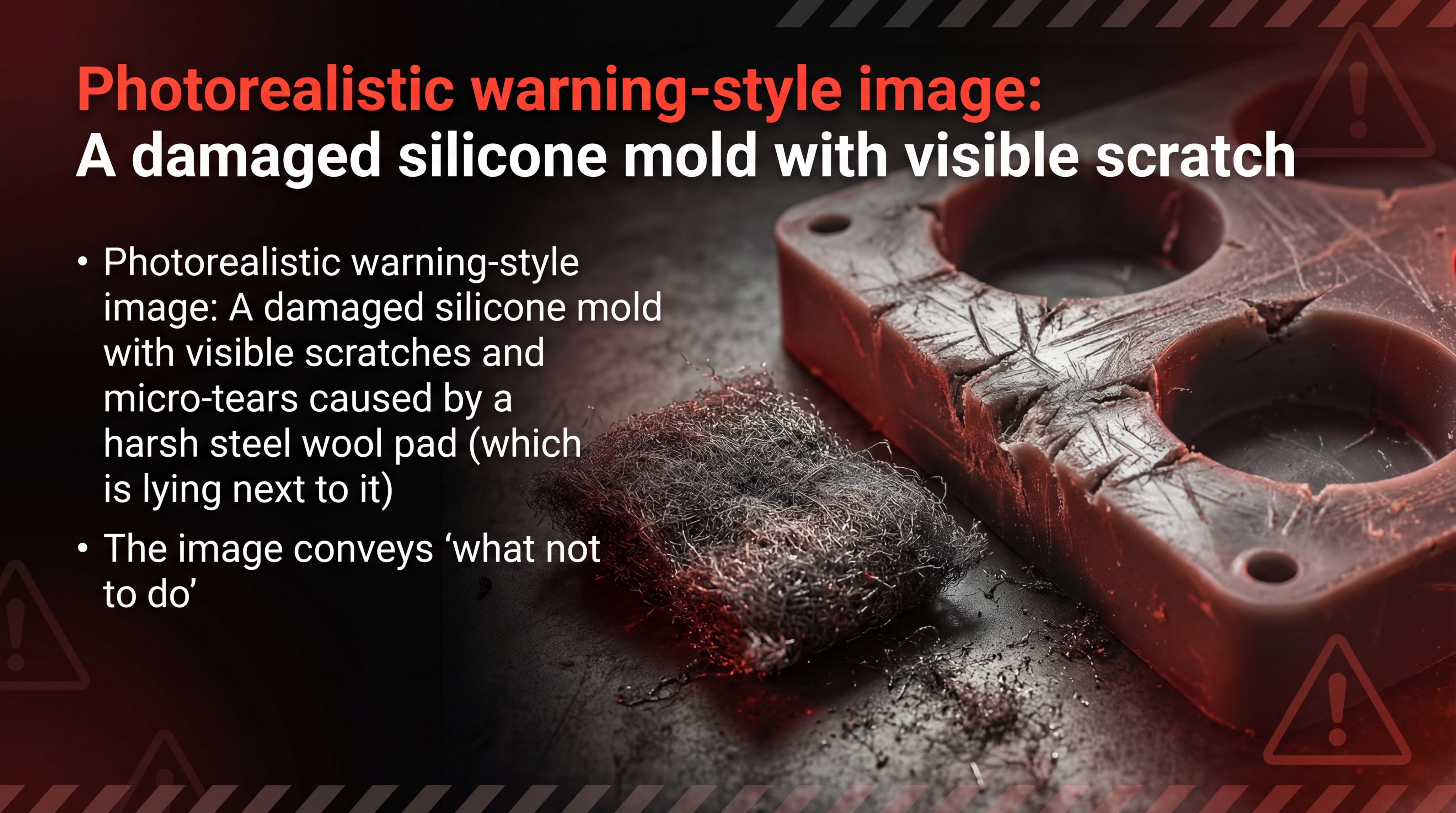
The most common mistakes in how to clean silicone molds involve using abrasive tools like steel wool or harsh chemicals that eat into the polymer. These actions create micro-scratches that trap bacteria and ruin the surface finish of your molded parts. Once the non-stick surface is compromised, the mold will likely require a complete replacement, increasing your operational costs.
Why avoid abrasive sponges and pads?
Abrasive materials physically tear the surface of the silicone, leading to “pitting” that becomes a breeding ground for residue. These tears also make it much harder to release the finished part in future cycles.
Simply put:
Protection of the surface finish is paramount for precision molding.
- Never use metal scrapers or knives.
- Avoid scouring pads or steel wool.
- Do not use bleach or concentrated acids.
- Avoid drying molds near open flames.
Can improper drying lead to mold damage?
Drying molds with standard kitchen towels often leaves behind lint and fibers that bond to the silicone. Always use microfiber or allow the tools to air-dry in a dust-free environment to maintain purity.
Key Takeaway: Avoiding mechanical abrasives and harsh solvents is the most important rule for extending the service life of your silicone molds.
| Common Mistake | Immediate Consequence |
|---|---|
| Using Steel Wool | Creates permanent surface scratches |
| Bleach Application | Causes material discoloration and brittleness |
| Sharp Tools | Leads to tears and structural failure |
Educating your production team on these prohibitions prevents accidental damage to expensive tooling.
How do you remove stubborn resin residue?
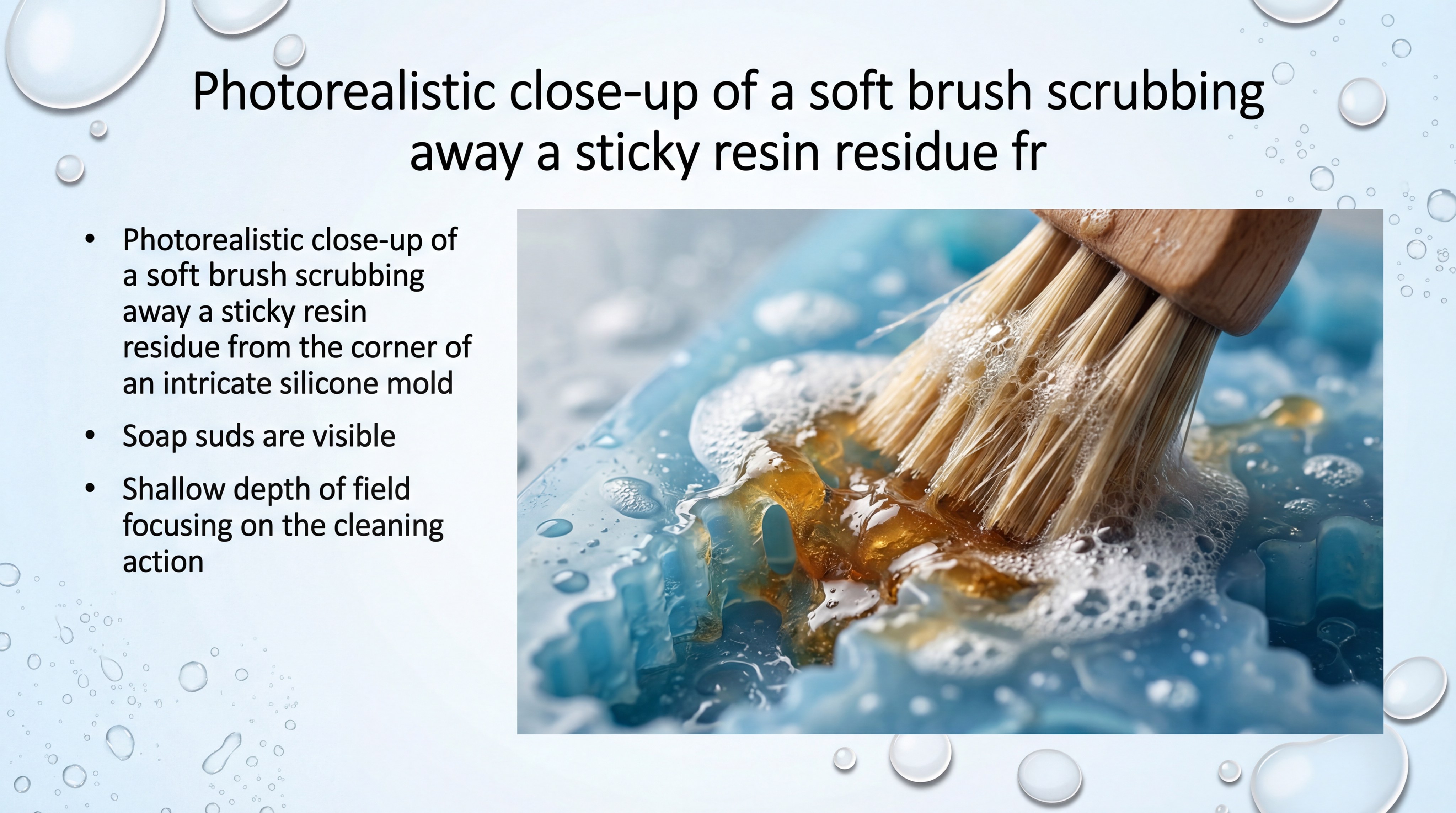
Removing stubborn resin residue during how to clean silicone molds requires a combination of hot water soaking and gentle mechanical agitation. If the resin has partially cured, you may need to apply a concentrated soap solution directly to the area before scrubbing with a soft brush. This process ensures that every detail of the mold remains sharp and free of obstructions for the next production run.
Is hot water effective for resin?
Hot water helps to soften most industrial resins, making them easier to lift from the silicone’s non-stick surface. Soaking the mold for 15 minutes in near-boiling water is often the first step in a deep-cleaning cycle.
Better yet:
Softening the residue reduces the amount of physical force needed.
- Soak in hot water to soften.
- Use a mild degreasing agent.
- Scrub corners with a detailing brush.
- Rinse with high-pressure water if available.
What if the resin is fully cured?
Fully cured resin can sometimes be “popped” out by gently flexing the mold, thanks to silicone’s natural flexibility. However, you must be careful not to stretch the mold beyond its elastic limit to prevent permanent deformation.
Key Takeaway: Patience and the right temperature are your best allies when dealing with difficult resin build-up in intricate cavities.
| Residue Type | Recommended Action |
|---|---|
| Liquid Resin | Wipe with soap and warm water |
| Sticky Residue | Hot soak followed by brush agitation |
| Cured Resin | Gently flex mold to release bonds |
Effective residue removal maintains the high-detail capabilities required for industrial components.
What is the best way to rinse and dry?
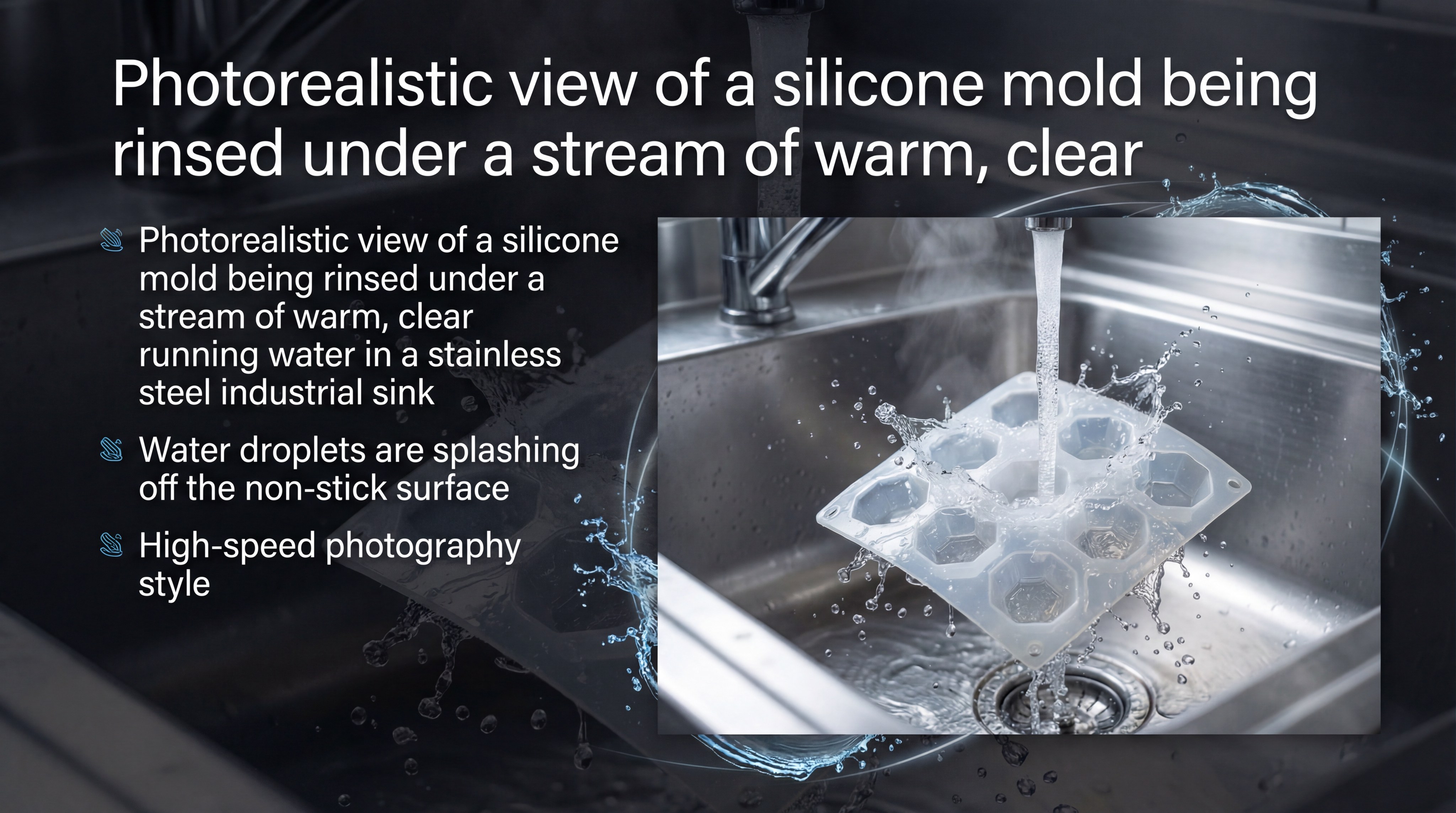
The best way to finish your process of how to clean silicone molds is to rinse them under high-pressure warm water and then air-dry them upside down. Rinsing removes any remaining soap film or baking soda particles that could contaminate your next batch of material. Proper drying prevents water spots from forming, which can mar the surface finish of high-gloss parts.
Why rinse with high-pressure water?
High-pressure streams are excellent for flushing out the deep recesses and undercuts common in industrial molds. This ensures that no cleaning agents are left behind to react with the molding material.
Best of all:
High-pressure rinsing reaches where brushes cannot.
- Use warm water for better soap removal.
- Rinse from multiple angles.
- Check for any remaining soap bubbles.
- Ensure the water runs completely clear.
How do you prevent dust during drying?
Drying molds upside down on a clean, ventilated rack prevents airborne dust from settling into the cavities. For immediate use, a lint-free microfiber cloth is the only acceptable manual drying tool.
Key Takeaway: A meticulous rinse and a controlled drying environment are the final steps to ensuring your molds are production-ready.
| Drying Method | Advantage |
|---|---|
| Air Drying | Zero risk of lint contamination |
| Microfiber | Fast and effective for immediate use |
| Rack Drying | Prevents moisture buildup and mold |
Incomplete drying can lead to moisture-related defects during the subsequent molding process.
How often should you clean production molds?
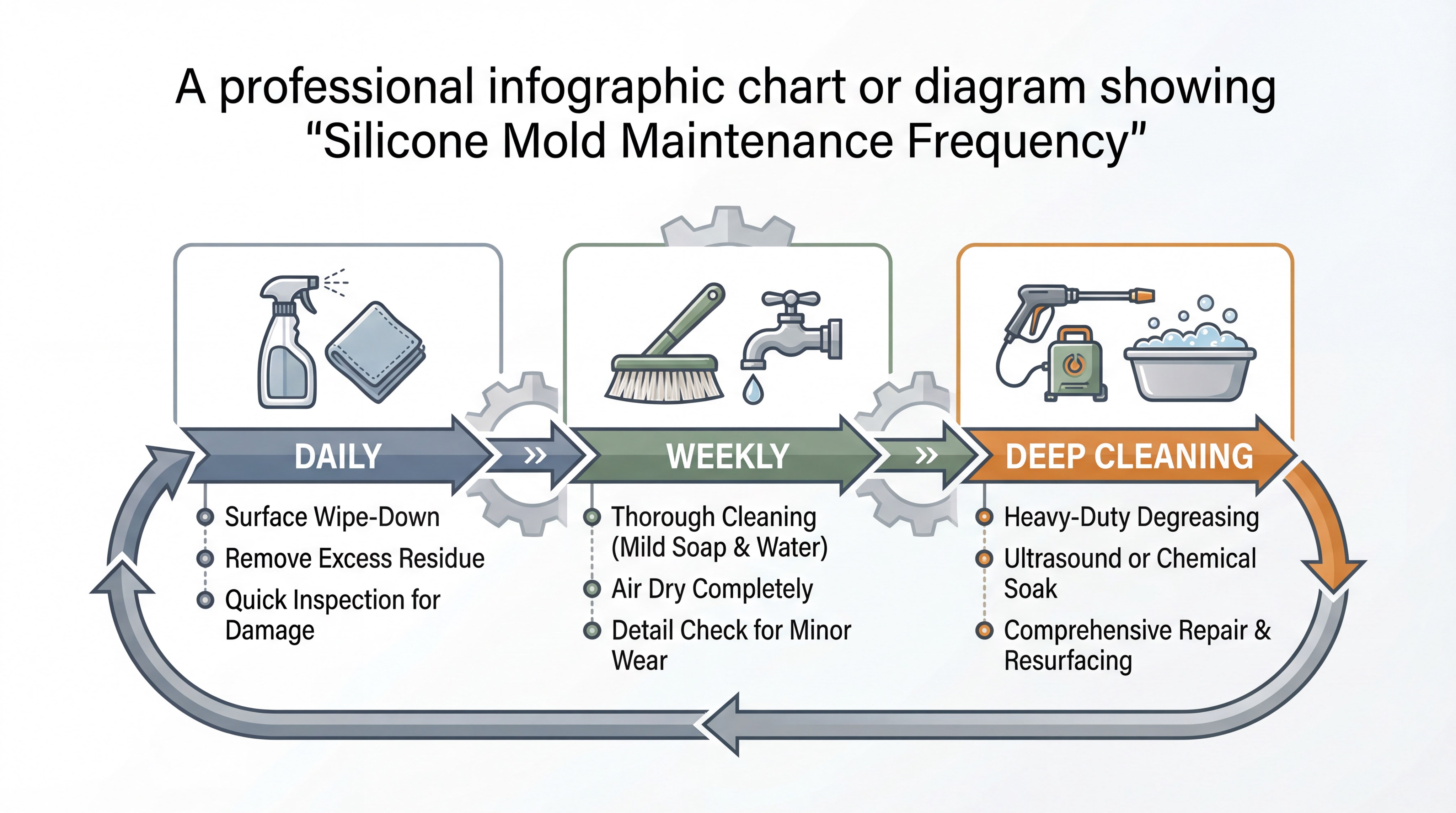
Determining how to clean silicone molds on a set schedule depends on your material throughput and the complexity of your designs. In a high-volume B2B environment, molds should be wiped down after every cycle and deep-cleaned at the end of every shift. This frequency prevents the “ghosting” of previous designs and maintains the biocompatibility required for sensitive applications like medical components.
Does material type affect frequency?
Materials like pigmented resins or high-oil rubbers require more frequent cleaning to prevent staining and chemical migration. If you notice any change in the part’s surface finish, it is time for an immediate cleaning cycle.
Believe it or not:
A proactive cleaning schedule reduces long-term maintenance costs.
- Daily: Wipe down and rinse.
- Weekly: Deep soak in vinegar or soda.
- Monthly: Heat cleaning and inspection.
- Shift End: Quick soap and water wash.
What are the signs of a dirty mold?
A sticky surface, visible residue in corners, or a dulling of the mold’s internal finish are clear indicators that cleaning is overdue. Ignoring these signs will inevitably lead to a higher rejection rate for your finished parts.
Key Takeaway: Consistency in your cleaning schedule is the most effective way to prevent cumulative build-up and maintain high production standards.
| Usage Level | Cleaning Interval |
|---|---|
| High-Volume Shift | Every 4 to 8 hours |
| Intermittent Use | Before and after every session |
| Prototyping | After every individual cycle |
Setting clear frequency guidelines for your operators ensures that quality never dips during a production run.
Where should you store clean silicone molds?
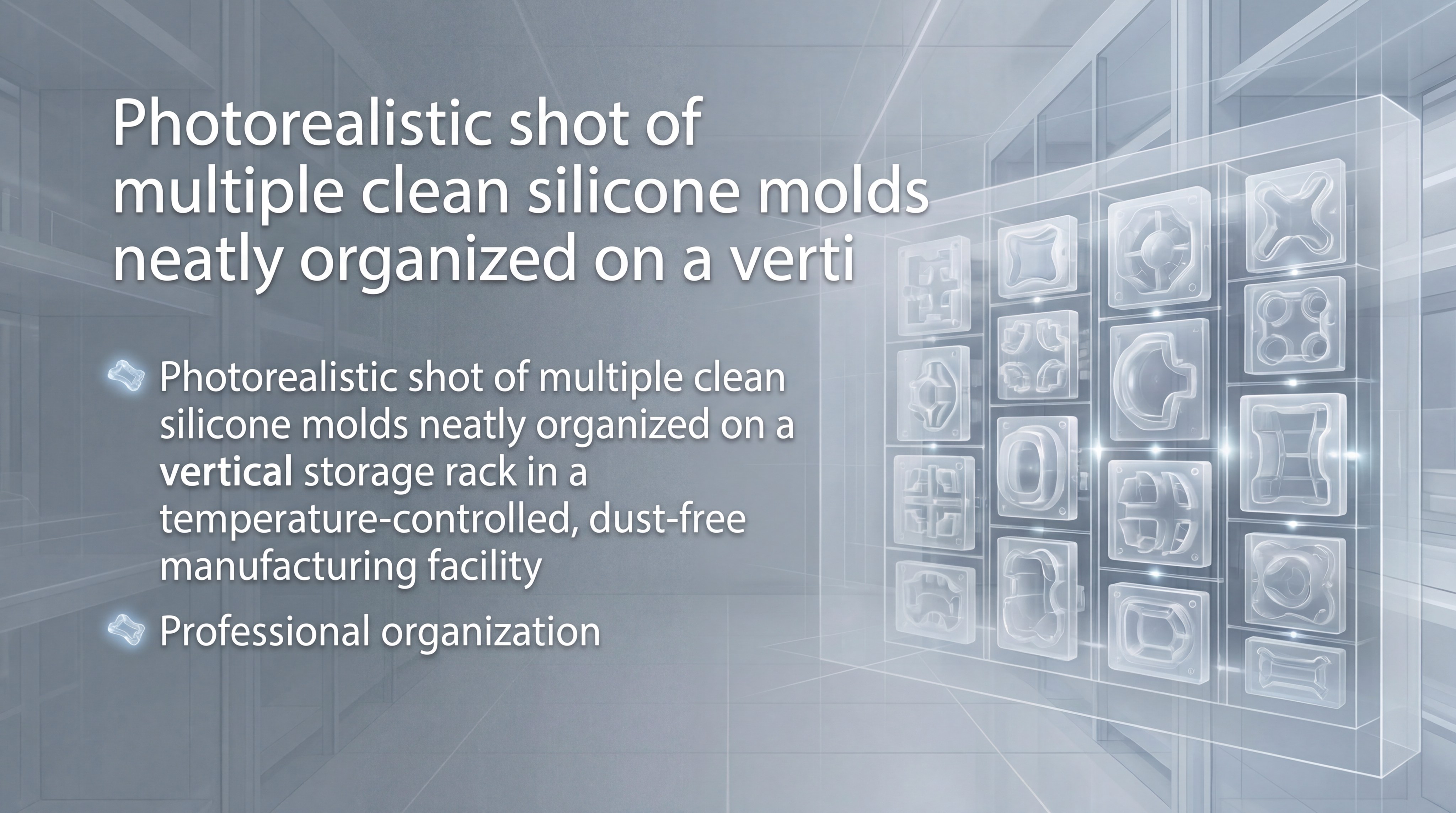
Once you have completed how to clean silicone molds, you must store them in a cool, dry, and dust-free environment to prevent re-contamination. Stacking molds directly on top of each other should be avoided as it can lead to permanent deformation or the transfer of oils. Use organized shelving or specialized bins to keep your production assets safe and ready for the next scheduled run.
Is UV light harmful during storage?
Silicone can degrade if exposed to direct sunlight for long periods, leading to yellowing and a loss of elasticity. Store your molds in opaque containers or dark cabinets to maximize their functional lifespan.
Generally speaking:
Organized storage is a hallmark of an efficient manufacturing facility.
- Use dust-free, temperature-controlled rooms.
- Store molds in a single layer.
- Keep away from chemical storage areas.
- Avoid humid environments to prevent mold.
Should molds be stored flat?
Molds should always be stored in their natural, relaxed state to prevent warping. Never fold or squeeze molds into tight spaces, as silicone has a “memory” and may not return to its original precision shape.
Key Takeaway: Proper storage is the final link in the maintenance chain, ensuring that the effort spent on cleaning is not wasted by poor environmental conditions.
| Storage Condition | Target Standard |
|---|---|
| Temperature | Stable 65°F – 75°F (18°C – 24°C) |
| Humidity | Low humidity to prevent surface moisture |
| Light Exposure | Minimal UV or direct sunlight exposure |
A well-maintained storage area protects your investment and ensures rapid deployment for new orders.
Conclusion
Mastering the process of maintaining your production equipment is essential for long-term manufacturing success. From the initial vinegar soak to advanced thermal cleaning, every step in your maintenance routine directly impacts the quality of your output. Failing to address residue and oils promptly leads to increased scrap rates and the premature failure of expensive tooling.
At HuaLin Silicone, we are committed to providing the precision-engineered solutions your business needs to scale effectively. Our expertise in LSR and compression molding ensures that your parts meet the highest industrial standards from the first batch to the millionth. Contact us today to start your next custom silicone project and experience the benefits of a professional manufacturing partnership.
Common FAQ about silicone mold care
- Can I put silicone molds in the dishwasher?
Generally yes, but it is not recommended for high-precision industrial molds. The high-pressure spray and harsh detergents can eventually degrade the non-stick surface and compromise tight tolerances. - What’s the best way to dry silicone?
Air-drying upside down is the gold standard. This prevents dust from settling into the cavities and ensures that moisture evaporates completely without leaving spots. - Can I use bleach on silicone?
Absolutely not. Bleach is a harsh oxidizer that can cause silicone to become brittle, discolor, and lose its flexible properties over time. - What is the safest soap for silicone?
A pH-neutral, fragrance-free dish soap is the safest choice. It effectively lifts oils without leaving a chemical film that could interfere with the molding process. - How do I know if the mold is clean?
A clean mold will feel smooth and non-sticky to the touch. It should also be completely odorless and visually free of any films or particles in the corners.