Selecting a trustworthy manufacturing partner requires verifying their certifications, production capacity, and tooling capabilities. Sourcing a high-quality silicone product from overseas becomes highly frustrating when you face delayed shipments or failed quality audits. Missed deadlines drain your budget quickly while defective batches destroy hard-earned brand reputation overnight. Fortunately, partnering with a vetted factory prioritizing strict quality control guarantees your project launches successfully. This guide reveals how you find reliable partners capable of handling complex manufacturing demands.
1. Why Find a Reliable Silicone Product Maker?
Securing a dependable partner guarantees your silicone product reaches target markets without disastrous physical defects. Shoddy manufacturing creates rejected batches rapidly. You need a factory operating strict controls during mass production constantly. Partnering with capable experts keeps business operations running smoothly across international borders.
Trustworthy vendors anticipate structural design flaws early. They correct minor technical issues before costly errors happen.
What Risks Accompany Poor Vendor Selection?
Here’s the deal: choosing an unverified manufacturer often leads straight toward ruined production schedules. Poor communication leaves your engineering team frustrated and confused.
Bad choices cause multiple severe business consequences:
- Frequent shipment delays ruin seasonal sales strategies.
- Inconsistent material quality causes sudden component failures.
- Hidden mold fees inflate initial budgets unexpectedly.
How Do Good Partners Protect Quality?
What’s the real story? Elite factories deploy dedicated quality inspection teams across every single line. They catch microscopic flaws immediately.
Key Takeaway: Evaluating vendor track records protects your entire investment from easily avoidable manufacturing disasters.
Vendor Risk Comparison
| Risk Factor | Unverified Supplier | Reliable Partner |
| Delivery Time | Unpredictable | Guaranteed |
| Defect Rate | High | Under 1% |
| Tooling Cost | Hidden fees | Transparent |
Analysis: This comparison reveals how selecting verified vendors dramatically reduces your financial and operational risks.
2. What Certifications Matter for a Silicone Product?
Valid industry certifications prove that a factory can legally manufacture your specific silicone product safely. Medical components require ISO 13485 approval always. Automotive parts demand IATF 16949 compliance for absolute safety continuously. You must request official documents before signing any binding contract.
Expired certificates indicate severe management problems internally. Always verify documentation through official third-party databases quickly.
Why Do Global Standards Matter Today?
You might be wondering: why do international standards carry so much weight globally? They force factories into maintaining rigorous daily cleanliness protocols.
Strict standards offer several major corporate advantages:
- Standardized procedures eliminate random human errors.
- Traceability protocols track materials back toward their origin.
- Regular audits maintain high cleanliness levels continuously.
Which Audits Verify Real Factory Capability?
Ready for the good part? Thorough on-site audits expose actual factory floor conditions instantly. They separate true manufacturers from simple trading companies easily.
Key Takeaway: Prioritizing suppliers holding current ISO certifications guarantees your goods meet stringent international market regulations continuously.
Key Industry Certifications
| Certification | Industry Focus | Primary Benefit |
| ISO 13485 | Medical Devices | Biocompatibility |
| IATF 16949 | Automotive | Zero defects |
| ISO 9001 | General Quality | Consistent output |
Analysis: This data outlines which specific credentials verify vendor competence for your target market sector.
3. How Does Capacity Affect Your Silicone Product?
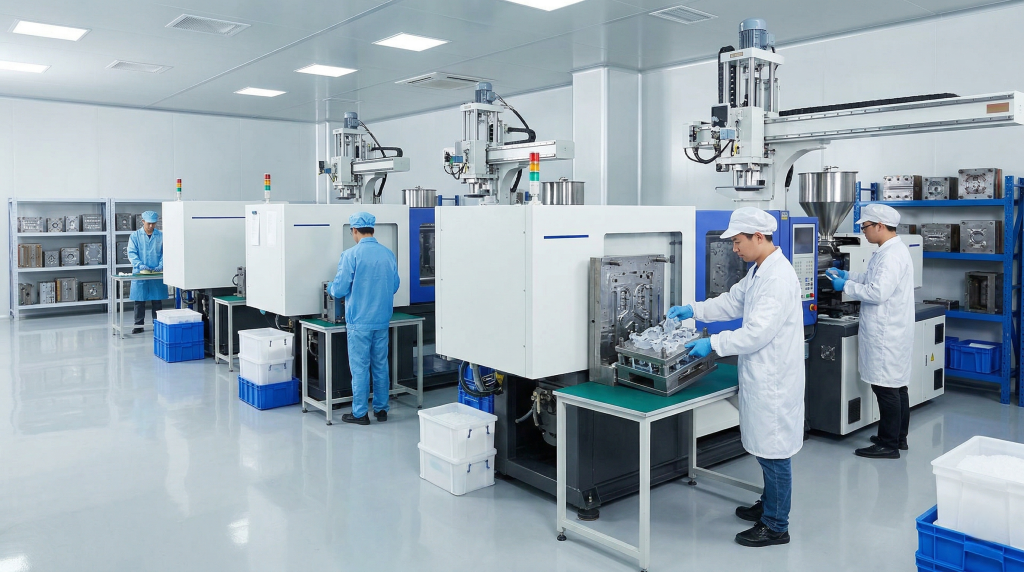
Available production volume dictates how fast your silicone product ships during peak consumer buying seasons. Small workshops struggle when order quantities spike suddenly. Large factories utilize dozens of vulcanization machines simultaneously. You must align sales projections with maximum factory output.
Massive facilities handle urgent custom orders efficiently. They maintain backup equipment ready for sudden emergency runs.
Can Your Maker Handle Peak Demand?
This is where it gets interesting: successful product launches frequently cause unexpected inventory shortages overnight. Your partner needs enough capacity reserves instantly.
Scalable capacity requires several necessary physical elements:
- Multiple identical production lines running simultaneously.
- Abundant raw material storage spaces available locally.
- Highly trained backup operators ready for overtime shifts.
Why Does Machine Count Dictate Delivery?
Truth be told: having thirty vacuum vulcanization machines allows a facility incredible scheduling flexibility daily. They run different client projects without constant tooling changes.
Key Takeaway: Matching anticipated volume requirements with actual factory capacity prevents disastrous out-of-stock situations entirely.
Production Capacity Metrics
| Machine Type | Daily Output | Best For |
| 85T LSR | 50K pcs | Small components |
| 250T Solid | 140K pcs | Standard buttons |
| Die Cutting | 200K pcs | Fast finishing |
Analysis: This breakdown shows how equipment volume directly translates into reliable daily production numbers for buyers.
4. What Role Does Equipment Play for a Silicone Product?
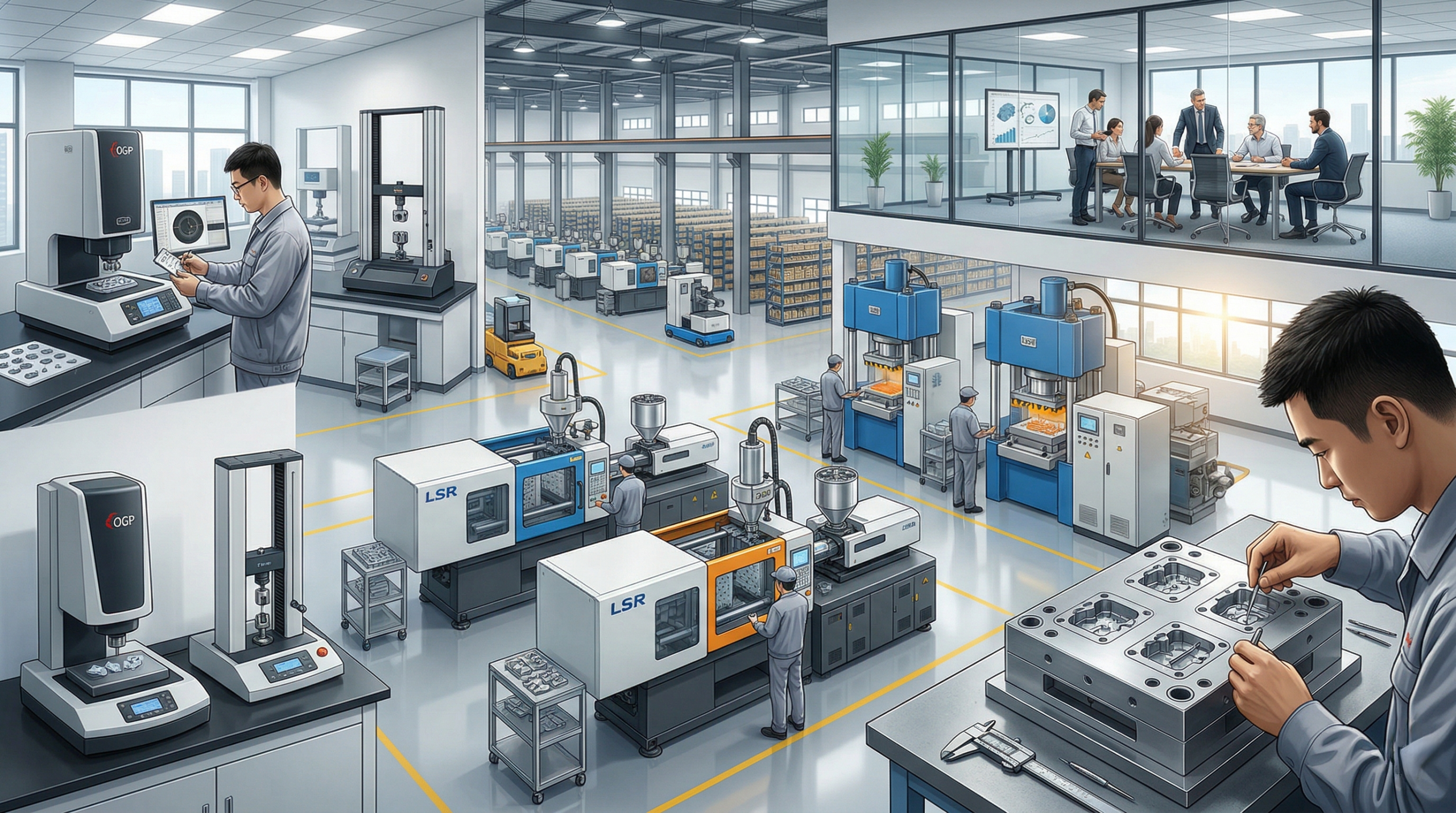
Advanced machinery determines exactly how accurate your finished silicone product appears upon final inspection. Outdated presses suffer from severe temperature fluctuations constantly. Modern vacuum vulcanization machines distribute heat evenly across every single mold cavity. You receive perfectly cured components without annoying physical defects.
Precision engineering demands highly accurate imported tools. Japanese EDM machines slice hardened metal with absolute perfection daily.
How Do CNC Machines Impact Precision?
Believe it or not: superior CNC centers cut mold steel within incredibly tight microscopic tolerances effortlessly. Bad cuts leave ugly flash on finished rubber parts.
High-end machining centers deliver notable manufacturing advantages:
- Mirror finishes reduce secondary polishing times significantly.
- Exact dimensions guarantee perfect assembly fitting later.
- Hardened steel withstands thousands of heavy pressing cycles.
Why Does Advanced Tech Reduce Defects?
Think about it: automated mixing systems blend raw materials far better than manual labor ever could. They eliminate dangerous air bubbles completely from uncured rubber.
Key Takeaway: Investing heavily in advanced production equipment eliminates common dimensional errors ruining your final assembly line.
Equipment Impact Analysis
| Machine Type | Tolerance Level | Defect Rate |
| Standard CNC | 0.05mm | 3.0% |
| Roders CNC | 0.01mm | 0.5% |
| Sodick EDM | 0.005mm | 0.1% |
Analysis: This metric table highlights how superior precision machinery directly slashes costly manufacturing error rates.
5. Why Is In-House Tooling Key for a Silicone Product?
Controlling mold creation internally accelerates your silicone product launch timeline by several valuable weeks. Outsourced tooling faces constant shipping delays between different facilities. An integrated workshop modifies CAD designs directly alongside actual production lines. You test physical prototypes much faster this way.
Internal toolmakers understand liquid rubber flow dynamics intimately. They design smart venting channels preventing trapped air pockets easily.
How Does Internal Tooling Save Time?
It gets better: immediate access toward milling machines means engineers adjust faulty molds overnight. External shops often require full weeks for minor dimensional corrections.
Fast mold modifications provide strategic market benefits:
- Rapid prototyping beats eager competitors entering new markets.
- Quick adjustments resolve unexpected assembly issues immediately.
- Direct communication removes confusing middleman translation errors.
What Makes Custom Molds Highly Superior?
Here is the kicker: tailor-made molds accommodate unique complex geometries perfectly without awkward physical compromises. Generic tooling forces designers into accepting subpar aesthetic finishes.
Key Takeaway: Maintaining a dedicated in-house tooling department empowers manufacturers toward delivering customized structural solutions rapidly.
Tooling Process Comparison
| Process Step | Outsourced Shop | In-House Tooling |
| Initial Design | 5 Days | 2 Days |
| Mold Revisions | 14 Days | 3 Days |
| Final Testing | 7 Days | 1 Day |
Analysis: This timeline comparison demonstrates how internal mold making drastically shortens total product development cycles.
6. How Do Labs Secure Silicone Product Reliability?
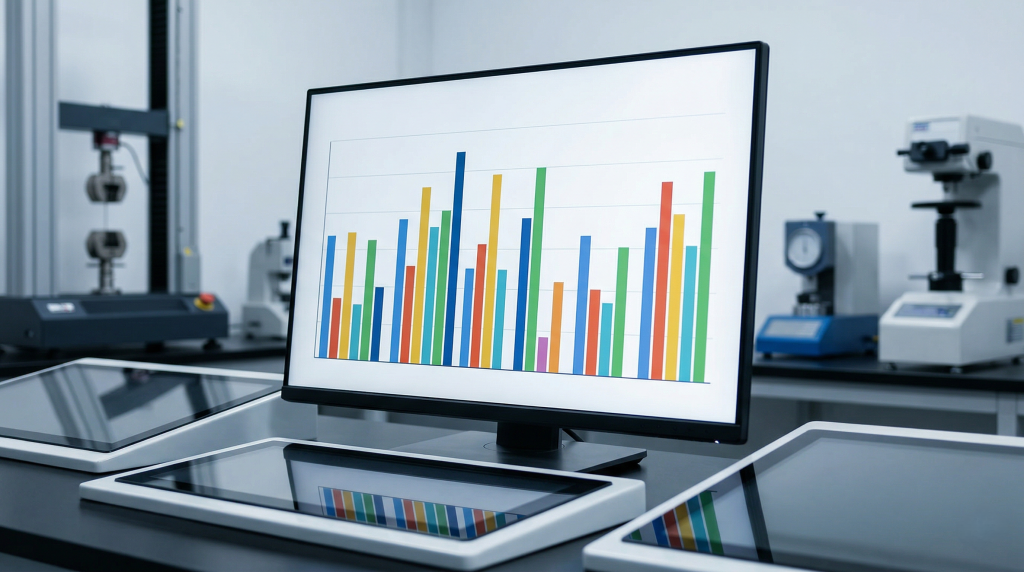
Rigorous laboratory testing confirms your manufactured silicone product survives harsh real-world conditions easily. Weak components degrade rapidly under intense ultraviolet sunlight exposure. Dedicated reliability labs push sample batches past their breaking point intentionally. You gain total confidence knowing parts withstand extreme daily abuse.
Modern testing facilities utilize sophisticated optical measuring instruments. These optical devices verify complex geometric dimensions down toward microscopic levels.
Which Testing Methods Prevent Failure?
What’s the catch? Skipping mechanical stress evaluations inevitably leads straight toward disastrous mass recalls later. Tensile machines stretch rubber samples until they snap violently.
Comprehensive testing involves multiple specific material evaluations:
- Hardness testers verify correct durometer specifications accurately.
- RCA abrasion machines simulate years of heavy finger rubbing.
- Handheld colorimeters guarantee exact Pantone color matching perfectly.
Why Do Environmental Tests Matter Most?
The best part? Programmable weather chambers mimic freezing winters alongside blazing tropical summers simultaneously. They expose hidden material weaknesses before public consumers ever do.
Key Takeaway: Operating an extensive internal reliability laboratory proves a manufacturer cares deeply about long-term component survival.
Quality Testing Protocols
| Test Type | Equipment Used | Failure Prevented |
| Mechanical | Tensile Tester | Tearing or snapping |
| Environmental | Weather Chamber | Sun degradation |
| Dimensional | OGP Image System | Poor fitting |
Analysis: This protocol breakdown illustrates how varied testing methods systematically prevent different structural component failures.
7. Why Partner with a Full-Service Silicone Product Factory?
Integrated manufacturing hubs handle your silicone product smoothly from raw concept until final boxed shipment. Splitting tasks between multiple vendors causes huge logistical nightmares frequently. One centralized factory applies uniform quality standards across every single production stage. You save massive amounts of administrative management time.
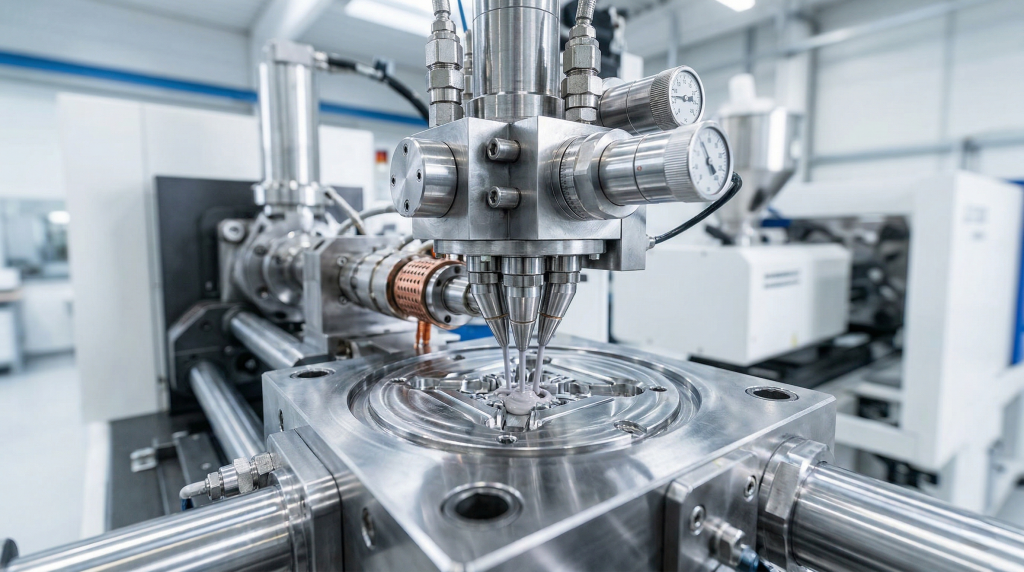
Comprehensive factories offer valuable secondary post-processing capabilities internally. They apply smooth UV coatings alongside precise logo printing seamlessly.
How Do Integrated Services Lower Costs?
Believe it or not: consolidating production steps eliminates redundant packaging expenses between different subcontracted workshops. Direct factory shipping removes greedy middlemen taking huge profit margins.
Consolidated manufacturing brings several distinct financial advantages:
- Reduced transportation fees lower total landed product costs.
- Single point accountability eliminates vendor blaming games entirely.
- Bulk material purchasing reduces initial raw ingredient prices.
What Are Assembly And Packaging Benefits?
But wait, there’s more: skilled workers assembling parts right after vulcanization prevents accidental dust contamination completely. Custom retail boxes get packed directly inside clean manufacturing zones.
Key Takeaway: Selecting a fully integrated manufacturing partner streamlines your entire supply chain while increasing profit margins.
Service Integration Benefits
| Service Model | Logistics Cost | Defect Risk |
| Fragmented | High | High |
| Semi-Integrated | Medium | Medium |
| Full-Service | Low | Low |
Analysis: This matrix clearly shows how utilizing one comprehensive factory drastically lowers both logistical expenses and risks.
8. How Does Experience Impact Your Silicone Product?
Deep industry knowledge guarantees your complex silicone product functions flawlessly within its intended operating environment. Novice factories frequently underestimate tricky liquid injection molding shrinkage rates. Veteran engineers apply decades of practical troubleshooting wisdom immediately. You bypass steep learning curves by leveraging their past historical successes.
Specific niche expertise matters greatly during new product introductions. Medical device veterans understand strict cleanroom handling protocols instinctively.
Why Do Past Projects Predict Success?
Look at it this way: a supplier dominating consumer electronics parts already knows fast turnaround requirements intimately. They anticipate aggressive holiday shipping deadlines without panicking under heavy pressure.
Relevant past experience provides massive strategic manufacturing shortcuts:
- Proven material formulas skip lengthy trial testing phases.
- Existing tooling techniques adapt quickly toward similar new designs.
- Established quality baselines satisfy demanding tier-one brand auditors.
How Do Specialists Handle Complex Designs?
You might be wondering: how do true experts mold incredibly thin waterproof seals successfully? They utilize specialized vacuum injection techniques preventing any delicate part tearing.
Key Takeaway: Partnering with seasoned industry veterans transforms dangerous manufacturing gambles into highly predictable commercial successes.
Experience Impact Metrics
| Supplier Type | Setup Time | First Pass Yield |
| Novice Vendor | 30 Days | 75% |
| General Factory | 20 Days | 88% |
| Industry Expert | 10 Days | 98% |
Analysis: This table demonstrates how specialized industry knowledge drastically accelerates setup times while maximizing initial yield rates.
9. Why Integrate Supply Chains for a Silicone Product?
Building robust supply networks protects your valuable silicone product from sudden global material shortages. Relying upon single isolated vendors invites catastrophe during international shipping strikes. Strategic partners source raw materials securely from multiple verified chemical giants. You sleep peacefully knowing backup plans exist for every single component.
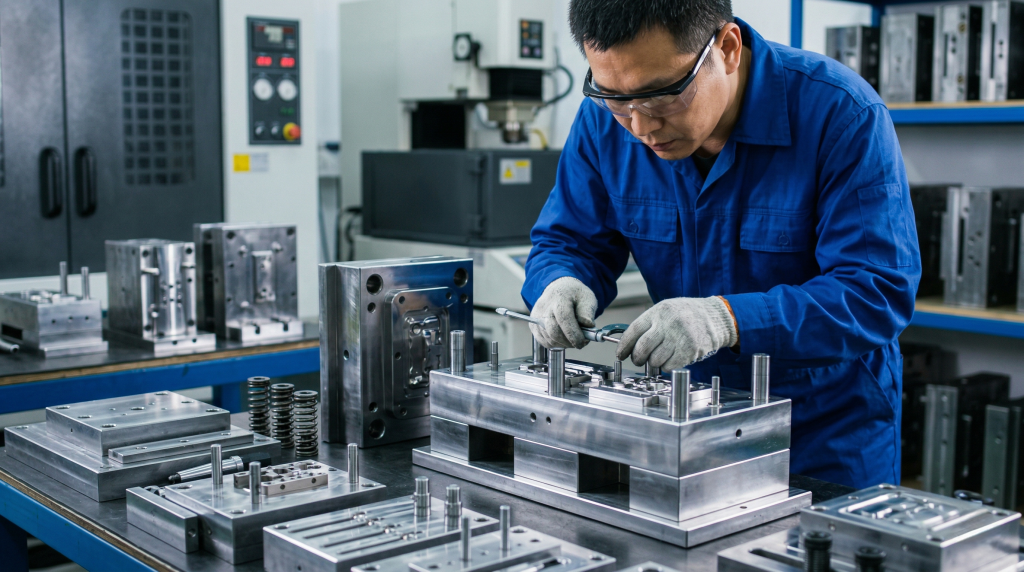
Located within established industrial clusters, premium factories procure specialized packaging materials rapidly. They collaborate closely with nearby printing shops daily.
What Makes Local Sourcing Highly Efficient?
Here’s the deal: purchasing raw rubber locally slashes expensive inbound freight charges massively. Short transit distances prevent sensitive unvulcanized compounds from degrading prematurely inside hot delivery trucks.
Regional industrial clusters offer brilliant logistical supply synergies:
- Rapid prototype delivery happens overnight via local couriers.
- Face-to-face engineering meetings resolve complex technical disputes instantly.
- Shared talent pools provide highly skilled machine operators continuously.
How Do Integrated Chains Prevent Disruptions?
What’s the real story? Hoarding massive safety stock buffers insulates entire production lines against sudden port closures. Smart managers predict global market fluctuations long before they happen.
Key Takeaway: Embedding your manufacturing into a stable regional supply ecosystem guarantees consistent uninterrupted commercial deliveries globally.
Supply Chain Efficiency
| Strategy Type | Material Delay Risk | Freight Cost |
| Global Sourcing | Very High | Premium |
| Single Source | Moderate | Standard |
| Local Cluster | Near Zero | Minimal |
Analysis: This efficiency model proves that localized material sourcing practically eliminates dangerous production delays completely.
10. How to Communicate About Your Silicone Product?
Establishing crystal clear dialogue guarantees your final silicone product matches original CAD specifications exactly. Vague emails create terrible misunderstandings regarding critical dimensional tolerances quickly. Professional project managers speak fluent technical English confidently during video calls. You avoid expensive remanufacturing cycles by confirming every single detail upfront.
Cultural barriers often mask severe underlying engineering problems early on. Great partners highlight potential design flaws bravely rather than staying silent.
Why Does Clear Dialogue Prevent Errors?
Ready for the good part? Standardized communication protocols force both sides into documenting agreed specifications permanently. Detailed weekly progress reports keep anxious stakeholders fully informed constantly.
Effective communication habits build extremely strong manufacturing partnerships:
- Shared project management software tracks every mold modification digitally.
- Regular video factory tours provide transparent visual progress updates.
- Clear bilingual requirement documents eliminate disastrous translation mistakes completely.
What Questions Reveal True Supplier Skill?
This is where it gets interesting: asking precise technical questions exposes incompetent sales representatives rapidly. Inquiring about specific curing temperatures reveals their actual factory floor knowledge instantly.
Key Takeaway: Fostering an open transparent communication channel forms the strongest foundation for long-term manufacturing prosperity.
Communication Effectiveness
| Tool Used | Clarity Level | Error Frequency |
| Basic Email | Low | Frequent |
| Phone Call | Medium | Occasional |
| Shared Dashboard | Very High | Rare |
Analysis: This communication matrix highlights how adopting advanced project management tools drastically reduces expensive manufacturing errors.
Choosing a verified manufacturing partner transforms your ambitious designs into highly profitable realities fast. You avoid terrible delays while securing outstanding component reliability across every batch. Our integrated facilities provide complete engineering support alongside massive production capabilities continuously. Reach out and contact us today for exceptional manufacturing solutions. Hualin Silicone stands firmly committed toward delivering engineering excellence globally.
FAQ
Q1: Can I reduce my initial tooling expenses?
Absolutely, optimization helps greatly. Modifying complex designs simplifies mold creation rapidly.
Q2: What’s the best method for verifying vendor capability?
Direct auditing works perfectly. Visiting their factory floor exposes real operational standards immediately.
Q3: How do I know if a factory uses safe materials?
Documentation proves everything clearly. Reputable makers provide official FDA or RoHS material certificates upon request.
Q4: Can I request expedited shipping for urgent orders?
Yes, flexible partners accommodate emergencies. Dedicated assembly lines process priority batches much faster during crises.
Q5: What’s the best way toward protecting intellectual property?
Legal agreements provide solid defense. Signing an NDA before sharing CAD files secures your proprietary designs.