
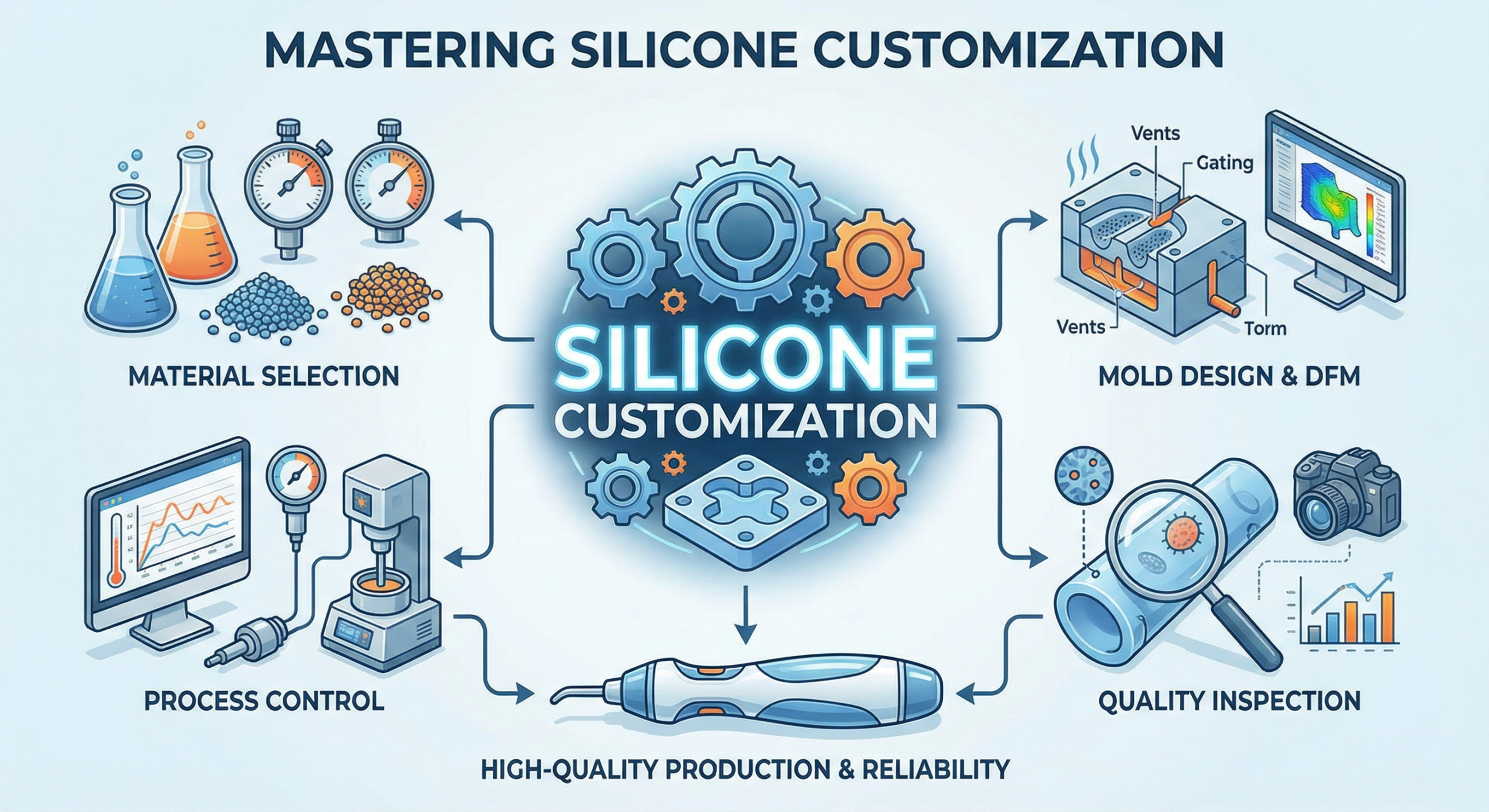
Mastering Silicone Customization requires a strategic blend of material science and precision engineering to avoid the costly pitfalls of production failure. Many procurement managers face the nightmare of batch rejections and delayed launches due to inconsistent part quality or supplier gaps. This frustration often leads to wasted resources and missed market opportunities that can damage your professional reputation. Fortunately, implementing a controlled manufacturing workflow ensures your custom parts are stable, compliant, and delivered on time.
Why is Material Selection Key in Silicone Customization?
Material selection is the foundation of product performance because it dictates thermal stability, chemical resistance, and biocompatibility for Silicone Customization. Choosing the wrong grade often leads to premature component failure or regulatory non-compliance. You must evaluate the specific environment where your part will operate to determine if food-grade, medical-grade, or industrial silicone is required.
Understanding Material Roles
Choosing the right base material ensures your product survives its intended lifecycle.
Here is the deal:
- Shore hardness determines the tactile feel and flexibility of the component.
- Temperature resistance prevents deformation in extreme environments.
- Tensile strength influences how well a part resists tearing under stress.
You must match material properties to functional requirements.
Common Selection Pitfalls
Ignoring the chemical environment is a recipe for disaster in high-stakes projects.
Think about it:
- Using standard silicone in contact with oils causes swelling and degradation.
- Over-specifying materials can lead to unnecessary cost increases.
- Failing to check FDA or LFGB compliance can stop your product from entering the market.
Many engineers overlook these details during the early design phase.
Effective Selection Strategies
The best approach is to consult with specialists early to define the optimal material formulation.
The result?
- You get a part that meets all performance benchmarks.
- Production costs stay within your budget.
- Regulatory hurdles are cleared before mass production starts.
| Material Property | Impact on Production | Recommended Action |
|---|---|---|
| Durometer (Hardness) | Affects demolding and sealing | Test Shore 10A to 80A ranges |
| Chemical Resistance | Determines lifespan in fluid contact | Conduct compatibility immersion tests |
| Cure Speed | Influences cycle time and cost | Align material type with molding process |
Analyzing the synergy between material chemistry and mechanical design ensures long-term reliability.
Key Takeaway: Strategic material selection prevents field failures and ensures your project meets all specific industry standards from the start.
How Can You Optimize Mold Design for Precision?
Optimizing mold design involves calculating precise shrinkage rates and gating positions to prevent dimensional variance in Silicone Customization. A poorly designed tool will produce parts with flash, air traps, or inconsistent wall thicknesses. Investing time in the tooling stage pays dividends through higher yields and lower scrap rates during mass production.

Critical Role of Mold Design
The mold serves as the blueprint for every single part that leaves your production line.
Why does this matter?
- Gating locations influence material flow and the presence of weld lines.
- Venting systems prevent air entrapment and burn marks on the surface.
- Draft angles are essential for easy part ejection without damage.
Precise tooling is the only way to achieve tight tolerances.
Best Practices for Molds
Using high-grade steel and advanced CNC machining ensures the longevity and accuracy of your tools.
Here is the truth:
- Regular maintenance schedules prevent wear from affecting part dimensions.
- Cooling channels must be optimized for uniform temperature distribution.
- Interchangeable inserts allow for minor design variations without full tool rebuilds.
These practices guarantee that your millionth part looks just like your first.
| Design Element | Benefit for Quality | Pitfall to Avoid |
|---|---|---|
| Proper Venting | Eliminates air bubbles | Under-venting causing short shots |
| Optimized Gating | Reduces surface blemishes | Gate blush near critical surfaces |
| Steel Selection | Increases tool lifespan | Soft metals losing precision quickly |
Detailed mold simulations help identify potential flow issues before you cut any metal.
Key Takeaway: Professional mold design is a one-time investment that secures the dimensional integrity and aesthetic quality of your entire product run.
Why is Process Control Vital in Manufacturing?
Process control ensures that every batch remains consistent by monitoring temperature, pressure, and cure times in real-time during Silicone Customization. Without strict parameters, you risk variations in hardness and physical properties between different production shifts. Maintaining a “stable state” in the factory environment is essential for high-volume orders that require absolute uniformity.
Importance of Process Control
Consistency is the hallmark of a world-class manufacturing facility.
And it gets better:
- Real-time monitoring catches deviations before they become defects.
- Automated mixing systems ensure perfect material ratios every time.
- Standardized cycle times stabilize the thermal history of the parts.
Control is what separates a prototype from a commercial product.
Common Control Issues
Fluctuations in ambient humidity or temperature can silently ruin a production batch.
Believe it or not:
- Improper injection pressure leads to flash or incomplete filling.
- Inconsistent vulcanization temperatures cause brittle parts or soft spots.
- Manual material handling introduces contaminants that weaken the structure.
These issues are often invisible until the parts fail in the field.
Enhancing Control Measures
Implementing a “digital twin” or sensor-based monitoring system provides total visibility into the production floor.
The bottom line:
- Data-driven adjustments improve overall equipment effectiveness.
- Traceability allows you to isolate issues to specific batches.
- Proactive maintenance prevents unexpected machine downtime.
| Control Factor | Primary Objective | Measurement Method |
|---|---|---|
| Injection Pressure | Complete cavity filling | Hydraulic or electric sensors |
| Mold Temperature | Uniform vulcanization | Thermocouples in tool plates |
| Mixing Ratio | Chemical stability | Static mixer flow meters |
Continuous monitoring of these variables eliminates the “human error” factor from the manufacturing equation.
Key Takeaway: Rigorous process control transforms manufacturing from an art into a predictable science, ensuring your brand’s reputation for quality.
How Do You Achieve Superior Surface Treatments?
Superior surface treatments require a combination of plasma activation and high-quality coatings to ensure long-term durability in Silicone Customization. Since silicone is naturally inert, getting inks or coatings to bond permanently is a significant technical challenge. Applying the right secondary operations can enhance the tactile feel and visual appeal of your final product.
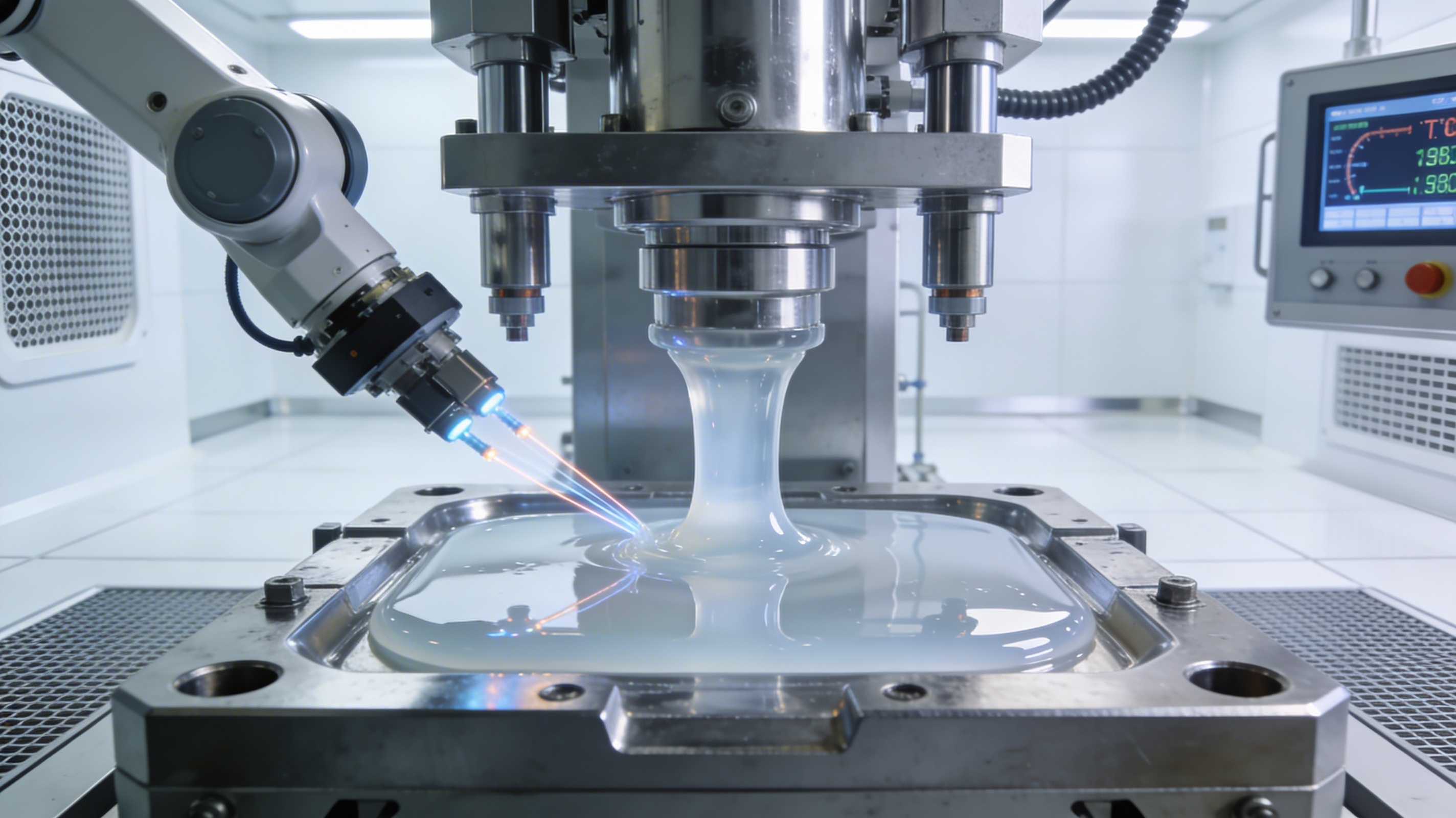
The Role of Surface Finish
The surface finish often defines the user’s first impression of your product’s quality.
Consider this:
- Matte finishes reduce fingerprints and provide a premium “soft-touch” feel.
- Laser etching allows for precise, permanent branding and iconography.
- Anti-dust coatings prevent the silicone from attracting lint and debris.
Your choice of finish should align with the end-user’s environment.
Treatment Best Practices
Preparation is the most critical step in any secondary surface operation.
Here is what works:
- Plasma or corona treatment increases the surface energy for better bonding.
- Using specialized silicone inks prevents peeling or fading over time.
- Cleanroom environments for coating prevent dust particles from being trapped.
Success is determined by how well the surface is prepared before the finish is applied.
| Treatment Type | Primary Benefit | Common Application |
|---|---|---|
| PU Coating | Increases wear resistance | Electronic device covers |
| Laser Marking | High-precision legends | Medical equipment keypads |
| Plasma Cleaning | Improves adhesive bond | Overmolded metal inserts |
Choosing the right surface technology ensures your product maintains its aesthetic appeal throughout its lifecycle.
Key Takeaway: Professional surface treatments provide both functional protection and a high-end finish that sets your product apart from competitors.
Why is a Robust Quality Inspection System Needed?
A robust inspection system is necessary to detect microscopic defects and dimensional deviations before products reach the client during Silicone Customization. Quality is not just about the final check; it is about building verification into every stage of the manufacturing process. Relying on a comprehensive QC framework protects your supply chain from the risks of mass recalls or assembly line stoppages.
Role of Quality Inspection
Inspection serves as the final gatekeeper for your brand’s integrity.
You need to know:
- Visual standards must be clearly defined to avoid subjective interpretations.
- Automated Optical Inspection (AOI) provides speed and accuracy for small parts.
- Physical testing validates that the parts meet the required mechanical specs.
Without inspection, you are simply hoping for the best.
Building Quality Frameworks
A successful framework combines human expertise with high-precision measuring equipment.
The secret?
- Incoming Quality Control (IQC) verifies raw materials before they enter production.
- In-Process Quality Control (IPQC) catches errors at the machine level.
- Final Quality Control (FQC) ensures only 100% compliant parts are shipped.
A multi-layered approach is the most effective way to catch rare defects.
| Inspection Tool | Capability | Metric Tracked |
|---|---|---|
| 2.5D Projector | Dimensional verification | Critical-to-quality (CTQ) sizes |
| Hardness Tester | Material validation | Shore A Durometer |
| Pull Tester | Bonding strength | Newtons (Force) |
A data-backed inspection report provides the transparency you need to trust your manufacturing partner.
Key Takeaway: Investing in a multi-stage inspection system minimizes risk and guarantees that every shipment meets your exact engineering specifications.
How Does Silicone Customization Benefit from DFM?
Design for Manufacturing (DFM) simplifies complex geometries, reducing the likelihood of air traps and material waste in Silicone Customization. By reviewing the design early, you can identify features that are difficult or expensive to mold. Implementing these changes before the tooling is built saves significant time and money during the production phase.
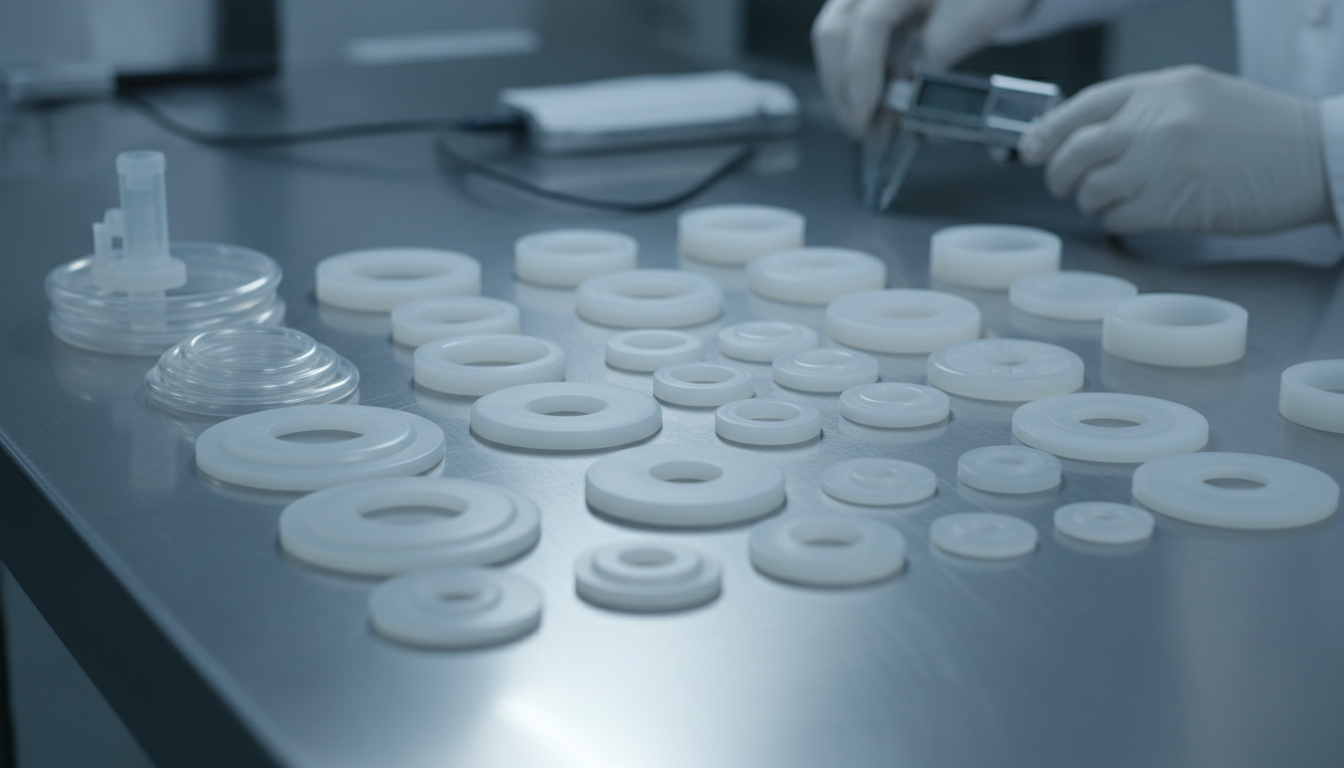
Reducing Engineering Risks
DFM acts as a proactive insurance policy against future production headaches.
The truth is:
- Uniform wall thickness prevents uneven cooling and part warping.
- Rounded corners improve material flow and reduce stress concentrations.
- Simplified parting lines make deflashing easier and more consistent.
Small design tweaks can lead to massive improvements in manufacturing yield.
Tolerance Planning Success
Establishing realistic tolerances is critical for ensuring part functionality without inflating costs.
Keep in mind:
- Tight tolerances require more expensive tooling and slower cycle times.
- Silicone’s high shrink rate makes extremely fine tolerances difficult to maintain.
- Functional dimensions should be prioritized over non-critical aesthetic areas.
Good DFM finds the balance between precision and manufacturability.
| DFM Checkpoint | Objective | Result of Optimization |
|---|---|---|
| Wall Thickness | Uniform material flow | Reduced sink marks and warping |
| Undercuts | Simplify part ejection | Lower tooling cost and complexity |
| Draft Angles | Smooth demolding | Minimized surface scratching |
Collaboration between your designers and the factory engineers is the most effective way to optimize DFM.
Key Takeaway: Early DFM reviews eliminate manufacturing bottlenecks and ensure your product is designed for high-yield, cost-effective production.
Which Molding Process Fits Your Specific Project?
Selecting the right molding process depends on your volume requirements, part complexity, and budget constraints for Silicone Customization. Liquid Silicone Rubber (LSR) molding is ideal for high-precision, high-volume parts, while compression molding offers a lower-cost entry point for simpler geometries. Understanding the strengths of each method allows you to optimize your production strategy.
Liquid Silicone Rubber (LSR)
LSR is the gold standard for intricate parts that require high precision and speed.
Why choose LSR?
- Fast cycle times make it perfect for high-volume mass production.
- Automated processes reduce labor costs and human error.
- Superior dimensional stability allows for incredibly tight tolerances.
If you need millions of identical, complex parts, LSR is the answer.
Overmolding Applications
Overmolding allows you to bond silicone directly to plastic or metal substrates for hybrid components.
The advantage is clear:
- It eliminates the need for secondary assembly and adhesives.
- The resulting bond is often stronger than a traditional mechanical connection.
- It enables the creation of waterproof and shock-resistant enclosures.
This process is essential for modern electronics and medical devices.
| Process | Best For | Tooling Cost |
|---|---|---|
| LSR Molding | High volume, complex parts | High |
| Compression | Low volume, simple parts | Low |
| Overmolding | Multi-material components | Moderate to High |
Selecting the optimal process ensures you don’t overpay for precision you don’t need or compromise on quality for cost.
Key Takeaway: Matching your project’s specific needs to the right molding technology is the most effective way to control both quality and cost.
How Do You Avoid Adhesive Failures in Bonding?
Avoiding adhesive failure requires matching the chemical polarity of the substrate with specific primers or overmolding techniques in Silicone Customization. Silicone’s “non-stick” nature makes it notoriously difficult to bond to other materials like metals or plastics. Using the wrong adhesive or poor surface preparation will lead to delamination and product failure in the field.
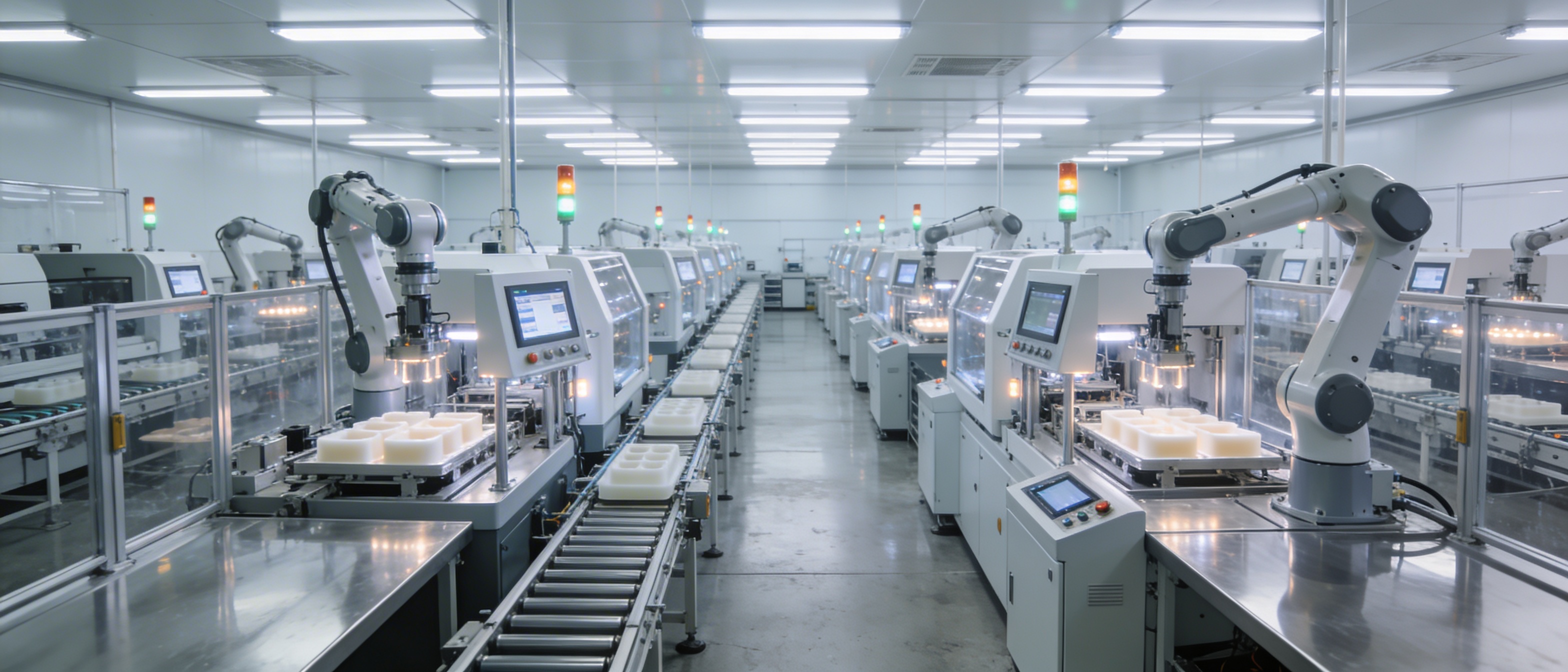
Selecting Right Adhesives
The chemistry of the adhesive must be compatible with both the silicone and the secondary substrate.
Check this out:
- Pressure-sensitive adhesives (PSAs) like 3M tapes are great for flat surfaces.
- Structural adhesives provide high-strength bonds for load-bearing parts.
- Primers are often necessary to “activate” the silicone surface for bonding.
The wrong glue will simply slide off the silicone once it cures.
Surface Prep Techniques
Even the best adhesive will fail if the surface is contaminated with oils or mold release agents.
The key steps:
- Solvent cleaning removes residual oils and fingerprints.
- Mechanical abrasion creates more surface area for the adhesive to grab.
- Plasma treatment changes the molecular structure of the surface for maximum grip.
Cleanliness is the most important variable in any bonding operation.
| Preparation Method | Mechanism | Typical Use Case |
|---|---|---|
| Chemical Primer | Molecular bridging | Bonding silicone to stainless steel |
| Sandblasting | Physical interlocking | Heavy-duty industrial seals |
| Ultrasonic Cleaning | Contaminant removal | High-precision medical components |
Rigorous bonding tests, such as peel or shear tests, are necessary to validate the assembly’s strength.
Key Takeaway: Success in silicone bonding depends entirely on the chemical compatibility and the meticulousness of the surface preparation process.
Why Should You Partner with a Full-Service Factory?
Partnering with a full-service factory consolidates your supply chain and ensures accountability from tooling to final assembly during Silicone Customization. When you use multiple vendors for molding, printing, and assembly, you introduce “supplier gaps” where errors can hide. A single-source partner manages the entire workflow, reducing lead times and ensuring that the final product meets your vision.
Integrated Design Support
A factory with in-house engineering can provide instant feedback on your designs.
The result?
- Tooling issues are identified and fixed before they reach the production floor.
- Engineering changes are implemented much faster than with third-party shops.
- Design intent is preserved because the team making the part also designed the tool.
Direct communication between design and production is a massive competitive advantage.
Stable Mass Production
Integrated facilities can maintain tighter control over the transition from prototype to scale.
Here is the truth:
- The same team that built the mold manages the production machines.
- Quality standards are applied consistently across all secondary operations.
- Logistics are simplified because you are only tracking one supplier.
This stability leads to more predictable lead times and higher overall quality.
One-Stop Logistics Care
Handling the final assembly and packaging in the same facility reduces the risk of transit damage.
Think about it:
- Parts don’t need to be shipped between multiple vendors for finishing.
- Custom packaging can be designed to protect sensitive silicone surfaces.
- Export-ready documentation is handled by a team familiar with international standards.
You spend less time managing vendors and more time growing your business.
| Service Phase | Full-Service Benefit | Fragmented Supplier Risk |
|---|---|---|
| Tooling | Integrated DFM feedback | Design-to-manufacturing disconnect |
| Molding | Real-time troubleshooting | Slow response to quality issues |
| Assembly | Single point of accountability | Finger-pointing between vendors |
Choosing a full-service partner eliminates the “hidden costs” of managing a complex, multi-vendor supply chain.
Key Takeaway: A full-service factory provides the technical depth and operational stability needed to bring complex silicone products to market successfully.
How Can Technology Drive Silicone Customization?
Modern technology drives quality through automated optical inspection and advanced simulation tools that predict material flow in Silicone Customization. As components become smaller and more complex, human eyes are no longer enough to guarantee perfection. Implementing Industry 4.0 solutions allows factories to achieve zero-defect targets while maintaining competitive pricing for global markets.
Automated Optical Checks
Cameras and AI algorithms can inspect parts faster and more accurately than any human operator.
The benefit:
- 100% inspection becomes feasible even for high-volume orders.
- Microscopic cracks or bubbles are identified in milliseconds.
- Data logs help identify trends and prevent future defects.
Automation ensures that your quality standards are met every single time.
Advanced Simulation Tools
Predictive software allows engineers to “mold” a part virtually before the tool is even built.
The result?
- Air traps and weld lines are predicted and eliminated in the design phase.
- Injection pressures and temperatures are optimized for maximum efficiency.
- Material waste is minimized, lowering the overall cost per part.
Simulation removes the “trial and error” from the development process.
Data-Driven Improvements
Connecting machines to a central network allows for real-time adjustments based on performance data.
Consider this:
- Sensors detect subtle shifts in machine performance before they impact quality.
- Predictive maintenance prevents machine breakdowns during critical runs.
- Production schedules are optimized based on real-time machine availability.
Data is the fuel that drives modern manufacturing excellence.
| Technology | Primary Function | Business Impact |
|---|---|---|
| Mold Flow Analysis | Predicts material behavior | Shortens development cycles |
| CCD Inspection | Detects surface defects | Reduces customer complaints |
| ERP Systems | Manages production data | Increases supply chain transparency |
Embracing these technologies allows you to stay ahead of the curve in an increasingly demanding global market.
Key Takeaway: Leveraging advanced manufacturing technology is the only way to meet the precision and volume requirements of the next generation of silicone products.
*
Summary and Next Steps
Achieving excellence in silicone manufacturing is a journey that starts with smart material choices and ends with rigorous quality control. By avoiding common pitfalls like poor mold design or inadequate surface preparation, you can ensure your products perform reliably in the field. Our factory-direct services are built to manage these risks for you, providing in-house tooling, stable mass production, and expert DFM support.
We are committed to being the repeatable, controlled backbone of your supply chain, helping you launch faster with fewer quality risks. Whether you are developing medical-grade seals or consumer electronics keypads, our brand vision is to deliver precision parts that exceed your expectations. To see how our integrated manufacturing process can support your next project, contact us today for a comprehensive DFM review and quotation.
*
Frequently Asked Questions
Can I customize the hardness of the silicone?
Absolutely. Silicone can be formulated to various durometers, typically ranging from Shore 10A (very soft) to 80A (hard), to perfectly match the flexibility and durability requirements of your specific application.
What’s the best way to prevent air bubbles?
The most effective methods include utilizing vacuum-assisted molding processes, optimizing venting systems within the mold design, and maintaining precise control over material mixing and injection pressures.
How do I know if a mold design is optimized?
Optimization is confirmed through professional Design for Manufacturing (DFM) reviews, which evaluate draft angles, gate locations, and wall thickness to ensure consistent material flow and easy demolding.
Can I combine silicone with metal parts?
Yes. This is achieved through advanced overmolding or insert molding techniques, where silicone is chemically or mechanically bonded to metal substrates to create durable, high-performance hybrid components.
What’s the best material for medical use?
Medical-grade Liquid Silicone Rubber (LSR) is generally considered the gold standard, as it offers superior biocompatibility, can be sterilized easily, and meets stringent regulatory requirements like FDA and ISO 10993.