
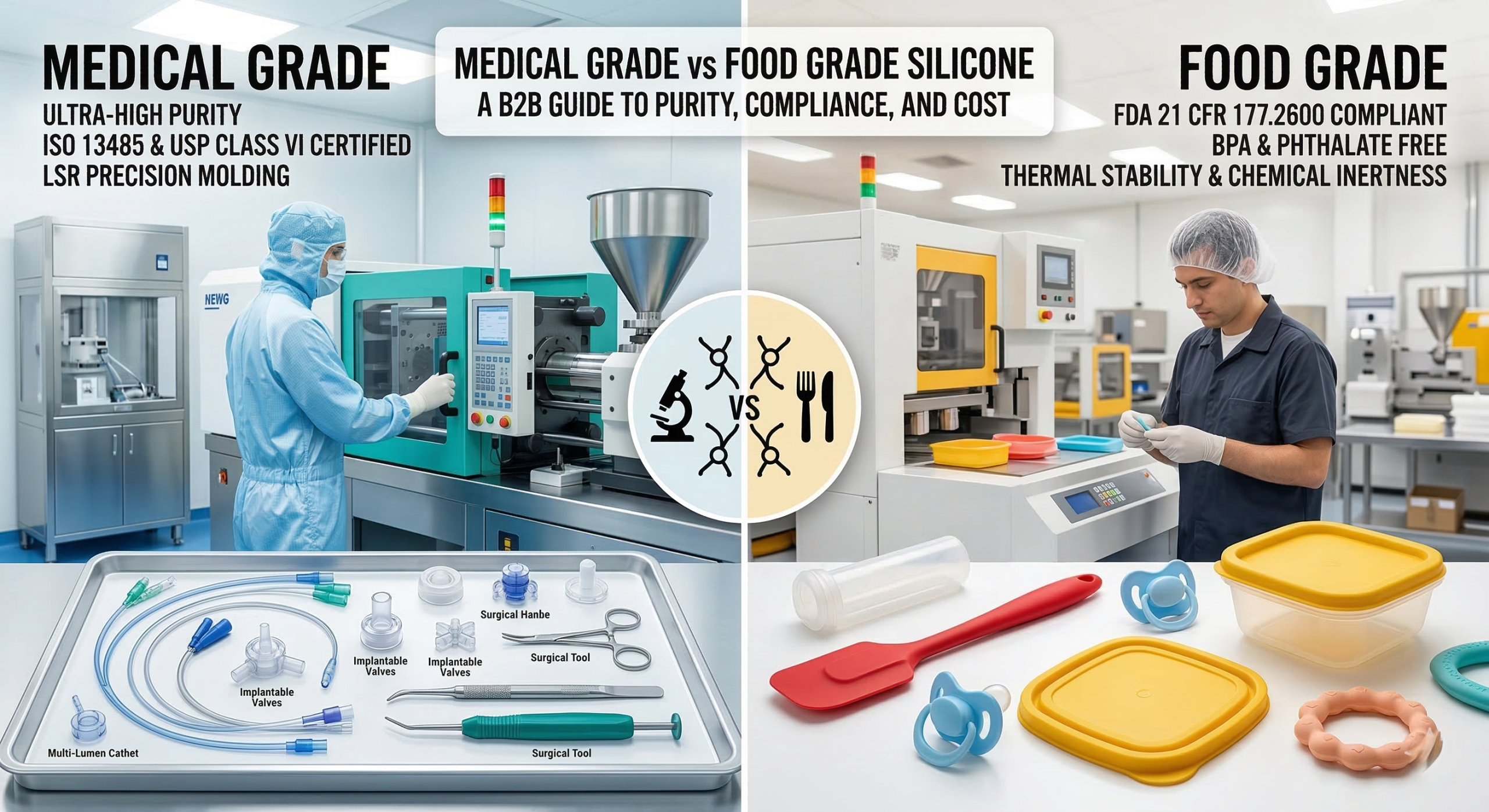
No, medical-grade silicone is not the same as food-grade silicone because it requires significantly higher purity levels and more rigorous biocompatibility testing. You might be struggling with fluctuating quality from your current suppliers or facing regulatory delays that threaten your launch timeline. Understanding if is medical grade silicone the same as food grade silicone? is the first step toward ensuring your product meets international safety standards without overspending.
Is medical grade silicone the same as food grade silicone?
No, they are distinct materials designed for different levels of human contact and safety regulation. While both share a similar molecular structure, is medical grade silicone the same as food grade silicone? is a question of refinement. Food grade focuses on preventing contamination during ingestion, whereas medical grade must ensure zero adverse reactions when touching internal tissues.
What is the core difference?
Think about this:
The core difference lies in the level of purification and the environment in which the material is molded. Medical grades undergo extreme filtration to remove volatile organic compounds that might cause irritation.
Why does the grade matter?
Choosing the wrong grade can lead to:
- Regulatory rejection of your final device.
- Unexpected material degradation in harsh environments.
- High recall risks due to skin sensitivities or leaching.
Key Takeaway: The fundamental distinction between these two grades is the intensity of the refining process and the intended regulatory environment.
| Feature | Food-Grade | Medical-Grade |
|---|---|---|
| Contact Type | Ingestion/Kitchen | Tissue/Fluid Contact |
| Purity Level | High | Ultra-High |
| Common Use | Spatulas, Lids | Catheters, Straps |
This distinction is vital for B2B procurement professionals who must balance performance with compliance costs.
What makes food-grade silicone safe for kitchen use?
Food-grade silicone is deemed safe because it is chemically inert and does not leach toxic chemicals into food products. When evaluating is medical grade silicone the same as food grade silicone?, you must realize that food-grade materials are specifically tested for BPA-free compliance. These parts can withstand extreme temperature cycles from the freezer to the oven without losing their structural integrity.
Understanding thermal stability
Let’s be honest:
Thermal stability is the hallmark of silicone used in the food industry. These materials remain flexible and non-reactive between -60°C and 200°C.
Non-toxic chemical profiles
Key safety features include:
- Resistance to mold and bacteria growth.
- Absence of fillers that could contaminate oils or acids.
- Hydrophobic properties that prevent odor absorption.
Key Takeaway: Food-grade silicone relies on chemical inertness and wide temperature resistance to maintain safety during repeated kitchen use.
| Safety Factor | Capability |
|---|---|
| Temperature | -60°C to +200°C |
| Chemicals | BPA & Phthalate Free |
| Bacterial | Highly Resistant |
Ensuring these standards are met requires a partner who understands the nuances of food-safe compounding.
How is medical grade silicone the same as food grade silicone in purity?
Both materials are similar in that they are far superior to industrial-grade rubbers in terms of elemental purity. However, when asking is medical grade silicone the same as food grade silicone? for high-performance applications, you see that medical grades take purity to a microscopic level. Both are non-reactive, but medical grade is stripped of nearly all potential irritants.
Shared base properties
Believe it or not:
Both grades utilize high-quality siloxane chains as their base, providing excellent durability and UV resistance. They are both highly versatile and can be colored to match any brand identity.
The gap in refining standards
The refining differences are clear:
- Medical grade requires ISO 10993 biocompatibility testing.
- Food grade focuses on FDA 21 CFR 177.2600 compliance.
- Medical grade materials often utilize platinum curing for maximum purity.
Key Takeaway: While they share a base chemical structure, medical grade undergoes additional refining to remove volatile compounds.
| Property | Food Grade | Medical Grade |
|---|---|---|
| Curing Method | Peroxide or Platinum | Mostly Platinum |
| Volatiles | Minimal | Near Zero |
| Surface Feel | Smooth | Ultra-Smooth/Silk |
This purity gap is what allows medical silicone to remain inside the human body without causing rejection.
What are the strict certifications for medical-grade parts?
Medical-grade parts must adhere to strict global certifications to ensure they are safe for clinical environments. In the debate of is medical grade silicone the same as food grade silicone?, the presence of ISO 13485 certification is a major differentiator. This standard ensures that every part is traceable and manufactured under a controlled quality management system.
The role of USP Class VI
Here is the kicker:
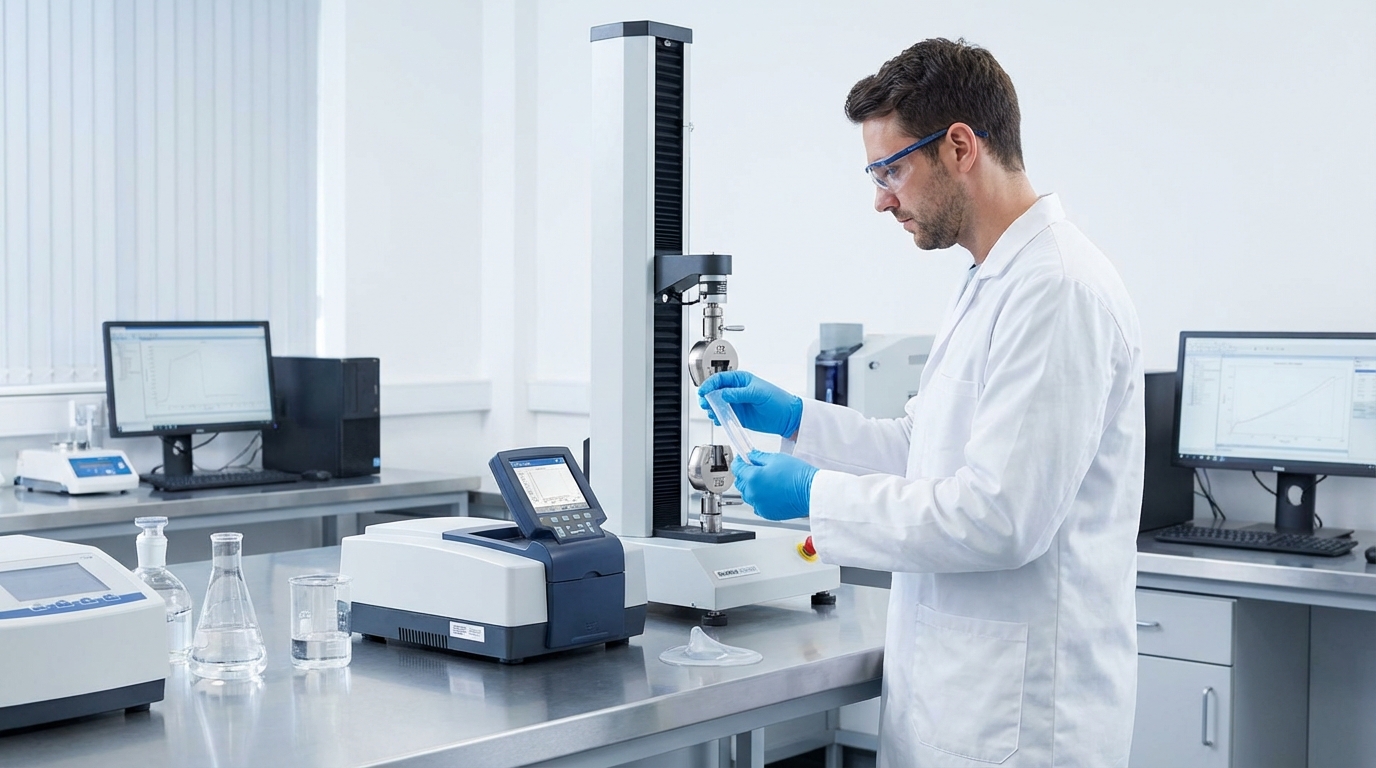
USP Class VI is one of the most stringent tests for medical materials, involving systemic toxicity and intracutaneous reactivity. Passing this test ensures the material is safe for permanent or temporary implantation.
Biocompatibility testing protocols
Typical medical tests include:
- Cytotoxicity (cell health impact).
- Sensitization (allergic reaction potential).
- Irritation (skin and tissue response).
Key Takeaway: Certifications like ISO 13485 and USP Class VI provide the legal and safety framework for medical silicone applications.
| Certification | Requirement |
|---|---|
| ISO 13485 | Quality Management System |
| ISO 10993 | Biocompatibility Standards |
| USP Class VI | Toxicity and Reactivity |
Adherence to these protocols is non-negotiable for any medical device component manufacturer.
Does medical grade silicone the same as food grade silicone cost more?
Yes, medical grade is more expensive because of the extensive testing, documentation, and cleanroom labor required. When you analyze is medical grade silicone the same as food grade silicone? from a budget perspective, you must account for the certification fees. The raw material itself is often more costly due to the high-grade platinum catalyst used during the curing process.
Why manufacturing overhead is higher
It gets better:
Manufacturing medical parts requires specialized cleanrooms that prevent dust and airborne particles from entering the mold. These environments increase operational costs but guarantee the purity your medical clients demand.
The cost of compliance insurance
B2B buyers should expect:
- Higher per-unit costs for low-volume medical runs.
- Fees for comprehensive documentation and material traceability.
- Investment in specific validation testing for new designs.
Key Takeaway: The increased cost of medical silicone is a direct reflection of the rigorous testing and sterile manufacturing environments required.
| Cost Driver | Food Grade | Medical Grade |
|---|---|---|
| Environment | Standard Workshop | ISO Cleanroom |
| Catalyst | Peroxide/Platinum | High-Purity Platinum |
| Traceability | Basic | Full Lot Traceability |
Understanding these drivers helps you justify the investment in premium medical materials to your stakeholders.
Why is biocompatibility critical for healthcare silicone?
Biocompatibility is critical because it ensures the material does not cause a toxic or immunological response in the body. If you are wondering is medical grade silicone the same as food grade silicone?, remember that food grade is only tested for safety when touched or ingested. Medical grade must be safe for blood contact and prolonged interaction with sensitive internal membranes.
Minimizing extractables and leachables
Think about it:
Extractables are chemicals that can be pulled out of a material under aggressive conditions, while leachables migrate naturally during use. Medical silicone is engineered to have almost zero migration, protecting the patient’s system.
Long-term vs. short-term contact
Biocompatibility categories include:
- Surface contact (skin or mucosal membranes).
- External communicating (blood or bone contact).
- Implant devices (long-term internal placement).
Key Takeaway: Biocompatibility is the defining safety metric that prevents patient injury and ensures medical device functionality.
| Testing Category | Focus Area |
|---|---|
| Cytotoxicity | Cell viability |
| Genotoxicity | Genetic impact |
| Hemocompatibility | Blood interaction |
Technical validation through these tests is what separates medical success from costly legal liability.
Can you use medical-grade silicone for food applications?
You can technically use medical-grade silicone for food applications, but it is rarely done due to the prohibitive cost. When asking is medical grade silicone the same as food grade silicone?, the answer is that medical grade exceeds all food-grade requirements. Using it for a simple kitchen spatula would provide no functional benefit while tripling your manufacturing budget.
Is it overkill for consumer goods?
The bottom line is:
For standard consumer products, food-grade silicone provides all the safety and durability you need. Medical grade is “over-engineered” for food storage, offering purity that the human digestive system doesn’t strictly require.
The hybrid product approach
Some brands choose a hybrid strategy:
- Medical grade for parts touching the mouth (like pacifiers).
- Food grade for the handles or peripheral components.
- Strategic branding that emphasizes “medical-grade” safety to consumers.
Key Takeaway: Medical-grade silicone is safe for food but usually represents an unnecessary financial burden for standard kitchenware.
| Usage Scenario | Recommended Grade |
|---|---|
| Kitchen Utensil | Food Grade |
| Baby Teether | High-Grade Food or Medical |
| Implantable Valve | Medical Grade |
Optimizing your material choice prevents “over-speccing” and keeps your product pricing competitive in the B2B market.
How does the manufacturing process differ between grades?
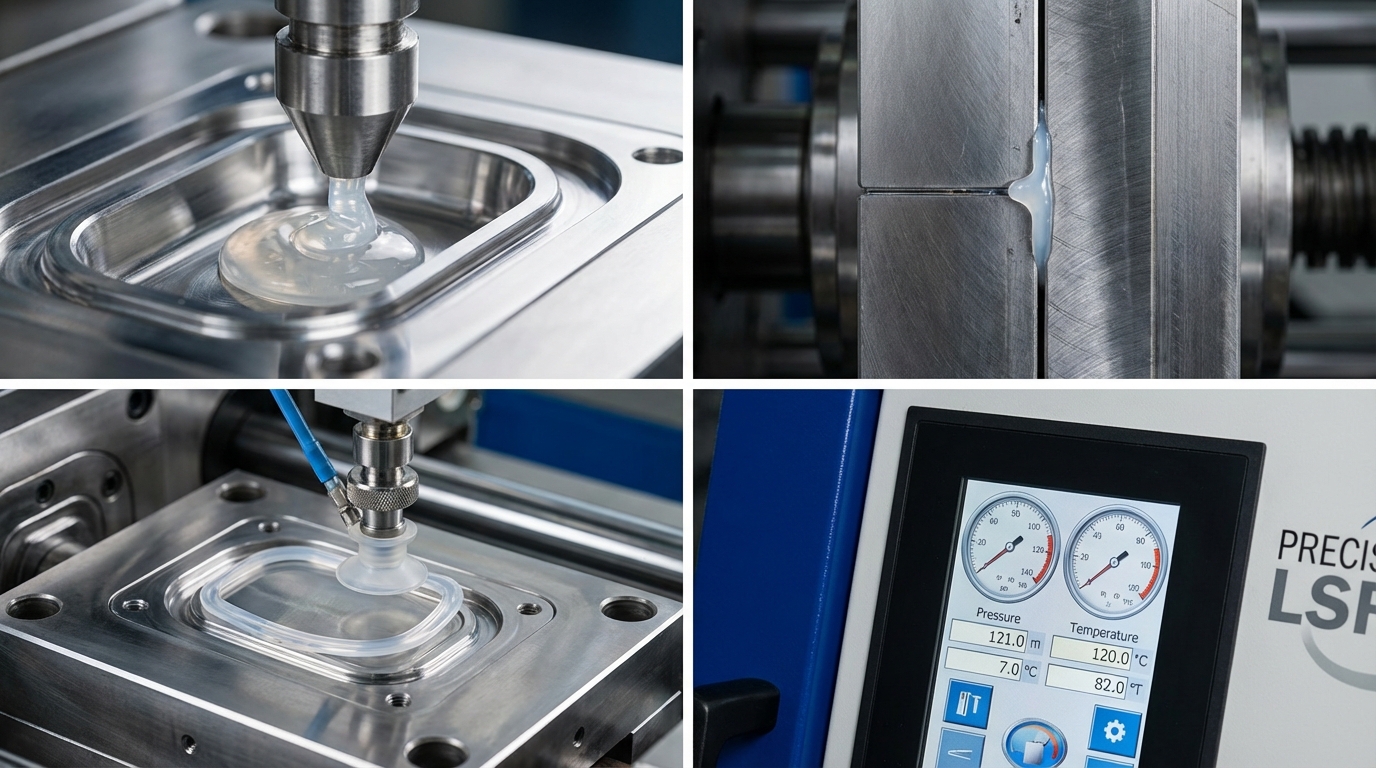
The manufacturing processes differ primarily in the level of environmental control and the precision of the molding equipment. In the context of is medical grade silicone the same as food grade silicone?, medical parts often require Liquid Silicone Rubber (LSR) injection molding. This closed-system process prevents external contaminants from entering the material during the production cycle.
Liquid Silicone Rubber (LSR) molding
You might wonder:
LSR molding is the preferred method for medical parts because it allows for high precision and repeatable tolerances. This process is highly automated, reducing the risk of human error and contamination.
Cleanroom environmental controls
Key cleanroom features include:
- HEPA filtration to remove 99.97% of particles.
- Controlled humidity and temperature to ensure material stability.
- Gowned workers to prevent skin or hair contamination.
Key Takeaway: Medical silicone production requires sterile cleanroom environments and high-precision LSR injection technology to meet safety standards.
| Factor | Food Grade Process | Medical Grade Process |
|---|---|---|
| Mold Type | Compression/Injection | Precision LSR Injection |
| Environment | Clean Workshop | ISO 7/8 Cleanroom |
| Handling | Manual/Standard | Automated/Sterile |
This level of control ensures that every part leaving the factory is free from defects and contaminants.

Is medical grade silicone the same as food grade silicone for babies?
For infant care products, the line between food and medical grade often blurs to ensure maximum safety. When you is medical grade silicone the same as food grade silicone? for items like pacifiers, many manufacturers opt for medical-grade materials. This is because babies have developing immune systems and are extremely sensitive to any chemical leaching.
Safety standards for infant care
But wait, there’s more:
Infant products must be resistant to saliva, easy to sterilize, and completely free of any flavor or odor. Medical-grade silicone provides a silkier texture that is gentler on a baby’s gums compared to standard food-grade options.
Durability and sterilization
Infant care requirements include:
- Resistance to repeated boiling and steam sterilization.
- High tear strength to prevent choking hazards.
- Hypoallergenic properties to avoid skin rashes.
Key Takeaway: For baby products, medical-grade silicone is often used to provide an extra layer of safety and a superior tactile experience.
| Product | Preferred Grade | Reason |
|---|---|---|
| Baby Bottle Nipple | Medical Grade | Mouth contact/Purity |
| Baby Plate | Food Grade | Efficiency/Durability |
| Teething Ring | Medical Grade | Gums contact/Safety |
Choosing a higher grade for infant care builds significant brand trust with parents who prioritize safety above all else.
Which silicone grade is right for your custom project?
Selecting the right grade depends on your industry regulations, the end-use environment, and your target price point. Is medical grade silicone the same as food grade silicone? No, but choosing the right one requires a deep dive into your product’s functional requirements. If your part will be implanted or used in surgery, medical grade is the only legal and ethical choice.
Evaluating your application risks
Make no mistake:
If your product has minimal skin contact and is used for food storage, food-grade silicone will save you money without compromising safety. However, for wearable medical tech or surgical tools, the liability risks of using a lower grade are too high.
Selecting the right production partner
What to look for in a partner:
- In-house mold making for faster DFM iterations.
- Both LSR and compression molding capabilities.
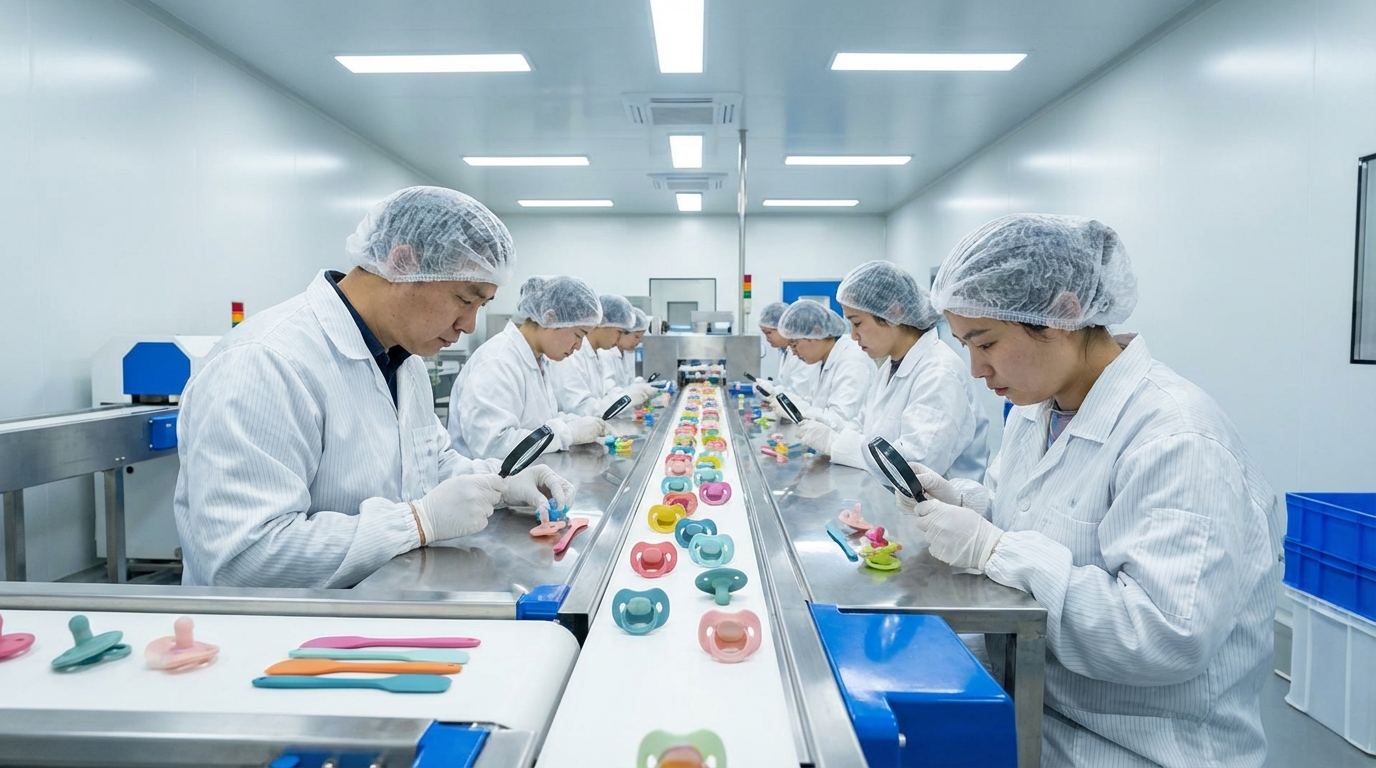
- Robust QC systems with 100% inspection availability.
Key Takeaway: Your material choice should align with both your regulatory needs and your project’s budgetary constraints.
| Selection Criteria | Choice |
|---|---|
| High Regulatory Risk | Medical Grade |
| Consumer Kitchenware | Food Grade |
| Infant Care Tools | Medical or High-Food |
By carefully evaluating these factors, you can launch a stable, high-quality product that stands out in the B2B marketplace.
*
Selecting between medical and food-grade silicone is a strategic decision that impacts your product’s safety, cost, and marketability. We have solved the common problems of material mismatch and regulatory non-compliance for clients across the EU and US. Our vision is to provide precision engineering that eliminates quality drift, allowing you to scale your manufacturing with confidence. Whether you need biocompatible medical parts or high-durability infant care solutions, we are here to support your project from tooling to mass production. contact us today to receive a professional DFM review and start your journey toward manufacturing excellence.
FAQs
Can I use food-grade silicone for long-term implants?
No, because food-grade silicone is not tested for biocompatibility and may cause severe tissue rejection or inflammatory responses.
What’s the best way to tell if silicone is medical grade?
Request a certification of compliance (CoC) then check for ISO 13485 or USP Class VI testing results from the raw material supplier.
Can I boil medical-grade silicone to sterilize it?
Yes, since medical-grade silicone is highly heat-resistant and will maintain its physical properties even after multiple steam or boiling cycles.
What’s the best curing agent for food-grade parts?
Platinum curing is the best choice because it does not produce the “blooming” effect or chemical byproducts often associated with peroxide curing.
Can I get custom colors for medical-grade silicone?
Yes, provided the pigments used are also medical-grade and certified for biocompatibility to ensure the final part remains safe.