
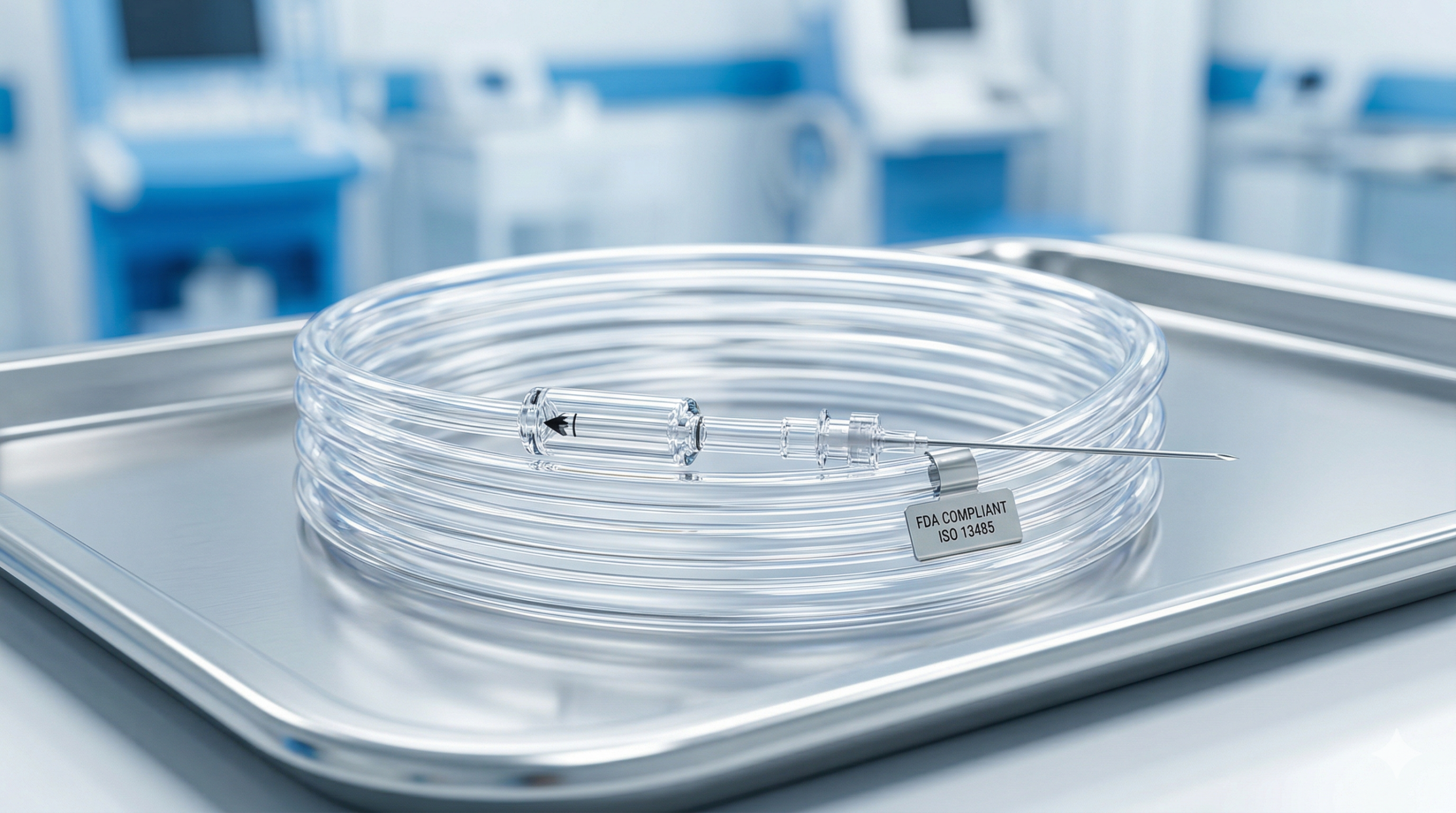
Medical silicone tubing acts as a highly pure, biocompatible extrusion engineered for safe fluid transfers within modern healthcare environments. Sourcing reliable materials for critical medical devices often feels like moving through a dangerous minefield of compliance risks and potential patient safety hazards. A single contamination issue or failed clinical audit can rapidly derail an entire manufacturing project while threatening lives. Fortunately, understanding physical properties and selection criteria of Medical Silicone helps you secure FDA-compliant, durable components consistently.
1. What Is Medical Silicone Tubing Exactly?
Medical silicone tubing functions as a flexible, highly durable conduit engineered specifically for transporting life-saving medical fluids safely. You need materials that meet rigorous biocompatibility standards when designing complex healthcare devices today. Medical Silicone provides necessary chemical inertness and purity required for preventing adverse biological patient reactions. Experts widely recognize this advanced material for delivering superior performance compared against traditional industrial plastics.
How Does It Differ From Standard Silicone?
Standard silicone works great for industrial uses, whereas medical-grade versions undergo much stricter purification processes. Here is the deal… healthcare applications demand a completely sterile environment completely free from leachable chemicals. Manufacturers process these specific premium materials inside controlled Class 100k cleanrooms guaranteeing absolute hygiene standards.
- Leaves zero toxic byproducts.
- Delivers high tear resistance.
- Guarantees complete tissue biocompatibility.
Why Does Biocompatibility Matter Most?
Biocompatibility guarantees that implanted tubing will not trigger dangerous immune responses upon contacting sensitive bodily tissues. Such safety remains paramount for protecting patients during invasive surgeries or continuous physiological monitoring procedures.
Key Takeaway: Prioritizing true medical-grade silicone protects your vulnerable patients alongside your valuable brand reputation.
| Feature | Standard Silicone | Medical Silicone |
| Material Purity | Moderate Grade | Ultra-High Grade |
| Cleanroom Setup | Not Required | Class 100k Environment |
| Safety Approvals | Basic Industrial | ISO 13485 Compliance |
This table clearly illustrates why upgrading toward medical-grade materials remains non-negotiable for critical healthcare applications.
2. Why Choose Medical Silicone Over Other Materials?
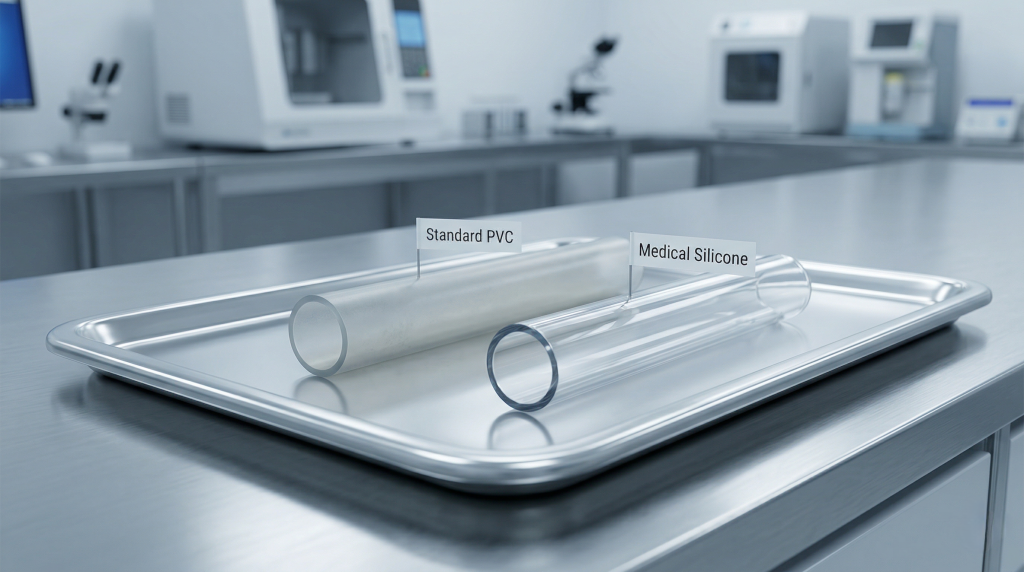
Medical silicone vastly outperforms cheap alternatives like PVC because of exceptional thermal stability and chemical resistance. Your critical medical devices face incredibly harsh operational environments ranging from extreme sterilization heat toward abrasive pharmaceutical fluids. Using high-quality Medical Silicone guarantees that internal components will never degrade, crack, or leach harmful substances over time.
Is It Truly Better Than PVC?
PVC plastic often contains dangerous plasticizers like DEHP which can leach into pharmaceutical fluids posing severe health risks. But here’s the kicker… silicone remains naturally flexible without requiring any dangerous chemical structural additives. It stays remarkably resilient and clear without compromising necessary patient safety protocols during treatments.
How Does It Handle Extreme Temperatures?
Unlike many cheap plastics that melt or become dangerously brittle, this advanced material maintains perfect structural integrity across vast temperature ranges. You can confidently deploy these tubes during extreme freezing applications or intense high-heat sterilization scenarios.
- Resists melting during steam autoclaving.
- Stays flexible within freezing environments.
- Maintains original geometric structural integrity.
Key Takeaway: Selecting premium silicone guarantees your expensive devices survive harsh medical environments without catastrophic failing.
| Material Type | Thermal Stability | Flexibility Factor | Biocompatibility Level |
| PVC Plastic | Low Rating | Additive-dependent | Poor Safety |
| Natural Latex | Moderate Rating | High Flexibility | Highly Allergenic |
| Pure Silicone | Excellent Rating | Natural State | Superior Safety |
Analyzing these core material properties reveals silicone as the absolute clear winner for safety-critical healthcare devices.
3. What Are the Main Types of Medical Silicone?
Primary categories include Liquid Silicone Rubber (LSR) alongside High Consistency Rubber (HCR), each perfectly suited for different manufacturing processes. Choosing a wrong material format can easily cause massive production delays and structural failures within your final product design. Opting for the correct Medical Silicone variation guarantees ideal mechanical performance and cost-effectiveness tailored for your specific application.
What Makes LSR So Special?
Liquid Silicone Rubber remains perfect for producing high-precision, intricate medical parts due its excellent flowability during injection molding. What’s the real story? LSR technology offers unmatched dimensional consistency making it perfect for high-volume automated medical manufacturing.
- Features incredibly fast curing times.
- Works ideally for complex geometries.
- Provides highly stable mass production.
When Should You Select HCR?
HCR, commonly called solid silicone, typically works best during traditional extrusion processes like creating long continuous tubes. It provides excellent baseline mechanical strength while remaining much more cost-effective for fabricating simpler geometric profiles.
Key Takeaway: Match your chosen silicone material state directly with your manufacturing process maximizing both efficiency and product quality.
| Material Type | Physical State | Best Application | Production Method |
| LSR Material | Liquid Form | Precision micro parts | Injection Molding Setup |
| HCR Material | Solid Form | Tubing and Profiles | Extrusion Compression Setup |
Selecting an appropriate silicone physical state directly dictates your overall factory manufacturing speed and final component precision.
4. How Is Medical Silicone Tubing Manufactured?
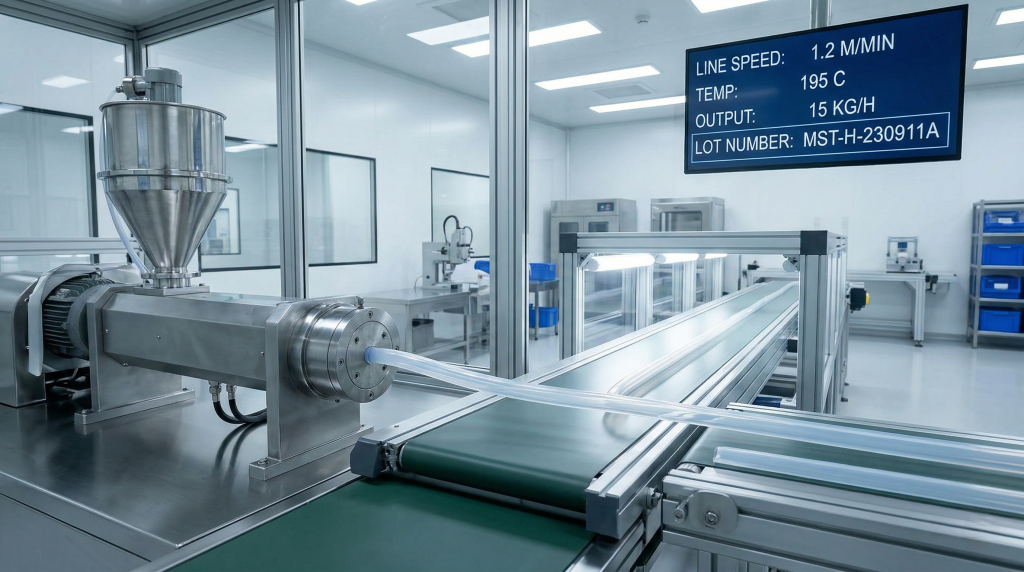
Factories primarily manufacture this tubing through an advanced extrusion process where raw material gets forced directly through a shaped metal die. You absolutely need microscopic precision and profound cleanliness during mass production preventing any structural defects or bacterial contamination. Processing advanced Medical Silicone requires state-of-the-art specialized machinery operating exclusively within strictly controlled environments like a Class 100k Clean Room.
What Does The Extrusion Process Involve?
Extrusion involves forcefully pushing raw uncured silicone through a highly specific die forming a continuous tubular hollow shape. This is where it gets interesting… machines then pass that formed material directly through a high-heat curing oven solidifying its final permanent form.
Why Is Platinum Curing Preferred Today?
Platinum curing represents the absolute gold standard for modern medical applications because it leaves absolutely no toxic chemical byproducts behind. It reliably creates a fundamentally stronger, optically clearer tube compared against older outdated peroxide curing methods.
- Leaves zero harmful peroxide residues.
- Provides higher visual clarity for fluid monitoring.
- Creates a much smoother surface finish.
Key Takeaway: Utilizing platinum-cured extrusion processes remains absolutely necessary for successfully meeting the strictest global medical safety regulations.
| Curing Method | Chemical Byproducts | Visual Clarity | Best Application Area |
| Platinum System | None Produced | High Transparency | Implants and Fluids |
| Peroxide System | Organic Acid Traces | Moderate Opacity | General Industrial Use |
This direct technical comparison highlights exactly why platinum curing absolutely dominates the high-end medical device manufacturing sector today.
5. Where Is Medical Silicone Tubing Commonly Used?
Hospitals extensively utilize this durable tubing inside critical catheters, complex respiratory care equipment, and sensitive biopharmaceutical fluid transfers. Designing life-saving healthcare equipment means you must carefully select versatile components that fit seamlessly into diverse, highly demanding clinical environments. Integrating premium Medical Silicone into your new designs guarantees completely reliable fluid management across various intensive care applications.
Can It Safely Handle Respiratory Care?
Yes, engineers widely utilize these tubes within advanced ventilators and emergency oxygen delivery systems due their extreme flexibility and complete lack of odor. Think about it… vulnerable patients rely on these exact tubes for taking their very next breath, making material purity an absolute non-negotiable necessity.
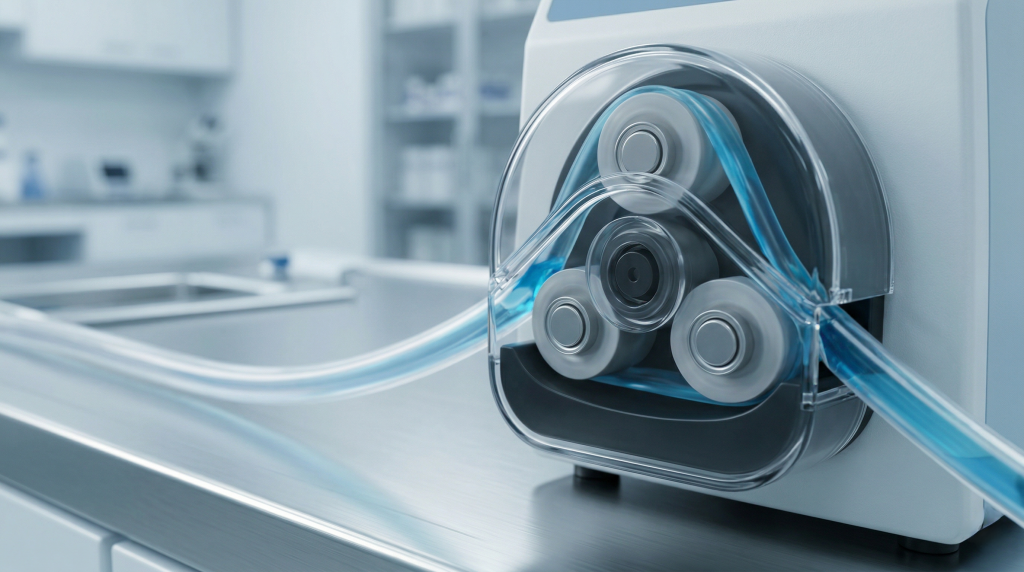
How Does It Perform Inside Peristaltic Pumps?
Peristaltic infusion pumps require highly specialized tubing capable of withstanding constant harsh mechanical squeezing without ever losing their original shape. Silicone natively offers the absolute perfect rebound resilience required for surviving this incredibly high-stress mechanical application.
- Delivers excellent compression set resistance.
- Maintains perfectly consistent fluid flow rates.
- Remains highly durable under constant friction.
Key Takeaway: Incredibly versatile silicone tubing easily adapts fitting virtually any demanding medical fluid transport engineering requirement imaginable.
| Medical Application | Key Performance Requirement | Silicone Material Performance |
| Intravenous Catheters | Absolute Tissue Biocompatibility | Exceptional Safety Rating |
| Patient Respirators | Odorless Clean Environment | Excellent Delivery Rating |
| Fluid Infusion Pumps | Rapid Rebound Resilience | Superior Mechanical Rating |
Reviewing these critical applications clearly demonstrates the material’s truly unparalleled functional adaptability across life-saving healthcare scenarios.
6. How Does Medical Silicone Ensure Patient Safety?
This specialized material creates profound safety by remaining completely chemically inert, fully hypoallergenic, and highly resistant against dangerous bacterial colonization. You simply cannot risk your vulnerable patients’ well-being utilizing substandard materials that might trigger severe allergic reactions or harbor deadly pathogens. Utilizing genuine Medical Silicone actively minimizes these severe risks, offering a completely safe, highly reliable physical interface between the medical device and human tissue.
Is It Truly Safe For Prolonged Skin Contact?
Absolutely, its inherent hypoallergenic nature makes it absolutely perfect for developing modern wearable devices and continuous monitoring skin patches. Ready for the good part? It fundamentally does not cause skin irritation or contact dermatitis, even during incredibly extended patient wear periods.
Does It Actually Prevent Dangerous Bacterial Growth?
While not chemically antimicrobial itself, its incredibly smooth, non-porous physical surface makes it extremely difficult for harmful bacteria adhering and multiplying. Implementing proper hospital cleaning protocols further guarantees that your installed tubing remains completely sterile protecting sensitive patients.
- Features a completely non-porous surface structure.
- Actively resists dangerous bacterial biofilm formation.
- Remains incredibly easy cleaning and sanitizing.
Key Takeaway: Utilizing hypoallergenic, smooth-surfaced silicone parts dramatically reduces the terrible risk concerning hospital-acquired bacterial infections.
| Core Safety Feature | Direct Benefit to Patient | Regulatory Compliance Aspect |
| Hypoallergenic Nature | Actively prevents skin rashes | Meets ISO 10993 Standards |
| Chemically Inert Profile | Stops toxic chemical leaching | Maintains FDA Approval Status |
| Smooth Surface Finish | Reduces bacterial attachment | Enables Easy Hospital Sterilization |
This impressive safety profile confirms exactly why global regulatory bodies heavily favor pure silicone for direct patient contact devices.
7. Can Medical Silicone Tubing Withstand Sterilization?
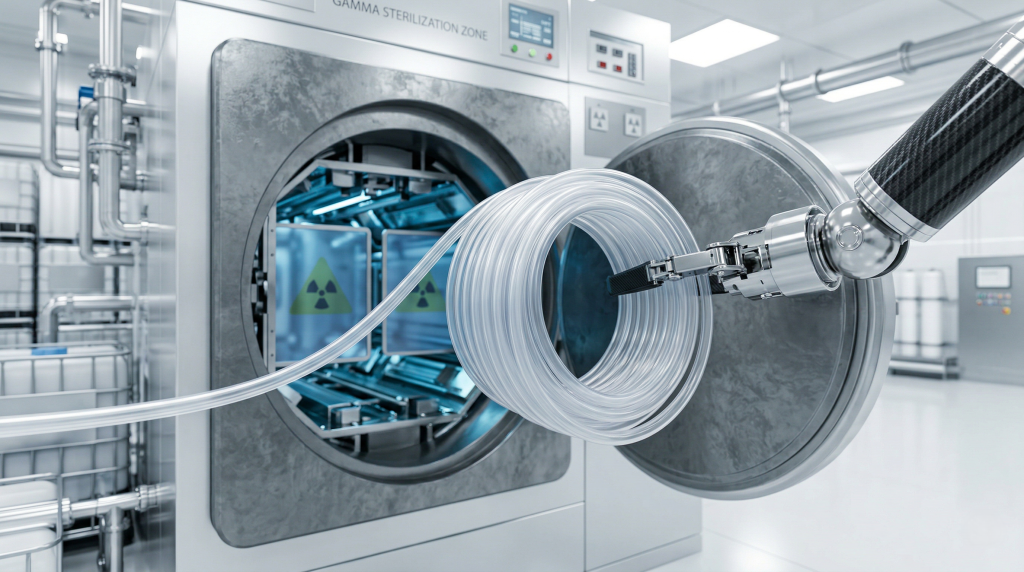
Yes, premium medical tubing effortlessly withstands repeated harsh cycles involving hot autoclaving, intense gamma radiation, and toxic ethylene oxide gas sterilization. Modern hospitals and busy clinics require tough reusable tools surviving intense daily cleaning procedures without ever breaking down mechanically. Choosing resilient Medical Silicone guarantees your expensive products will successfully endure countless sterilization cycles, extending their practical usable lifespan vastly.
How Does It React Facing High-Heat Autoclaving?
Autoclaving utilizes incredibly high-pressure steam, which easily destroys cheaper plastics but leaves premium silicone completely structurally unaffected. Simply put… the material’s incredibly robust molecular structure flawlessly handles extreme clinical heat reaching 200°C without melting or permanently deforming.
Is Gamma Radiation Actually Safe For It?
Gamma radiation remains highly effective sterilizing single-use disposable medical devices, and pure silicone wonderfully maintains its chemical stability during this intense process. It might experience very slight mechanical stiffening, but it permanently retains its vital overall functional integrity.
- Flawlessly handles 134°C pressurized steam autoclaving.
- Remains fully compatible utilizing EtO sterilization gas.
- Resists physical degradation facing intense gamma rays.
Key Takeaway: Exceptional multi-method sterilization compatibility makes pure silicone the absolute most reliable material choice for both reusable and disposable medical tools.
| Sterilization Type | Operating Temp/Condition | Silicone Material Reaction |
| Steam Autoclave | 134°C Pressurized Steam | Zero Structural Change |
| Gamma Ray Exposure | High Radiation Levels | Very Slight Stiffening |
| Ethylene Oxide Gas | Toxic Chemical Gas | Fully Safe Compatible |
Understanding these impressive sterilization tolerances allows engineering teams designing durable, incredibly easily sanitized modern medical equipment confidently.
8. What Should You Consider When Selecting Tubing?
When selecting appropriate tubing, engineers must carefully consider inner diameter, overall wall thickness, material durometer hardness, and the specific transported fluid. Complex product specifications often feel overwhelming when simultaneously trying balancing maximum flexibility alongside necessary kink resistance. Analyzing your specific Medical Silicone performance requirements carefully guarantees achieving the precise fluid flow rates and pressure ratings your new device absolutely needs.
Why Does Wall Thickness Matter So Much?
A much thicker wall actively prevents the flexible tubing from kinking or suddenly collapsing under high vacuum pressure, although it reduces overall bendability. Look at it this way… designers must carefully strike a perfect balance guaranteeing the tube bends easily without ever restricting critical internal fluid flow.
How Do You Choose The Correct Durometer?
Durometer specifically measures the raw material’s physical hardness, which directly impacts exactly how it feels and mechanically functions inside mechanical infusion pumps. Lower durometers feel much softer and more flexible, while higher measured ones offer vastly greater internal pressure resistance.
- Measure required inner/outer diameters incredibly precisely.
- Carefully match durometer ratings matching pump requirements.
- Accurately assess maximum pressure and vacuum limits.
Key Takeaway: Establishing precise dimensional and hardness material specifications remains absolutely paramount guaranteeing the flawless mechanical operation concerning your medical device.
| Physical Parameter | Direct Effect on Tubing | Ideal Application Use Case |
| Thin Wall Design | Promotes high physical flexibility | Standard gravity drip lines |
| Thick Wall Design | Provides high kink resistance | Heavy vacuum suction tools |
| High Shore A Rating | Creates stiffer/stronger tube | Intense high-pressure fluid flow |
Properly evaluating these critical physical parameters guarantees your finished tubing will easily meet all demanding physical requirements concerning its intended medical application.
9. How Do Certifications Impact Medical Silicone Quality?
Official certifications like ISO 13485 alongside strict FDA compliance guarantee that manufactured silicone consistently meets stringent global quality and safety standards. Working alongside uncertified unreliable suppliers dangerously exposes your entire business toward catastrophic factory audit failures and massive expensive product recalls. Partnering alongside a fully certified Medical Silicone manufacturing expert guarantees absolute component traceability, consistent production quality, and total regulatory peace of mind.
Why Is ISO 13485 So Incredibly Crucial?
ISO 13485 represents the ultimate internationally recognized quality management system standard created specifically for safe medical device manufacturing globally. It gets better… facilities holding this prestigious certification undergo rigorous independent audits guaranteeing their controlled production environments and daily processes remain absolutely flawless.
Do Strict FDA Regulations Actually Apply Here?
Yes, raw materials used inside human healthcare devices must strictly meet stringent FDA standards regarding acceptable chemical composition and maximum extraction limits. This vital oversight legally guarantees that absolutely no harmful chemical toxins will ever leach from the pure silicone entering the vulnerable human body.
- Guarantees perfectly consistent factory batch quality.
- Provides complete end-to-end raw material traceability.
- Strictly meets all demanding federal FDA guidelines.
Key Takeaway: Relying exclusively upon fully certified manufacturing partners entirely eliminates massive regulatory compliance headaches while accelerating your profitable market entry speed.
| Official Certification | Primary Focus Area | Direct Business Benefit |
| ISO 13485 Standard | Medical QMS Requirements | Consistent Flawless Quality |
| IATF 16949 Standard | Automotive QMS Requirements | High Manufacturing Traceability |
| FDA / LFGB Approval | Material Health Safety | Non-toxic Patient Assurance |
This robust certification framework provides the absolute foundational trust required successfully building and rapidly scaling life-saving medical device solutions globally.
10. How Can Custom Medical Silicone Tubing Benefit You?
Advanced custom manufacturing allows engineering teams tailoring the tubing’s exact dimensions, visual colors, and mechanical performance characteristics matching your exact device specifications perfectly. Generic off-the-shelf catalog solutions often force designers compromising on component fit, ultimately leading toward inefficient bulky designs and dangerous potential fluid leak points. Investing resources into fully customized Medical Silicone components gives your team total control over the entire engineering process, resulting creating a vastly superior final medical product.
Can You Actually Customize The Extrusion Shape?
Yes, specialized custom extrusion dies easily create complex multi-lumen tubes or totally unique geometric profiles designed specifically for highly specialized surgical tools. Want to know the best part? Engineers can cleverly combine multiple separate fluid channels directly into a single unified tube, dramatically streamlining your overall medical device’s physical architecture.
Are Vivid Custom Colors Readily Available?
Adding bright color stripes or completely visually tinting the entire tubing helps busy medical staff easily identify different fluid lines during incredibly complex surgical procedures. This brilliant visual management strategy heavily reduces the terrible daily risk concerning dangerous clinical medication delivery errors inside chaotic hospitals.
- Offers perfectly tailored inner/outer geometric dimensions.
- Provides bright color-coding promoting hospital safety.
- Enables complex multi-lumen internal design capabilities.
Key Takeaway: Expert custom engineering rapidly transforms generic basic tubing into a highly specialized, extreme high-performance asset elevating your specific medical device design.
| Customization Feature | Primary Functional Advantage | Typical Medical Application |
| Multi-Lumen Extrusion | Carries multiple separated fluid paths | Complex Cardiovascular Catheters |
| Vivid Color Stripes | Enables rapid visual identification | Busy Hospital IV Lines |
| Unique Physical Profiles | Guarantees perfect mechanical device fit | Custom Diagnostic Equipment |
Leveraging advanced custom silicone manufacturing powerfully empowers your engineering team innovating boldly without facing the frustrating limitations concerning standard, basic off-the-shelf market components.
Final Thoughts
Securing the right medical silicone tubing remains absolutely paramount for protecting patient lives while guaranteeing your medical devices perform flawlessly under extreme pressure. This detailed guide has hopefully clarified the complex material selection process, solving your core concerns regarding biocompatibility, reliable manufacturing methods, and critical regulatory compliance standards. We possess the advanced technical expertise and certified Class 100k cleanroom facilities required bringing your most demanding medical device concepts into safe reality. If you are ready transforming your engineering vision into compliant, mass-produced perfection, please contact us today discussing your next major project. Together, we can build a safer, more reliable future for global healthcare innovation through uncompromised precision manufacturing excellence.
FAQ
Q1: What’s the best way defining medical silicone tubing?
It acts as a high-purity, biocompatible conduit. Engineers specifically design this resilient material safely transporting sensitive fluids and medical gases within healthcare environments without ever causing dangerous allergic reactions.
Q2: How do I know if platinum curing works better?
Yes, platinum curing definitively works better for human medical use. It absolutely leaves zero toxic peroxide chemical residues behind, ultimately resulting creating a much cleaner, optically clearer, and fundamentally safer tube intended for direct patient contact.
Q3: Can I safely sterilize these tubes repeatedly?
Absolutely, hospitals can safely sterilize them multiple times daily. The incredibly robust silicone material structure effortlessly withstands intense pressurized autoclaving, harsh gamma radiation, and toxic ethylene oxide gas exposure without ever mechanically degrading.
Q4: What’s the best method choosing the correct physical size?
Designers must perfectly align the physical dimensions matching your specific device’s internal pressure requirements. Carefully selecting the mathematically correct wall thickness and internal inner diameter actively prevents dangerous mechanical kinking while simultaneously guaranteeing optimal steady fluid flow rates.
Q5: How do I know if a manufacturing supplier remains reliable? Always actively look for globally recognized quality management factory certifications. A reliable supplier holding an official ISO 13485 certification while operating a pristine Class 100k clean room guarantees incredibly stringent quality control alongside flawless regulatory compliance.