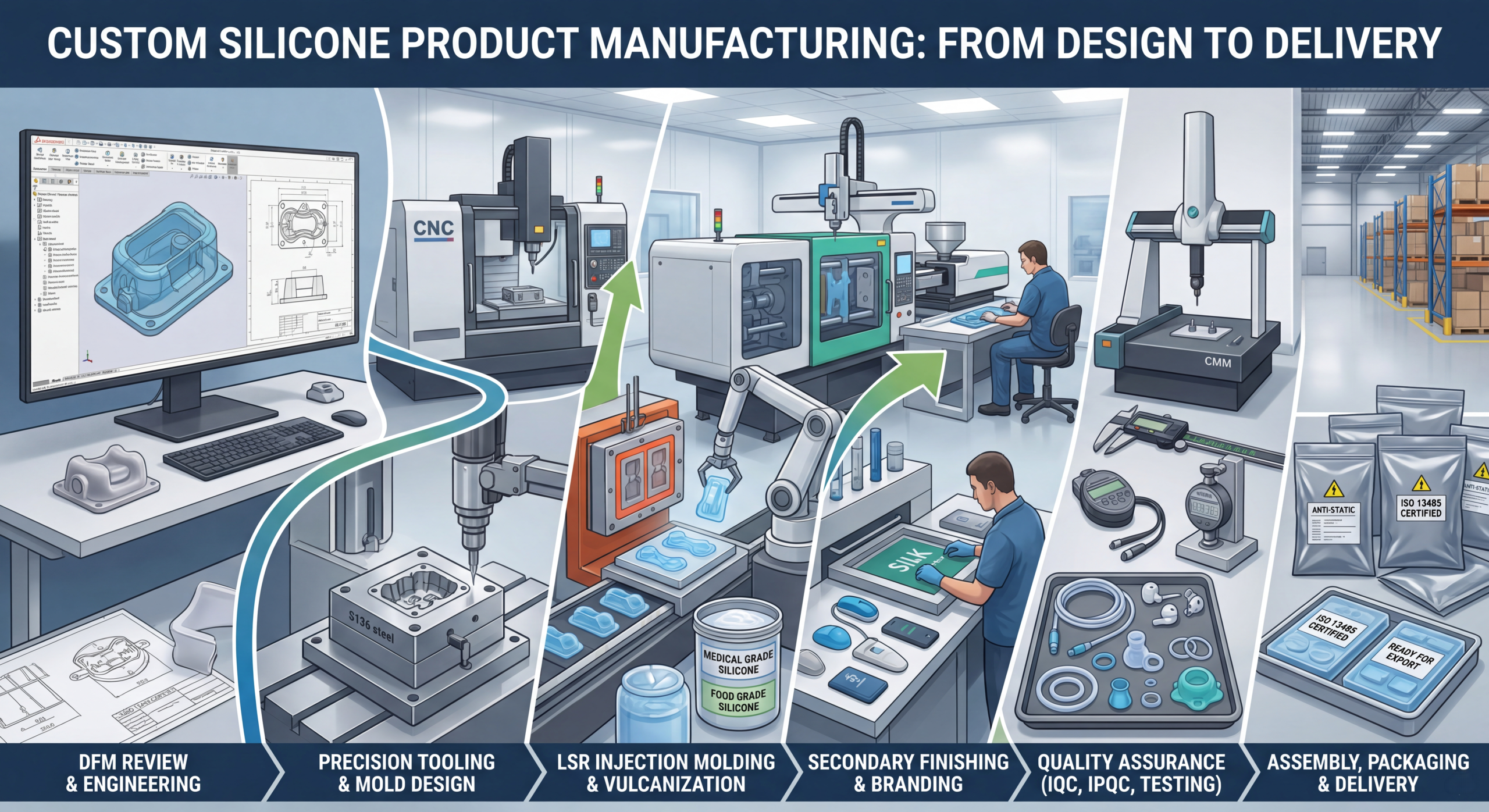
The custom silicone manufacturing process is a specialized engineering workflow that transforms raw elastomer into precision-engineered parts through mold design, controlled vulcanization, and secondary finishing. Many businesses struggle with production delays, inconsistent part quality, and material failures that arise from choosing the wrong manufacturing route. These issues often lead to wasted capital and missed market opportunities, leaving you with products that fail to meet critical tolerances or safety standards.
You can solve these challenges by partnering with a manufacturer that provides a stable, integrated process from the first drawing to the final shipment. By leveraging professional engineering and automated molding, your Custom Silicone Products can achieve the durability and precision required for demanding applications.
How do we start your custom silicone project?
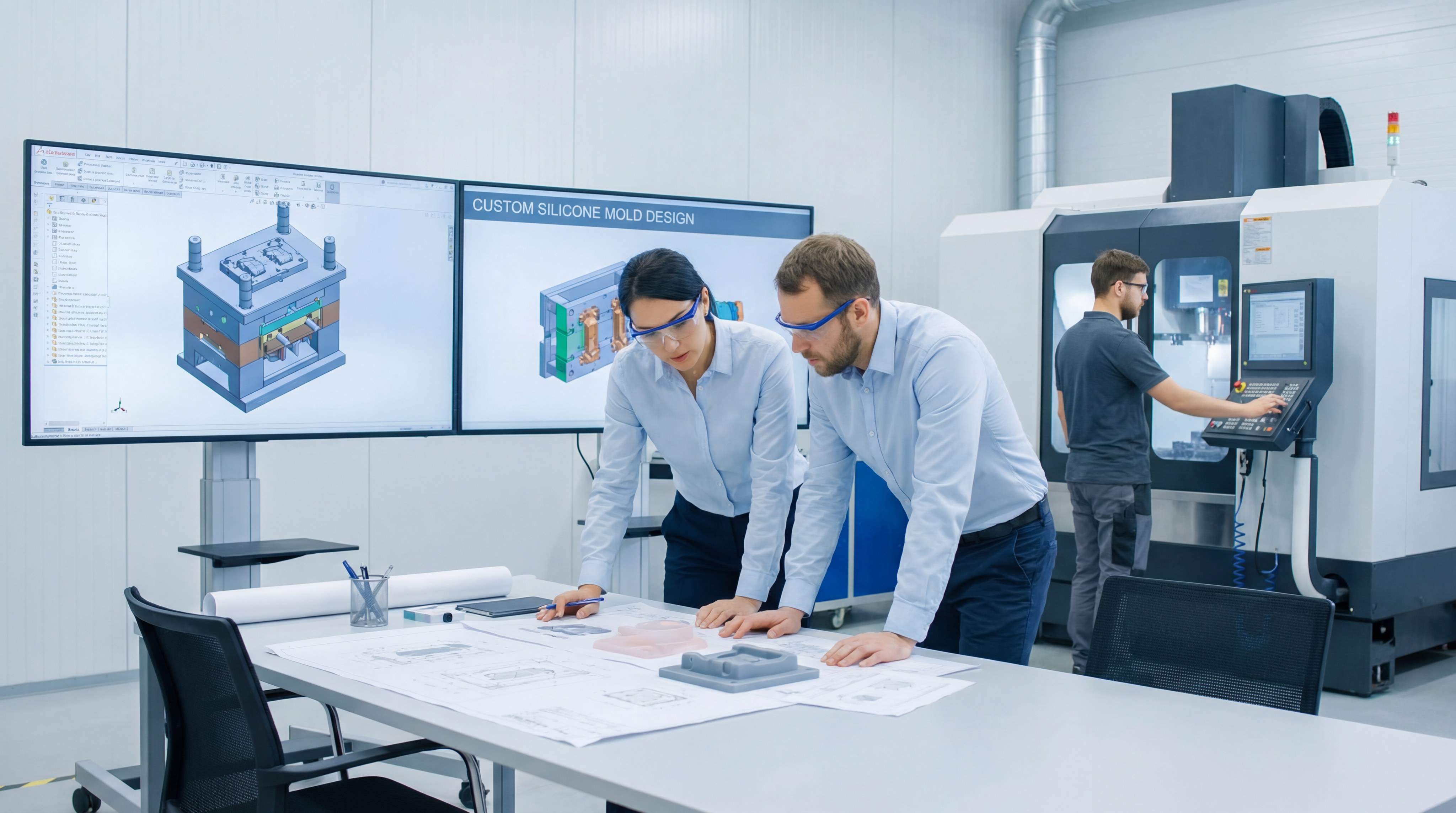
Starting Custom Silicone Products begins with a comprehensive Design for Manufacturing (DFM) review to ensure your geometry is optimized for the molding process. This initial engineering phase is vital for identifying potential issues like air traps or uneven wall thickness before expensive steel is cut.
What is the role of DFM?
Our engineering team analyzes draft angles and parting lines to ensure smooth part ejection and minimal flash. This step prevents common manufacturing defects and reduces the need for costly secondary trimming operations.
Here is the deal:
A small adjustment in your design during the DFM phase can save thousands of dollars in mold modifications later.
How do we handle prototyping?
- We offer rapid prototyping to test the form and fit of your component.
- Functional samples can be produced using temporary tools or 3D-printed silicone.
- This phase allows you to verify material properties before committing to mass production.
Key Takeaway: Early-stage engineering collaboration ensures your design is actually manufacturable, significantly reducing the risk of expensive technical failures.
| Stage | Key Deliverable | Purpose |
|---|---|---|
| Concept Review | Technical Feasibility | Validate design intent |
| DFM Report | Optimized Blueprint | Reduce manufacturing risk |
| Prototyping | Physical Sample | Verify fit and function |
Engineering precision at the start determines the stability of your entire production lifecycle.
Why is mold design critical for silicone quality?
The creation of Custom Silicone Products relies on high-precision mold design, as the tool determines the dimensional accuracy and surface finish of every unit. We use high-grade steel and advanced CNC machining to build tools that maintain tight tolerances across millions of production cycles.
What mold types are used?
The choice between compression, transfer, or injection molds depends on the complexity of your part and the required production volume. Each mold type is specifically engineered to manage heat distribution and pressure for optimal curing.
But wait:
The grade of steel used in your mold directly impacts the longevity of the tool and the consistency of the parts.
How do we ensure mold precision?
- We utilize NAK80 or S136 steel for high-durability production molds.
- CNC and EDM machining ensure that tolerances stay within ±0.05mm.
- Integrated venting systems prevent surface bubbles and material defects.
Key Takeaway: Superior mold design is the foundation for long-term consistency and minimizes dimensional drift during high-volume production.
| Mold Type | Best For | Cycle Speed |
|---|---|---|
| Compression | Simple, large parts | Moderate |
| Injection (LSR) | Complex, high precision | Very Fast |
| Overmolding | Multi-material parts | High Complexity |
Investing in high-precision tooling reduces scrap rates and ensures your parts meet strict specifications every time.
How do you choose the right silicone material?
Choosing the correct grade for Custom Silicone Products involves matching the polymer’s chemical properties to your product’s operating environment. We offer various materials, including FDA-compliant food grade, medical-grade, and high-tear-strength industrial silicone.
What factors impact material choice?
You must consider the required Shore A hardness, temperature range, and exposure to oils or chemicals. Selecting a material that is too soft or too rigid for its application can lead to premature product failure.
Look:
Choosing a material based only on the lowest price often leads to durability issues once the product is in the field.
How is color matching handled?
- We use the Pantone Matching System to achieve exact brand colors.
- Pigments are mixed in-house to ensure color uniformity across different batches.
- UV stabilizers can be added to prevent fading in outdoor applications.
Key Takeaway: Proper material selection balances cost, performance, and regulatory compliance to ensure your product survives its intended environment.
| Grade | Compliance | Typical Use |
|---|---|---|
| Food Grade | FDA, LFGB | Kitchenware, Baby products |
| Medical Grade | ISO 13485 | Medical devices, Tubing |
| Industrial | RoHS, REACH | Automotive, Electronics |
Precise material compounding ensures that every production batch performs exactly like your approved prototype.
What happens during the silicone molding cycle?
The production cycle of Custom Silicone Products involves placing raw material into a heated mold where it undergoes a process called vulcanization. Heat and pressure create permanent cross-links between polymer chains, turning a gummy substance into a durable, elastic solid.
What is vulcanization?
Vulcanization is the chemical transformation that gives silicone its unique physical properties, such as heat resistance and elasticity. The specific curing time and temperature must be carefully controlled to prevent the material from becoming brittle.
The bottom line is:
Precise control over the curing cycle is what separates a high-quality silicone part from one that is sticky or weak.
Is there a difference in molding methods?
- Compression molding is highly cost-effective for larger, simpler geometries.
- Liquid Silicone Rubber (LSR) molding provides the highest speed for intricate parts.
- Multi-shot molding allows for different colors or hard-soft material combinations.
Key Takeaway: Mastered vulcanization processes guarantee that your parts possess the necessary tear resistance and flexibility for long-term use.
| Method | Tooling Cost | Ideal Volume |
|---|---|---|
| Compression | Low to Medium | Low to Medium |
| LSR Injection | High | High Volume |
| Transfer | Medium | Complex Parts |
Standardized molding procedures ensure that mechanical properties remain stable from the first shot to the last.
Which surface treatments enhance silicone products?
Finishing Custom Silicone Products with surface treatments improves the tactile feel, branding, and resistance to environmental contaminants. Many consumer-facing parts require secondary coatings to reduce dust attraction or enhance the grip of the material.
Can we add branding?
Silkscreen printing and laser engraving are the primary methods used to add permanent logos or functional icons. These markings are designed to withstand frequent handling and exposure to cleaning agents without fading.
Think about this:
A high-quality surface finish can significantly increase the perceived value of your product for the end user.
What are functional coatings?
- Anti-static coatings prevent dust and lint from sticking to the silicone.
- Soft-touch PU finishes provide a premium, velvet-like texture.
- Plasma treatments can improve the adhesion of secondary components.
Key Takeaway: Strategic surface finishing solves functional issues like friction while simultaneously strengthening your brand’s visual identity.
| Treatment | Key Benefit | Typical Application |
|---|---|---|
| PU Coating | Dust resistance | Electronics covers |
| Silk Screen | High-contrast branding | Buttons, Interfaces |
| Laser Etching | Permanent marking | Serial numbers |
Secondary treatments transform a raw molded part into a market-ready product with professional branding and enhanced durability.
How is quality maintained in silicone production?
Maintaining the quality of Custom Silicone Products requires a rigorous testing loop that spans from raw material arrival to final shipment. We implement strict inspection protocols to ensure every part meets the dimensional and physical requirements of your project.
What are the main inspection stages?
Incoming Quality Control (IQC) verifies raw material purity, while In-Process Quality Control (IPQC) catches defects during the molding cycle. This multi-layered approach ensures that only perfect parts move to the final assembly stage.
What’s the point?
Failing to catch a tolerance issue during the molding phase can lead to the rejection of an entire production batch.
Which tests are standard?
- CMM and digital calipers verify critical dimensional tolerances.
- Durometer testing confirms the material hardness meets your specifications.
- Tear and tensile testing ensures the material can withstand functional stress.
Key Takeaway: A robust QC system acts as your insurance policy against batch rejections and costly product recalls.
| Test Type | Metric | Compliance |
|---|---|---|
| Dimensional | ±0.05mm Precision | ISO 3302-1 |
| Physical | Shore A Hardness | ASTM D2240 |
| Reliability | Compression Set | ASTM D395 |
Traceability and rigorous testing protocols ensure that your parts meet the strict requirements of regulated global industries.
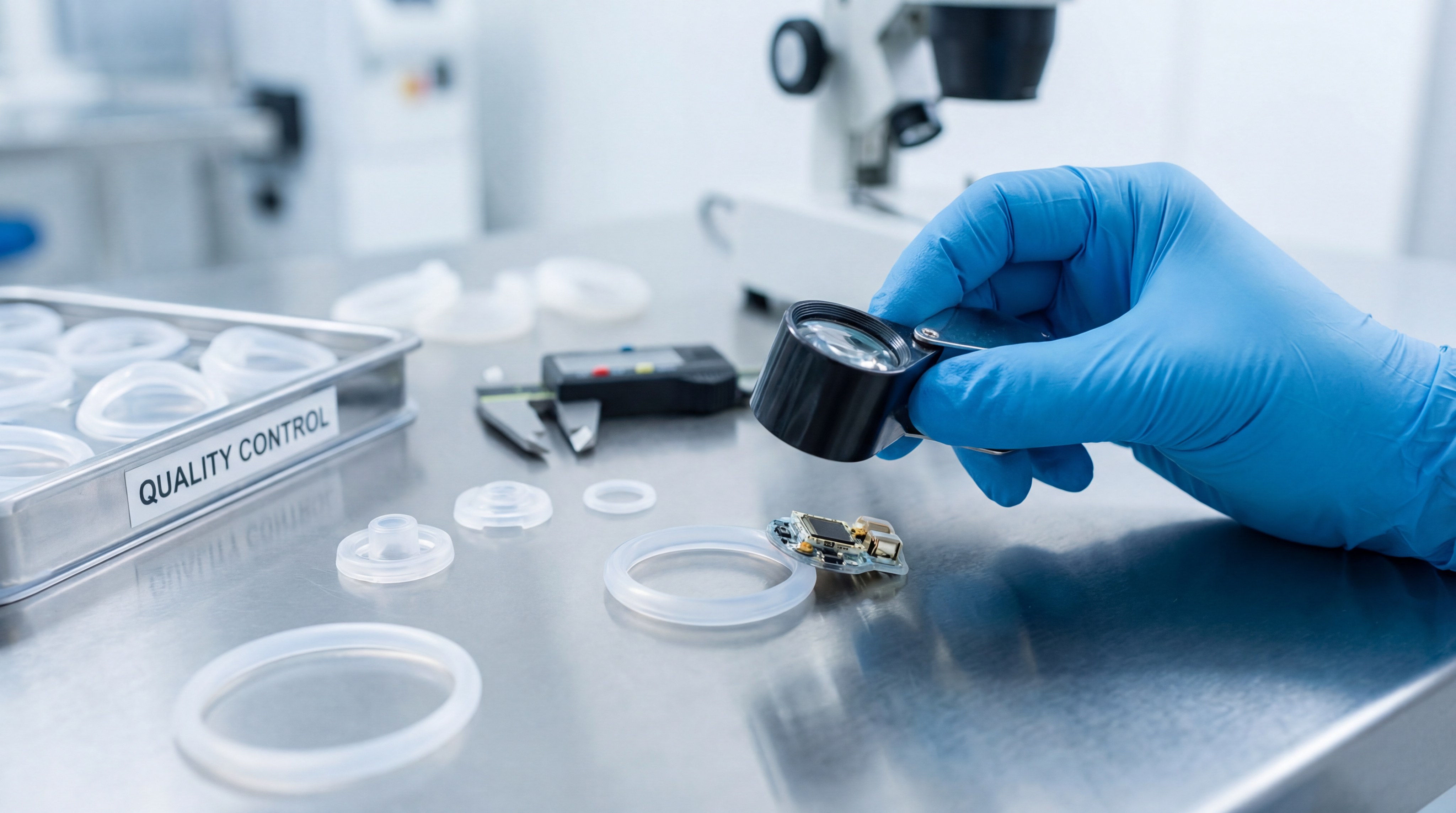
Are there special needs for medical silicone parts?
When manufacturing Custom Silicone Products for healthcare, the process must occur in a cleanroom to prevent contamination. Medical applications require high-purity materials that have been tested for biocompatibility and resistance to sterilization processes.
Why is cleanliness vital?
Medical-grade silicone must be processed in environments that control particulates and microbes to ensure patient safety. Contamination during the molding process can lead to device failure or biological rejection in clinical settings.
In fact:
Medical manufacturing requires a level of process documentation that standard industrial molding simply does not provide.
What certifications are required?
- ISO 13485 certification for medical device quality management systems.
- USP Class VI or ISO 10993 standards for material biocompatibility.
- FDA registration for components used in food or drug contact.
Key Takeaway: Partnering with a manufacturer who understands medical-grade nuances is non-negotiable for safety-critical healthcare components.
| Requirement | Medical Grade | Industrial Grade |
|---|---|---|
| Production | Cleanroom | Controlled Factory |
| Material | USP Class VI | RoHS/REACH |
| Records | Full Traceability | Batch Records |
Specialized processing ensures that your healthcare products are safe, sterile, and fully compliant with global health regulations.
What are the benefits of liquid silicone molding?
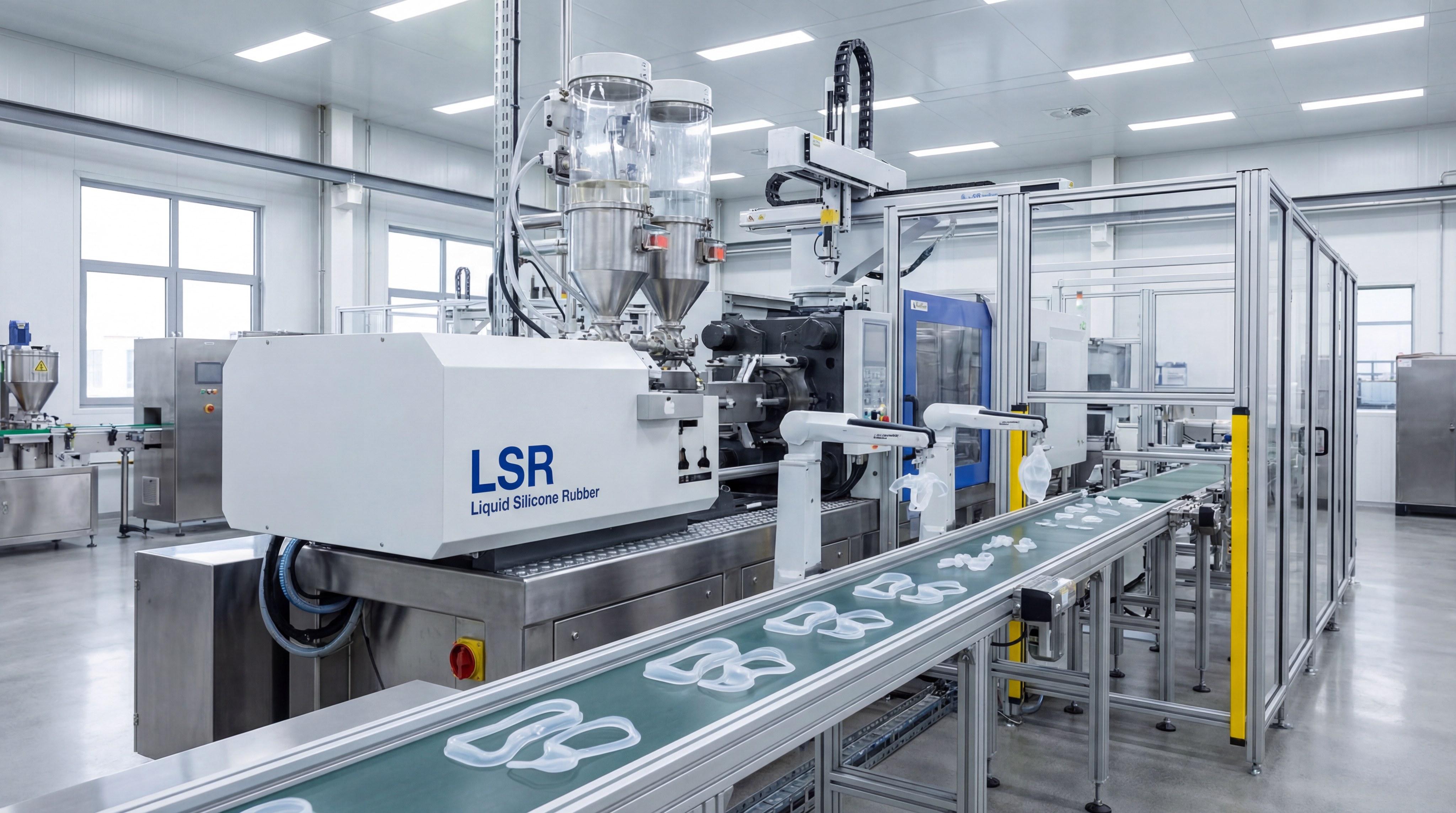
Liquid Silicone Rubber (LSR) injection is the gold standard for high-precision Custom Silicone Products due to its liquid state and rapid cure times. This technology is ideal for complex geometries and high-volume production where human intervention must be minimized.
Is LSR better for precision?
LSR molding uses advanced injection systems that meter material with extreme accuracy, resulting in minimal flash and tighter tolerances. The liquid state allows the material to flow into very thin walls and intricate details that solid silicone cannot reach.
Surprisingly:
Despite higher initial tooling costs, LSR often provides a lower total cost per unit for large-scale projects.
How does automation help?
- Automated de-molding systems reduce labor costs and part damage.
- Shorter cycle times allow for much faster market delivery.
- Computer-controlled injection ensures that every part is identical to the last.
Key Takeaway: LSR molding is the optimal choice for high-volume projects where precision, speed, and labor savings are top priorities.
| Feature | LSR Molding | Compression Molding |
|---|---|---|
| Precision | Excellent | Good |
| Speed | High Speed | Moderate |
| Automation | Fully Automated | Manual/Semi-Auto |
LSR technology allows for the creation of components that are simply impossible to manufacture using traditional compression methods.
How does assembly and packaging protect your goods?
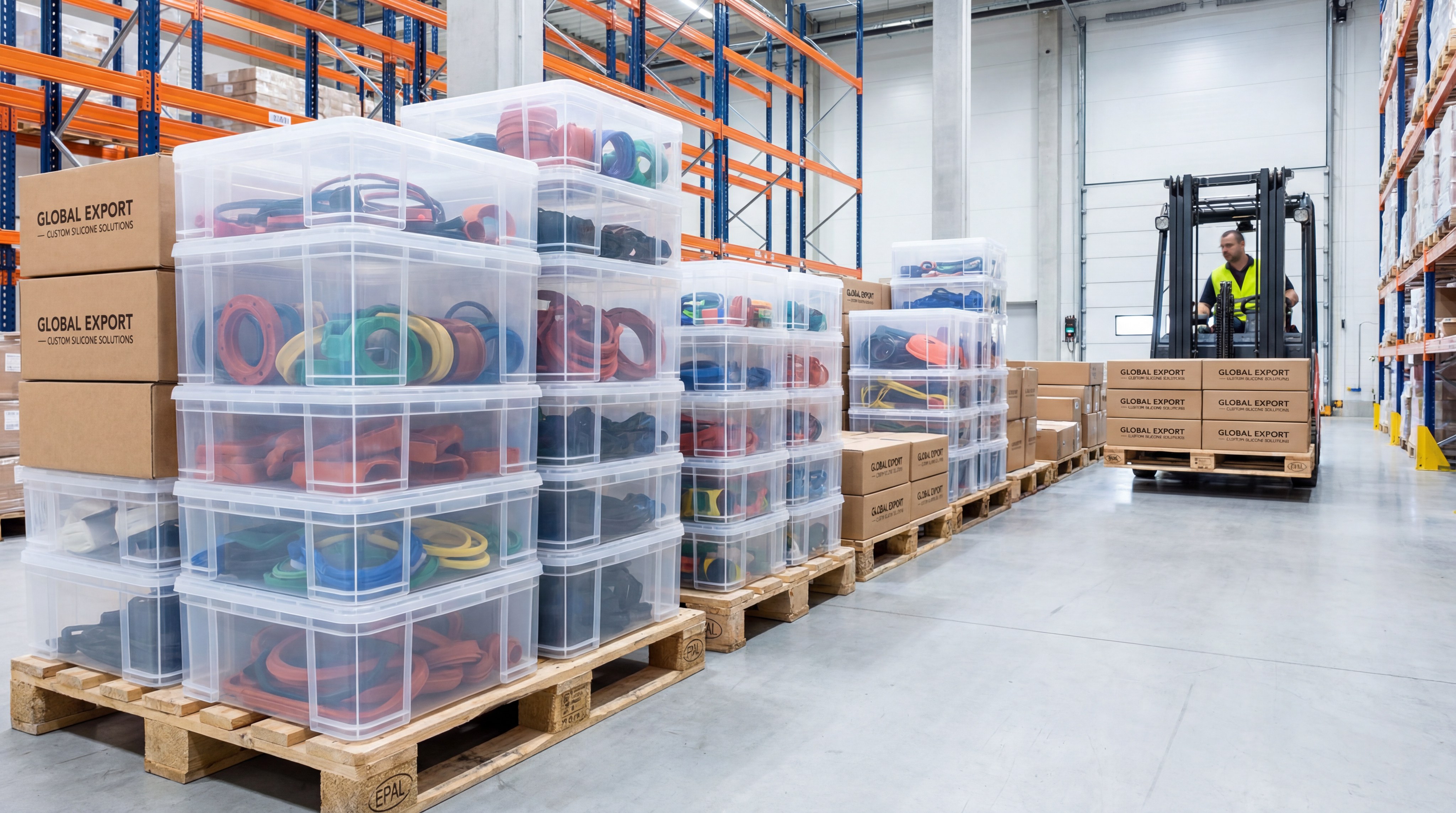
The final stages of producing Custom Silicone Products involve careful assembly and specialized packaging to prevent damage during transit. Silicone can be prone to dust attraction and deformation if it is not handled with care before shipping.
Why is specialized packaging needed?
Silicone parts can lose their shape or attract static-charged dust if they are bulk-packed in standard cartons. We use custom trays and anti-static bags to ensure that parts arrive at your facility in pristine condition.
Here is the truth:
Poor packaging can ruin perfectly molded parts during a long international shipment.
What secondary services are offered?
- Precision bonding of silicone to plastic or metal components.
- Application of adhesive backings for easy product installation.
- Retail kitting and labeling for direct-to-market products.
Key Takeaway: Professional packaging and assembly ensure that your investment is protected from the factory floor to the end user.
| Packaging Type | Protection | Primary Use |
|---|---|---|
| Anti-static Bags | Dust/Static | Electronics |
| Custom Blister | Physical Shape | Medical devices |
| Bulk Carton | Basic | Industrial parts |
Integrated assembly and logistics services simplify your supply chain by providing a single point of accountability for the finished product.
Why choose an integrated silicone manufacturer?
Choosing an integrated partner for your Custom Silicone Products means having design, tooling, and mass production under one roof. This centralized approach reduces communication errors and significantly accelerates the speed at which you can bring a product to market.
How does this reduce your risk?
When one factory manages the entire lifecycle, there is no chance for a “blame game” between different vendors if a part fails. We take full responsibility for the tool, the material, and the final molded output.
Best of all:
Working with a single-source manufacturer allows for much tighter control over your project’s confidential data and intellectual property.
What are the long-term benefits?
- Lower overall shipping and handling costs for multi-stage projects.
- Consistent quality standards across all production and assembly phases.
- Faster response times for design changes or production scale-ups.
Key Takeaway: An integrated manufacturer provides the stability and technical depth required to navigate complex production challenges successfully.
| Comparison | Multi-Vendor | Integrated Partner |
|---|---|---|
| Communication | Fragmented | Streamlined |
| Lead Time | Longer | Optimized |
| Accountability | Low | High |
A consolidated manufacturing strategy is the most efficient way to scale your product from a prototype to a global launch.
Ready to move from design to delivery? At our facility, we solve your manufacturing headaches by providing a stable, high-precision process that protects your brand and your bottom line. Our 13,000 m² facility and expert engineering team are dedicated to turning your vision into reality with uncompromising quality. Whether you need medical-grade parts or consumer enclosures, our goal is to be the reliable backbone of your global supply chain. Contact us today to receive a comprehensive DFM review and a competitive quote for your next project.
Common questions about silicone manufacturing?
Can I use my existing molds with your injection machines?
It depends on the mold base and cooling system. While we can often adapt existing tooling, we must first inspect the technical specifications to ensure compatibility with our specific machine configurations.
What is the best way to reduce the unit cost of my silicone part?
The best way is to optimize for high-volume LSR injection molding. While the initial tooling investment is higher, the significantly faster cycle times and automation lead to a much lower cost per unit over time.
How long does a typical silicone mold last?
A high-quality steel mold (like S136) can typically last for 500,000 to over 1,000,000 cycles with proper maintenance. The choice of steel grade is the biggest factor in determining the tool’s lifespan.
Can I get a custom color that matches my plastic housing?
Yes. We use Pantone color matching and can perform physical sample matching to ensure your silicone components perfectly align with the other materials in your assembly.
What is the best silicone hardness for a waterproof seal?
Typically, a Shore A hardness between 30 and 50 provides the ideal balance of flexibility and resistance. This range allows the silicone to compress enough to create a reliable waterproof barrier.