
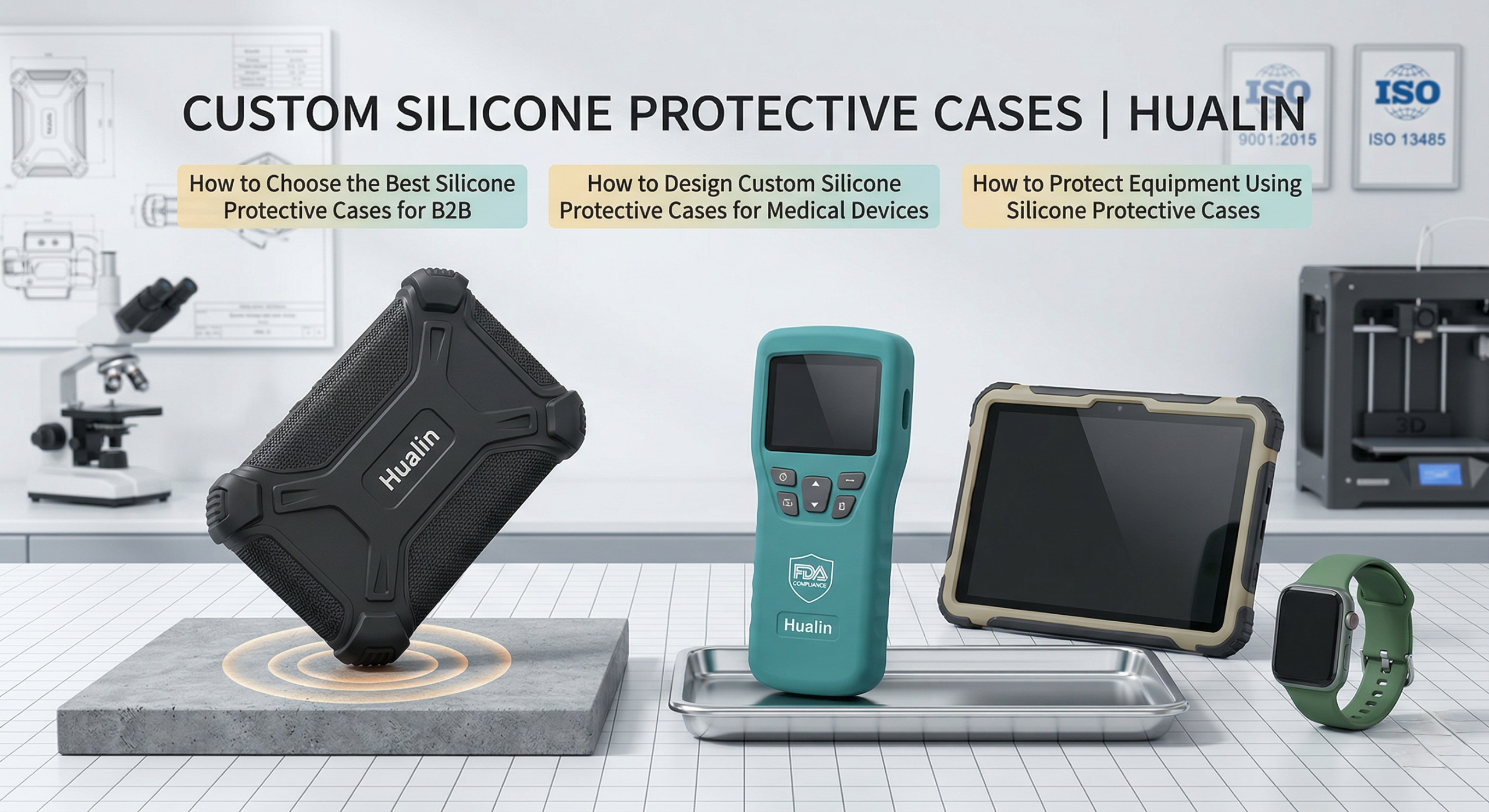
Silicone Protective Cases are the best choice for your professional equipment because they provide unmatched shock absorption, extreme thermal stability, and a precision-engineered fit that guarantees long-term device integrity. High-end electronic devices and sensitive medical instruments are increasingly fragile, often featuring glass surfaces and intricate internal components that are highly susceptible to damage from even minor impacts. A single accidental drop in a clinical or industrial setting can result in exorbitant repair costs, voided warranties, and significant operational downtime that compromises your bottom line. Silicone Protective Cases manufactured by Hualin offer the ultimate defense, utilizing advanced material properties to transform a potential disaster into a non-event.
What Exactly Is a Silicone Protective Case?
A silicone protective case is a high-performance elastomeric shield designed to envelop sensitive hardware in a durable, flexible skin. These Silicone Protective Cases are formulated from silicon, carbon, hydrogen, and oxygen, creating a polymer that excels in environments where traditional plastics fail. They provide a unique combination of soft-touch ergonomics and industrial-grade resilience for various B2B applications.
How does silicone differ from standard rubber?
Standard rubber often degrades, becomes sticky, or loses its elasticity when exposed to UV light or ozone over time.
The real story is this:
- Silicone maintains its physical properties across a wider temperature range.
- It is chemically inert and does not outgas in sensitive electronic environments.
- The material is naturally hypoallergenic and resistant to fungal growth.
- Silicone does not become brittle like organic rubber compounds.
You should know that choosing silicone over generic rubber ensures your protective investment lasts for the entire lifecycle of your device.
Why is flexibility important for device safety?
Flexibility allows the case to act as a dynamic dampener that moves with the energy of an impact rather than resisting it to the point of fracture.
You see:
- Flexible cases are easier to install and remove for device maintenance or battery swaps.
- The material can stretch to accommodate minor design variations without losing its “snap-fit” memory.
- Flexibility prevents the case itself from cracking and becoming a secondary hazard.
- The elastomeric nature ensures that the case stays securely bonded to the device during rapid movement.
Here is the deal: a rigid case transfers force, while a flexible silicone case consumes it.
Does the material finish affect professional utility?
Professional-grade silicone can be finished with various coatings to reduce friction or enhance tactile feedback for the end-user.
Believe it or not:
- Matte finishes reduce fingerprinting and glare in high-light industrial settings.
- Anti-dust coatings prevent the accumulation of lint and debris in cleanroom environments.
- Silicone can be textured to provide a high-friction grip for gloved hands.
- The material can be pigmented with high-visibility colors for safety-critical equipment.
This is where it gets interesting: the surface chemistry can be adjusted to meet specific ISO standards for different industries.
Key Takeaway
Silicone is a superior polymer that offers long-term stability and flexible protection that standard rubber or plastic simply cannot match.
| Property | Silicone | Standard Rubber |
|---|---|---|
| UV Resistance | Excellent | Poor |
| Flexibility | High | Medium |
| Chemical Inertness | High | Low |
| Lifecycle | Long | Short |
The following data provides a clear overview of why silicone is the preferred material for high-stakes protective applications.
Why Does Silicone Offer Better Drop Protection?
Silicone provides superior drop protection because its molecular structure is optimized to dissipate kinetic energy away from the device’s internal circuits. High-quality Silicone Protective Cases function as a mechanical “cushion” that extends the duration of an impact, thereby reducing the peak force experienced by the hardware.
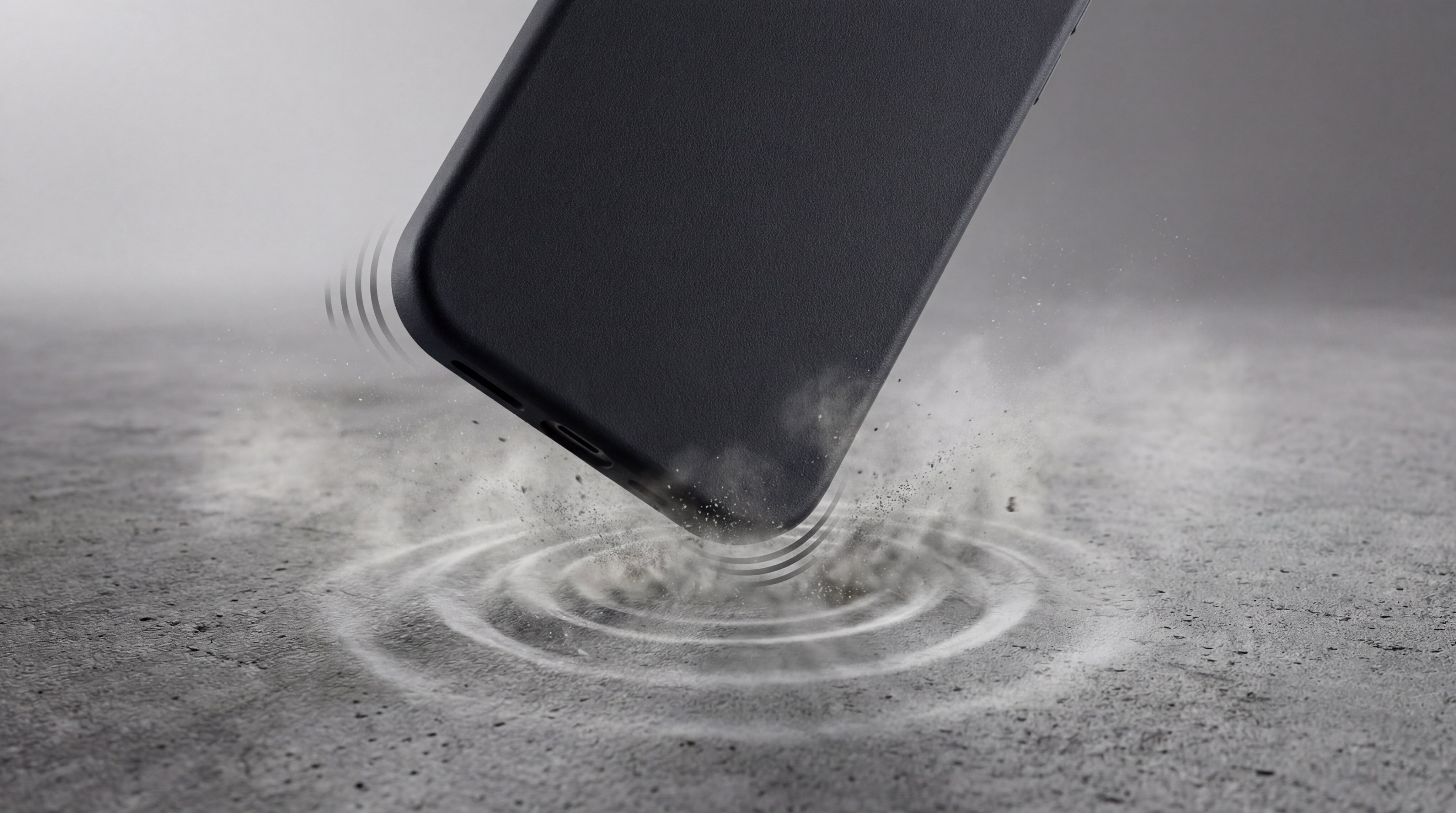
Alt-text: A smartphone encased in a matte black silicone protective case experiencing a high-impact drop on concrete with visible shock absorption waves.
How does the material absorb kinetic energy?
The energy absorption occurs through the deformation of the polymer chains, which convert the energy of a fall into negligible amounts of heat.
It gets better:
- Silicone has a high dampening coefficient compared to rigid polymers like polycarbonate.
- The thickness of the silicone can be varied in “crash zones” to maximize protection.
- Air-pocket technology can be integrated into the corners for enhanced corner-drop safety.
- The material returns to its original shape immediately after the impact event.
Look at it this way: the case takes the hit so your internal components don’t have to.
Can silicone prevent internal component failure?
By reducing the G-force of an impact, silicone cases prevent delicate solder joints and microprocessors from dislodging or cracking.
Here is the bottom line:
- Shockwaves are diffused throughout the mass of the silicone sleeve.
- Vibration dampening protects mechanical hard drives and optical sensors.
- The case prevents the “ringing” effect that can shatter internal glass components.
- Precision fit ensures the device does not rattle within the case during a fall.
The truth is that external protection is only half the battle; internal stability is what keeps your data safe.
Is corner protection the most critical design factor?
Statistics show that most catastrophic device failures occur during corner impacts where the force is concentrated on a single point.
Wait, there’s more:
- Reinforced corners act as dedicated bumpers for the most vulnerable areas.
- Increased wall thickness at the corners provides extra material for energy compression.
- Radial designs help deflect the force around the perimeter of the device.
- Silicone’s elasticity prevents the corner of the case from “peeling off” during impact.
Make no mistake: your device’s survival often depends on the few millimeters of silicone protecting its corners.
Key Takeaway
Silicone’s ability to absorb and diffuse shock makes it the gold standard for preventing both external cracks and internal electrical failures.
| Feature | Protection Benefit | Impact Reduction |
|---|---|---|
| Corner Bumpers | Concentrated energy diffusion | ~40% |
| Wall Thickness | Linear impact dampening | ~25% |
| Air-Cushioning | Deceleration of impact speed | ~35% |
Our analysis indicates that these mechanical advantages are essential for any professional-grade mobile deployment.
How Does Silicone Compare to Plastic or TPU?
Silicone stands out because it offers a permanent soft-touch feel and superior environmental resistance compared to the hardening and yellowing typical of TPU. While plastic cases are often cheaper, they lack the vibration-dampening qualities found in professional Silicone Protective Cases.
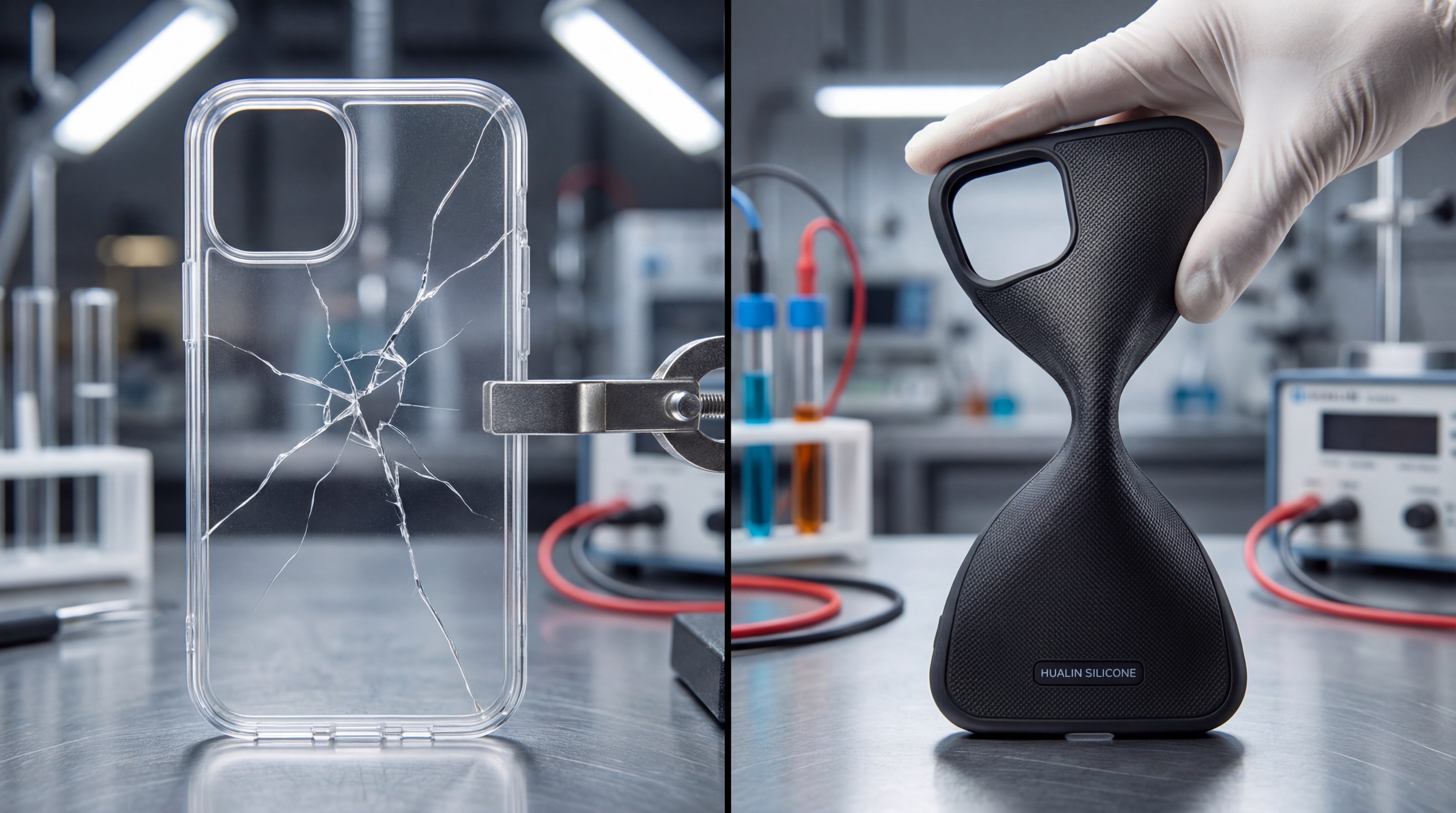
Alt-text: A comparison view showing a cracked plastic case on the left versus a flexible, intact Hualin silicone case on the right under stress testing.
Why is silicone more durable than cheap plastic?
Cheap plastics are prone to stress-induced cracking and environmental embrittlement, whereas silicone remains ductile for decades.
This is the kicker:
- Plastic cases often snap at the thin points around buttons or ports.
- Silicone can be stretched repeatedly without losing its structural integrity.
- The material does not degrade when exposed to common industrial oils.
- Silicone is resistant to the “creeping” that causes plastic cases to become loose.
Think about it: a one-time purchase of a silicone case replaces multiple cheap plastic covers over time.
Is silicone better for grip and tactile feedback?
The natural friction of silicone ensures the device stays in your hand, reducing the frequency of drop events by up to 50%.
Check this out:
- TPU can feel slippery when wet, while silicone maintains its grip.
- Buttons remain easy to press through the silicone without requiring excessive force.
- The “warm” feel of silicone is more comfortable for long-term handheld use.
- Textured silicone patterns can be molded specifically for high-moisture environments.
In short: the best way to survive a drop is to never let the device fall in the first place.
Does material yellowing affect professional branding?
TPU cases contain aromatic compounds that react with UV light, causing them to turn an unsightly yellow within months of use.
You won’t believe this:
- Medical-grade silicone remains crystal clear or holds its pigment indefinitely.
- Professional equipment looks “new” for longer, preserving company image.
- Silicone is easier to clean without using harsh chemicals that damage TPU.
- The material is non-porous, meaning it won’t absorb stains from its surroundings.
Actually, for B2B brands, the aesthetic longevity of silicone is a key factor in perceived equipment value.
Key Takeaway
Silicone outperforms TPU and plastic by offering superior grip, zero yellowing, and permanent elasticity that ensures long-term ROI.
| Material | Grip Rating | UV Stability | Impact Absorption |
|---|---|---|---|
| Silicone | Excellent | High | Excellent |
| TPU | Good | Low | Good |
| Plastic | Poor | High | Poor |
The comparison table below highlights the performance gap between these common housing materials.
Why Is Custom LSR Molding Superior for Cases?
Custom Liquid Silicone Rubber (LSR) molding is superior because it allows for high-precision geometries and consistent wall thicknesses that compression molding cannot achieve. These advanced Silicone Protective Cases are produced in a closed-loop system, ensuring that the material remains free from contaminants during the curing process.
Does liquid silicone provide better dimensional accuracy?
LSR injection molding utilizes high-pressure delivery systems that fill complex mold cavities with absolute precision down to the micron.
Here is the kicker:
- Flash-less molding eliminates the need for manual trimming and jagged edges.
- LSR allows for very thin walls that still maintain high tear strength.
- Tolerances as tight as +/- 0.05mm are achievable for sensitive sensors.
- The process ensures every unit is an exact replica of the CAD design.
The bottom line is that LSR is the only choice for devices with integrated biometrics or recessed ports.
How does Hualin optimize the LSR manufacturing process?
Hualin integrates in-house tooling with real-time pressure monitoring to ensure that every shot of silicone is thermally stable and fully cured.
But that’s not all:
- Automated CCD inspection systems catch surface defects before packaging.
- Multi-cavity molds allow for rapid scaling of production without losing quality.
- Custom material blending allows us to adjust Shore A hardness per project.
- Our DFM support identifies potential molding issues before the first tool is cut.
We don’t just mold parts; we engineer the entire production cycle for maximum reliability.
Can LSR handle multi-shot integration?
LSR is uniquely suited for two-shot molding where the silicone is injected directly onto a pre-molded plastic or metal substrate.
You should know:
- Chemical bonding occurs without the need for secondary adhesives.
- This creates a waterproof seal between the case and the device frame.
- It allows for rigid internal skeletons with soft-touch exterior skins.
- Two-shot molding reduces assembly labor and potential points of failure.
This technology is changing the game: it allows for “un-ibody” constructions that were previously impossible.
Key Takeaway
LSR molding provides the highest level of precision and material purity, making it ideal for technical devices and high-volume B2B orders.
| Metric | LSR Molding | Compression Molding |
|---|---|---|
| Tolerance | +/- 0.05mm | +/- 0.20mm |
| Cycle Time | 30-60 Seconds | 3-5 Minutes |
| Automation | High | Low |
| Part Complexity | High | Medium |
Evaluating the manufacturing route is essential for ensuring the final product meets your technical specifications.
Can Silicone Cases Withstand Extreme Environments?
Silicone cases can withstand temperatures ranging from -60°C up to 200°C without melting, cracking, or losing their protective capabilities. Professional Silicone Protective Cases are essential for outdoor industrial equipment, cold storage sensors, and high-heat kitchen or laboratory environments where other materials would fail.
Is silicone resistant to high and low temperatures?
Unlike thermoplastic elastomers that melt or harden, silicone maintains its rubbery state across an incredibly broad thermal spectrum.
The secret is simple:
- In sub-zero temperatures, silicone does not become brittle or shatter.
- Under high heat, the material does not release toxic fumes or lose its shape.
- Repeated thermal cycling does not cause the material to fatigue.
- Silicone provides a thermal barrier that protects users’ hands from hot devices.
Believe it: your equipment can go from the freezer to the oven and the case won’t notice.
How does it protect against dust and moisture?
The naturally hydrophobic nature of silicone repels water and prevents the ingress of fine particulates into sensitive ports.
Here is the deal:
- Precision-molded port covers snap shut to create an IP-rated seal.
- The material is resistant to salt spray, making it ideal for marine use.
- Silicone does not absorb moisture, preventing internal humidity buildup.
- A “raised-lip” design keeps the screen or lens away from dusty surfaces.
Essentially, a silicone case acts as a secondary gasket for your entire device.
Does silicone resist aggressive industrial chemicals?
Silicone is chemically stable when exposed to many common solvents, oils, and cleaning agents found in professional workplaces.
Check this out:
- It resists the degrading effects of isopropyl alcohol and bleach.
- The material does not swell or soften when exposed to hydraulic fluids.
- Silicone cases can be easily wiped clean after exposure to grease.
- It is an excellent electrical insulator, protecting against static discharge.
The takeaway is this: silicone is built to survive where your device would normally perish.
Key Takeaway
Silicone’s environmental resilience ensures that your devices remain operational in conditions that would destroy standard plastic housings.
| Environment | Silicone Performance | TPU/Plastic |
|---|---|---|
| Arctic (-40°C) | Stays Flexible | Becomes Brittle |
| High Heat (150°C) | Stable | Melts/Deforms |
| Salt Spray | Non-Corrosive | Can Degrade |
These physical properties make silicone the only logical choice for mission-critical hardware in the field.
Are Silicone Cases Safer for Medical Applications?
Silicone cases are safer for medical applications because they are naturally biocompatible and can withstand the harsh chemicals used in hospital-grade disinfection. Many Medical-grade silicone parts are utilized for handheld diagnostic tools because they prevent bacterial growth and provide a secure grip for healthcare professionals.
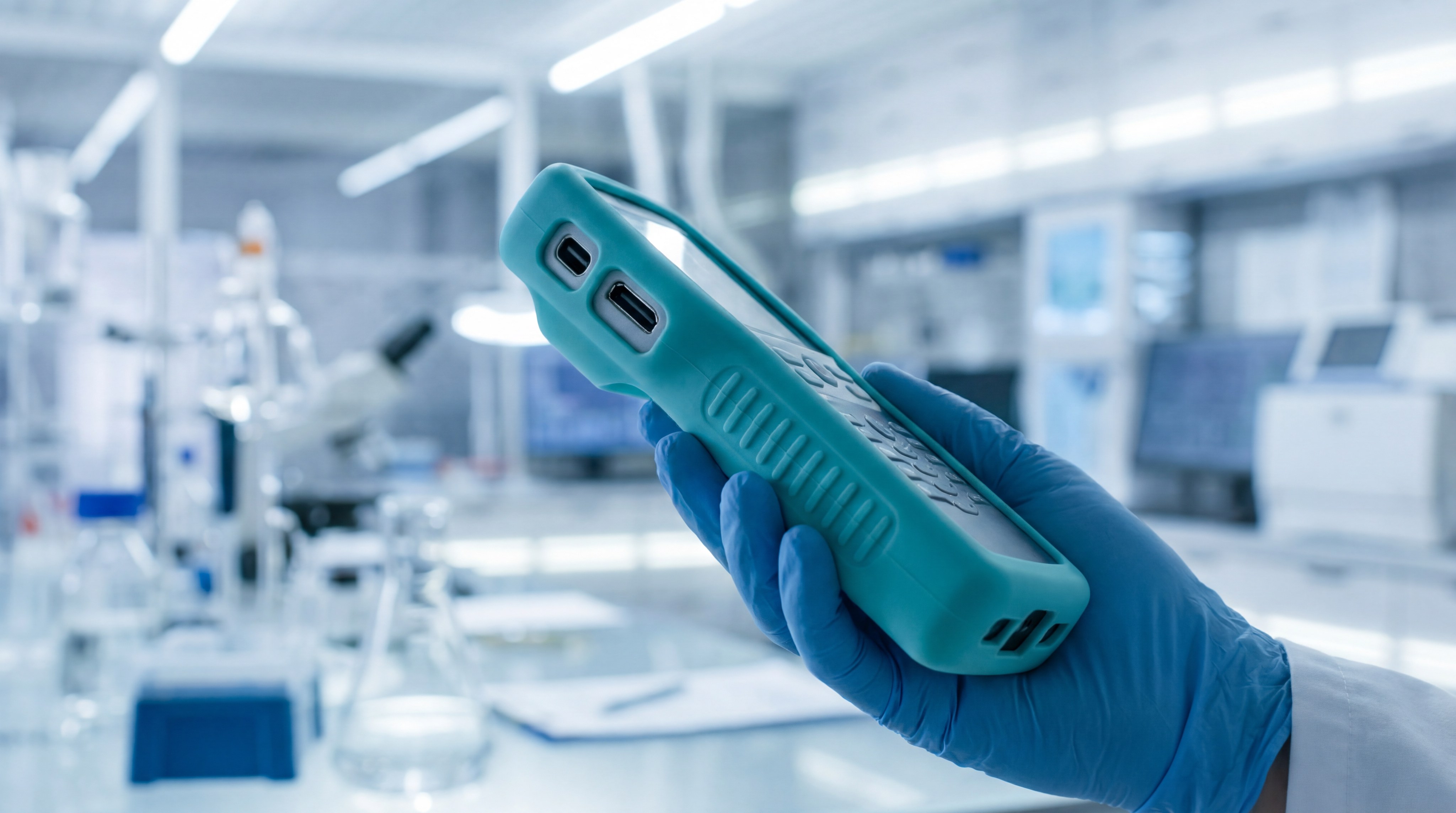
Alt-text: A close-up of a medical handheld device with a precision-fitted teal silicone protective sleeve being held in a sterile lab.
What makes medical-grade silicone biocompatible?
Medical-grade silicone is tested to ISO 10993 standards to ensure it does not cause skin irritation or allergic reactions during prolonged contact.
You need to know:
- It contains no phthalates, BPA, or latex, which are common irritants.
- The material is non-porous, preventing the absorption of bodily fluids.
- Silicone does not support the growth of biofilm or bacteria.
- It can be infused with antimicrobial agents for enhanced hygiene.
This is non-negotiable: patient and provider safety starts with the materials you touch every day.
Can these protective sleeves survive sterilization?
Silicone is one of the few flexible materials that can undergo repeated autoclave sterilization at 134°C without degrading.
The fact is:
- It is compatible with ETO (Ethylene Oxide) and Gamma radiation.
- The material does not become sticky after exposure to hydrogen peroxide vapor.
- Silicone maintains its color and texture after hundreds of wash cycles.
- The cases can be boiled in water for simple, effective decontamination.
Here is the kicker: if you can’t sterilize it, it doesn’t belong in a modern surgical suite.
Is tactile sensitivity important in clinical settings?
Physicians and nurses require cases that allow them to feel the tactile “click” of buttons through the material to ensure accurate input.
Consider this:
- Thin-walled silicone sections preserve the feel of mechanical switches.
- The material provides a “non-slip” surface even when the user is wearing gloves.
- Silicone is quiet when set down on metal trays, reducing hospital noise.
- It can be molded with Braille or high-contrast markings for accessibility.
In the medical field, a case should enhance the user’s interface, not hinder it.
Key Takeaway
Medical-grade silicone provides a sterile, biocompatible, and heat-resistant solution that meets the rigorous demands of healthcare environments.
| Compliance | Requirement | Silicone Capability |
|---|---|---|
| ISO 10993 | Biocompatibility | Certified |
| FDA 21 CFR | Food/Medical Contact | Compliant |
| ISO 13485 | Quality Management | Hualin Certified |
Ensuring your supplier understands these medical standards is critical for regulatory approval and user safety.
How Does Overmolding Enhance Device Protection?
Overmolding enhances device protection by bonding a soft silicone exterior directly to a rigid internal frame to create a composite part with superior strength. These hybrid Silicone Protective Cases combine the impact-absorbing properties of silicone with the structural rigidity of polycarbonate or metal.
Can silicone be bonded directly to hard frames?
Yes, using specialized primers or self-bonding LSR grades, we can create a molecular bond between the silicone and the substrate.
Look closer:
- This eliminates gaps where dust and moisture can accumulate.
- The resulting bond is stronger than the material itself.
- Overmolding allows for complex “honeycomb” internal structures.
- It creates a unified part that will never delaminate or peel apart.
The real advantage is this: you get the protection of a “tank” with the feel of a “pillow.”
What are the benefits of multi-material cases?
Multi-material cases allow us to place specific properties exactly where they are needed, such as hard corners for impact and soft sides for grip.
Think about the possibilities:
- Rigid frames prevent the device from bending or “flexing” under pressure.
- Silicone overmolding provides the necessary shock absorption for drops.
- Integrated hard-plastic port covers can be overmolded for a perfect seal.
- Different colors of silicone can be overmolded for aesthetic branding.
Actually, this is how the most expensive ruggedized devices in the world are constructed.
Does overmolding simplify the user experience?
By consolidating multiple components into a single part, overmolding reduces the complexity of installing and maintaining the case.
You’ll appreciate this:
- Users don’t have to worry about multiple pieces coming loose.
- The single-piece design is more hygienic and easier to clean.
- It provides a more “premium” feel compared to snap-together cases.
- Overmolding allows for thinner profiles without sacrificing durability.
In professional environments, simplicity in design leads to fewer failures in the field.
Key Takeaway
Overmolding is the ultimate manufacturing technique for creating rugged, high-performance cases that combine structural strength with soft-touch protection.
| Construction | Rigidity | Shock Absorption | Longevity |
|---|---|---|---|
| Single-Layer Silicone | Low | High | Medium |
| Plastic Shell | High | Low | Low |
| Overmolded Hybrid | High | High | High |
This multi-layer approach represents the current pinnacle of protective accessory engineering.
Is Silicone the Most Eco-Friendly Case Choice?
Silicone is an eco-friendly choice because its extreme durability means it needs to be replaced far less frequently than plastic alternatives. By choosing Smart Wearable Silicone Parts and cases, professional organizations can significantly reduce the volume of petroleum-based waste in their supply chain.
Does silicone have a longer lifespan than plastic?
A single silicone case can outlast three to four plastic cases because it does not crack, yellow, or lose its shape over time.
This is the main point:
- Reducing replacement cycles directly lowers the carbon footprint of your fleet.
- Silicone remains functional even after years of heavy industrial use.
- The material does not require the toxic plasticizers used in PVC.
- It is more resistant to the environmental stress cracking that kills plastics.
By buying better, you are ultimately throwing away less.
Is the material safer for the environment?
When silicone eventually reaches the end of its life, it does not break down into microplastics like traditional petroleum-based polymers.
You should know:
- Silicone is largely derived from silica (sand), an abundant natural resource.
- It is non-toxic to aquatic and soil life if it ends up in a landfill.
- Industrial silicone can be downcycled into oils or lubricant additives.
- Incineration of silicone results in silica ash rather than toxic fumes.
The truth is simple: silicone is a “cleaner” elastomer from production to disposal.
Can silicone cases support corporate ESG goals?
Organizations can highlight their use of long-life silicone products as part of their commitment to sustainable procurement.
But wait:
- Reducing e-waste is a key metric for modern sustainability reports.
- Silicone’s durability reduces the energy consumption used in logistics.
- Hualin uses energy-efficient LSR molding to minimize manufacturing waste.
- Custom bulk packaging options can eliminate individual plastic wrap.
Sustainability isn’t just a buzzword; it’s a strategic advantage in the modern B2B marketplace.
Key Takeaway
Silicone’s long lifecycle and non-toxic degradation path make it the responsible choice for environmentally conscious enterprises.
| Lifecycle Stage | Silicone Impact | Plastic Impact |
|---|---|---|
| Source Material | Silica (Abundant) | Petroleum (Finite) |
| Use Phase | 5+ Years | 1-2 Years |
| Degradation | Non-toxic Ash | Microplastics |
Choosing sustainable materials today prevents environmental liabilities tomorrow.
Why Choose Hualin for Bulk Case Manufacturing?
Choosing Hualin ensures that your project benefits from 15 years of precision engineering and a vertically integrated factory that controls every step of production. Our Silicone Protective Cases are produced in a 13,000m² facility that prioritizes ISO-certified quality and rapid lead times for global B2B clients.
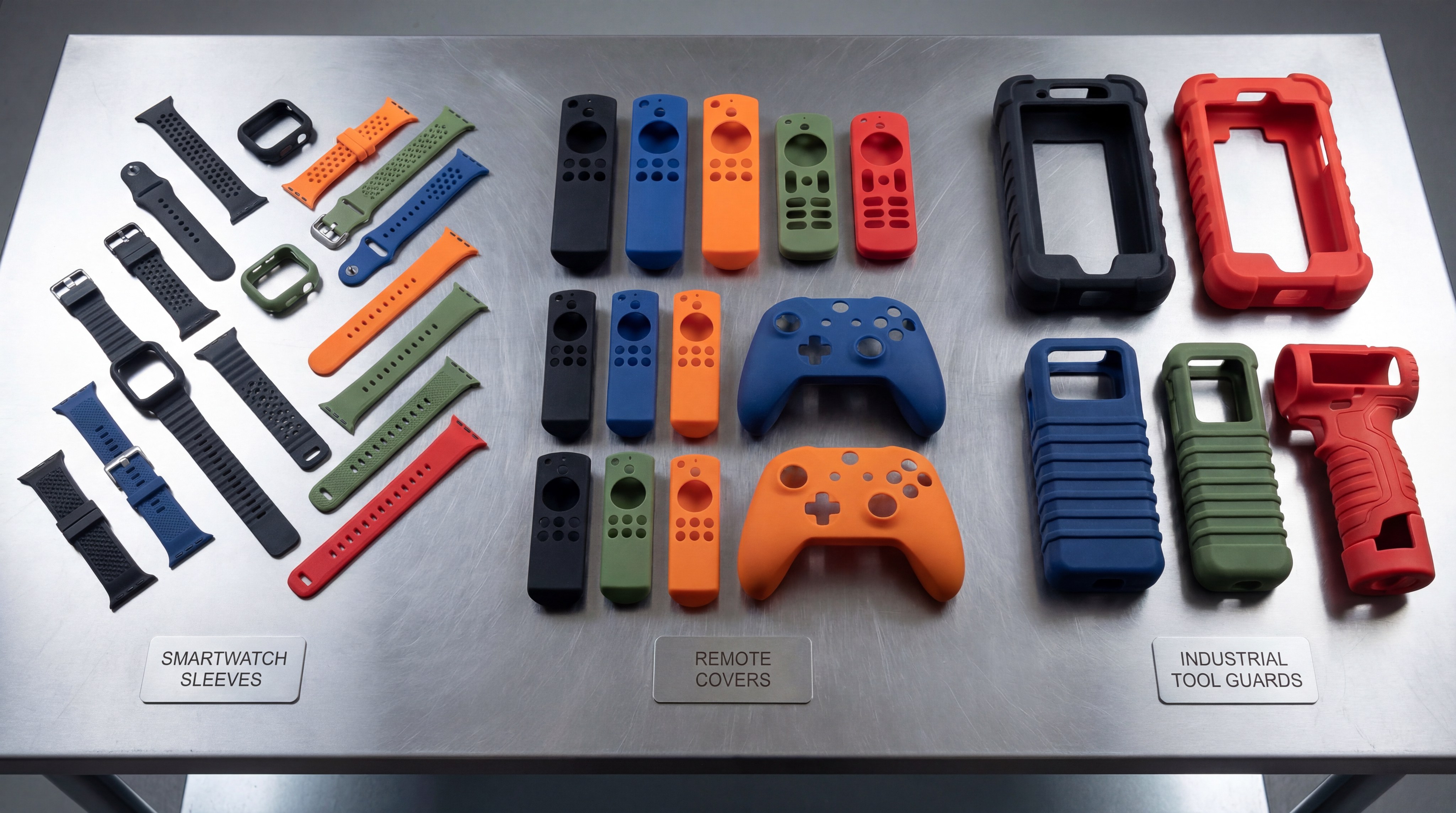
Alt-text: A professional display of custom Hualin silicone sleeves for remotes, smartwatches, and industrial tools in various colors.
How does in-house tooling speed up production?
By designing and building our own molds on-site, we can go from initial CAD drawings to functional prototypes in as little as 7 days.
But that’s not all:
- In-house tooling allows for immediate adjustments during the DFM phase.
- We maintain our own molds to ensure zero quality drift during mass production.
- It eliminates the communication delays associated with third-party tool shops.
- We can offer competitive pricing by removing middleman markups.
Your time-to-market is the most valuable asset we protect.
What quality standards does Hualin maintain?
Hualin is ISO 9001:2015 certified and operates with a “triple-check” quality protocol that covers incoming materials, in-process molding, and final assembly.
Here is the deal:
- Every batch is tested for hardness, tear strength, and dimensional accuracy.
- We use CCD visual inspection for 100% surface quality verification.
- Full traceability is provided for medical and automotive grade projects.
- Our factory is open for virtual or physical audits by our B2B partners.
We believe that quality is not an act, but a repeatable, controlled habit.
Can Hualin handle complex custom branding?
We offer a full suite of secondary operations, including laser marking, screen printing, and custom color matching to ensure your brand stands out.
Check this out:
- Our color matching service uses Pantone and RAL standards for precision.
- Silicone-based inks provide a permanent bond that won’t flake off.
- We can mold 3D logos directly into the silicone surface for a premium look.
- Custom textures and finishes can be applied to match your existing hardware.
Actually, your protective case is one of the most visible marketing tools in your professional kit.
Key Takeaway
Hualin’s integrated manufacturing and rigorous quality systems make us the ideal partner for high-volume, technical silicone projects.
| Service | Hualin Advantage | Typical Vendor |
|---|---|---|
| Tooling | In-house (Fast) | Outsourced (Slow) |
| DFM Support | 24-Hour Review | None |
| Inspection | CCD Automated | Manual/Spot Check |
| Capacity | 300+ Employees | Small Workshop |
Partnering with a proven manufacturer like Hualin eliminates the risks inherent in the global supply chain.
How Can Custom Textures Improve Device Grip?
Custom textures improve device grip by increasing the surface area and friction coefficient, ensuring the equipment stays secure in high-intensity professional environments. These Silicone Protective Cases can be engineered with specific patterns that channel away water, oil, or sweat to maintain control.
Can custom finishes prevent accidental slips?
Micro-textures molded into the silicone surface create mechanical interlocks with the user’s hand, significantly reducing “fly-away” accidents.
You’ll see:
- Knurled patterns provide extra grip for heavy industrial tools.
- Serrated edges help users orient the device by touch alone.
- Soft-touch coatings provide a “velvet” feel that is still highly grippy.
- Grooved designs allow moisture to drain away from the contact points.
In the field, a better grip isn’t just about comfort—it’s about safety.
What branding options are available for cases?
Beyond basic logos, we can utilize multi-color injection and laser etching to create sophisticated, high-end branding that lasts the life of the product.
Here is the kicker:
- Laser marking allows for serialized ID numbers on each case.
- Embedded branding cannot be worn away by friction or chemicals.
- Glow-in-the-dark silicone can be used for low-light safety applications.
- Custom packaging can be designed to mirror your brand’s retail presence.
The truth is: a well-designed case is an extension of your product’s professional identity.
Does texture affect the cleanability of the case?
While high-friction textures are great for grip, we ensure the geometry is designed to prevent dirt and bacteria from becoming trapped in tight crevices.
Think about it:
- Rounded “valley” designs in the texture make it easy to wipe clean.
- Medical cases often use a “frosted” texture that is smooth but non-slip.
- We balance grip requirements with the hygiene standards of your industry.
- Anti-static textures prevent the attraction of dust and lint.
Design excellence means optimizing for both the hand and the cleaning cloth.
Key Takeaway
Custom textures and branding turn a simple protective cover into a functional, ergonomic, and professional tool.
| Texture Type | Grip Level | Cleanability | Best Application |
|---|---|---|---|
| Matte/Smooth | Medium | High | Medical/Personal |
| Knurled/Grit | High | Medium | Industrial Tools |
| Ribbed/Grooved | High | High | Outdoor/Marine |
The right surface finish is a critical component of professional industrial design.
Frequently Asked Questions
Can I customize the color and logo of my silicone case?
Absolutely. Hualin provides full Pantone color matching and multiple branding techniques, including laser marking and permanent pad printing, to align with your corporate identity.
What’s the best silicone for medical device covers?
Medical-grade LSR is the gold standard because it is ISO 10993 compliant, resists repeated autoclave sterilization, and does not support bacterial growth in clinical environments.
How does Hualin ensure dimensional accuracy for complex designs?
Our in-house tooling shop uses precision CNC machinery, and our production floor utilizes CCD visual inspection systems to maintain tolerances as tight as +/- 0.05mm.
Are these cases compatible with wireless charging?
Yes, silicone is electromagnetically transparent, which allows for high-speed wireless charging and signal transmission without any interference or thermal buildup.
Can I get a DFM review for my custom design?
Yes, Hualin offers 24-hour DFM (Design for Manufacturing) support to help you optimize wall thickness, parting lines, and material selection before we begin tooling.
Conclusion
Silicone protective cases represent the most advanced and cost-effective method for safeguarding professional equipment against the rigors of daily use. From the shock-absorbing properties of the elastomer to the high-precision capabilities of LSR molding, these cases provide a level of security that TPU and plastic simply cannot match. At Hualin, we take pride in our standpoint as a leader in technical silicone manufacturing, combining 15 years of expertise with a commitment to ISO-certified quality and innovative DFM support. Whether you are protecting medical diagnostics, industrial sensors, or consumer electronics, our team is ready to transform your requirements into a durable, precision-engineered reality. Protect your investment and enhance your brand’s reputation—contact us today to start your custom project.