
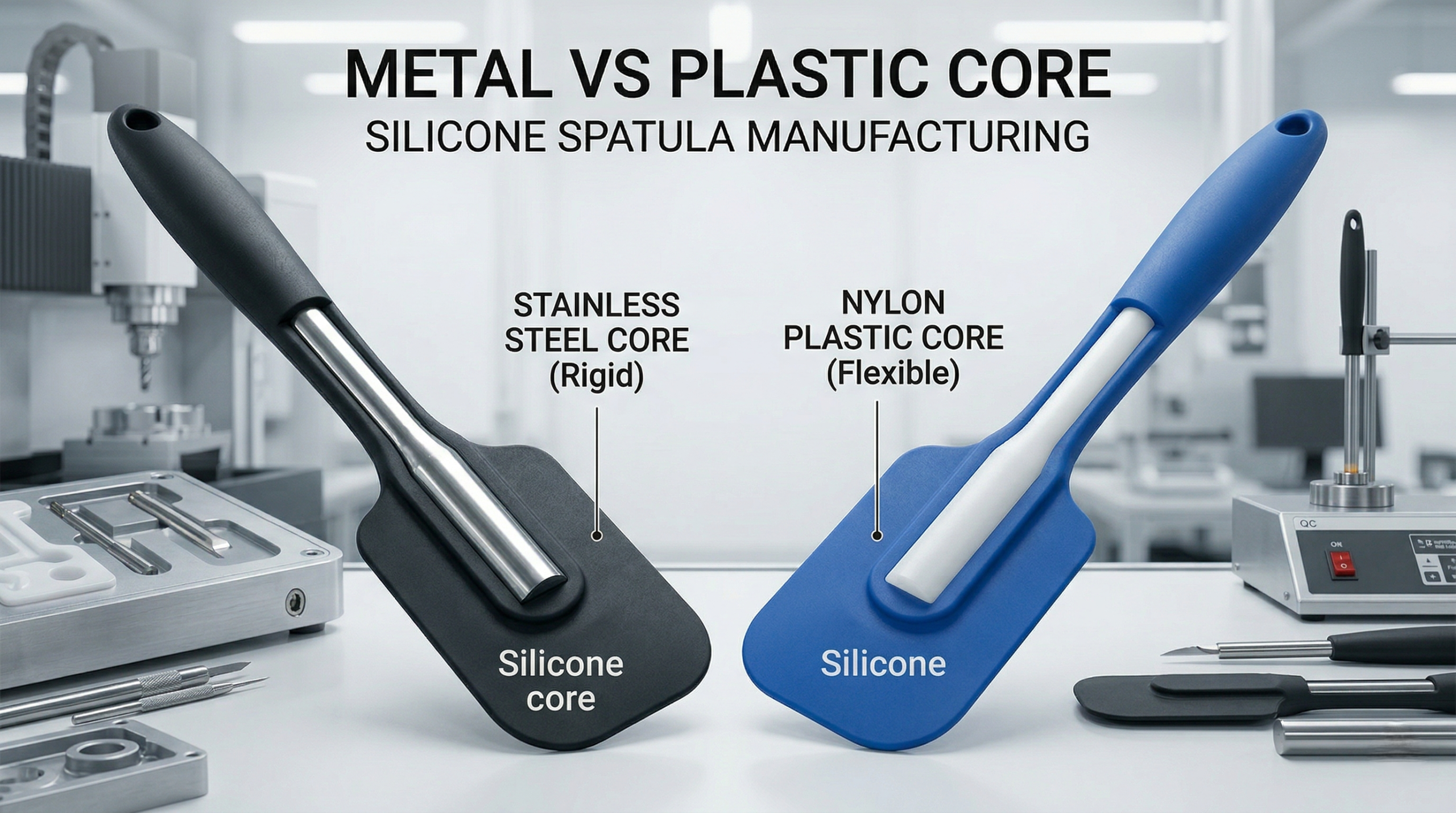
The debate between metal and plastic cores comes down to balancing strength with flexibility. You are finalizing a product design and selecting materials for your next kitchenware line. The internal spatula structure often fails, causing product returns and frustrating your target customers. A weak center leads to immediate customer dissatisfaction, ruining your hard-earned brand reputation rapidly. The internal spine choice dictates performance, making thorough material research absolutely necessary for success. Learning how to choose silicone manufacturer solves these structural dilemmas effectively by ensuring high-quality production standards.
What Defines a Spatula Core and How to Choose Silicone Manufacturer?
A core defines a structural spine, providing necessary rigidity for intensive culinary mixing tasks. Understanding how to choose silicone manufacturer requires evaluating their advanced overmolding precision capabilities. Expert factories keep internal inserts perfectly centered during high-pressure injection molding operations. Proper alignment prevents thin spots that could eventually tear or fail entirely during use.
A reliable partner implements stringent quality controls for maintaining center positioning accuracy constantly. Defective alignment ruins structural integrity, making advanced factory vetting absolutely mandatory for brands. Quality molding equipment ensures consistent product dimensions across massive international production batches. Precise alignment guarantees your kitchen tools remain perfectly balanced, durable, and highly effective.
What Structural Roles Do Inserts Play?
Cores dictate whether your kitchen tool bends gracefully or fails instantly under pressure. A strong center spine prevents floppy edges during demanding culinary food preparation applications. Factories inject liquid rubber around these stiff inserts for maximum physical product stability. Here’s the deal: internal support systems provide several indispensable functions for professional equipment.
- They stop catastrophic bending during heavy dough mixing.
- They distribute applied human forces evenly across the tool.
- They protect soft outer rubber from premature mechanical wear.
These functions make high-quality inserts mandatory for professional-grade culinary tools worldwide. Designing tools without proper spines guarantees complete mechanical failure during normal daily usage.
Can Internal Materials Dictate Product Lifespan?
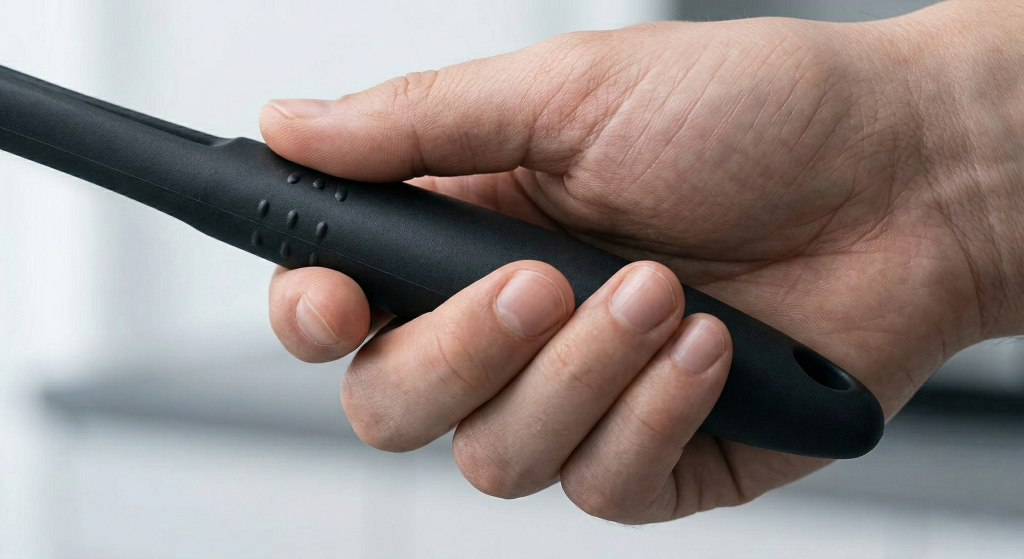
Different insert materials dramatically influence a commercial item’s total lifespan and consumer satisfaction. Steel resists extreme bending forces, while nylon endures repetitive daily flexing without snapping. Your production partner must test material fatigue limits thoroughly before initiating mass manufacturing. Key Takeaway: Always align insert material choices with your desired product durability targets.
Selecting an optimal spine material guarantees significantly fewer customer returns over many years. Proper material selection prevents premature tool degradation in busy commercial kitchen environments.
| Core Material | Flex Resistance | Typical Lifespan |
| Stainless Steel | Exceptional | 5+ Years |
| Nylon Blend | Moderate | 2-3 Years |
| This brief comparison shows steel spines clearly dominating long-term durability performance metrics. |
How Do Metal Cores Enhance Spatula Structural Integrity?
Metal spines offer unmatched stiffness, preventing deformation under intense physical food preparation loads. Evaluating how to choose silicone manufacturer involves checking their steel insert handling methods thoroughly. Proper adhesion between rubber and steel dictates overall product structural integrity and safety. Factories apply specific primers before molding, ensuring materials bond together permanently without slipping.
Strong chemical bonds prevent internal slipping during aggressive dough folding operations by chefs. Poor primer application creates dangerous hollow pockets inside your premium culinary tools. Finding an experienced production partner prevents these hidden mechanical failures completely during usage. Robust steel centers survive decades of daily abuse in fast-paced commercial kitchens.
Does Steel Provide Superior Mixing Power?
Steel centers deliver incredible torque transfer for thick batter manipulation tasks in bakeries. Cooks apply significant downward pressure without bending a rigid stainless center spine backwards. What’s the real story? Steel inserts transform basic scrapers into heavy-duty utility instruments.
- They slice through frozen ingredients easily.
- They scrape thick caramel from metal bowls.
- They resist permanent warping after heavy abuse.
These traits make rigid centers necessary for demanding commercial bakery applications everywhere. High torque transfer allows workers to process massive food quantities with minimal effort.
Can Heavy Spines Cause Fatigue?
Heavy steel inserts increase total product weight significantly compared with basic nylon options. Chefs experience wrist strain after mixing large batches for extended periods every shift. Weight distribution matters immensely when designing ergonomic professional kitchen hand tools for workers. Key Takeaway: Balance heavy steel centers with comfortable rubber handle designs carefully.
Ergonomic grips mitigate user fatigue while maintaining excellent mixing torque capabilities for chefs. Thoughtful engineering prevents long-term repetitive strain injuries among dedicated culinary professionals.
| Feature | Steel Spine | Plastic Spine |
| Tool Weight | Heavy | Lightweight |
| Mixing Power | Superior | Moderate |
| This table demonstrates how weight trade-offs directly impact mixing performance capabilities. |
How to Choose Silicone Manufacturer for Plastic Spatulas?
Nylon centers create incredibly lightweight tools ideal for fast culinary scraping applications. Deciding how to choose silicone manufacturer means assessing their polymer blending skills accurately. A skilled factory selects nylon grades balancing flexibility with moderate physical stiffness perfectly. Incorrect polymer choices cause internal snapping during cold temperature usage scenarios in kitchens.
High-quality nylon bends gracefully without suffering permanent structural damage or microscopic cracking. Excellent molders maintain consistent temperatures, preventing plastic warping during high-heat rubber injection. These careful manufacturing steps guarantee reliable, flexible kitchen tools every single production run. Precision temperature control eliminates brittle plastic defects before products reach consumers.
Why Do Bakers Prefer Flexible Scrapers?
Bakers frequently scrape delicate frostings from curved glass mixing bowl surfaces during shifts. A flexible spine conforms perfectly against rounded container walls with absolute ease. Ready for the good part? Flexible nylon centers offer distinct advantages for precise tasks.
- They adapt seamlessly against curved bowl shapes.
- They fold egg whites gently without deflating them.
- They reduce hand fatigue during repetitive scraping.
These benefits explain why pastry chefs favor lightweight flexible hand tools so heavily. Delicate baking processes demand finesse rather than brute mechanical force from utensils.
Do Plastic Spines Withstand High Temperatures?
Standard nylon inserts melt at significantly lower temperatures than steel counterparts during cooking. Leaving a flexible tool resting inside a boiling pot causes severe physical deformation. Engineering teams specify high-temperature resistant polymers for premium kitchen utensil designs. Key Takeaway: Always verify maximum temperature ratings before selecting an internal polymer material.
Choosing heat-resistant nylon prevents disastrous structural melting during normal daily cooking operations. Upgraded plastics cost slightly more but provide necessary thermal safety margins.
| Material | Melting Point | Best Use Case |
| Standard Nylon | 150°C | Baking |
| High-Temp Polymer | 230°C | Stovetop Cooking |
| This data illustrates why high-temperature polymers cost more but perform vastly better. |
How Does Heat Resistance Compare in Core Materials?
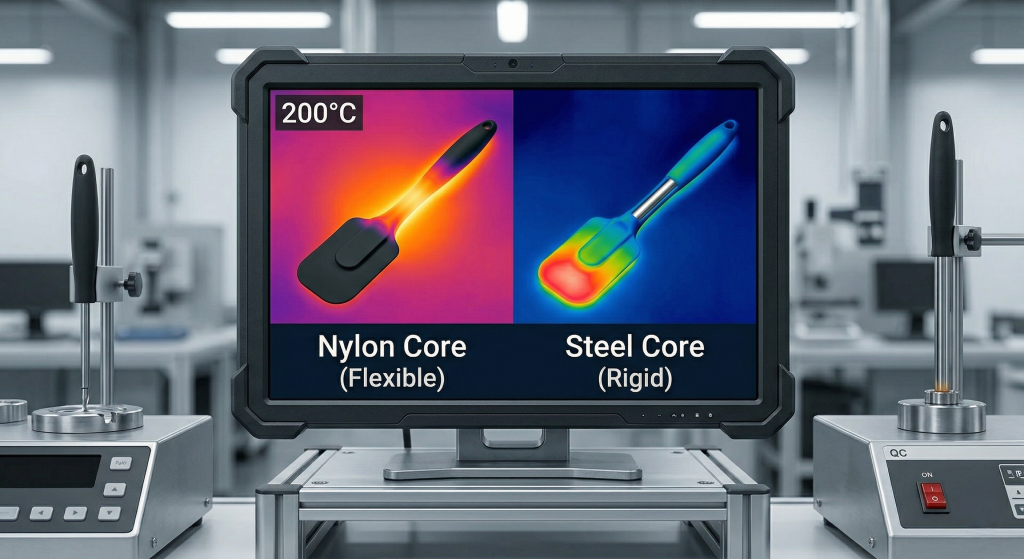
Heat resistance determines whether a tool survives intense stovetop cooking environments daily. Researching how to choose silicone manufacturer requires reviewing their high-temperature testing protocols closely. Steel centers handle ambient pan temperatures exceeding five hundred degrees Fahrenheit easily. Nylon centers soften quickly when exposed directly against blistering metal cooking pans.
Thermal conductivity presents another challenge, as steel transfers heat toward bare human hands. A thick rubber handle coating acts as mandatory insulation for protecting users. Experienced factories balance these thermal properties perfectly during initial product development stages. Protecting consumers from thermal injuries remains paramount for any responsible cookware brand.
What Happens During Extreme Heat Exposure?
Intense stovetop heat degrades inferior materials rapidly during normal daily cooking sessions. Steel simply absorbs thermal energy without losing any fundamental mechanical structural strength. This is where it gets interesting… Thermal behavior differs drastically between common spine options.
- Steel transfers heat efficiently along its length.
- Nylon acts as a natural thermal insulator.
- Rubber coatings protect both spines from flames.
Understanding these thermal dynamics helps engineers design safer consumer culinary products consistently. Managing heat transfer prevents accidental burns while maintaining robust tool durability.
Can Insulation Prevent User Burns?
Thick rubber overmolding prevents scalding metal from burning a user’s delicate hand. Factories measure rubber thickness carefully, ensuring adequate thermal barrier protection exists constantly. Thin handle coatings fail quickly, exposing hot internal metal spines dangerously to skin. Key Takeaway: Demand stringent thermal testing from your selected production factory partner.
Verifying handle insulation thickness prevents severe user injuries and costly legal lawsuits. Robust thermal protection builds customer trust for your premium kitchenware brand.
| Spine Type | Heat Transfer Rate | Insulation Needed |
| Stainless Steel | Very High | Thick Rubber |
| Nylon Plastic | Low | Thin Rubber |
| This summary reveals why metal spines demand significantly thicker protective rubber coatings. |
Which Spatula Core Type Offers Better Rigidity and Torque?
Rigidity allows a cook to manipulate heavy ingredients with minimal physical effort. Figuring out how to choose silicone manufacturer means analyzing their strength tests thoroughly. Solid steel centers resist bending, transferring all applied torque directly downward efficiently. Plastic spines absorb applied torque by flexing, reducing overall scraping power noticeably.
Commercial kitchens demand maximum rigidity for pushing dense meats across hot metal grills. Home bakers prefer slight flexing for scraping soft batters from ceramic bowls. Your target audience dictates which rigidity profile works best for their specific needs. Matching stiffness against culinary applications ensures ultimate consumer satisfaction and brand loyalty.
How Does Torque Affect Cooking Efficiency?
High torque allows chefs to smash garlic cloves quickly and completely effortlessly. Rigid tools act as levers, multiplying human force during complex food preparation. But here’s the kicker… A weak spine limits your ability to perform basic maneuvers.
- Flimsy tools struggle pushing heavy vegetable portions.
- Rigid spines chop soft ingredients directly inside pans.
- Flexible centers fail when lifting heavy burger patties.
Matching rigidity profiles against intended culinary applications guarantees superior user experiences consistently. Inefficient tools slow down busy restaurant kitchens, causing unacceptable service delays.
Do Hybrid Designs Offer Better Performance?
Some innovative designs combine stiff steel handles with flexible plastic scraping tips. This hybrid approach delivers excellent handle torque alongside useful tip flexibility simultaneously. Complex hybrid manufacturing requires advanced multi-shot injection molding capabilities from your factory. Key Takeaway: Consider hybrid spine designs for creating versatile, premium kitchen utility tools.
Blending materials unlocks unique performance characteristics impossible with single-material spine constructions alone. Hybrid engineering represents the pinnacle of modern culinary tool design innovation.
| Design Type | Handle Rigidity | Tip Flexibility |
| Solid Steel | High | Low |
| Solid Plastic | Moderate | High |
| Hybrid Model | High | High |
| This matrix proves hybrid designs deliver optimal characteristics for versatile professional cooking. |
How to Choose Silicone Manufacturer for Tooling Needs?
Tooling accuracy defines final product quality, eliminating flashing and dimensional errors completely. Knowing how to choose silicone manufacturer involves inspecting their CNC machining equipment firsthand. High-end factories utilize German CNC machines for cutting flawless steel molds accurately. Perfect molds ensure liquid rubber surrounds internal spines with completely uniform thickness.
Cheaper tooling creates uneven rubber distribution, exposing internal metal prematurely during usage. Advanced molding facilities invest heavily in slow-speed wire cutting technologies for precision. These investments guarantee your culinary tools meet exact engineering specification tolerances strictly. Superior tooling prevents costly manufacturing defects before mass production even begins.
Why Is Mold Precision Absolutely Necessary?
Imperfect molds leave ugly rubber flashing along product parting line seams noticeably. Workers must trim this flashing manually, increasing total labor costs significantly daily. What’s the real story? Precise molds eliminate manual trimming and improve final aesthetic quality.
- Tight tolerances prevent liquid rubber leakage completely.
- Smooth mold cavities create glossy surface finishes naturally.
- Accurate sizing prevents internal spines from shifting off-center.
Investing in premium mold creation saves massive manufacturing headaches down the road. Perfect tooling yields flawless consumer products straight from the molding machine.
Can Bad Tooling Ruin Internal Spines?
Rough mold cavities scratch soft plastic inserts during the rigorous overmolding process. Scratched plastic creates weak points, leading toward eventual structural breakage under heavy pressure. Expert machinists polish mold cavities obsessively until they achieve perfect mirror finishes. Key Takeaway: Never compromise on initial mold tooling quality for any commercial product.
High-quality steel molds pay massive dividends through drastically reduced defect rates. Precision engineering protects your brand from negative customer reviews regarding poor durability.
| Tooling Quality | Defect Rate | Surface Finish |
| Premium CNC | Under 1% | Mirror Smooth |
| Budget CNC | Over 5% | Rough Edges |
| This chart validates spending extra capital on premium mold manufacturing services immediately. |
How Does Core Choice Impact Ergonomics and Product Safety?
Ergonomics dictate how comfortable a kitchen tool feels during extended daily usage. Understanding how to choose silicone manufacturer requires evaluating their ergonomic design support. Heavy metal spines cause significant wrist fatigue during repetitive bakery tasks daily. Lightweight plastic centers reduce physical strain, improving overall worker comfort dramatically.
Safety remains paramount, as exposed metal corners cause severe hand injuries instantly. Proper rubber overmolding thickness guarantees a safe, comfortable grip every single time. Factories must balance total weight against necessary structural spine rigidity very carefully. Thoughtful ergonomic engineering prevents occupational injuries for dedicated culinary industry professionals.
What Makes a Handle Truly Comfortable?
Comfortable handles feature contoured shapes matching natural human hand resting positions perfectly. A well-designed grip prevents slipping when hands become wet or exceptionally greasy. Here’s the deal: Ergonomic engineering prevents long-term repetitive strain injuries for busy chefs.
- Textured surfaces increase grip friction safely.
- Tapered necks allow precise fingertip control easily.
- Balanced weight distribution prevents awkward wrist twisting.
Prioritizing these features creates loyal customers who love using your tools daily. Excellent ergonomics transform ordinary cooking tasks into highly enjoyable culinary experiences.
Do Material Choices Affect Food Safety?
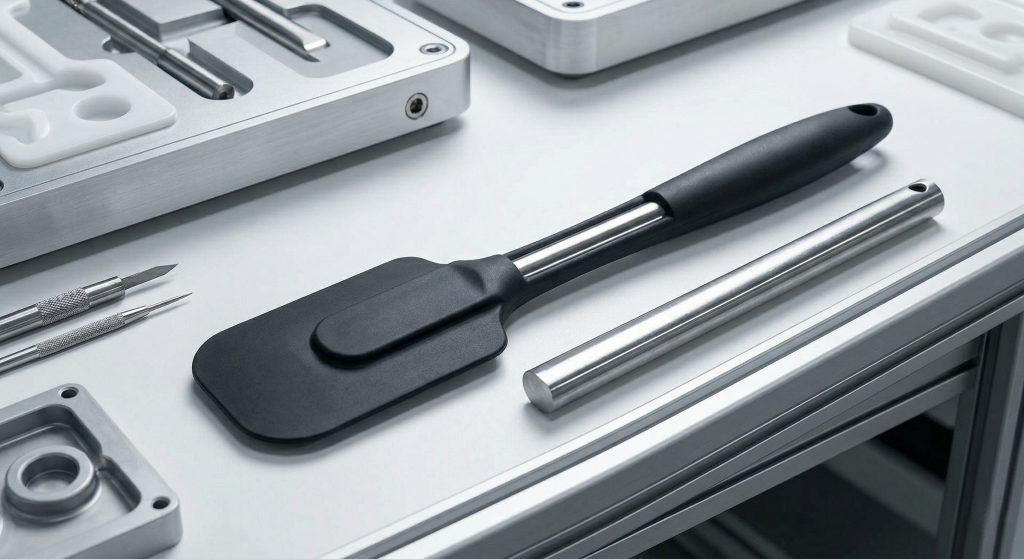
Food safety regulations demand non-toxic materials for all commercial kitchen utensils worldwide. Inferior metal spines rust internally if water breaches the protective rubber coating. Premium factories use specialized stainless steel alloys preventing internal rust completely. Key Takeaway: Always specify rust-resistant internal metals for any food contact application.
Preventing internal corrosion guarantees long-term hygienic safety for culinary consumers everywhere. Strict compliance with hygiene standards protects your business from devastating health recalls.
| Material | Rust Risk | Food Safety Compliance |
| Standard Iron | High | Poor |
| Stainless Steel | Zero | Excellent |
| Nylon Polymer | Zero | Excellent |
| This safety evaluation highlights why standard iron remains unacceptable for utensils. |
What Are the Typical Use Cases for Metal vs Plastic Cores?
Different cooking environments demand specific structural characteristics from kitchen hand tools constantly. Analyzing how to choose silicone manufacturer involves matching capabilities against your exact market. Heavy-duty commercial kitchens require indestructible metal spines for daily abuse survival. High-volume bakeries prefer lightweight nylon centers for rapid frosting spreading tasks.
Barbecue enthusiasts need extended metal handles preventing burns over open grill flames. Home cooks usually prefer versatile plastic designs handling simple mixing duties easily. Identifying your exact target demographic simplifies the material selection process completely. Tailoring product strength for specific consumers maximizes your overall retail market penetration.
Where Do Metal Spines Excel Most?
Professional chefs subject their gear against extreme heat and physical trauma daily. Metal tools smash thick ice blocks without sustaining any structural damage whatsoever. This is where it gets interesting… Industrial environments exploit metallic strength advantages perfectly.
- They scrape scorched food from heavy iron skillets.
- They support massive portions of heavy pulled pork.
- They survive accidental drops onto hard concrete floors.
These brutal scenarios destroy flimsy consumer-grade tools within a few short days. Supplying robust gear builds strong relationships with demanding professional restaurant owners.
When Should You Choose Plastic Spines?
Non-stick cookware requires gentle handling, making flexible nylon an ideal material choice. Rigid metal sometimes pierces rubber coatings, scratching expensive Teflon pan surfaces permanently. Nylon bends gracefully, protecting delicate cooking surfaces during aggressive scraping motions safely. Key Takeaway: Match your spine material against the specific cookware your customers utilize.
Protecting expensive non-stick pans builds massive brand trust with domestic home consumers. Supplying surface-safe utensils guarantees repeat business from satisfied amateur home chefs.
| Core Type | Best Cookware Match | Primary User |
| Steel Spine | Cast Iron Pans | Professional Chefs |
| Nylon Spine | Teflon Coated Pans | Home Cooks |
| This pairing guide helps brands target specific consumer cooking demographics effectively. |
How to Choose Silicone Manufacturer for High-Volume Runs?
Scaling production from prototypes toward massive volumes requires distinct factory capabilities absolutely. Discovering how to choose silicone manufacturer means auditing their automation equipment thoroughly. Automated production lines reduce labor costs while maintaining strict quality consistency globally. Manual processes introduce human error, causing unacceptable variance between different product batches.
Advanced factories utilize robotics for placing metal inserts perfectly inside molds rapidly. This automated precision guarantees zero defects across hundreds of thousands of units. Selecting an automated partner ensures smooth scaling during peak seasonal demand periods. Consistent high-volume manufacturing prevents costly stock shortages during critical retail holiday seasons.
Why Is Automation Critical for Quality?
Robots repeat exact movements flawlessly, placing inserts with millimeter precision continuously. Consistent placement guarantees uniform rubber wall thickness across every single finished product. Ready for the good part? Automation slashes defect rates dramatically while accelerating output.
- Robotic arms operate continuously without needing breaks.
- Automated optical inspection catches microscopic surface defects instantly.
- Conveyor systems transport finished goods directly toward packaging.
These technological advantages make automation mandatory for profitable high-volume manufacturing campaigns. Investing time finding automated partners guarantees superior profit margins for your company.
Can ERP Systems Prevent Supply Delays?
Enterprise Resource Planning software tracks raw material inventory levels in real-time accurately. A robust ERP system orders replacement steel automatically before material shortages occur. Factories lacking software integration often miss shipping deadlines due to missing parts. Key Takeaway: Partner with technologically advanced factories utilizing modern ERP inventory tracking systems.
Software-driven inventory management prevents disastrous out-of-stock scenarios during busy retail seasons. Reliable supply chains keep your distribution channels flowing smoothly without unexpected interruptions.
| Factory Type | Defect Rate | Delivery Reliability |
| Fully Automated | Near Zero | Extremely High |
| Manual Labor | Moderate | Variable |
| This comparison proves modern automation delivers superior reliability for large international brands. |
How Do Overmolding Methods Differ for Spatula Materials?
Overmolding encapsulates rigid internal spines completely inside soft exterior rubber layers seamlessly. Figuring out how to choose silicone manufacturer demands understanding their bonding techniques thoroughly. Metal requires specialized chemical adhesion promoters applied manually before the molding cycle. Plastic cores frequently bond naturally with liquid rubber through thermal fusion processes.
Incorrect bonding causes the exterior skin to peel away from internal spines. This delamination destroys functionality, creating a floppy and entirely useless kitchen tool. Expert factories perfect these bonding formulas through extensive chemical engineering trials constantly. Flawless adhesion prevents bacteria from infiltrating microscopic gaps inside your cooking utensils.
What Challenges Does Metal Overmolding Present?
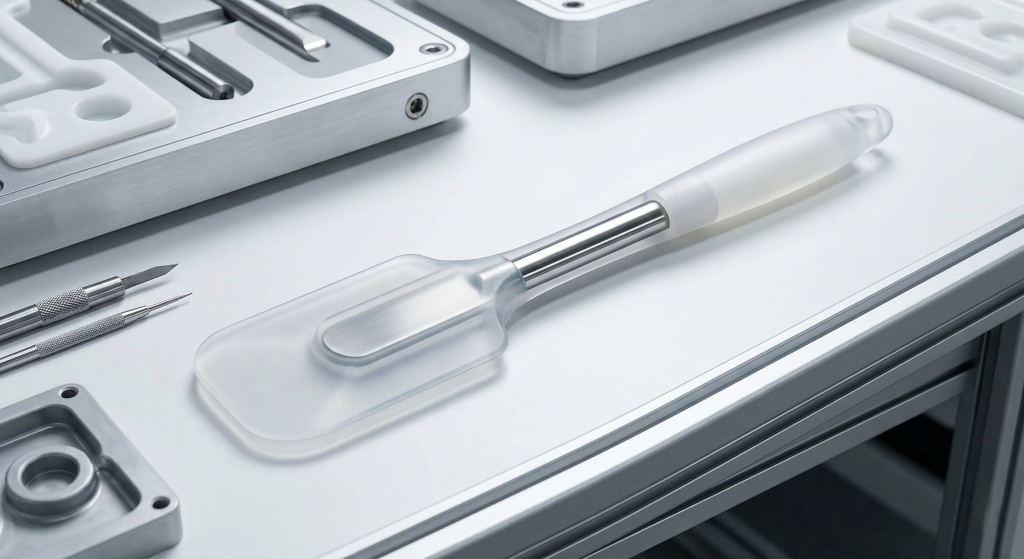
Steel conducts heat rapidly, causing liquid rubber to cure unevenly sometimes. Engineers must pre-heat metallic inserts, ensuring uniform curing throughout the entire mold. What’s the real story? Temperature management remains the biggest hurdle during metal overmolding.
- Cold metal shocks the liquid rubber upon contact.
- Pre-heating prevents premature curing near the metal surface.
- Precise temperature controls yield flawless chemical adhesion bonds.
Mastering these thermal dynamics separates amateur molders from true elite industry professionals. Premium factories utilize thermal imaging cameras for verifying precise insert temperatures continuously.
Are Plastic Overmolding Processes Faster?
Nylon inserts share similar thermal properties with liquid rubber, simplifying overmolding significantly. Factories skip the pre-heating phase entirely, accelerating overall manufacturing cycle times drastically. Faster cycles reduce unit costs, making nylon tools cheaper for end consumers. Key Takeaway: Understand how material choices impact manufacturing cycle times and final costs.
Selecting nylon reduces production complexities, lowering your final wholesale purchasing price substantially. Optimized manufacturing cycles boost your bottom line while maintaining excellent product quality.
| Spine Material | Bonding Method | Cycle Time |
| Stainless Steel | Chemical Primer | Slower |
| Nylon Polymer | Thermal Fusion | Faster |
| This processing breakdown explains why metal tools inherently carry higher production costs. |
Choosing a core determines your product’s market success. A strong spine delivers durability, while flexible nylon offers lightweight agility perfectly. Your choice defines performance. We solved structural dilemmas today by explaining fundamental material differences thoroughly. Contact us today for reliable manufacturing support. We transform complex engineering concepts into flawless tangible products rapidly. Hualin Silicone stands firmly behind precision engineering, building a world where quality never bends under pressure.
FAQ
Q1: What’s the best core material for high-temperature commercial cooking?
Stainless steel remains the ultimate choice. It withstands temperatures exceeding five hundred degrees Fahrenheit without losing structural integrity or melting during service.
Q2: Can I use plastic cores for heavy-duty mixing applications?
No, you should avoid them. Plastic bends under intense pressure, lacking the necessary torque required for manipulating thick, heavy doughs effectively.
Q3: How do I know if my manufacturer uses high-quality tooling?
Inspect their CNC machinery brands directly. Premium factories utilize German or Japanese equipment, guaranteeing mirror-smooth molds and zero rubber flashing defects.
Q4: Is it possible to combine metal and plastic in one design?
Yes, hybrid designs exist. Manufacturers mold stiff metal handles alongside flexible nylon tips, requiring advanced multi-shot injection molding capabilities for production.
Q5: Why do metal core spatulas require thicker rubber coatings?
Metal transfers heat rapidly. A thicker rubber layer acts as insulation, preventing hot internal steel from burning a user’s hands during cooking.