
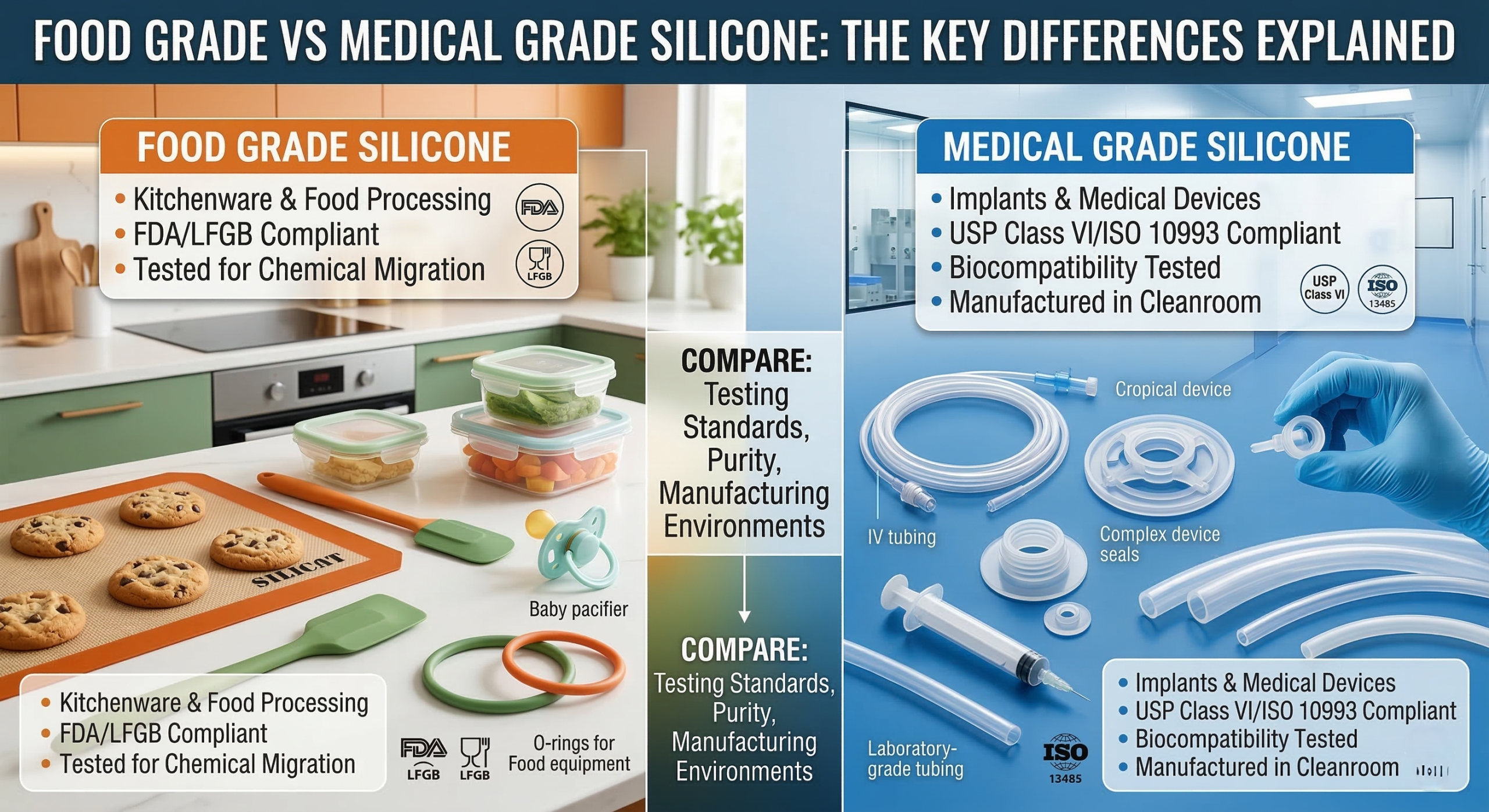
The difference between food grade and medical grade silicone lies primarily in their testing standards, purity levels, and specific regulatory compliance for human contact. You may find yourself sourcing components for a high-end consumer line only to realize that a standard material choice might lead to safety recalls or regulatory rejection. Failing to distinguish between these grades often agitates production timelines and inflates costs due to rework or lost consumer trust. By understanding the specific nuances of each material, you can ensure your products meet the highest safety benchmarks and performance expectations. The essential question for many engineers is: Is medical grade silicone the same as food grade silicone?
What is food grade silicone?
Food grade silicone is a non-toxic elastomer specifically tested for safety when in direct contact with food and beverages. It is highly resistant to extreme temperatures and does not leach chemicals into substances it touches.
Many manufacturers ask, is medical grade silicone the same as food grade silicone? while designing kitchenware or baby items. Food-grade variants are primarily defined by their ability to remain inert and odorless under stress.
What are its common applications?
You will find this material in everything from baking molds to seals for food processing equipment. Its versatility allows it to withstand both freezing and oven temperatures without degrading.
The best part?
- Baking mats and molds
- Kitchen utensils and spatulas
- O-rings for coffee machines
- Food storage containers
How is food grade safety verified?
Think about it: for a material to be truly food-safe, it must pass rigorous extraction tests. Standards like FDA 21 CFR 177.2600 ensure that no harmful substances migrate from the silicone into the food.
Here is the deal:
- Complies with FDA and LFGB standards
- Free from BPA, lead, and phthalates
- Durable through thousands of wash cycles
- Resists bacterial growth naturally
Key Takeaway: Food grade silicone is the industry standard for consumer kitchen products, providing a cost-effective yet highly safe solution for food contact.
| Feature | Food Grade Silicone |
|---|---|
| Primary Use | Kitchenware & Food Processing |
| Compliance | FDA / LFGB |
| Temperature Range | -60°C to 230°C |
| Testing Focus | Chemical Migration |
Effective food grade silicone must balance thermal stability with chemical inertness to ensure long-term consumer safety.
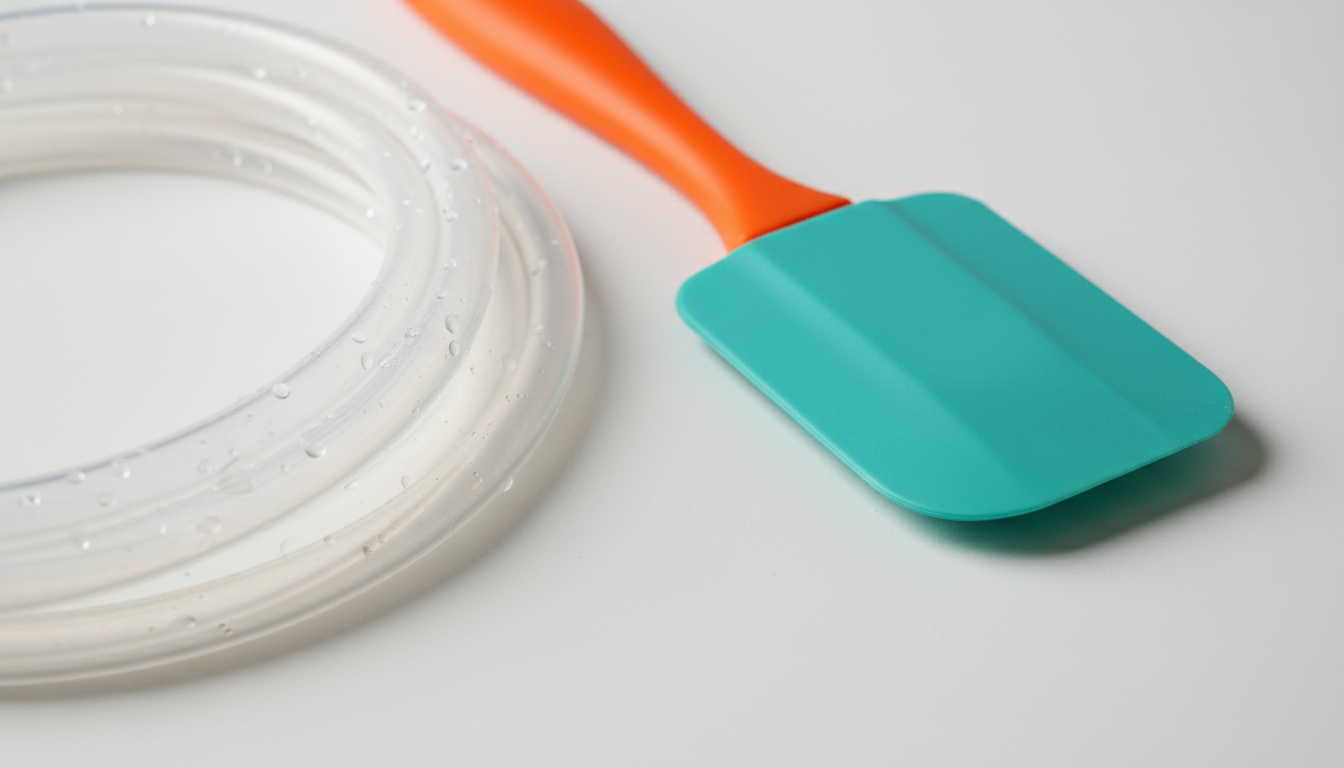
What defines medical grade silicone?
Medical grade silicone is a high-purity elastomer that has undergone extensive biocompatibility testing to ensure it does not cause adverse reactions when in contact with human tissue. It is often manufactured in controlled environments to prevent any contamination.
When evaluating materials, you must determine if is medical grade silicone the same as food grade silicone? for your specific device requirements. Medical grades are typically categorized by their duration of contact with the body.
What are the different medical classes?
You should know that medical silicone is often divided into healthcare-grade for skin contact and long-term implantable grade. The latter undergoes the most stringent verification processes in the industry.
The bottom line:
- Class VI USP testing
- ISO 10993 compatibility
- Long-term implantable options
- Short-term healthcare grades
Why choose medical grade for wearables?
Medical grade silicone is hypoallergenic and latex-free, making it ideal for devices that stay on the skin for extended periods. It prevents the irritation often associated with lower-quality plastics or rubbers.
Here is the deal:
- Excellent skin compatibility
- High tear strength
- Sterilizable via autoclave or gamma
- Transparent and pigmentable
Key Takeaway: Medical grade silicone is essential for any application requiring biocompatibility, offering a level of purity that exceeds standard food-safe requirements.
| Feature | Medical Grade Silicone |
|---|---|
| Primary Use | Implants & Medical Devices |
| Compliance | ISO 10993 / USP Class VI |
| Biocompatibility | High (Tested on tissue) |
| Manufacturing | Cleanroom Environment |
The rigorous testing for medical grade silicone ensures that it remains safe for internal and external medical applications without triggering immune responses.
Is medical grade silicone the same as food grade silicone?
No, medical grade silicone is not the same as food grade silicone because it requires significantly higher purity levels and more rigorous biocompatibility testing. While medical grade can technically be used for food, food grade silicone does not meet the standards for medical implantation.
When you ask, is medical grade silicone the same as food grade silicone?, you are looking at the difference between “safe to eat off” and “safe to put inside the body.” The manufacturing protocols for the former focus on chemical leaching, while the latter focuses on cellular interaction.
Are there shared characteristics?
Both materials share the fundamental benefits of silicone, such as heat resistance and flexibility. However, the additives and curing agents used in medical grades are strictly controlled to avoid any toxicity.
The best part?
- Both are temperature resistant
- Both are moisture repellent
- Both offer excellent UV stability
- Both are microplastic-free
Can you substitute one for the other?
Think about it: while you could use medical grade for a spatula, the cost would be prohibitive for mass production. Conversely, using food grade for a medical valve could lead to severe health complications.
Here is the deal:
- Medical grade is more expensive
- Food grade lacks tissue testing
- Processing environments differ
- Regulatory pathways are distinct
Key Takeaway: Distinguishing between these grades is a critical step in product design to balance manufacturing costs with necessary safety certifications.
| Comparison Point | Food Grade | Medical Grade |
|---|---|---|
| Cost | Moderate | High |
| Skin Sensitivity | Low | Ultra-Low (Hypoallergenic) |
| Implantable | No | Yes (Specific Grades) |
| Testing Scope | Extraction/Leaching | Biocompatibility/Cell Toxicity |
Choosing the correct grade prevents regulatory hurdles and ensures the end-user is protected based on the product’s intended environment.
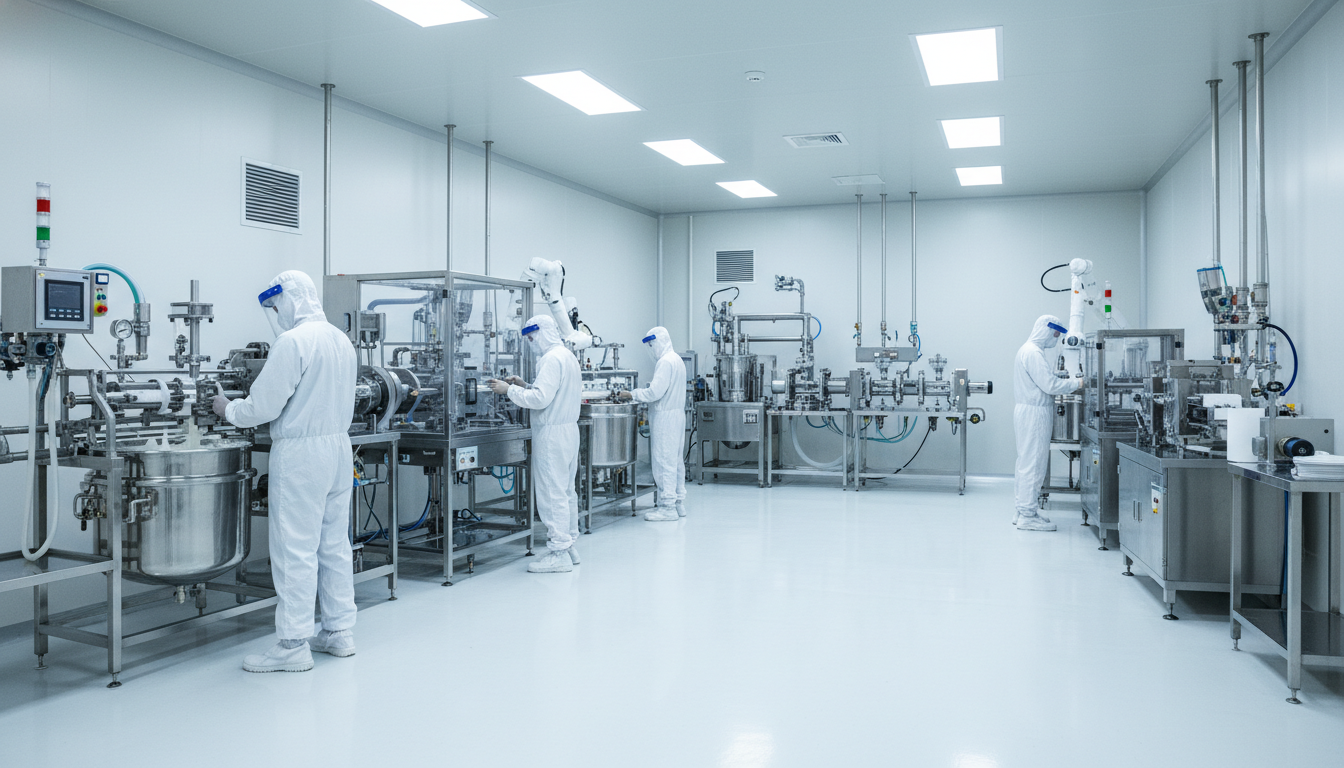
What are the key manufacturing differences?
The manufacturing differences involve the curing systems used and the environment in which the silicone is processed. Medical grade silicone typically uses platinum curing to ensure no byproducts remain in the material.
Many procurement teams wonder, is medical grade silicone the same as food grade silicone? when reviewing factory capabilities. High-quality medical silicone is almost always produced in a Class 100,000 cleanroom.
What is the role of platinum curing?
You will find that platinum-cured silicone is the gold standard for both high-end food and medical applications. Unlike peroxide curing, it leaves no acidic residue or “bloom” on the surface of the part.
The bottom line:
- No volatile byproducts
- Higher clarity and transparency
- Superior mechanical properties
- Faster cycle times in LSR molding
How does the cleanroom affect quality?
Think about it: a single dust particle can compromise the integrity of a medical seal. Manufacturing in a controlled environment ensures that no foreign contaminants are embedded in the silicone during the molding process.
Here is the deal:
- Class 100,000 cleanroom standards
- Strict operator hygiene protocols
- Integrated quality control systems
- Prevention of cross-contamination
Key Takeaway: The manufacturing environment and curing method are the silent indicators of whether a silicone part is truly medical-grade or merely food-safe.
| Factor | Standard Factory | Cleanroom Manufacturing |
|---|---|---|
| Air Filtration | Standard | HEPA Filtered |
| Curing Agent | Peroxide or Platinum | Platinum Only |
| Contamination Risk | Moderate | Minimal |
| Certification | ISO 9001 | ISO 13485 |
Advanced manufacturing processes like LSR injection molding in cleanrooms are vital for maintaining the high-purity standards required for medical applications.
Why does material purity affect performance?
Material purity directly impacts the longevity, clarity, and physical stability of the silicone product over time. Higher purity grades are less likely to yellow, crack, or lose their elasticity under harsh conditions.
You must realize that is medical grade silicone the same as food grade silicone? is a question of performance as much as safety. Medical-grade materials are engineered to maintain their properties even after repeated sterilization.
Does purity prevent “blooming”?
You might notice a white powder appearing on lower-quality silicone over time; this is known as blooming. High-purity medical silicone is formulated to eliminate the fillers that cause this phenomenon.
The best part?
- Permanent transparency
- No odor or taste transfer
- Consistent durometer (hardness)
- Resistance to chemicals
How does it handle sterilization?
Think about it: medical devices often need to be cleaned at high pressures and temperatures. Purer silicone structures can withstand steam autoclaving without breaking down at the molecular level.
Here is the deal:
- Withstands 121°C autoclave cycles
- Resistant to gamma radiation
- Chemical resistance to disinfectants
- High tear and tensile strength
Key Takeaway: Investing in higher purity materials ensures that your products maintain their aesthetic and functional integrity throughout their lifecycle.
| Performance Metric | Food Grade | Medical Grade |
|---|---|---|
| Yellowing Resistance | Good | Excellent |
| Sterilization Cycles | Limited | Extensive |
| Surface Finish | Smooth | Ultra-Smooth/Non-Porous |
| Fillers | Minimal | None (High Purity) |
Purity in silicone chemistry translates to reliability in high-stakes environments where material failure is not an option.
Which grade is ideal for baby products?
For baby products like teethers and nipples, food grade silicone is the baseline, but many premium brands opt for medical-healthcare grade for added safety. This ensures the material is completely safe for prolonged oral contact.
When you ask, is medical grade silicone the same as food grade silicone? for infant care, the answer depends on the level of risk you are willing to accept. High-purity Liquid Silicone Rubber (LSR) is generally preferred for its softness and safety.
Why is LSR preferred for babies?
You will find that LSR is the material of choice for baby bottle nipples because it is incredibly soft yet durable. It mimics the feel of natural skin while remaining easy to clean and sanitize.
The bottom line:
- Odorless and tasteless
- Hypoallergenic for sensitive skin
- Bite and tear resistant
- Easy to mass produce via injection
What about safety certifications?
Think about it: parents are increasingly concerned about microplastics and chemicals. Using a certified food-grade or healthcare-grade silicone provides the peace of mind that the product is free from toxins.
Here is the deal:
- BPA and Phthalate free
- FDA and EN14350 compliant
- Resistant to dishwasher heat
- Soft on developing gums
Key Takeaway: While food grade is sufficient, medical-healthcare grade silicone offers the highest level of protection for the most vulnerable consumers.
| Baby Product | Recommended Grade | Reason |
|---|---|---|
| Feeding Spoons | Food Grade | Standard safety sufficient |
| Bottle Nipples | Healthcare Grade LSR | Prolonged oral contact |
| Teethers | High-Tear Food Grade | Safety and durability |
| Pacifiers | Healthcare Grade | Skin and oral contact |
Choosing the right silicone for baby products balances manufacturing efficiency with the ultimate goal of infant safety.

Are there different biocompatibility levels?
Yes, biocompatibility levels range from short-term skin contact to long-term permanent implantation. Medical grade silicone must pass specific biological tests depending on its intended use.
Manufacturers frequently ask, is medical grade silicone the same as food grade silicone?, when they encounter USP Class VI requirements. These requirements are far more stringent than any food-grade testing protocol.
What is USP Class VI?
You should understand that USP Class VI is one of the most common designations for medical silicone. It involves testing the material’s reaction in living tissue to ensure it is non-toxic and non-reactive.
The best part?
- Most rigorous testing class
- Trusted by medical professionals
- Ensures low levels of toxicity
- Verified for surgical use
How is ISO 10993 used?
Think about it: ISO 10993 is the international standard for the biological evaluation of medical devices. It covers everything from irritation and sensitization to systemic toxicity.
Here is the deal:
- Evaluates tissue interaction
- Tests for cytotoxicity
- Measures sensitization levels
- Essential for global compliance
Key Takeaway: Biocompatibility is the defining factor that elevates a material from food-safe to medical-grade, ensuring it is safe for the human body.
| Biocompatibility Test | Purpose | Required for Medical? |
|---|---|---|
| Cytotoxicity | Cell damage check | Yes |
| Sensitization | Allergic reaction test | Yes |
| Extraction | Chemical leaching | Yes (and Food Grade) |
| Implantation | Tissue integration | Only Medical (Long-term) |
Understanding these testing tiers allows you to select a material that perfectly matches your device’s risk profile.
Can you use medical grade for food contact?
Yes, medical grade silicone is perfectly safe for food contact and often exceeds the requirements for food safety. However, its high cost usually makes it impractical for standard consumer kitchenware.
In the debate of is medical grade silicone the same as food grade silicone?, it is helpful to think of medical grade as a “super-set” of food grade. It does everything food grade does, but with additional biological safeguards.
When should you use medical grade for food?
You might choose medical grade for high-end espresso machines or laboratory-grade food processing equipment. In these cases, the extreme purity justifies the additional expense.
The bottom line:
- Zero risk of taste transfer
- Maximum chemical resistance
- Longer lifespan in industrial use
- Compliance with the strictest laws
Is the price difference worth it?
Think about it: for a standard spatula, the price of medical grade silicone would make the product uncompetitive. For a medical-grade feeding tube, the safety requirement makes the cost irrelevant.
Here is the deal:
- Medical grade can cost 2-5x more
- Over-engineering can hurt margins
- Focus on the application needs
- Quality assurance is the priority
Key Takeaway: While medical grade is superior in every technical aspect, it is usually reserved for applications where food grade safety is insufficient.
| Application | Recommended Silicone | Cost Logic |
|---|---|---|
| Home Baking | Food Grade | Balanced cost/safety |
| Lab Equipment | Medical Grade | Purity is essential |
| Pet Bowls | Food Grade | Durability at low cost |
| IV Tubing | Medical Grade | Life-critical safety |
Using the right material for the right application ensures both safety and business viability in the competitive B2B market.

What specific certifications are required?
Certifications vary by region and industry, with FDA and LFGB being primary for food, and ISO 13485 and USP Class VI being primary for medical. You must ensure your supplier can provide the necessary documentation.
When verifying if is medical grade silicone the same as food grade silicone?, look at the certification stamps. These documents prove that the material has undergone the specific testing required for your market.
What is the difference between FDA and LFGB?
You should know that while FDA is the US standard, LFGB is the stricter European standard. Many B2B buyers prefer LFGB-certified silicone because it undergoes more rigorous testing for sensory and chemical transfer.
The best part?
- LFGB is the “Gold Standard”
- FDA is widely accepted globally
- LFGB requires “Pinch Test” success
- Both ensure food-safe contact
What medical certifications matter most?
Think about it: an ISO 13485 certification means the manufacturer has a quality management system specifically for medical devices. This is a crucial requirement for any medical-grade component supplier.
Here is the deal:
- ISO 13485 (Medical QMS)
- ISO 10993 (Biocompatibility)
- USP Class VI (Tissue safety)
- RoHS and REACH compliance
Key Takeaway: Proper certification is your legal safeguard, ensuring that your products are compliant with international safety laws.
| Certification | Industry | Region |
|---|---|---|
| FDA | Food | USA |
| LFGB | Food | Europe |
| USP Class VI | Medical | Global |
| ISO 13485 | Medical | Global |
By insisting on these certifications, you eliminate the guesswork and protect your brand from liability and safety failures.
How to select the right material for you?
Selecting the right material requires evaluating the end-user’s contact level, the environment of use, and your production budget. You should always consult with an expert manufacturer to conduct a DFM analysis.
Ultimately, is medical grade silicone the same as food grade silicone? is the first question in a larger material selection process. Your choice will define your product’s market positioning and safety profile.
How do you perform a stretch test?
You can perform a simple “pinch and twist” test on silicone samples. If white appears, it often indicates the presence of fillers, which are common in low-quality silicone but absent in true medical or high-end food grades.
The bottom line:
- High-quality silicone stays one color
- Fillers reduce durability
- Pure silicone is more flexible
- Stretch tests provide quick feedback
Why consult with a manufacturer early?
Think about it: an experienced partner can help you choose a custom formula that balances tear strength with softness. Early collaboration reduces the risk of choosing an over-specified or under-specified material.
Here is the deal:
- Access to custom formulas
- Prototype testing support
- Expert DFM feedback
- Global shipping and compliance
Key Takeaway: The best material choice is one that meets all safety standards without unnecessary cost, achieved through expert guidance.
| Step | Action | Outcome |
|---|---|---|
| 1 | Define Contact Type | Identify Grade (Food/Med) |
| 2 | Review Budget | Select Curing (Pt/Peroxide) |
| 3 | Request Samples | Perform Pinch/Stretch Test |
| 4 | Verify Certs | Confirm Legal Compliance |
A methodical approach to material selection ensures that your product is safe, functional, and profitable in the global market.
*
Conclusion
Navigating the complexities of material science is essential for delivering safe, high-quality products. Whether you are developing medical valves or eco-friendly kitchenware, understanding the distinct requirements of food grade and medical grade silicone is the key to success. We help you solve these engineering challenges by providing expert guidance, precision manufacturing, and full regulatory compliance. From initial design to mass production, we ensure your components meet the highest global standards. To secure the future of your product line with premium silicone solutions, contact us today.
*
FAQ
Can I use food grade silicone for a medical device?
No, you should not. Food grade silicone lacks the biocompatibility testing required to ensure it won’t cause adverse reactions in the human body.
What is the best way to tell if silicone is food grade?
The most reliable way is to check for FDA or LFGB certification. You can also perform a “pinch test”; pure food-grade silicone will not turn white when stretched.
Is medical grade silicone more durable than food grade?
Generally, yes. Medical grade silicone is often platinum-cured and formulated for higher tear strength and resistance to harsh sterilization environments.
Is medical grade silicone hypoallergenic?
Yes, it is specifically designed to be inert and non-reactive, making it safe for people with sensitive skin or latex allergies.
Does all medical grade silicone need to be manufactured in a cleanroom?
For implantable and high-purity healthcare applications, cleanroom manufacturing is the standard to prevent contamination. For basic consumer skin-contact items, it may not always be required but is still preferred for quality.