
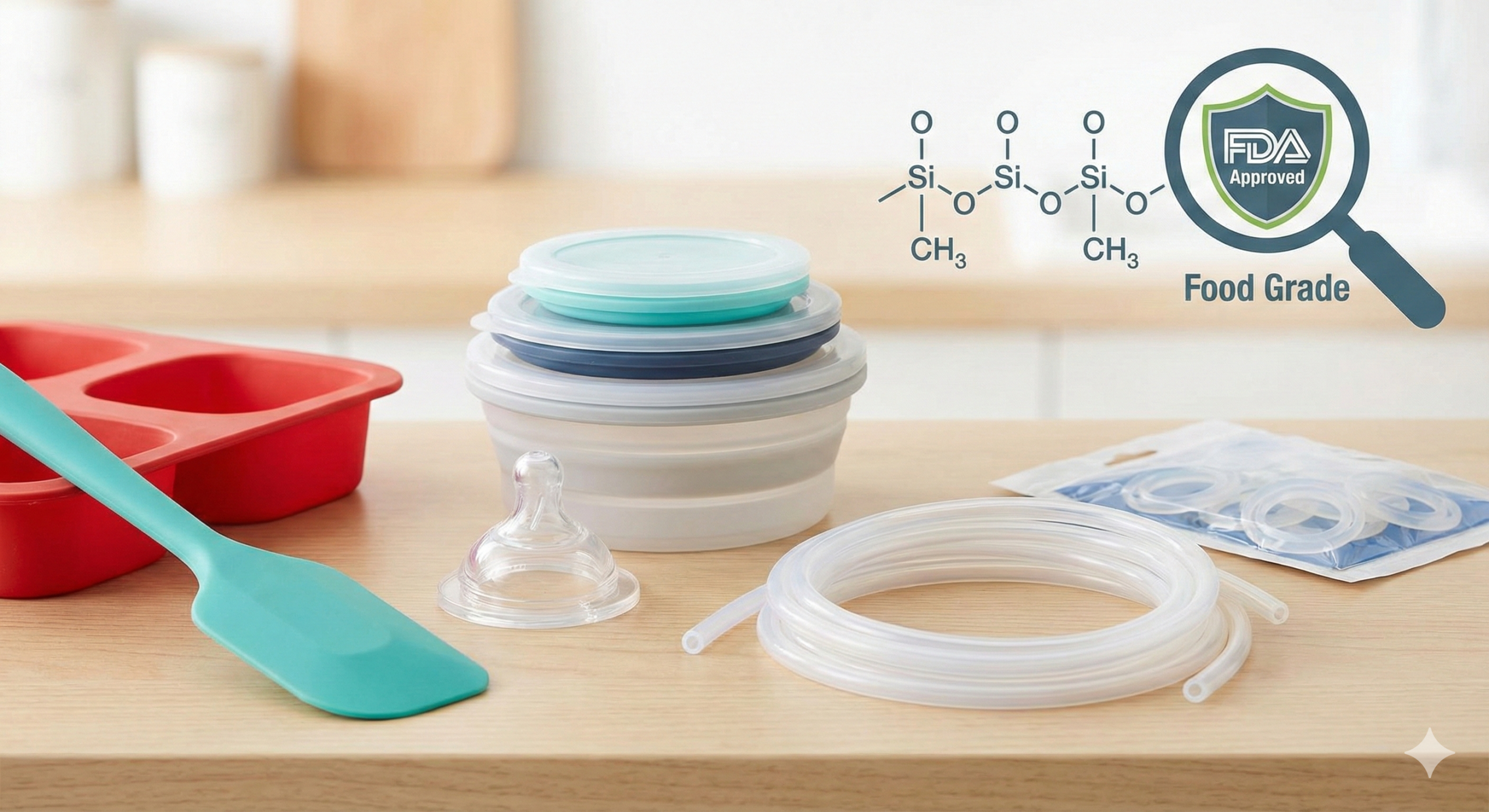
FDA food grade silicone is a synthetic polymer derived primarily from silica (sand), oxygen, carbon, and hydrogen. You carefully select organic ingredients and BPA-free storage, yet a hidden risk may be lurking in your kitchen drawer or production line. Traditional plastic utensils and low-quality seals often degrade under heat, leaching microplastics and synthetic chemicals directly into your products. This chemical migration isn’t just a nuisance; it’s a long-term safety concern that many B2B buyers overlook until their components start to warp or fail. To ensure total safety and compliance, you must understand what is food grade silicone and why its unique composition makes it the gold standard for non-toxic industrial applications.
What are the fundamental chemical components of silicone?
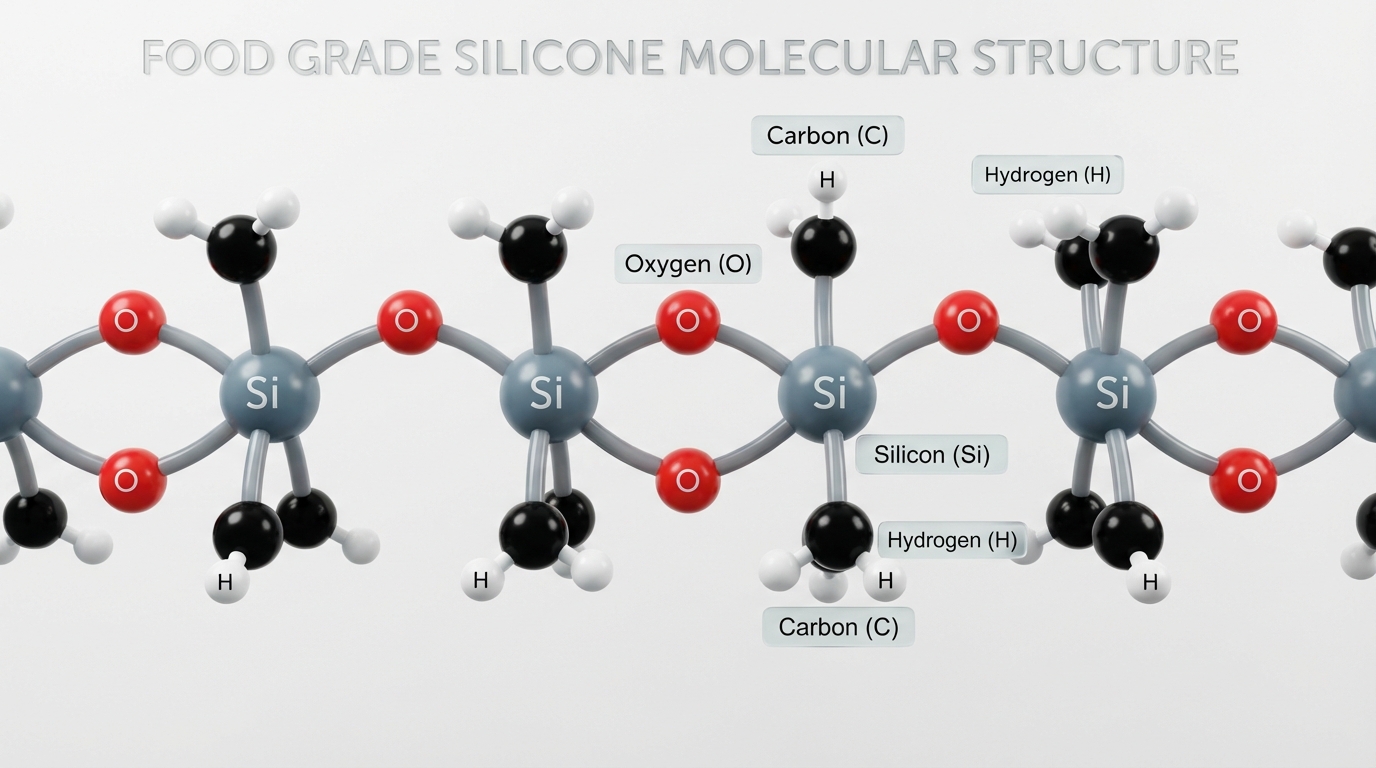
At its core, understanding what is food grade silicone requires looking at its molecular “backbone.” Unlike petroleum-based plastics, this material is built on a siloxane chain consisting of alternating silicon and oxygen atoms. This inorganic foundation is what provides the material with its incredible stability and resistance to environmental degradation.
Think about it: the unique hybrid nature of this polymer allows it to perform where others fail. Organic groups, typically methyl or vinyl, are attached to the silicon atoms to provide flexibility and water-repellent properties. This specific arrangement ensures the material remains inert when in contact with food substances.
How does the siloxane bond provide stability?
The silicon-oxygen bond is significantly stronger than the carbon-carbon bonds found in traditional plastics. This means that when you use these components in high-heat environments, the molecular structure remains intact. You won’t have to worry about the material breaking down or releasing volatiles during standard operating procedures.
Furthermore, the absence of harmful fillers ensures that the purity of your end product is never compromised. Because the structure is so stable, it resists oxidation and UV exposure far better than organic rubbers. Here is the deal: if you want longevity and safety, the siloxane backbone is your best ally.
- Silicon (Si): The primary elemental building block.
- Oxygen (O): Creates the stable bridge between silicon atoms.
- Methyl Groups: Provide the necessary flexibility and “rubbery” feel.
- Inert Nature: Ensures no reaction with acids or oils.
| Component | Function | Benefit |
|---|---|---|
| Siloxane Backbone | Structural Integrity | High Heat Resistance |
| Organic Groups | Physical Flexibility | Custom Molding Capability |
| Silica Source | Material Purity | Non-toxic food contact |
Analysis: The inorganic-organic hybrid structure creates a material that combines the strength of glass (silica) with the versatility of rubber.
Key Takeaway: The molecular stability of the silicon-oxygen bond is the primary reason food-grade silicone outperforms plastic in safety and durability.
How is raw silica transformed into high-purity silicone?
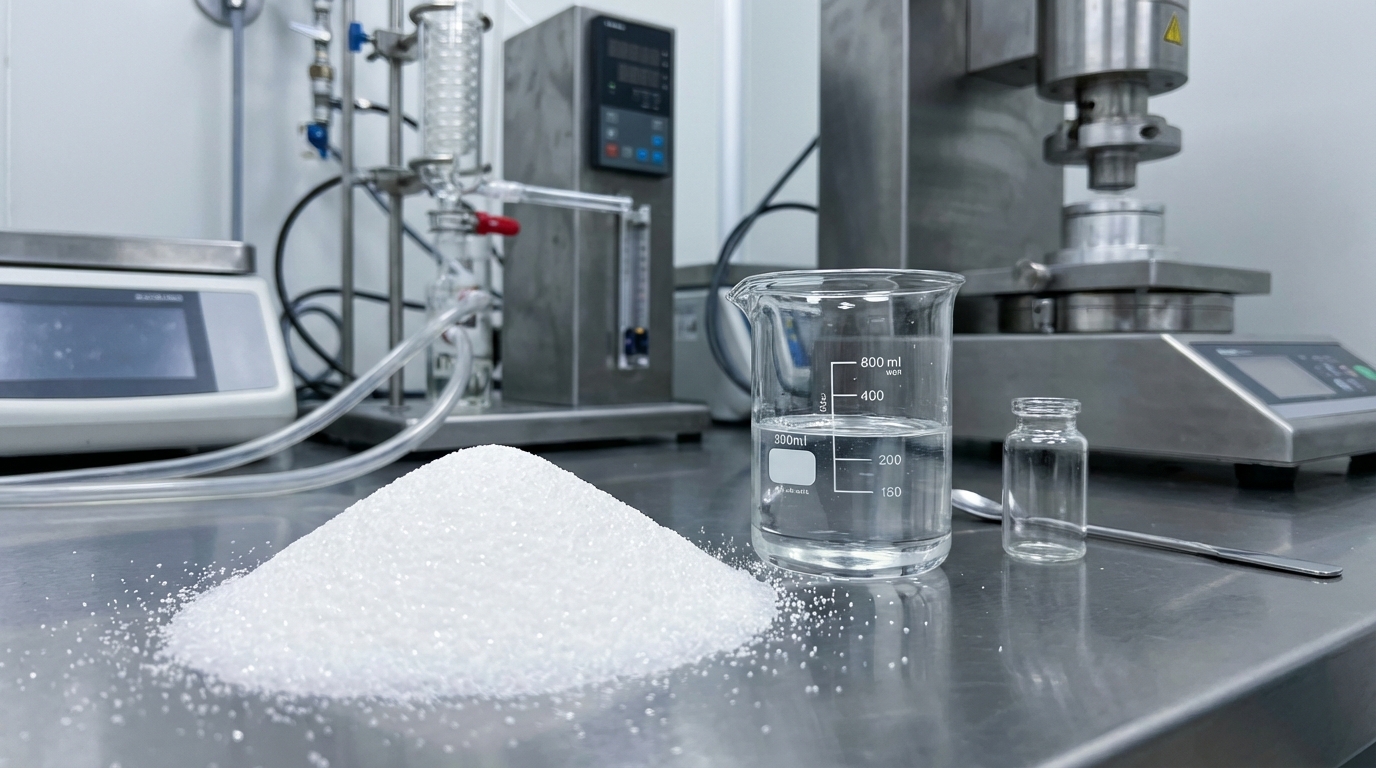
The journey of what is food grade silicone begins with quartz sand, one of the most abundant minerals on Earth. To create a high-purity polymer, the silica must undergo a complex reduction process in high-temperature furnaces to extract pure silicon. This raw element is then reacted with methyl chloride to produce the precursors needed for polymerization.
Believe it or not, the refinement stage is where the “food grade” distinction is truly earned. After the initial synthesis, the material undergoes intense filtration to remove any volatile organic compounds (VOCs) or residual chemicals. This ensures that the final product is clean enough for repeated contact with consumable goods.
What happens during the hydrolysis phase?
Hydrolysis is a critical chemical reaction where the silicon precursors are treated with water to form the long-chain polysiloxanes. This process is carefully controlled to manage the viscosity and molecular weight of the silicone. You need this precision to ensure the material can be molded into complex industrial shapes without losing its structural integrity.
The resulting silicone base is then “de-volatilized” to ensure no odors or tastes can be transferred to food. This high-purity approach is why professional manufacturers prioritize laboratory-grade refinement. It is the only way to guarantee a finished product that meets global export standards.
- Extraction: Isolating pure silicon from quartz.
- Synthesis: Creating chlorosilanes via chemical reactions.
- Hydrolysis: Building the polymer chains with water.
- Refinement: Removing impurities and volatile residues.
| Step | Process Type | Result |
|---|---|---|
| Furnace Reduction | Thermal | 99% Pure Silicon |
| Chlorination | Chemical | Intermediate Precursors |
| Distillation | Purification | High-grade Polymer Base |
Analysis: The transformation from sand to silicone involves multiple stages of purification designed specifically to eliminate contaminants.
Key Takeaway: Raw material purity is established during the initial extraction and refinement stages, long before the silicone is molded.
What specific FDA compliance standards define safety?
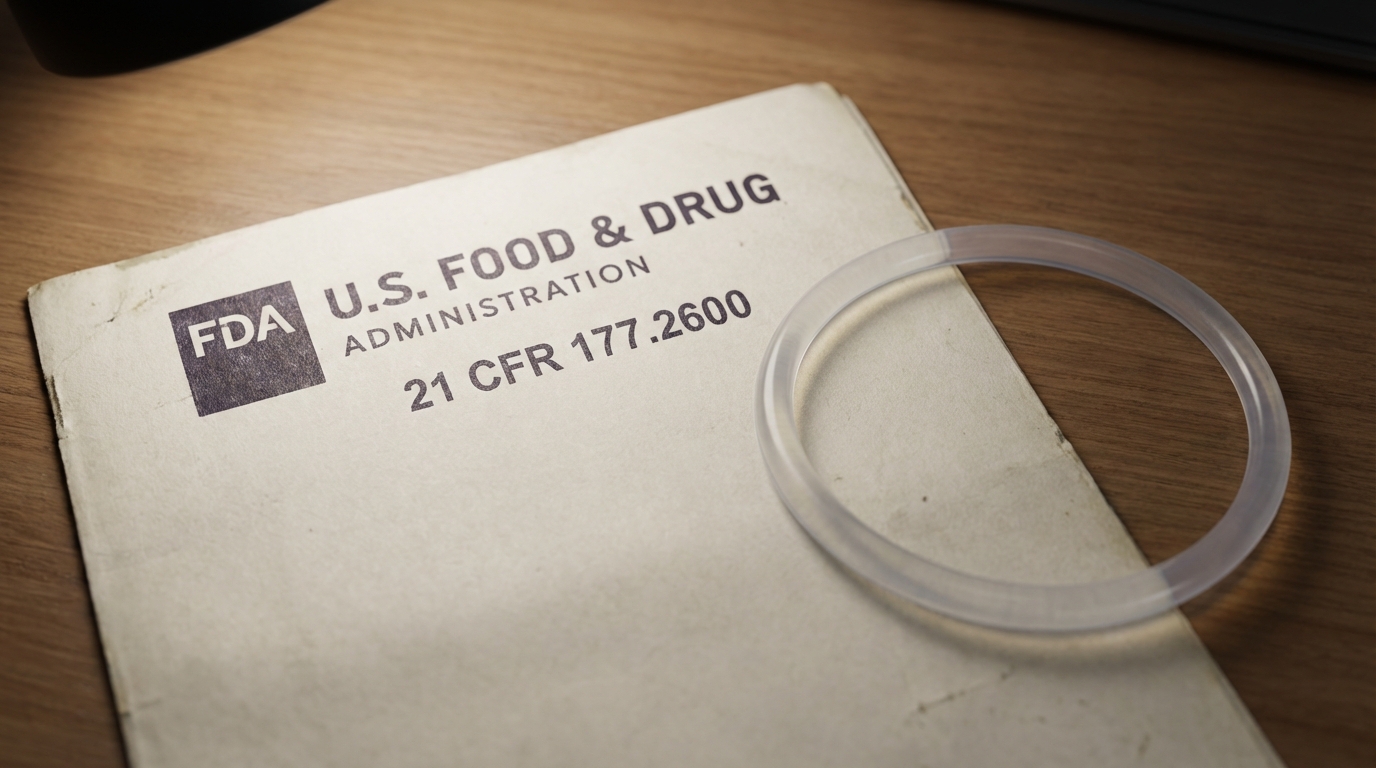
When evaluating what is food grade silicone for your supply chain, you must look for 21 CFR 177.2600 compliance. This specific FDA regulation governs rubber articles intended for repeated use in food production and packaging. It sets strict limits on the amount of extractable substances that can migrate from the silicone into food.
You see, the FDA doesn’t just check the ingredients; they test how the material behaves under stress. To pass these standards, the silicone must demonstrate that it does not release harmful levels of chemicals when exposed to fatty or aqueous foods. This verification is essential for maintaining consumer trust and passing regulatory audits.
Why are extraction limits so important?
Extraction limits represent the maximum allowable “leaching” of the material into food products. If a silicone component fails these tests, it cannot be legally sold as food-grade in the United States. You must ensure your suppliers provide third-party laboratory verification from organizations like SGS or TUV.
Meeting these extraction limits requires using high-quality raw materials and a clean manufacturing environment. It also means the material must be properly post-cured to drive off any remaining volatiles. Here is the bottom line: FDA compliance is your insurance policy against product recalls.
- CFR 177.2600: The primary federal standard for food contact rubber.
- Fatty Food Testing: Ensures stability in oils and fats.
- Aqueous Food Testing: Verifies safety in water-based products.
- Laboratory Traceability: Essential for industrial audits and quality logs.
| Test Parameter | Requirement | Purpose |
|---|---|---|
| Distilled Water Extraction | < 20 mg/sq. in | Aqueous food safety |
| n-Hexane Extraction | < 175 mg/sq. in | Fatty food safety |
| Repeated Use Durability | No physical change | Structural reliability |
Analysis: FDA standards are not suggestions; they are measurable scientific benchmarks that ensure material safety under extreme conditions.
Key Takeaway: Always verify the specific CFR documentation to ensure your silicone components are legally compliant for food contact.
Why is the curing process critical for food safety?
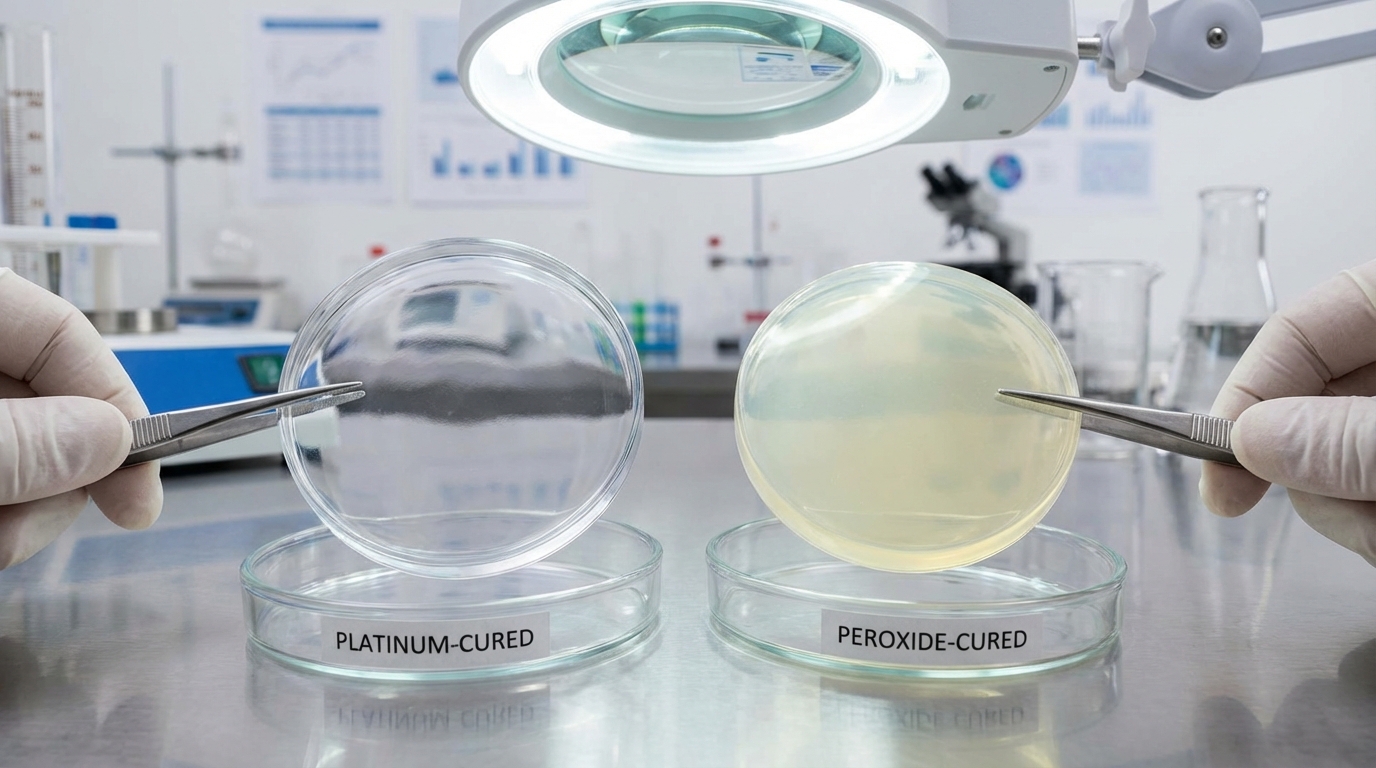
The curing method determines the purity and final performance of what is food grade silicone in your application. In the industrial world, there are two main types of curing: peroxide and platinum. While peroxide curing is common for industrial gaskets, it often leaves behind “blooming” residues or a slight chemical odor that is unacceptable for food contact.
The best part? Platinum curing is an addition-cure system that leaves behind zero byproducts. When you choose platinum-cured silicone, you are choosing a material with higher clarity, better tensile strength, and superior biological inertness. It is the gold standard for high-end food, beverage, and medical equipment.
How does platinum curing prevent blooming?
Blooming occurs when peroxide breakdown products migrate to the surface of the silicone, creating a white, powdery residue. You won’t see this with platinum-cured parts because the catalyst becomes part of the molecular structure itself. This makes the material much more stable and less likely to impart any “off” flavors to food.
Moreover, platinum-cured silicone has a more consistent cross-linking density. This leads to better dimensional stability and fewer defects during the mass production process. If your project requires tight tolerances and high purity, platinum is the only logical choice for your business.
- Addition Reaction: Cross-links without creating byproducts.
- High Clarity: Resulting parts are often transparent or very clean.
- No Odor: Ideal for sensitive taste and smell applications.
- Consistent Tear Strength: Better durability during repeated mechanical use.
| Feature | Peroxide Cured | Platinum Cured |
|---|---|---|
| Byproducts | Acidic residues | None |
| Odor Profile | Noticeable | Odorless |
| Cost | Lower | Higher |
Analysis: Platinum curing represents a significant upgrade in material purity by eliminating chemical migration at the molecular level.
Key Takeaway: For food and beverage applications, always specify platinum-cured silicone to avoid odors and white residue “blooming.”
How does food grade differ from industrial silicone?
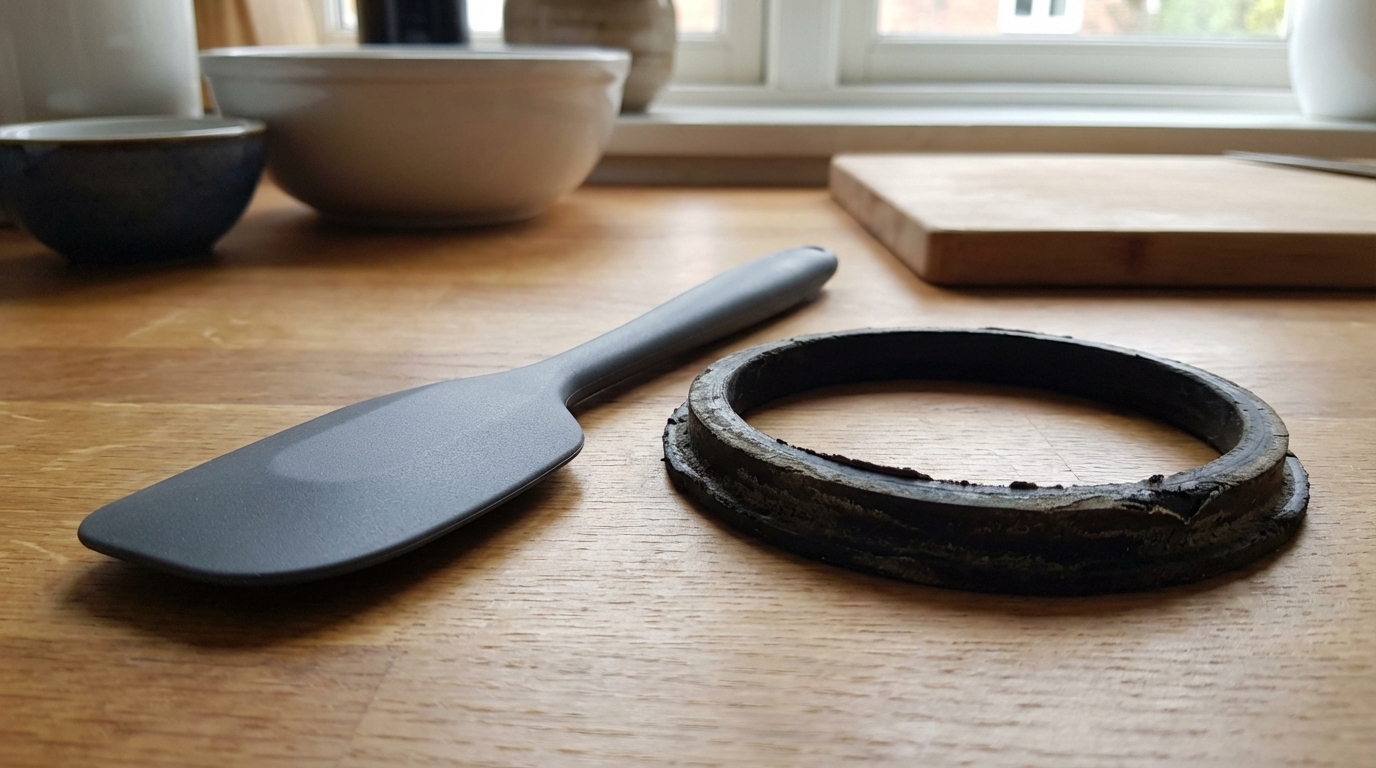
Distinguishing what is food grade silicone from industrial versions is not always possible with the naked eye. Industrial silicone often contains cheap fillers like calcium carbonate to reduce manufacturing costs. These fillers can leach out over time, especially when the material is exposed to the acidic or oily environments common in food processing.
Think about the consequences: using an industrial-grade seal in a food-grade machine could lead to contamination of thousands of units. Food-grade silicone uses fumed silica as a reinforcing filler, which is much more stable and safe. It is specifically formulated to be non-reactive, ensuring your production line remains clean and compliant.
Does the “pinch test” actually work?
You might have heard that if you pinch silicone and it turns white, it contains fillers. While this can sometimes indicate low quality, it is not a scientific measure of safety. Many high-purity, thick-walled silicone parts will show stress whitening simply due to physics, not chemical impurity.
The only reliable way to tell the difference is through chemical analysis and certification. Industrial silicone is designed for mechanical strength and chemical resistance to oils, but not for ingestion safety. You must ensure your procurement team understands that price should never come at the expense of material grade.
- Filler Types: Fumed silica (food grade) vs. Calcium carbonate (industrial).
- Chemical Migration: Industrial grades may release plasticizers or oils.
- Certification: Food grade requires FDA/LFGB; industrial does not.
- Mechanical Usage: Industrial is often harder and less flexible.
| Characteristic | Food Grade | Industrial Grade |
|---|---|---|
| Primary Filler | Fumed Silica | Calcium Carbonate |
| Chemical Stability | High (Inert) | Variable |
| Surface Finish | Non-stick / Smooth | Often Rougher |
Analysis: The difference lies in the invisible fillers and catalysts that determine whether a material is safe for human contact.
Key Takeaway: Never substitute industrial-grade silicone in food contact areas, as fillers can leach into products and cause safety failures.
What gives silicone its extreme temperature resistance?
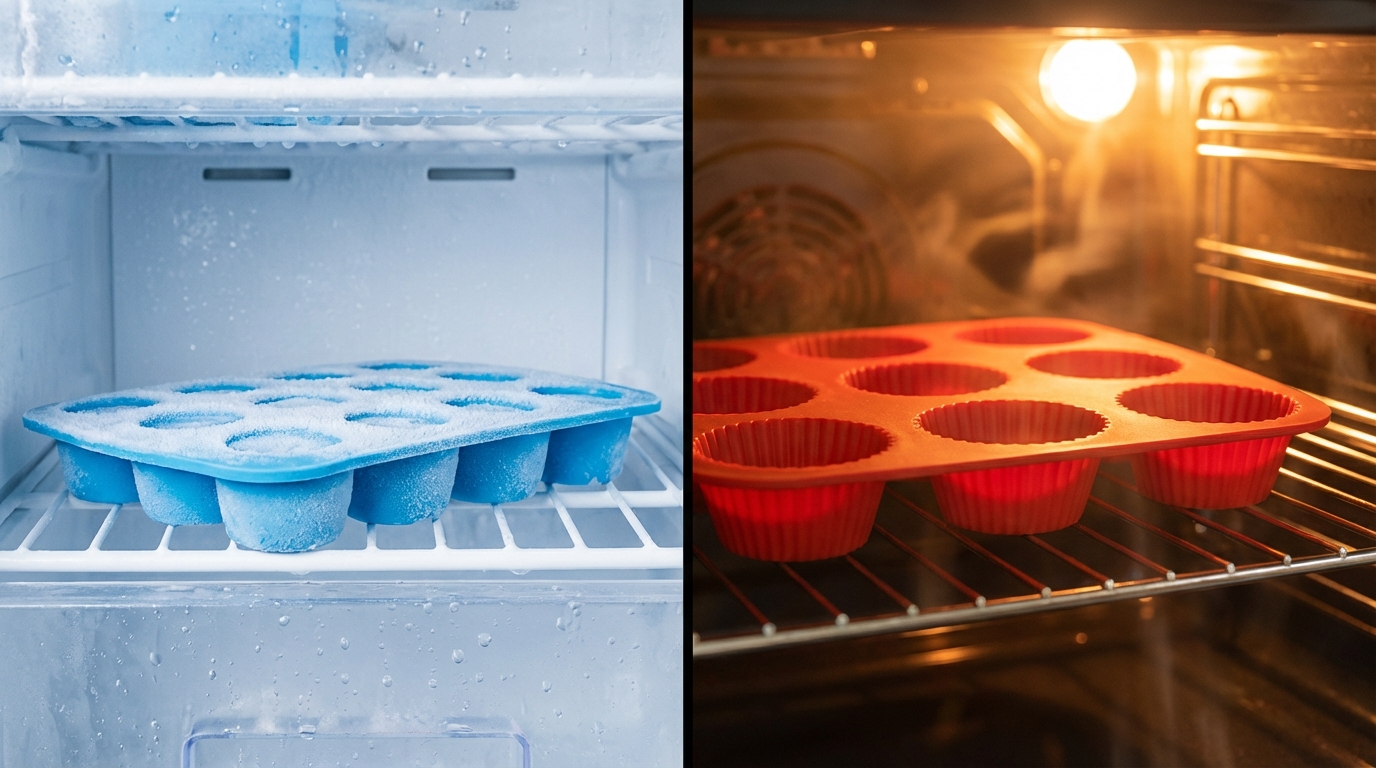
One of the most valuable traits of what is food grade silicone is its ability to withstand extreme thermal stress. This material typically remains stable at temperatures ranging from -60°C to +230°C (-76°F to 446°F). This makes it ideal for everything from flash-freezing equipment to commercial baking ovens and industrial heat sealers.
You can rely on this stability because the siloxane backbone does not vibrate or break apart easily under thermal energy. While plastics melt or become brittle, silicone retains its rubber-like elasticity. This ensures that gaskets and seals maintain a perfect vacuum even as temperatures fluctuate wildly.
Why does silicone stay flexible in the freezer?
Most rubbers and plastics undergo a “glass transition” at low temperatures, turning into a hard, brittle state. Silicone has an extremely low glass transition point, meaning it stays soft and functional even in sub-zero industrial freezers. This prevents leaks and cracks that commonly plague other sealing materials in cold-chain logistics.
In the oven, silicone resists oxidation and doesn’t smoke or release toxic fumes unless exposed to direct flame. This thermal versatility allows you to streamline your inventory by using a single material for multiple stages of the production process. Here is the deal: silicone is the ultimate “all-weather” industrial polymer.
- Heat Stability: Rated up to 230°C for continuous use.
- Cold Flexibility: Maintains seal integrity at -60°C.
- Oxidation Resistance: Does not become “crusty” or hard over time.
- UV/Ozone Resistance: Can be used in outdoor food transport.
| Condition | Silicone Behavior | Result |
|---|---|---|
| Extreme Heat | Remains soft / No melting | Safe for baking / Sealing |
| Deep Freeze | Retains elasticity | Prevents brittle cracking |
| Temperature Cycling | Minimal expansion | Maintains tight tolerances |
Analysis: The high bond energy of the silicon-oxygen chain prevents the material from degrading under thermal extremes that destroy plastics.
Key Takeaway: Silicone’s wide temperature range makes it the most versatile material for food processing lines involving both cooking and freezing.
Why is silicone preferred for baby and infant products?
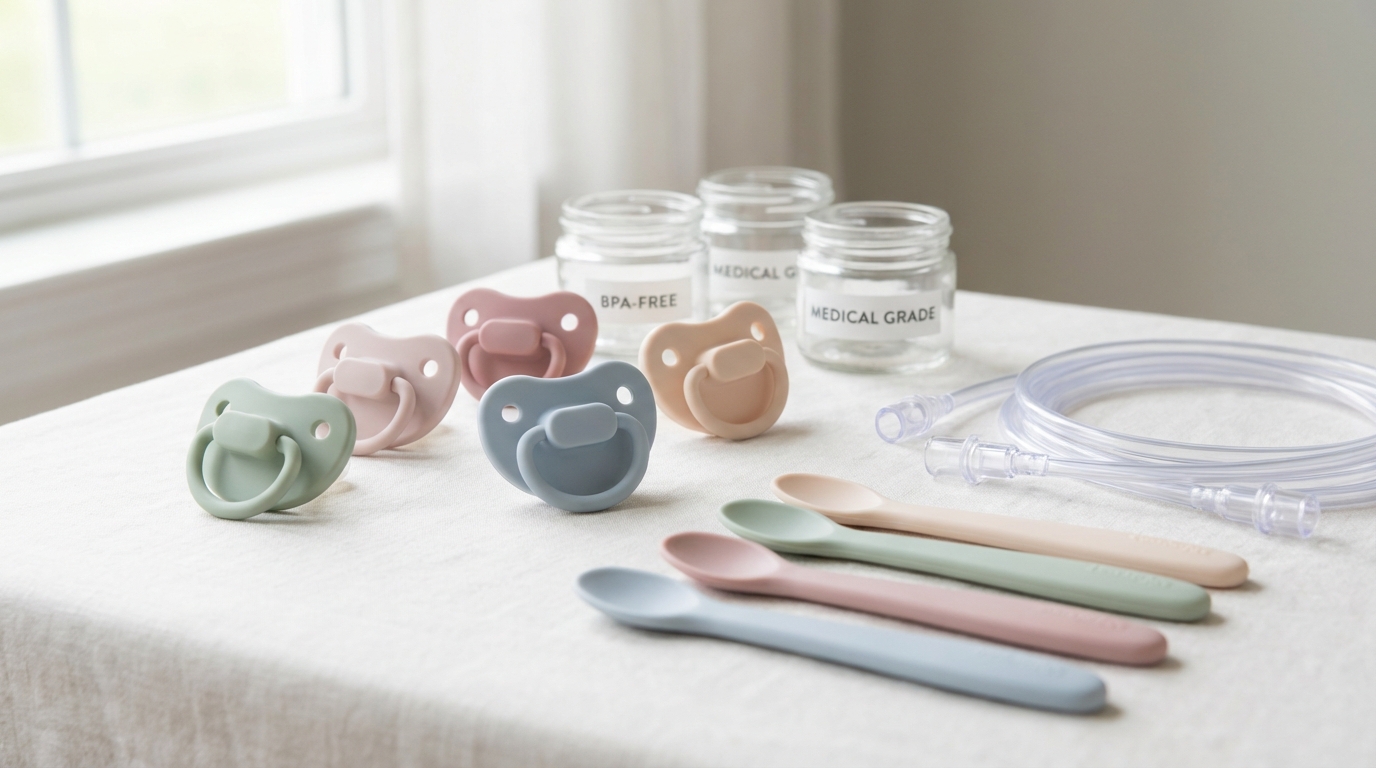
In the maternal and infant market, understanding what is food grade silicone is vital for brand safety. This material is naturally hypoallergenic and non-porous, meaning it does not harbor bacteria or mold. For babies with developing immune systems, this hygiene factor is a major selling point for pacifiers, bottle nipples, and teethers.
The best part? Silicone is 100% free from BPA, BPS, phthalates, and lead. Unlike some soft plastics that require chemical softeners (plasticizers) to remain flexible, silicone is naturally soft. This eliminates the risk of endocrine-disrupting chemicals leaching into the mouths of infants during use.
How does silicone mimic natural textures?
Manufacturers can adjust the “Shore Hardness” of silicone to mimic the feel of human skin or natural rubber. This makes it the preferred choice for breastfeeding accessories and bottle components where a natural latch is required. You can produce parts that are soft enough for a baby’s gums but durable enough to resist being bitten off.
Additionally, silicone is dishwasher and sterilizer safe. You can boil it or steam it repeatedly without the material warping or losing its shape. This durability ensures that baby products remain safe and functional throughout their entire intended lifespan, reducing the risk of choking hazards from degraded parts.
- Hypoallergenic: Safe for sensitive skin and allergies.
- Bacteria Resistant: Non-porous surface is easy to sanitize.
- BPA-Free: Naturally free from toxic plasticizing chemicals.
- Texture Control: Can be made ultra-soft or firm.
| Attribute | Benefit for Infants | Production Advantage |
|---|---|---|
| Softness | Gental on gums | High consumer appeal |
| Sterilizable | Ultimate hygiene | Repeat sales via quality |
| Non-porous | Resists odors | Maintains product freshness |
Analysis: The inherent safety and hygiene properties of silicone make it the only logical choice for high-end maternal and baby care brands.
Key Takeaway: Silicone provides a toxic-free, soft, and easy-to-clean alternative to plastic that is essential for the infant product industry.
What makes food grade silicone so flexible and durable?
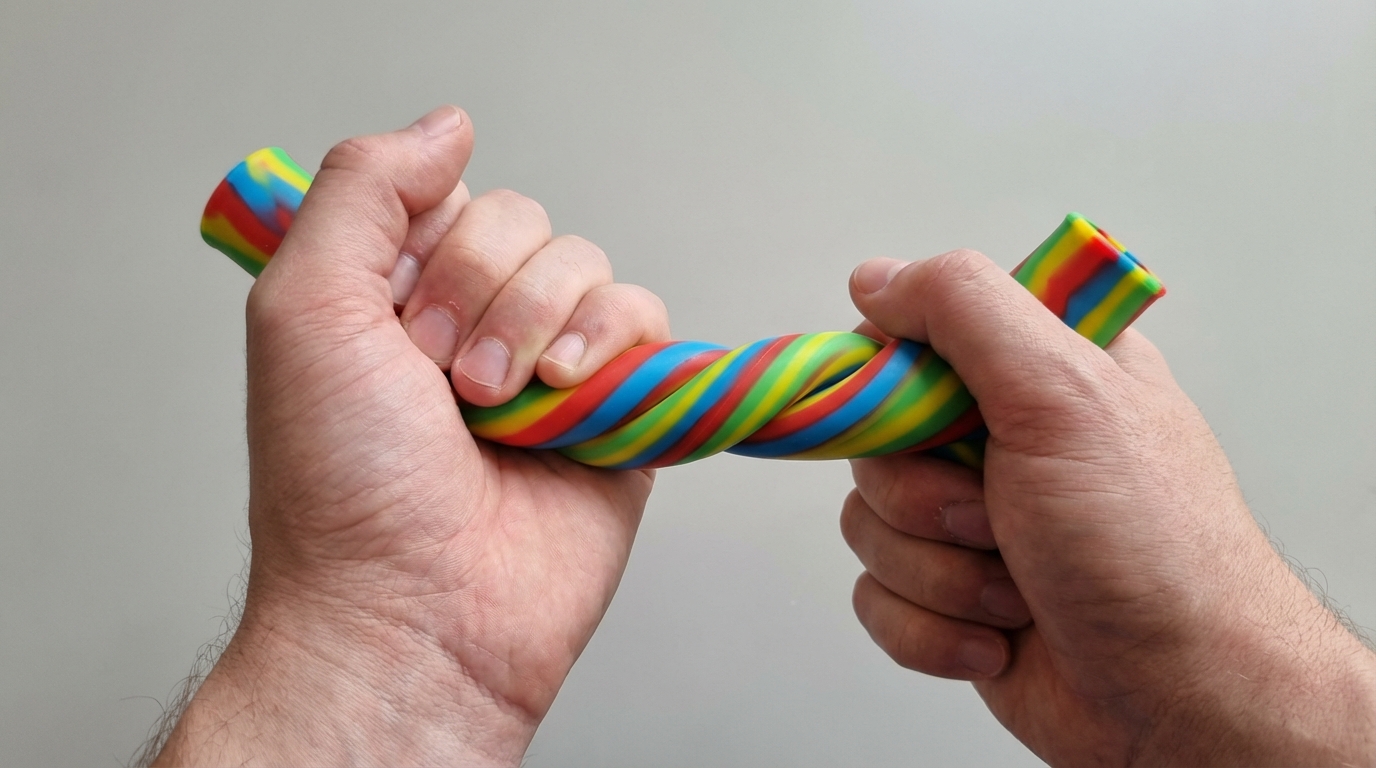
The physical resilience of what is food grade silicone is a byproduct of its long molecular chains. These chains are highly coiled, allowing them to stretch significantly and return to their original shape without permanent deformation. This “shape memory” is critical for industrial hoses and tubes that must handle constant movement and pressure.
Think about your machinery: components that flex thousands of times a day will eventually fail if they are made of inferior materials. Silicone resists compression set, meaning a seal won’t stay “flat” after being squashed for months. This ensures that your equipment remains leak-proof over long maintenance cycles, saving you thousands in downtime.
How does tensile strength affect longevity?
Tensile strength refers to the material’s resistance to being pulled apart. High-grade food silicone is engineered to resist tearing even when it is thin or stretched. This makes it perfect for complex gaskets or thin-walled tubing used in beverage dispensing systems and dairy production.
It doesn’t become brittle with age like PVC or latex. While other materials might crack after a few months of exposure to air and light, silicone remains pliable for years. This longevity is why it is used in “set and forget” industrial applications where reliability is the number one priority.
- Elongation: Can stretch up to 600% or more before breaking.
- Compression Set: Returns to 95%+ of original height after squashing.
- Tear Resistance: Hard to rip even with a small notch or cut.
- Longevity: Does not “dry rot” like natural rubber.
| Property | Value Range | Industrial Benefit |
|---|---|---|
| Shore Hardness | 10A to 80A | Wide range of applications |
| Tensile Strength | 5 – 10 MPa | High pressure resistance |
| Elongation | 200% – 800% | Flexes without failure |
Analysis: The combination of flexibility and shape memory ensures that silicone components provide a reliable seal across long service lives.
Key Takeaway: Silicone’s ability to return to its original shape after stretching or compression makes it the superior choice for high-cycle industrial parts.
How can you identify eco-friendly silicone kitchenware?
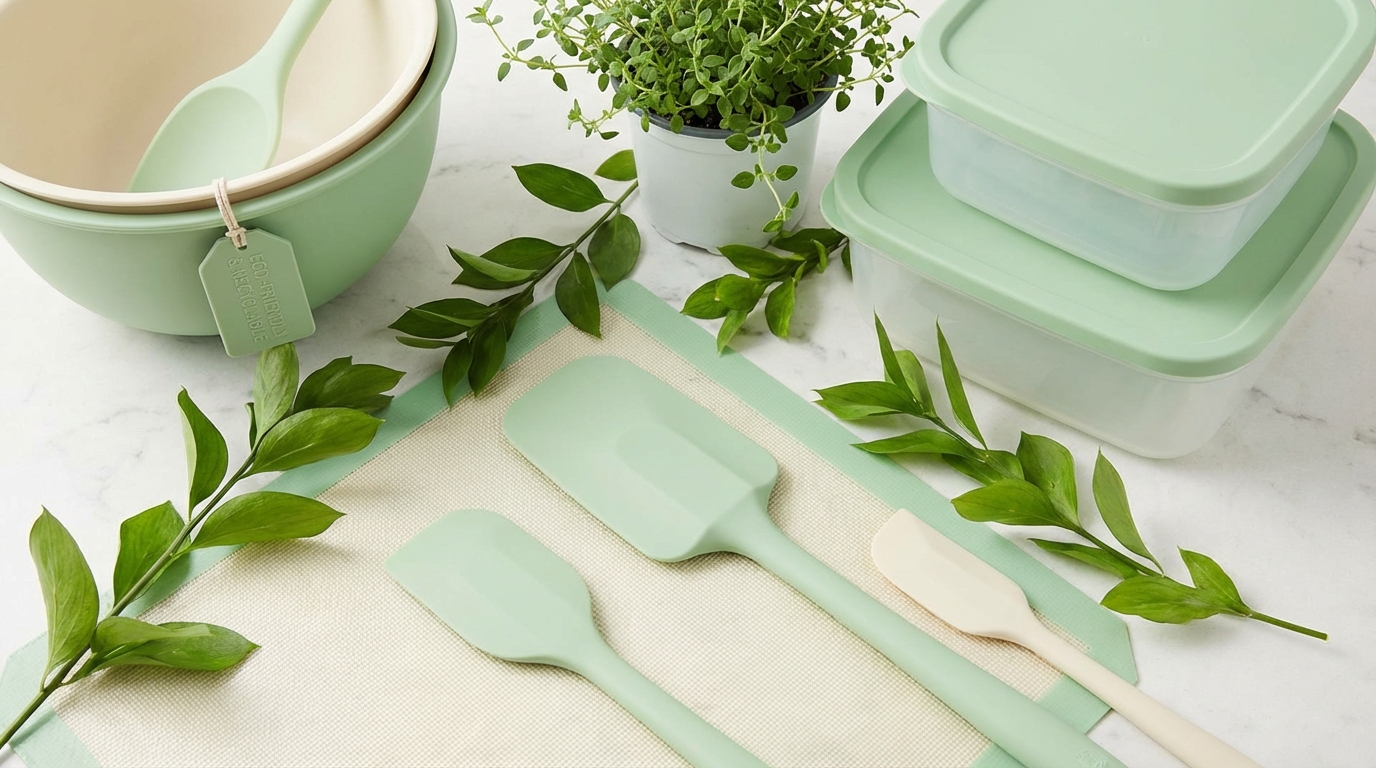
In a world increasingly focused on ESG goals, what is food grade silicone stands out as a “planet-friendlier” alternative to single-use plastics. Because it is made from silica (sand) rather than petroleum, its production has a lower reliance on fossil fuels. Furthermore, the extreme durability of silicone means products need to be replaced less often, reducing overall waste.
You should look for products that are marketed as “100% Silicone” to avoid hidden plastic blends. Pure silicone is fully recyclable through specialized industrial facilities, where it can be ground down and turned into playground surfacing or insulation. While not yet curbside recyclable, it is far less likely to break down into microplastics that contaminate our oceans.
Is silicone better for the environment than plastic?
The extraction of silica is generally less damaging than the extraction and refining of crude oil. Additionally, when silicone is eventually incinerated at the end of its life, it converts back into its original ingredients: silica, carbon dioxide, and water vapor. It does not release toxic chlorine gas like PVC or leave behind permanent microplastic particles.
Here is the deal: sustainability is a major selling point for modern B2B consumers. By offering silicone-based solutions, you are helping your clients meet their waste reduction targets. It is a material that balances high industrial performance with a much lower long-term environmental footprint.
- Non-Petroleum: Derived from abundant mineral sand.
- Long Life: Reduces the need for frequent replacements.
- No Microplastics: Does not break down into persistent ocean pollutants.
- Clean Disposal: Incinerates into non-toxic minerals and gases.
| Factor | Silicone | Single-Use Plastic |
|---|---|---|
| Raw Material | Silica (Sand) | Crude Oil |
| Lifespan | 10+ Years | Months / Years |
| Degradation | Very Slow (Stable) | Fast (Breaks into microplastics) |
Analysis: Silicone represents a transition toward circular economy materials that prioritize durability and non-toxic end-of-life disposal.
Key Takeaway: Choosing silicone over plastic reduces your carbon footprint and eliminates the risk of microplastic contamination in your supply chain.
What is the best way to maintain food grade containers?
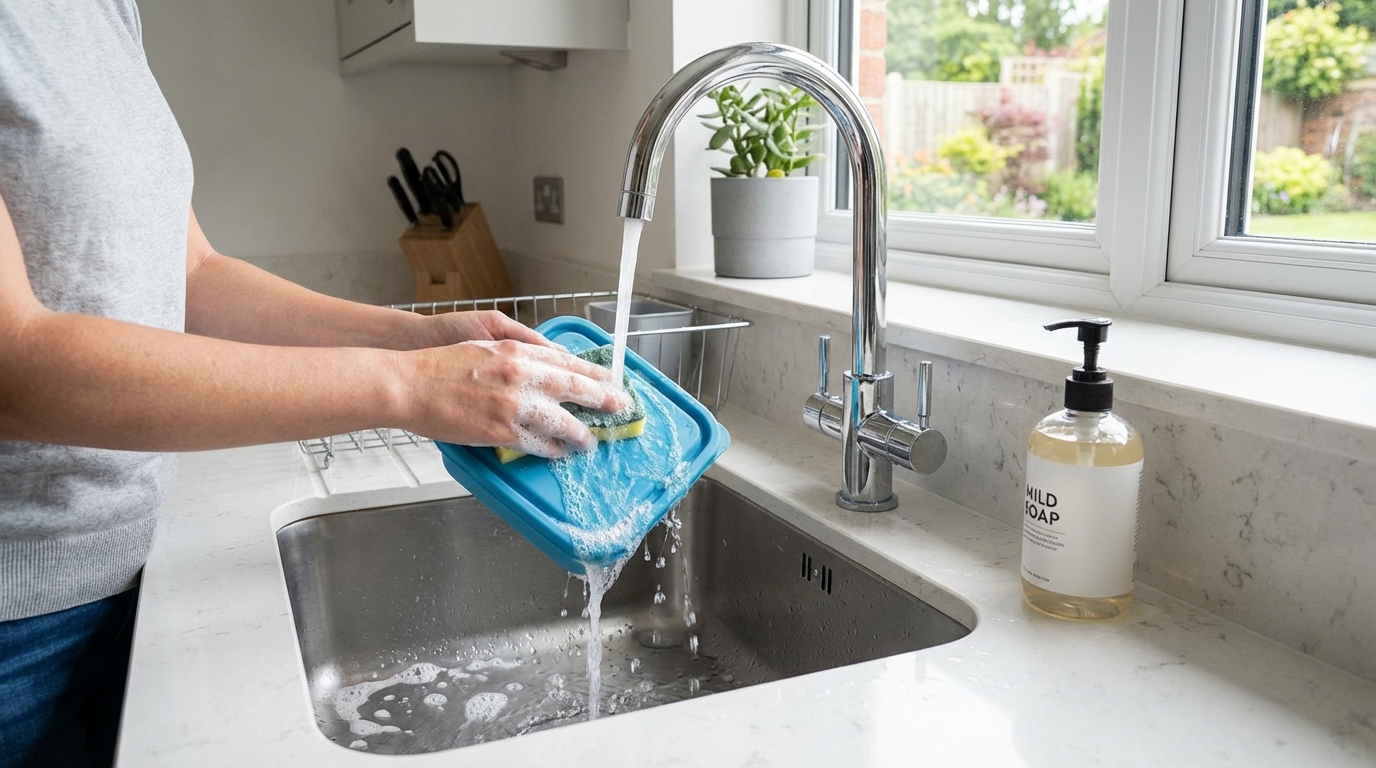
Maintaining what is food grade silicone components is remarkably simple, which is why they are so popular in high-volume commercial kitchens. The material is naturally non-stick and hydrophobic, meaning it repels water and prevents food from bonding to the surface. Most components can be cleaned using standard industrial dishwashers without any risk of damage.
You should, however, avoid using abrasive pads or steel wool. While silicone is tough, sharp objects can create micro-scratches that may eventually harbor bacteria. Stick to soft sponges and neutral detergents to keep the surface smooth and hydrophobic for years to come.
Can you remove stubborn odors from silicone?
Because silicone is inert, it rarely absorbs odors, but high-fat foods can sometimes leave a lingering scent. A simple solution