
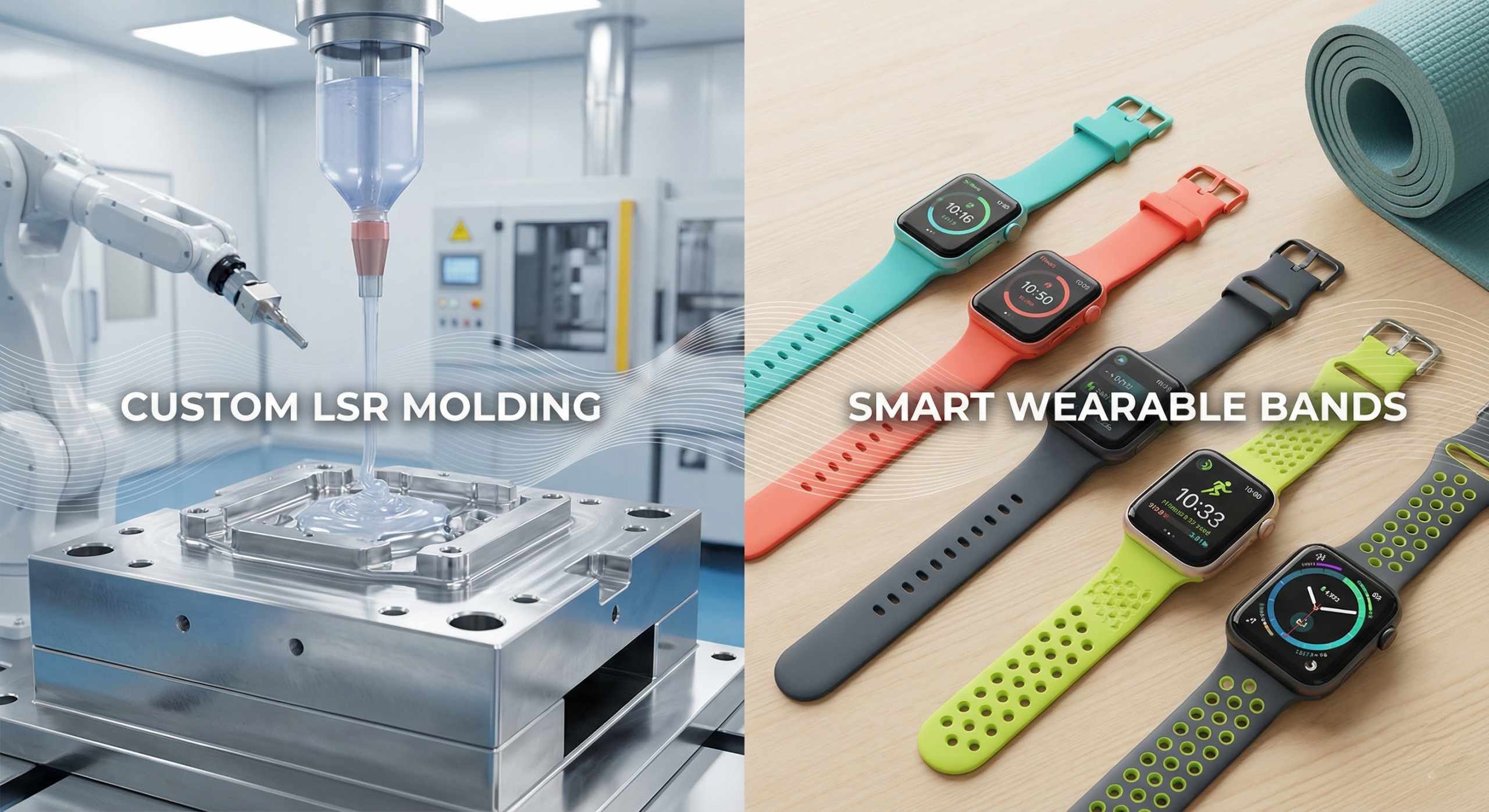
While the official high-performance bands for these premium smartwatches are actually made from a custom fluoroelastomer, the vast majority of aftermarket options are indeed made of silicone. Many procurement managers face significant challenges when choosing between these materials, often worrying about potential skin irritation or high production costs that could impact their bottom line. Choosing the wrong elastomer can lead to batch recalls and significant brand damage if the material reacts poorly to 24/7 skin contact. By partnering with a specialist in Custom Silicone Manufacturing for Smart Wearable Devices, you can secure hypoallergenic, medical-grade materials that balance premium comfort with cost-effective production.
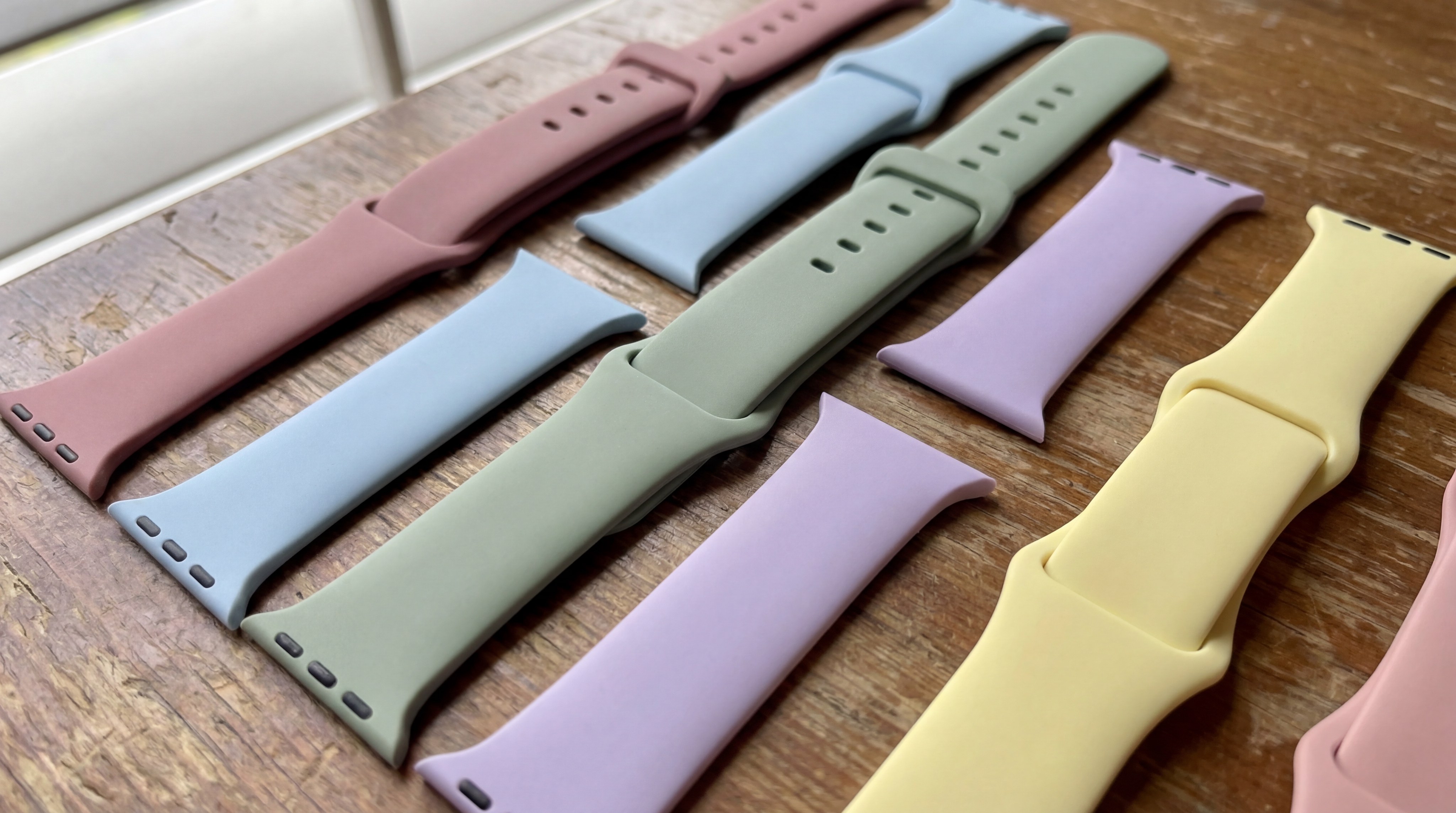
What is the official material used by major brands?
Major manufacturers typically use a synthetic rubber called fluoroelastomer for their standard athletic bands rather than basic silicone. This choice is driven by the need for a material that is significantly denser and more resistant to chemicals and oils than standard consumer-grade rubbers. For those looking to replicate this premium feel, Custom Silicone Manufacturing for Smart Wearable Devices offers advanced formulations that mimic the silky texture and weight of high-end synthetic rubbers.
The choice of fluoroelastomer
Manufacturers select this material because it offers exceptional durability and a smooth finish that resists dust and lint. It is specifically designed to withstand the rigors of intense physical activity while maintaining its structural integrity over years of use.
Here’s the deal:
- Higher density than standard silicone.
- Exceptional resistance to skin oils and sweat.
- Retains its matte finish longer.
Durability for athletic use
Synthetic rubbers provide the necessary tensile strength to ensure the device remains securely attached to your wrist during high-impact sports. This prevents accidental drops and ensures the biometric sensors maintain consistent contact with the skin.
Think about this:
- Reduced risk of tearing at the pinholes.
- Resistant to UV degradation from outdoor sun exposure.
- Maintains flexibility in both hot and cold climates.
Key Takeaway: While the original equipment uses fluoroelastomer for its density and chemical resistance, high-end silicone remains the primary choice for the broader market due to its comfort and versatility.
| Feature | Fluoroelastomer | High-End Silicone |
|---|---|---|
| Material Type | Synthetic Rubber | Organic Polymer |
| Primary Benefit | Chemical Resistance | Skin Comfort |
| Market Use | Original Equipment | Aftermarket Accessories |
Fluoroelastomer provides a dense, premium weight that serves as the benchmark for durability in the high-end wearable market.
Is silicone a standard for third-party accessories?
Silicone has become the industry standard for third-party accessory makers due to its incredible versatility and lower production cost. When looking at Custom Silicone Manufacturing for Smart Wearable Devices, you will find that this material allows for a massive variety of colors and textures that are difficult to achieve with other elastomers. This flexibility makes it the go-to solution for brands that want to offer extensive customization options to their customers.
Cost-effective market solutions
Silicone is generally more affordable to source and mold than fluoroelastomer, allowing brands to offer high-quality products at a more competitive price point. This makes it ideal for high-volume consumer goods where margin and variety are critical.
The truth is:
- Lower raw material costs per unit.
- Faster molding cycles during production.
- Vastly easier to pigment for custom brand colors.
Softness and all-day comfort
The inherent softness of silicone makes it exceptionally comfortable for users who wear their devices throughout the day and night. It conforms easily to the wrist without creating the pressure points sometimes felt with stiffer synthetic rubbers.
You should know:
- Naturally more flexible than dense rubbers.
- Lighter weight for a “barely there” feel.
- Smooth surface that reduces friction against the skin.
Key Takeaway: Silicone dominates the accessory market because it provides the best balance of wearer comfort, manufacturing efficiency, and aesthetic variety.
| Factor | Silicone Standard | Fluoroelastomer Standard |
|---|---|---|
| Production Cost | Low to Moderate | High |
| Color Variety | Infinite | Limited |
| Weight | Lightweight | Dense/Heavy |
The adaptability of silicone allows manufacturers to pivot quickly between different styles and consumer trends without massive overhead.
Why is fluoroelastomer often confused with silicone?
Fluoroelastomer is frequently mistaken for silicone because they both share a similar smooth, matte appearance and a soft-touch feel. In the world of Custom Silicone Manufacturing for Smart Wearable Devices, identifying these differences is crucial for ensuring you receive the specific material properties your product requires. While they look similar on a shelf, their chemical compositions and long-term performance in specific environments are quite different.
How textures can be misleading
Both materials can be finished with a silky coating that makes them feel nearly identical to the untrained touch. This surface treatment is designed to reduce the “tackiness” typically associated with raw rubber.
Listen to this:
- Surface coatings hide the base material’s friction.
- Both materials are molded with high precision.
- Matte finishes are standard for both elastomers.
Differences in chemical structure
Fluoroelastomer contains fluorine, which provides its signature resistance to heat and chemicals, whereas silicone is based on a silicon-oxygen backbone. This structural difference impacts how the material reacts to common substances like sunscreen or household cleaners.
Here is the secret:
- Silicone is more breathable on the skin.
- Fluoroelastomer resists swelling from oils better.
- Both are considered high-performance polymers.
Key Takeaway: The visual similarities between these two materials often lead to confusion, but their chemical resilience and weight are the true differentiators.
| Property | Silicone | Fluoroelastomer |
|---|---|---|
| Chemical Base | Silicon/Oxygen | Carbon/Fluorine |
| Matte Finish | Easily achieved | Natural property |
| Oil Resistance | Good | Superior |
Understanding the chemical distinction ensures that your product line meets the specific durability expectations of your target audience.
Is medical-grade silicone safe for 24/7 skin contact?
Medical-grade silicone is considered one of the safest materials for long-term skin contact because it is completely hypoallergenic and biocompatible. Professional Custom Silicone Manufacturing for Smart Wearable Devices ensures that no harmful fillers or irritants are added during the production process. When you source materials that meet these high standards, you significantly reduce the risk of your customers developing rashes or allergic reactions.
Preventing severe skin irritation
High-purity silicone does not react with human sweat or skin oils, making it an inert barrier that protects the user. Many lower-quality plastics or rubbers contain plasticizers that can leach out and cause dermatitis over time.
Don’t overlook this:
- Free from BPA and phthalates.
- No latex proteins that trigger allergies.
- Non-reactive with sensitive skin types.
Certifications for biocompatibility
Reputable manufacturers provide documentation showing their silicone meets international standards like REACH and RoHS. You should always verify that your supplier follows industry-standard safety protocols to protect your brand’s reputation.
Believe it or not:
- FDA-grade silicone is standard for top brands.
- ISO certifications guarantee consistent material purity.
- Regular testing prevents batch contamination.
Key Takeaway: Sourcing medical-grade or high-purity silicone is the most effective way to guarantee safety and comfort for 24-hour wearable use.
| Safety Standard | Requirement | Silicone Performance |
|---|---|---|
| Biocompatibility | Non-reactive to tissue | Excellent |
| Leachables | No harmful chemical migration | High Resistance |
| Allergen Profile | No common triggers | Hypoallergenic |
Investing in certified medical-grade silicone is a proactive strategy to eliminate consumer health complaints and build long-term trust.
How does silicone compare to traditional rubber straps?
Silicone generally outperforms traditional natural rubber straps because it is far more resistant to environmental factors like UV rays and extreme temperatures. Within the field of Custom Silicone Manufacturing for Smart Wearable Devices, silicone is preferred because it doesn’t become brittle or sticky as it ages. You will find that silicone is often a better choice than plastic or natural rubber for products that are used daily in varied conditions.
Resistance to UV and aging
Natural rubber can crack and lose its elasticity when exposed to sunlight for prolonged periods, whereas silicone remains stable. This longevity ensures that your product maintains its aesthetic appeal and functional integrity throughout its lifecycle.
Keep in mind:
- Silicone does not “yellow” like some plastics.
- Higher ozone resistance than natural rubber.
- Maintains color vibrancy under the sun.
Flexibility in extreme environments
Silicone stays soft and pliable even in freezing temperatures that would cause traditional rubber to harden and crack. This makes it the ideal material for users who transition between indoor environments and outdoor winter activities.
Make no mistake:
- Stays flexible down to -50°C.
- Heat resistant up to 250°C.
- Won’t melt or deform during high-intensity use.
Key Takeaway: Silicone’s superior stability against heat, cold, and sunlight makes it a more reliable and durable choice than traditional natural rubber.
| Environment | Natural Rubber | Silicone |
|---|---|---|
| Direct Sunlight | Prone to cracking | Highly resistant |
| Freezing Cold | Becomes brittle | Remains flexible |
| Long-term Storage | Can become sticky | Remains stable |
The environmental resilience of silicone ensures that the wearable device remains functional and comfortable regardless of the user’s climate.
Are silicone bands the healthiest choice for fitness?
Silicone is widely considered the healthiest material for fitness applications because its non-porous surface does not absorb sweat or bacteria. Modern Custom Silicone Manufacturing for Smart Wearable Devices produces bands that are incredibly easy to sanitize after a heavy workout. Unlike fabric or leather, which can trap odors and moisture against the skin, silicone remains hygienic and dry.
Hygiene and bacteria prevention
Because silicone is non-porous, bacteria have nowhere to hide or grow on the surface of the band. This is essential for preventing the “gym smell” and skin infections that can occur with absorbent materials.
Think about this:
- Does not absorb moisture or perspiration.
- Naturally antimicrobial surface properties.
- Prevents the buildup of dead skin cells.
Ease of cleaning after exercise
You can simply rinse a silicone band under tap water or wipe it down with a mild detergent to remove salt and oils. This simple maintenance routine keeps the band looking new and prevents the degradation of the material over time.
It’s quite simple:
- Waterproof for swimming and showers.
- Dries instantly with a towel.
- Can be sanitized with alcohol wipes.
Key Takeaway: The non-absorbent nature of silicone makes it the most hygienic and low-maintenance choice for active users.
| Activity | Fabric/Leather | Silicone |
|---|---|---|
| Heavy Sweating | Absorbs and smells | Repels and stays clean |
| Swimming | Takes hours to dry | Dries in seconds |
| Daily Cleaning | Difficult/Damaging | Quick and easy |
For any brand focused on the fitness market, silicone provides the hygiene benefits that health-conscious consumers demand.
What are the benefits of custom liquid silicone molding?
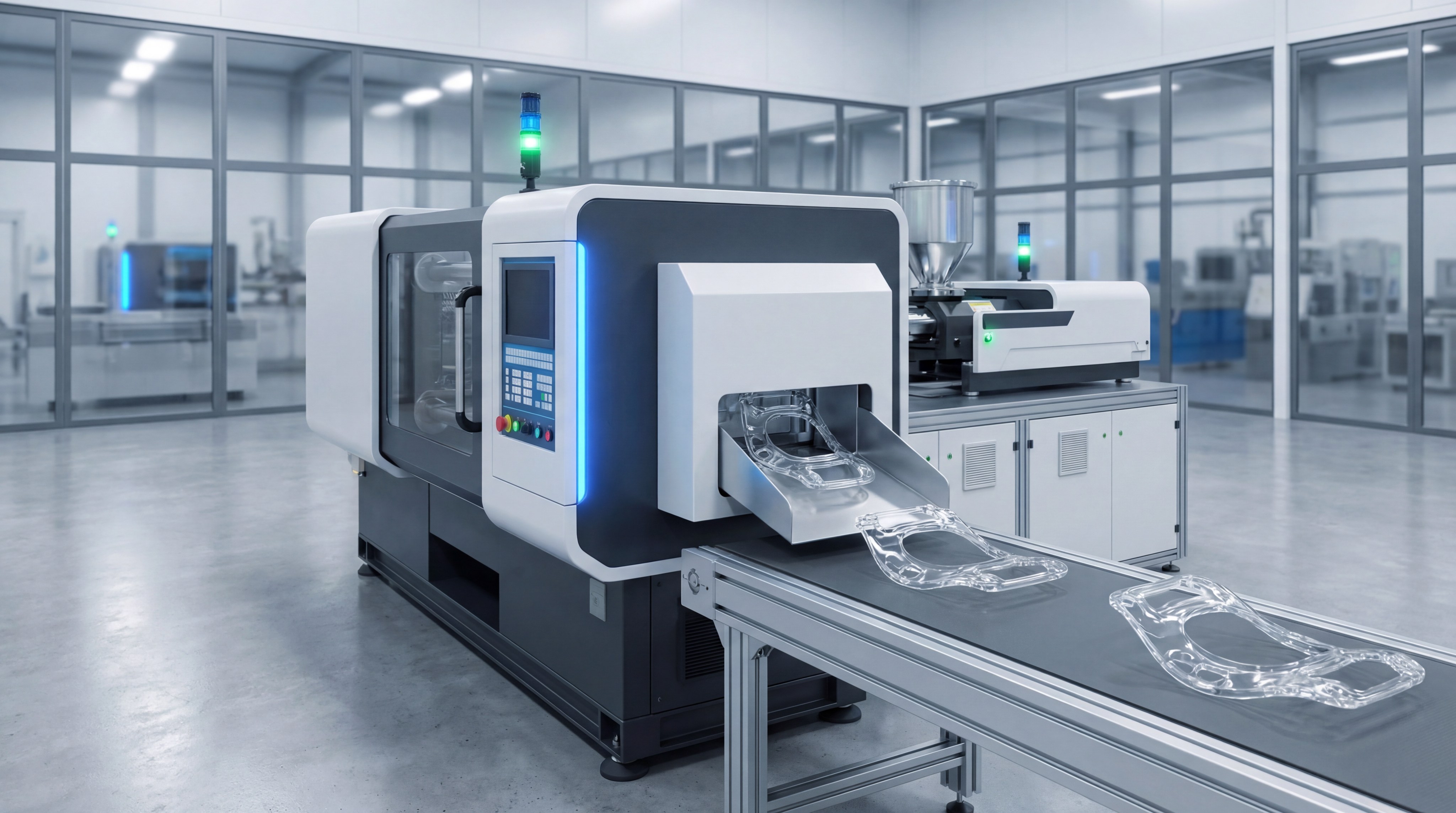
Liquid Silicone Rubber (LSR) injection molding is the gold standard for producing complex, high-precision wearable components. Through Custom Silicone Manufacturing for Smart Wearable Devices, LSR allows you to create intricate designs with extremely tight tolerances. This process is particularly effective for designing substrates for successful overmolding, where silicone is bonded directly to metal or plastic parts.
Precision for smart hardware
The liquid nature of the raw material allows it to flow into the most detailed mold cavities, ensuring that every edge is sharp and every connector fits perfectly. This is critical for bands that must click into proprietary locking mechanisms on the device.
Check this out:
- High repeatability for large production runs.
- Minimal flash or waste material.
- Capable of thin-wall geometries.
Integration through overmolding
Overmolding allows manufacturers to combine the softness of silicone with the structural strength of rigid plastics or metals in a single part. This creates a seamless transition between the band and the device connectors, improving both durability and aesthetics.
The bottom line:
- Eliminates the need for messy adhesives.
- Creates a permanent, waterproof bond.
- Allows for integrated metal buckles.
Key Takeaway: LSR molding provides the precision and integration capabilities required for modern, high-tech wearable accessories.
| Process | Compression Molding | LSR Injection |
|---|---|---|
| Precision | Moderate | Very High |
| Cycle Time | Slower | Very Fast |
| Complexity | Basic shapes | Intricate details |
Utilizing LSR technology ensures that your wearable products meet the exacting standards of modern electronics consumers.
How do you identify high-quality wearable materials?
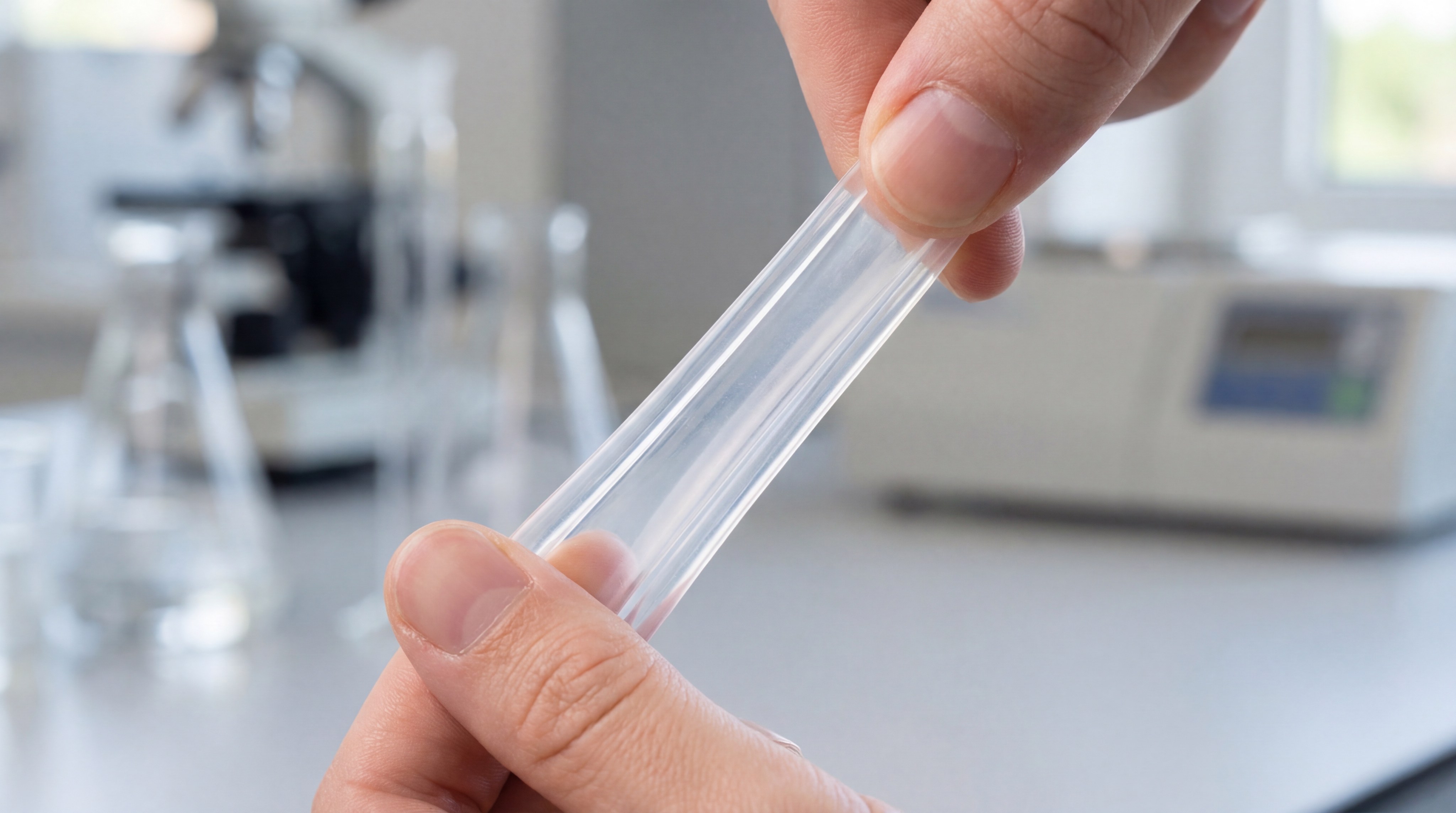
You can identify high-quality silicone by performing a simple “pinch test” to see if white fillers have been added to the mixture. During Custom Silicone Manufacturing for Smart Wearable Devices, pure silicone will maintain its color when stretched or twisted. If the material turns white at the stress point, it indicates the presence of cheap fillers that can reduce the band’s lifespan and cause skin reactions.
The pinch test for purity
When you pinch and twist a high-quality silicone band, the color should remain consistent throughout the bend. If you see a white streak, the manufacturer likely used “extended” silicone, which is less durable and potentially less safe for skin contact.
Watch for this:
- Pure silicone stays the same color.
- Fillers make the material feel stiffer.
- Low-quality bands often have a chemical odor.
Verifying REACH and RoHS compliance
Always ask your manufacturer for current compliance certificates to ensure the material is free from restricted hazardous substances. High-quality silicone products should be backed by transparent testing data that you can share with your retail partners.
Here is the truth:
- Certificates prove absence of heavy metals.
- Ensures the product is safe for global export.
- Protects your brand from legal liability.
Key Takeaway: Material purity is easily verified through physical tests and official certification, both of which are essential for quality assurance.
| Quality Marker | High-Quality Silicone | Low-Quality Silicone |
|---|---|---|
| Pinch Test | No color change | Turns white/chalky |
| Odor | Odorless | Strong chemical smell |
| Certifications | REACH/RoHS available | Missing or expired |
Conducting these simple checks allows procurement teams to weed out inferior suppliers before they impact product quality.
Why choose silicone for high-volume wearable production?
Silicone is the ideal choice for high-volume production because of its scalability and the efficiency of modern injection molding processes. When engaging in Custom Silicone Manufacturing for Smart Wearable Devices, you can produce thousands of units per day with extremely consistent results. This predictability is vital for maintaining brand standards across global supply chains.
Scalability and multi-cavity tooling
High-volume molds can feature multiple cavities, allowing several bands to be produced in a single press cycle. This dramatically reduces the cost per unit and helps you meet the demands of major product launches.
You will see:
- Lower labor costs through automation.
- Highly consistent dimensions across batches.
- Rapid replenishment of popular inventory.
Consistent color and hardness
Silicone allows for precise control over Shore A hardness and color matching, ensuring that every band feels and looks exactly as intended. This consistency is difficult to maintain with natural materials like leather or woven fabrics.
Here is why:
- Digital color matching for brand consistency.
- Hardness can be tuned for comfort or support.
- Minimal variation between production runs.
Key Takeaway: The industrial efficiency of silicone manufacturing makes it the most viable material for large-scale, global wearable brands.
| Production Metric | Small Batch | High Volume |
|---|---|---|
| Tooling Cavities | 1-2 | 16-32 |
| Consistency | High | Very High |
| Unit Cost | Moderate | Low |
The ability to scale quickly without sacrificing quality is why the world’s leading tech companies rely on silicone for their accessory ecosystems.
How to source reliable silicone for wearable devices?
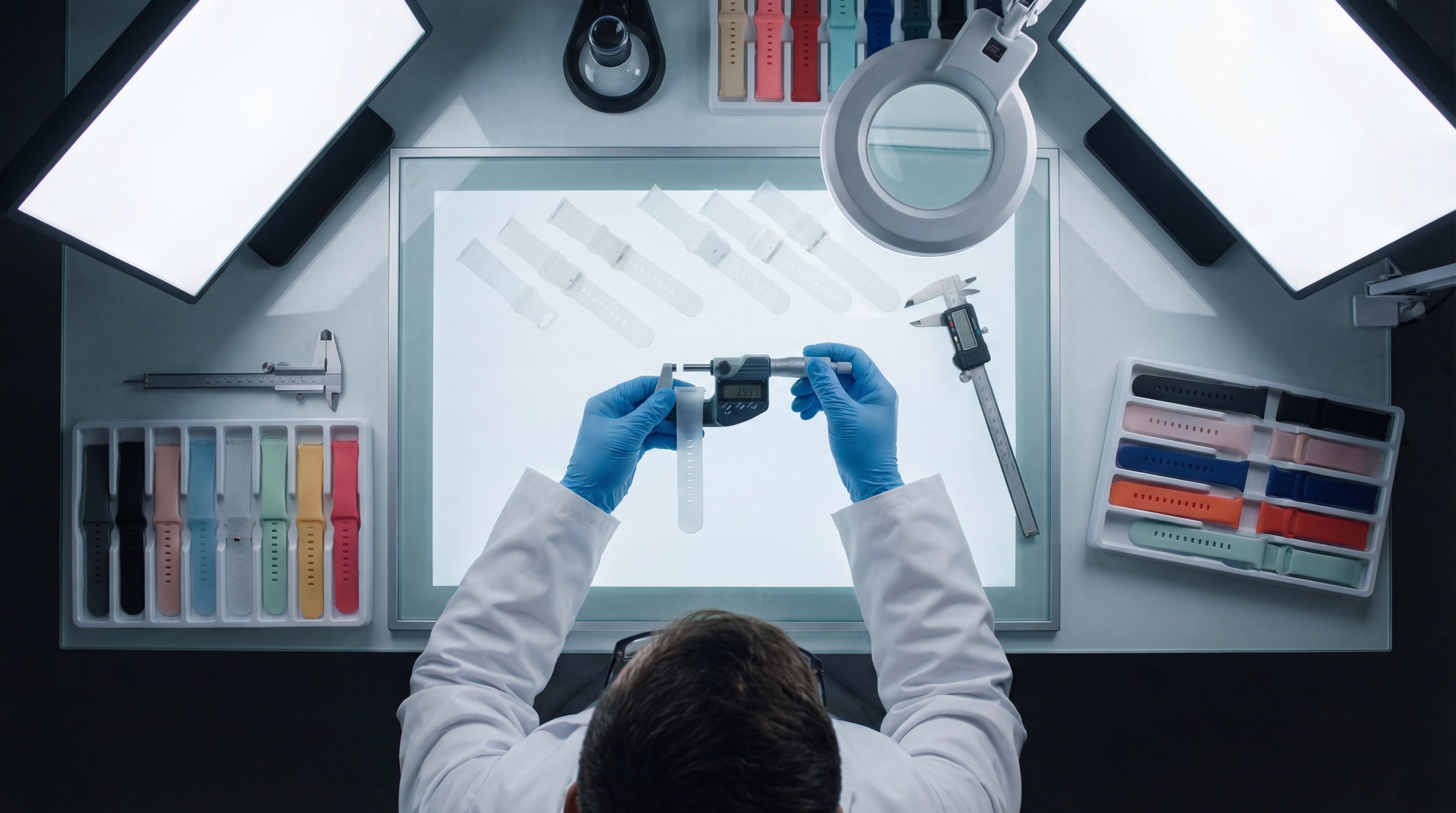
Finding a reliable partner for Custom Silicone Manufacturing for Smart Wearable Devices requires vetting their in-house engineering and quality control capabilities. A top-tier manufacturer should offer a complete range of solutions from initial design support to final assembly and packaging. Partnering with an experienced factory ensures that your project transitions smoothly from a prototype to a market-ready product.
Evaluating factory expertise
Look for a manufacturer with a proven track record in the electronics or medical industries, as they will have the necessary cleanroom environments and precision equipment. In-house mold making is a major advantage, as it allows for faster iterations and tighter control over the final product quality.
Don’t forget:
- Check for on-site QC laboratories.
- Verify experience with overmolding techniques.
- Look for DFM (Design for Manufacturing) support.
Prototyping and speed to market
A reliable partner can provide rapid prototyping services, allowing you to test fit and finish before committing to expensive high-volume tooling. This reduces your risk and ensures that the final product meets your exact specifications.
The reality is:
- 3D-printed molds for initial samples.
- Fast turnaround on pilot production runs.
- Early identification of design flaws.
Key Takeaway: Choosing a manufacturer with integrated engineering and high-purity production capabilities is the final step to a successful product launch.
| Supplier Criteria | Basic Factory | Expert Partner |
|---|---|---|
| Mold Making | Outsourced | In-House |
| Engineering | Minimal | Full DFM Support |
| Quality Control | Visual only | Precision Lab Testing |
Partnering with an expert ensures that your wearable accessories are produced with the precision and safety that high-end devices require.
*
In the competitive world of wearable technology, the choice of material is never just about aesthetics—it is about performance, safety, and brand integrity. While official smartwatch brands set a high bar with fluoroelastomer, silicone remains the most versatile and cost-effective solution for creating a successful accessory line. We are dedicated to providing the highest quality medical-grade silicone solutions that help your brand stand out in a crowded market. If you are ready to elevate your product line with premium materials, reach out to us today to start your custom manufacturing journey.
Reader-Centric FAQ
Can I order custom colors for my brand’s wearable line?
Yes, we offer precise color matching to ensure your silicone bands perfectly align with your brand’s unique color palette and aesthetic requirements.
What’s the best way to clean silicone bands after exercise?
The most effective method is to rinse the band with warm water and a mild soap, then dry it immediately with a lint-free cloth to maintain its finish.
Can I request medical-grade silicone for sensitive skin products?
Absolutely, we specialize in high-purity medical-grade silicone that is fully biocompatible and designed specifically for 24/7 skin contact without irritation.
What’s the average lead time for custom silicone prototypes?
Depending on the complexity of the design, we can typically deliver functional prototypes within 7 to 14 days for your initial review and testing.
Can I integrate metal buckles directly into the silicone mold?
Yes, our advanced overmolding capabilities allow us to bond silicone directly to metal buckles and connectors, creating a durable and seamless final product.