
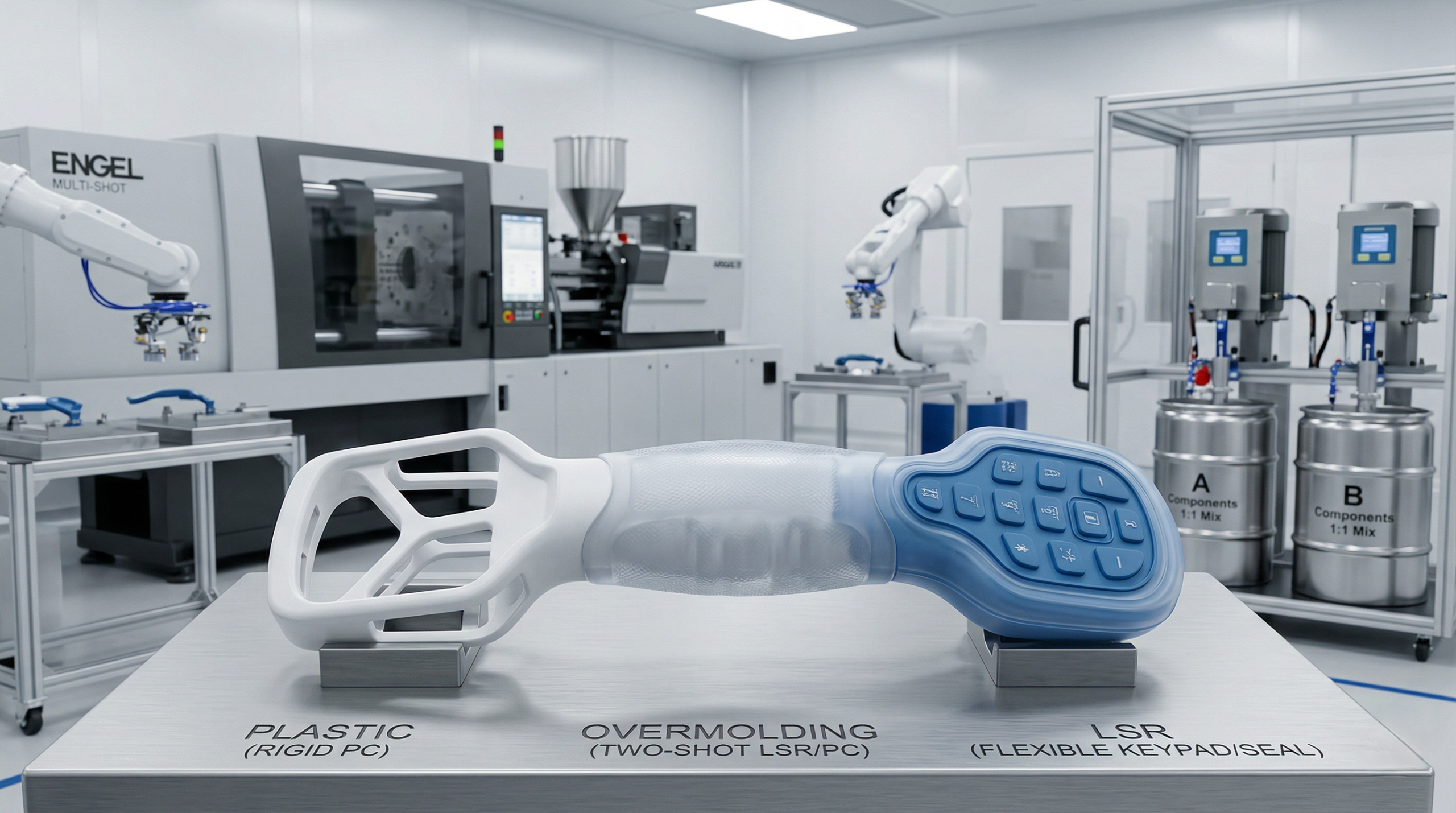
What are plastic, LSR injection molding, and overmolding? They represent distinct manufacturing methods utilized for creating rigid parts, flexible silicone components, and integrated products respectively. Designing durable devices frequently causes intense frustration for hardware engineers. Components fail prematurely under extreme stress, creating costly product recalls and damaging brand reputation. 30 seconds of exposure against severe heat destroys ordinary materials completely. Fortunately, selecting an appropriate manufacturing process like LSR Injection Molding provides a reliable way of guaranteeing superior performance. By understanding these distinct molding methods, engineering teams can significantly reduce defect rates while optimizing overall production efficiency.
How Does Plastic Injection Molding Work?
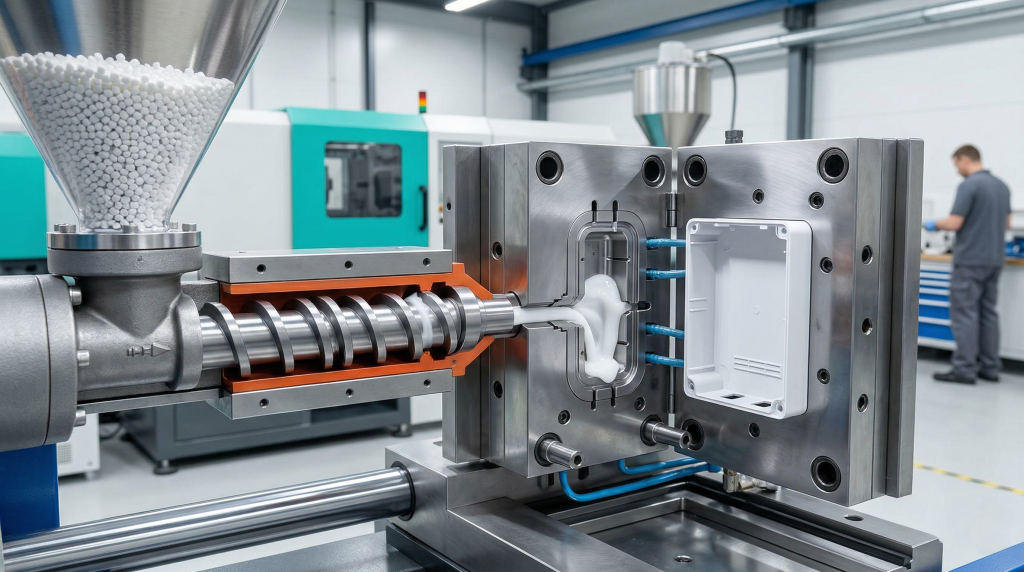
Plastic injection molding works by melting solid thermoplastic pellets and forcing molten material inside a metal cavity for rapid cooling. Unlike LSR Injection Molding, this highly standardized process relies on physical temperature changes rather than chemical cross-linking. You can rapidly produce thousands of identical, hard structural components with remarkable consistency. Manufacturers rely on established technology for building strong enclosures efficiently.
Can This Process Satisfy Your Requirements?
Here stands the deal: while thermoplastics excel at creating strong outer shells, they often fall short when your product requires soft grips. You must carefully evaluate whether a purely rigid material aligns with final user experience expectations.
- High-volume scalability remains its strongest advantage.
- Initial setup demands precise fluid dynamics calculations.
- Tooling modifications become highly restrictive later.
Key Takeaway: Standard plastic molding represents a highly effective method of mass-producing rigid parts, provided your engineering team finalizes designs beforehand.
| Metric | Plastic Molding | Alternative Options |
| Material Base | Thermoplastic resins | Liquid silicones |
| Primary Usage | Rigid outer shells | Flexible seals |
| Cycle Cadence | Extremely rapid | Highly variable |
Maintaining strict thermal control during cooling phases remains a necessary factor regarding warping defect prevention.
What Makes LSR Injection Molding Superior?
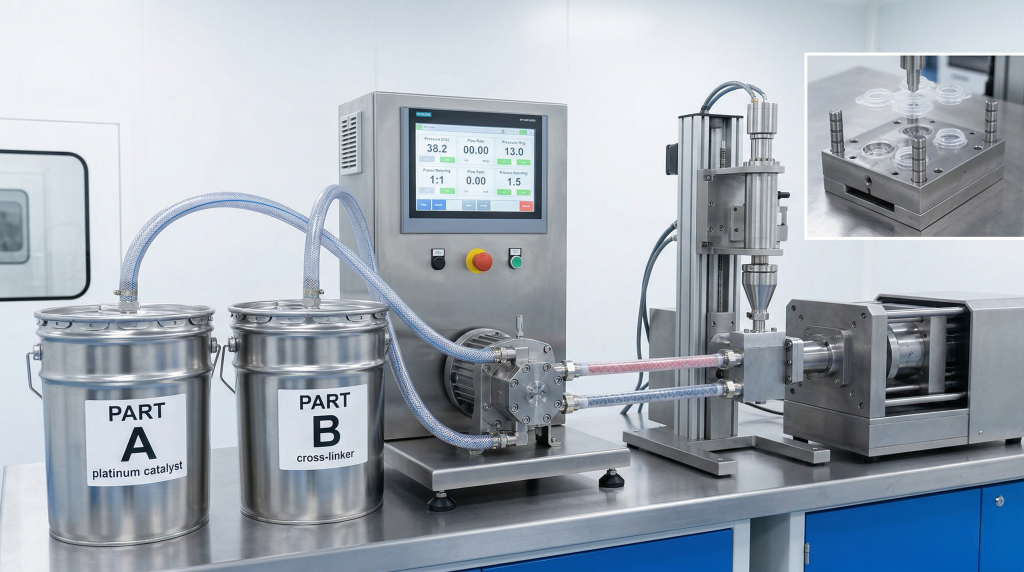
LSR injection molding is superior because this technique utilizes a highly controlled chemical curing process that creates incredibly resilient flexible components. When you implement LSR Injection Molding, you invest in technology capable of handling extreme conditions effortlessly without losing structural integrity. Automated mixing systems guarantee exact consistency across every single batch. This sophisticated approach drastically reduces human error alongside contamination risks.
Why Do Top Engineers Prefer This Method?
You might be wondering, why shift from traditional solid rubber toward a liquid alternative? The answer lies within flawless precision and flash-free results generated by automated pumping systems. You no longer worry about manual weighing errors or extensive secondary trimming operations.
- Platinum curing enables rapid vulcanization.
- Closed systems prevent airborne dust contamination.
- Low viscosity allows micro-level detail replication.
Key Takeaway: Upgrading toward liquid silicone processing grants unparalleled product consistency while significantly lowering long-term labor expenses through high automation.
| Feature | Solid Silicone | Liquid Silicone |
| Mix Operation | Manual labor | Automated pumps |
| Component Precision | Moderate levels | Extremely high |
| Post-Processing | Trimming required | Flash-free results |
Transitioning toward automated liquid systems directly correlates with drastic reductions regarding material waste and operator dependency.
Why Choose Overmolding for Complex Designs?
Overmolding is chosen for complex designs because the process seamlessly bonds soft materials directly over rigid substrates without secondary adhesives. While standalone LSR Injection Molding produces great flexible parts, combining multiple materials creates integrated components offering both strength and comfortable grips. You can design superior waterproof seals chemically bonded onto main housings. This advanced integration simplifies supply chains by merging multiple manufacturing stages together.
What Makes Chemical Bonding So Strong?
This is where things get interesting. True overmolding relies upon molecular adhesion between compatible materials rather than simple mechanical interlocking. When you specify correct combinations involving hard plastics and liquid silicones, resulting bonds become virtually indestructible under normal use.
- Substrates must withstand secondary curing temperatures.
- Surface energy alignment determines ultimate bond strength.
- Proper gating design prevents substrate deformation.
Key Takeaway: Implementing two-shot strategies dramatically upgrades product quality by preventing water ingress while enhancing user comfort.
| Substrate Material | Overmold Layer | Typical Application |
| Polycarbonate | Liquid Silicone | Medical panels |
| ABS Plastic | TPE Resins | Tool handles |
| Stainless Steel | Liquid Silicone | Waterproof connectors |
Matching thermal expansion rates between base structures and overmolded layers prevents long-term delamination issues.
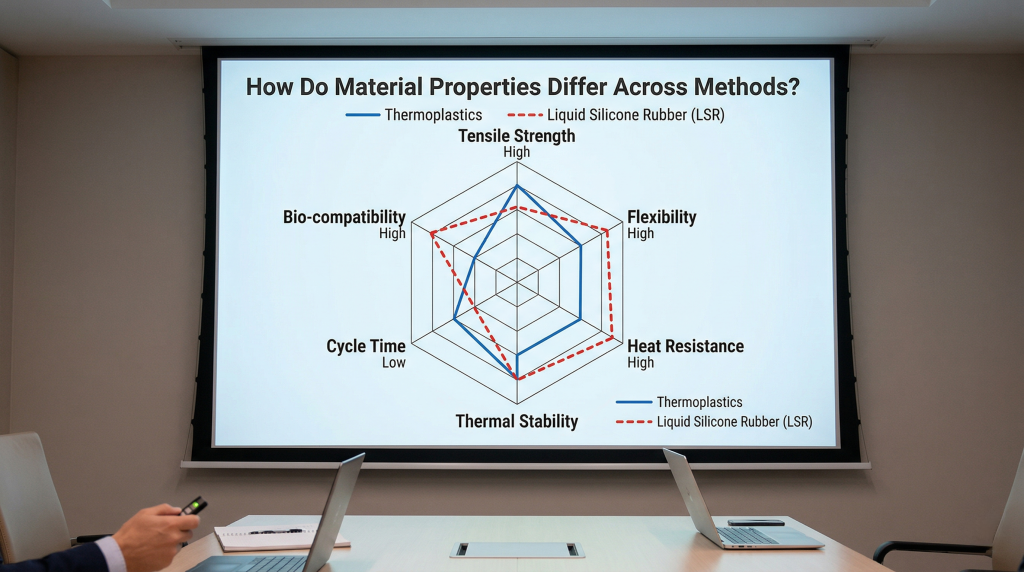
How Do Material Properties Differ Across Methods?
Material properties differ significantly because thermoplastics physically melt before solidifying, whereas liquid silicones undergo permanent chemical cross-linking during vulcanization. The polymers used during LSR Injection Molding remain highly flexible across massive temperature ranges. Conversely, traditional plastic resins offer high tensile strength but frequently become brittle when exposed outside normal environmental factors. You must carefully weigh these intrinsic physical behaviors against intended product lifespans.
Are You Specifying Correct Grades?
What’s the real story? Not all silicones or plastics act similarly, and choosing incorrect formulations guarantees product failure. You have an obligation of navigating complex regulatory compliance matrices depending upon target demographics.
- Medical grades require strict ISO 10993 testing.
- Food-grade materials must pass rigorous FDA protocols.
- Industrial formulations prioritize high tear resistance.
Key Takeaway: Thoroughly vetting material selections against global regulatory requirements protects brands from costly liability scenarios.
| Material Grade | Key Characteristic | Regulatory Standard |
| Industrial Type | High durability | RoHS Compliance |
| Food Contact | Non-toxic nature | FDA Guidelines |
| Healthcare Level | Implantable safety | ISO 13485 metrics |
Prioritizing medical-grade certifications provides maximum safety regarding end-users while facilitating smoother entry into heavily regulated markets.
Which Process Offers the Best Cost Efficiency?
The most cost-efficient process depends entirely upon production volumes, with plastic molding winning low-complexity scenarios and liquid silicone excelling elsewhere. A high-end LSR Injection Molding operation requires substantial upfront capital covering specialized mixing equipment. However, you quickly recover initial costs through drastically reduced scrap rates alongside eliminated manual trimming labor. Your finance team should calculate total ownership costs rather than comparing simple per-unit prices.
Where Are Hidden Manufacturing Costs?
Now, here is the kicker. The cheapest quote often hides disastrous secondary expenses like poor assembly yields. You should prioritize automated systems providing reliable output without constant human intervention.
- Automated flashless production eliminates trimming labor.
- Cold runner blocks reduce costly material waste.
- Higher initial tool quality prevents frequent maintenance.
Key Takeaway: Investing heavier capital upfront regarding premium tooling ultimately yields the lowest cost per unit over entire product lifecycles.
| Cost Factor | Thermoplastic Molding | Liquid Silicone |
| Upfront Equipment | Moderate pricing | Very high pricing |
| Raw Materials | Relatively inexpensive | Premium pricing |
| Secondary Labor | Variable expenses | Near zero |
Recognizing that near-zero post-processing expenses offset premium material prices helps justify switching toward advanced automation.
How Do Production Cycle Times Compare?
Production cycle times compare favorably for thermoplastics due to rapid physical cooling, while silicone requires longer chemical heating phases. When deploying LSR Injection Molding, cycle durations depend heavily upon vulcanization speeds driven by mold temperatures. Standard plastic resins chill in mere seconds, generating incredibly high daily output numbers. You must engineer cooling channels perfectly for maximizing output without causing internal material stress.
Can Manufacturers Speed Up Curing Phases?
Ready for the good part? Modern heating technologies allow manufacturers an opportunity of slashing silicone vulcanization times significantly. You achieve surprisingly fast production cadences if engineering partners design highly efficient thermal distribution within steel cavities.
- Optimized mold heating zones accelerate uniform cross-linking.
- High-grade platinum catalysts trigger faster chemical reactions.
- Automated robotic demolding shaves seconds off every cycle.
Key Takeaway: Partnering with experienced manufacturers guarantees thermally balanced molds, allowing maximum daily yields without sacrificing part integrity.
| Process Type | Cycle Determinant | Typical Duration |
| Standard Plastic | Water cooling speed | 10 – 45 seconds |
| Liquid Silicone | Heat vulcanization | 30 – 90 seconds |
| Complex Overmold | Dual-step bonding | 60 – 120 seconds |
Accurately forecasting cycle durations allows operations teams a chance of correctly calculating required cavities for meeting strict deadlines.
What Are the Tooling Requirements for Each?
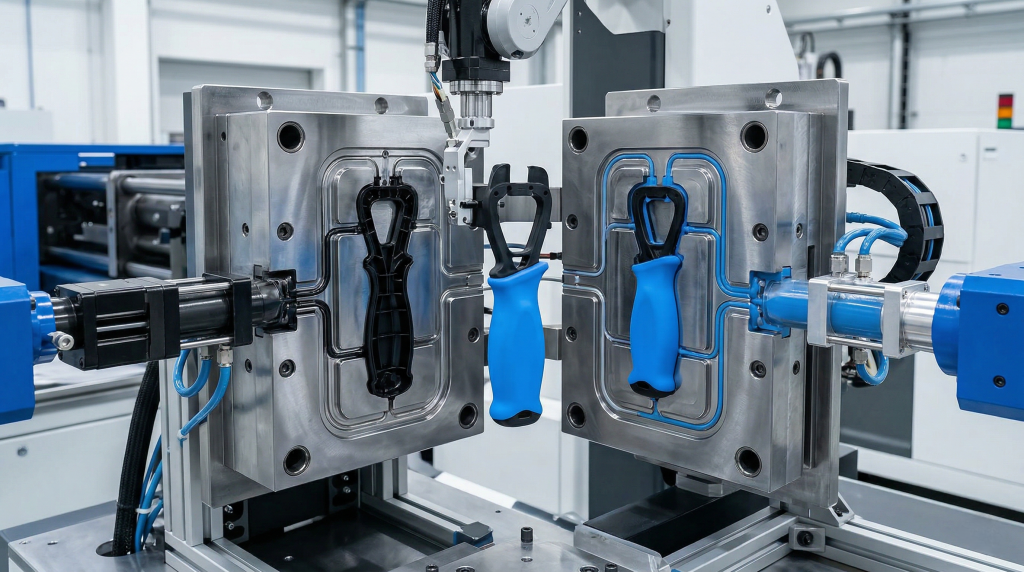
Tooling requirements dictate that silicone molds need extraordinarily tight tolerances alongside vacuum sealing, whereas plastic molds focus primarily upon high-pressure containment. Because raw materials used during LSR Injection Molding have viscosities similar to water, microscopic gaps result in unacceptable flashing. You need molds machined from premium hardened steel using cutting-edge CNC technology. Conventional thermoplastic molds act slightly more forgiving but still demand expert venting designs.
Why Do Tolerances Matter So Much?
Think about this for a moment. Poorly cut mold tools guarantee endless production headaches, rejected batches, and severe assembly complications. You should only trust toolmakers utilizing high-end optical measurement systems for verifying every single dimension.
- Vacuum assistance removes trapped air preventing voids.
- Cold runner blocks prevent premature feed line curing.
- Micro-venting allows gases an escape route safely.
Key Takeaway: Paying for top-tier precision tooling upfront represents the only reliable method of guaranteeing uninterrupted mass production runs.
| Tooling Aspect | Plastic Molds | Silicone Molds |
| Metal Tolerance | Standard precision | Ultra-high precision |
| Flow Systems | Hot or cold runners | Cold runner blocks |
| Air Removal | Standard venting | Vacuum extraction |
Mandatory implementation of vacuum extraction inside silicone tooling completely prevents air entrapment, generating perfect surface cosmetics.
Which Method Provides the Highest Quality Control?
Liquid silicone processing provides the highest quality control due to fully enclosed delivery systems preventing external contamination entirely. Utilizing LSR Injection Molding within certified cleanroom environments delivers unmatched batch-to-batch consistency. You do not worry about airborne dust ruining transparent optical lenses. Rigid plastic manufacturing also employs strict quality checks, but open-air hopper systems sometimes introduce unwanted foreign particulates.
How Do Automated Inspections Protect Brands?
Let’s cut to the chase. Human visual inspection remains inherently flawed while slowing down entire supply chains dramatically. You need partners integrating high-resolution CCD camera systems directly onto production floors for catching microscopic defects instantly.
- Automated vision systems check dimensions in real-time.
- Inline sensors monitor cavity pressure continuously.
- Strict cleanroom protocols prevent biological contamination.
Key Takeaway: Implementing rigorous machine-driven inspection protocols guarantees that only flawless, perfectly dimensioned components ever reach assembly lines.
| QC Checkpoint | Traditional Method | Advanced Automation |
| Surface Defects | Human visual check | CCD Optical Scanning |
| Material Mix | Manual weighing | Precision gear pumps |
| Environment | Open factory floor | ISO Class 8 Cleanroom |
Transitioning away from human oversight toward optical scanning drastically upgrades Process Capability Index scores regarding critical parts.
What Industries Benefit Most from These Methods?
The healthcare, automotive, and consumer electronics industries benefit most from these methods due to constant needs regarding durable components. A robust LSR Injection Molding setup perfectly addresses stringent biocompatibility mandates found inside medical sectors. Automotive engineers rely heavily upon dual-material overmolding for creating fail-safe weather seals. You will find nearly every premium smart device currently relying upon these technologies for ultimate weather protection.
Are Brands Capitalizing on Emerging Trends?
Here’s the real secret. Brands proactively adopting advanced multi-material molding gain massive competitive advantages by offering superior ergonomics. You can upgrade brand positioning simply by improving tactile feelings associated with exterior interfaces.
- Wearable tech demands skin-safe hypoallergenic bands.
- EV batteries require extreme high-temperature gaskets.
- Smartphones utilize micro-overmolded SIM trays effectively.
Key Takeaway: Leveraging high-performance manufacturing techniques allows brands an opportunity of entering premium market tiers confidently.
| Target Industry | Core Requirement | Recommended Application |
| Healthcare Field | Sterilizability | Surgical device handles |
| Automotive Sector | Thermal resistance | Engine wiring seals |
| Consumer Goods | Waterproofing | TWS earbud components |
Matching specific industry pain points with correct material technology instantly solves demanding engineering challenges.
How Should You Select the Right Process?
You should select the right process by conducting comprehensive Design for Manufacturability analyses evaluating product environments alongside volume requirements. Before committing toward LSR Injection Molding, you must determine whether parts genuinely require extreme thermal resistance. Consulting seasoned manufacturing engineers early prevents disastrous redesigns later. You should review flow simulations closely, ensuring chosen methods align perfectly with physical specifications.
Why Is Early Supplier Involvement Highly Valuable?
This changes everything. Bringing capable manufacturing partners into brainstorming sessions allows optimization regarding wall thicknesses before designs lock. You save months of frustrating trial-and-error iterations by leveraging deep practical expertise.
- DFM reports highlight potential air trap locations.
- Expert material selection balances performance against budgets.
- Optimized part geometry reduces expensive tooling complexity.
Key Takeaway: Engaging professional molding experts during initial design stages guarantees smooth, cost-effective transitions from concept toward mass production.
| Evaluation Step | Action Required | Expected Outcome |
| Environment Check | Define chemical exposure | Accurate material choice |
| Volume Forecast | Estimate annual production | Proper cavitation logic |
| DFM Analysis | Review drafts precisely | Optimized mold layout |
A rigorous data-driven evaluation process completely eliminates guesswork alongside financial risks associated with launching new hardware.
Understanding the distinct advantages of these advanced manufacturing processes allows engineering teams an opportunity to confidently overcome design hurdles. We have addressed complexities regarding material selection, tooling precision, and production efficiency so companies can make informed, data-driven decisions. As a premier manufacturing partner, our facility provides comprehensive solutions ranging from early-stage design optimization toward high-volume cleanroom production. Our commitment regarding flawless execution alongside continuous innovation guarantees your most ambitious concepts become high-performing realities. If your team remains ready for upgrading product lines with unmatched reliability, contact us today and discuss upcoming projects.
FAQ
Q1: Can I use medical-grade materials for consumer products?
Absolutely, and utilizing this strategy proves highly effective. Cross-applying strict ISO 13485 compliant materials for smart wearables guarantees biocompatibility, offering consumers total peace of mind while commanding premium market pricing.
Q2: What’s the best process for manufacturing waterproof electronic components?
Overmolding liquid silicone onto rigid plastics remains the superior choice. This approach creates permanent molecular bonds completely eliminating separate O-rings, preventing water ingress, and boosting long-term reliability.
Q3: How do I know if I should choose plastic or silicone?
Your decision depends entirely upon thermal requirements alongside tactile expectations. Choose standard thermoplastics for rigid structural parts operating near room temperatures, but switch toward silicone whenever components face extreme heat.
Q4: Can I lower the tooling costs for complex silicone molding?
Yes, primarily by engaging in early design optimization. Collaborating with engineers during DFM analyses allows simplification regarding complex geometries, which significantly reduces machining difficulty alongside overall steel costs.
Q5: Is it possible to guarantee zero defects in mass production?
While absolute mathematical perfection remains impossible, operations can achieve near-zero defect rates. By utilizing automated closed-loop pumping, cleanroom environments, and real-time CCD optical inspections, defect levels drop toward negligible fractions.