
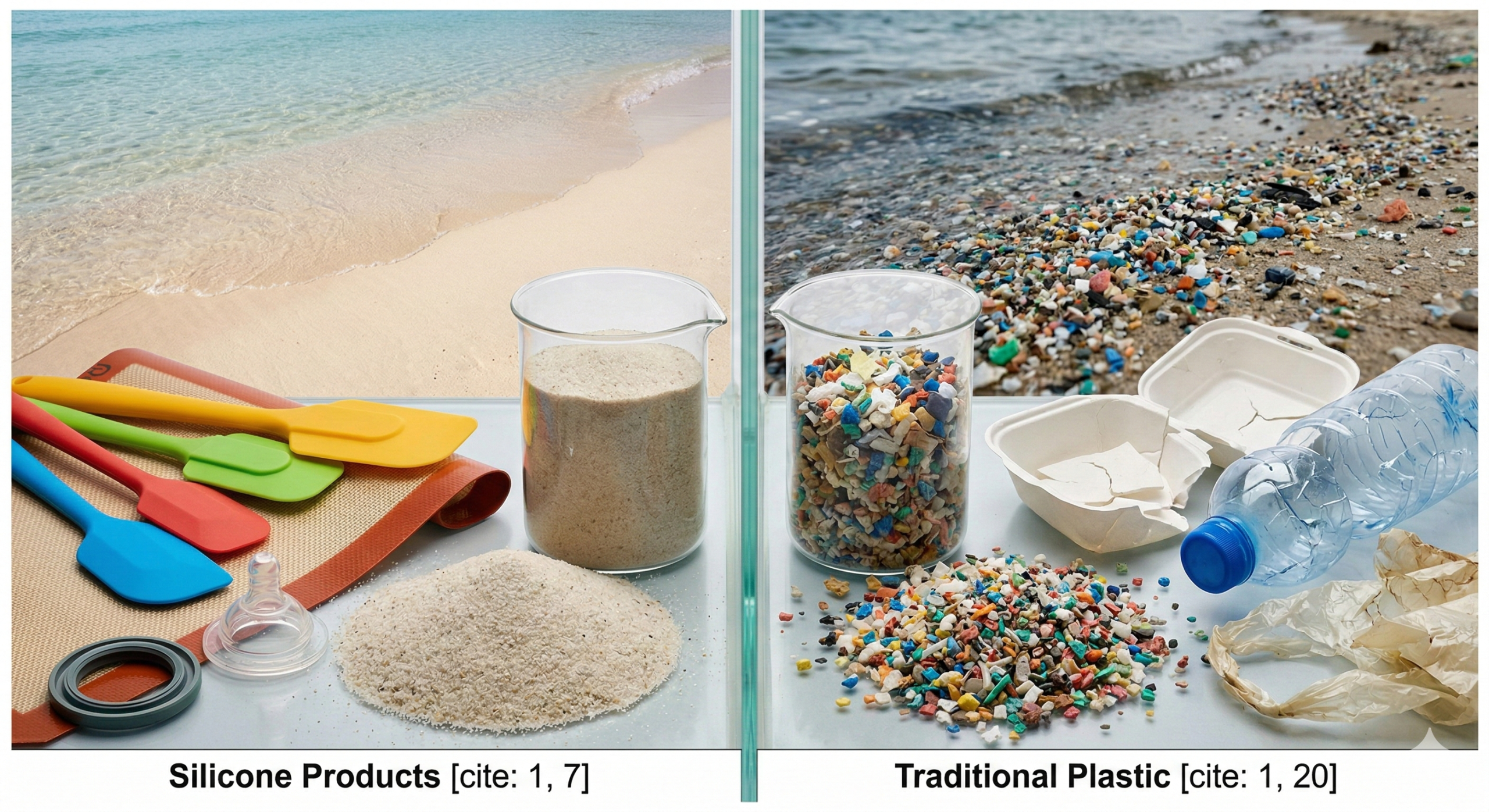
Silicone does not release microplastics in the same way traditional petroleum-based polymers do because its chemical backbone is mineral-based rather than carbon-heavy. As global industries face increasing regulatory pressure and consumer backlash regarding environmental pollution, the search for stable, non-leaching materials has intensified. Transitioning away from unstable plastics helps you mitigate long-term health risks and operational liabilities. Understanding the science behind microplastics from silicone is essential for any professional managing supply chains in the medical, baby care, or consumer goods sectors.
What is the chemical composition of silicone products?
Silicone is a synthetic rubber-like material composed of a repeating siloxane backbone consisting of alternating silicon and oxygen atoms. This unique inorganic structure distinguishes it from the long carbon chains found in standard plastics, which are prone to oxidative fragmentation. When you evaluate the risk of microplastics from silicone, you must realize that the base material is derived from silica sand, a naturally occurring mineral.
The addition of organic groups like methyl or vinyl provides the flexibility and durability required for industrial applications. These side groups are chemically bonded to the silicon-oxygen chain, creating a hybrid material that resists environmental degradation.
Is it a plastic or a rubber?
Silicone is technically categorized as an elastomer, which means it behaves like rubber but is synthesized through chemical processes. It offers a unique combination of elasticity and thermal stability that organic rubbers cannot provide.
- High thermal resistance up to 250°C.
- Excellent electrical insulation properties.
- Resistance to UV light and ozone.
Think about it:
The molecular bond in silicone is much stronger than the carbon-carbon bonds found in traditional plastics. This strength translates directly into material longevity.
Key Takeaway: Understanding the siloxane backbone helps you identify why silicone is inherently more stable than carbon-based polymers in demanding environments.
| Element | Role in Silicone Structure | Industrial Benefit |
|---|---|---|
| Silicon | Primary structural atom | High thermal stability |
| Oxygen | Interconnecting link | Flexibility and durability |
| Carbon | Organic side groups | Water repellency |
This molecular framework ensures that the material remains inert even under chemical stress.
Does silicone release microplastics like traditional polymers?
No, silicone does not release microplastics because it lacks the carbon-carbon backbone that fragments into the tiny, persistent plastic particles found in the ocean. Traditional plastics like polyethylene break down into fragments smaller than 5mm, whereas microplastics from silicone are technically non-existent due to the material’s mineral origin. You are essentially dealing with a substance that behaves more like glass or stone when it eventually degrades.
While plastics fragment into pieces that attract toxins, silicone tends to stay structurally sound for decades. Even if it were to wear down, the resulting microscopic particles are chemically distinct and less bio-available than petroleum fragments.
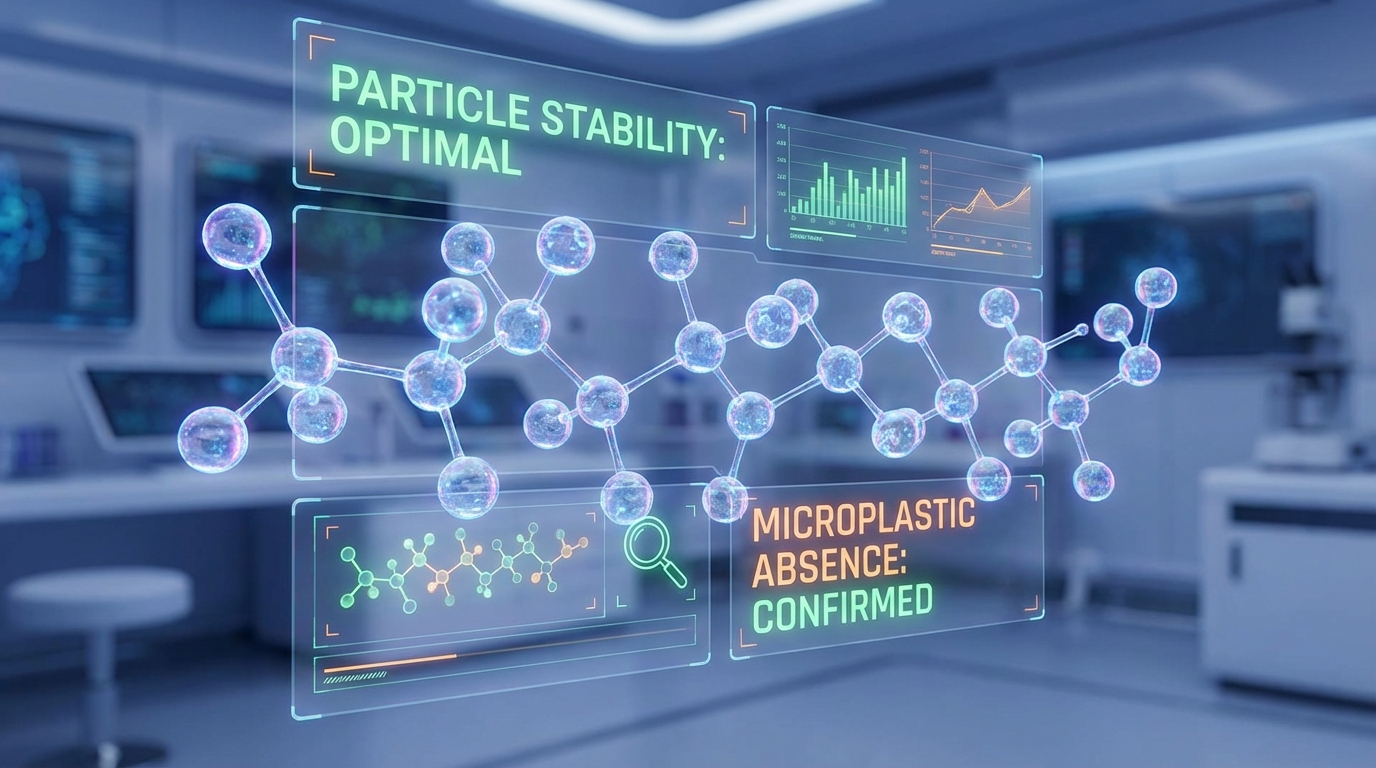
How silicone resists fragmentation
Unlike thermoplastics that soften and shed particles when exposed to heat or sunlight, silicone maintains its cross-linked matrix. This cross-linking prevents the shedding of large polymer chains into the environment.
- No BPA or phthalate leaching.
- Stable at extreme pH levels.
- Resistant to oxidative stress.
Here is the bottom line:
Silicone’s resistance to environmental stress means it will not contribute to the global microplastic crisis that plagues the plastics industry.
Key Takeaway: You can confidently market silicone as a microplastic-free alternative, providing a significant competitive edge in sustainability-focused markets.
| Property | Traditional Plastic | Food-Grade Silicone |
|---|---|---|
| Primary Source | Petroleum | Silica (Sand) |
| Degradation Mode | Microplastic fragmentation | Gradual oxidation |
| Toxicity | High leaching potential | Chemically inert |
Silicone’s inorganic nature makes it the premier choice for zero-fragmentation requirements.
How does heat exposure affect silicone’s structural integrity?
Silicone remains exceptionally stable at high temperatures, often withstanding up to 250°C without melting or losing its mechanical properties. Because of this thermal resilience, the concern regarding microplastics from silicone during cooking or sterilization is virtually zero. You can rely on these products for repeated heating cycles in medical autoclaves or kitchen environments without fear of polymer breakdown.
Standard plastics often begin to release volatile organic compounds and microscopic fragments long before they reach their melting point. Silicone, however, retains its shape and chemical bonds, ensuring no hazardous particles migrate into the surrounding medium.
Thermal stability thresholds
The Si-O bond energy is significantly higher than the C-C bond energy found in common plastics. This means it takes far more energy to break the molecular structure of silicone.
- Operating range: -60°C to +250°C.
- No toxic fumes released during heating.
- Maintains flexibility at freezing temperatures.
The best part?
Even under localized overheating, silicone usually converts back into silica (sand), rather than forming toxic sludge or microplastic beads.
Key Takeaway: High heat stability ensures that your products remain safe and particle-free throughout rigorous sterilization and cooking processes.
| Temperature Range | Silicone Behavior | Standard Plastic Behavior |
|---|---|---|
| -50°C | Flexible and resilient | Brittle and prone to cracking |
| 100°C | Completely stable | Softening and leaching |
| 200°C+ | Structurally intact | Melting and decomposing |
Materials that resist heat-induced breakdown are essential for long-term product safety.
Can mechanical wear lead to micro-particle shedding?
Yes, extreme mechanical wear can cause silicone to shed microscopic particles, but these are technically mineral-based fragments rather than microplastics. While microplastics from silicone are not a risk, physical abrasion from heavy industrial use can create silicone dust. You must differentiate between the harmful chemical migration of plastics and the physical shedding of inert silicone.
In consumer products like baby pacifiers or kitchen utensils, normal use is unlikely to generate any measurable shedding. However, in high-friction industrial seals, the material will eventually wear down over millions of cycles.
Factors influencing abrasion
The hardness of the silicone (measured in Shore A) and the surface finish play a major role in how the material handles friction. Smoother, high-grade surfaces are far less likely to shed particles.
- Surface texture and friction coefficients.
- Material durometer (hardness).
- Presence of reinforcing fillers like silica.
But wait, there is more:
The particles shed from silicone are generally larger and heavier than plastic micro-fragments, meaning they settle quickly and do not remain airborne or suspended in water as easily.
Key Takeaway: While mechanical wear is inevitable, the resulting particles remain inert and do not pose the same environmental threats as petroleum-based microplastics.
| Wear Type | Resulting Particle | Environmental Impact |
|---|---|---|
| High-Friction | Inert silicone dust | Low (settles quickly) |
| Low-Friction | Negligible shedding | None |
| UV Exposure | No shedding | None |
Minimizing mechanical stress through smart design is the most effective way to prevent particle release.
Is medical-grade silicone truly safer for long-term use?
Medical-grade silicone is the gold standard for safety because it undergoes rigorous purification to remove volatile organic compounds and catalysts. When considering the risk of microplastics from silicone in a clinical setting, medical-grade options provide the highest level of assurance. You are guaranteed a material that is biocompatible, hypoallergenic, and extremely resistant to the body’s internal environment.
Low-quality silicone may contain fillers that could potentially shed, but medical-grade versions are strictly regulated to prevent such occurrences. This makes it the only viable choice for implants, catheters, and wearable medical devices.
Biocompatibility and inertness
Because medical silicone does not react with human tissue or fluids, there is no risk of the material breaking down and releasing particles into the bloodstream. This is a critical advantage over many medical-grade plastics.
- USP Class VI certification.
- ISO 10993 testing for cytotoxicity.
- Platinum-curing for high purity.
Here is the bottom line:
Choosing medical-grade materials ensures that the structural integrity of the device is maintained for its entire functional life.
Key Takeaway: For applications involving direct human contact, medical-grade silicone eliminates the possibility of chemical leaching and material fragmentation.
| Material Grade | Purification Level | Typical Application |
|---|---|---|
| Medical Grade | Ultra-High | Implants and surgical tools |
| Food Grade | High | Kitchenware and baby care |
| Industrial Grade | Standard | Gaskets and automotive seals |
Investing in high-purity grades is the most effective strategy for ensuring user safety.
Does manufacturing quality influence the risk of degradation?
Yes, the quality of the manufacturing process, particularly the curing method, directly determines the risk of material degradation. High-precision manufacturing ensures that microplastics from silicone remain a non-issue by creating a perfectly cross-linked molecular structure. If you utilize low-tier manufacturing with poor heat control, the silicone may remain “under-cured,” leading to surface tackiness and potential particle shedding.
Platinum-cured silicone is generally superior to peroxide-cured options because it leaves behind no chemical by-products. This results in a cleaner, more stable product that is far less likely to degrade over time.
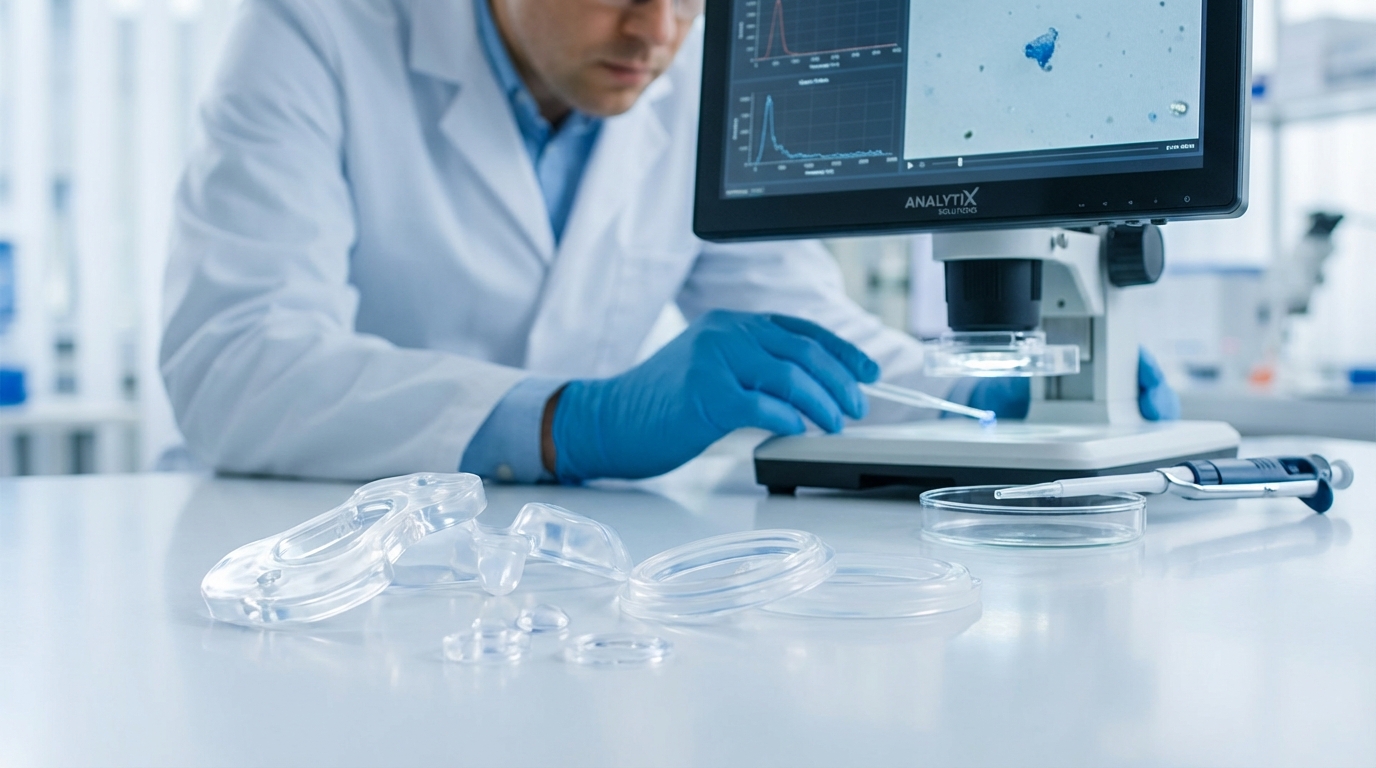
Curing methods and stability
The choice between Liquid Silicone Rubber (LSR) and compression molding also affects the final part’s consistency. LSR molding often provides better structural uniformity, reducing the likelihood of weak spots.
- Platinum-cured for no by-products.
- High-pressure molding for density.
- Precision temperature control during vulcanization.
Think about it:
A well-manufactured silicone part is essentially a single, massive molecule that is incredibly difficult to break apart through natural wear.
Key Takeaway: Partnering with a manufacturer that prioritizes platinum-curing and LSR precision is the best way to prevent material breakdown.
| Curing Agent | By-products | Long-term Stability |
|---|---|---|
| Platinum | None | Maximum |
| Peroxide | Organic acids | Moderate |
| None (Uncured) | Volatile monomers | Very Low |
Superior manufacturing techniques are the primary defense against material instability and degradation.
How do we detect microscopic silicone particles in a lab?
Laboratory detection of silicone particles requires advanced spectroscopic methods like Raman Imaging or Fourier Transform Infrared (FTIR) spectroscopy. Standard visual inspections cannot distinguish between microplastics from silicone and other microscopic contaminants. When you need to verify the purity of a batch, these high-tech tools identify the specific silicon-oxygen “fingerprint” of the material.
Scientists use these methods to map the distribution of particles in water or soil samples. Because silicone is distinct from carbon-based plastics, it is easily identified and separated during analysis.
Advanced imaging techniques
Raman spectroscopy is particularly effective because it allows researchers to look at the vibrational modes of the molecules. This provides a clear picture of whether a particle is a plastic, a mineral, or a silicone.
- Raman Spectroscopy for molecular mapping.
- SEM (Scanning Electron Microscopy) for surface analysis.
- GC-MS for detecting volatile leachable substances.
Why does this matter?
Accurate detection allows companies to prove their products are not contributing to microplastic pollution in environmental audits.
Key Takeaway: Sophisticated lab testing provides the empirical data needed to back up sustainability claims and ensure regulatory compliance.
| Method | Detection Capability | Best Use Case |
|---|---|---|
| Raman Imaging | Molecular identification | Micro-particle characterization |
| FTIR | Chemical bonding analysis | Material purity verification |
| SEM | Surface morphology | Identifying physical wear patterns |
Scientific verification is the only way to confirm that your supply chain is truly microplastic-free.
What is the environmental impact of non-biodegradable silicone?
Silicone is not biodegradable, but it is much more environmentally friendly than plastic because it does not fragment into toxic micro-chains. The long-term impact of microplastics from silicone is significantly lower because the material remains inert in landfills and oceans. While it will not disappear quickly, it does not release endocrine disruptors or heavy metals as it slowly oxidizes.
Unlike plastic, which can be eaten by marine life and enter the food chain, silicone is generally ignored by biological organisms. It eventually breaks back down into silica and CO2 over hundreds of years.
The life cycle of silicone
Because silicone is so durable, it needs to be replaced less often than plastic alternatives. This longevity reduces the total volume of waste generated by your business over time.
- Inert in ocean environments.
- Recyclable through specialized industrial processes.
- Low toxicity to soil microbes.
The best part?
When silicone is incinerated, it produces silica ash (sand) and water vapor, rather than the toxic dioxins associated with burning plastic.
Key Takeaway: While silicone persists in the environment, its inert nature and non-toxic breakdown make it a far superior choice for eco-conscious brands.
| Environmental Factor | Traditional Plastic | High-Grade Silicone |
|---|---|---|
| Biodegradability | None (Fragments) | None (Stays Inert) |
| Marine Toxicity | High (Ingestion) | Negligible |
| Incineration | Toxic fumes | Silica ash and vapor |
Focusing on durability and inertness is the most practical approach to modern environmental stewardship.
Should your business switch from plastic to silicone components?
Switching to silicone components allows you to offer more durable, safer, and more sustainable products to your clients. Given the increasing concern over microplastics from silicone compared to standard plastics, the marketing advantages are clear. You will reduce the risk of product failure and chemical leaching, which is vital for maintaining high brand reputation.
The initial cost of silicone may be higher, but the lifecycle value is significantly better. Silicone parts last longer and perform better under stress, reducing warranty claims and customer dissatisfaction.
Strategic business advantages
Companies that move away from conventional plastics now are better prepared for future environmental regulations. Being an early adopter of high-stability materials can define your brand as an industry leader.
- Lower risk of regulatory fines.
- Higher perceived product value.
- Long-term savings on material replacements.
Think about it:
Would you rather deal with a product recall due to chemical leaching, or invest in a stable material from the start?
Key Takeaway: Transitioning to silicone is a strategic move that protects your brand from future plastic-related liabilities and environmental regulations.
| Business Metric | Plastic Components | Silicone Components |
|---|---|---|
| Initial Cost | Low | Moderate |
| Durability | Low to Moderate | High |
| Regulatory Risk | High (BPA/Microplastics) | Very Low |
A shift toward premium elastomers is a shift toward long-term business resilience.
How can you verify the purity of your silicone supplies?
To verify silicone purity, you should always request a Certificate of Analysis (COA) and material safety data sheets from your suppliers. Ensuring that your supply chain is free from microplastics from silicone requires rigorous auditing of raw material sources. You must look for certifications like FDA, LFGB, or USP Class VI to ensure the material meets international safety standards.
A reputable supplier will be transparent about their curing agents and the use of any fillers. Testing for “extractables and leachables” is the standard B2B method for confirming material safety.
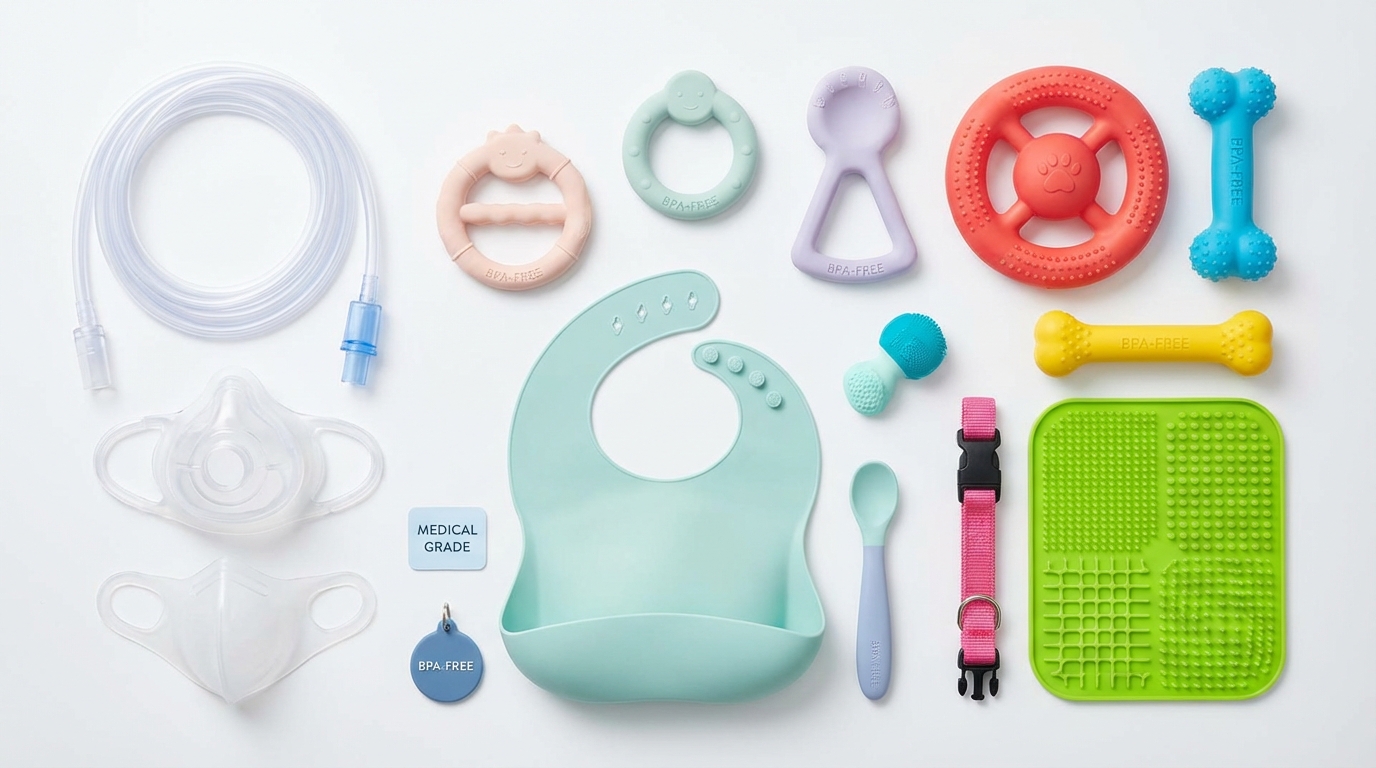
Purity verification checklists
Don’t just take a supplier’s word; perform independent batch testing periodically. This prevents “quality drift” where cheaper fillers are slowly introduced into your production runs.
- Verify FDA/LFGB compliance documents.
- Request “Toluene Extract” test results.
- Perform a “pinch test” to check for white fillers.
Here is the bottom line:
Purity is not just a safety feature; it is the foundation of your product’s mechanical performance and structural integrity.
Key Takeaway: Rigorous supplier auditing and certification checks are the only ways to guarantee that your silicone products are 100% pure and stable.
| Certification | Meaning | Best For |
|---|---|---|
| USP Class VI | Highest biocompatibility | Medical implants |
| FDA/LFGB | Food safety compliance | Kitchenware |
| RoHS/REACH | Chemical safety | Electronics/Consumer goods |
Comprehensive documentation ensures that your products meet the highest global quality standards.
The transition from unstable plastics to high-performance silicone solves the persistent problems of chemical leaching and microplastic fragmentation. By adopting mineral-based elastomers, you provide your customers with products that are both safer for the human body and more responsible for the planet. We are committed to helping you navigate this shift with precision-engineered solutions that meet the strictest international standards. Whether you are developing medical devices or premium consumer goods, we can help you lead the market in sustainability. To secure your supply chain and discuss custom manufacturing options, contact us today.
Frequently Asked Questions
Can I use silicone for high-heat industrial applications?
Yes, silicone is excellent for high-heat environments, as it typically maintains its structural integrity and flexibility at temperatures up to 250°C. Unlike many plastics, it does not melt or release toxic fumes when exposed to significant heat.
What’s the best way to verify silicone purity?
The best way is to request official certifications such as FDA, LFGB, or USP Class VI from your manufacturer. Additionally, a simple “pinch test”—twisting the silicone to see if white fillers appear—can help identify low-quality additives.
Is silicone safer for baby products than PET?
Yes, silicone is generally considered safer because it is chemically inert and does not contain BPA, phthalates, or other endocrine disruptors common in plastics. It also does not fragment into microplastics, which is a growing concern for infant health.
Can I recycle silicone factory waste?
Yes, although it is more difficult than recycling plastic, silicone can be ground down and used as filler for other products or chemically recycled through catalytic cracking. Many specialized B2B recycling programs exist to handle industrial silicone waste.
Does silicone leach chemicals during sterilization?
No, high-quality, platinum-cured silicone is non-reactive and does not leach chemicals during standard steam or dry-heat sterilization. This makes it the preferred material for medical instruments and food-processing equipment.