Finding the perfect manufacturing partner requires a deep dive into technical certifications, production capacity, and historical reliability to ensure your specific engineering requirements are met with precision. Selecting a Silicone Manufacturer is often the difference between a seamless product launch and a logistical nightmare filled with quality defects. We provide this expert guide backed by years of industrial experience to help you navigate the complexities of global sourcing and silicone vulcanization.
Many procurement managers struggle with suppliers who promise high-grade medical or automotive parts but deliver inconsistent batches that fail rigorous safety audits. This inconsistency leads to costly production delays, wasted materials, and friction with your own clients who demand perfection. Imagine the frustration of an entire shipment being rejected because a factory lacked the proper cleanroom environment or used low-grade raw materials. Our solution provides a structured framework to vet potential partners effectively so you can secure a reliable supply chain.
1. Why is checking certifications essential for a Silicone Manufacturer?
Checking certifications is essential because it serves as the ultimate proof of a factory’s commitment to international quality standards and regulatory compliance. Every reputable Silicone Manufacturer must hold specific documents like ISO 9001 or IATF 16949 to demonstrate they have the systems in place to manage complex production cycles. These certifications aren’t just pieces of paper; they are blueprints for how a company handles risk management and defect prevention.
Does ISO 13485 matter for your medical project?
When you are developing medical-grade wearables or surgical components, ISO 13485 is non-negotiable for ensuring biocompatibility and safety. This standard proves that the facility maintains a clean environment and strictly follows a quality management system specifically for medical devices. But here’s the kicker… without this certification, your product might never clear FDA or CE regulatory hurdles.
- Ensures consistent product safety for sensitive users.
- Provides a clear audit trail for every batch produced.
- Reduces the risk of contamination during the molding process.
What does IATF 16949 mean for automotive quality?
The automotive industry demands zero-defect policies, and the IATF 16949 certification is the gold standard for any automotive-focused Silicone Manufacturer. It ensures that the supplier uses advanced product quality planning (APQP) and can provide full traceability for every gasket or seal. Ready for the good part? Working with an IATF-certified factory significantly lowers your liability risks in the long run.
- Mandates rigorous testing for durability and extreme temperatures.
- Requires advanced statistical process control (SPC) for mass production.
- Focuses on continuous improvement and waste reduction in the supply chain.
Key Takeaway: Verifying certifications ensures your partner can legally and technically meet the high-stakes requirements of regulated industries like healthcare and automotive.
| Certification | Industry Focus | Main Benefit |
| ISO 9001:2015 | General Manufacturing | Standardized quality management systems. |
| IATF 16949 | Automotive | Zero-defect production and full traceability. |
| ISO 13485 | Medical Devices | Specialized safety protocols for medical parts. |
Standardized certifications act as a filter to remove low-quality suppliers before they enter your supply chain.
2. How does the molding process impact your final product?
The molding process impacts your final product by determining the precision, texture, and physical properties of the silicone parts being manufactured. A professional Silicone Manufacturer will offer both Liquid Silicone Rubber (LSR) and Solid Silicone (Compression) molding to suit different application needs. Choosing the wrong method can lead to excessive flashing, poor sealing, or structural weaknesses that compromise the integrity of your design.
Is Liquid Silicone Rubber (LSR) right for precision?
LSR injection molding is the best choice for high-volume, high-precision parts that require tight tolerances and complex geometries. You might be wondering… why is it preferred for waterproof components? The answer lies in its ability to be overmolded onto plastic or metal substrates for a perfect seal.
- High automation leads to lower labor costs for large orders.
- Minimal flash and high dimensional stability for small parts.
- Fast cycle times compared to traditional compression molding.
When should you choose Solid Silicone compression molding?
Compression molding is generally more cost-effective for large, simple parts or lower production volumes where mold costs need to be kept low. This is where it gets interesting… while it is slower than LSR, it is incredibly versatile for varying material hardness and colorful aesthetic designs.
- Lower initial tooling investment for startups and new projects.
- Suitable for large-format gaskets and thick-walled protective cases.
- Easier to achieve specific Pantone color matches in smaller batches.
Key Takeaway: Understanding the technical differences between LSR and solid compression allows you to optimize both the cost and performance of your product.
| Process Type | Best For | Tooling Cost |
| LSR Injection | High Precision / Mass Production | Higher |
| Compression Molding | Simpler Designs / Large Parts | Lower |
| Overmolding | Multi-material Seals | Moderate to High |
Selecting the correct molding technology ensures your design intent translates perfectly into the final physical part.
[Image showing the difference between LSR injection molding machines and vacuum vulcanization machines in a clean factory with 16:9 aspect ratio]
3. Does the manufacturer have in-house tooling capabilities?
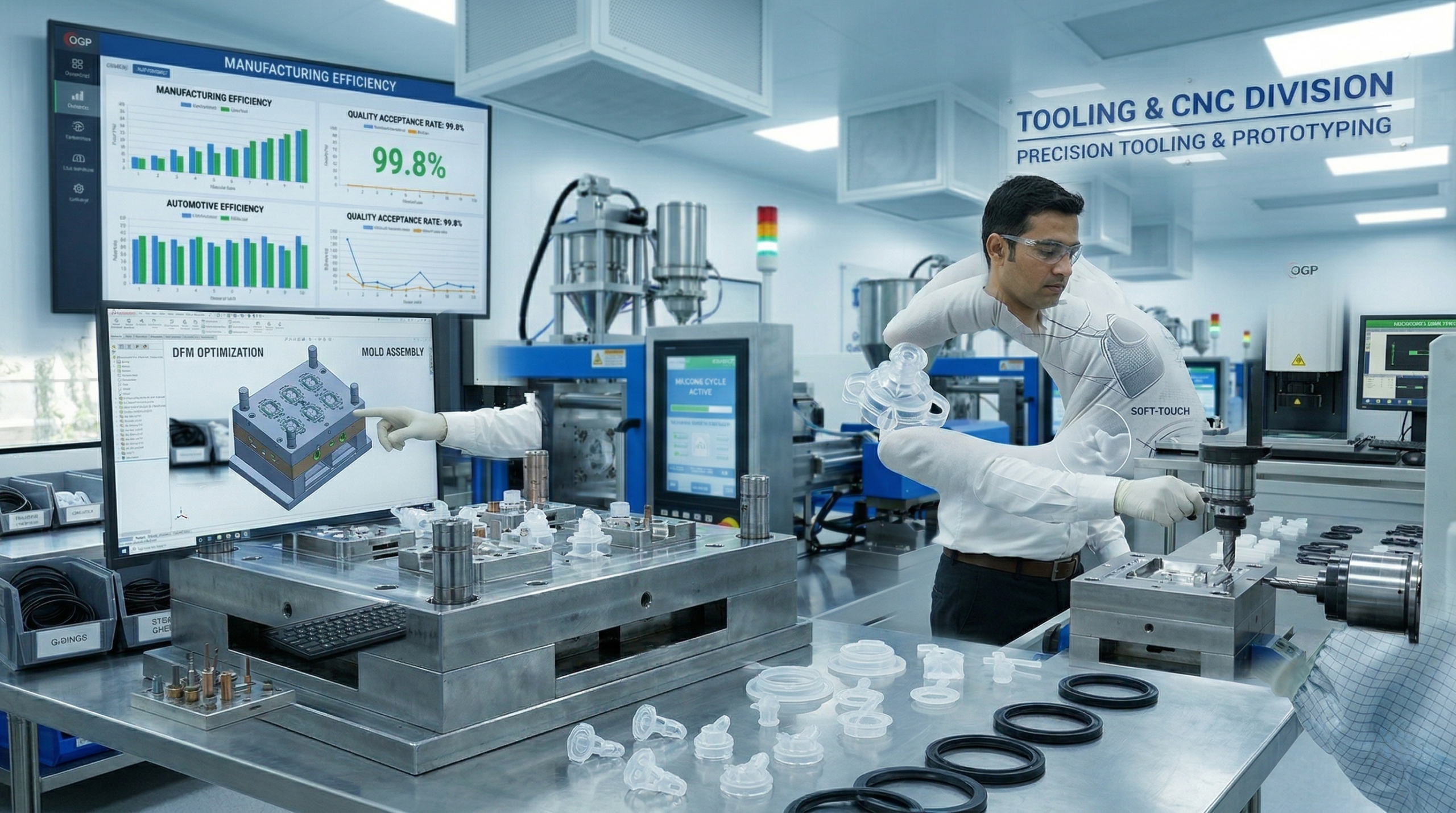
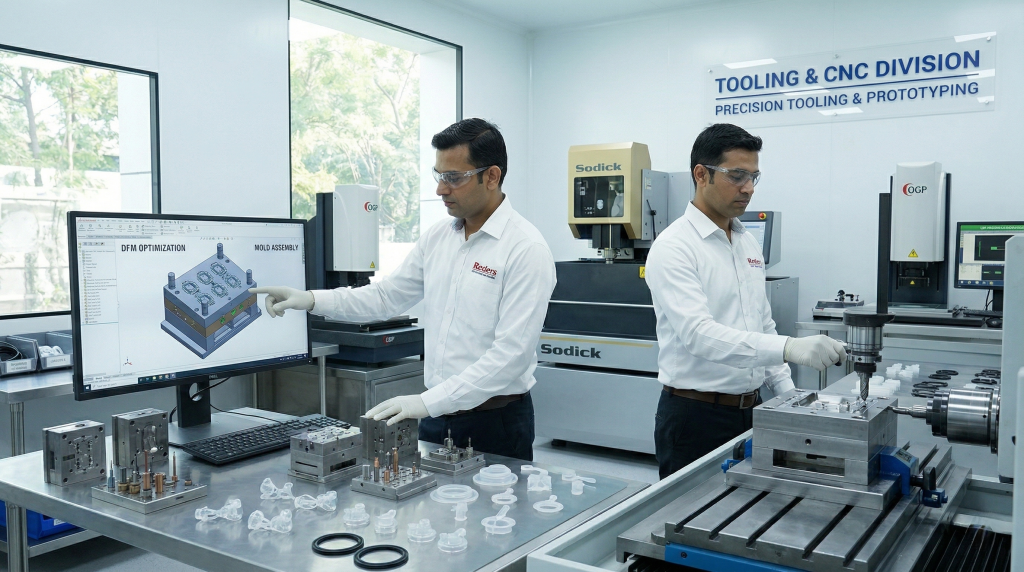
In-house tooling capabilities are a massive advantage because they allow the Silicone Manufacturer to control the entire production timeline and quality of the molds. When a factory outsources its molds, you often face delays and communication gaps if the mold requires adjustments during the sampling phase. A partner with their own CNC and EDM machines can react instantly to your design changes.
How does in-house tooling speed up production?
Having a dedicated mold shop means that design for manufacturing (DFM) feedback happens in real-time between the engineers and the toolmakers. The real story is… that this integration can shave weeks off your development cycle by eliminating shipping times between different vendors.
- Rapid prototyping and quick mold modifications.
- Better maintenance and longer lifespan for your production tools.
- Direct control over the precision of the mold surface finish.
What equipment should you look for in a tool shop?
A top-tier Silicone Manufacturer should be equipped with high-precision machinery like German Roders CNCs or Japanese Sodick EDM machines. Believe it or not… the quality of the steel and the precision of the CNC determines whether your silicone button feels “clicky” or “mushy.”
- CNC Machining Centers for fast material removal and shaping.
- Mirror EDM for achieving ultra-smooth surface textures.
- Slow-speed wire cutting for extreme precision in mold inserts.
Key Takeaway: Choosing a manufacturer with in-house tooling minimizes project risks and ensures faster time-to-market for your innovations.
| Tooling Equipment | Origin / Quality | Purpose |
| Roders CNC | Germany / High | High-speed precision machining. |
| Sodick EDM | Japan / High | Creating intricate details and textures. |
| Grinding Machines | Standard | Ensuring flat surfaces and tight fitment. |
Direct control over the mold-making process is the best insurance policy for your project’s technical success.
4. Can they handle complex post-processing requirements?
Post-processing requirements like UV coating, printing, and die-cutting are what transform a raw silicone part into a finished consumer-ready product. You should look for a Silicone Manufacturer that offers integrated secondary services to avoid the hassle of managing multiple vendors. A one-stop shop ensures that the quality standards applied to molding are also applied to the final aesthetic finish.
Why is UV modification vital for consumer electronics?
Silicone is naturally tacky and attracts dust, which is a major pain point for products like watch bands or earbud tips. Here’s the deal… applying an automatic UV spray coating gives the silicone a “soft-touch” feel and prevents it from becoming sticky over time.
- Improves wear resistance and prevents surface degradation.
- Enhances the premium feel of the product for the end-user.
- Provides a protective barrier against oils and sweat.
What about precision printing and assembly?
For medical buttons or control panels, the legibility and durability of printed icons are critical for user safety and experience. Wait, there’s more… an integrated manufacturer can also provide assembly services, such as applying adhesive backings or inserting metal components.
- Silk-screen and pad printing for high-resolution graphics.
- Laser etching for backlit buttons and illuminated displays.
- Automated lamination for precise adhesive application.
Key Takeaway: Integrated post-processing saves you significant time and reduces the logistical risks associated with multi-vendor supply chains.
| Service | Benefit | Typical Application |
| UV Coating | Dust-proof / Soft-touch | Wearables, Phone Cases |
| Pad Printing | High-detail Graphics | Remote Controls, Medical Panels |
| Die Cutting | Custom Shapes | Gaskets, Adhesive Parts |
Consolidating molding and finishing under one roof ensures color consistency and structural integrity across the entire batch.
5. Is a cleanroom environment necessary for your project?
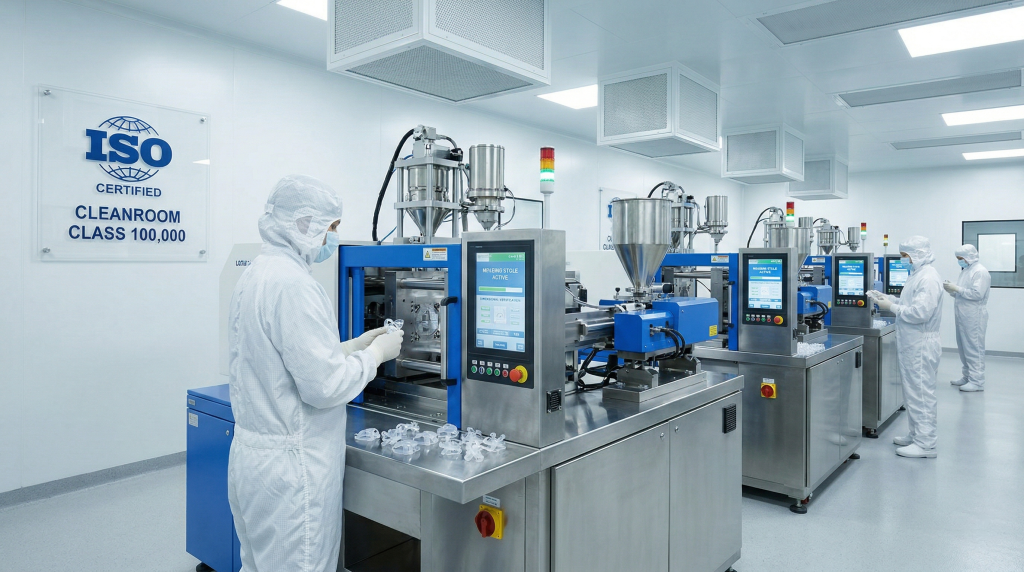
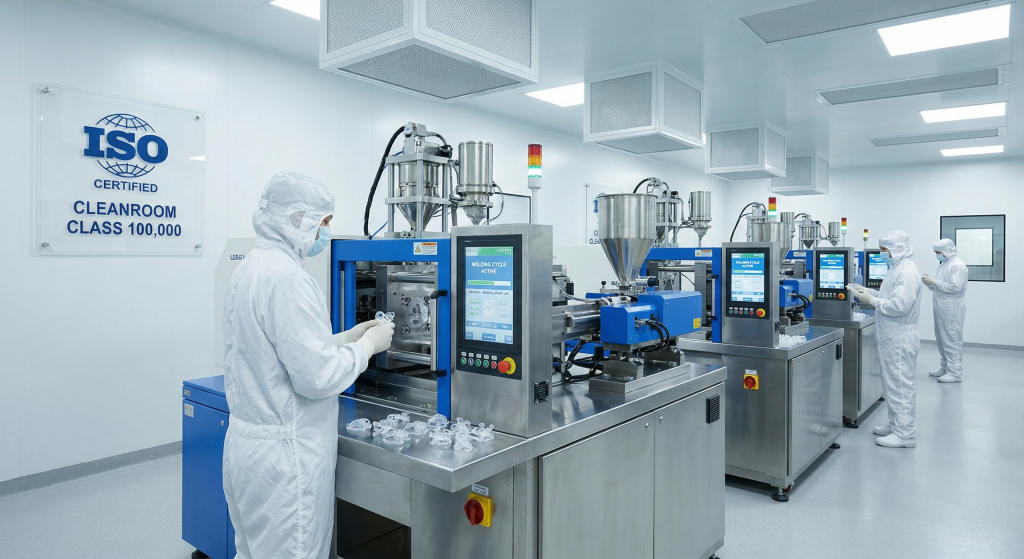
A cleanroom environment is necessary whenever your product must be free from airborne particles, dust, or biological contaminants. If you are sourcing from a Silicone Manufacturer for medical, optical, or high-end electronic applications, a Class 100,000 cleanroom is often a prerequisite. Even a tiny speck of dust trapped in a silicone lens or a medical valve can lead to product failure or safety hazards.
How does a cleanroom prevent defects?
In a controlled environment, humidity, temperature, and particulate matter are strictly monitored to ensure the raw silicone remains pure during the molding process. You might be wondering… how this affects your bottom line? It drastically reduces the rejection rate caused by cosmetic “black spots” or structural impurities.
- Maintains material purity for medical-grade biocompatibility.
- Eliminated surface defects on transparent or high-gloss parts.
- Prevents cross-contamination between different material types.
What should you verify during a factory audit?
When visiting a Silicone Manufacturer, check the air filtration systems and the protocols employees follow before entering the production zone. Believe it or not… something as simple as improper gowning or a lack of air showers can compromise a cleanroom’s effectiveness.
- Presence of air showers at every entrance to the cleanroom.
- Strict dress codes including hairnets, gloves, and anti-static suits.
- Regular particle count logs and third-party environmental audits.
Key Takeaway: For high-spec industries, the factory’s environmental controls are just as important as the machinery they use.
| Cleanroom Class | Max Particles/m³ | Common Uses |
| Class 10k | 352,000 | Advanced Medical, Precision Optics |
| Class 100k | 3,520,000 | General Medical, Smart Wearables |
| Non-Cleanroom | Uncontrolled | Industrial Seals, Consumer Goods |
A controlled manufacturing environment is the only way to guarantee the purity required for sensitive human-contact applications.
[Image showing workers in full cleanroom suits operating LSR machines in a sterilized environment with 16:9 aspect ratio]
6. How does the manufacturer ensure quality and reliability?
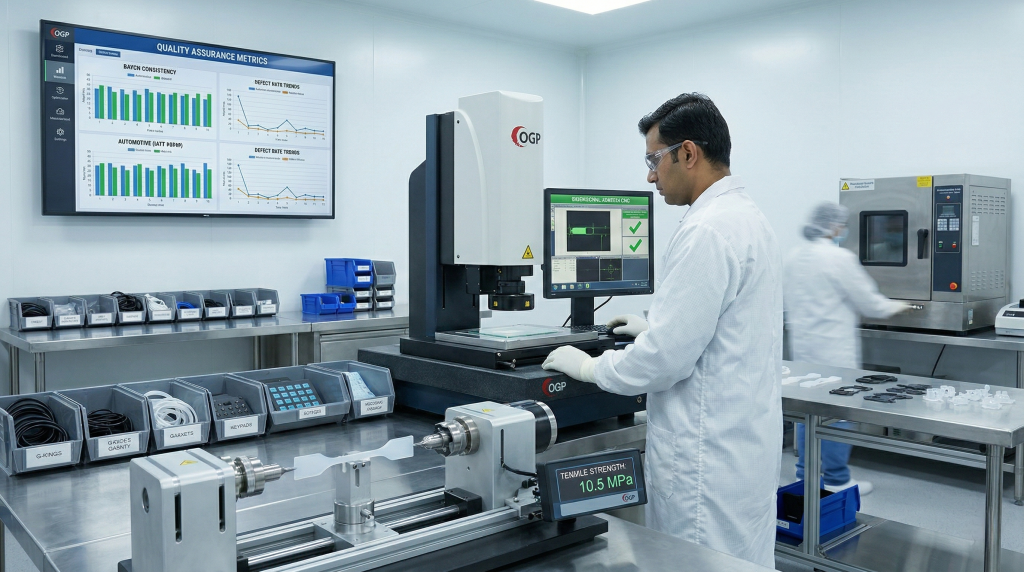
Quality and reliability are ensured through a combination of advanced testing equipment, rigorous inspection protocols, and a data-driven quality management system. A reputable Silicone Manufacturer doesn’t just check parts at the end; they integrate quality checks into every stage of the production cycle. From incoming raw material inspection to final outgoing quality control (OQC), every step should be documented.
What testing equipment should a lab have?
A well-equipped laboratory should be able to perform mechanical, chemical, and dimensional tests to verify that the parts meet your engineering specifications. The real story is… that without high-end tools like OGP measuring instruments, you cannot guarantee the tight tolerances required for waterproof seals.
- Tensile testing machines to measure elongation and strength.
- Environmental chambers for heat, humidity, and UV aging tests.
- Life-cycle testers to simulate thousands of button presses.
Can automated inspection improve accuracy?
Manual inspection is prone to human error, especially during long shifts, which is why leading factories invest in CCD (Charge-Coupled Device) automatic inspection machines. But here’s the kicker… these machines can scan thousands of parts per hour for tiny cracks, burrs, or color deviations that the human eye might miss.
- High-speed scanning for 100% inspection of critical batches.
- Microscopic analysis for detecting internal material voids.
- Consistent 2D and 3D dimensional verification against CAD models.
Key Takeaway: A manufacturer with a robust internal laboratory reduces your need for third-party testing and prevents defective parts from reaching your customers.
| Test Type | Equipment Used | What it Measures |
| Dimensional | OGP / 2.5D Tester | Exact measurements vs. Blueprint. |
| Durability | Key Life Tester | Cycles before material failure. |
| Safety | RoHS Detector | Presence of hazardous chemicals. |
Investing in a partner with superior testing capabilities is the most effective way to protect your brand’s reputation.
7. Does the manufacturer have experience in your specific industry?
Experience in your specific industry is a strong indicator that the Silicone Manufacturer understands your unique challenges, regulatory requirements, and user expectations. A factory that primarily makes kitchenware may struggle with the precision required for a TWS earbud or an automotive sensor housing. You should look for a portfolio that includes recognizable brands in your sector to verify their expertise.
Why is industry-specific knowledge valuable?
Manufacturers who work with consumer electronics giants like Huawei or JBL already understand the “Time-to-Market” pressures and the need for flawless aesthetics. This is where it gets interesting… because they can often offer design for manufacturing (DFM) advice based on what has worked for similar products in the past.
- Familiarity with industry-standard materials and additives.
- Understanding of common failure modes in specific applications.
- Proven ability to scale production for seasonal market demands.
How can you verify their past performance?
Ask for case studies or redacted inspection reports that demonstrate their ability to solve complex engineering problems for other clients. Ready for the good part? A confident Silicone Manufacturer will be happy to discuss how they managed high-volume orders or difficult overmolding challenges.
- Check their list of cooperative partners and global clients.
- Request samples of similar parts they have produced previously.
- Inquire about their experience with specific certifications like FDA or LFGB.
Key Takeaway: Partnering with an industry veteran reduces the learning curve and ensures that the factory speaks your technical language.
| Industry | Key Requirement | Silicone Solution |
| Smart Wearables | Skin Safety / Soft Touch | Food-grade LSR + UV Coating |
| Automotive | Durability / Sealing | IATF 16949 Gaskets |
| Medical | Purity / Precision | ISO 13485 + Cleanroom Molding |
Industry expertise allows a manufacturer to anticipate your needs and prevent common production pitfalls before they occur.
8. Can they scale production to meet your growth?
Scaling production is a critical factor if you expect your product to grow from a small pilot run to millions of units in mass production. A small Silicone Manufacturer might offer great service for prototypes but could fail to maintain quality or lead times when you suddenly double your order. You need to analyze their floor space, number of machines, and workforce stability.
What determines a factory’s total capacity?
Capacity is not just about the number of molding machines but also the efficiency of the supporting infrastructure like material mixing and post-processing lines. Wait, there’s more… an ERP (Enterprise Resource Planning) system is essential for managing large-scale logistics and ensuring that raw materials are always in stock.
- Total floor space (e.g., 13,000 sqm) for production and storage.
- Daily output capacity for specific components (e.g., 500k LSR parts/week).
- Number of shifts and total employee headcount to handle peak seasons.
How do they handle small vs. large orders?
Flexible manufacturers can offer a “one-stop service” that supports you from the initial prototype (low MOQ) to full-scale manufacturing. You might be wondering… if they will prioritize your small order? A good partner sees themselves as a long-term collaborator rather than just a vendor.
- Prototyping tools for fast market validation.
- Multi-cavity molds for high-efficiency mass production.
- Dedicated assembly and packaging lines for “direct-to-FBA” shipping.
Key Takeaway: Choosing a partner with significant scale ensures that your supply chain remains stable even as your market demand fluctuates.
| Production Metric | Small Factory | Large Scale Manufacturer |
| Machine Count | 5-10 Sets | 50+ Sets |
| Floor Space | <2,000 sqm | >10,000 sqm |
| Management | Manual Tracking | ERP System Integration |
Scalability is the foundation of a long-term business relationship that can withstand the pressures of rapid market success.
9. Is their communication and service level up to par?
Communication and service levels are often the most overlooked factors when selecting a Silicone Manufacturer, yet they are the most frequent causes of project failure. In the B2B world, you need a partner who responds quickly, speaks your language, and provides transparent updates on production status. Misunderstandings regarding technical specifications can lead to entire batches of unusable parts.
Why is an “Integrated Industry and Trade” model better?
Factories that have their own international sales and service teams tend to offer much better communication than those that rely on third-party brokers. Here’s the deal… when you talk directly to the factory’s engineering-led sales team, nothing gets lost in translation between your needs and the production floor.
- Direct access to the technical team for DFM and troubleshooting.
- Faster response times for quotes and mold modifications.
- More flexibility with MOQs and custom packaging requests.
What does proactive service look like?
A proactive Silicone Manufacturer will flag potential design issues before the mold is even cut, saving you time and money. Believe it or not… a simple suggestion to change a draft angle or a wall thickness can drastically improve the yield rate and lower your unit cost.
- Weekly production progress reports with photos and data.
- Transparent handling of quality issues and quick RMA processes.
- Providing suggestions for cost-saving material alternatives.
Key Takeaway: Effective communication is the “glue” that holds a complex manufacturing project together and ensures mutual success.
| Communication Feature | Why it Matters |
| Fluent English Support | Prevents technical misunderstandings. |
| Engineering-led Sales | Provides immediate design feedback. |
| Digital ERP Tracking | Offers transparency on order status. |
Seamless communication reduces stress and allows you to focus on marketing and selling your product rather than managing the factory.
10. Are they a sustainable and socially responsible partner?
Sustainability and social responsibility are becoming mandatory requirements for global brands and modern B2B supply chains. When vetting a Silicone Manufacturer, you should consider their environmental management systems and how they treat their workforce. Companies with ISO 14001 and OHSAS 18001 certifications demonstrate that they are built for long-term stability rather than short-term gains.
How does environmental management affect you?
A factory that manages its waste and energy consumption effectively is less likely to face government shutdowns or environmental fines that could disrupt your supply. But here’s the kicker… using eco-friendly materials and processes can also be a major selling point for your final product in the “green” market.
- Waste reduction strategies and recycling of silicone scrap.
- Energy-efficient machinery and sustainable factory lighting.
- Compliance with global environmental regulations like REACH and RoHS.
What is the importance of social compliance?
Ethical manufacturing ensures that your products are not associated with poor working conditions or labor violations, which can destroy a brand’s reputation overnight. The real story is… that happy, well-treated workers are more productive and produce higher-quality work with fewer errors.
- Safe working conditions and proper safety equipment for all staff.
- Fair wages and compliance with local labor laws.
- Regular safety training and health monitoring for machine operators.
Key Takeaway: Choosing an ethical and sustainable manufacturer protects your brand from PR risks and ensures a more resilient supply chain.
| Responsibility Factor | Certification / Standard | Benefit to Buyer |
| Environment | ISO 14001 | Reduced regulatory and supply risk. |
| Health & Safety | OHSAS 18001 | Stable workforce and fewer accidents. |
| Material Safety | RoHS / REACH | Safe for global export and consumers. |
Sustainable practices are not just good for the planet; they are a hallmark of a mature and reliable manufacturing partner.
Conclusion
Choosing the right Silicone Manufacturer is a multi-faceted decision that involves balancing technical precision, production capacity, and ethical standards. By focusing on essential certifications like IATF 16949, verifying in-house tooling capabilities, and ensuring a robust quality management system, you can build a partnership that drives long-term success. We have seen that the most successful projects are those where the manufacturer acts as an extension of your own engineering team. If you are ready to elevate your product quality and streamline your supply chain, contact us today to discuss your specific requirements. Our commitment to excellence and customer-first philosophy ensures that your silicone components are delivered with zero defects and maximum reliability. Let’s grow together by turning your complex designs into high-performance reality.
FAQ
Q1: What is the best way to verify a silicone manufacturer’s quality?
The best way is to check for ISO and industry-specific certifications like IATF 16949 or ISO 13485. These ensure the factory follows standardized global protocols for quality control.
Q2: How do I know if I need LSR or compression molding?
It depends on your part’s complexity and volume; LSR is better for high-precision mass production, while compression molding is more cost-effective for simpler, larger parts.
Q3: Can I get help with the design of my silicone part?
Yes, leading manufacturers provide Design for Manufacturing (DFM) feedback. They can suggest changes to wall thickness or draft angles to improve production yield and lower costs.
Q4: What’s the best material for medical-grade products?
Liquid Silicone Rubber (LSR) is generally the best choice for medical applications. It offers superior biocompatibility, is resistant to bacteria, and is processed in cleanroom environments.
Q5: How do I know if a factory is truly a manufacturer or just a trader?
Ask for a video tour or a physical audit of the facility to see the machines in action. A true manufacturer will have its own tooling shop, molding lines, and testing laboratory on-site.