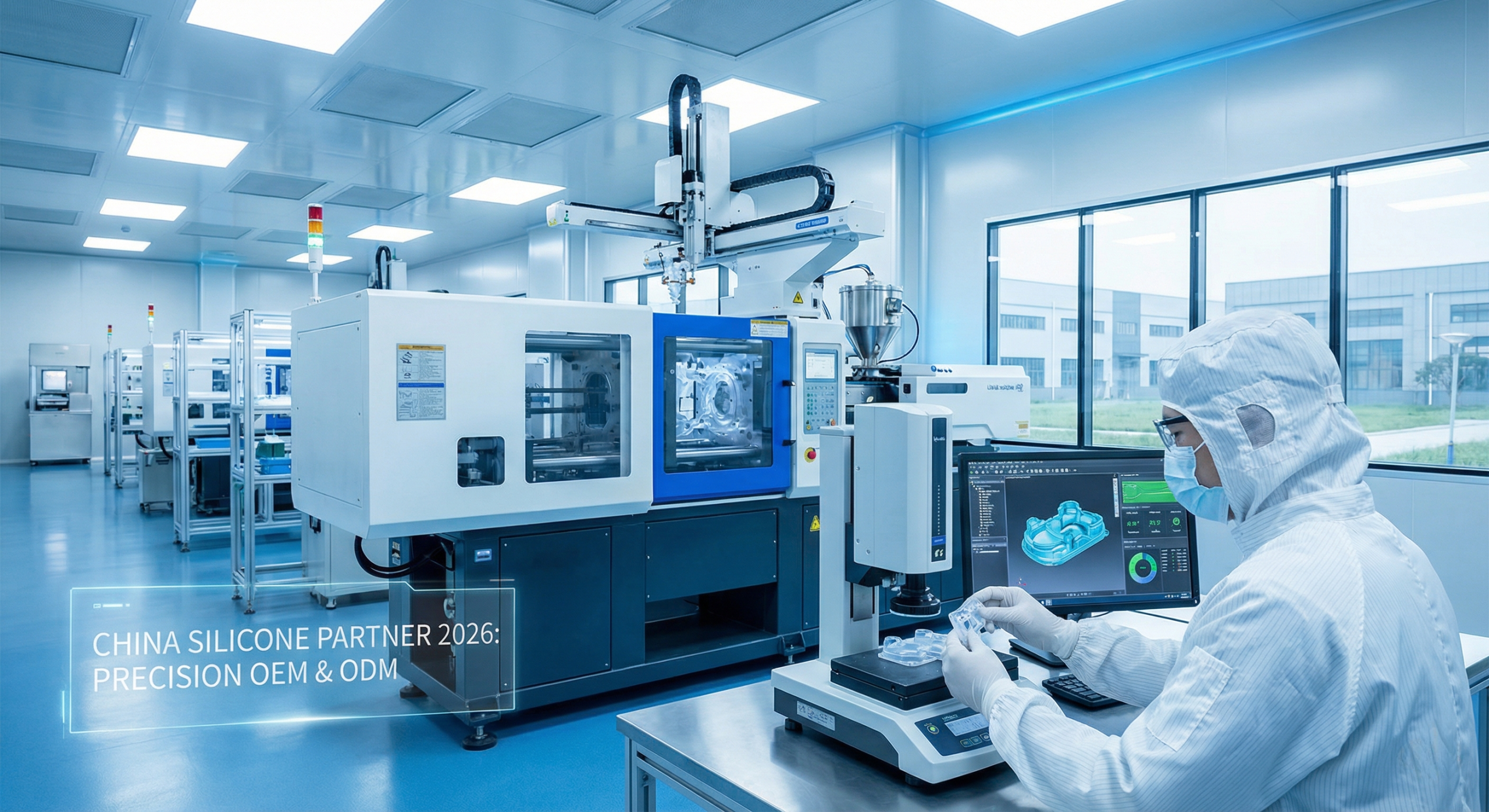
Choosing the right partner requires a deep dive into technical capabilities, certification transparency, and engineering support. Many B2B buyers struggle with inconsistent part quality and communication gaps that delay critical product launches. How to Choose a Reliable Silicone Manufacturer in China is the solution to securing your supply chain and ensuring your custom parts meet global standards without the risk of costly defects. HuaLin Silicone provides the integrated manufacturing and DFM support needed to navigate the complexities of 2026’s market demands.
Why is China Leading Silicone Manufacturing in 2026?
China leads the global market by offering the most mature ecosystem for high-precision Liquid Silicone Rubber (LSR) and automated compression molding. Learning How to Choose a Reliable Silicone Manufacturer in China allows you to tap into a supply chain that integrates raw material compounding with advanced tooling. This infrastructure ensures that your projects benefit from both cost efficiency and technical innovation.
The global shift toward high-performance silicone?
Industries are moving away from basic plastics toward biocompatible, heat-resistant silicone for critical applications. You will find that the 2026 market demands materials that can withstand extreme environments while remaining non-toxic for consumer safety.
- Increased use of medical-grade LSR for wearables.
- Shift toward eco-friendly, food-grade silicone in kitchenware.
- Growth in conductive silicone for smart electronics.
Here is the deal: staying ahead of these trends requires a partner who understands the nuances of material science.
Key Takeaway: China’s dominance is driven by an integrated supply chain that offers superior material versatility and technical scaling.
| Driver | Impact on Your Project |
|---|---|
| Raw Material Access | Lower costs and stable material availability. |
| Automation Depth | Higher batch consistency and faster production cycles. |
| Innovation Clusters | Access to the latest LSR and overmolding technologies. |
This synergy between material access and automation makes China the logical choice for complex 2026 OEM projects.
What Are the Main Risks When Sourcing From China?
The primary risks include quality drift across production batches and potential compliance failures in regulated markets. To mitigate these, you must understand How to Choose a Reliable Silicone Manufacturer in China by focusing on factories with rigid quality management systems. Without these safeguards, your brand could face expensive recalls or customs rejections.
How do communication barriers impact projects?
Misaligned technical specifications often stem from a lack of direct engineering dialogue between the buyer and the factory. You need a partner who can translate your 3D CAD files into functional parts without losing critical tolerance data in translation.
- Misinterpreted Shore A hardness requirements.
- Poorly defined surface finish standards (matte vs. gloss).
- Confusion over secondary operation details like laser engraving.
Think about it: a single misunderstood tolerance can render an entire production run useless for assembly.
Key Takeaway: Quality drift and poor technical communication are the most common causes of project failure in international sourcing.
| Risk Factor | Potential Consequence | Mitigation Strategy |
|---|---|---|
| Quality Drift | Assembly issues and high scrap rates. | Request batch-specific QC reports. |
| Compliance Gaps | Market entry rejection or legal fines. | Verify FDA/LFGB certificates directly. |
| Lead Time Delays | Missed seasonal launch windows. | Demand real-time production tracking. |
Successful sourcing depends on proactive risk management and choosing a partner with a proven track record of transparency.
How Do You Spot a Real Factory vs. a Middleman?
You can identify a true manufacturer by verifying their in-house tooling facility and specific production machinery. Identifying How to Choose a Reliable Silicone Manufacturer in China involves looking past sleek websites to confirm ownership of the actual injection and compression equipment. This direct relationship eliminates the “middleman markup” and ensures clear accountability for your project’s success.
Verifying in-house mold-making capabilities?
A real factory will have a dedicated CNC and EDM department to create and maintain your custom molds. You should ask for a live video tour of the tooling shop to confirm they aren’t outsourcing the most critical part of the process.
- Presence of precision CNC machining centers.
- Dedicated EDM (Electrical Discharge Machining) for fine details.
- In-house mold testing and revision capabilities.
The best part? Direct control over tooling significantly reduces your development timeline and improves part accuracy.
Key Takeaway: Direct factories provide better price protection and technical accountability than trading intermediaries.
| Entity Type | Cost Structure | Quality Control |
|---|---|---|
| Real Factory | Direct pricing; no hidden fees. | Direct oversight of every production step. |
| Trading Company | Commissions added to every unit. | Limited influence over the actual factory floor. |
| Hybrid Supplier | Transparent pricing with service fees. | Shared responsibility with factory partners. |
Verifying assets through audits is the only way to guarantee you are working with the source of production.
Which Molding Processes Suit Your Project Best?
Your project’s success depends on selecting the right molding technology, such as LSR injection for high precision or compression molding for larger parts. Understanding How to Choose a Reliable Silicone Manufacturer in China means evaluating which process balances your budget with your performance requirements. Selecting the wrong method can lead to excessive flash, poor tolerances, or unnecessarily high unit costs.
Liquid Silicone Rubber (LSR) vs. Compression?
LSR is the gold standard for high-volume, high-precision parts that require cleanroom manufacturing. If you are developing a medical device or a complex sound-isolating earbud, the automated nature of LSR is essential.
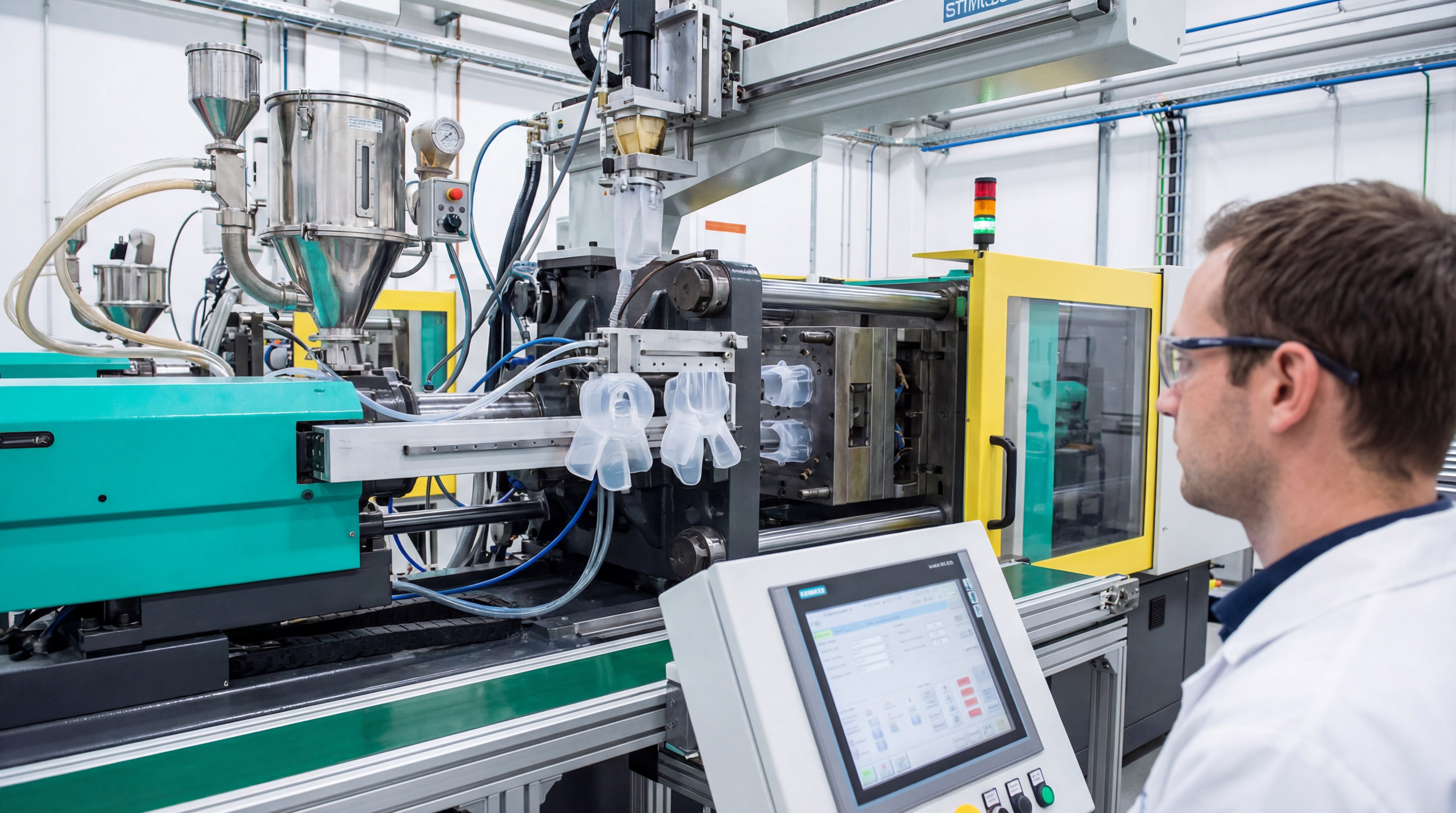
- LSR offers high-speed cycles and minimal waste.
- Compression is better for large, thick-walled components.
- LSR supports complex geometries and thin walls.
Look: choosing the process is just as important as choosing the material when you need to hit tight tolerances.
Key Takeaway: LSR molding is superior for precision and cleanliness, while compression remains the cost-effective choice for simpler geometries.
| Process | Best For | Typical Tolerance |
|---|---|---|
| LSR Injection | High precision, medical, small parts. | ±0.05mm to ±0.1mm |
| Compression | Large seals, gaskets, household items. | ±0.1mm to ±0.3mm |
| Overmolding | Bonding silicone to plastic or metal. | Dependent on substrate |
Selecting the optimal molding route early in the design phase ensures you don’t overpay for unnecessary precision.
What Quality Certifications Are Mandatory in 2026?
Mandatory certifications now include ISO 13485 for medical applications and strict LFGB/FDA compliance for any food-contact surfaces. Knowing How to Choose a Reliable Silicone Manufacturer in China means ensuring your supplier holds up-to-date, verifiable documents that match your target market’s legal requirements. In 2026, regulators are more stringent about material traceability and chemical migration limits.
Understanding FDA and LFGB food-grade standards?
While both certifications ensure safety, LFGB is often required for the European market and involves more rigorous testing for sensory and chemical stability. You must ensure your manufacturer uses platinum-cured silicone if your product needs to meet these high-level standards.
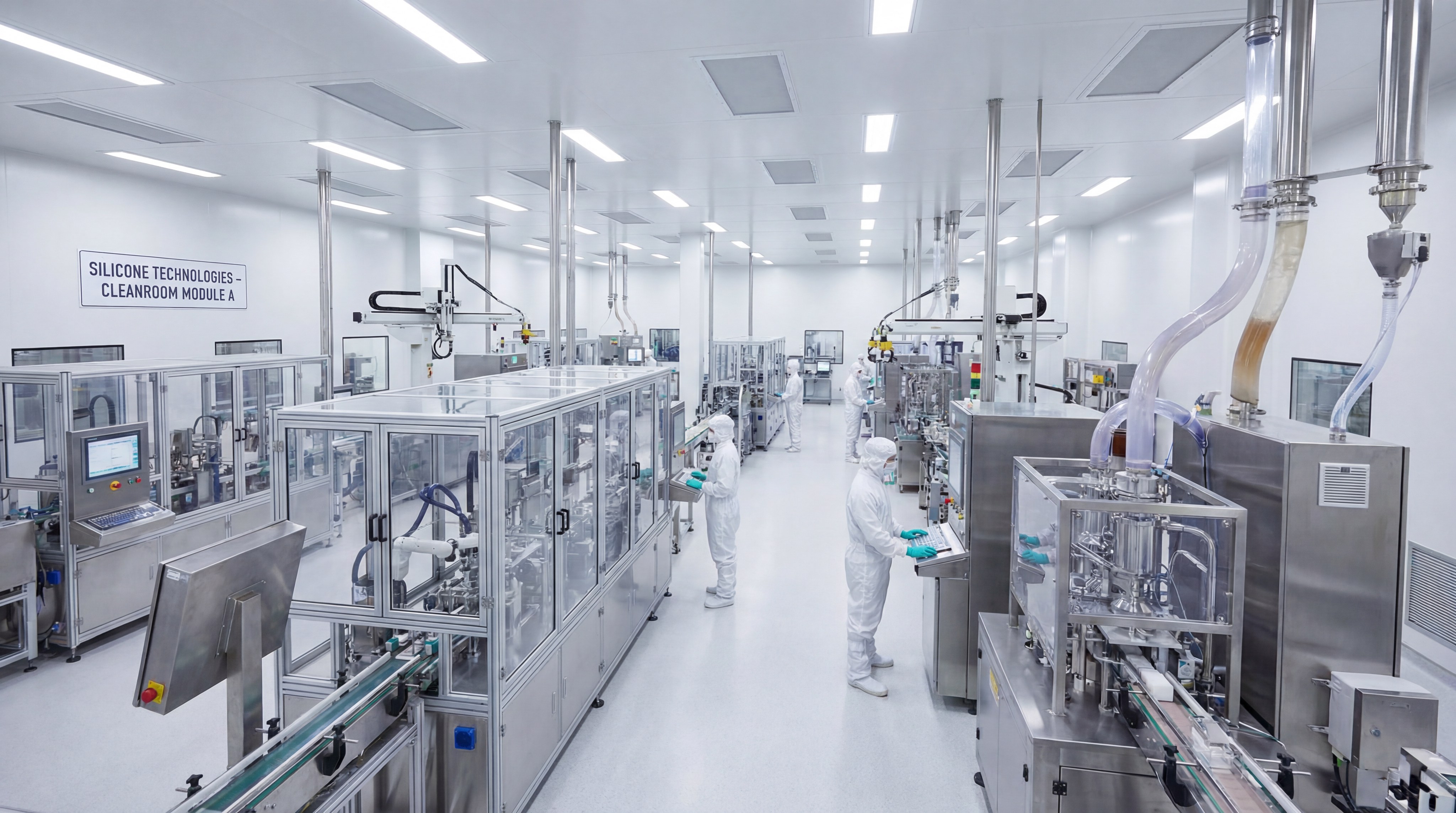
- Platinum-cured silicone prevents “blooming” and odor.
- FDA compliance is necessary for the US market.
- LFGB is the preferred standard for high-end kitchenware.
It gets better: factories with their own testing labs can provide pre-compliance data before you send parts to third-party labs.
Key Takeaway: Certification is not just a badge; it is a legal requirement that protects your brand from liability.
| Certification | Industry Focus | Key Requirement |
|---|---|---|
| ISO 9001 | General Manufacturing | Quality Management Systems. |
| ISO 13485 | Medical Devices | Traceability and risk management. |
| FDA/LFGB | Food & Baby Care | Chemical migration and safety limits. |
Always cross-reference certificate numbers with the issuing body to ensure the documents are current and valid.
Why Is Design for Manufacturing (DFM) Essential?
DFM prevents costly engineering mistakes by optimizing part geometry for the silicone molding process before you invest in steel tools. A core part of How to Choose a Reliable Silicone Manufacturer in China is finding a team that provides proactive feedback on wall thickness, draft angles, and gate placement. This collaborative approach ensures that your parts are not only functional but also efficient to manufacture.
Reducing engineering risks before tooling begins?
Without a DFM review, you might face issues like air traps, parting line flash, or inconsistent curing that ruins the finish. You will save thousands of dollars by adjusting your design based on professional molding simulations.
- Optimizing wall thickness for even cooling.
- Reviewing draft angles to ensure easy part ejection.
- Planning parting lines to hide unsightly seams.
In short: DFM is the bridge between a beautiful 3D model and a functional, mass-produced product.
Key Takeaway: Professional DFM feedback is the most effective way to reduce tooling costs and production scrap rates.
| DFM Element | Why It Matters | Optimization Goal |
|---|---|---|
| Draft Angles | Affects part removal from mold. | Minimum 0.5 to 1 degree. |
| Wall Thickness | Influences cure time and warping. | Maintain uniform thickness. |
| Gate Location | Impacts appearance and strength. | Place in non-critical areas. |
Investing time in DFM during the prototyping phase prevents expensive mold modifications once production has started.
How Does the Custom Silicone Production Workflow Look?
A standard workflow begins with a comprehensive technical review and ends with 100% inspection and global logistics support. Learning How to Choose a Reliable Silicone Manufacturer in China means looking for a partner that follows a documented, stage-gate process to ensure nothing is missed. This structured approach moves your project from a raw concept to a market-ready product with full transparency.
From initial CAD design to 3D prototyping?
Your project starts with a feasibility study where the engineering team evaluates your CAD files for molding compatibility. You should insist on a physical prototype—often through 3D printing or rapid tooling—to verify the “feel” and fit before cutting mass-production molds.
- Step 1: Technical CAD review and DFM.
- Step 2: Prototype creation for functional testing.
- Step 3: Tooling fabrication and T1 samples.
Bottom line: a documented workflow ensures that every stakeholder is aligned on tolerances and timelines.
Key Takeaway: A structured workflow reduces project risk by validating designs at every stage of the manufacturing process.
| Phase | Key Milestone | Duration (Typical) |
|---|---|---|
| Design | DFM approval and material choice. | 3–5 Days |
| Tooling | Mold fabrication and T1 samples. | 15–30 Days |
| Production | Mass production and QC. | 10–20 Days |
A clear roadmap helps you manage stakeholder expectations and plan your marketing launch with confidence.
What Inspection Standards Ensure Consistent Quality?
Consistency is maintained through a three-stage inspection process that covers incoming materials, in-process production, and final product verification. To master How to Choose a Reliable Silicone Manufacturer in China, you must demand specific QC protocols that utilize advanced measuring equipment like CCD visual systems. These automated tools catch defects that the human eye might miss, especially in high-volume runs.
Advanced testing with CCD visual systems?
CCD (Charge-Coupled Device) cameras can scan thousands of parts per hour for surface defects, dimensional errors, or color inconsistencies. You should verify if your manufacturer uses these systems to ensure that 100% of your parts meet the specified quality level.

- IQC: Checking raw silicone batch properties.
- IPQC: Hourly checks on the production line.
- FQC: Final visual and dimensional verification.
Why does this matter? Comprehensive inspection prevents defective parts from ever reaching your warehouse.
Key Takeaway: Multi-stage quality control is the only way to ensure that your millionth part is as good as your first.
| Inspection Stage | Primary Focus | Equipment Used |
|---|---|---|
| Incoming (IQC) | Material purity and hardness. | Durometer, Rheometer. |
| In-Process (IPQC) | Dimensional stability. | Calipers, CCD Cameras. |
| Final (FQC) | Appearance and packaging. | Visual standards, Weight scales. |
Standardized QC reports should be part of every shipment, giving you full confidence in your inventory.
Which Industries Benefit Most From China Partners?
Medical, automotive, and baby care industries benefit the most from China’s ability to scale high-precision silicone production rapidly. Selecting How to Choose a Reliable Silicone Manufacturer in China involves finding a partner that specializes in your specific industry’s regulatory and performance needs. These manufacturers understand that a baby teether requires different material safety profiles than an automotive gasket.
Ensuring safety for baby care and medical parts?
In sectors like baby care, there is zero tolerance for chemical leaching or sharp edges. You will find that experienced China partners have dedicated cleanroom environments and use 100% food-grade or medical-grade LSR to guarantee user safety.
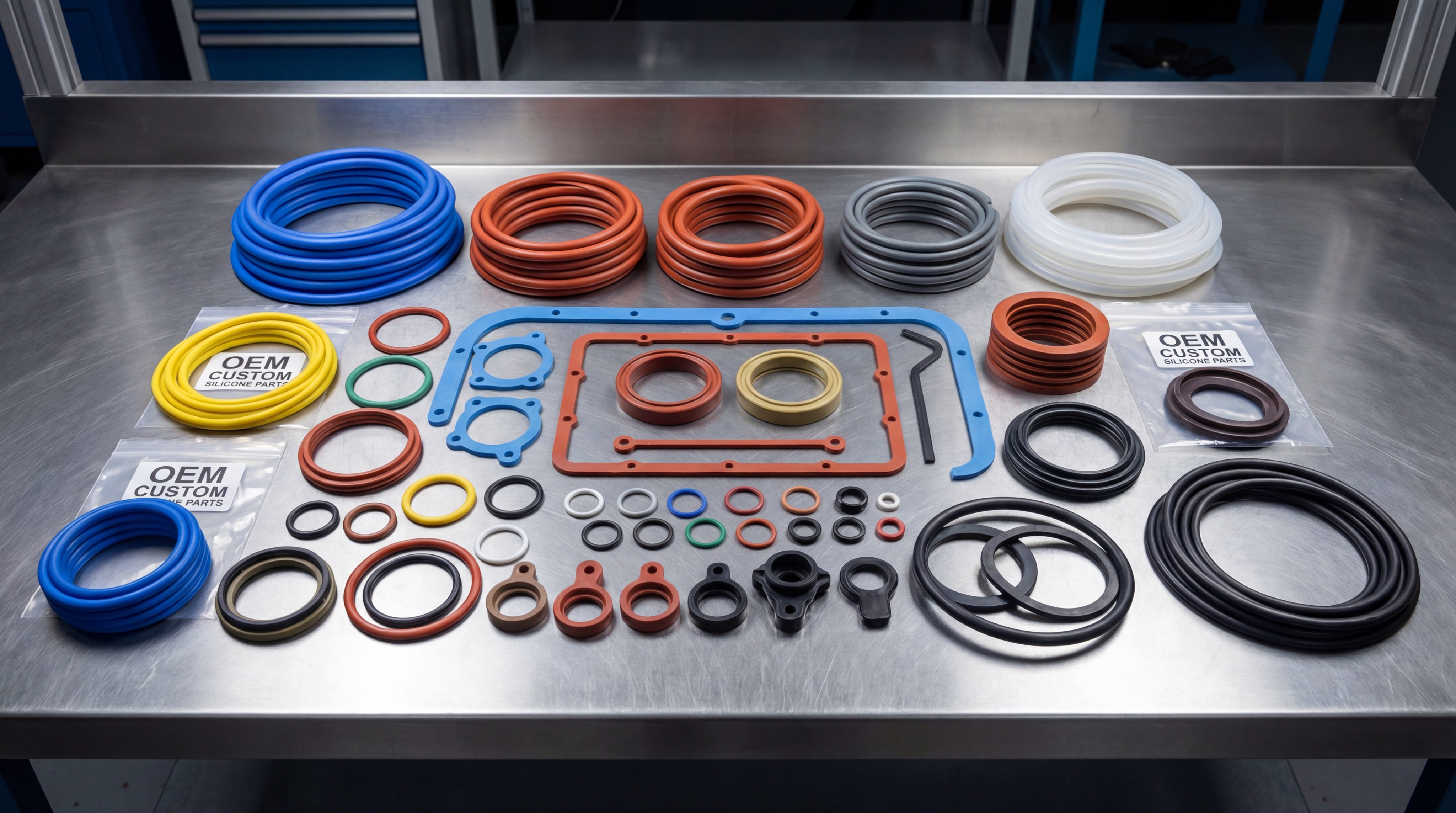
- BPA-free, non-toxic materials for infants.
- Sterilizable components for medical equipment.
- High-durability seals for automotive sensors.
But wait, there is more: many of these factories also offer assembly and retail packaging, making them a true one-stop-shop.
Key Takeaway: Specialized industry expertise ensures that your products comply with sector-specific safety and performance standards.
| Industry | Critical Requirement | Best Material |
|---|---|---|
| Medical | Biocompatibility (ISO 10993). | Medical-grade LSR. |
| Baby Care | Non-toxicity (FDA/LFGB). | Food-grade Silicone. |
| Automotive | Heat & Oil Resistance. | High-Consistency Rubber (HCR). |
Choosing a partner with industry-specific experience reduces your learning curve and speeds up market entry.
How Do You Select Your Long-Term Strategic Partner?
A long-term partner is defined by their willingness to scale with your brand and their transparency during production setbacks. Finalizing How to Choose a Reliable Silicone Manufacturer in China requires an evaluation of their project management style and their investment in future technologies. The right manufacturer doesn’t just fill orders; they act as an extension of your own engineering team.
Evaluating responsiveness and project management?
You need a partner who responds to inquiries within 24 hours and provides weekly status reports on your mold builds. Look for manufacturers that assign a dedicated account manager who understands both the technical and commercial aspects of your project.
- Quick response times for DFM and quotes.
- Proactive updates on production milestones.
- Willingness to invest in custom equipment for large projects.
Why does this matter? Strong communication and scalability are the foundations of a partnership that lasts for decades.
Key Takeaway: The best manufacturers act as strategic partners, offering technical advice and production scalability.
| Partner Attribute | Immediate Benefit | Long-Term Value |
|---|---|---|
| Technical Support | Faster R&D cycles. | Lower cost of innovation. |
| Scalability | No capacity bottlenecks. | Supports rapid brand growth. |
| Transparency | Less project stress. | Built-in supply chain trust. |
Choosing a partner is an investment in your company’s future; choose one that grows as you grow.
Strategic Selection for 2026 Success
In the rapidly evolving landscape of 2026, the success of your OEM or ODM project hinges on finding a manufacturer that balances technical mastery with absolute transparency. We solve the common pain points of quality drift and communication delays by providing in-house tooling, ISO-certified cleanrooms, and proactive DFM support. Whether you are launching medical-grade wearables or eco-friendly baby products, our team ensures your designs are optimized for mass production and global compliance.
We are committed to being more than just a vendor; we are your strategic engineering partner in China. By integrating material science with advanced automation, we help you bring innovative silicone solutions to market faster and with lower risk. Contact us today to start your project with a team dedicated to precision, safety, and your long-term growth.
Frequently Asked Questions (FAQ)
- Can I get a DFM review before I pay for tooling?
Yes, reliable manufacturers always provide a preliminary Design for Manufacturing (DFM) review to identify potential molding issues before you commit to tooling costs. - What is the best way to verify a factory’s certifications?
The best way is to ask for the certificate numbers and the name of the issuing body, then verify them directly on the official database of the certification agency (e.g., ISO or FDA). - Why is LSR molding more expensive than compression molding?
LSR molding requires more complex, automated injection machinery and high-precision steel molds, but it offers much lower labor costs and higher consistency for large-scale production. - How can I ensure my proprietary designs stay confidential?
You should always sign a bilingual (English/Chinese) Non-Disclosure Agreement (NDA) with the factory before sharing any sensitive CAD files or intellectual property. - What is a typical lead time for a new custom silicone product?
Typically, the process takes 3–5 days for DFM, 20–30 days for mold fabrication and sampling, and 10–15 days for mass production, depending on the complexity.