To choose a reliable Custom Silicone Products Manufacturer in China, you must evaluate their in-house tooling capabilities, material certifications, and industry-specific mass production experience. Sourcing from overseas is often a minefield of middlemen and inconsistent quality that can drain your budget. If you pick the wrong supplier, you risk devastating project delays and product recalls that damage your brand reputation. By following a structured vetting process, you can secure a stable supply chain and launch your product with confidence.
Why is factory capability a top priority?
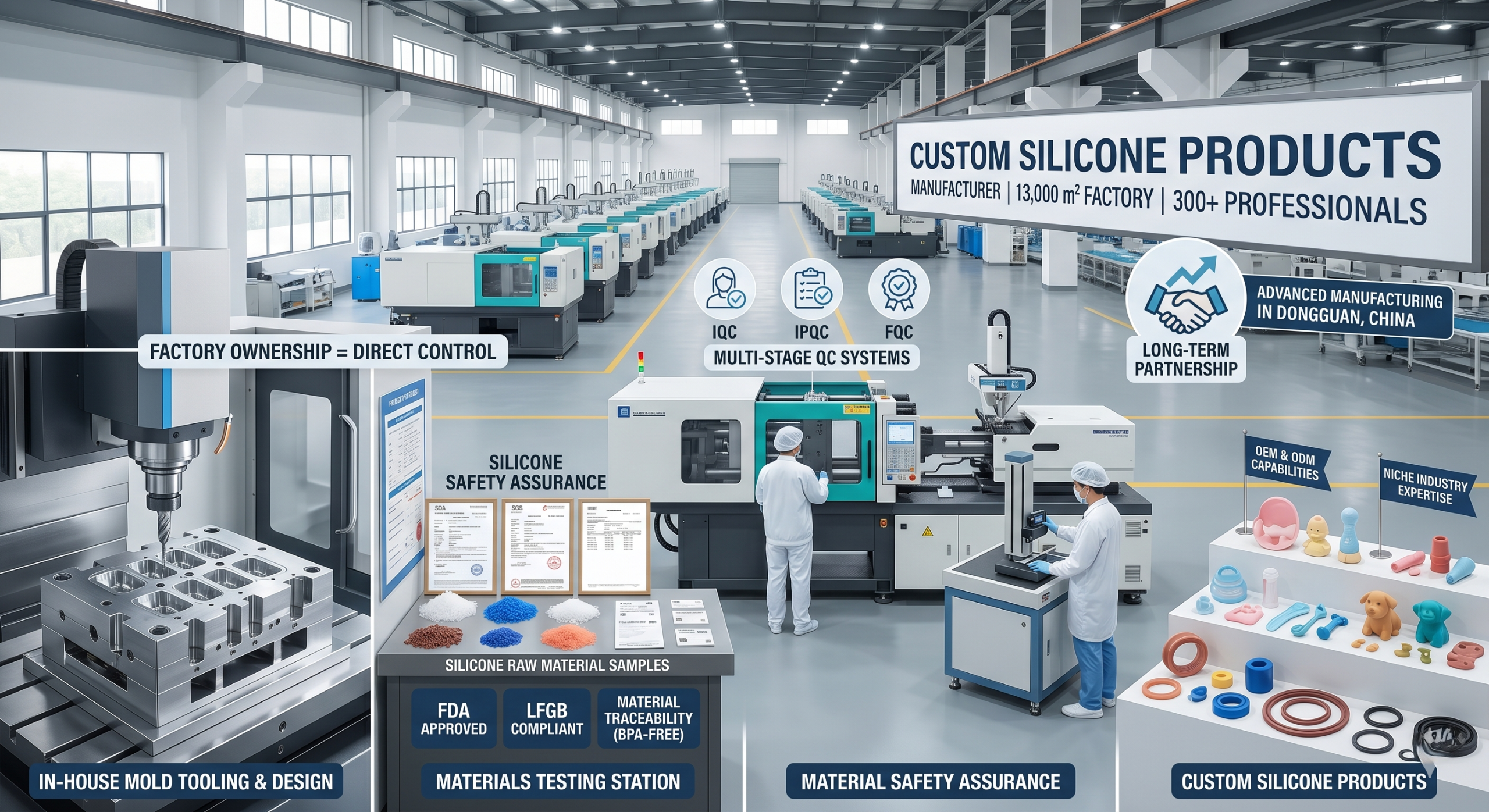
A professional Custom Silicone Products Manufacturer should own its production facility and equipment to ensure direct control over every manufacturing stage. Working with a middleman often leads to hidden costs and communication gaps that slow down your project.
Assessing the manufacturing floor
Think about it: how can you trust a supplier who doesn’t show you where the work happens? You should look for a facility like our 13,000 m² factory in Dongguan that houses high-precision machinery.
- LSR (Liquid Silicone Rubber) injection units.
- Advanced compression molding presses.
- In-house mixing and compounding areas.
- Cleanroom environments for medical parts.
Verifying facility scale and staff
Now let’s dive deeper into the operational scale needed for mass production. A reliable factory typically employs over 300 professionals to manage multi-shift production and quality checks.
- Dedicated engineering teams for DFM.
- Skilled operators for secondary operations.
- Logistics staff for global export.
The following table summarizes the core facility requirements for high-volume silicone production.
| Facility Requirement | Standard Benchmark | Buyer Benefit |
|---|---|---|
| Total Area | 10,000+ Square Meters | Scalability for large orders |
| Employee Count | 200 – 500 Staff | Specialized labor division |
| Machinery Type | LSR & Compression | Process versatility |
Key Takeaway: Physical facility ownership is the only way to guarantee that your technical specifications are followed without unauthorized third-party outsourcing.
Is the Custom Silicone Products Manufacturer experienced?
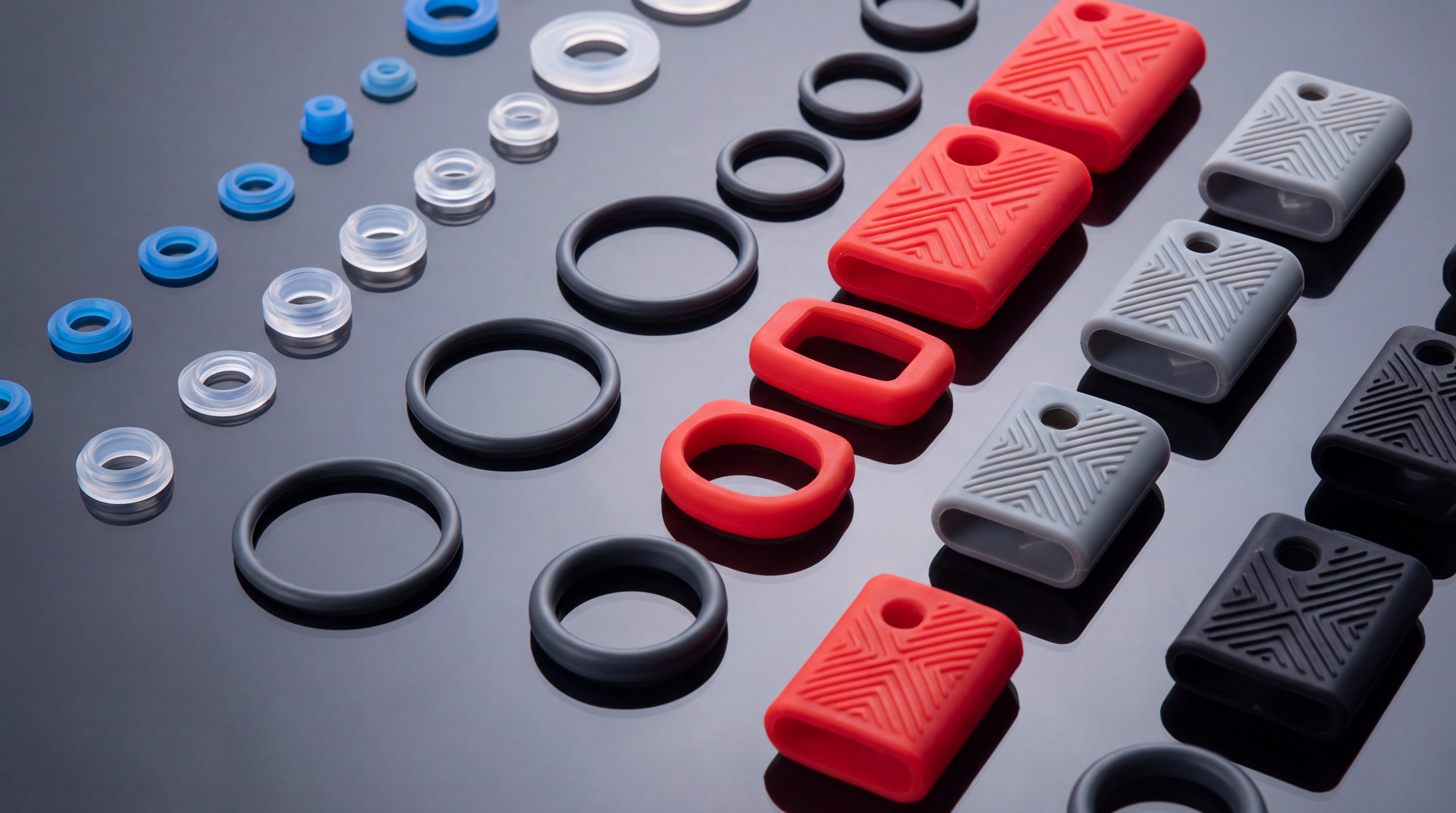
Every Custom Silicone Products Manufacturer you interview should demonstrate a proven track record in your specific industry to avoid beginner mistakes. Experience ensures that the factory understands the unique stress points and performance requirements of your product category.
Reviewing OEM and ODM portfolios
But here is the kicker: many factories can copy a design, but few can optimize it. You need a partner that offers both Original Equipment Manufacturing and Original Design Manufacturing support.
- Historical cases in medical or baby care.
- Complex overmolding project examples.
- Experience with multi-material bonding.
Evaluating engineering depth
Wait, there is more than just looking at photos; you need to see their technical problem-solving skills. An experienced team will provide DFM suggestions that reduce material waste and cycle times.
- Wall thickness optimization advice.
- Parting line placement strategies.
- Gating system design for LSR.
Analyze the experience levels based on project complexity in the table below.
| Experience Level | Service Type | Outcome for You |
|---|---|---|
| Novice | Standard Copying | High risk of design flaws |
| Expert | Full OEM Support | Accurate realization of prints |
| Strategic Partner | ODM & DFM | Optimized cost and performance |
Key Takeaway: Industry-specific experience allows the manufacturer to anticipate production hurdles before they result in expensive scrap or rework.
How do you verify material safety standards?
A reputable Custom Silicone Products Manufacturer must provide full traceability for all raw materials used in your project to ensure user safety. This is especially critical for products intended for food contact, medical use, or skin-sensitive applications.
Checking food-grade and medical compliance
Truth be told: if a supplier cannot provide a material test report, you should walk away immediately. You must insist on documented evidence that the silicone is free from BPA and harmful contaminants.
- FDA (US) food-safe certification.
- LFGB (European) compliance reports.
- Medical-grade biocompatibility testing.
- RoHS and REACH environmental standards.
Ensuring material traceability
Now, let’s look at how the factory manages its internal material supply chain. A professional manufacturer keeps batch records for every order to track raw material performance across time.
- Incoming inspection reports (IQC).
- Batch-specific material data sheets.
- Certified supplier audit records.
The table below outlines the critical certifications required for various silicone product categories.
| Industry | Required Certification | Safety Impact |
|---|---|---|
| Mother & Baby | FDA / BPA-Free | Non-toxic for infants |
| Medical | ISO 13485 / Biocompatible | Safe for clinical use |
| Industrial | RoHS / REACH | Environmental compliance |
Key Takeaway: Never settle for verbal promises regarding safety; always demand third-party lab reports that match the batch number of your production run.
Why choose a manufacturer with in-house molds?
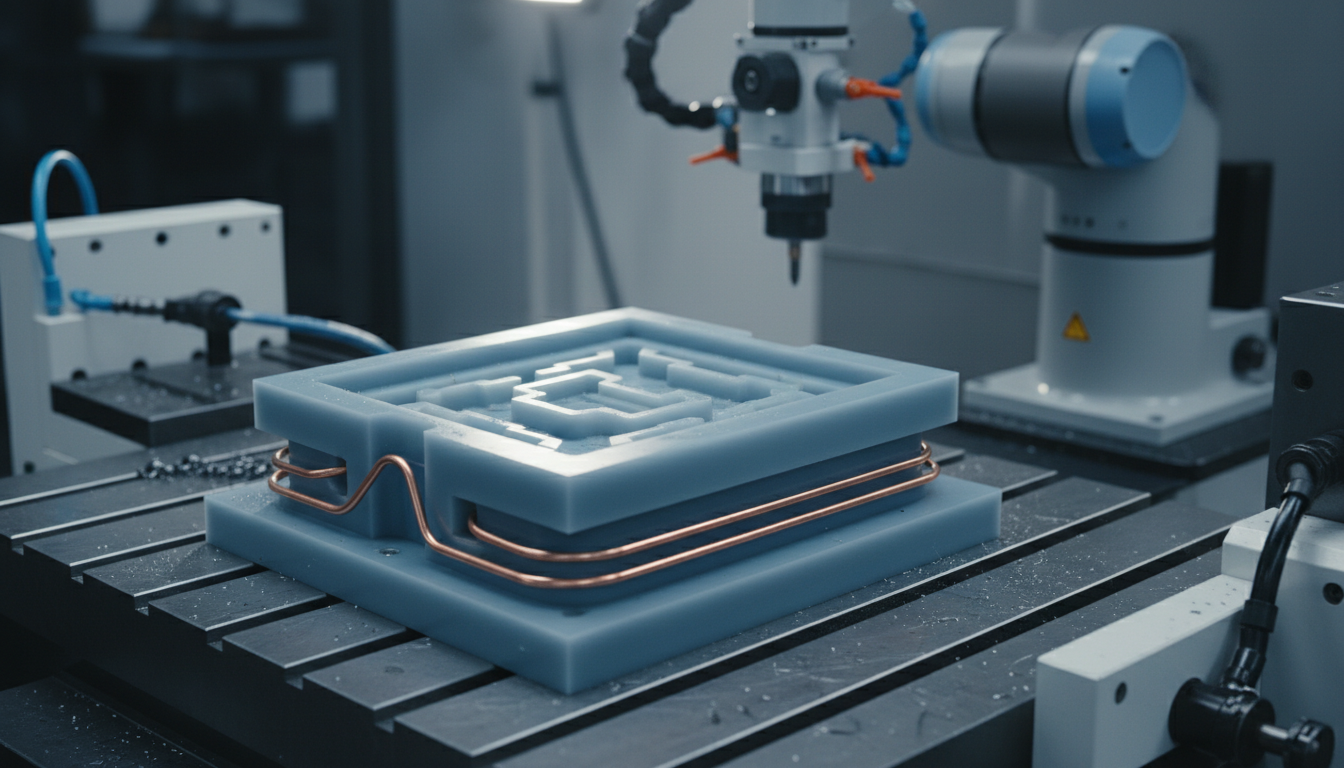
Choosing a Custom Silicone Products Manufacturer with in-house capabilities for tooling design and fabrication is the most effective way to protect your project timeline. When the mold is made under the same roof as production, communication errors are virtually eliminated.
Speeding up the development cycle
Think about it: why wait for two separate companies to coordinate when you can get it all in one place? In-house mold making allows for rapid iterations and immediate corrections during the sampling phase.
- CNC machining for precision tools.
- EDM (Electrical Discharge Machining).
- Mold testing on-site.
- Immediate repair and maintenance.
Controlling tooling costs and quality
But here is the kicker: outsourcing molds often results in a 20-30% markup that you shouldn’t have to pay. Managing the mold quality directly ensures that the steel grade and cavity finish meet your longevity expectations.
- Choice of P20, S136, or NAK80 steel.
- Precision tolerance management.
- Optimization for LSR injection.
The comparison table below highlights the advantages of internal tooling versus third-party outsourcing.
| Tooling Source | Lead Time | Cost Efficiency | Quality Oversight |
|---|---|---|---|
| Internal Factory | 15-25 Days | High (No markup) | Direct & Real-time |
| External Vendor | 30-45 Days | Low (Agent fees) | Second-hand updates |
Key Takeaway: In-house tooling is a hallmark of a high-tier manufacturer, providing faster market entry and tighter control over part dimensions.
What quality control systems are in place?
A world-class Custom Silicone Products Manufacturer does not treat quality as an afterthought but embeds it into every single step of the workflow. You need to see a multi-stage inspection process that starts before the machines even turn on.
Understanding the three-stage QC process
Wait, there is more to quality than just a final check at the end. A reliable system uses a proactive approach to catch defects before they multiply across a bulk order.
- IQC: Verification of raw materials.
- IPQC: Hourly patrol inspections during molding.
- FQC/OQC: Final visual and functional testing.
Utilizing advanced inspection technology
Now let’s dive deeper into the tools they use to maintain consistency. Modern factories use automated systems to eliminate human error during the inspection process.
- CCD visual inspection for surface flaws.
- Tensile testers for material strength.
- Dimensional measurement via 2.5D projectors.
- Waterproof testing for sealed components.
The following data summarizes the key inspection stages used to ensure zero-defect delivery.
| QC Stage | Critical Activity | Primary Goal |
|---|---|---|
| In-Process | First-article approval | Process stability |
| Secondary | Manual trimming & deflashing | Aesthetic perfection |
| Final | 100% visual inspection | Customer satisfaction |
Key Takeaway: Rigorous QC systems are your insurance policy against the high costs of receiving defective inventory or handling customer returns.
Is the manufacturer niche-focused?
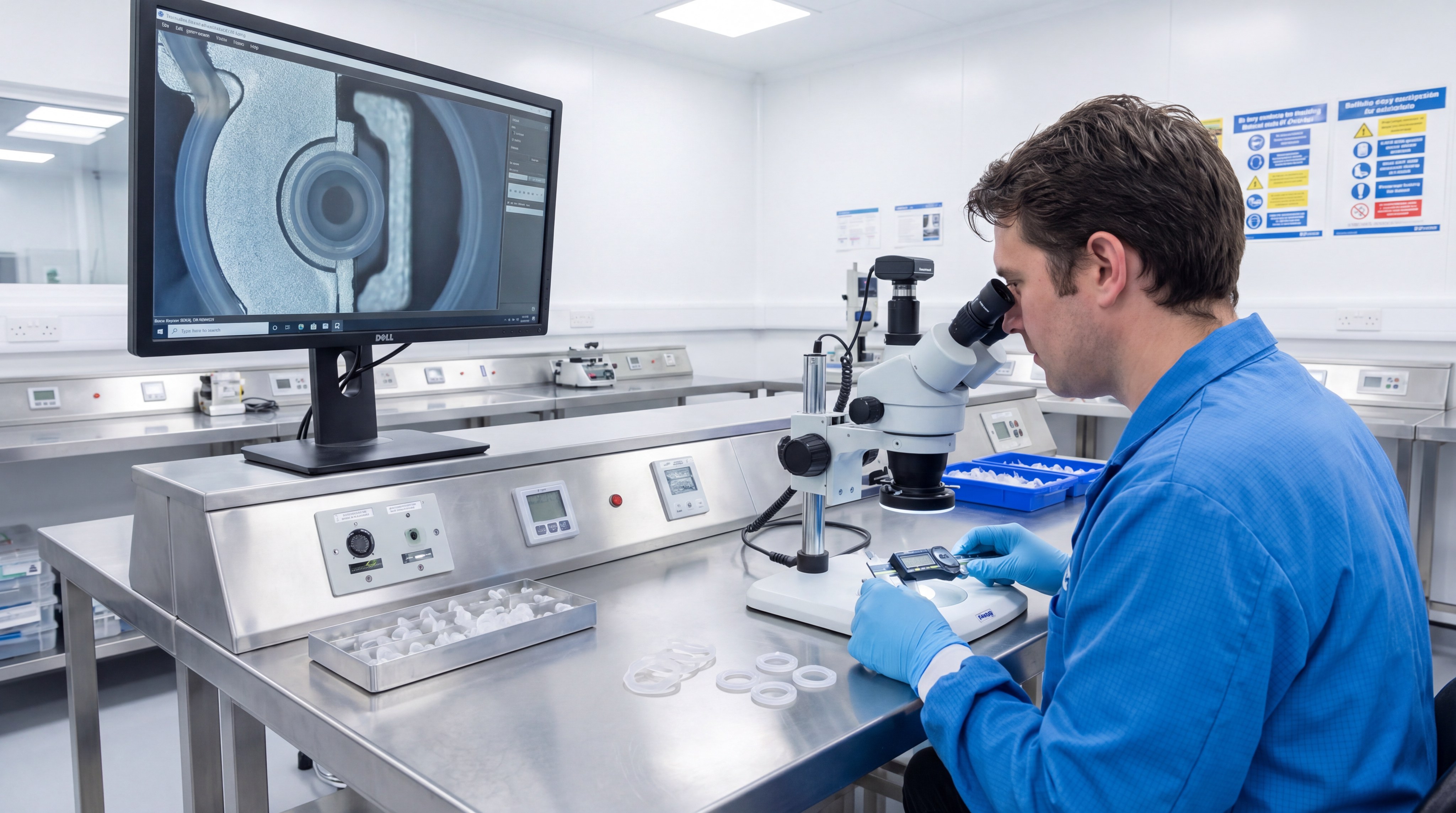
Working with a Custom Silicone Products Manufacturer that specializes in pet products or medical parts ensures they understand the specific failure modes of your niche. Generalist factories often struggle with the nuanced requirements of specialized industries.
Mastering industry-specific challenges
Think about it: a factory making industrial gaskets might not understand the surface finish requirements of a high-end wearable. Specialized manufacturers have already solved the problems you are likely to face.
- Bite resistance for pet accessories.
- Skin-safe textures for wearables.
- Precision acoustics for audio parts.
- Chemical resistance for e-cigarettes.
Scaling within a specific category
Wait, there is more: niche focus often leads to better material pricing through bulk purchasing within that category. It also means their production lines are already optimized for your product’s shape and size.
- Standardized jigs and fixtures.
- Optimized packaging solutions.
- Streamlined assembly workflows.
This table illustrates how niche focus translates to specific manufacturing advantages.
| Niche Sector | Core Focus | Specialized Machine |
|---|---|---|
| Acoustics | Tight tolerances | Precision LSR |
| Consumer | Visual aesthetics | Compression Molding |
| Medical | High purity | Cleanroom LSR |
Key Takeaway: Choosing a manufacturer with a portfolio in your exact niche reduces the learning curve and results in a more “retail-ready” product.
How critical is communication and follow-up?
The success of your project with a Custom Silicone Products Manufacturer depends heavily on the speed and clarity of their communication. Technical details can easily be lost in translation, leading to expensive tooling mistakes.
Bridging the language and technical gap
But here is the kicker: a “yes” from a supplier doesn’t always mean they understood your requirement. You need an English-speaking project management team that can translate your business needs into technical manufacturing instructions.
- Dedicated account managers.
- Weekly progress reports with photos.
- Transparent lead time updates.
- Instant chat for quick queries.
Speed of technical feedback
Now let’s dive deeper into the importance of early-stage responsiveness. A professional manufacturer should provide initial feedback on your design within 24 to 48 hours.
- Rapid DFM review and quotation.
- Material selection guidance.
- Mold structure recommendations.
Communication metrics that define a professional supplier are listed in the table below.
| Metric | Industry Standard | Excellence Level |
|---|---|---|
| Quote Turnaround | 3-5 Business Days | 24 Hours |
| DFM Feedback | 5 Business Days | 48 Hours |
| Project Status | Bi-weekly | Real-time / Daily |
Key Takeaway: Fast, accurate communication is a strong indicator of a factory’s internal organization and their commitment to your project’s success.
Why is total project value better than low price?
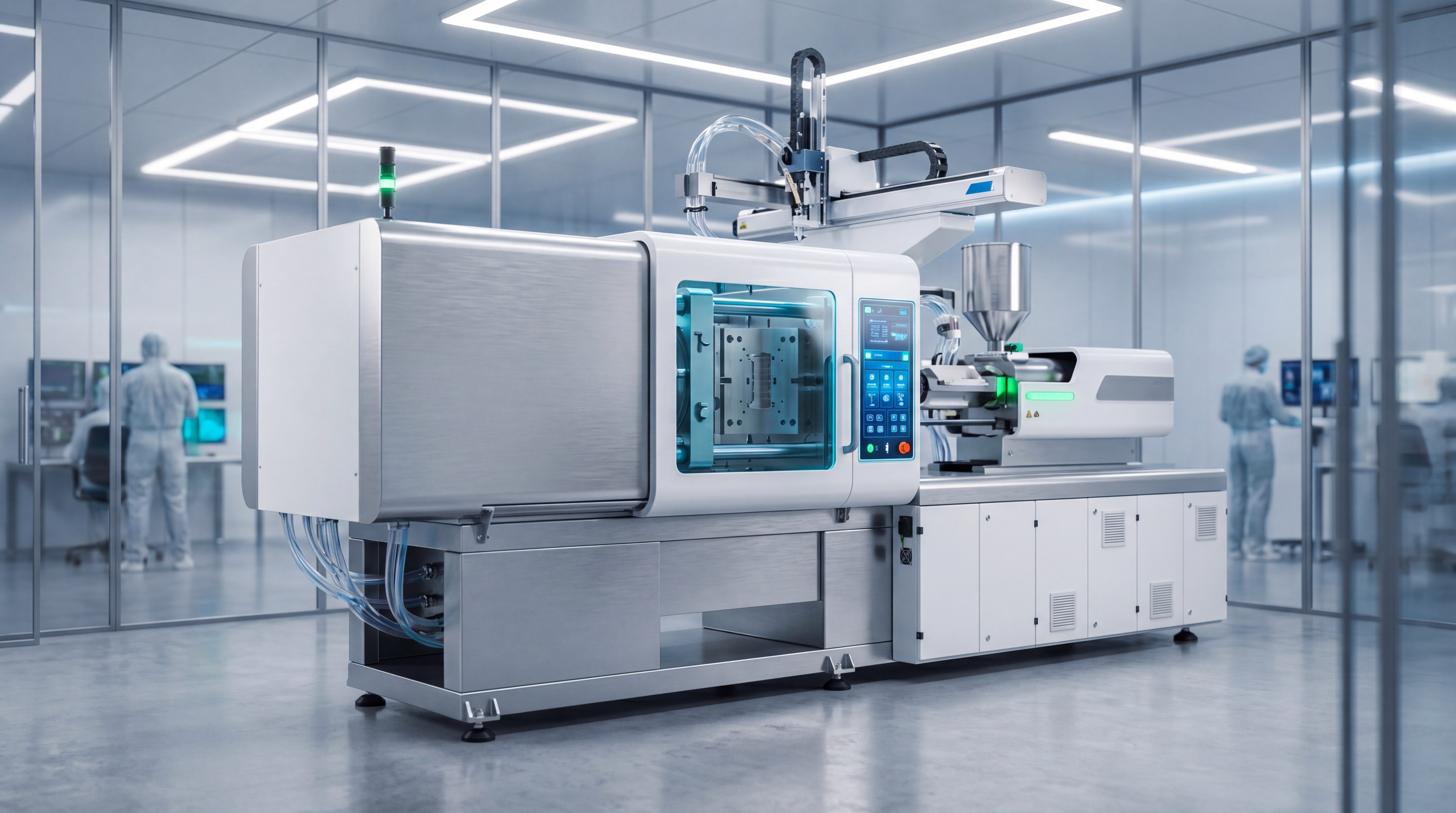
When vetting a Custom Silicone Products Manufacturer, you must look beyond the initial unit price and evaluate the quality control standards and long-term durability. The cheapest quote often leads to the highest total cost once you factor in defects and shipping delays.
Calculating the hidden costs of cheap production
Think about it: what is the true cost of a $1.00 part if 10% of them are unusable? Low-cost manufacturers often save money by using recycled silicone or skipping essential curing steps.
- High scrap rates during assembly.
- Poor surface durability and fading.
- Expensive air-freight costs due to delays.
- Damage caused by inadequate packaging.
Investing in reliability and compliance
But here is the kicker: professional manufacturers include value-added services in their pricing that protect your investment. These services ensure your product arrives ready for the shelf without extra processing.
- One-stop export documentation.
- Secondary spray coating and printing.
- Assembly and custom retail packaging.
The table below breaks down the difference between “Price” and “Value” in silicone manufacturing.
| Cost Factor | Cheap Supplier | Value-Driven Factory |
|---|---|---|
| Material | Recycled/Low grade | 100% Virgin/Certified |
| Defect Rate | 5% – 8% | < 0.5% |
| Packaging | Bulk/Unprotected | Customized/Retail-ready |
Key Takeaway: Prioritizing total project value ensures a lower cost-per-sale and builds a more sustainable, profitable brand.
Can I request samples before mass production?
You should never commit to mass production with a Custom Silicone Products Manufacturer without first validating a physical sample. This phase is your final opportunity to verify the fit, feel, and function of the silicone part.
Utilizing different sampling methods
Wait, there is more than just one way to get a sample before the final mold is cut. Depending on your budget and timeline, you can choose a method that matches your current development stage.
- 3D printed prototypes for shape checks.
- CNC machined samples in actual material.
- Rapid prototype molds for material testing.
- Full production samples from the final tool.
Validating the manufacturer’s performance
Now let’s dive deeper into what the sample actually tells you about the factory. The quality of the sample is the best indicator of the quality you will receive in a bulk order of 100,000 units.
- Surface texture and color matching.
- Parting line visibility and flash control.
- Packaging quality and labeling accuracy.
Review the sampling options and their purposes in the summary table below.
| Sample Type | Primary Purpose | Lead Time |
|---|---|---|
| 3D Print | Geometry & Scale check | 2-3 Days |
| CNC Sample | Hand-feel & Material test | 5-7 Days |
| Mold Sample | Final production approval | 15-20 Days |
Key Takeaway: Sampling is an essential risk-management step that prevents the nightmare of discovering a design flaw after the bulk order has shipped.
Why seek a long-term manufacturing partner?
A professional Custom Silicone Products Manufacturer is not just a vendor; they should be an extension of your own team. Learning about us and our long-term partnership approach will show you how we help brands scale from zero to millions.
Scaling your production capacity
Think about it: what happens to your brand if you suddenly need ten times the volume next month? A long-term partner has the facility size and financial stability to reserve capacity for your growth.
- Priority scheduling for repeat orders.
- Warehousing and inventory management.
- Support for multi-cavity mold upgrades.
Continuous improvement and R&D
But here is the kicker: the best manufacturers will help you innovate for your next product launch. They stay updated on the latest silicone technologies and share these insights with their loyal partners.
- Shared research on new coatings.
- Collaborative design for v2.0 products.
- Long-term cost-reduction roadmaps.
The following table summarizes the strategic benefits of a long-term manufacturing partnership.
| Partnership Phase | Major Benefit | Financial Impact |
|---|---|---|
| Year 1 | Quality Stabilization | Reduced defect costs |
| Year 2-3 | Process Optimization | Lower unit pricing |
| Year 5+ | Strategic Joint R&D | Exclusive market innovation |
Key Takeaway: A stable, long-term partnership eliminates the repetitive “hidden costs” of vetting and onboarding new suppliers every season.
Frequently Asked Questions
Can I get a mold design review before I pay?
Yes, most top-tier manufacturers will provide a preliminary DFM (Design for Manufacturing) review once they receive your 3D files. This ensures that the part is actually moldable and identifies potential cost-saving changes before you commit to tooling.
What is the best way to handle shipping from China?
The best way is to work with a manufacturer that offers “Ex-works” to “DDP” services. A reliable factory will have a network of logistics partners who handle the customs, duties, and final delivery to your warehouse.
Can I customize the packaging for retail?
Absolutely. Professional factories offer full assembly and secondary packaging services. They can source everything from eco-friendly paper boxes to plastic blister packs so your products arrive “shelf-ready.”
What is the typical MOQ for custom silicone products?
MOQ (Minimum Order Quantity) varies depending on the product size and manufacturing process. Generally, compression molding allows for lower MOQs (500-1,000 pcs), while LSR injection often requires higher volumes (3,000+ pcs) to offset setup costs.
How do I protect my intellectual property (IP)?
You should always sign an NNN (Non-disclosure, Non-use, Non-circumvention) agreement before sharing sensitive 3D drawings. Reliable manufacturers in China are accustomed to these agreements and value their long-term reputation over stealing a single design.
If you are looking for a precision manufacturing partner with 15+ years of experience and a 13,000 m² ISO-certified facility, contact us today to receive a professional DFM review for your next silicone project.