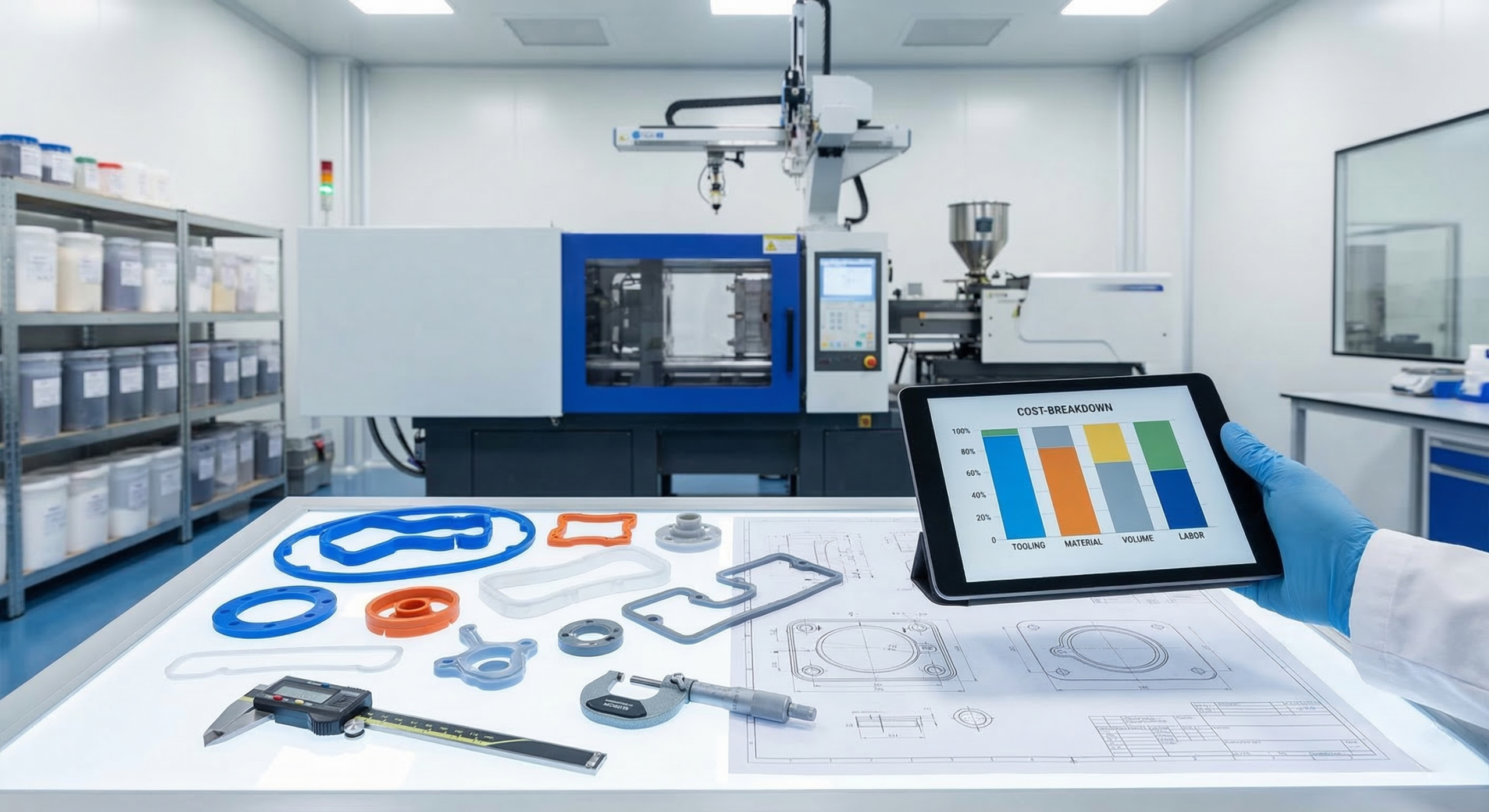
Custom silicone molding typically costs between $1,500 and $5,000 for simple prototypes, while high-precision production tooling can range from $10,000 to over $50,000 depending on complexity. Many engineers face the frustration of receiving high quotes that stall projects before they even begin. Without a clear breakdown of expenses, you risk overpaying for features you don’t need or choosing cheap methods that compromise part integrity. Understanding the custom silicone molding for gaskets cost allows you to balance quality and budget effectively from the start.
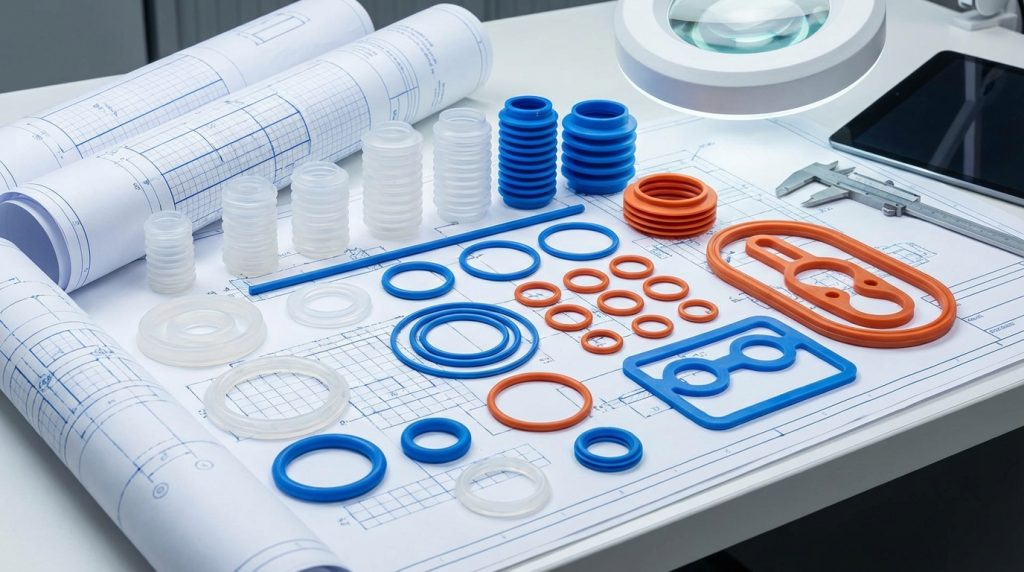
[Image: custom silicone molding parts showcase index 4.jpeg]
What is the custom silicone molding for gaskets cost?
The cost for custom silicone molding is determined by a combination of one-time tooling fees and the recurring price per unit produced. For most commercial projects, you can expect tooling to start at a few thousand dollars, while unit prices fluctuate based on material weight and cycle time. Calculating the custom silicone molding for gaskets cost early in the design phase helps you avoid expensive pivots later.
What is the average price for production runs?
Production runs involve higher volumes, where the initial tooling cost is amortized over thousands of parts. Here’s the deal: while the upfront investment is higher, your cost per gasket drops significantly as you scale.
- High-volume runs often see unit prices below $0.50.
- Tooling for production is built to last for hundreds of thousands of cycles.
- Multi-cavity molds are essential for lowering these production expenses.
How do unit prices vary with order volume?
Unit prices are highly sensitive to how many gaskets you order at one time. Think about it: a setup that takes three hours costs the same whether you make ten parts or ten thousand.
Key Takeaway: Balancing your initial tooling investment against your projected annual volume is the most effective way to manage your total project expenditure.
| Volume Tier | Tooling Cost Est. | Unit Price Est. |
|---|---|---|
| Prototype (10-100) | $1,500 – $3,500 | $5.00 – $15.00 |
| Mid-Volume (1k-10k) | $5,000 – $15,000 | $1.00 – $3.00 |
| High-Volume (50k+) | $20,000+ | $0.10 – $0.80 |
This data illustrates how increasing order size dramatically shifts the financial burden from unit price to initial tooling.
Why do production silicone molds have high upfront costs?
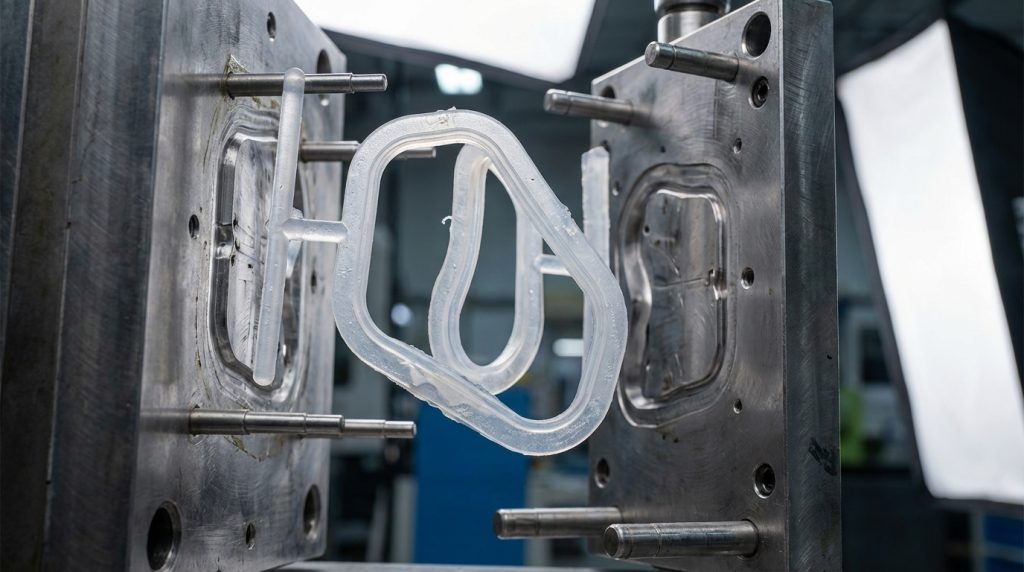
Production molds require a significant upfront investment because they are engineered from hardened steel to withstand extreme pressure and heat over long periods. When you evaluate the custom silicone molding for gaskets cost, you are paying for the durability and precision that only high-grade tooling can provide. These molds ensure that your gaskets remain within tight tolerances even after 100,000 injection cycles.
Does the choice of steel impact the price?
The type of metal used for the mold cavity is a primary driver of the initial quote. Using P20 or H13 steel ensures that the mold doesn’t warp or wear down during high-heat silicone injection.
- P20 steel is common for mid-range production life.
- H13 hardened steel is the gold standard for high-volume reliability.
- Stainless steel is used for medical applications to prevent corrosion.
How does precision CNC machining add value?
High-precision machining is required to create the intricate sealing surfaces necessary for leak-proof gaskets. But wait, there’s more: the level of detail in the mold directly correlates to how much hand-finishing is needed later.
Key Takeaway: Investing in high-quality steel and precision machining prevents the mold from failing prematurely, which saves you from paying for a second mold later.
| Material Type | Durability (Cycles) | Cost Impact |
|---|---|---|
| Aluminum | 500 – 5,000 | Low |
| P20 Steel | 50,000 – 100,000 | Medium |
| Hardened H13 | 500,000+ | High |
The choice of mold material is the single most important factor in determining the longevity and total ROI of your production tooling.
How does design complexity affect your project budget?
Design complexity increases the budget because intricate features require more advanced mold mechanisms and longer machining time for the tool itself. Adding features like undercuts or internal threads will naturally raise the custom silicone molding for gaskets cost due to the extra labor involved. Simplified designs often lead to faster cycle times and lower overall manufacturing expenses.
Do undercuts and threads increase expenses?
Features that prevent a part from being pulled straight out of a mold require “actions” or “slides.” Here is the deal: these moving parts in the mold increase the complexity and the likelihood of maintenance.
- Simple open-and-shut molds are the cheapest to build.
- Hand-loaded inserts can reduce mold costs but increase labor price per part.
- Automatic slides increase mold costs but lower unit prices for high volume.
How do wall thickness and tolerances play a role?
Thin walls and extremely tight tolerances require the mold to be machined to much higher standards. Think about it: if your gasket requires a +/- 0.005″ tolerance, the mold must be even more precise, which takes more time to verify and calibrate.
Key Takeaway: Reviewing your design for simplicity before starting the tooling process can save you thousands of dollars in unnecessary mold complexity.
| Feature Type | Complexity Level | Cost Increase |
|---|---|---|
| Simple Flat Gasket | Low | 0% |
| Internal Undercuts | High | 25% – 40% |
| Extreme Tolerances | Very High | 15% – 30% |
Reducing complexity through smart design is the fastest way to bring your project costs back in line with your budget.
What are the different types of silicone molding processes?
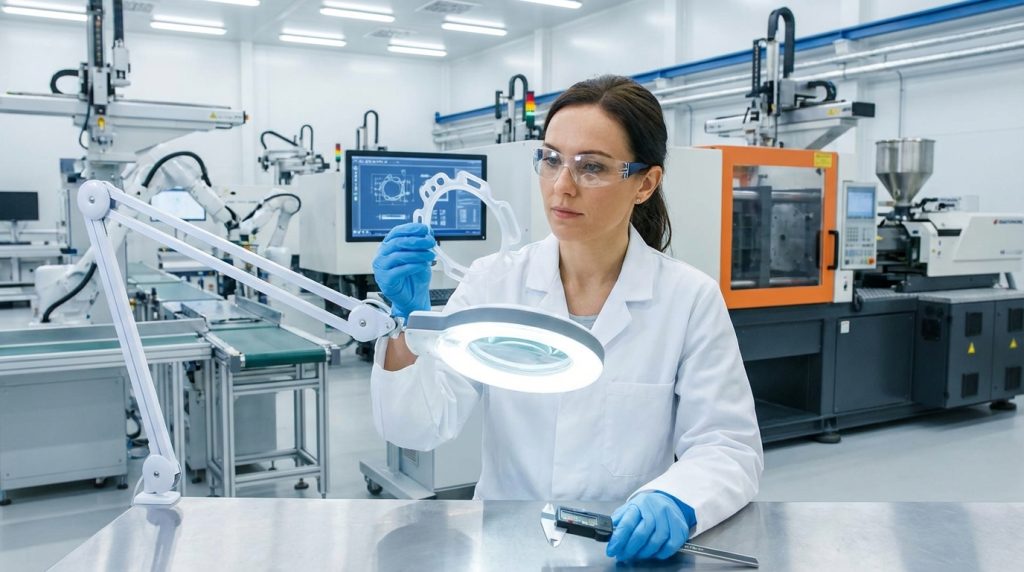
The molding process you choose, such as Liquid Silicone Rubber (LSR) or compression molding, fundamentally changes your budget structure. Each method influences the custom silicone molding for gaskets cost by dictating how quickly parts are made and how much material is wasted. Choosing the wrong process for your volume can lead to massive inefficiencies in your spending.
Is Liquid Silicone Rubber (LSR) more expensive?
LSR injection molding typically has the highest tooling cost but offers the lowest unit cost for high-volume orders. But wait, there’s more: it is a highly automated process that results in very little human intervention and high consistency.
- LSR tools require precision cold runner systems.
- Cycle times for LSR are much faster than compression molding.
- It is the preferred method for complex medical and automotive gaskets.
How does compression molding lower initial costs?
Compression molding is often the best choice for large, simple gaskets or low-volume production runs. Here’s the deal: the tooling is much simpler and cheaper to manufacture, though the labor per part is higher.
Key Takeaway: Use compression molding for large parts or low volumes to save on tooling, and switch to LSR for high-volume precision parts.
| Process Type | Tooling Cost | Speed | Best For |
|---|---|---|---|
| Compression | $1,500 – $5,000 | Slow | Large/Simple Parts |
| LSR Injection | $10,000 – $40,000 | Fast | High Volume/Precision |
| Overmolding | $15,000+ | Medium | Complex Assemblies |
The process choice should always be driven by your total volume requirements and part complexity rather than tooling price alone.
Which factors influence custom silicone molding for gaskets cost?
Beyond the mold and the process, factors like the size of the gasket and specific sealing requirements play a major role in your final invoice. Every gram of material and every second added to the cooling cycle affects the custom silicone molding for gaskets cost in a tangible way. Understanding these variables allows you to make informed trade-offs during the engineering phase.
How does gasket size affect material usage?
The physical dimensions of your gasket dictate how much raw silicone is consumed per shot. Think about it: a large perimeter seal for an enclosure uses significantly more material than a small O-ring, which impacts the unit price.
- Larger parts require larger molds and bigger molding machines.
- Material waste (flash) is usually higher on larger parts.
- Part nesting in the mold is harder with large geometries.
Why do sealing requirements change the price?
Gaskets designed for high-pressure or chemical-resistant environments may require specialized silicone formulations. Here’s the deal: these high-performance materials are more expensive to buy and often harder to process.
Key Takeaway: Optimize your part dimensions and sealing specs to only what is necessary for the application to keep material costs under control.
| Factor | Impact on Cost | Why? |
|---|---|---|
| Part Weight | High | Direct material cost per part. |
| Surface Finish | Medium | Polishing time for the mold. |
| Flash Tolerance | Medium | Labor for manual or cryogenic deflashing. |
Focusing on these three variables during design can lead to significant savings without sacrificing the functional performance of the gasket.
How do material grades impact the final pricing?
The grade of silicone you select can change your material costs by 20% to 200%, depending on the certifications required. When calculating the custom silicone molding for gaskets cost, you must decide if your application truly requires premium grades like medical-grade or fluorosilicone. Standard industrial grades are significantly more affordable for general-purpose sealing applications.
Is medical grade silicone worth the extra cost?
Medical grade silicone is necessary for biocompatibility but carries a high price tag due to cleanroom manufacturing and strict testing requirements. But wait, there’s more: the raw material itself is subject to rigorous quality control that increases the supplier’s overhead.
- Class VI silicone is mandatory for many healthcare devices.
- It requires validated manufacturing processes.
- The material is often processed in ISO-certified cleanrooms.
What is the price gap for food grade materials?
Food-grade silicone must comply with FDA regulations to ensure it doesn’t leach harmful chemicals. Here’s the deal: while cheaper than medical grade, it is still more expensive than standard industrial silicone.
Key Takeaway: Always specify the lowest grade of material that safely meets your regulatory requirements to avoid over-engineering your budget.
| Silicone Grade | Typical Cost | Common Use |
|---|---|---|
| Industrial | Lowest | General seals, gaskets. |
| Food Grade (FDA) | Moderate | Kitchenware, food processing. |
| Medical Grade | Highest | Implants, surgical tools. |
The gap between industrial and medical grade silicone is substantial, making material selection a critical financial decision.
What is the difference between prototype and production molds?
Prototype molds are designed for speed and learning, while production molds are designed for efficiency and long-term output. This distinction is the primary reason why the custom silicone molding for gaskets cost can vary so wildly between two different quotes. You shouldn’t invest in a $20,000 steel mold until you have verified your design with a cheaper prototype tool.
When is RTV silicone casting the better choice?
For extremely low quantities, Room Temperature Vulcanization (RTV) casting allows you to skip expensive metal tooling entirely. Think about it: you can get parts in days instead of weeks, though the parts won’t be as durable as molded ones.
- Best for 1 to 50 parts for fit-and-function testing.
- Uses 3D printed or machined masters.
- Lower upfront cost but much higher unit price.
How long do hardened steel molds last?
Hardened steel molds are built to last for the lifetime of your product. Here’s the deal: if you plan to produce 100,000 gaskets over five years, the high initial cost of a steel mold is the most economical path.
Key Takeaway: Use aluminum or RTV tooling for the validation phase and switch to hardened steel only when the design is frozen and volume is high.
| Mold Type | Build Time | Lifetime | Best For |
|---|---|---|---|
| RTV Casting | 3-5 Days | 25 parts | Rapid Prototyping |
| Aluminum Tool | 2-3 Weeks | 5,000 parts | Bridge Production |
| Steel Tool | 4-8 Weeks | 500,000+ parts | Mass Production |
Selecting the right tool for the current stage of your product lifecycle ensures you aren’t wasting capital on unnecessary durability.
Why is the number of mold cavities a critical cost driver?
The number of cavities refers to how many parts the mold produces in a single “shot” or cycle. While adding cavities increases the custom silicone molding for gaskets cost upfront, it is the most effective way to slash your per-unit price. If you are ordering 100,000 gaskets, a 16-cavity mold will pay for itself in labor savings almost immediately.
How do multi-cavity molds lower unit costs?
Each time the molding machine cycles, it costs a specific amount in electricity and labor. But wait, there’s more: if that cycle produces eight parts instead of one, your labor cost per part is essentially divided by eight.
- Reduces the machine time needed for the total order.
- Maximizes the efficiency of the raw material injection.
- Lowers the overhead costs associated with each production run.
When should you stick to single-cavity tooling?
Single-cavity tools are ideal for large parts or when you are still in the market-testing phase. Here’s the deal: you don’t want to pay for a 4-cavity mold if you only need 500 parts per year.
Key Takeaway: Multi-cavity tooling is an investment in efficiency; use it only when your projected volume justifies the higher initial tool price.
| Cavity Count | Tooling Cost | Unit Labor Cost | Recommended Volume |
|---|---|---|---|
| 1-Cavity | $3,000 | 100% | < 1,000 units |
| 4-Cavity | $8,500 | 30% | 1,000 – 10,000 units |
| 16-Cavity | $25,000+ | 10% | > 50,000 units |
Expanding the number of cavities is the most powerful lever you have for reducing long-term production costs in high-volume scenarios.
How can you reduce your custom silicone manufacturing expenses?
Reducing expenses requires a proactive approach to Design for Manufacturability (DFM) and strategic ordering. By optimizing your design and consolidating your demand, you can significantly lower the custom silicone molding for gaskets cost without losing part quality. Working closely with your manufacturer early on often reveals hidden savings that aren’t obvious on a standard blueprint.
Can DFM reviews lower your initial quote?
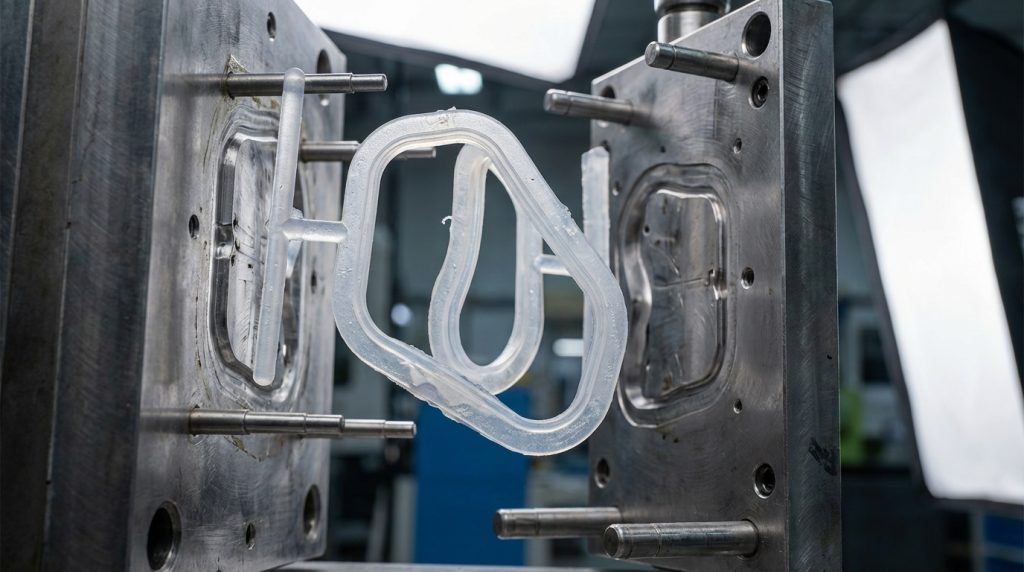
A DFM review is where the manufacturer looks for ways to make your part easier to mold. Think about it: a small change in draft angle or wall thickness can sometimes eliminate the need for a complex mold action.
- Simplifies the machining of the mold.
- Reduces the risk of part defects like bubbles or tearing.
- Shortens the cooling time required for each cycle.
How does volume ordering impact ROI?
Ordering a year’s worth of gaskets at once instead of quarterly can save you thousands in setup fees. Here’s the deal: every time a manufacturer starts your job, they have to clean the machine and heat the mold, which you pay for.
Key Takeaway: Engage your supplier for a DFM review and try to order in the largest batches possible to maximize your return on investment.
| Saving Strategy | Estimated Savings | Effort Level |
|---|---|---|
| DFM Optimization | 10% – 20% | Medium |
| Batch Size Increase | 15% – 30% | Low |
| Material Substitution | 5% – 15% | High |
Implementing even one of these strategies can result in thousands of dollars in savings over the life of a production contract.
Is silicone more cost-effective than TPE or rubber?
While silicone often has a higher purchase price than Thermoplastic Elastomers (TPE) or natural rubber, it provides better long-term value in harsh environments. When you look at the total custom silicone molding for gaskets cost over a five-year period, silicone often wins because it doesn’t degrade or need frequent replacement. Its ability to maintain a seal at temperatures ranging from -50°C to 250°C makes it indispensable for high-performance applications.
What is the long-term value of silicone?
Silicone gaskets are resistant to UV, ozone, and extreme temperatures, meaning they won’t crack or leak like cheaper rubbers. But wait, there’s more: this reliability reduces the cost of warranty claims and field repairs for your final product.
- Longer service life in automotive and aerospace.
- Lower maintenance costs for industrial equipment.
- Better performance in medical sterilization cycles.
Does durability justify the higher upfront price?
If your product is used in a “set it and forget it” application, the failure of a $0.50 gasket could cost thousands in repair labor. Here’s the deal: spending 20% more on silicone today can save you 200% in service costs tomorrow.
Key Takeaway: Evaluate your material choice based on the “cost of failure” rather than just the initial price on the quote.
| Material | Upfront Cost | Durability | Temp Range |
|---|---|---|---|
| Natural Rubber | Low | Low | -20°C to 80°C |
| TPE | Low/Medium | Moderate | -40°C to 120°C |
| Silicone | Medium/High | Exceptional | -50°C to 250°C |
In applications involving heat or outdoor exposure, the superior properties of silicone make it the most cost-effective choice over the product’s lifespan.
Frequently Asked Questions (FAQ)
Can I use a 3D printed mold for production?
No, because 3D printed materials cannot withstand the high temperatures and pressures required for silicone molding over repeated cycles. They are only suitable for making a few prototype parts before they warp or break.
What is the best way to get an accurate price quote?
The best way is to provide a complete 3D CAD file (STEP or IGES) along with a 2D drawing that specifies your material grade, tolerances, and required volume. This allows the manufacturer to calculate material weight and cycle time precisely.
How do I know if I should choose LSR or compression molding?
You should choose LSR if you have a high-volume project (over 5,000 parts) that requires high precision and automation. Choose compression molding if you have a simple design, very large parts, or a limited budget for initial tooling.
Will a larger gasket always cost more to produce?
Yes, but the relationship isn’t always linear. While a larger gasket uses more material, the cycle time might not increase significantly, meaning the labor cost remains relatively stable despite the higher material expense.
Conclusion
Navigating the financial complexities of silicone manufacturing requires a balance between upfront tooling investments and long-term part quality. We have explored how design complexity, material selection, and the number of mold cavities directly influence your total expenditure. By optimizing your designs for manufacturability and choosing the right molding process for your volume, you can eliminate waste and ensure a high return on investment. Our goal is to provide the transparency you need to make confident decisions that protect both your product integrity and your bottom line. We believe that precision engineering shouldn’t be a luxury, but a standard for every B2B partner we serve. To get a detailed breakdown for your specific project, contact us today for a comprehensive quote and DFM analysis.