
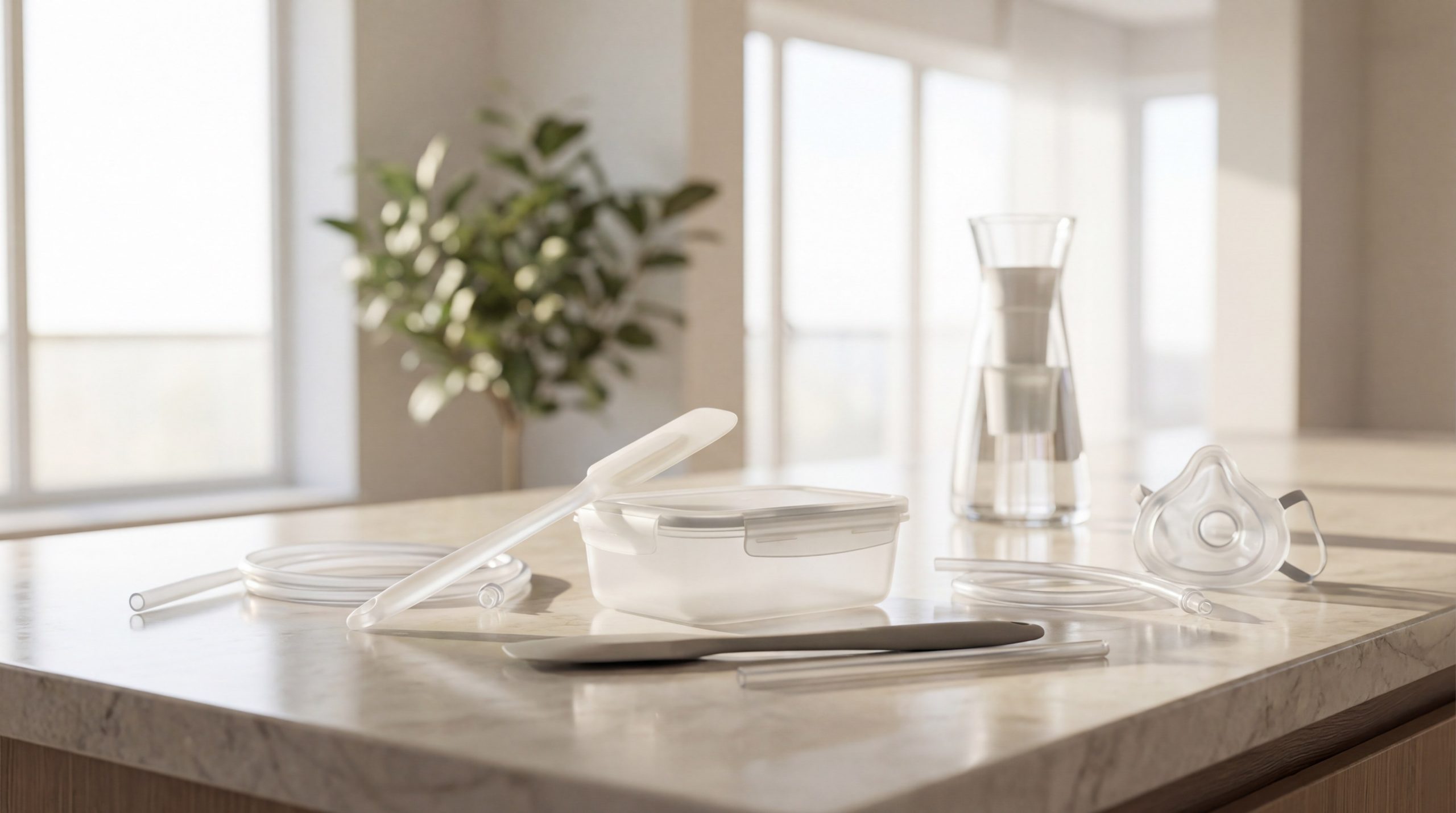
Silicone is a highly stable polymer that does not release microplastics under normal, everyday use conditions. If you are concerned about the environmental impact of your household items, you might worry about microplastics from silicone entering your food or water, but the material’s cross-linked structure provides a level of durability that traditional plastics simply cannot match. By switching to high-quality silicone components, you eliminate the common pain point of plastic degradation, ensuring a safer and more sustainable solution for your family.
Is silicone a source of microplastics in your home?
No, silicone is not a source of traditional petroleum-based microplastics because its backbone is made of silicon and oxygen rather than carbon. When you use products made of microplastics from silicone, you are using a material designed for extreme stability and resistance to breakdown.
Here is the deal:
Silicone is chemically distinct from the plastics that typically shed harmful particles into the environment. Because it is a synthetic rubber, it maintains its integrity even when used daily in high-traffic areas of your home.
What makes silicone different from plastic?
Silicone is an inorganic polymer, whereas plastics are organic polymers derived from fossil fuels. This fundamental difference means silicone does not fragment into the persistent microplastic beads that currently plague our oceans and food chains.
Can you trust your silicone kitchenware?
![Silicone Products Manufacturing in Modern Facility]()
Most high-quality silicone is tested to withstand thousands of uses without showing signs of surface wear. This resilience is what makes it a preferred material for those looking to reduce their plastic footprint.
- Silicone is non-porous and resists staining.
- It does not react with food or beverages.
- The material is flexible and does not crack like rigid plastic.
Key Takeaway: Silicone provides a durable, non-shedding alternative to traditional plastics, helping you maintain a cleaner home environment.
| Feature | Silicone | Traditional Plastic |
|---|---|---|
| Primary Base | Silicon/Oxygen | Petroleum/Carbon |
| Microplastic Shedding | Negligible | High |
| Longevity | Years | Months to Years |
The chemical architecture of silicone ensures that it remains intact where other materials would fail.
How does silicone compare to traditional plastics?
Silicone is significantly more stable than traditional plastics, which are notorious for breaking down into microscopic fragments over time. While plastic begins to shed particles as soon as it is exposed to UV light or friction, silicone remains robust due to its high-energy chemical bonds.
Think about this:
If you compare a plastic spatula to a silicone one, the plastic version will often show scratches and “fuzzing” on the edges after just a few months. This is a clear sign of material loss that ends up in your meals.
Why does plastic shed more easily?
Plastic is often made with various additives and fillers that can weaken the overall structure. These fillers are frequently the first things to leach out or break away, leading to the rapid formation of microplastics.
Is the molecular structure of silicone more stable?
The cross-linked nature of silicone creates a “jungle gym” effect that holds every molecule tightly in place. This makes it incredibly difficult for individual particles to break free and enter the surrounding environment.
- High tensile strength prevents tearing.
- UV resistance stops sun-induced degradation.
- Thermal stability prevents melting and warping.
Key Takeaway: Choosing silicone over plastic directly reduces the amount of microscopic debris generated by your daily activities.
| Metric | Silicone Stability | Plastic Stability |
|---|---|---|
| UV Resistance | Excellent | Poor |
| Chemical Inertness | High | Low to Moderate |
| Structural Integrity | Maintains shape | Prone to brittle failure |
Understanding the material science behind silicone helps you make more informed decisions for your household.
Can high heat cause silicone to degrade into particles?
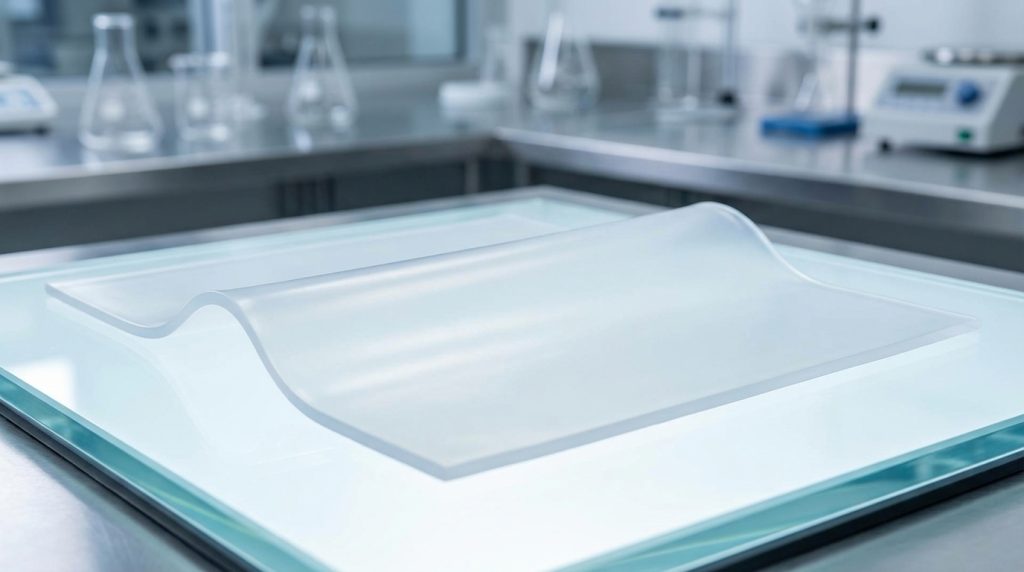
No, standard food-grade silicone does not degrade or release particles when used within its intended temperature range, which typically extends up to 230°C (446°F). High-quality microplastics from silicone are specifically engineered to remain inert during baking, boiling, and steaming.
Look at it this way:
Most kitchen plastics start to soften or release odors at temperatures well below the boiling point of water. Silicone, however, stays perfectly cool and collected, keeping your food pure and free from synthetic debris.
Does extreme temperature change the material?
![Macro Shot of Food-Grade Silicone Material]()
While silicone can handle intense heat, it is important to avoid direct flames or temperatures exceeding its rating. Under extreme, unintended stress, any material can fail, but silicone’s failure point is much higher than that of consumer-grade plastics.
Is baking with silicone safe?
Baking mats and molds are designed to be used repeatedly in ovens without any off-gassing or particle shedding. This reliability ensures that your baked goods are not contaminated by the tools you use to create them.
- Silicone retains its shape at 200°C.
- It does not release toxic fumes.
- The surface remains non-stick without chemical coatings.
Key Takeaway: Silicone’s high thermal resistance makes it the safest choice for high-heat cooking and medical applications.
| Condition | Silicone Reaction | Plastic Reaction |
|---|---|---|
| Boiling (100°C) | No change | Potential leaching |
| Baking (200°C) | Stable | Melting/Fumes |
| Freezing (-40°C) | Remains flexible | Becomes brittle |
The thermal window of silicone is broad enough to cover almost every standard household and industrial application.
Does mechanical stress impact the stability of silicone?
Under normal use, mechanical stress like bending or folding does not cause silicone to shed particles or break down. However, extreme mechanical abuse—such as cutting it with a knife or aggressive industrial grinding—can create fragments, though these are not categorized as traditional microplastics.
But wait:
Even when a silicone product is stretched to its limit, it is designed to snap back into place without losing its structural integrity. This “memory” is a key feature that prevents the surface from fraying or shedding.
How does constant stretching affect silicone?
For products like watch bands or seals, constant stretching is part of the design. High-quality silicone is tested for millions of cycles to ensure that the material does not fatigue or release dust.
Does scrubbing damage the surface?
Using soft sponges and standard detergents is perfectly safe for silicone surfaces. Unlike plastic, which gets dull and scratched from cleaning, silicone maintains its smooth finish, which prevents the buildup of bacteria and the release of tiny fragments.
- Exceptional elongation properties.
- Resistance to abrasion and rubbing.
- Durable enough for industrial gaskets.
Key Takeaway: The physical toughness of silicone means it can handle a lifetime of use without contributing to particulate pollution.
| Stress Type | Silicone Performance | Plastic Performance |
|---|---|---|
| Repeated Bending | No cracking | Fatigue failure |
| Abrasion | High resistance | Scratches easily |
| Impact | Absorbs energy | Can shatter |
Mechanical durability is a cornerstone of silicone engineering, especially in dynamic environments.
Why is food-grade silicone considered a safer choice?
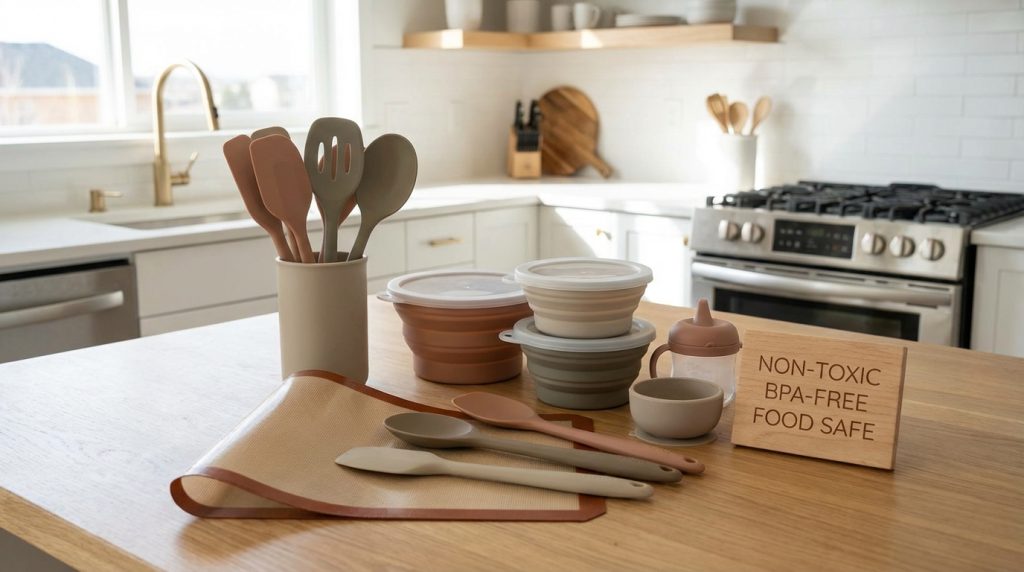
Food-grade silicone is considered safer because it is manufactured under strict quality controls to ensure it does not contain harmful fillers or leachable chemicals. When you source microplastics from silicone for your kitchen or nursery, you are choosing a material that meets rigorous safety standards like FDA or LFGB compliance.
It gets better:
Because food-grade silicone is inert, it doesn’t interact with the oils or acids in your food. This means the flavor of your meals stays exactly as intended, and no unwanted particles migrate from the container to your plate.
What defines food-grade quality?
![Eco-Friendly Silicone Kitchenware Display]()
Quality silicone is made without the use of Bisphenol A (BPA), phthalates, or lead. These substances are common in plastics and are known to cause health issues, but they are absent from high-purity silicone production.
Are there standards for silicone purity?
Manufacturers must adhere to specific protocols to ensure that every batch of silicone is free from contaminants. This includes using medical-grade or food-grade raw materials that have been thoroughly vetted for safety.
- FDA approval for food contact.
- LFGB certification for European markets.
- BPA-free and non-toxic formulation.
Key Takeaway: Food-grade certification is your guarantee that the silicone you use is pure and will not contaminate your family’s meals.
| Standard | Focus Area | Requirement |
|---|---|---|
| FDA | Food Safety | Extraction limits |
| LFGB | Purity | Stricter testing for migration |
| ISO 9001 | Management | Consistent quality processes |
Purity standards are the foundation of trust for anyone using silicone in sensitive applications.
What happens when silicone products reach their end of life?
When silicone products reach their end of life, they do not biodegrade, but they also do not break down into harmful microplastics like traditional waste. Instead, silicone remains chemically inert in landfills, sitting as a stable solid that does not leach chemicals into the soil or groundwater.
The bottom line:
While we should aim for long-term use, knowing that silicone won’t turn into millions of tiny plastic beads provides a significant environmental advantage over single-use plastics.
Is silicone biodegradable?
No, silicone is a man-made material designed for longevity, so it does not decompose naturally. However, this lack of biodegradation is also why it doesn’t release gases or micro-fragments into the atmosphere as it ages.
How should you dispose of old silicone?
Many specialized recycling facilities can now grind down old silicone and repurpose it into industrial lubricants, playground mulch, or new low-grade silicone products. This circular approach helps keep the material out of landfills entirely.
- Silicone is recyclable at specialized centers.
- It does not release toxins when incinerated properly.
- Stable in landfills for centuries without leaching.
Key Takeaway: Although it isn’t biodegradable, silicone’s stability prevents it from becoming a source of invisible pollution.
| End-of-Life Path | Silicone Impact | Plastic Impact |
|---|---|---|
| Landfill | Inert and stable | Leaches and fragments |
| Incineration | Converts to silica/CO2 | Releases toxic fumes |
| Recycling | Downcycled into oils | Hard to sort/low value |
Managing the disposal of silicone responsibly ensures that its environmental benefits are maximized.
Are baby products made of silicone safe for long-term use?
Yes, baby products like pacifiers and teethers are incredibly safe because microplastics from silicone are hypoallergenic and resistant to the growth of mold or bacteria. For parents, the primary concern is the safety of what goes into a child’s mouth, and silicone offers a soft yet durable solution that won’t shed.
Believe it or not:
Silicone is often used in medical implants because the human body does not react to it. This same biocompatibility makes it the ideal material for babies who have sensitive developing systems.
Are silicone pacifiers safe for babies?
Unlike latex or cheap plastics, silicone pacifiers do not harbor odors and won’t become sticky over time. They can be boiled repeatedly for sterilization without any risk of the material breaking down or releasing particles.
Should you replace baby gear frequently?
Even though silicone is tough, you should inspect items for physical damage. If a baby with teeth manages to bite through a teether, the resulting pieces are large and visible, rather than the invisible micro-particles shed by plastic.
- Smooth surface prevents bacterial colonies.
- Odortless and tasteless for picky infants.
- Can be deep-cleaned in the dishwasher.
Key Takeaway: Silicone’s safety profile makes it the Gold Standard for baby products where chemical leaching and micro-particles are unacceptable.
| Baby Item | Silicone Benefit | Plastic Risk |
|---|---|---|
| Pacifier | Sterilizable | Cracks and traps bacteria |
| Teether | Soft on gums | Can leach phthalates |
| Spoon | Gentle and durable | Sheds microplastics |
For the most vulnerable users, material choice is the most important safety decision a parent can make.
Can harsh chemicals cause silicone to shed microparticles?
Silicone is highly resistant to most household chemicals and acidic foods, meaning it won’t shed microparticles even when exposed to vinegar, citrus, or standard dish soaps. This chemical resistance is a major factor in why microplastics from silicone are rarely a concern in laboratory or kitchen settings.
Consider this:
While strong acids or bases can eventually affect the material, it would take extreme industrial concentrations to cause a silicone seal to lose its integrity. For your daily life, the material is virtually indestructible.
Do strong detergents cause leaching?
Most dishwashing detergents are formulated to be safe for silicone. Because silicone is non-porous, the chemicals don’t soak into the material, and the surface doesn’t break down to release “micro-dust.”
Is silicone resistant to acidic foods?
You can safely store tomato sauce, lemon juice, or vinegar-based dressings in silicone containers. The material won’t pit or corrode, ensuring that your food stays free from any synthetic contaminants.
- Resists most oils and fats.
- Does not absorb food smells.
- Maintains color after contact with dyes.
Key Takeaway: The chemical inertness of silicone protects it from the common causes of material degradation in the kitchen.
| Substance | Silicone Resistance | Plastic Resistance |
|---|---|---|
| Vinegar/Acids | Excellent | Can cloud or pit |
| Cooking Oils | Very High | Can soften material |
| Alcohol | High | Can cause crazing |
Chemical stability ensures that your silicone products remain as safe on the thousandth use as they were on the first.
How does HuaLin Silicone ensure material purity?
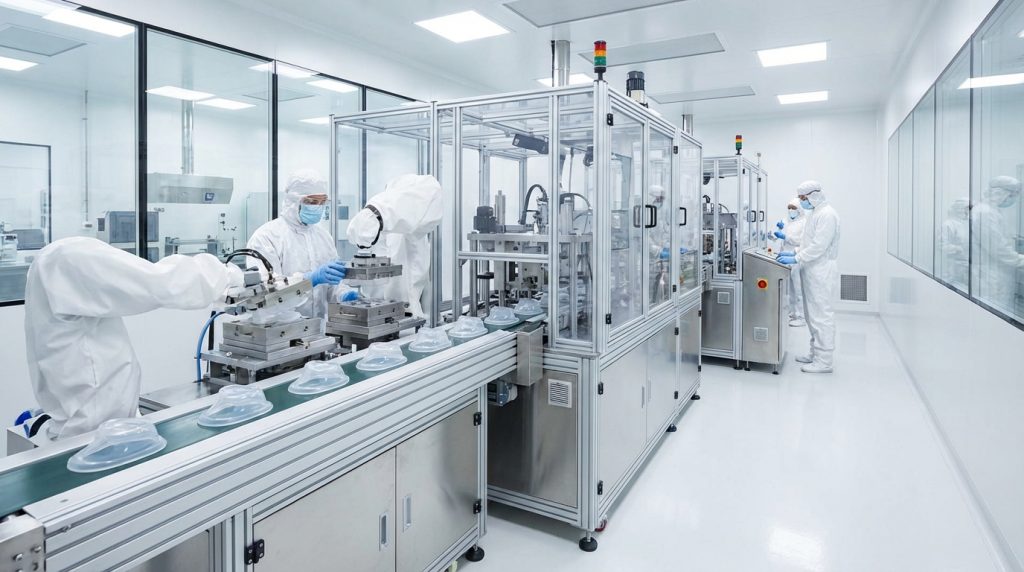
HuaLin Silicone ensures material purity through advanced Liquid Silicone Rubber (LSR) injection molding and a rigorous three-stage quality control system. When producing microplastics from silicone, our ISO 9001 certified facility uses only traceable, high-grade raw materials to prevent any contamination.
Here is the kicker:
With 13,000 m² of production space and over 15 years of expertise, we control the entire process from mold design to final inspection. This vertical integration eliminates the risk of “supplier gaps” where low-quality fillers might be introduced.
How does LSR molding prevent contamination?
Liquid Silicone Rubber is processed in a closed system, which minimizes exposure to dust and environmental pollutants. This results in parts with superior clarity, consistency, and a total absence of the particulate matter found in lower-quality molding processes.
What is the benefit of in-house tooling?
By designing and manufacturing our own molds, we ensure that the tolerances are incredibly tight. This precision prevents “flash” or excess material that could later break off and become a nuisance to the end user.
- 100% final inspection available.
- Automated CCD visual inspection.
- Cleanroom manufacturing capabilities.
Key Takeaway: HuaLin’s integrated manufacturing process guarantees that your silicone parts are free from defects and harmful impurities.
| Quality Step | HuaLin Method | Benefit |
|---|---|---|
| Material Sourcing | Traceable high-grade | No toxic fillers |
| Molding | LSR/Compression | High dimensional accuracy |
| Inspection | Three-stage (IQC/IPQC/FQC) | Zero-defect delivery |
Investing in high-end manufacturing is the only way to ensure the long-term safety of silicone components.
Is silicone truly an eco-friendly alternative to plastic?
Yes, silicone is a superior eco-friendly alternative because its extreme durability significantly reduces the need for frequent replacements and keeps waste out of the ecosystem. While the creation of silicone requires energy, its long lifespan and lack of microplastic shedding make it a responsible choice for a sustainable future.
Make no mistake:
The goal is to move away from the “disposable” culture of plastic. A single silicone bag can replace hundreds of single-use plastic zip-locks, preventing a massive amount of micro-debris from entering our environment.
Can silicone reduce your carbon footprint?
Because silicone doesn’t need to be replaced as often as plastic, the total energy consumed over the product’s life cycle is often lower. Fewer replacements mean fewer manufacturing runs and less transportation energy used.
Is silicone the ultimate plastic alternative?
While no material is perfect, silicone’s combination of safety, stability, and durability puts it far ahead of traditional polymers. It is a bridge toward a world where we no longer have to worry about the invisible threat of microplastic pollution.
- Replaces thousands of single-use items.
- Reduces overall household waste.
- Safer for wildlife if properly managed.
Key Takeaway: Switching to silicone is a tangible way to protect our oceans and soil from the persistent threat of microplastic fragments.
| Environmental Factor | Silicone Impact | Plastic Impact |
|---|---|---|
| Life Cycle Length | Very Long | Short |
| Marine Life Danger | Low (Inert) | High (Microplastics) |
| Reusability | High | Low to Moderate |
The move toward silicone represents a shift toward quality and environmental stewardship in product design.
华林硅胶致力于提供高精度定制硅胶解决方案,始终将安全与耐久性置于首位。我们深知您的项目需要稳定的大规模生产和零风险的材料纯度。无论您正在开发医用级部件、婴儿护理用品还是智能可穿戴组件,我们的团队都将以ISO认证的卓越品质助您实现构想。让我们助您规避材料失效与塑料污染风险。开启更安全、更高性能的制造之旅,立即联系我们。HuaLin Silicone is committed to providing high-precision, custom silicone solutions that prioritize safety and durability. We understand that your project requires stable mass production and zero-risk material purity. Whether you are developing medical-grade parts, baby care essentials, or smart wearable components, our team is ready to bring your vision to life with ISO-certified excellence. Let us help you eliminate the risks of material failure and plastic contamination. To start your journey toward safer, high-performance manufacturing, contact us today.
FAQ
Can I microwave silicone containers safely
Yes. Silicone is microwave-safe because it does not absorb microwave energy and has a high heat tolerance that prevents melting or leaching. Just ensure the product is marked as “microwave-safe” and does not contain any hidden metal inserts.
What’s the best way to clean silicone to prevent buildup?
The best way is to use warm water and a mild dish soap or place the item in the top rack of your dishwasher. Because silicone is non-porous, it won’t trap bacteria, and regular cleaning will maintain its smooth, non-shedding surface for years.
How do I know if my silicone is high quality?
No, not all silicone is created equal, but you can check for “filler” by performing the “pinch test.” If you twist or pinch the silicone and white shows through, it likely contains cheap fillers; pure, high-quality silicone will maintain its color throughout the bend.
Can I use silicone for medical-grade applications?
Yes. Medical-grade silicone is biocompatible, hypoallergenic, and can be easily sterilized using an autoclave or gamma radiation. This makes it the ideal material for skin-contact devices and surgical components that must remain stable and non-reactive.
What’s the best temperature range for silicone use?
The best range for standard silicone is between -60°C and 230°C (-76°F to 446°F). This broad window allows the material to transition from the freezer to the oven without any loss of integrity or release of particles.