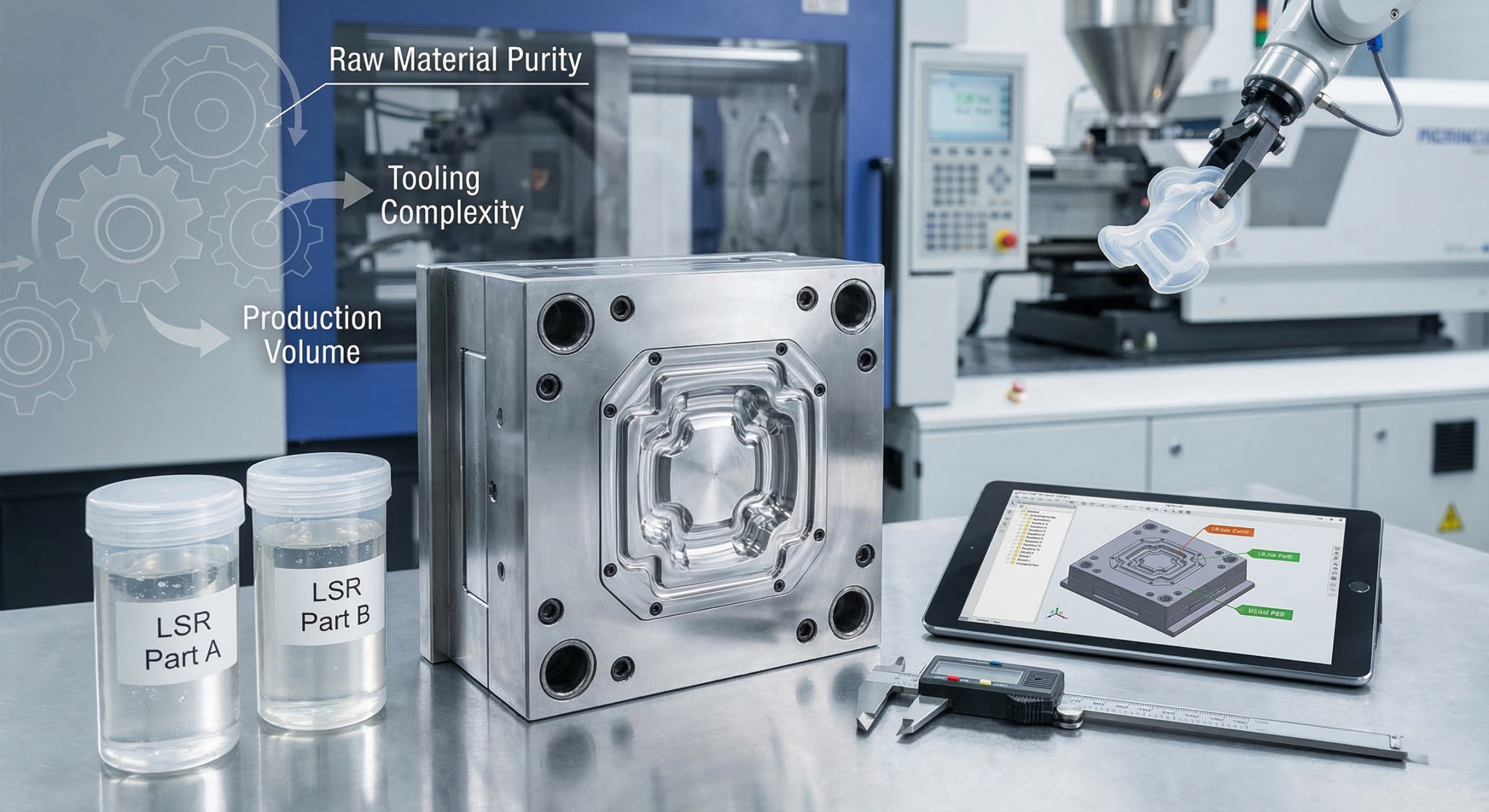
Factors affecting the cost of liquid silicone rubber include raw material purity, tooling complexity, production volume, and specific material grades required for compliance. You face constant pressure to deliver high-precision components while maintaining a competitive edge in a crowded B2B marketplace. This financial tension often leads to production delays or unexpected expenses when technical variables are not properly accounted for during the design phase. HuaLin Silicone provides the engineering depth and transparent pricing models you need to navigate these complex variables from prototype to mass production. You might be at a stage where you are asking, Why is liquid silicone rubber (LSR) tooling so expensive?
What determines raw material market prices?
Raw material prices are primarily determined by the cost of silicon dioxide, the complexity of the polymer system, and the current global supply chain stability. You need to understand that LSR is typically a two-component system that requires precise chemical synthesis to achieve its unique mechanical properties. This manufacturing foundation is why you must consider how global demand for high-purity silica influences your bottom line. Why is liquid silicone rubber (LSR) tooling so expensive? is a question often answered by the high overhead of maintaining these raw material standards. You can explore our specific material options at Why is liquid silicone rubber (LSR) tooling so expensive?
Is high-purity silica worth the extra cost?
Think about it: the purity of your raw materials directly correlates with the success of your final part in demanding environments. If you choose lower-grade materials to save on upfront costs, you risk higher scrap rates and potential field failures. High-purity silica ensures that the silicone maintains its tensile strength and heat resistance over thousands of cycles.
- Silicon dioxide purity levels (99% or higher for medical).
- Presence of reinforcing fillers for mechanical durability.
- Curing agent types including platinum-based catalysts.
- Logistics and storage requirements for temperature-sensitive components.
- Batch-to-batch consistency protocols maintained by the supplier.
How do global supply chains shift pricing?
Here is the deal: any disruption in the global supply of raw silicon or chemical catalysts causes immediate ripples in LSR pricing. You should monitor market trends to time your bulk orders effectively and avoid peak pricing during shortages. Reliable partners like HuaLin Silicone maintain strategic reserves to insulate your project from these sudden market shifts.
- Energy costs associated with siloxane synthesis.
- Geopolitical stability in major silicon-producing regions.
- Freight and shipping insurance for international delivery.
- Availability of specialized additives for flame retardancy.
- Environmental regulations affecting chemical processing plants.
Key Takeaway: Understanding raw material drivers allows you to forecast budgets accurately and choose the right grade of silicone for your specific application without overpaying for unnecessary purity levels.
| Factor | Cost Impact | Primary Driver | Risk Level |
|---|---|---|---|
| Silica Purity | High | Application requirements | Low |
| Catalyst Type | Medium | Curing speed needs | Medium |
| Supply Chain | Volatile | Global logistics | High |
| Additives | Low | Functional specs | Low |
Stable raw material sourcing is the bedrock of a predictable manufacturing budget for any LSR project.
How does manufacturing complexity impact cost?
Manufacturing complexity drives costs through increased cycle times, specialized labor requirements, and the need for advanced injection molding equipment. You should realize that LSR processing involves multiple stages including siloxane synthesis, polymerization, and high-precision compounding. Each of these steps requires energy and skilled oversight to ensure the material performs as expected during the molding phase. Why is liquid silicone rubber (LSR) tooling so expensive? is a frequent inquiry because the complexity of the machinery involved requires significant capital investment.
Does the injection molding process add value?
Look at it this way: the precision of LSR injection molding allows you to create geometries that are impossible with traditional compression molding. This process uses a closed-loop system that minimizes material waste and ensures every part is identical to the last. While the equipment is costly, the reduction in manual labor and finishing time often offsets the initial machine investment.
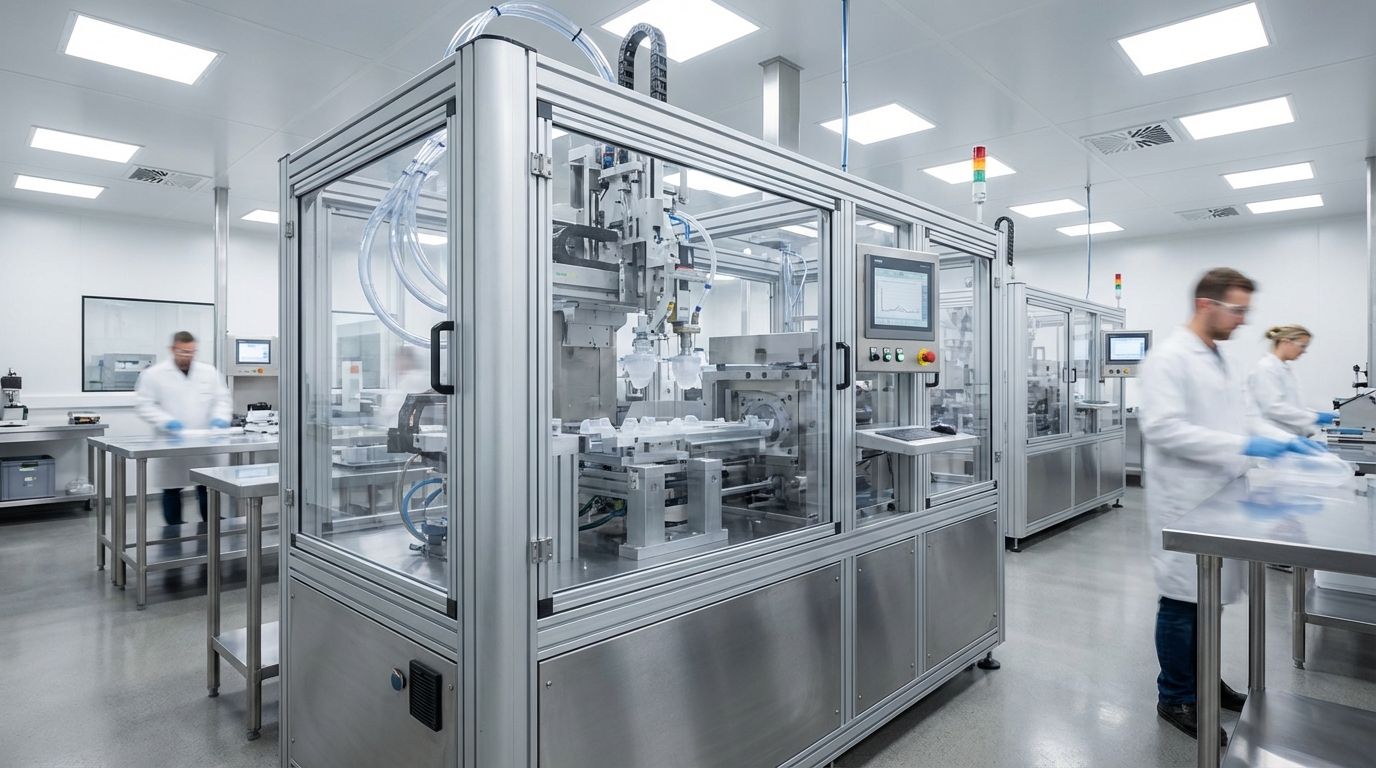
- Automated dosing systems for two-part mixing.
- Precision temperature control within the mold cavities.
- High-pressure injection for thin-walled components.
- Vacuum venting to eliminate air bubbles and flash.
- Integrated robotic arms for part extraction and sorting.
How do cycle times influence your quote?
It gets better: shorter cycle times mean more parts per hour, which significantly lowers your per-unit cost over long production runs. LSR cures rapidly when exposed to heat, but reaching that optimal “sweet spot” requires expensive mold heating elements. If your part design is too thick, the cooling and curing time will increase, driving up the labor and machine time costs.
- Wall thickness optimization for faster heat transfer.
- Material viscosity affecting the injection speed.
- Gate design and placement for balanced flow.
- Part weight and its relationship to machine tonnage.
- Pre-heating requirements for specialized material blends.
Key Takeaway: Reducing manufacturing complexity through smart design and high-efficiency machinery is the most effective way to lower the total cost of ownership for LSR parts.
| Complexity Factor | Cost Influence | Efficiency Gain | Implementation |
|---|---|---|---|
| Machine Tonnage | High | Structural integrity | Vital |
| Cycle Duration | Medium | Higher throughput | Critical |
| Automation | Low | Lower labor costs | Optional |
| Energy Use | Medium | Sustainable ops | Moderate |
Advanced manufacturing techniques turn initial complexity into long-term savings by maximizing production speed and minimizing manual intervention.
Why is liquid silicone rubber (LSR) tooling so expensive?
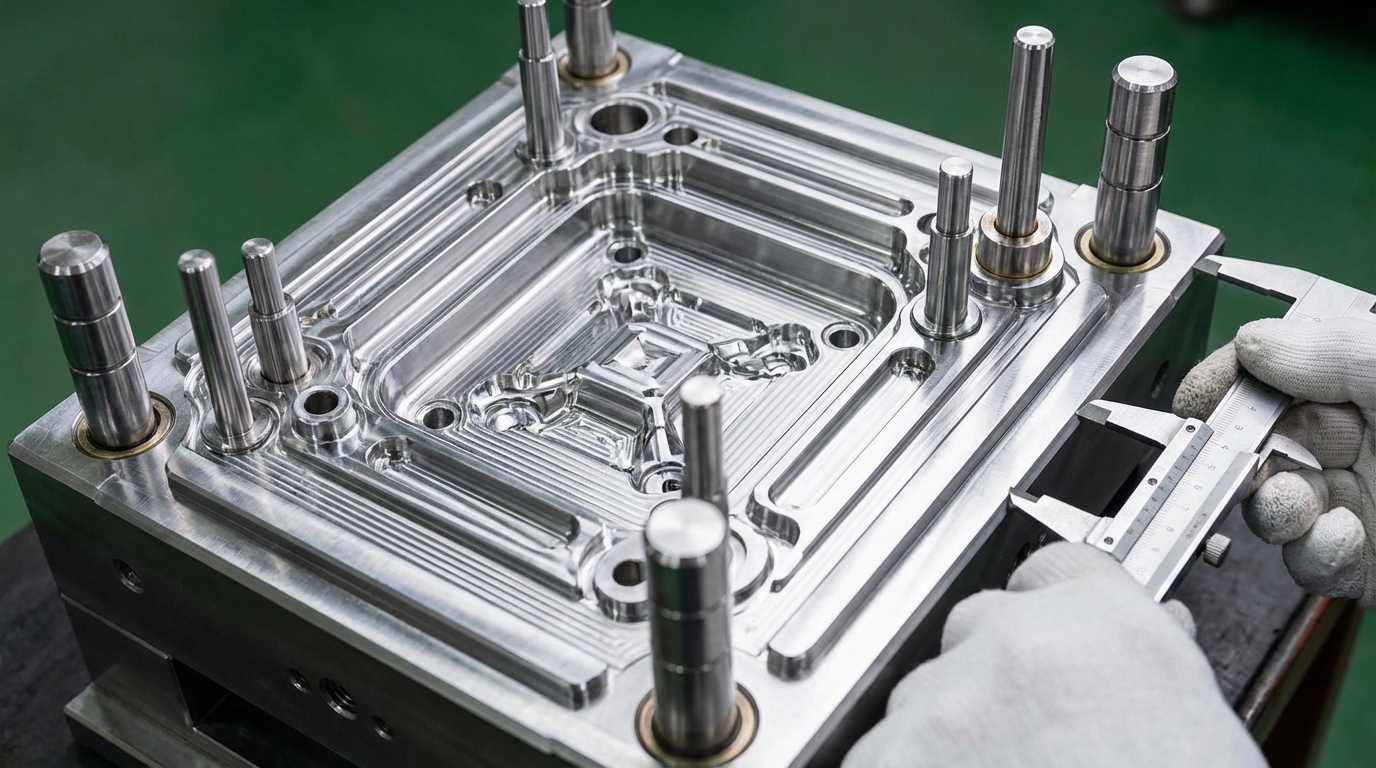
Tooling costs are high because of the precision CNC machining required for hardened steel molds and the integration of complex cold runner systems. You are investing in a piece of hardware that must withstand hundreds of thousands of cycles at high pressures and temperatures. Unlike standard plastic molds, LSR molds must be perfectly sealed to prevent the low-viscosity material from leaking. Why is liquid silicone rubber (LSR) tooling so expensive? is a question that leads directly back to the Why is liquid silicone rubber (LSR) tooling so expensive? case studies showing how high-quality steel pays for itself.
Why is mold steel selection so critical?
Here is the kicker: using high-grade stainless steel prevents corrosion from the moisture often present in industrial environments and the chemical reactions during curing. If you opt for cheaper aluminum or low-grade steel, the mold will degrade quickly, leading to flash and dimensional inaccuracies. Hardened steel maintains sharp edges for gates and vents, ensuring your parts remain within tolerance for the entire life of the project.
- Corrosion resistance for long-term storage.
- Thermal conductivity for even heating across cavities.
- Hardness levels to prevent abrasive wear from fillers.
- Surface finish capabilities for high-gloss or matte parts.
- Machinability for complex internal cooling channels.
What is the role of cold runner systems?
Believe it or not: a cold runner system can save you up to 30% in material costs by keeping the silicone in the runner from curing. This allows you to reuse the material in the next shot rather than throwing it away as waste. While a cold runner mold costs significantly more to build, the material savings on high-volume runs often pay for the system in a matter of months.
- Valve gate technology for zero-waste production.
- Independent temperature zones for precise curing.
- Reduced runner scrap for environmental sustainability.
- Faster cycle times due to eliminated runner cooling.
- Higher cavitation possibilities in a smaller mold footprint.
Key Takeaway: High upfront tooling costs represent a strategic investment in quality and material efficiency that lowers the per-part price in mass production.
| Tooling Element | Initial Cost | ROI Timeline | Impact on Quality |
|---|---|---|---|
| Cold Runner | Very High | 6-12 Months | High |
| Hardened Steel | High | 12-24 Months | Maximum |
| Multi-Cavity | Medium | 3-6 Months | Consistent |
| Surface Texture | Low | Immediate | Aesthetic |
Investing in premium tooling ensures that your production remains stable and your parts meet tight tolerances throughout the entire product lifecycle.
Which material grades drive up expenses?
Specific material grades such as medical, food-contact, or aerospace-certified LSR drive up expenses due to the rigorous testing and documentation required. You must realize that industrial-grade silicone is vastly different from biocompatible grades used in implants or surgical tools. The manufacturing environments for these high-grade materials must be strictly controlled to prevent contamination. Why is liquid silicone rubber (LSR) tooling so expensive? becomes an even more relevant question when you factor in the cleanroom requirements for medical-grade molding.
Why does medical grade cost so much?
Let’s face it: the cost of a medical-grade material is high because the manufacturer assumes the liability for its biocompatibility and purity. You are paying for extensive laboratory testing, including skin irritation, toxicity, and long-term implantability studies. Furthermore, these materials are often produced in smaller batches with higher quality control oversight, which removes the benefit of massive economies of scale.
- Biocompatibility certifications (ISO 10993).
- Traceability from raw materials to final part.
- USP Class VI compliance for surgical applications.
- Cleanroom manufacturing costs (ISO Class 7 or 8).
- Sterilization compatibility (Autoclavable or Gamma).
Is food-grade silicone a middle ground?
Think about it: food-grade LSR offers a balance between high-performance purity and industrial affordability. While it must meet FDA or LFGB standards, it does not require the extreme medical testing that surgical grades demand. This makes it an ideal choice for your kitchenware or baby product projects where safety is paramount but budgets are tighter.
- FDA CFR 177.2600 compliance for food contact.
- Odorless and tasteless properties for consumables.
- BPA-free and non-toxic chemical compositions.
- Heat resistance for oven and microwave use.
- Resistance to fatty acids and common cleaning agents.
Key Takeaway: Choosing the minimum required grade for your application’s compliance needs is a critical step in managing your overall project budget.
| Grade Category | Relative Cost | Main Application | Regulation |
|---|---|---|---|
| Industrial | 1.0x | Gaskets, Seals | RoHS/REACH |
| Food Grade | 1.5x | Kitchenware, Baby | FDA/LFGB |
| Medical Grade | 3.0x+ | Implants, Surgery | ISO 10993 |
| Aerospace | 2.5x | O-rings, Shields | Mil-Spec |
Selecting the correct material grade ensures regulatory compliance while preventing unnecessary spending on certifications that your application doesn’t require.
How do production volumes shift pricing?
Production volumes shift pricing through the amortization of fixed costs like tooling and setup over a larger number of units. You should understand that the cost per part drops dramatically as you move from 1,000 units to 100,000 units. This is because the initial investment in high-quality molds and machine setup time is shared across more parts. Why is liquid silicone rubber (LSR) tooling so expensive? is a question that loses its sting once you see the unit price decrease at scale. You can view our high-volume capabilities at Why is liquid silicone rubber (LSR) tooling so expensive?
Does low-volume production make sense?
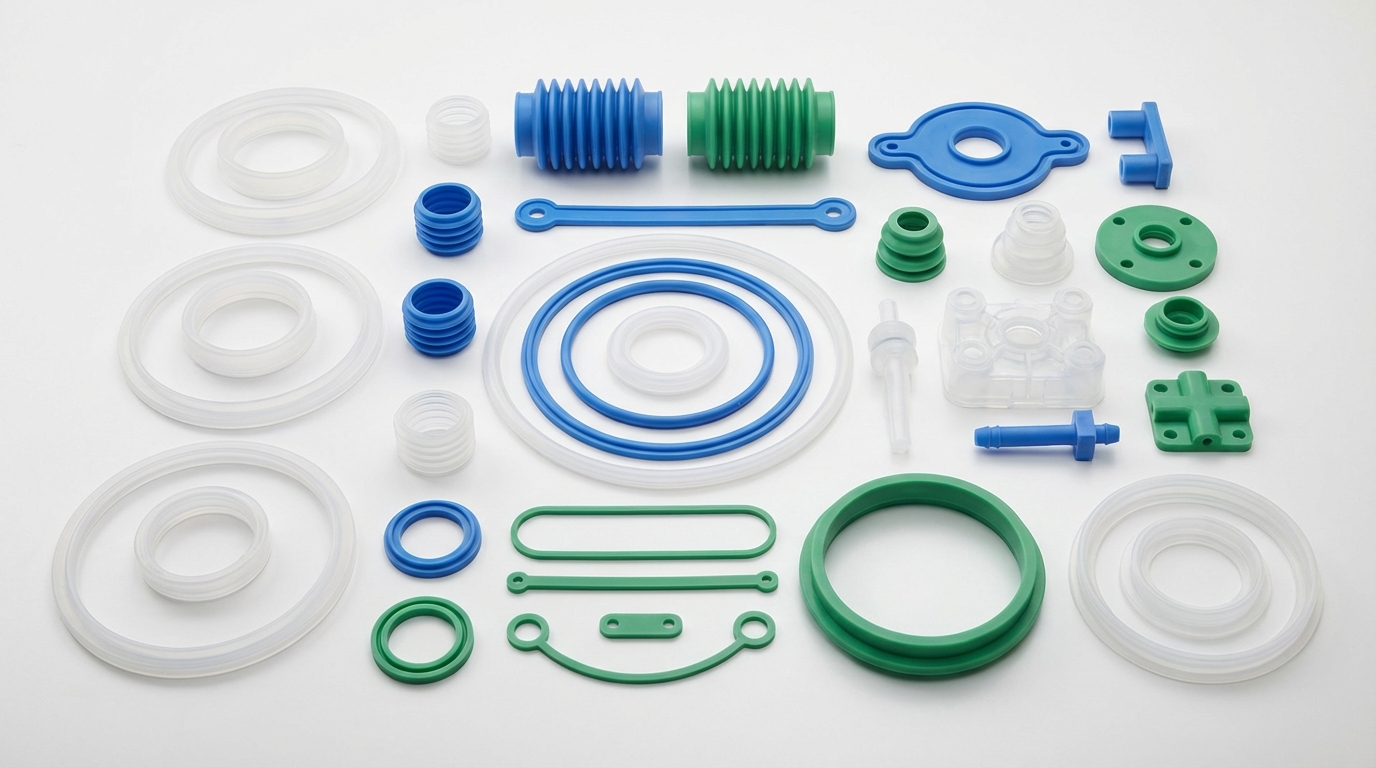
Here is the deal: low-volume production is often more expensive on a per-part basis but saves you money by preventing overstocking and allowing for design iterations. If you are launching a new product, it might be wiser to pay a higher unit price for 500 parts than to invest in a 32-cavity mold for a design that might change next month. Prototyping and small-batch runs are essential for validating your market before committing to full-scale production.
- Lower initial tooling investment for single-cavity molds.
- Higher flexibility for design changes and testing.
- Faster lead times for market entry and feedback.
- Reduced storage costs for finished goods inventory.
- Manual inspection protocols often used for small batches.
How do you achieve economies of scale?
Now, here is the exciting part: once your design is locked, moving to a multi-cavity mold can slash your unit costs by 50% or more. High-volume production allows for fully automated systems that run 24/7 with minimal human intervention. This shift from labor-intensive processes to capital-intensive automation is where you find the most significant profit margins in B2B manufacturing.
- High-cavitation molds (up to 128 cavities or more).
- Automatic degating and robotic part collection.
- In-line quality inspection using high-speed cameras.
- Bulk material purchasing discounts from raw vendors.
- Reduced energy consumption per unit through efficiency.
Key Takeaway: Aligning your tooling strategy with your expected sales volume is the most effective way to optimize your unit price and ROI.
| Volume Tier | Unit Price | Tooling Strategy | Best For |
|---|---|---|---|
| Prototype | Very High | 3D Print / Soft Tool | R&D |
| Small Batch | High | Single Cavity | Market Test |
| Mass Production | Low | Multi-Cavity | Mature Market |
| High Volume | Very Low | Fully Automated | Global Supply |
Scaling your production thoughtfully allows you to manage risk during the early stages while maximizing profit during the growth phase.
Why does part geometry affect final cost?
Part geometry affects cost because complex shapes require more sophisticated mold designs, specialized slides, and potentially longer cycle times. You should realize that every undercut, thin wall, or internal thread in your design adds a layer of complexity to the tooling. A simple, flat gasket is much cheaper to produce than a multi-functional housing with integrated seals. Why is liquid silicone rubber (LSR) tooling so expensive? is frequently a direct result of design features that require moving parts within the mold.
Are undercuts the enemy of your budget?
Look at it this way: undercuts require the mold to have side-actions or lifters that move out of the way before the part can be ejected. These moving parts increase the maintenance requirements and the initial cost of the mold significantly. If you can redesign your part to eliminate undercuts, you can often use a simple “open and shut” mold, which is the most cost-effective solution.
- Design for Manufacturability (DFM) reviews.
- Draft angles to facilitate easy part ejection.
- Elimination of unnecessary aesthetic features.
- Uniform wall thickness to prevent sink marks.
- Simplification of parting lines for cleaner edges.
How does wall thickness impact the quote?
Here is the kicker: inconsistent wall thickness causes uneven curing, which can lead to warped parts and high rejection rates. Thick sections take much longer to cure than thin ones, which drags out the entire cycle time for every single shot. By maintaining a uniform wall thickness, you ensure a faster, more predictable production cycle that keeps your costs down.
- Ribs and gussets for strength instead of thickness.
- Coring out heavy sections to save on material.
- Optimal wall ranges (typically 0.5mm to 5mm).
- Impact of thickness on thermal expansion.
- Flow analysis to ensure complete cavity filling.
Key Takeaway: Simple geometries lead to simple molds and faster production, which are the primary drivers of low manufacturing costs.
| Geometry Feature | Cost Impact | Tooling Change | Cycle Time |
|---|---|---|---|
| Simple Flat | Low | None | Very Fast |
| Undercuts | High | Slides / Lifters | Slow |
| Thin Walls | Medium | High Pressure | Fast |
| Varying Walls | High | Heat Balancing | Variable |
Simplifying your part design during the engineering phase is the most direct way to reduce both tooling and per-unit production costs.
How do secondary operations add value?
Secondary operations add value by enhancing the functionality or appearance of the part through processes like overmolding, printing, or specialized coatings. You might need your silicone part to bond to a plastic housing or have a high-durability logo printed on the surface. While these steps add to the per-unit cost, they often eliminate the need for downstream assembly at your facility. Why is liquid silicone rubber (LSR) tooling so expensive? is a question that applies to these complex Why is liquid silicone rubber (LSR) tooling so expensive? solutions where multiple materials are combined.
Is overmolding worth the investment?
Think about it: overmolding silicone directly onto a plastic or metal substrate creates a permanent bond without the need for adhesives. This process reduces the risk of part failure and creates a seamless, high-quality look and feel for consumer products. While it requires a more complex two-shot mold or a secondary molding step, the labor savings in assembly are massive.
- Chemical bonding between silicone and substrate.
- Mechanical interlocks for extra durability.
- Reduced assembly steps and labor costs.
- Improved waterproof and dustproof sealing.
- Ergonomic improvements for handheld devices.
Do coatings and printing change the cost?
Here is the deal: adding a specialized coating, such as a low-friction “soft touch” finish, can improve the user experience but adds another process step. Similarly, silk-screen or pad printing requires specialized inks that can bond to the silicone surface without peeling. You must weigh the aesthetic and functional benefits of these additions against your target retail or wholesale price.
- Anti-dust coatings for consumer electronics.
- Conductive coatings for EMI/RFI shielding.
- High-durability printing for instruction legends.
- Laser etching for permanent serial numbers.
- Talc or oil treatments to prevent sticking.
Key Takeaway: Integrating secondary operations at the factory level often reduces your total assembly cost and improves the overall quality of the final product.
| Operation | Cost Adder | Benefit | Assembly Impact |
|---|---|---|---|
| Overmolding | High | Permanent bond | Eliminates |
| Pad Printing | Medium | Branding/ID | Minor |
| Coating | Medium | User Feel/Dust | None |
| Assembly | Variable | Ready-to-use | Eliminates |
Leveraging secondary operations allows you to receive finished components that are ready for immediate integration into your final product assembly.
What role does quality assurance play?
Quality assurance plays a vital role in preventing costly recalls, minimizing scrap, and ensuring that every part meets your specific technical requirements. You should view QA not as an expense, but as an insurance policy for your brand’s reputation. Advanced inspection techniques ensure that dimensional tolerances are maintained and material properties are consistent across every production lot. Why is liquid silicone rubber (LSR) tooling so expensive? is often a question of how much precision you are willing to pay for in your final inspection reports.
Why is 100% inspection sometimes necessary?
Look at it this way: for critical medical or automotive components, a single failure can have catastrophic consequences. In these cases, 100% visual and dimensional inspection using automated optical systems is the only way to guarantee safety. While this adds a small fee to each part, it eliminates the risk of defective parts reaching your assembly line and causing a shutdown.

- Automated CCD camera inspection for surface defects.
- Critical-to-Quality (CTQ) dimension measurement.
- Durometer (hardness) testing for material verification.
- Tear strength and elongation testing in the lab.
- Statistical Process Control (SPC) for batch monitoring.
How do certifications impact your supplier choice?
It gets better: working with an ISO-certified manufacturer like HuaLin Silicone ensures that there is a documented system in place for every step of production. These certifications, such as ISO 9001 or IATF 16949, prove that the factory adheres to international standards for quality and management. You gain peace of mind knowing that your supplier is audited regularly by third-party experts.
- ISO 9001:2015 for general quality management.
- ISO 13485 for medical device manufacturing.
- IATF 16949 for automotive supply chains.
- FDA registration for food and drug contact parts.
- Traceability systems for raw material batch tracking.
Key Takeaway: Investing in a supplier with robust quality systems reduces your long-term risk and ensures consistent part performance in the field.
| QA Measure | Cost Level | Benefit | Risk Reduction |
|---|---|---|---|
| Visual Check | Low | Aesthetic quality | Moderate |
| CCD Inspection | Medium | High-speed accuracy | High |
| Lab Testing | High | Material integrity | Maximum |
| ISO Audits | Low | System reliability | High |
High-quality standards prevent the “hidden costs” of manufacturing, such as part rejections, rework, and damaged customer relationships.
How can you optimize design for cost?
You can optimize design for cost by engaging in Early Supplier Involvement (ESI) and applying DFM principles before any steel is cut. You should work closely with your manufacturing partner to identify areas where tolerances can be relaxed or geometries simplified. Small changes at the CAD stage can lead to thousands of dollars in savings during the production phase. Why is liquid silicone rubber (LSR) tooling so expensive? is a question that can be mitigated by following the engineering guidance found at Why is liquid silicone rubber (LSR) tooling so expensive?
Why is DFM the first step to savings?
Believe it or not: a simple DFM review can often identify ways to reduce material usage by 10-15% without sacrificing part performance. Engineers can suggest wall thickness adjustments that shorten cycle times or parting line placements that eliminate the need for manual trimming. By listening to the experts who run the machines every day, you gain insights that software alone cannot provide.
- Standardizing radii to fit common CNC tools.
- Optimizing gate locations for best cosmetic finish.
- Reducing the number of moving parts in the mold.
- Designing for automated part extraction.
- Selecting standard material colors to avoid custom fees.
How does tolerance planning affect price?
Here is the deal: specifying a tolerance that is tighter than necessary is one of the fastest ways to blow your budget. LSR is a flexible material, and while it can be molded to very tight tolerances, doing so requires much more expensive molds and slower production cycles. You should only use “precision” tolerances for critical fitment areas and use “standard” tolerances for everything else.
- Understanding the “Shrinkage” factor of LSR.
- Differentiating between functional and aesthetic tolerances.
- Impact of tool wear on dimensional consistency.
- Thermal expansion considerations for the end environment.
- Use of jigs and fixtures for post-mold measurement.
Key Takeaway: Proactive communication with your manufacturer during the design phase is the most effective strategy for reducing total project costs.
| Design Action | Savings Potential | Difficulty | Timing |
|---|---|---|---|
| DFM Review | High | Low | Concept Phase |
| Wall Uniformity | Medium | Moderate | Design Phase |
| Tolerance Relax | High | Low | Drawing Phase |
| Color Standard | Low | Low | Final Phase |
Collaborative engineering transforms your design into a manufacturing-friendly asset that maximizes quality while minimizing unnecessary expenditures.
Why should you choose a local partner?
Choosing a partner with deep local expertise in hubs like Dongguan provides advantages in supply chain speed, technical communication, and logistics efficiency. You gain access to a massive ecosystem of material suppliers, mold makers, and secondary processors that can accelerate your time-to-market. Why is liquid silicone rubber (LSR) tooling so expensive? is a question often answered by the logistical savings found when your supplier is centrally located in a manufacturing powerhouse.
Does geographic proximity matter?
Think about it: being near major ports and international airports reduces your shipping costs and transit times significantly. A supplier in a major manufacturing hub can often source specialized additives or components within hours, whereas a remote factory might take days or weeks. This speed allows you to respond faster to market changes and maintain lower inventory levels at your own warehouse.
- Reduced lead times for raw materials.
- Access to high-speed international shipping lanes.
- Lower inland freight costs to major ports.
- Ability to conduct on-site factory audits easily.
- Closer collaboration with local engineering teams.
How do local talent pools benefit you?
Here is the kicker: regions like Dongguan have decades of experience in high-precision silicone molding, meaning the workforce is highly skilled in solving complex production issues. You benefit from a collective “tribal knowledge” that ensures your project is handled by professionals who have seen and solved similar challenges before. This expertise translates directly into fewer errors and higher production yields for your project.
- Experienced mold designers and CNC operators.
- Expertise in multi-component and overmolding.
- Highly efficient logistics and export teams.
- Proven track record with global B2B brands.
- Culture of continuous improvement and efficiency.
Key Takeaway: Selecting a supplier in a premier manufacturing region provides the logistical and technical infrastructure needed for high-performance B2B projects.
| Location Factor | Business Impact | Cost Benefit | Strategic Value |
|---|---|---|---|
| Hub Proximity | Speed to market | Lower shipping | High |
| Skill Density | Lower error rate | Less scrap | Maximum |
| Vendor Access | Material choice | Bulk pricing | High |
| Export Ease | Compliance | No hidden fees | Moderate |
A strategically located manufacturing partner acts as an extension of your own supply chain, providing the agility and expertise required for modern global business.
Navigating the costs of liquid silicone rubber requires a deep understanding of how technical design choices interact with manufacturing realities. From the purity of raw materials to the precision of hardened steel molds, every variable plays a role in your final unit price. By partnering with an expert like HuaLin Silicone, you gain the transparency and engineering support needed to optimize every dollar of your production budget. We specialize in transforming complex designs into stable, high-volume production reality through our ISO-certified facilities and DFM-first approach. Whether you are developing medical devices, automotive components, or consumer goods, we provide the precision you need at a cost that makes sense for your business. Our vision is to empower global innovators through precision engineering and reliable silicone manufacturing.
Take the first step toward a more efficient production cycle and contact us today for a comprehensive DFM review and custom quotation.
Frequently Asked Questions
Can I reduce my tooling cost by using aluminum molds?
Only for very short runs. Judgment: Aluminum is generally not recommended for LSR because the high injection pressures and temperatures will cause the soft metal to warp and degrade quickly. You will end up spending more on part rejections and mold repairs than you saved on the initial tool.
What’s the best way to handle color matching without high fees?
Stick to standard Pantone colors. Judgment: Custom color matching requires specialized compounding and cleaning of the injection system, which adds labor and material waste. If you can use a “standard” black, white, or clear silicone, you can significantly reduce your setup costs.
How do I know if I need a cold runner system?
Calculate your material waste over 50,000 units. Judgment: If the volume of silicone in your runners represents more than 20% of your total material usage, a cold runner will likely pay for itself. For high-volume projects, the material savings are almost always greater than the increased cost of the tooling.
Can I overmold LSR onto any type of plastic?
No, you must choose a high-temperature thermoplastic. Judgment: LSR cures at temperatures typically between 150°C and 200°C, which will melt standard plastics like ABS or PP. You need to use materials like PA (Nylon), PBT, or PPS that can withstand the curing heat without deforming.
What’s the best way to get an accurate quote quickly?
Provide a complete 3D CAD file and a detailed 2D drawing. Judgment: An elite manufacturer needs to see wall thicknesses, tolerances, and surface requirements to provide a binding quote. Without these details, you will only receive “ballpark” estimates that are likely to change as the project progresses.