
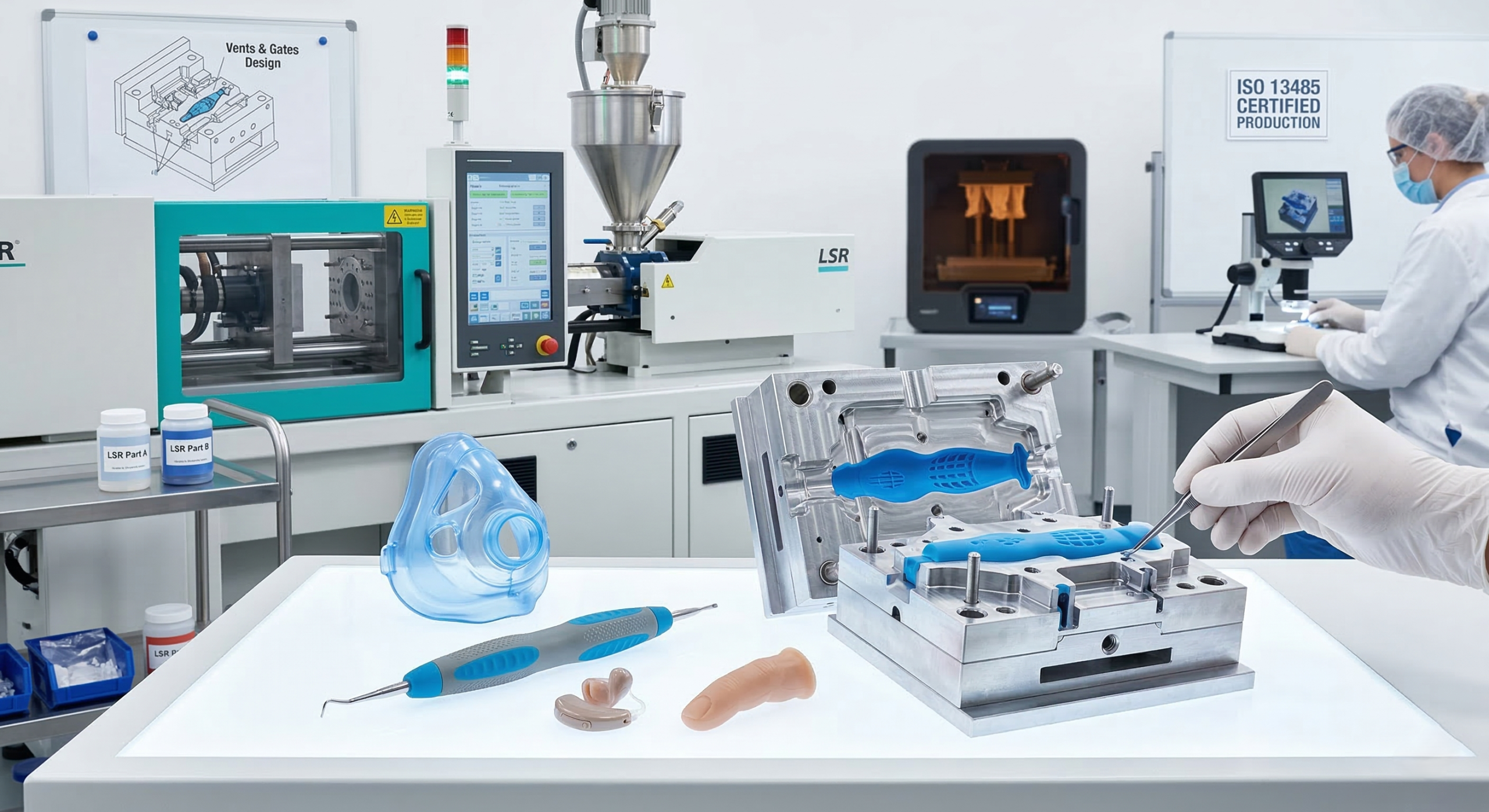
Creating silicone medical devices requires a strategic approach to material selection, precision tooling design, and specialized fabrication methods to meet rigorous healthcare standards. You likely face significant hurdles when trying to bring custom components to market, especially with the high costs associated with traditional metal tooling. Delays in the prototyping phase can stall your clinical validation or cause you to miss critical market windows entirely. Modern medical custom silicone molding provides a high-efficiency solution that bridges the gap between digital design and physical medical-grade parts.
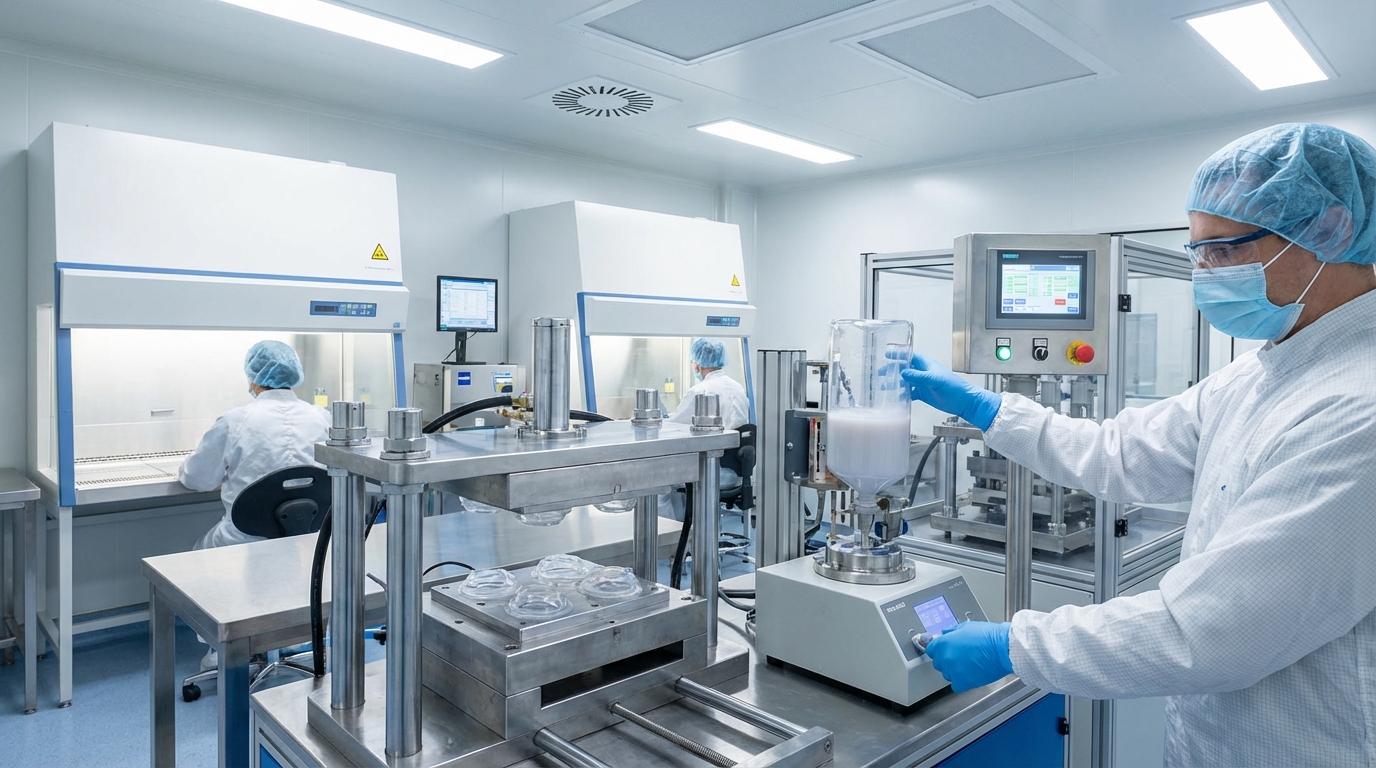
What is medical custom silicone molding and its applications?
Medical custom silicone molding is a specialized manufacturing process used to produce high-precision, flexible, and biocompatible components for the healthcare sector. This versatile technology is essential for creating everything from custom hearing aids and respiratory masks to specialized handles and grips for surgical instruments. By utilizing medical custom silicone molding, you can achieve the complex geometries required for patient-matched anatomical models and advanced prosthetics.
Methods for silicone part production
The truth is: there are several ways to approach production depending on your volume requirements. Direct printing is excellent for complex internal geometries, while injection molding remains the gold standard for mass-market scalability.
- Direct silicone 3D printing
- Compression molding for gaskets
- Injection filling for complex seals
Direct printing vs. molding techniques
Choosing the right technique ensures that your medical device performs reliably under clinical stress. Here is the deal: while printing is faster for one-off prototypes, molding offers superior surface finish for high-volume production.
Key Takeaway: Understanding the specific application of your device allows you to select a production method that balances speed, cost, and precision.
| Production Method | Best Use Case | Typical Volume |
|---|---|---|
| Direct 3D Printing | Complex Geometries | 1 – 50 Parts |
| Injection Molding | High-Precision Seals | 500+ Parts |
| Compression Molding | Gaskets & Pads | 100 – 1000 Parts |
High-precision methods ensure that your production cycle remains agile and cost-effective.
Why is silicone a preferred material for medical devices?
Silicone is a preferred material for medical devices because it offers a unique combination of thermal stability, chemical resistance, and exceptional biocompatibility. In the context of medical custom silicone molding, these properties ensure that the final product can withstand sterilization processes like autoclaving without losing mechanical integrity. It remains soft and flexible across a wide temperature range, making it ideal for devices that interact directly with human tissue.
Key mechanical and biocompatible properties
But wait, there is more: silicone’s inherent purity makes it less likely to cause allergic reactions compared to latex or other synthetic elastomers. Its high tear strength and elongation properties are critical for wearable devices that must endure constant movement.
- Excellent electrical insulation
- Resistance to UV and ozone
- Stable chemical structure
Evaluating skin and mucous membrane safety
When designing biocompatible silicone for wearables, you must verify that the material meets ISO 10993 standards. It is crucial to check the manufacturer’s safety data sheets to confirm the polymer is rated for its intended biological contact duration.
Key Takeaway: Silicone’s mechanical resilience and safety profile make it the most reliable choice for sensitive healthcare applications.
| Property | Medical Benefit | Impact |
|---|---|---|
| Biocompatibility | Reduced irritation | Higher patient safety |
| Heat Resistance | Sterilization-ready | Reusable devices |
| High Tear Strength | Durability | Long-term reliability |
Understanding these properties is vital for achieving long-term regulatory compliance.
What are the different types of medical silicones available?
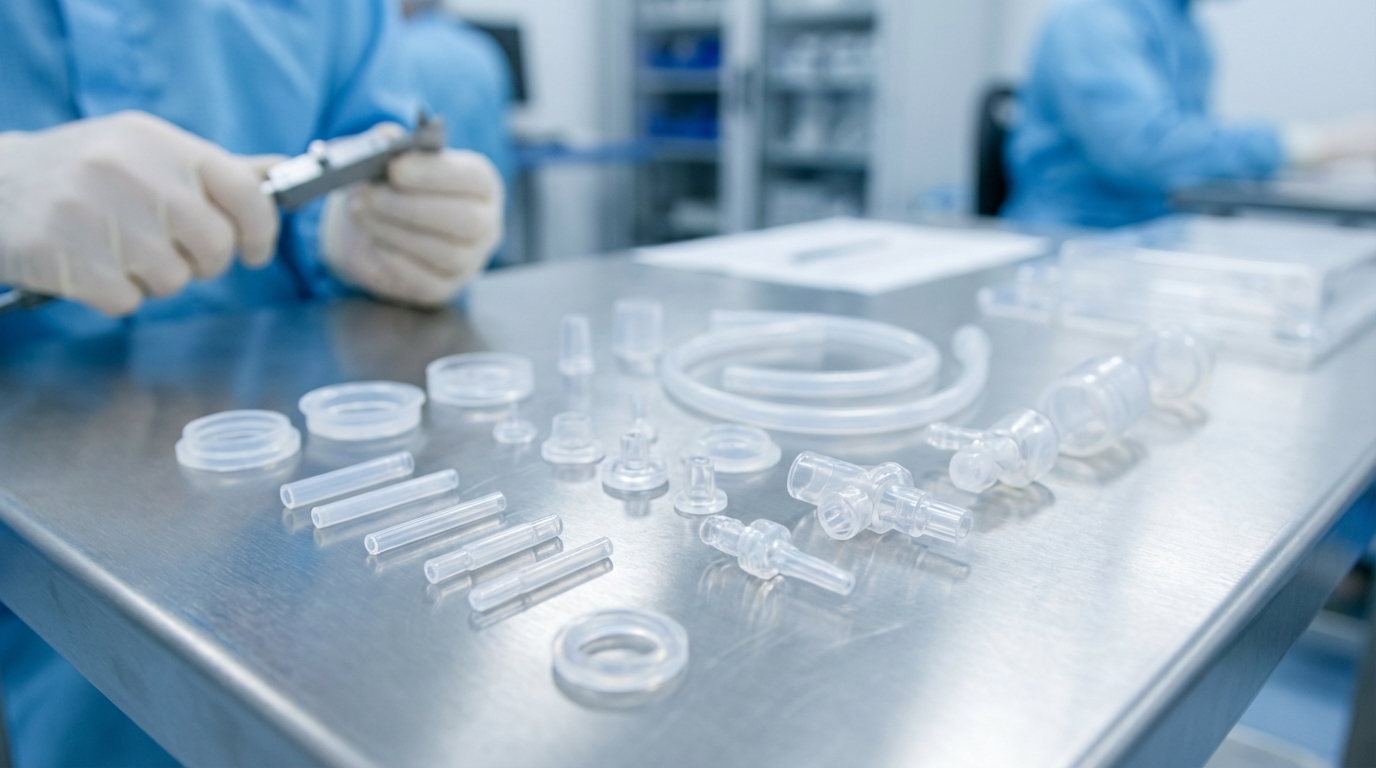
Medical silicones are primarily available in three forms: Liquid Silicone Rubber (LSR), High Temperature Vulcanized (HTV) silicone, and Room Temperature Vulcanized (RTV) silicone. When you engage in medical custom silicone molding, selecting the correct chemical grade is the first step toward a successful build. Each type offers different processing speeds and final material characteristics, from ultra-soft medical grade silicone parts to rigid insulators.
Liquid silicone rubber characteristics
Let’s break it down: LSR is typically used for high-volume injection molding because it cures quickly and maintains extremely tight tolerances. This material is fed into a mold through automated systems, ensuring consistent part quality across thousands of cycles.
- Low viscosity for easy flow
- Fast curing times
- High thermal stability
Understanding the durometer rating scale
Durometer measures the hardness of the silicone, which can range from a soft gel to a hard plastic feel. Most medical devices fall within the Shore 10A to 80A range, depending on whether you need a soft seal or a sturdy handle.
Key Takeaway: Matching the silicone type and durometer to your device’s function is essential for both performance and manufacturing efficiency.
| Silicone Grade | Processing Method | Hardness Range |
|---|---|---|
| LSR | Injection Molding | 10A – 80A |
| HTV | Compression / Extrusion | 30A – 90A |
| RTV | Gravity Casting | 10A – 60A |
Correct grade selection acts as the foundation for successful clinical validation.
How do you choose between 3D printing and silicone molding?
Choosing between 3D printing and molding depends on your project’s current stage, the complexity of the part, and your required lead time. If you need a single, complex prototype for a fit test, direct printing is often the most efficient path. However, medical custom silicone molding is superior when you require specific colors, transparency, or a larger batch of parts for beta testing.
Evaluating complex geometries and color needs
The bottom line: direct 3D printing can handle shapes that are physically impossible to release from a traditional mold. If your design features intricate internal channels or undercuts, printing might be your only viable option.
- Printing: Best for rapid iterations
- Molding: Best for material variety
- Hybrid: Using printed molds for silicone
Balancing time and biocompatibility
While printing is fast, molding allows you to use a wider range of certified medical-grade silicones. If your device requires extensive biocompatibility testing, molding with a known medical grade polymer is generally safer for regulatory approval.
Key Takeaway: Use 3D printing to finalize your design geometry and transition to molding when material properties and volume become the priority.
| Factor | 3D Printing | Silicone Molding |
|---|---|---|
| Initial Setup Cost | Low | Moderate |
| Lead Time | Hours | Days |
| Material Choice | Limited | Extensive |
Balancing these factors determines whether you achieve rapid prototyping or scale.
Why should you consider medical custom silicone molding for tooling?
Using 3D printed rapid tooling for molding is a powerful strategy because it drastically reduces the cost and lead time associated with metal molds. By adopting this approach to medical custom silicone molding, you can produce functional prototypes using true medical-grade silicone in just a few days. This allows you to perform in-house mold design and engineering without waiting weeks for a CNC-machined aluminum tool.
Advantages of rapid tooling
Here is the kicker: rapid tooling allows you to test multiple mold iterations simultaneously. If a design requires a slight adjustment to a sealing lip, you can simply print a new mold insert and resume casting the next day.
- Significant cost savings
- Faster design validation
- Reduced barrier to entry
Improving surface finish and precision
Stereolithography (SLA) molds provide the smooth surface finish required for medical devices. Since silicone captures every detail of the mold surface, high-resolution prints ensure that your final parts look and feel like production-grade items.
Key Takeaway: Rapid tooling bridges the gap between digital design and mass production, allowing for faster and cheaper device development.
| Benefit | Impact on Development | Metric |
|---|---|---|
| Reduced Cost | Lower R&D expenditure | Save up to 90% |
| Faster Iteration | Quicker design cycles | Days vs. Weeks |
| Design Freedom | Complex mold shapes | High versatility |
Rapid tooling provides a significant competitive advantage in time-sensitive medical markets.
How do you ensure compatibility between resins and silicones?
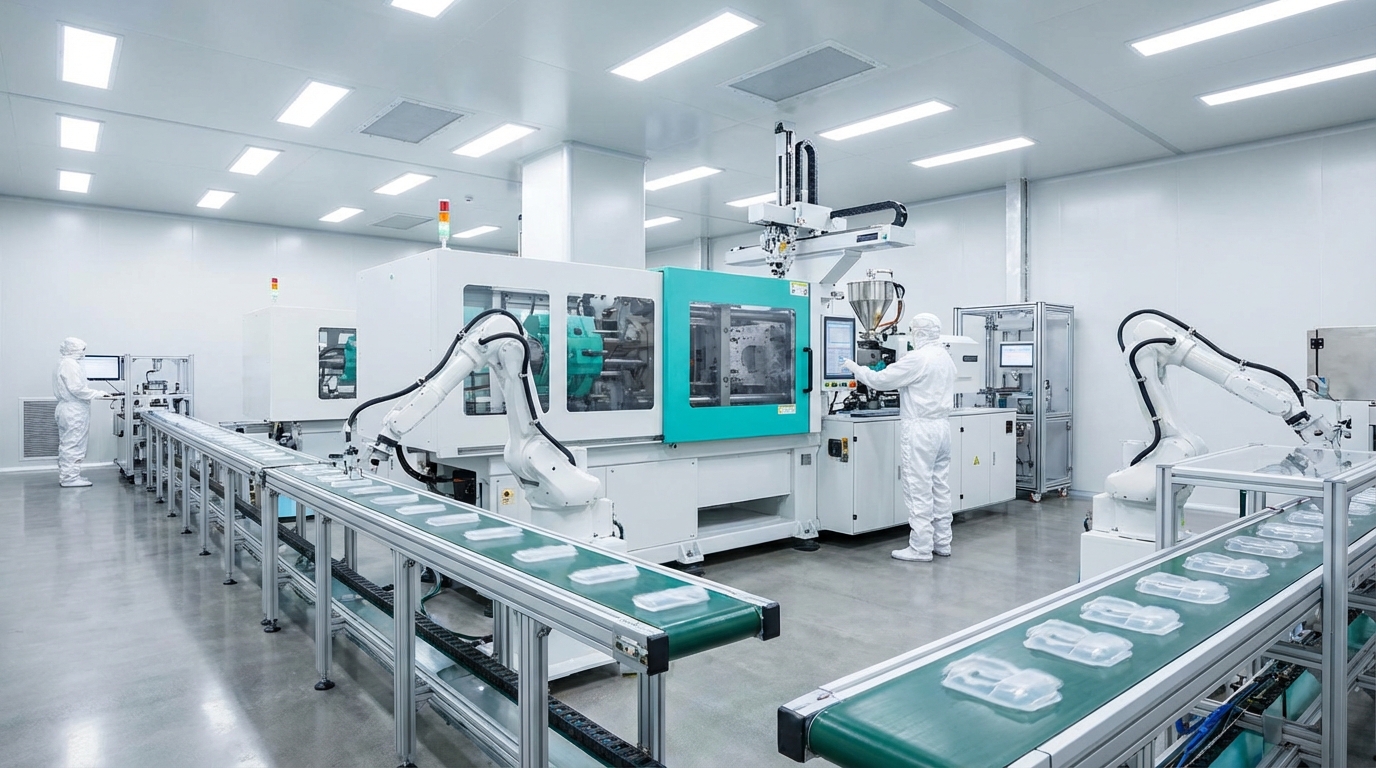
Ensuring compatibility between your mold resin and the silicone is vital to prevent cure inhibition, which can result in a tacky, unfinished part surface. In the world of medical custom silicone molding, this is a common challenge when using platinum-catalyzed silicones with 3D printed molds. You must ensure that the mold is chemically inert before the liquid silicone is introduced into the cavity.
Preventing cure inhibition in platinum silicones
Believe it or not: residual monomers on the surface of a 3D printed mold are the primary cause of curing failure. You must thoroughly wash your printed molds in clean isopropyl alcohol (IPA) to remove any uncured resin.
- Use secondary solvent washes
- Ensure full UV post-curing
- Allow the mold to outgas
Best practices for protective coatings
Applying a thin, clear acrylic spray or an epoxy coating to the interior of the mold can act as a reliable barrier. This not only prevents chemical interference but also gives your silicone parts a high-gloss, professional finish.
Key Takeaway: Proper post-processing of the mold is just as important as the design of the silicone part itself for a successful outcome.
| Step | Action | Objective |
|---|---|---|
| Solvent Wash | Double IPA rinse | Remove tacky resin |
| Post-Cure | Extended UV/Heat | Stabilize polymer |
| Coating | Acrylic Spray | Prevent inhibition |
Strict adherence to washing protocols prevents expensive failures during the molding phase.
Which mold type is best for your specific medical device?
Selecting the right mold type depends on whether you are encapsulating hardware, creating a custom one-off part, or producing a small series of gaskets. When you utilize medical custom silicone molding, you can choose between injection-filled molds, overmolds, or sacrificial eggshell molds. Each configuration serves a specific engineering purpose within the healthcare design workflow.
Injection filled and overmolding configurations
Think about this: if your device requires a silicone grip around a plastic handle, overmolding is your best choice. In this process, you suspend the hardware inside a multi-part mold before injecting the liquid silicone.
- Overmolding for grips
- Injection for complex seals
- Compression for flat parts
Using sacrificial eggshell molds for custom goods
Eggshell molds are thin-walled shells designed to be broken away after the silicone cures. This technique is perfect for creating unique, patient-specific medical devices like custom hearing aids or orthopedic inserts that cannot be de-molded traditionally.
Key Takeaway: The geometry and production volume of your medical device should dictate the mold configuration you select for manufacturing.
| Mold Type | Application | Reuse Potential |
|---|---|---|
| Overmold | Encapsulated hardware | Multi-use |
| Eggshell | Patient-specific parts | Single-use |
| Compression | Simple gaskets | High reuse |
Aligning mold types with geometry is the key to minimizing scrap rates.
What are the steps for a successful silicone molding process?
A successful molding process begins with meticulous mold design, including the placement of gates, vents, and alignment features. In medical custom silicone molding, you must account for the displacement of air to avoid bubbles and voids that could compromise the device’s structural integrity. Following a structured workflow ensures that your parts meet the high-quality standards required for clinical use.
Designing the mold and adding vents
Don’t overlook this: the placement of your air vents is critical for ensuring the silicone fills every corner of the mold. You should place vents at the highest points of the cavity where air is most likely to be trapped during the injection phase.
- Define the parting line
- Add draft angles (2 degrees)
- Incorporate alignment pins
Silicone preparation and degassing methods
Trapped air is the enemy of a high-quality silicone cast. You should always use a vacuum chamber to degas your liquid silicone before injection to ensure a dense, bubble-free part that meets medical specifications.
Key Takeaway: Precision in the design phase and patience during material preparation lead to consistent, high-fidelity results.
| Process Stage | Key Action | Purpose |
|---|---|---|
| Design | Add 0.1mm offset | Perfect fitment |
| Preparation | Vacuum degassing | Remove air bubbles |
| Curing | Temperature control | Consistent hardness |
Systematic process control guarantees that every medical device meets safety standards.

How can case studies guide your medical custom silicone molding?
Case studies from industry leaders provide valuable insights into how to successfully navigate the transition from a digital model to a physical medical product. By observing how others use medical custom silicone molding, you can learn how to solve complex challenges like material bonding or rapid clinical prototyping. These real-world examples serve as a blueprint for your own development journey.
Prototyping custom medical devices
It gets better: companies developing patient-specific pessaries have used 3D printed eggshell molds to create custom-fit devices. This approach significantly improved patient outcomes by providing a more precise fit than standardized, off-the-shelf medical products.
- Patient-matched audiology parts
- Custom orthopedic prototypes
- Rapid surgical tool grips
Producing end-use overmolded prosthetic grippers
Advanced bionic hands utilize overmolded silicone fingers to provide a touch-sensing, high-grip surface. Using rapid tooling allowed the engineers to test dozens of grip textures in a fraction of the time required for traditional manufacturing.
Key Takeaway: Case studies prove that hybrid manufacturing methods can deliver production-quality parts with significant time and cost savings.
| Case Study Focus | Industry | Major Win |
|---|---|---|
| Custom Pessaries | Women’s Health | Patient-specific fit |
| Bionic Grippers | Prosthetics | Superior tactile grip |
| Hearing Aids | Audiology | Rapid custom scaling |
Learning from successful case studies reduces the learning curve for your team.
How can you start producing silicone medical devices today?
Starting your production journey requires a clear understanding of ISO certified silicone manufacturing and a partner who can support you from DFM to mass production. In medical custom silicone molding, you need to ensure your supply chain can handle the regulatory demands of the healthcare industry. By focusing on quality standards and engineering support, you can turn a concept into a validated medical device with minimal risk.
Transitioning from prototyping to manufacturing
Make no mistake: the jump from a single prototype to thousands of parts requires a stable, repeatable process. You must work with a facility that offers controlled manufacturing routes, including LSR and compression molding, to ensure batch-to-batch consistency.
- Review ISO 13485 compliance
- Request DFM suggestions
- Verify cleanroom capabilities
Setting quality standards for healthcare products
High-quality manufacturing isn’t just about the final part; it’s about the traceable documentation and inspection protocols that back it up. Ensure your partner uses CCD visual inspection and dimensional measurement tools to verify every critical feature.
Key Takeaway: Choosing an experienced, certified manufacturing partner is the most critical decision you will make in the lifecycle of your silicone medical device.
| Readiness Factor | Requirement | Importance |
|---|---|---|
| Certification | ISO 9001 / 13485 | Mandatory for health |
| Engineering | DFM Review | Prevents mold failure |
| Inspection | CCD / Dimensional | Ensures part safety |
Partnering with an expert manufacturer streamlines your path to international markets.
Bringing a new healthcare product to life is a complex journey fraught with technical and regulatory hurdles. This article has detailed how modern molding techniques and rapid tooling can eliminate the high costs of traditional manufacturing and accelerate your time to market. Whether you are developing custom prosthetics or high-volume surgical tools, we can provide the ISO-certified engineering and stable mass production you need to succeed. Our mission is to transform your complex designs into reliable, medical-grade components through a controlled, repeatable process. To see how our expertise can support your next innovation, please reach out to us for a custom consultation.
*
Frequently Asked Questions
Can I use any silicone for medical parts?
No, you must exclusively use medical-grade silicones that have been tested for biocompatibility and meet ISO 10993 or USP Class VI standards. Using non-certified materials can lead to device failure and severe patient safety risks.
Is 3D printing better than molding for prototypes?
It depends on your goals; 3D printing is faster for verifying geometry, while molding is better for testing the actual medical-grade material properties. Most engineers use a hybrid approach by 3D printing the molds to cast the final silicone.
How do I know if my mold is fully cured?
It depends on the resin type, but usually, a fully cured SLA mold will lose its surface tackiness and may develop a slight yellow tint. Ensuring the mold is completely cured is vital to prevent it from inhibiting the silicone’s own curing process.
Can I overmold silicone onto metal hardware?
Yes, silicone can be bonded to metal or plastic inserts through mechanical interlocking or the use of specialized primers. This is a common practice for creating ergonomic grips on surgical instruments or durable wearable devices.
Are all silicones safe for skin contact?
No, only specific platinum-catalyzed silicones are typically rated for prolonged skin or mucous membrane contact. You must always consult the manufacturer’s Material Safety Data Sheet (MSDS) to verify the safety rating for your specific application.