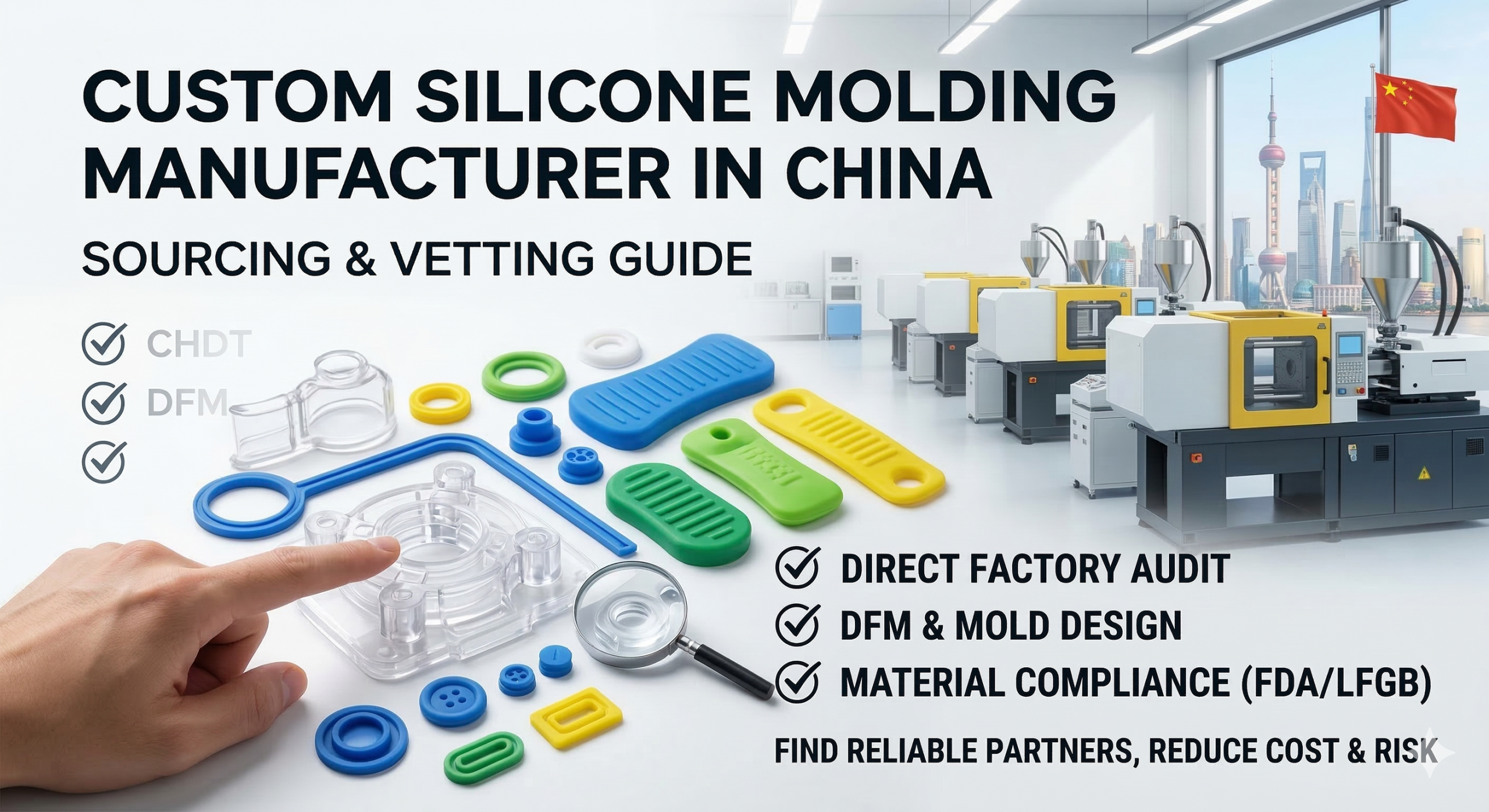
Finding the top 10 silicone injection molding companies in China requires evaluating technical precision, material compliance, and factory-direct reliability. Many businesses struggle with inconsistent part quality, material failure, and delayed lead times when sourcing from overseas manufacturers. A single batch of defective seals or a late shipment can halt production lines, ruin brand reputation, and lead to massive financial losses. By learning how to choose a reliable custom silicone molding manufacturer in China? and vetting their in-house engineering and quality systems, you can secure factory-direct pricing while maintaining Western quality standards.
How to choose a reliable custom silicone molding manufacturer in China?
You choose a reliable partner by verifying their in-house engineering, quality control systems, and specific compliance certifications. Knowing how to choose a reliable custom silicone molding manufacturer in China? involves looking past low prices and focusing on technical transparency.
Avoiding common sourcing pitfalls
Many buyers fall into the trap of hiring middleman trading companies that lack technical depth. Direct factories provide better communication and accountability for your specific design requirements.
- Verify if the supplier owns their mold-making equipment.
- Ask for real-time video audits of their production floor.
- Check for ISO 9001 or IATF 16949 certifications.
Here is the deal:
A direct factory relationship eliminates the markup of a middleman and gives you direct access to the engineers.
The value of a one-stop factory model
Integrated services from tooling to mass production reduce the risk of quality drift between different vendors. This model ensures that the person who designed the mold is also responsible for the final part’s performance.
Look:
When one team handles the entire lifecycle, they take full ownership of the final dimensions and material properties.
| Metric | Direct Factory | Trading Company |
|---|---|---|
| Technical Support | High (Internal Engineers) | Low (Communication Link) |
| Price Transparency | Factory Direct | Commission Based |
| Quality Control | Real-time / In-house | Third-party / Inspections |
The comparison above highlights why direct factory engagement is the safest route for complex industrial or medical silicone projects.
Key Takeaway: Choosing a direct manufacturer ensures you receive technical accountability and the lowest total cost of ownership.
Why is in-house mold making vital for your success?
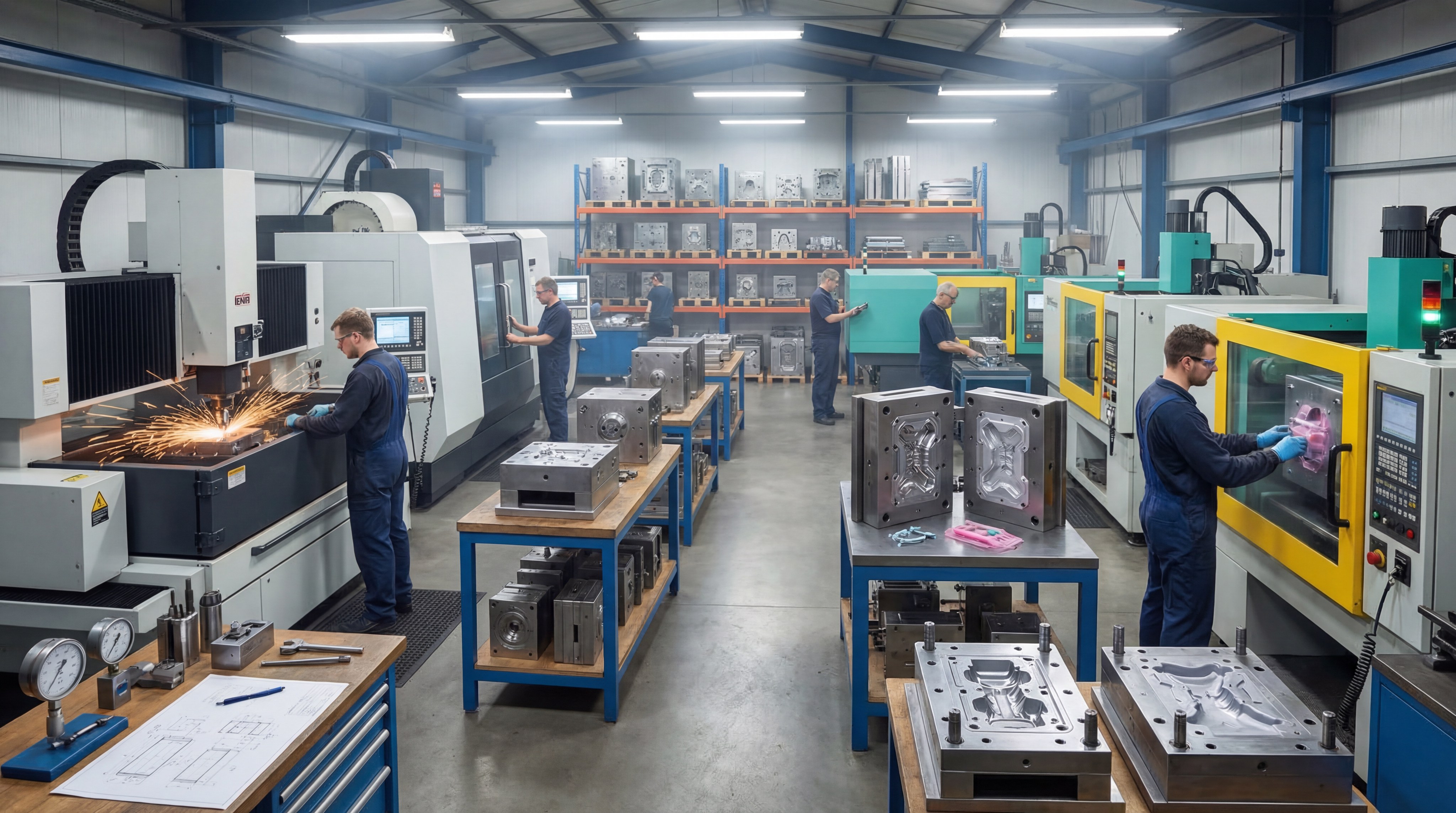
In-house tooling allows for faster design adjustments and prototype iterations without the delays of third-party vendors. Understanding how to choose a reliable custom silicone molding manufacturer in China? means prioritizing suppliers who control their own mold shop.
Reducing iterations with in-house design
Internal tooling departments can modify steel molds in hours rather than days. This agility is crucial when you are fine-tuning tolerances during the prototyping phase.
Bottom line:
Speed to market is often determined by how quickly your manufacturer can implement engineering changes.
Balancing precision and lead time
High-precision CNC machining ensures that your molds produce parts with minimal flash and consistent dimensions over thousands of cycles. Quality tooling is a long-term investment that prevents production downtime later.
- Use high-grade steel for multi-cavity molds to ensure longevity.
- Ensure the factory uses EDM and high-speed CNC for intricate details.
- Request regular mold maintenance logs to track tool health.
| Tooling Type | Avg. Lead Time | Unit Cost Impact |
|---|---|---|
| In-house Tooling | 15-20 Days | Low (Direct Costs) |
| Outsourced Tooling | 25-35 Days | High (Markup + Delays) |
This data shows that internal tooling control significantly shortens your development cycle while keeping costs predictable.
Key Takeaway: In-house mold making gives you the flexibility to pivot designs quickly while maintaining superior part accuracy.
Which molding process suits your specific budget and volume?
Selecting the right manufacturing route depends on your part complexity, required volume, and initial capital for tooling. Determining how to choose a reliable custom silicone molding manufacturer in China? requires an understanding of different production methods.
Liquid Silicone Rubber (LSR) vs. Compression
LSR molding is a highly automated process ideal for high-precision, high-volume components with complex geometries. Compression molding is more cost-effective for simpler parts or smaller production runs where lower tooling costs are preferred.
Look:
Automated LSR systems reduce human error and labor costs, making them the standard for medical and electronics industries.
- LSR: Best for complex seals, valves, and medical devices.
- Compression: Best for large gaskets, pads, and low-volume prototypes.
- Overmolding: Combines silicone with plastic or metal for hybrid parts.
Calculating the total cost of ownership
Initial unit price is only one factor; you must also consider scrap rates, maintenance, and secondary finishing operations. High-quality processes often save money over time by reducing the need for manual trimming or sorting.
The reality is:
Cheaper processes often lead to higher secondary costs due to flash removal or high rejection rates.
| Feature | LSR Injection | Compression Molding |
|---|---|---|
| Precision | Ultra-High | Moderate |
| Automation | Full | Manual/Semi-Auto |
| Tooling Cost | Higher | Lower |
Choosing based on this matrix ensures you don’t overpay for precision you don’t need or sacrifice quality for a lower entry price.
Key Takeaway: Aligning your process choice with your volume goals prevents unnecessary tooling investments and optimizes unit costs.
How can you verify material safety and compliance standards?
You verify safety by requesting traceable raw material batch records and independent test reports for specific standards. Part of knowing how to choose a reliable custom silicone molding manufacturer in China? is ensuring they use authentic, certified resins.
Understanding FDA, LFGB, and ISO standards
Different industries require specific certifications, such as food-grade LFGB or medical-grade biocompatibility. You should always demand current certificates that match the material batch used for your specific order.
Here is the deal:
Material fraud is a major risk; only work with suppliers who provide full traceability from the raw material manufacturer.
- Request FDA/LFGB reports for any food-contact parts.
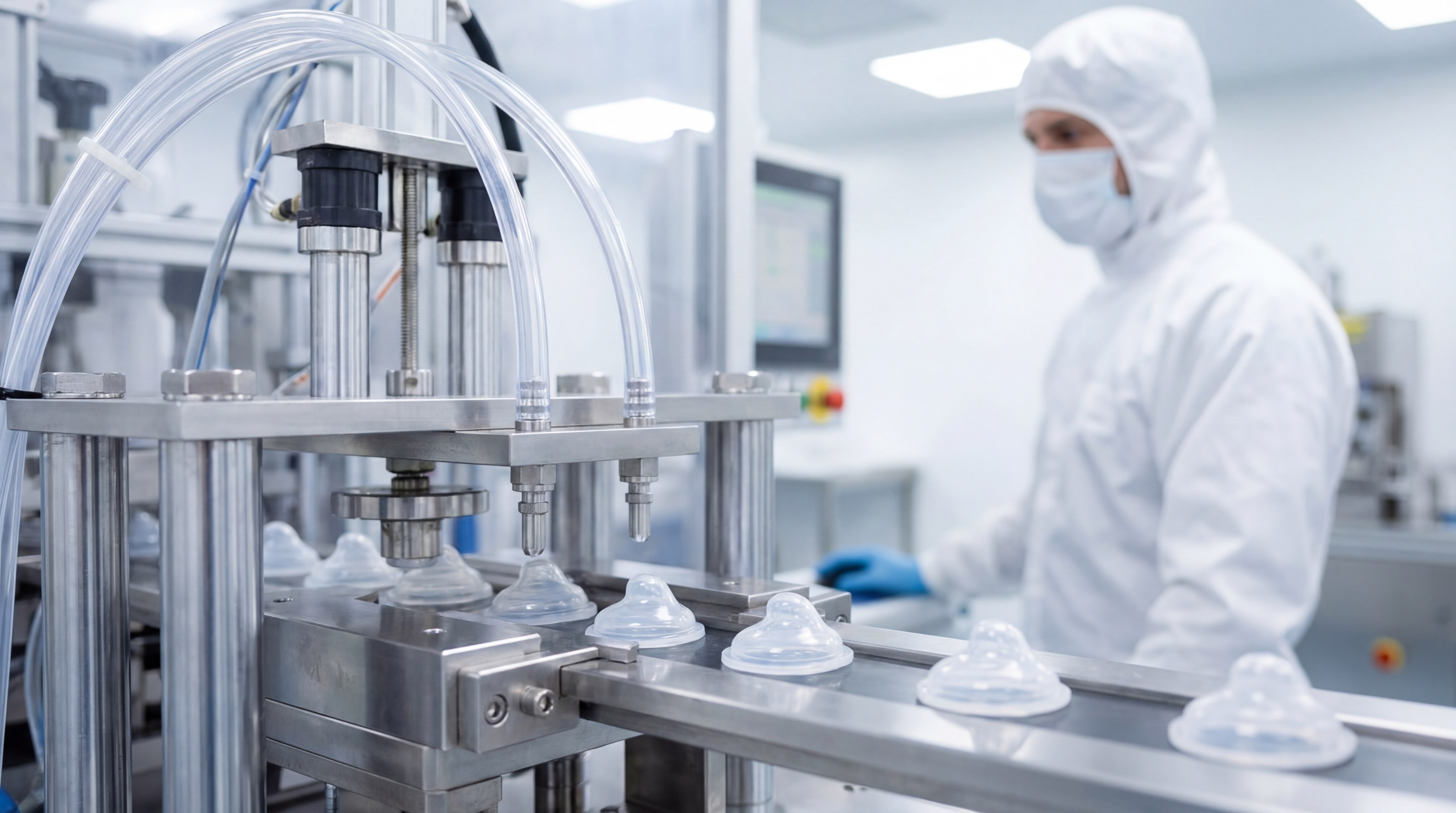
- Ensure medical parts are produced in a certified cleanroom environment.
- Ask for RoHS and REACH compliance for electronic components.
Ensuring material traceability
Traceability ensures that every part can be linked back to a specific material lot and production date. This is vital for recall protection and maintaining consistency across multiple production years.
But wait, there’s more:
Quality manufacturers use Incoming Quality Control (IQC) to test Shore hardness and tear strength before production begins.
| Industry | Primary Certification | Key Documentation |
|---|---|---|
| Medical | ISO 13485 | Biocompatibility Reports |
| Automotive | IATF 16949 | Material Data Sheets (MSDS) |
| Consumer | FDA / LFGB | Food-Grade Test Results |
This checklist serves as your baseline for vetting a supplier’s ability to meet global safety requirements.
Key Takeaway: Material transparency protects your brand from liability and ensures your products are safe for the end user.
Why should you demand a DFM review before tooling begins?
A Design for Manufacturing (DFM) review identifies potential production failures like air traps or uneven wall thickness early. Learning how to choose a reliable custom silicone molding manufacturer in China? means finding a partner who offers this engineering feedback for free.
Preventing failure through proactive engineering
DFM helps optimize part geometry to ensure the silicone flows correctly into the mold cavities. This prevents expensive tooling modifications after the steel has already been cut.
Look:
A good DFM report will suggest changes to radii, wall thickness, and gate locations to improve part quality.
- Check for potential parting line flash in the design.
- Identify thick sections that might cause “sink” or curing issues.
- Evaluate draft angles to ensure easy part ejection from the mold.
Strategy for tolerances and shrinkage
Silicone has a unique shrinkage rate that must be accounted for in the mold design to reach final specifications. Expert engineers apply these calculations based on the specific grade of silicone rubber you select.
The reality is:
Generic shrinkage rates lead to assembly failures; you need a supplier who understands material-specific behavior.
| DFM Checkpoint | Purpose | Impact on Project |
|---|---|---|
| Wall Thickness | Ensure uniform curing | Prevents warping and sink |
| Draft Angles | Facilitate ejection | Reduces surface damage |
| Gate Placement | Control material flow | Minimizes visible cosmetic marks |
This analytical approach to design ensures that the transition from 3D model to physical part is seamless and error-free.
Key Takeaway: Demanding a DFM review saves weeks of troubleshooting and thousands of dollars in mold rework costs.
How do factories maintain consistent quality in mass production?
Factories maintain consistency through a rigorous three-stage QC system that monitors parts from material entry to final shipping. When researching how to choose a reliable custom silicone molding manufacturer in China?, you must evaluate their inspection equipment and protocols.
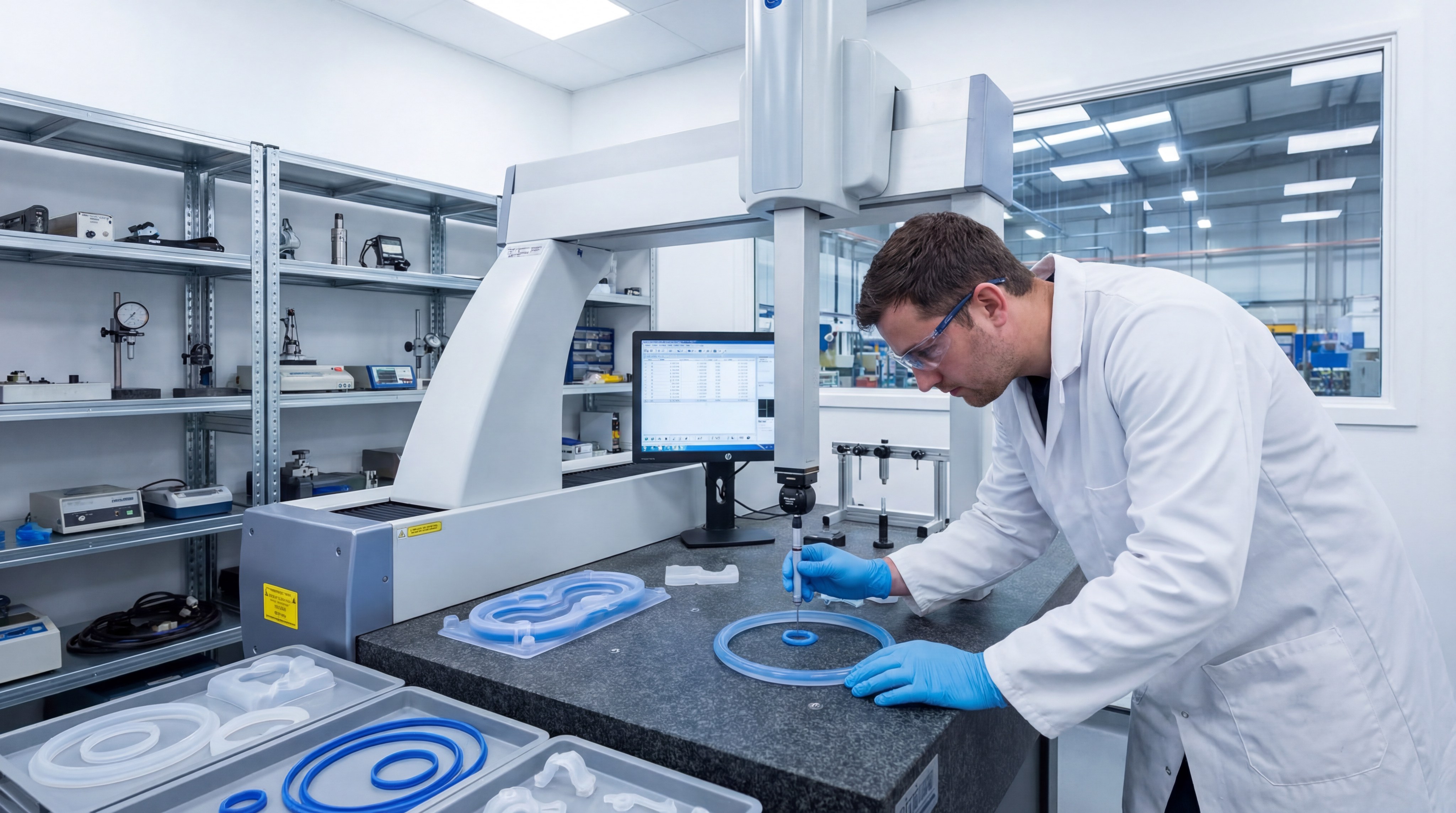
The three-stage quality control system
A robust system includes Incoming Quality Control (IQC), In-Process Quality Control (IPQC), and Final Quality Control (FQC). This ensures that defects are caught immediately at the machine rather than at the end of a production run.
Here is the deal:
Without IPQC, a single machine error could ruin an entire day’s production before anyone notices.
- IQC verifies material hardness and color consistency.
- IPQC involves hourly checks of critical-to-quality dimensions.
- FQC provides a final visual and functional audit before packaging.
Advanced inspection equipment
Modern factories use CCD visual inspection and microscopic analysis to detect micro-cracks or surface imperfections. These tools provide a level of accuracy that human inspection alone cannot achieve.
Bottom line:
Automated inspection ensures 100% verification for critical components like medical valves or electronic seals.
| QC Test Type | Parameter Checked | Industry Standard |
|---|---|---|
| Hardness Test | Shore A Durometer | ASTM D2240 |
| Dimensional | Tolerance Accuracy | ISO 3302-1 |
| Tensile | Pull/Tear Strength | ISO 37 |
These standardized tests ensure that every batch of parts performs exactly like the approved prototypes.
Key Takeaway: Rigorous production discipline prevents batch rejections and ensures your assembly line never stops due to part defects.
Is Liquid Silicone Rubber (LSR) right for your components?
LSR is the superior choice for high-precision components that require extreme durability and complex geometries. Finding how to choose a reliable custom silicone molding manufacturer in China? often leads to suppliers specializing in this automated technology.
High-precision benefits and automation
The LSR process uses a closed-loop system to inject liquid silicone into a heated mold for rapid curing. This automation eliminates manual labor and results in parts with virtually no flash or trimming required.
Look:
LSR is the gold standard for high-volume production because of its consistent cycle times and high output.
- Faster cycle times compared to traditional compression molding.
- Better dimensional stability for parts with thin walls.
- Excellent for multi-cavity molds producing millions of units.
Biocompatibility and thermal stability
LSR is naturally inert, making it perfect for medical devices, baby products, and high-temperature automotive gaskets. It maintains its physical properties across a wide temperature range from -60°C to over 200°C.
Here is the deal:
If your part requires a soft touch combined with chemical resistance, LSR is almost always the best material choice.
| Property | LSR Performance | Application Value |
|---|---|---|
| Clarity | High Transparency | Perfect for optical/medical |
| Tear Strength | Excellent | Durable for flexible parts |
| Heat Resistance | Up to 250°C | Ideal for engine components |
This technical performance makes LSR the preferred material for demanding engineering environments where failure is not an option.
Key Takeaway: LSR provides the precision and material stability required for high-stakes medical and industrial applications.
How does overmolding improve your product’s performance?
Overmolding improves performance by creating a seamless, chemical bond between silicone and a plastic or metal substrate. When learning how to choose a reliable custom silicone molding manufacturer in China?, check if they have multi-shot injection capabilities.
Bonding silicone to plastic or metal inserts
This process eliminates the need for messy adhesives and creates a waterproof, vibration-dampening seal. It is commonly used for ergonomic tool grips, wearable device straps, and integrated electronic housings.
Bottom line:
Overmolding reduces assembly steps and creates a more premium, durable product for your customers.
- Silicone + PC: Great for consumer electronics and housings.
- Silicone + Stainless Steel: Essential for medical surgical instruments.
- Silicone + PA: Used in automotive for robust, heat-resistant seals.
Enhancing durability and ergonomics
By adding a soft-touch silicone layer to a rigid plastic core, you improve the end-user experience while maintaining structural integrity. The chemical bond ensures the silicone will not peel or delaminate over time.
Look:
A strong chemical bond is achieved through specific primer applications or self-bonding LSR grades.
| Substrate | Bond Strength | Common Use Case |
|---|---|---|
| Plastic (PC/PBT) | High (Chemical) | Smartwatch Straps |
| Metal (AL/SS) | Moderate (Mechanical) | Surgical Tool Handles |
| Glass | High (Adhesion) | Optical Seals |
Integrating different materials into a single part simplifies your supply chain and enhances the functional reliability of your product.
Key Takeaway: Overmolding creates high-performance hybrid parts that combine structural strength with functional flexibility.
Which regions in China offer the best silicone manufacturing?
The Pearl River Delta, specifically Dongguan and Shenzhen, offers the world’s most robust supply chain for silicone manufacturing. You can how to choose a reliable custom silicone molding manufacturer in China? by focusing your search on these mature industrial clusters.
The Dongguan and Shenzhen advantage
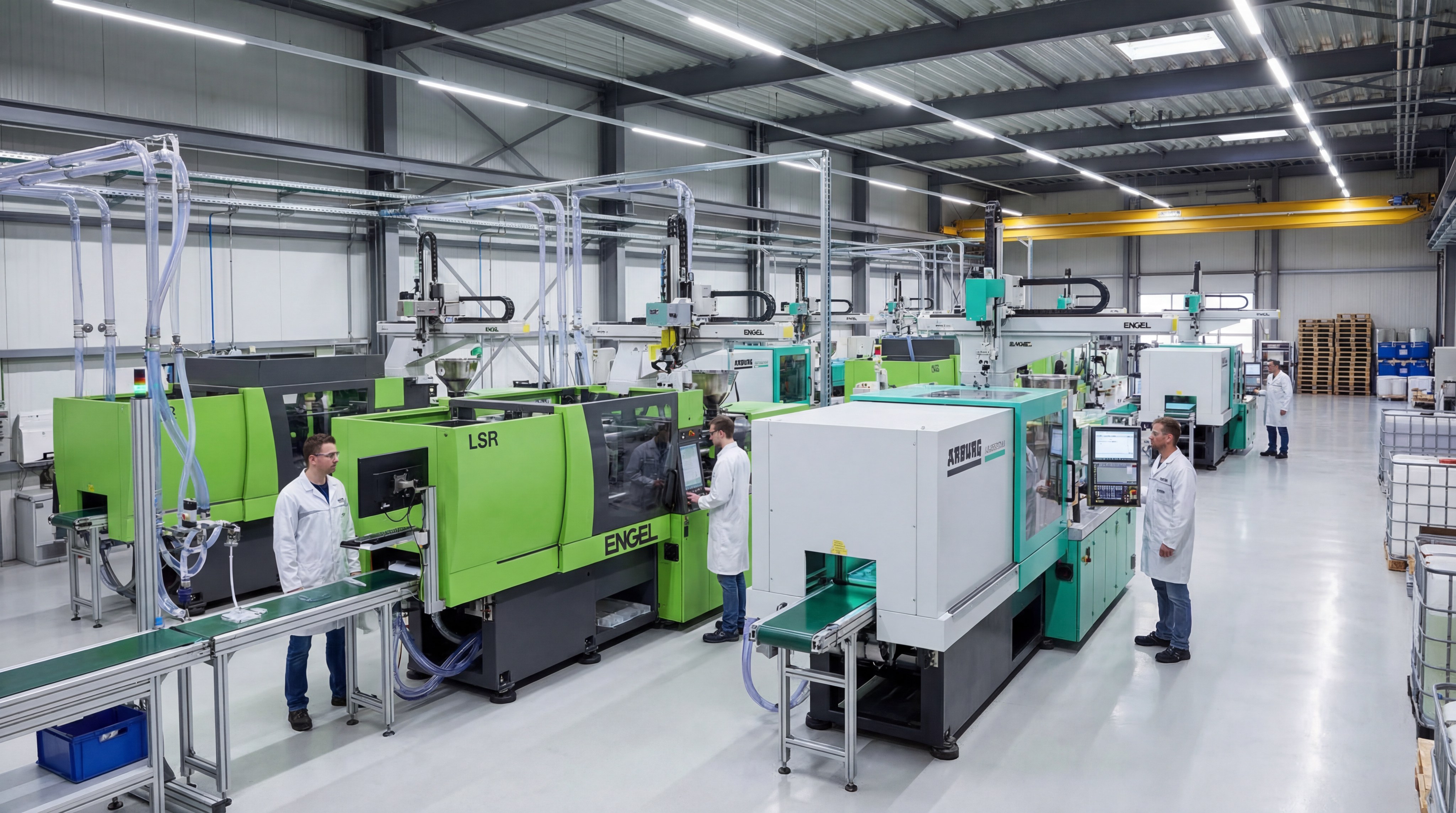
These cities host a massive concentration of raw material suppliers, mold-making experts, and specialized secondary processors. This proximity allows for faster sourcing of specialty resins and quicker turnaround on tooling components.
The reality is:
Manufacturing in these hubs gives you access to the most experienced engineering talent in the global silicone industry.
- Dongguan: The global hub for hardware and mold-making precision.
- Shenzhen: Leader in high-tech electronics and wearable silicone integration.
- Zhejiang: Specialized in high-volume, lower-complexity consumer goods.
Assessing regional specialization
While many regions produce silicone, the South China cluster is unmatched for medical-grade and high-precision LSR manufacturing. The local logistics infrastructure also ensures that international shipments are handled with professional efficiency.
Look:
Choosing a factory in Dongguan means your parts can be on a ship or plane within hours of final inspection.
| Region | Primary Focus | Technical Level |
|---|---|---|
| Dongguan | Industrial/Medical/Molds | Ultra-High |
| Shenzhen | Consumer Electronics/Wearables | High |
| Ningbo | Auto/General Industrial | Moderate |
This regional breakdown helps you align your project requirements with the local expertise available in different Chinese provinces.
Key Takeaway: Sourcing from Dongguan or Shenzhen provides the highest level of technical support and logistics convenience for global buyers.
How to assess a supplier’s export and logistics reliability?
You assess reliability by evaluating their historical export data, English communication skills, and ability to manage complex shipping terms. Knowing how to choose a reliable custom silicone molding manufacturer in China? involves vetting their administrative professionalism.
Navigating international shipping and customs
A reliable supplier should be comfortable with various shipping terms like FOB, DAP, or DDP. They must provide accurate documentation, including packing lists, certificates of origin, and material declarations, to ensure smooth customs clearance.
Bottom line:
A factory that cannot handle paperwork will cause expensive delays at your local port.
- Check if they have a dedicated export department.
- Ask for references from current Western clients.
- Verify their experience with international freight forwarders.
Communication and project management
Successful offshore manufacturing depends on clear, proactive communication throughout the project lifecycle. You need a partner who provides regular status updates and can explain technical issues in clear English.
Look:
The best factories assign a single point of contact who understands both the engineering and the commercial side of your project.
- Expect DFM feedback within 24 to 48 hours of your inquiry.
- Demand clear timelines for tooling, sampling, and mass production.
- Use instant messaging tools for real-time problem-solving.
| Readiness Factor | Good Supplier | Red Flag |
|---|---|---|
| Response Time | < 24 Hours | > 3 Days |
| Documentation | Detailed/Traceable | Vague/Missing |
| Terms Offered | Flexible (FOB/DDP) | EXW Only |
Evaluating these factors before you sign a contract will protect you from shipping headaches and communication breakdowns.
Key Takeaway: Professional export management is just as important as manufacturing quality for ensuring your parts arrive on time and on budget.
Frequently Asked Questions (FAQ)
Can I get medical-grade silicone parts that are FDA-compliant?
Yes, reputable manufacturers use traceable, medical-grade raw materials. They can provide comprehensive test reports for FDA, RoHS, and REACH to ensure your products meet global health and safety standards.
What is the best way to ensure my design remains confidential?
Professional manufacturers will sign a Non-Disclosure Agreement (NDA). You should request this before sharing any 3D files or proprietary project details to protect your intellectual property.
Can I visit the factory before placing a large order?
Absolutely, and you should. If you cannot visit in person, request a live video tour of the production floor and the quality control laboratory to verify their capabilities and equipment.
What is the difference between silicone injection and compression molding?
Injection molding (LSR) is automated and best for high-volume precision, while compression is manual and more cost-effective for simpler parts. Your choice should be based on part complexity and the total number of units needed.
What file formats are required for a quote?
Most manufacturers require 3D files in STP, IGS, or STEP formats. Providing 2D PDF drawings with tolerance specifications is also necessary for the engineering team to give you an accurate price.
Conclusion
Choosing the right silicone injection molding company in China is the difference between a successful product launch and a costly supply chain failure. By prioritizing factories that offer in-house tooling, robust DFM support, and certified material traceability, you eliminate the most common risks of overseas sourcing. We specialize in transforming your complex designs into high-quality silicone components that meet strict global standards. Our team is dedicated to providing transparent communication and technical excellence from the first prototype to mass production. To bring your next project to life with a partner committed to your success, contact us today for an expert consultation and quote.