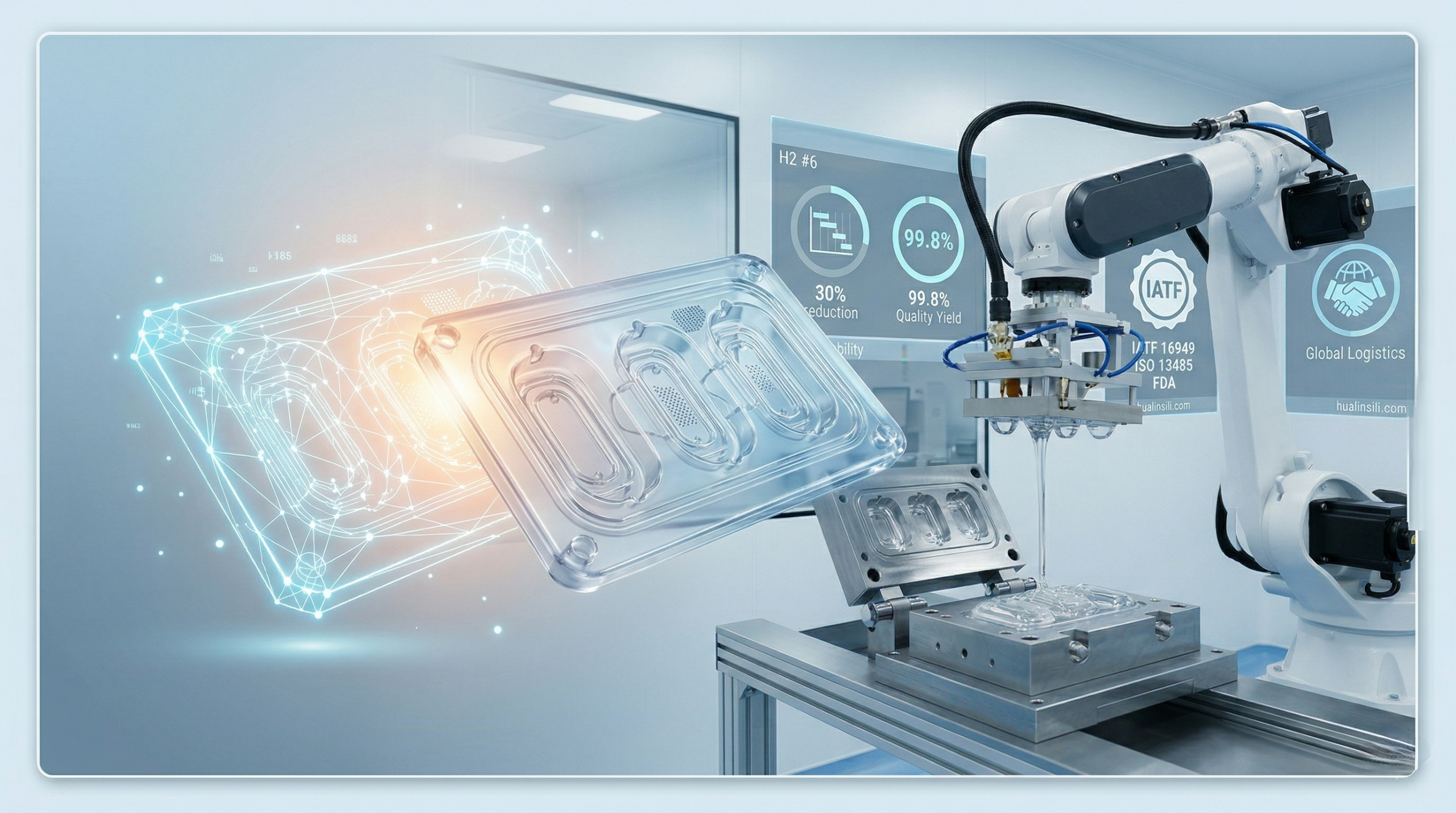
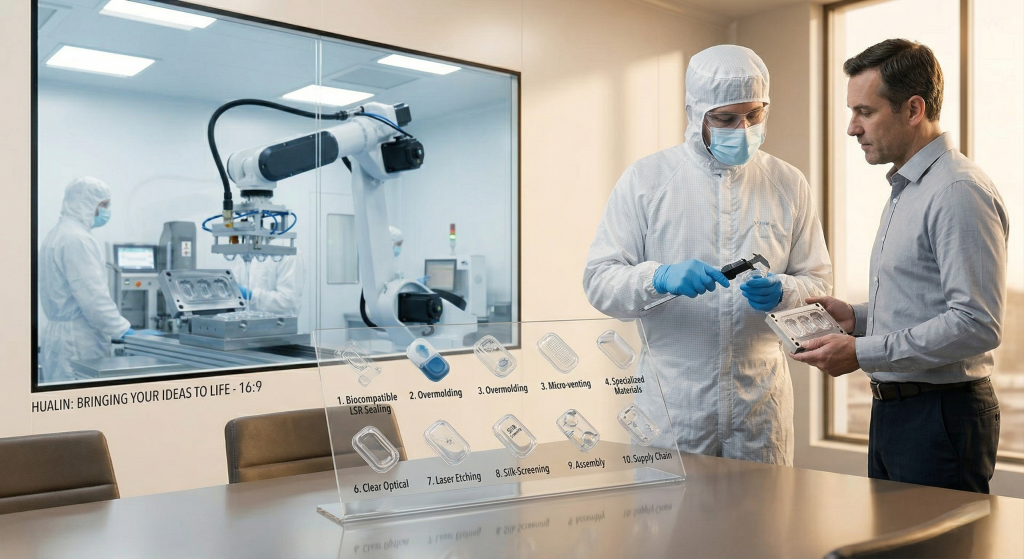
A custom Silicone Mold Manufacturer brings your ideas to life by transforming abstract design concepts into tangible, high-quality production parts through precision engineering and advanced material science. Whether you are navigating the complexities of medical-grade device components or developing the next viral consumer wearable, the journey from a digital sketch to a physical product is fraught with technical hurdles. But here’s the kicker… many innovators face the agonizing reality of “design-to-manufacturing” gaps where beautiful concepts fail during the molding process or incur massive cost overruns. We bridge this gap by offering integrated tooling and liquid silicone rubber (LSR) expertise to ensure your vision remains intact from the first prototype to the millionth unit.
Imagine you have spent months perfecting a new ergonomic wearable design, only to find that your current supplier cannot maintain the tight tolerances required for the waterproof seal. This leads to leaked costs, missed launch windows, and a product that simply doesn’t feel premium. It’s a nightmare, right? Our professional engineering team eliminates this friction by providing a comprehensive DFM (Design for Manufacturing) analysis and in-house precision tooling. By partnering with a dedicated facility that understands both solid and liquid silicone, you gain a competitive edge through speed and technical reliability.
1. Why Hire a Custom Silicone Mold Manufacturer for Your Project?
A custom Silicone Mold Manufacturer provides the specialized technical expertise and precision machinery required to produce complex, high-performance parts that standard off-the-shelf solutions simply cannot match. Wait, let’s dig a little deeper… choosing a custom partner means you are not just buying a mold; you are investing in a tailored production strategy that accounts for material shrinkage, parting lines, and venting.
What are the benefits of customized tooling?
Customized tooling allows you to dictate every physical property of your component, ensuring that the silicone behaves exactly as needed under stress or environmental exposure.
- Precision Control: Achieve tolerances as tight as ±0.05mm for critical sealing areas.
- Material Optimization: Select specific durometers (hardness) from 10A to 80A.
- Feature Integration: Incorporate complex undercuts or overmolding with ease.
The real story is… that custom tooling reduces long-term waste by optimizing the gate placement and reducing flash. This translates directly to lower per-part costs during high-volume production runs.
How does customization improve product performance?
When you customize the molding process, you can enhance the tactile feel and durability of the end product through specialized surface treatments like UV coating or laser etching.
- Enhanced Grip: Custom textures can be etched directly into the mold steel.
- Chemical Resistance: Tailored formulas can withstand oils, sweat, or medical disinfectants.
- Longevity: Optimized vulcanization cycles ensure the silicone does not degrade prematurely.
Ready for the good part? Using professional CNC machining and Sodick EDM machines ensures that the final product mirrors your CAD file with absolute fidelity.
Key Takeaway: Custom manufacturing ensures your product is functionally superior and aesthetically consistent, providing a professional finish that builds brand trust.
| Benefit Category | Custom Manufacturing Advantage | Impact on Business |
| Quality Control | 100% CCD Inspection available | Zero-defect delivery to end users |
| Engineering | DFM Feedback at the start | Reduced time-to-market by 30% |
| Durability | Optimized material selection | Lower warranty claim rates |
The data above shows that moving from generic to custom solutions significantly de-risks your supply chain.
2. How Does the Silicone Mold Manufacturer Design Process Work?
The design process at a Silicone Mold Manufacturer begins with a thorough evaluation of your 3D models to identify potential manufacturing risks and optimize the geometry for the molding cycle. Here’s the deal… the transition from a 3D print to a production-ready mold requires a deep understanding of how liquid or solid silicone flows under high pressure and temperature.
What happens during the initial DFM review?
During the Design for Manufacturing (DFM) phase, engineers analyze wall thicknesses and draft angles to ensure the part can be ejected without tearing or deforming.
- Wall Thickness Check: Ensuring uniform thickness to prevent “sink marks” or uneven curing.
- Gate Placement: Locating the injection point where it won’t interfere with the part’s function.
- Draft Angles: Adding slight tapers to vertical walls for smooth part removal.
This is where it gets interesting… a proactive manufacturer will suggest minor design tweaks that can cut your cycle time by seconds, saving you thousands of dollars over the project’s life.
How is the prototype mold developed?
Prototyping involves creating a simplified mold, often using aluminum or soft steel, to test the fit and function of the silicone part before committing to multi-cavity production.
- Rapid Turnaround: Getting samples in as little as 10 to 15 days.
- Functional Testing: Verifying the “snap-fit” or sealing capabilities in real-world conditions.
- Iteration: Making quick adjustments to the mold based on physical sample feedback.
Believe it or not, this stage is the most critical for preventing expensive mistakes during the mass production phase.
Key Takeaway: A structured design process minimizes technical debt and ensures that the final mold is optimized for both speed and quality.
| Design Stage | Key Activity | Goal |
| Conceptual Review | CAD File Analysis | Identify “un-moldable” features |
| DFM Report | Technical Documentation | Approval of parting lines and gates |
| Prototyping | First Article Inspection (FAI) | Validation of dimensions and material |
This systematic approach guarantees that every technical requirement is documented and met before the steel is cut.
3. Can a Silicone Mold Manufacturer Handle Complex LSR Projects?
A professional Silicone Mold Manufacturer utilizes advanced Liquid Silicone Rubber (LSR) injection molding technology to produce high-precision, biocompatible parts that require extreme consistency. But wait, there’s more… unlike traditional compression molding, LSR is a closed-loop system that prevents contamination, making it the gold standard for medical and food-grade applications.
Why is LSR better for high-precision parts?
LSR maintains a low viscosity, allowing it to flow into incredibly thin walls and intricate geometries that solid silicone cannot reach.
- Flashless Molding: Precise dosing and mold clamping reduce excess material.
- Rapid Cycles: Faster curing times compared to solid rubber vulcanization.
- Automation: Fully automated lines reduce human error and labor costs.
You might be wondering… if LSR is worth the higher initial tooling cost, and the answer is almost always “yes” for quantities over 50,000 units.
Is LSR suitable for medical-grade components?
Yes, because LSR is processed in a Class 100k Clean Room environment, it is the primary choice for skin-contact wearables and surgical tools.
- Biocompatibility: Meets ISO 10993 and USP Class VI requirements.
- Odorless & Tasteless: Perfect for baby products and respiratory masks.
- Sterilization: Can withstand autoclaving and gamma radiation without losing shape.
The bottom line is… our IATF 16949 and ISO 13485 certifications ensure that your LSR parts meet the most stringent global safety standards.
Key Takeaway: LSR technology offers the highest level of precision and hygiene, making it indispensable for technical and medical industries.
| Parameter | LSR Molding | Solid Compression |
| Precision | High (±0.02mm) | Moderate (±0.1mm) |
| Production Speed | Very Fast | Moderate |
| Waste Material | Minimal | Moderate (Flash) |
Selecting LSR allows you to scale production rapidly while maintaining a zero-defect policy.
4. What Materials Does a Silicone Mold Manufacturer Recommend?
A reliable Silicone Mold Manufacturer will recommend specific material grades based on your product’s operating environment, ranging from standard industrial silicone to specialized fluorosilicone. It’s no secret that… the wrong material choice can lead to premature failure, such as swelling when exposed to oils or cracking under extreme UV light.
How do you choose the right durometer?
The “durometer” refers to the hardness of the silicone, and selecting the right level is vital for the user experience and mechanical function.
- 20A – 30A: Soft and flexible, ideal for earbud tips or soft-touch buttons.
- 40A – 60A: General purpose, used for gaskets, seals, and protective cases.
- 70A – 80A: Rigid silicone, best for structural parts or high-pressure valves.
Now, this is the important part… different materials have different shrinkage rates, which must be accounted for during the mold design phase.
What are the specialized silicone options?
For extreme environments, we offer specialized compounds that provide properties beyond standard thermal stability.
- High-Temp Silicone: Withstands continuous exposure up to 250°C.
- Conductive Silicone: Used for keypad contacts and EMI shielding.
- Food-Grade/Medical-Grade: Certified for FDA and LFGB compliance.
You see… by testing these materials in our in-house reliability lab, we ensure your product survives the harshest conditions.
Key Takeaway: Proper material selection is the foundation of product reliability and user satisfaction.
| Silicone Type | Primary Feature | Typical Application |
| FVMQ (Fluorosilicone) | Fuel & Oil Resistance | Automotive engine seals |
| High-Tear Strength | Resists ripping | Smartwatch bands |
| Antimicrobial | Inhibits bacteria growth | Medical device interfaces |
Understanding these material nuances allows you to engineer a product that exceeds industry standards.
[Image showing different colorful silicone raw material samples and their textures with a 16:9 aspect ratio]
5. How Important is the Tooling Workshop at a Silicone Mold Manufacturer?
The internal tooling workshop at a Silicone Mold Manufacturer is the heart of the operation, determining the ultimate accuracy and surface finish of every part produced. Let’s face it… if a factory outsources its mold-making, you lose control over the timeline and the precision of the steelwork.
Why use German and Japanese CNC machines?
High-end machines like Roders (Germany) and Sodick (Japan) allow us to achieve mirror-finish EDM surfaces and micron-level precision.
- Mirror EDM: Eliminates the need for manual polishing on cosmetic surfaces.
- High-Speed Milling: Produces complex 3D shapes with perfect repeatability.
- Slow-Speed Wire Cutting: Essential for creating precise inserts and mating parts.
What’s the catch? These machines are expensive to operate, but they ensure that your molds last for hundreds of thousands of cycles without degrading.
Can the workshop handle mold repairs and modifications?
In-house tooling means that if you need a design change after the first samples, we can modify the steel immediately without shipping it to a third party.
- Rapid Iteration: Save weeks of transit time during the NPI phase.
- Preventative Maintenance: Regular cleaning and inspection of molds to prevent flash.
- Extended Mold Life: Expert care ensures your investment stays productive for years.
The best part is… having engineers and mold-makers in the same building leads to a seamless transition from design to production.
Key Takeaway: In-house tooling capability is the single best indicator of a manufacturer’s ability to deliver high-quality parts on time.
| Equipment Type | Brand | Precision Level |
| CNC Machining | Roders (Germany) | ±0.002mm |
| Mirror EDM | Sodick (Japan) | 0.1 Ra Surface Finish |
| Image Measuring | OGP (USA) | Automatic Dimensional Check |
High-quality equipment is the only way to guarantee the consistency required for B2B global supply chains.
6. Why Does a Silicone Mold Manufacturer Need a Clean Room?
A Class 100,000 Clean Room is a specialized production environment where a Silicone Mold Manufacturer controls airborne particles to prevent contamination in sensitive products. Here’s the kicker… even a single speck of dust can cause a “black spot” defect in a transparent silicone part or compromise the sterility of a medical valve.
How does the Clean Room environment work?
The air is constantly filtered and pressurized to ensure that contaminants are pushed out, while employees wear specialized suits to minimize shedding.
- HEPA Filtration: Removes 99.97% of particles larger than 0.3 microns.
- Constant Monitoring: Temperature and humidity are locked to prevent material variations.
- Strict Access: Air showers and gowning rooms keep the production zone pristine.
You might be wondering… if your product really needs this level of care, and if it’s for the medical, optics, or high-end electronics industry, the answer is a resounding “yes.”
What products require Clean Room manufacturing?
Products that interface with the human body or delicate electronics must be produced in these controlled environments to ensure safety and function.
- Medical Interfaces: Respiratory masks, catheters, and surgical grips.
- Optical Components: Clear silicone lenses or light pipes.
- High-End Consumer: Transparent earbud tips and baby bottle nipples.
The truth is… customers today are more sensitive than ever to hygiene and cosmetic perfection.
Key Takeaway: Clean Room manufacturing is a prerequisite for any brand aiming for the medical or premium consumer markets.
| Clean Room Class | Max Particles/ft³ | Common Industry Use |
| Class 10,000 | 10,000 | Precision Electronics |
| Class 100,000 | 100,000 | Medical & Food Grade LSR |
| Standard Shop | Uncontrolled | Industrial Rubber Parts |
Investing in a clean-room partner protects your brand from costly recalls and quality complaints.
7. What Quality Certifications Should a Silicone Mold Manufacturer Have?
Top-tier Silicone Mold Manufacturer compliance starts with global certifications like IATF 16949 and ISO 13485, which prove their management systems meet rigorous international standards. But here’s the real story… certifications aren’t just pieces of paper; they are a promise that every part is traceable and every process is audited for consistency.
What is the significance of IATF 16949?
The IATF 16949 certification is the gold standard for the automotive industry, focusing on defect prevention and continuous improvement in the supply chain.
- Risk Management: Proactive identification of potential failure modes (FMEA).
- Traceability: Every batch of raw material can be tracked to the final shipped part.
- Consistency: Strict adherence to standardized work instructions.
Ready for the good part? These rigorous automotive standards often make the factory better at producing consumer goods too, as the mindset of “zero defects” is applied everywhere.
Why is ISO 13485 essential for medical parts?
ISO 13485 specifies requirements for a quality management system where an organization needs to demonstrate its ability to provide medical devices.
- Validation: IQ/OQ/PQ protocols for all machinery and processes.
- Safety First: Focuses on the biocompatibility and cleanliness of the final part.
- Documentation: Comprehensive records for every production run are kept for years.
It’s a no-brainer… if you are developing a medical device, you cannot risk working with a supplier that lacks this specific certification.
Key Takeaway: Certifications provide the necessary framework for transparency and accountability in high-stakes manufacturing.
| Certification | Industry Focus | Key Value Provided |
| IATF 16949 | Automotive | Advanced Product Quality Planning (APQP) |
| ISO 13485 | Medical Device | Regulatory Compliance & Safety |
| ISO 14001 | Environmental | Sustainable Manufacturing Practices |
These standards ensure that your supplier operates with the professional rigor required by global Fortune 500 companies.
[Image showing various ISO and IATF certification logos and quality control stamps with a 16:9 aspect ratio]
8. How Can a Silicone Mold Manufacturer Support Mass Production?
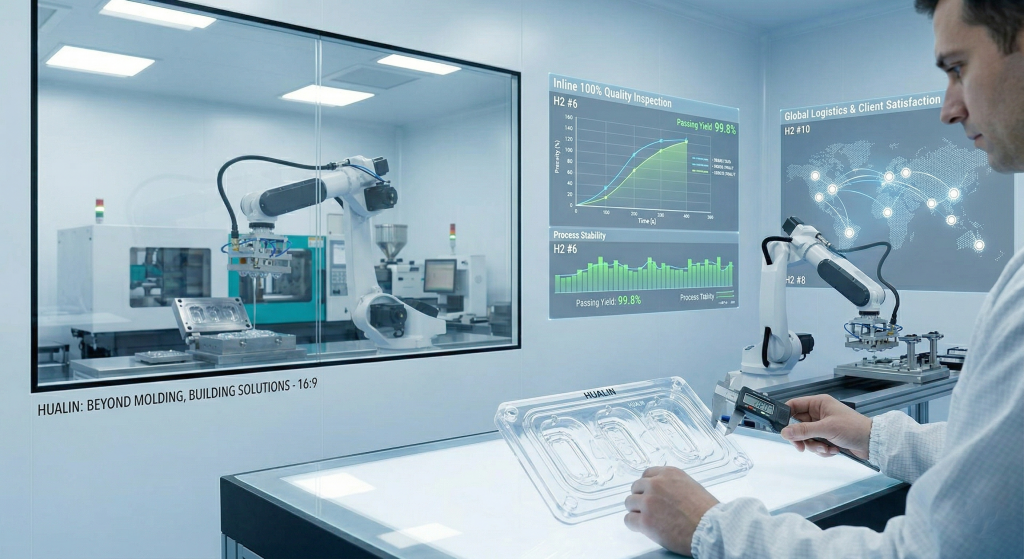
Scaling from a prototype to millions of units requires a Silicone Mold Manufacturer to have massive machine capacity and automated post-processing lines. What’s the real story? Many small shops can make ten great parts, but they crumble when you ask for 100,000 pieces per week with the same level of quality.
What is the scale of production capacity?
A well-equipped factory should have dozens of vacuum vulcanization and LSR machines to handle large-scale orders simultaneously.
- High Volume: Capacity to produce over 1 million precision seals per day.
- Multi-Cavity Molds: Running 32 or 64-cavity molds to maximize efficiency.
- 24/7 Operation: Continuous shifts to meet tight global shipping deadlines.
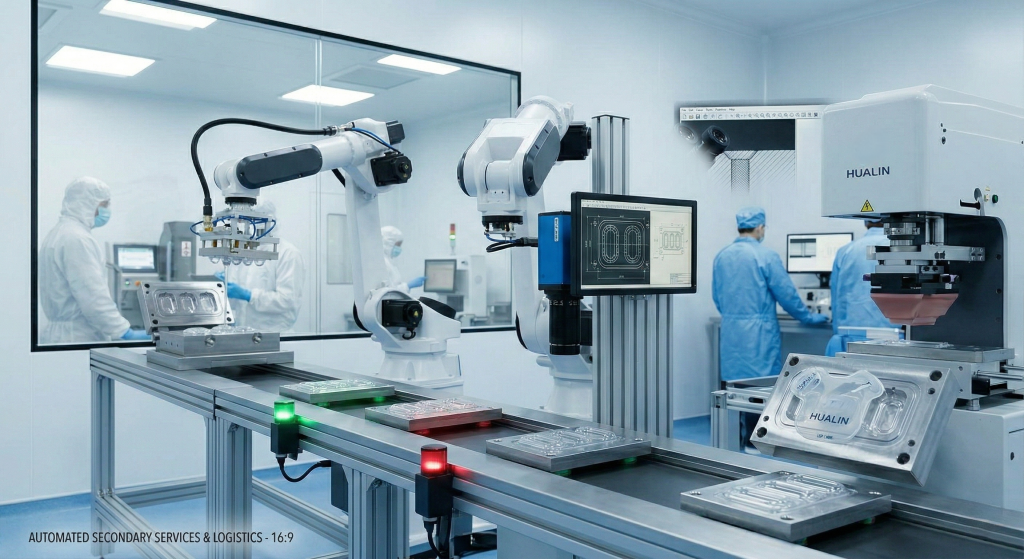
This is where it gets interesting… by using automated spraying and printing lines, we can finish thousands of parts per hour with perfect cosmetic alignment.
How does automation improve reliability?
Automation in secondary processes like UV coating and CCD inspection removes the variability inherent in manual labor.
- CCD Inspection: Cameras check every part for dimensional accuracy in milliseconds.
- Automatic Spraying: Ensures a uniform soft-touch coating without drips or thin spots.
- ERP Systems: Real-time tracking of production yields and warehouse levels.
Believe it or not, automation is often the only way to keep costs competitive while manufacturing in high-standard facilities.
Key Takeaway: Massive capacity and automation allow you to grow your business without worrying about supply chain bottlenecks.
| Process | Automation Level | Daily Output Capability |
| Solid Molding | Semi-Automated | 140K Buttons / Day |
| UV Coating | Fully Automated | 200K Pieces / Day |
| Inspection | CCD Automatic | 500K Pieces / Day |
Scale is not just about quantity; it’s about maintaining quality at speed.
9. Can a Silicone Mold Manufacturer Provide Secondary Services?
A one-stop Silicone Mold Manufacturer provides more than just molding; they offer integrated services like silk-screen printing, laser carving, and final assembly to deliver a finished product. Here’s the deal… if you have to ship your silicone parts to a second factory for painting and a third for assembly, you are doubling your logistics costs and risks.
What surface treatments are available?
Surface treatments can transform the look and feel of silicone, making it more resistant to dust or adding branding.
- UV Modification: Reduces the natural stickiness of silicone to prevent dust buildup.
- Silk-Screen & Pad Printing: High-durability inks for logos and button icons.
- Laser Etching: Precision removal of coating to allow light to shine through (backlit buttons).
What’s the catch? These processes must be done in a clean environment, or you will end up with debris trapped under the paint.
Do they offer assembly and packaging?
Integrated manufacturers can assemble your silicone parts with plastic or metal components and even provide retail-ready packaging.
- Overmolding: Bonding silicone directly onto a plastic or metal substrate.
- Kitting: Grouping multiple parts into a single SKU for easy fulfillment.
- FBA Ready: Packaging and labeling parts for direct shipment to Amazon warehouses.
Ready for the good part? This “Turnkey” approach allows you to focus on marketing while we handle the entire physical supply chain.
Key Takeaway: Integrated secondary services reduce complexity and total cost of ownership for your product.
| Secondary Service | Purpose | Value Added |
| Laser Carving | Backlit effects | Premium UI/UX design |
| UV Coating | Dust resistance | Better consumer hand-feel |
| Final Assembly | Ready-to-use kits | Reduced logistics overhead |
Choosing a partner with full-process capabilities simplifies your life and ensures a cohesive final product.
[Image showing a technician performing silk-screen printing on a silicone keypad with a 16:9 aspect ratio]
10. What is the Best Way to Start a Project with a Silicone Mold Manufacturer?
The best way to start is to provide a complete RFQ (Request for Quote) package to your Silicone Mold Manufacturer, including 3D CAD files, material specs, and estimated annual volumes. Wait, let’s dig a little deeper… the more information you provide upfront, the more accurate the initial quote and DFM feedback will be.
What should be included in your RFQ?
A professional RFQ helps the engineering team understand the “intent” of the part, not just its dimensions.
- 3D Files: STEP or IGES formats are the industry standard.
- Material Requirements: Specify durometer, color (Pantone), and certifications.
- Critical Dimensions: Highlight which tolerances are most important for function.
The real story is… a good manufacturer will ask you “Why?” as much as “How?” to ensure the design is truly fit for purpose.
How do we handle the transition to mass production?
Once the prototype is approved, the project moves into a pilot run (Small Batch) to validate the multi-cavity production mold.
- Pilot Run: Testing the mold at full production speed.
- PPAP Approval: Providing the necessary documentation for automotive or medical clients.
- Ramp-Up: Gradually increasing volume as your market demand grows.
This is where it gets interesting… we are here to grow with you, from your first 1,000 units to your first million.
Key Takeaway: A detailed and transparent start leads to a smoother production journey and a better final product.
| Startup Step | Action Required | Result |
| NDA Signing | Legal protection | Secure sharing of IP |
| RFQ Submission | Provide 3D & Specs | Accurate cost & lead time |
| DFM Feedback | Engineer review | Optimized for manufacturing |
Starting on the right foot ensures that your vision is realized without unnecessary delays or surprises.
Summary of Key Insights
We have covered the entire lifecycle of silicone product development, from the initial design and material selection to high-volume LSR molding and secondary assembly. By focusing on precision tooling, clean-room environments, and global certifications, a professional manufacturer ensures that your product is safe, durable, and cost-effective.
The Main Message
The difference between a successful product launch and a failure often comes down to the technical competence of your manufacturing partner. We offer the high-tech infrastructure and engineering expertise to ensure your ideas are never “lost in translation.”
Take the Next Step
Are you ready to transform your concept into a market-ready product? Our team is standing by to provide a detailed DFM analysis of your current designs. Whether you need complex LSR overmolding or high-volume precision seals, we have the capacity to deliver. Contact us today to schedule a technical consultation and get your project moving toward reality. At Hualin, we don’t just make molds; we build the future of silicone innovation, one precision part at a time.
Frequently Asked Questions (FAQ)
Q1: Can I use the same mold for both LSR and solid silicone?
No, the processes are fundamentally different. LSR requires a liquid injection system with a cold runner, while solid silicone uses a compression or transfer mold with heat. Each material requires a dedicated tool designed for its specific flow characteristics.
Q2: What’s the best way to reduce the cost of my silicone mold?
The most effective way is to simplify the design to allow for a two-plate mold without complex sliders or lifters. Reducing the number of cavities for initial runs can also lower upfront costs, though it increases the per-part price.
Q3: How do I know if my product requires a Clean Room?
If your product is used in medical applications, food contact, or requires a “mirror-perfect” cosmetic finish without any dust contamination, a Clean Room is mandatory. For general industrial gaskets or protective cases, a standard controlled shop environment is usually sufficient.
Q4: Can I get a custom color for my silicone parts?
Yes, we can match any color based on a Pantone or RAL code. For LSR, the pigment is injected automatically during the mixing process, ensuring perfect color consistency across every single part in the production run.
Q5: How do I know if my design is actually manufacturable?
Submit your 3D files for a DFM (Design for Manufacturing) review. Our engineers will check for issues like trapped air, thin walls, or impossible undercuts and provide a report with suggested improvements before you spend a penny on tooling.